



Sanjha Morcha

Stealth frigate ‘Mahendragiri’ to be commissioned into Navy on July 11

Designed by the Navy’s Warship Design Bureau (WDB) and built by MDL-Mumbai, ‘Mahendragiri’ “is capable of undertaking anti-air, anti-surface and anti-submarine operations, and is equally suited for maritime security, power projection, humanitarian assistance and disaster relief (HADR), search and rescue, and sustained presence missions”, according to a Navy spokesperson.

“The frigate is equipped with an advanced suite of indigenous and state-of-the-art weapons and sensors, including surface-to-surface and surface-to-air missile systems, sophisticated electronic warfare capabilities, comprehensive anti-submarine warfare systems and an integrated combat management system,” the official added.

Incorporating advanced stealth features, enhanced survivability, reduced radar signature and a high degree of automation, the frigate is powered by a modern combined diesel or gas (CODOG) propulsion system, enabling high-speed operations with “exceptional endurance across the full spectrum of maritime missions”.

“With over 75 per cent indigenous content, ‘Mahendragiri’ exemplifies the Government of India’s ‘Aatmanirbhar Bharat’ initiative,” the Navy said.


9,909 forgotten WWI Indian Soldiers Commemorated in UK

article_Author
Mohit Khanna Tribune News Service

he Commonwealth War Graves Commission (CWGC) has added 9,909 men previously omitted from commemoration records, recognising them as casualties of the First World War who died of injuries away from the battlefield.

The soldiers have now been acknowledged through the Punjab Registers project, a five-year partnership between the CWGC, the UK Punjab Heritage Association, and the University of Greenwich.

During the First World War, more than 1.4 million men from the Indian Army served on all major battlefronts.

One in six soldiers fighting for the British came from pre-partition India, with half a million from Punjab, including Sikh, Muslim, Hindu and Christian servicemen. Yet, many of these men have long been overlooked in mainstream histories.

Early work on the Punjab Registers showed that some soldiers listed as having died during the conflict were missing from CWGC records and commemorations. The majority of the missing casualties were men who had died in non-operational zones within India during the war.

Due to rulings made by the British Indian Government at the time, these men were not afforded war graves status, and so their names were never shared with the Commission. This project has overturned that decision, read the statement.

A major verification process was undertaken. A CWGC-funded PhD student at the University of Greenwich, George Williams, and nineteen volunteers from around the world, many with personal ties to the Registers, examined 15,935 deaths and compared them with 74,000 existing CWGC Indian Army records.

Their enormous effort was supported by computer-assisted analysis, and each stage was reviewed by the CWGC and Indian Army specialists. The process revealed that 9,909 casualties were missing from the records. The Punjab Registers project forms part of the Commission’s wider Non-Commemoration Programme, established in 2021 to address historical inequalities in commemoration.

So far, the programme has identified more than 20,000 additional names for commemoration, the statement reads. In a statement on its social media handle X, the Commonwealth War Graves Commission (CWGC) stated, “Today, we are announcing the largest single addition to our casualty records since the Second World War, following a major international research project drawing on rare historical records.” “A total of 9,909 Indian Army servicemen, previously missing from our records, have now been added, correcting a past historical omission that meant they were never formally commemorated,” the statement reads.

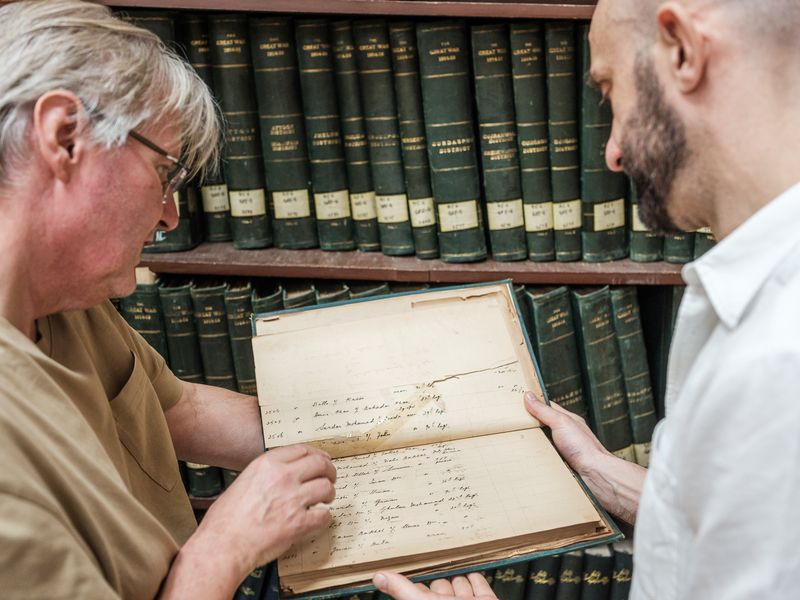
“This milestone is the outcome of the Punjab Registers project, a five-year partnership between the CWGC, the UK Punjab Heritage Association (UKPHA), and the University of Greenwich. Together, the organisations digitised and analysed a rare and fragile collection of documents held at Lahore Museum, containing the names and service details of approximately 3,20,000 Punjabi recruits,” reads the statement on the website of the Commonwealth War Graves.

Claire Horton CBE, Director General of the CWGC, said: “Over a century after the end of the First World War, our mission endures, ensuring all those who died in the service of the Commonwealth receive the commemoration they deserve. The Punjab Registers project is a landmark moment in that mission.

The recovery of every one of these 9,909 names helps restore missing chapters in family and world histories.

It stands as a constant, timeless reminder that commemoration is not only about the past, it is about personal identity, family legacy, and recognising the human cost of war.”

“The CWGC remains committed to meaningful physical commemoration and to working with governments and nations to seek their views on a memorial to honor these individual soldiers with the dignity and respect they so rightly deserve,” stated Horton.


How do I prove my Indian citizenship

The exercise must be anchored in the maxim that the burden does not rest on the citizen

article_Author
Manish Tewari

THE Ministry of External Affairs’ assertion that the passport is not a “citizenship document” but a “travel document” has birthed a fundamental, unsettling question: if the passport is not proof of citizenship, what is?

The vast apparatus of the Indian State dispenses benefits through myriad documents: ration card, health insurance enrolment, Kisan credit card and a host of similar instruments. These documents are, lock, stock and barrel, no proof of citizenship whatsoever.

Then comes Aadhaar. Section 9 of the Aadhaar Act, 2016, states unequivocally that the Aadhaar number/card neither confers nor is evidence of citizenship.

The driving licence fares no better. It is a permit issued under the Motor Vehicles Act to a person who is not otherwise disqualified, authorising them to drive a motor vehicle.

The Electoral Photo Identity Card (EPIC) sails in the same boat. Voting, a constitutional right, and not a fundamental right, is not an inalienable right available to every citizen by the mere fact of citizenship.

Furthermore, voter ID is issued not by the Central Government but by the Election Commission, whose plenary powers, broad as they may be under Article 324, do not extend to the determination of citizenship. This has been confirmed by the Supreme Court (SC) in the Special Intensive Revision (SIR) case — Association for Democratic Reforms v. ECI (2026).

Having ruled out these tokens of identity, we return to the passport. The government’s reliance on Section 20 of the Passports Act, 1967, which enables the issuance of a passport even to a non-citizen in public interest, suffers from the fallacy of composition.

Besides, it draws strength from the Passport Manual (Chapter 2, Paragraph 6.1), which states that “a passport provides evidence of the holder’s nationality, but this is placed in the same category as any other evidence of the citizenship status of an individual.” This gives birth to two distinct and necessary lines of consideration.

First, for all Indian nationals who hold a passport issued not under Section 20 but under the general rule of Section 5(2), the passport is an assertion of citizenship. Section 6 mandates the passport-issuing authority to reject an application for a passport inter alia on the ground that the applicant is a non-citizen.

The entire inquiry and verification apparatus is predicated on the applicant being a citizen.

The machinery of citizenship across borders is also anchored to the passport as the operational certificate of citizenship. The Indian Community Welfare Fund (ICWF), designed to assist overseas Indian nationals in times of distress and emergency on a means-tested basis, is explicitly reserved for “Indian citizens,” not for Persons of Indian Origin or Overseas Citizens of India (OCI).

The government’s own consular machinery requires the production of an Indian passport to establish the beneficiary’s citizenship, and an endorsement on that passport is mandatory for accessing the fund.

Furthermore, the architecture of the OCI, under Section 7A of the Citizenship Act, 1955, rests on this very edifice. An OCI cardholder, a former Indian citizen, must prove one’s own lineage of citizenship extending up to four generations to qualify. The primary, and often the only, document that establishes this former citizenship is a passport.

In the same vein, children born abroad to Indian citizens are registered with Indian diplomatic missions to acquire citizenship by descent, and the parent’s citizenship is proved by their Indian passport.

At border trade posts like Tamu-Moreh in Manipur along the Myanmar border, interdependent communities of both nationalities traverse daily, depositing their IDs at the check-post in the morning and retrieving them upon return by sunset. Nationality is determined by these documents.

Even Section 15 of the Immigration and Foreigners Act, 2025, states that when a foreigner in India with a valid passport is recognised as a national by the law of more than one foreign country, the civil authority may treat that foreigner as the national of the country on whose passport he entered India. Thus, a passport is the determinant of nationality.

Although the SC, in State Trading Corporation of India Ltd. v. Commercial Tax Officer (1963), held that ‘citizenship’ and ‘nationality’ are not interchangeable, the judgment was made in the context that while juristic persons may be nationals for the purposes of international law, they cannot be citizens for the purposes of municipal law or the Constitution, which contemplates citizens as natural persons.

For natural persons, the conceptual distinction between nationality and citizenship, rooted in Roman law, has collapsed in the modern constitutional scheme. Roman law distinguished the nationals into civis (citizen with full political-civic rights), latinus (intermediate status), peregrinus (foreigner), servus (slave), and hostis (enemy) until all free subjects evolved into cives, leaving only foreigners and those stripped of citizenship outside the civic pale.

An Indian national holding a passport issued under Section 5 (neither a slave, nor an enemy alien, nor a person deprived of citizenship) is a citizen simply because no other category exists to accommodate him.

The second consideration flows from the Passport Manual: “any other evidence of the citizenship status”. What document is such evidence?

Three successive questions provide the answer. First, is the issue of the document preceded by such rigorous process that it effectively requires adducing all evidence of citizenship? The passport application requires a declaration of citizenship, verification of place and date of birth, and parentage. Second, are citizens fundamentally entitled, and prospective citizens eligible, to apply for that document? The right to travel abroad, a fundamental right under Article 21, as laid down in Maneka Gandhi v. Union of India (1978), is operationalised by the issuance of a passport.

A non-citizen, having no such fundamental right, may obtain a passport under Section 20, but the Section 5 route is a citizen’s gateway. Third, is the issuing authority for a passport the Central Government and not any state government or any other instrumentality?

As things stand today, the standalone document that serves as practical proof of citizenship for a citizen by birth is a passport issued under Section 5. Certainly, it is not the only mode of proof but that is all a citizen has.

The ideal, of course, is a meticulously maintained National Register of Citizens (NRC), complemented by the National Population Register (NPR). Yet, the experience of Foreigners Tribunals and Illegal Migrants Determination Tribunals serves as a grim cautionary tale.

Any sincere citizenship determination exercise must be anchored in one unshakeable maxim: the burden to prove citizenship does not rest on the citizen; but the burden to rebut the presumption of citizenship rests on the State.

It must not become a Kafkaesque gauntlet in which the poor, the disaster-borne, the landless and the illiterate are presumed aliens until they prove their citizenship, without the means — or even knowledge of what document would suffice — to do so.


2 of Assam Rifles shot in Manipur ambush

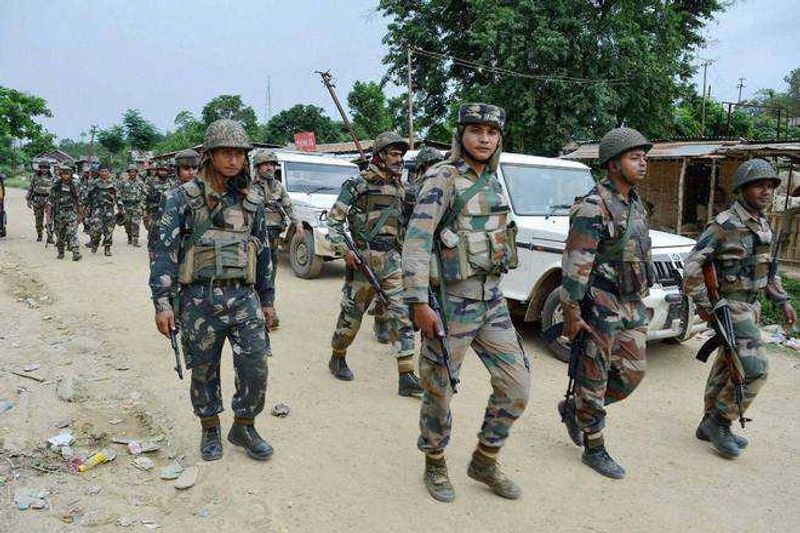
wo Assam Rifles personnel were killed and several others injured in an ambush by suspected militants in Manipur’s Ukhrul district on Monday, the police said.

The incident occurred around 1.30 pm in the Nungshang Khong area of the hill district when the suspected militants fired at a convoy of the paramilitary force, a senior officer said.

“The deceased include a warrant officer and a driver. They died on the spot. The incident occurred some 17 km from the district headquarters under the Ukhrul police station limits when the convoy was returning to the 40th Assam Rifles battalion headquarters at Sangshak,” the officer said.

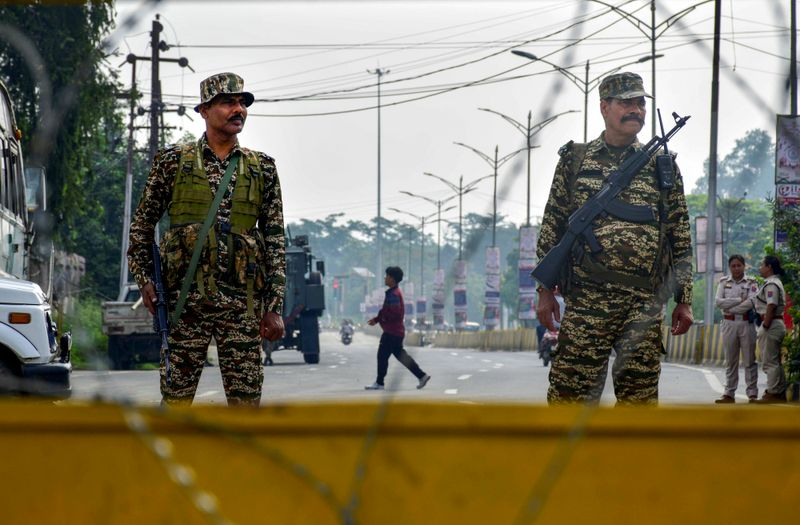
Following the attack, additional security personnel were deployed in the area and an exchange of fire broke out between the central forces and armed militants in a nearby locality, he said.

The attack site had been cordoned off while a forensic team was sent from Imphal to conduct an inspection, the officer said. Locals claimed that several farmers, who were working in nearby paddy fields at the time of the firing, were detained by security forces for interrogation.

In a statement, Chief Minister Y Khemchand Singh condemned the killing of the two Assam Rifles personnel and conveyed his deepest condolences to the bereaved families. He asserted that the government would not tolerate such brutal violence and would not remain a mute spectator to these atrocities.

Security forces have been conducting search and area domination operations in the fringe and vulnerable localities across Manipur since the ethnic violence broke out three years ago. More than 260 people have been killed and thousands rendered homeless in the ethnic strife between Meiteis and Kuki-Zo groups since May 2023.


First person account: ‘What Jaswant Singh Khalra told me before he died’

Jaswant Singh Khalra’s life and sacrifice are back in the news with a fresh ban on the telecast of the movie “Satluj” (earlier titled “Punjab 95”), based on his life. As a reporter for The Tribune in Tarn Taran since 1984, I am among the few journalists who met and interacted with him.

In fact, I once informed him directly about the threat to his life. It was an afternoon in early August 1995. I was standing near Maharaja Ranjit Singh Public School on Tarn Taran’s main road when Khalra, driving his trademark open jeep, stopped to talk to me.

I had been covering his press conferences as well as reporting police statements issued against him.

He spotted me and stopped his car. I went up to him and exchanged pleasantries. Khalra was much in the news for his claims about the cremation of 25,000 unclaimed bodies by the Punjab Police. I cautioned him to be careful.

Years later, crusade launched by Jaswant Singh Khalra leads to conviction of 135 policemen

Referring to a conversation a senior police officer had with me while briefing about a police case, I told Khalra that the officer had sent a coded warning. The officer referred to Gurbani in a veiled warning, “Tell him (Jaswant) jo adde so jharre, sharan pare so tarre”. It meant “those who resist, they fall, but those who seek refuge are saved.” The officer wanted to convey that those who had stood up against the Punjab Police had fallen but those who sought their refuge were saved. Khalra did not blink once and smiled. He too quoted Gurbani in his reply to the officer, “Jo sharan aaye, tiss kanth laaye (whoever comes seeking refuge, He embraces them).”

Khalra meant that he had already sought refuge from God, who had embraced him; thus, he was not worried about his death.

He added that it would not be easy for the police to eliminate him through a routine fake encounter as the issue had already gained international attention in England and the USA. He was prepared to sacrifice himself for the truth. That was the last time I saw him.

On August 31, 1995, then Punjab Chief Minister Beant Singh was assassinated. The Punjab Police picked up many people on suspicion.

On September 6, Khalra was kidnapped from outside his house in Amritsar by men in plain clothes. He was never seen again


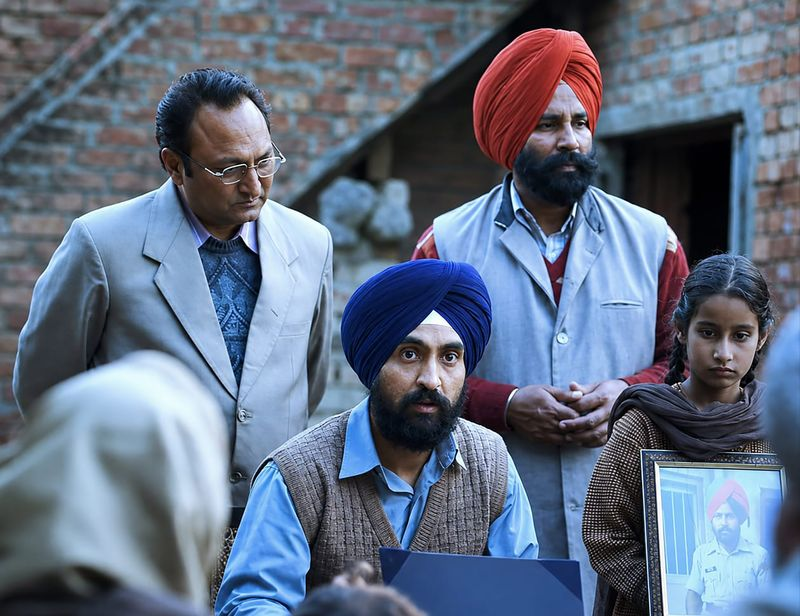
Despite Zee5 takedown, Diljit Dosanjh starrer ‘Satluj’ being circulated on WhatsApp

A day after the OTT platform Zee5 removed Diljit Dosanjh’s film ‘Satluj’ from its platform in India, the full movie is allegedly being circulated in several WhatsApp groups, according to reports from online users.

Government sources on Monday said that certain portions of the film had the potential to be misused by anti-India forces.

A high-quality digital copy of the film, around 589 MB in size with a runtime of 2 hours, 43 minutes and 59 seconds, is reportedly being shared over WhatsApp groups. However, the authorities have not issued any official statement on the alleged circulation of the movie.

Experts have warned that sharing or downloading banned or pirated content may violate laws and could invite legal action. Cyber safety officials also advised people not to engage with such content and to report suspicious sharing activity on messaging platforms.

On Sunday, Zee5 on Instagram wrote, “The response to Satluj since its release has been truly overwhelming. We are deeply grateful to every viewer who chose to subscribe, watch and champion the film. Your love and support have meant a great deal to us and to everyone who brought this story to life. At Zee5, we stand firmly by Satluj and the creative vision behind it. We believe powerful storytelling has the ability to inspire, endure and leave a lasting impact. We remain committed to championing authentic and meaningful narratives.”

The post further read, “In light of the current developments, Satluj will be unavailable in India until further notice. We remain committed to exploring every appropriate avenue through due process to bring the film back to our audiences at the earliest opportunity. Our commitment to creators and to stories told with conviction, artistic integrity and purpose remains unwavering.”


‘Satluj’ ban couldn’t stop Rajasthan: Villagers gather for massive big-screen screening

Despite the removal of Diljit Dosanjh’s film Satluj from streaming platform ZEE5 in India, the film continues to generate widespread attention. A viral video circulating on social media shows residents of a Rajasthan village gathering in large numbers to watch the film together on a giant outdoor screen, turning the screening into an event.

The clip, which has garnered thousands of views and shares, captures men, women and children assembled in an open area as “Satluj” plays on a large LED screen.

While the exact location of the village could not be independently verified, the video has sparked widespread discussion online, with many users describing it as a show of solidarity with Punjabi cinema.

The community screening comes just days after Satluj was quietly released on ZEE5 on Friday before becoming unavailable in India less than 48 hours later. In a statement, ZEE5 said the film would remain unavailable in the country “until further notice” due to “current developments”, without elaborating further.

Reacting to the development during an Instagram Live session from the United States, where he is currently touring, Diljit Dosanjh said he had anticipated the film’s removal from the platform.

“I had a feeling on Friday that something like this would happen. I thought it would happen on Monday when offices opened, but I didn’t expect it to happen on Sunday evening,” he said.

The actor added that the film was released without any promotional campaign because the team expected it could face restrictions. “I am satisfied that people have seen the film. It has reached them,” he said, adding that he had also seen videos of community screenings, including one reportedly held at a gurdwara in Rajasthan.

However, ZEE5 has not encouraged viewers to access the film through unauthorised means. The platform has stated that it is committed to pursuing the appropriate legal process to make the film available again in India.

Directed by Honey Trehan, Satluj is based on the life of human rights activist Jaswant Singh Khalra, who exposed the alleged illegal cremation of thousands of unidentified bodies in Punjab between 1984 and 1994. Khalra was abducted in 1995 and never returned.

https://www.instagram.com/p/Daa_wl8hcvz/?utm_source=ig_embed&utm_campaign=embed_video_watch_again

In 2005, four Punjab Police personnel were convicted in his abduction and murder case, with their sentences later enhanced to life imprisonment by the Punjab and Haryana High Court.

Originally titled Punjab ’95, the film remained in limbo for more than three years after the filmmakers declined to accept 127 cuts reportedly suggested by the Central Board of Film Certification. Although the title was later changed to Satluj, its release has continued to face hurdles.


Headlines : 05 Jul 2026

30 JUNE 1963- A RED LETTER DAY IN THE ANNALS OF THE INDIAN ARMY,Batch comprising 234 Engineer Officers was commissioned on 30 June 1963.

16-km Velachery–Tambaram High Road is set to be renamed after Major Mukund Varadharajan, the Indian Army officer

New Army Uniforms 2026 regulations are about memory & identity

Punjab drafts rehabilitation policy with job quota for Agniveers

The hardest goodbye: Remembering a father, and a warrior hero

India’s bullets go green: Brass replaced by fibre for lighter soldier load

Indian Army’s historic Silk Route expedition: ‘Retracing History, Inspiring the Future

MoD okays facility to test indigenous marine engines

The cruellest, taxing month


30 JUNE 1963- A RED LETTER DAY IN THE ANNALS OF THE INDIAN ARMY

Batch comprising 234 Engineer Officers was commissioned on 30 June 1963.
At 11 AM on 01 July, 2026, before our 63rd Commissioning Anniversary Luncheon

BY

Veteran IC-15090 Col SS Rajan,The Bombay Sappers,Bangalore, 9449043770

  1. Post Chinese aggression in Oct-Nov 1962, Pandit Jawaharlal Nehru, the then Prime Minister of India, gave a ‘clarion call’ asking the youth to join the Army; and in response to which thousands & thousands of young men between the ages 20-35 years joined the Army as Emergency Commissioned (EC) Officers.
  2. In order to facilitate speedy induction of EC Officers, two more training establishments, viz. Officers Training School (OTS) at Chennai and OTS at Pune came up; and the training of EC-1 Course at the two OTS’ commenced on 07 Jan 1963.
  3. In order to induct Officers speedily into Units of various Arms & Services the training period of Regular Courses at IMA, Dehradun, was cut short; and all Gentleman Cadets (GCs) were allotted various Arms & Services by mid-March 1963. And, same was the case with GCs at OTS Chennai & Pune.
  4. In order to accommodate the heavy influx of EC Courses, starting with EC-2 at IMA, EC-3 at OTS Chennai and EC-4 at OTS Pune, in the month of April 1963, only those Gentleman Cadets who were allotted Armoured Corps and Infantry, were retained at IMA, OTS Chennai & OTS Pune; and the rest allotted various Arms & Services were despatched to their respective Colleges/Schools of Instruction in the first week of April 1963, for further pre-commission training, as enumerated below:
  5. School of Artillery, Deolali, Maharashtra.
  6. College of Military Engineering (CME), Pune, Maharashtra.
  7. Military College of Telecommunication Engineering, Mhow, MP.
  8. School of Electronics & Mechanical Engineering (EME), Baroda, Gujarat.
  9. ASC School, Bareill, UP.
  10. AOC School, Jabalpur, MP.
  11. AEC School, Pachmarhi, MP.
  12. 30 June 1963 was a “Red Letter Day” in the Annals of the Indian Army; for on that day, approximately 1500 Officers comprising ten courses as listed below, passed out from IMA, OTS Chennai & OTS Pune; and various Colleges/Schools of Instruction, as enumerated in Para 4 above:
  13. 18 Technical Graduates Course;
  14. 32 Direct Entry (DE) Course;
  15. 23 NDA Course;
  16. 17 NCC Course;
  17. 2 Officers Training Unit (OTU) Course;
  18. 33 DE Course;
  19. 18 NCC Course;
  20. 34 DE Course;

(j)       EC-1 Course; and,

(k)      EC-1 Technical Graduates Course.

6.       We, the Sappers of June 1963 Batch, did the Combat Engineering leg of the YO’s Course as pre-commission training as GCs; and, 234 Officers were commissioned in the Corps of Engineers at mid-night 29/30 June in the Hall housing the Library of the Combat Engineering Wing at CME, Pune. It was a momentous occasion.

7.       Having been commissioned in CME, Dhapodi, Pune, the Sappers June 1963 Batch celebrated the Golden Jubilee of our Commissioning Anniversary at CME, Pune, on 29-30 June 2013; and, the Diamond Jubilee of our Commissioning Anniversary at CME, Pune, on 29-30 June 2023; and, we now look forward to celebrating our 65th Commissioning Anniversary at CME, Pune, on 29-30 June 2028.

 Au revoir till then.

COL SS RAJAN ,BOMBAY SAPPERS Veteran at the age of 82 years wearing a Uniform on Ceremonial functions.

PAYING HOMAGE TO BRAVE IC-15055 MAJOR SURINDER VATSA, VrC, WHO LAID DOWN HIS LIFE IN THE LINE OF DUTY ON 13 DECEMBER 1971

Major Surinder Vatsa VrC

The citation of Vir Chakra awarded to him reads:

On 13 December 1971, Major Surinder Vatsa of an engineer regiment accompanied a column of Maratha Light Infantry assigned the task of raiding an enemy locality on the Kamalpur-Bskashiganj axis in the Eastern Sector. The raid was successful and four enemy 130mm mortars were captured. Apprehending enemy reinforcements, Major Vatsa was ordered to destroy the mortars before the raiding column returned to base. He destroyed two mortars with explosives but while preparing the charge for the third mortar he was shot by an enemy sniper. Though seriously wounded, realizing the importance of the task he held on and managed to damage the remaining mortars by exploding grenades in their barrels before he died. In this action, Major Vatsa displayed gallantry, determination and devotion to duty of a high order.

  • Major Surinder Vatsa hailed from Ferozepur district in Punjab and was born on 01 Jan 1942. Son of Shri S L Vatsa, he got commissioned into 59 Engr Regt of the Bengal Engineers Group (BEG) of the Corps of Engineers, one of the oldest arms of the Army manned by combat engineers. By the year 1971, he had been promoted to the rank of Major and developed into a committed soldier and fine officer who commanded respect of his juniors and seniors as well. 

Battle of Jamalpur (Indo-Pak War)-  Dec 1971

During Indo- Pak 1971 war Maj Surinder Vatsa’s unit 59 Engr Regt was deployed on the eastern border. The unit was providing engineering support to infantry units functioning under the operational control of 95 Mountain Brigade. As part of operational plan, 95 Mountain Brigade was tasked to advance along axis Kamalpur – Bakshiganj – Jamalpur – Tangail –
Dacca. IB was crossed on 03 December 1971 and after a brief artillery action at Bakshiganj, Pak garrison withdrew to Jamalpur. The Brigade forces resumed advance on 06 December, Brahmaputra River was crossed 8 kms West of Jamalpur and road blocks established South & South – East of Jamalpur on 7/8 December 1971.  By 10 December 1971, 95 Mountain Brigade concentrated around Jamalpur with 1 MLI in the South, 13 Guards in the South East and across the river was the Brigade HQ along with 59 Engr Regt & a battery of 120mm Mortars. It was planned to launch an attack on Jamalpur on the night of 10/11 December from the South using 1 MLI to get a foothold in the built up area & then 13 Guards to attack from South – East. 

As part of the ongoing operations, on 13 Dec 1971 Maj Vatsa commanding a Company of 59 Engr Regt was accompanying a column of a battalion of 1 MLI. They were assigned the task of raiding on enemy locality on the Kamalpur- Bakshiganj axis. Having set up an ambush, the enemy force walked in and started deploying its mortars and when trapped, opened heavy retaliatory fire. Rising to the occasion, Maj Vatsa improvised a charge using anti-tank mine and charged at the enemy guns along with a section of his men. Maj Vatsa and his comrades were successful in destroying two enemy mortars. Maj Vatsa then targeted the third enemy gun and while doing so came under enemy fire. He got seriously wounded but undeterred he held on and managed to damage the remaining mortars by exploding grenades in their barrels. Eventually he succumbed to his serous injuries and was martyred. Maj Surinder Vatsa was a valiant soldier and gritty officer who led from the front and laid down his life in the line of his duty. 

Maj Surinder Vatsa was given the nation’s third highest gallantry award, “Vir Chakra” for his outstanding courage, unyielding fighting spirit and supreme sacrifice during the operation. Major Surinder Vatsa is survived by his wife Smt Prabha Vatsa.

Respected Veterans Sanjha Morcha,

Our Batch comprising 234 Engineer Officers was commissioned on 30 June 1963. At 11 AM on 01 July, 2026, before our 63rd Commissioning Anniversary Luncheon Get-together at RSI Bangalore, Brig Yogender Parimu laid a Wreath at the National Military Memorial, Bangalore, in memory and as a mark of respect to our Batchmate, IC-15055 Major Surinder Vatsa, VrC, Bengal Sappers ,ex 59 Engr Regt who laid down his life in the line of duty during the 1971 War, in the Eastern Theatre on 13 Dec 1971.

Below are a few photographs taken on the occasion of Wreath Laying.

70 feet tall monolithic granite Veeragallu (stupa) symbolising the Aatma of 22,000 Soldiers who laid down their lives in the Line of Duty in Wars, CI Ops & Low intensity Conflicts (LIC) along the Line of Control (LoC) with Pakistan and Line of Actual Control (LAC) with China, starting from 27 Oct 1947.   

Wreath laid in memory and as a mark of respect to our Batchmate, Brave IC-15055 Major Surinder Vatsa, VrC, A Bengal Sapper, who laid down his life in the line of duty during the 1971 War, in the Eastern Theatre on 13 Dec 1971.  

IC-15005 Brig Y Parimu of the Spr June 1963 Batch laying a Wreath at the National Military Memorial, Bengaluru, in memory & as a mark of respect to our Batchmate, Brave IC-15055 Major Surinder Vatsa, VrC, A Bengal Sapper, who laid down his life in the line of duty during the 1971 War, in the Eastern Theatre on 13 Dec 1971.


16-km Velachery–Tambaram High Road is set to be renamed after Major Mukund Varadharajan, the Indian Army officer

CHENNAI: The 16-km Velachery–Tambaram High Road is set to be renamed after Major Mukund Varadharajan, the Indian Army officer who was killed in action and posthumously awarded the Ashoka Chakra, the country’s highest peacetime gallantry honour.The Tambaram Corporation Council on Thursday approved a resolution to name the arterial road “Major Mukund Varadharajan Road” in recognition of his sacrifice. The proposal was taken up following the approval from the Municipal Administration and Water Supply Department.