

















Observing that the widow had been unnecessarily harassed and denied her rightful claim for which the authorities must compensate her adequately, the Tribunal’s Chandigarh Bench, comprising Justice Sudhir Mittal and Lt Gen Ranbir Singh, also imposed costs of Rs 5 lakh on the officials concerned for denial of lifetime arrears and for delay in grant of ordinary family pension.
The soldier, Gunner Darshan Singh, was invalided out of service in April 1993 on account of physical disabilities after rendering service of a little over nine years’ service. The disability was held attributable to military service.
No disability benefits were granted him and he approached the AFT seeking service element of pension with effect from 1993, which were granted to him in 2012, though the arrears were restricted to three years.
Despite the AFTs’ orders, service element was not granted by the pension authorities on the grounds that he had not completed 10 years of service. He passed away in November 2011 before his case was decided by the AFT. “The same, however, does not make any difference so far as the entitlement of service element was concerned,” the Bench said.
The widow’s counsel contended that her late husband entitled to grant of service element and she was entitled to grant of family pension after his death. The same has been rejected on account of irrelevant reasons, he argued.
The Bench pointed out that the order of the court has not been implemented even after a lapse of 14 long years and the Artillery Records had rejected the claim for pension over frivolous reasons which have no legal sanctity whatsoever.
Further, the bench observed that the authorities have submitted that the case of the widow for grant of family pension was processed in the year 2022 which showed that they accept that she is entitled to grant of ordinary family pension because her husband was entitled to service element of pension.
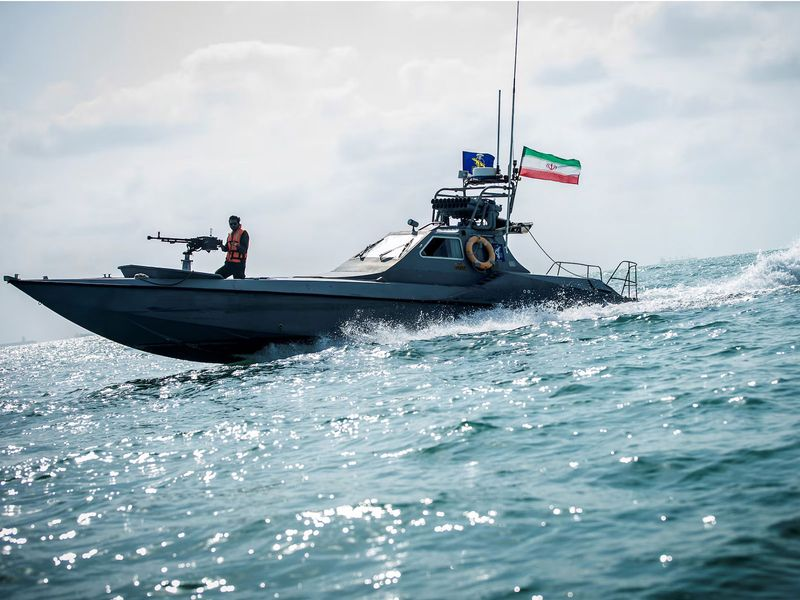
The Navy is set to commission indigenous stealth frigate Mahendragiri in the presence of Defence Minister Rajnath Singh at an event in Visakhapatnam on Saturday. Anti-submarine warfare vessel Malvan is slated for commissioning on July 22.
Mahendragiri is the sixth of the seven-ship series of the INS Nilgiri Class, five of which have been commissioned. The Nilgiri class is the first class of warships to be built using a new, faster shipbuilding technique called ‘integrated construction’. These ships are modular, ergonomic and have been built within the envisaged timelines.
Fitted with the latest weapons, sensors, attack missiles such as the BrahMos and air-defence missiles, Mahendragiri has the ability to stay at sea for extended periods, a capability referred to as a ‘blue-water’ capability in naval parlance.
The seven ships of the Nilgiri class – named Project 17-A – are follow-on to the Shivalik class of frigates and represent a generational leap. The Naval Warship Design Bureau (NWDB) has incorporated indigenous design features, improved stealth, survivability and combat capability, along with reduced radar signatures, advanced surveillance radars and electronic warfare suites.
The Nilgiri class displaces about 6,700 tonne, are 5 per cent larger than their predecessor, the Shivalik-class frigates, and yet incorporate a sleeker form, with a reduced radar cross section.
They are powered by combined diesel or gas (CODOG) propulsion plants using diesel engines and gas turbines that drive controllable-pitch propellers and are managed through an integrated platform management system (IPMS). This enables higher speeds and improved fuel efficiency.
The weapon suite includes supersonic surface-to-surface missiles, medium-range surface-to-air missiles, 76-mm MR Gun and a combination of 30-mm and 12.7-mm close-in weapon systems and the anti-submarine and underwater weapon systems.
The Nilgiri class uses ‘integrated construction’ which entails making various parts of a ship, particularly its hull, superstructure, and internal systems in blocks of 250 tonnes each.
These blocks are built with precision to allow cabling and piping to pass through when two set of blocks are welded together seamlessly. Artificial intelligence helps determine the sequence for assembling a warship, including sourcing of material and production timelines.
Indian shipyards now build a ship in six years, down from the earlier period of 8-9 years.
The Naval Warship Design Bureau has introduced the latest technology, adopted new design software, and used artificial intelligence and modern construction techniques. The design bureau uses a software to predict what would a ship be like. It predicts the turning radius, a ship’s sailing ability and its infra-red signature besides the ability to sustain in water and what sort of power it needs. The equipment, layout of machinery, fluid dynamics are predicted by a software.

Amritsar Riders Club, a community of motorcycle enthusiasts based out of holy city, will undertake a special journey to remember and pay tribute to the courage and sacrifices of soldiers of the Sikh Regiment of the Indian Army. The ride, scheduled for July 12, will have a procession of bikers riding to historic the Pul Moran, a heritage site located 36 kilometres from Amritsar and just a kilometre from India-Pakistan border at Attari.
Deputy Commissioner, Amritsar, Dalvinderjit Singh informed that a commemorative motorcycle ride is being organised to pay tribute to the courage, sacrifice and glorious legacy of the brave soldiers of the Sikh Regiment. “Members of the Indian Army, civilians and Amritsar Club riders will be part of this expedition. They will ride to Pul Kanjri museum to remember soldiers who made the supreme sacrifice for the defence of the country,” he said.
Amritsar Riders is a community that brings together bikers, who enjoy group rides, touring, road safety awareness and social events. The club is not a government organisation; it operates as a riding community and often collaborates with local motorcycle dealerships and event organisers for rides and awareness campaigns.
The journey will start from Company Bagh, Amritsar at 5:30 am after gathering the participants. Dalvinderjit Singh appealed to motorcycle lovers, ex-servicemen, serving soldiers and patriotic citizens to join this commemorative journey with a sense of discipline and respect, and pay tribute to the martyrs of the country.
He said that such events play an important role in encouraging the spirit of patriotism among the youth, strengthening national unity and keeping alive the glorious legacy of the supreme sacrifice of the brave soldiers of the Sikh Regiment.
“Anyone participating, must consider traffic rules, maintain complete discipline and maintain mutual respect and sense of brotherhood during the journey,” he said.
Also read: My Sikh Regiment ways — by Brig Sandeep Thapar (Retd)

Editor-in-Chief, The Tribune
Jyoti Malhotra is Editor-in-Chief of The Tribune group of newspapers. She has worked with India’s top newspapers, across print, TV and digital, both in English and Hindi media, and is a regular contributor on BBC Radio. Her X & Insta handles are @jomalhotra & email is jyoti.malhotra@tribunemail.com
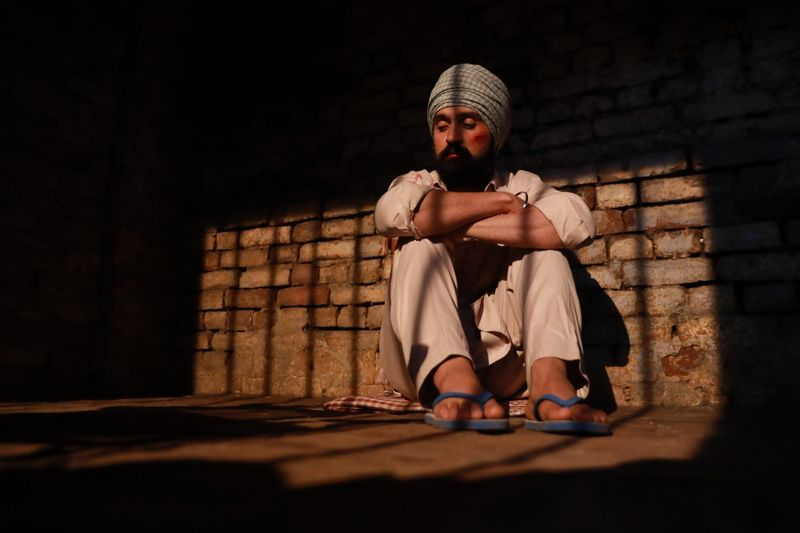
OVER the last few weeks, life has been imitating two pieces of art which have been trying to make sense of life as it happened decades ago. The first is the 1947 Partition movie by Imtiaz Ali, Main Vaapas Aaunga, which goes back 80 years to tell the story of a forced migration of a people, forced to uproot themselves from one home in search of another, forever condemned to be called “refugees” — living in imitation colonies called Model Town pretty much beyond the pale of Delhi University on the outskirts of Delhi, in memory of the Model Town they left behind in Lahore; sending their children to imitation schools like Lyallpur Senior Secondary Girls School in Jalandhar, in memory of a town called Lyallpur back home which doesn’t even exist anymore. Lyallpur’s new name has been Faisalabad for a while, but who’s to tell the folks in Jalandhar that.
That’s the problem with memory — you can’t unsee what you saw with your eyes or unhear what you’ve heard. Even if you didn’t personally see or hear, a remembrance of that time is enough to bring back nightmares. Friends in Chandigarh won’t take their parents to see Main…, lest it bring back some of the trauma they once went through.
Not that Punjab is a stranger to trauma. The two motifs of revenge — and reconciliation — as Rajmohan Gandhi brought out so evocatively in a book by that name have resonated across the decades, even centuries, across Punjab. If Delhi was the acme of your ambition, the “sone ki chidiya,” then Punjab lay en route and you had to cross all the rivers of Punjab to reach your goal. Some stopped short, most notably Alexander, in 326 BC — he turned around on his heels in the Punjab, and left; it remains the only state in India that has deserved an article before its name. Meanwhile, the ebb and flow of the ticking clock, just like its rivers, washed up invaders, intruders, democrats, assassins, terrorists, militants, human rights activists — the list is endless, across all sins of omission and commission.
GeographicReference
Advertisement
These days, as the monsoon covers the country, our rivers are in spate. The Chenab, still called a Punjabi river although it hasn’t touched Indian Punjab since 1947, roars along its embankments in the Jammu region before it enters Pakistan Punjab — you cannot stop its flow. Geography simply won’t accede to politics, before or after Op Sindoor.
Speaking of the Chenab, can Satluj be far behind — not the river, the movie. All of Punjab has watched it, or is watching it — on large screens set up by village committees, in the shadow of a gurdwara or just in an open ground, after dusk falls, the Centre’s ban tossed by the wayside. Even the Delhi Sikh Gurdwara Management Committee is organising screenings in the heart of the capital. The irony is complete.
Every political party is watching carefully, with polls barely six months away, each one of them keenly aware that if they don’t say the right thing, or use the right phrases, they could be swept away by the tide of emotion that is roiling the state. Every one of my colleagues in The Tribune says that “everyone knows everything, about what happened those years.” But what does that really mean? What is it about Satluj that has touched off a chord in Punjab? Does the Centre’s ban really mean that it’s too soon, that it needs another few decades before Punjab can look back at its horrors, just like Main Vaapas Aaunga has done after 80 years, and that it’s better not to disturb the darkness, leave alone challenge it. At the end of the day, let’s face it, Diljit Dosanjh lives in Amreeka, not back home in the pind.
Here’s the fear. That Punjab will be riven once again. People will take sides. Criticism that the movie is “too one-sided” really means that only one side, the side of the human rights activist, Jaswant Singh Khalra, has seen the light of day. Not how terrorists mowed down innocent people, both Hindu and Sikh. Not how Punjab’s police force was also cut down by terrorists and how their families suffered. Not how Hindus suffered. Not how god-fearing Hindus and Sikhs fought back. Certainly not how Pakistan fanned the fire of a flame that was already lit in Punjab.
Fact is, Satluj has scraped the surface, revealing a dark, ugly side — it’s not yet clear how people will come to terms with it. The movie quotes Khalra as saying that 25,000 innocent people were killed. Writing in The Tribune in 2019, security analyst and relative of former Punjab DGP KPS Gill, Ajai Sahni, said that between 1981 and 1995 — in the year both then chief minister Beant Singh and Khalra were killed — 11,696 civilians and 1,746 security force personnel (1,415 of the Punjab Police) were killed by terrorists, while the police killed 8,090 terrorists. That’s 21,532 people.
Meanwhile, social media is full of contestations, both sound and fury. BJP leader Ravneet Singh Bittu’s X handle is replete with black-and-white videos of the time, showing clean-shaven dead men — none of the faces are masked. You could legitimately ask the question : Why are these videos being dug up now, and how are they being allowed to get past social media’s strict censors? But as Bittu tells my colleague Shivani Bhakoo, the BJP has not banned the movie. Perhaps he hasn’t seen the order from the Information & Broadcasting Ministry.
‘Let Satluj flow,’ stated an editorial in this newspaper earlier this week, arguing that the collective trauma of Punjab can only attempt a catharsis if more and more writers, filmmakers, the media — people, all — talk about what happened, and how, and perhaps even why. Except that a collective catharsis demands a collective grieving — not finger-pointing or name-calling, or blaming. Neither the Congress nor the Akali Dal or the BJP (when it was in alliance with the Akali Dal) have done much in the years they were in power, in that direction.
It has taken 80 years and the passing on of a generation to be able to watch Main Vaapas Aaunga and it’s still a tear-jerker. It’s been 112 years since Punjab sent half a million men to fight on behalf of the British army in the First World War — tomorrow, Sunday, wait for the story in The Tribune of how 9,909 of them, forgotten and consigned to the dustbin of history, have finally been recognised. It’s been about 30 years since the end of terrorism in Punjab — let’s take the first steps today not to forget, or deny our dark past, but to remember and heal. It’s time.
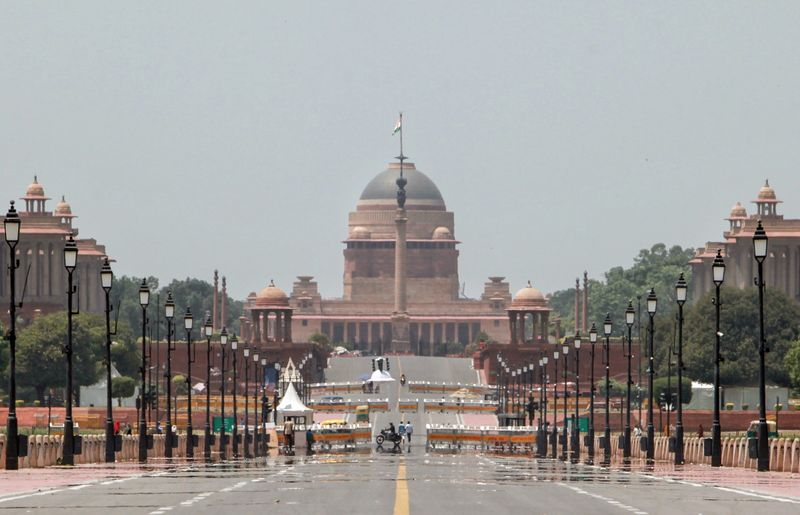
Prime Minister Narendra Modi and the ruling dispensation are determined to do away with India’s “thousand years of slavery”. As part of this project, the Union Government has been redeveloping the Central Vista in the heart of New Delhi, the city that the British built after they decided to move the capital of the Raj from Calcutta in 1911. It took them 20 years to build the new capital, which was inaugurated in 1931.
At the head of the Vista, up on Raisina Hill, was the principal seat of imperial power — the imposing Viceroy’s House. Down the hill were North and South Blocks which housed the secretariat of the Raj. And then came a vast rectangular space — the Great Place — at whose northern end a circular Central Legislature was constructed. From the gates of the Viceroy’s House through the centre of the Great Place was a grand 3 km-long road — Kingsway — flanked by lawns and ponds. Kingsway culminated in the All India War Memorial. Beyond that was the large traffic roundabout with a canopy above the statue of King George V.
The Kingsway lawns were bounded by Queen Victoria Road to the north and King Edward Road to the south. On these roads were located the residences of the Executive Councillors. The Imperial Records Department building was constructed on Queen Victoria Road. The only princely state to be given the privilege of having a residence on King Edward Road was Jodhpur. No princely state had a house on Queen Victoria Road. Away from the Vista, on a radial road to the south of the Viceroy’s House, the second most imposing house in the new capital was built. This was Flagstaff House, the residence of the Commander-in-Chief.
A couple of “temporary” constructions were built on the two roads during the Second World War. Thus, on Queen Victoria Road, a Central Vista mess for the Air Force came up and an Army mess was built on the lawns of the Jodhpur House.
As India became a Republic, it was only natural to change the names of the buildings on the Vista. Thus, the Viceroy’s House (Government House from 1947 to 1950) eventually became Rashtrapati Bhavan. The Central Legislature building became the Parliament building and Flagstaff House began to be called Teen Murti House, the residence of India’s first Prime Minister. The Imperial Records Department became the National Archives and the War Memorial was popularly called India Gate. George V’s statue was taken down.
As space requirements increased after Independence, new construction was done for government offices. Thus, the National Museum, Krishi Bhawan and Shastri Bhawan were built on Queen Victoria Road, which was renamed Rajendra Prasad Road, and Udyog Bhawan and Nirman Bhawan on King Edward Road, which was renamed after Maulana Azad. Vayu Bhawan and Rail Bhawan were also built.
For some of these buildings, the houses of the Executive Councillors were brought down. In time, the only one which remained was that of the Vice President of India. Later, the Indira Gandhi National Centre for the Arts and the Jawaharlal Nehru Bhawan were also constructed. In all these changes, an attempt was made to retain the integrity of the Vista.
During his tenure as PM, Modi has been radically changing the Vista. Thus, a new Parliament building and Secretariat buildings have been constructed. North and South Blocks have been abandoned and will be converted into museums. A new Vice President’s residence has been built and a new Prime Minister’s House is under construction. Several post-Independence and pre-Independence buildings have been brought down. A grand War Memorial has come up in front of the National Stadium, near India Gate. And, Netaji Subhas Chandra Bose’s statue is now under the canopy where once stood that of George V.
Yet, while the reconstruction of the Vista is in progress, can Modi’s ambitious project be said to be complete as long as the structure which was the crowning edifice of British imperial authority remains the residence of India’s Rashtrapati? The PM has taken keen interest in the construction of the new buildings, which seek to blend — both in their architecture and interiors — India’s ancient traditions with the aspiration of Viksit Bharat.
Certainly, it was important for Modi to change “subsidiary” buildings, but all this may not be enough as long as the apex structure of the Raj remains the seat of the Republic’s power. That is, in itself, incongruous. Can it continue indefinitely in view of the ruling party’s ideology and Modi’s project? Would they not prefer that the Rashtrapati Bhavan become a historical monument like so many in Delhi?
Naturally, the construction of a new Presidential residence will be a project of mammoth proportions. It will also be controversial, but the PM has never shied away from dissent in matters which he considers essential to his ideology and legacy. The second aspect is the need for land. Clearly, unlike the construction of the new Parliament building while the old one has become an adjunct cannot be a model for a new Presidential residence. The present structure’s size and location make that impossible. Hence, land will have to be found in the centre of Delhi.
The steps being taken to cancel leases of imperial institutions and land parcels of adjoining government structures can make sufficient land available for a new Presidential residence. Indeed, while other reasons are being given for some of these lease cancellations, does the actual one lie in wanting a new Presidential residence? A new one which harmonises India’s ancient glory with its current resurgence and the promise of Viksit Bharat will be far removed in nature and spirit from the imperial building where the Rashtrapati currently resides.
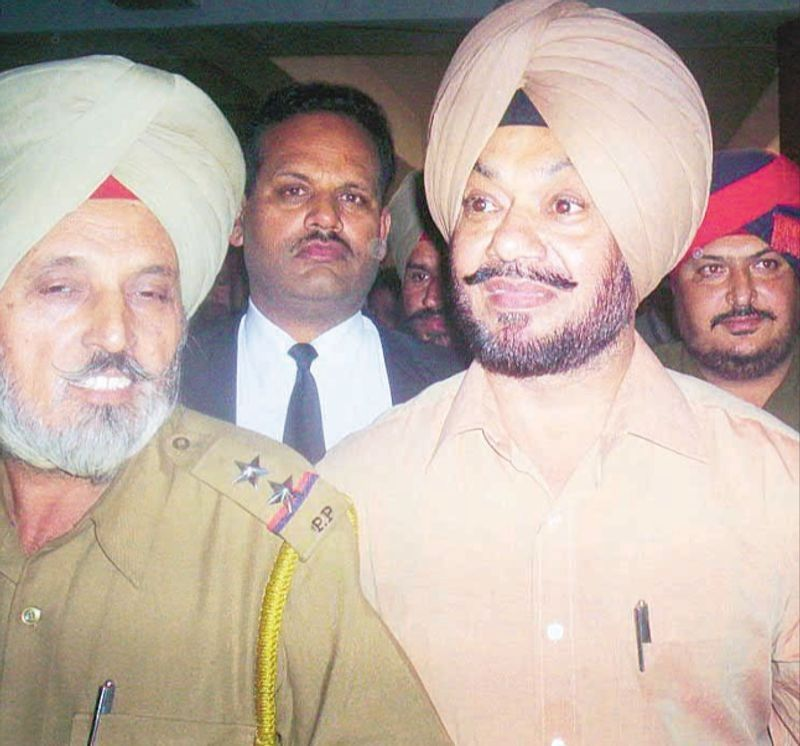
While the whereabouts of dismissed DSP Jaspal Singh, who was sentenced to life for his role in the 1995 abduction and murder of human rights activist Jaswant Singh Khalra, are still unknown, it has come to the fore that he still holds the coveted gallantry award recipient status.
Despite clear instructions from the Ministry of Home Affairs (MHA), the Punjab Police have allegedly failed to act on withdrawing the President’s Police Medal for Gallantry awarded to former Tarn Taran SSP Ajit Singh Sandhu and DSP Jaspal Singh, both convicted in the Khalra abduction and murder case.
A letter sent by then Deputy Secretary SK Rastogi, Ministry of Home Affairs, in 2017 (the copy of which is with The Tribune), with a subject titled — withdrawal /forfeiture of the President’s Police Medal and Police Medal — reads, “It has been observed that the state governments are not strictly adhering to the guidelines related to withdrawal of medals”.
“An instance has been noticed that a gallantry medal awardee was convicted by the Hon’ble court and subsequently dismissed from the service in 2006, but the state concerned did not bring the facts to the notice of this ministry,” reads the letter.
Former Tarn Taran SSP Ajit Singh Sandhu, charge-sheeted by the CBI in 1996 for his alleged role in Khalra’s disappearance, died by suicide in 1997 before trial.
Jaspal Singh was convicted by a CBI court in 2005, sentenced to life imprisonment, and his conviction was upheld by the Punjab and Haryana High Court in 2007 and the Supreme Court in 2011. He was released on interim bail in May 2023.
Under Rule 6 of the President’s Police Medal Rules and Rule 8 of the Police Medal Rules (1951), gallantry awards can be withdrawn if the recipient is convicted of an offence involving moral turpitude, dismissed for misconduct or deemed by the President to have brought disrepute to the force.
Despite repeated attempts, Director General of Police Gaurav Yadav was not available to comment on the issue.
An official requesting anonymity said considering the sensitivity in the wake of movie “Satluj”, no official would comment on the matter.
According to prosecution, Khalra was shot dead inside the police station. His body was allegedly transported in the trunk of a vehicle and dumped into a canal near Harike in an attempt to destroy evidence.
It has come to light that of eight police personnel convicted for the murder of Khalra, four have died, three are on parole or bail while one is still incarcerated.
Meanwhile, Chief Minister Bhagwant Singh Mann-led AAP government maintained that it did not sign any file related to premature release of Khalra murder case convicts.

US President Donald Trump on Friday (local time) said that he has “left instructions” to launch a massive military action against Iran, if Tehran succeeds in the plan of assassinating him, while stressing that the country would be bombed “at levels they have never seen before”, New York Post reported.
Speaking in an interview with New York Post, Trump highlighted that he has been on Iran’s “kill list” for a long time. He further denied the reports of Israeli intelligence warning him regarding Iran’s alleged plot to assassinate the US President.
“I’ve been on their list for a long time. That’s what we’re dealing with. The only thing is, I’ve left instructions — if anything happens, to just literally bomb them at levels that they’ve never seen before, Trump told NYP.
“No, no. Israel came up with nothing. No, no, I’ve been No. 1 [on Iran’s kill list] for a long time, and it’s the way life is, you know,” said Trump, as per New York Post.
Trump’s remarks come in the aftermath of former Iranian Supreme Leader Ayatollah Ali Khamenei’s funeral and recent reports related to an alleged Iranian plot to assassinate the US President.
Khamenei was laid to rest at the Imam Reza shrine in Iran’s Mashhad on early Friday morning, 131 days after he was killed in US-Israel joint strikes in Iran.
Meanwhile, US President Donald Trump on Friday said that Washington has agreed to continue talks with the Islamic Republic following Tehran’s request but reiterated that the US still considers the ceasefire between the two sides to be “over”.
“The Islamic Republic of Iran has asked us to continue ‘talks.’ We have agreed to do so, but the United States has stated to them, in no uncertain terms, that the Cease Fire is OVER!” Trump said in a post on Truth Social.
Trump’s comment comes as Qatari negotiators travel to Iran in an effort to ease tensions and resume the US-Iran talks.