
BY Jyoti Malhotra

Editor-in-Chief, The Tribune
Jyoti Malhotra is Editor-in-Chief of The Tribune group of newspapers. She has worked with India’s top newspapers, across print, TV and digital, both in English and Hindi media, and is a regular contributor on BBC Radio. Her X & Insta handles are @jomalhotra & email is jyoti.malhotra@tribunemail.com
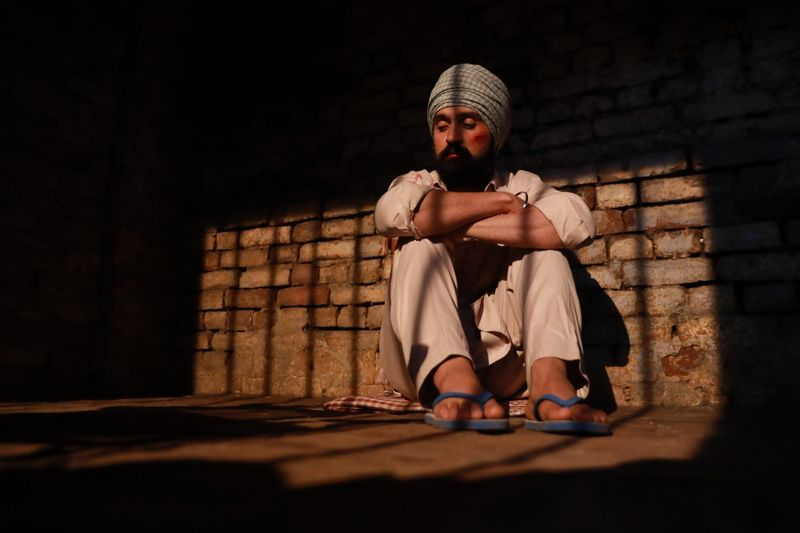
THE GREAT GAME: Punjab’s catharsis demands collective grieving — not finger-pointing or name-calling
OVER the last few weeks, life has been imitating two pieces of art which have been trying to make sense of life as it happened decades ago. The first is the 1947 Partition movie by Imtiaz Ali, Main Vaapas Aaunga, which goes back 80 years to tell the story of a forced migration of a people, forced to uproot themselves from one home in search of another, forever condemned to be called “refugees” — living in imitation colonies called Model Town pretty much beyond the pale of Delhi University on the outskirts of Delhi, in memory of the Model Town they left behind in Lahore; sending their children to imitation schools like Lyallpur Senior Secondary Girls School in Jalandhar, in memory of a town called Lyallpur back home which doesn’t even exist anymore. Lyallpur’s new name has been Faisalabad for a while, but who’s to tell the folks in Jalandhar that.
That’s the problem with memory — you can’t unsee what you saw with your eyes or unhear what you’ve heard. Even if you didn’t personally see or hear, a remembrance of that time is enough to bring back nightmares. Friends in Chandigarh won’t take their parents to see Main…, lest it bring back some of the trauma they once went through.
Not that Punjab is a stranger to trauma. The two motifs of revenge — and reconciliation — as Rajmohan Gandhi brought out so evocatively in a book by that name have resonated across the decades, even centuries, across Punjab. If Delhi was the acme of your ambition, the “sone ki chidiya,” then Punjab lay en route and you had to cross all the rivers of Punjab to reach your goal. Some stopped short, most notably Alexander, in 326 BC — he turned around on his heels in the Punjab, and left; it remains the only state in India that has deserved an article before its name. Meanwhile, the ebb and flow of the ticking clock, just like its rivers, washed up invaders, intruders, democrats, assassins, terrorists, militants, human rights activists — the list is endless, across all sins of omission and commission.
GeographicReference
Advertisement
These days, as the monsoon covers the country, our rivers are in spate. The Chenab, still called a Punjabi river although it hasn’t touched Indian Punjab since 1947, roars along its embankments in the Jammu region before it enters Pakistan Punjab — you cannot stop its flow. Geography simply won’t accede to politics, before or after Op Sindoor.
Speaking of the Chenab, can Satluj be far behind — not the river, the movie. All of Punjab has watched it, or is watching it — on large screens set up by village committees, in the shadow of a gurdwara or just in an open ground, after dusk falls, the Centre’s ban tossed by the wayside. Even the Delhi Sikh Gurdwara Management Committee is organising screenings in the heart of the capital. The irony is complete.
Every political party is watching carefully, with polls barely six months away, each one of them keenly aware that if they don’t say the right thing, or use the right phrases, they could be swept away by the tide of emotion that is roiling the state. Every one of my colleagues in The Tribune says that “everyone knows everything, about what happened those years.” But what does that really mean? What is it about Satluj that has touched off a chord in Punjab? Does the Centre’s ban really mean that it’s too soon, that it needs another few decades before Punjab can look back at its horrors, just like Main Vaapas Aaunga has done after 80 years, and that it’s better not to disturb the darkness, leave alone challenge it. At the end of the day, let’s face it, Diljit Dosanjh lives in Amreeka, not back home in the pind.
Here’s the fear. That Punjab will be riven once again. People will take sides. Criticism that the movie is “too one-sided” really means that only one side, the side of the human rights activist, Jaswant Singh Khalra, has seen the light of day. Not how terrorists mowed down innocent people, both Hindu and Sikh. Not how Punjab’s police force was also cut down by terrorists and how their families suffered. Not how Hindus suffered. Not how god-fearing Hindus and Sikhs fought back. Certainly not how Pakistan fanned the fire of a flame that was already lit in Punjab.
Fact is, Satluj has scraped the surface, revealing a dark, ugly side — it’s not yet clear how people will come to terms with it. The movie quotes Khalra as saying that 25,000 innocent people were killed. Writing in The Tribune in 2019, security analyst and relative of former Punjab DGP KPS Gill, Ajai Sahni, said that between 1981 and 1995 — in the year both then chief minister Beant Singh and Khalra were killed — 11,696 civilians and 1,746 security force personnel (1,415 of the Punjab Police) were killed by terrorists, while the police killed 8,090 terrorists. That’s 21,532 people.
Meanwhile, social media is full of contestations, both sound and fury. BJP leader Ravneet Singh Bittu’s X handle is replete with black-and-white videos of the time, showing clean-shaven dead men — none of the faces are masked. You could legitimately ask the question : Why are these videos being dug up now, and how are they being allowed to get past social media’s strict censors? But as Bittu tells my colleague Shivani Bhakoo, the BJP has not banned the movie. Perhaps he hasn’t seen the order from the Information & Broadcasting Ministry.
‘Let Satluj flow,’ stated an editorial in this newspaper earlier this week, arguing that the collective trauma of Punjab can only attempt a catharsis if more and more writers, filmmakers, the media — people, all — talk about what happened, and how, and perhaps even why. Except that a collective catharsis demands a collective grieving — not finger-pointing or name-calling, or blaming. Neither the Congress nor the Akali Dal or the BJP (when it was in alliance with the Akali Dal) have done much in the years they were in power, in that direction.
It has taken 80 years and the passing on of a generation to be able to watch Main Vaapas Aaunga and it’s still a tear-jerker. It’s been 112 years since Punjab sent half a million men to fight on behalf of the British army in the First World War — tomorrow, Sunday, wait for the story in The Tribune of how 9,909 of them, forgotten and consigned to the dustbin of history, have finally been recognised. It’s been about 30 years since the end of terrorism in Punjab — let’s take the first steps today not to forget, or deny our dark past, but to remember and heal. It’s time.