















👍👍✈️✈️🇮🇳🇮🇳👍👍
Note:-
Above inputs are from open media sources.
The strength of any nation’s Armed Forces lies not merely in advanced weapons, sophisticated technology or superior battlefield capabilities. History consistently reminds us that the enduring foundations of military power are loyalty, discipline, institutional integrity and an unwavering commitment to constitutional values. These principles, collectively reflected in India’s tradition of Soldiering Dharma, deserve renewed attention as the nation navigates a rapidly changing social and strategic environment.
The Indian subcontinent’s history offers important lessons. Many foreign invasions and prolonged periods of external rule succeeded not simply because invaders possessed stronger armies, but because internal rivalries, divided loyalties and political fragmentation weakened indigenous resistance. Whenever personal ambition or sectional interests prevailed over collective national purpose, the consequences were profound. The future of nations is ultimately written by the loyalty of their people rather than by military technology alone.
India’s Armed Forces have historically remained insulated from political, religious and ideological divisions. Their apolitical character has been one of the greatest strengths of the Republic. Today, however, increasing social polarization and visible political affiliations among some veterans have generated public debate. While every citizen enjoys democratic freedoms after retirement, preserving public confidence in the political neutrality of military institutions remains essential. The loyalty of a soldier must continue to rest exclusively with the Constitution, the Nation and the chain of command.
Another emerging concern is the growing volume of litigation before the Armed Forces Tribunal (AFT) High Courts and Supreme Court’s . A large number of service, pension and welfare disputes indicate that existing administrative mechanisms often fail to provide timely and satisfactory resolutions. Delayed justice imposes financial, emotional and professional costs on serving personnel, veterans and their families. It also points towards the need for more responsive human resource policies and administrative reforms.
Equally significant is the absence of a comprehensive statutory framework addressing the long-term welfare, resettlement and rehabilitation of military personnel. India has enacted laws governing recruitment, discipline and service conditions, yet no unified Armed Forces Welfare and Resettlement legislation comprehensively addresses transition from military to civilian life. As service models evolve and national security challenges become more complex, such a framework deserves serious consideration.
Recent structural changes have also generated uncertainty among certain categories of personnel. Short Service Commissioned Officers have long sought greater clarity regarding career progression, pensionary entitlements and post-release rehabilitation. Likewise, the Agniveer recruitment model has sparked an important national discussion on long-term employment prospects, skill utilisation and social security after military service. Whatever one’s view of these policies, their long-term success will depend upon ensuring fairness, predictability and dignified opportunities after release from service.
Military rank represents far more than organisational hierarchy. It embodies constitutional authority, professional competence, responsibility and lifelong honour. Any perception that institutional equality is weakening or that different categories of soldiers are being treated unequally can affect morale and cohesion—the very qualities upon which military effectiveness depends.
India’s security will undoubtedly benefit from modernisation and technological advancement. Yet no technology can substitute for trust, fairness, unity and disciplined leadership. Preserving Soldiering Dharma, strengthening welfare institutions, delivering timely justice, and ensuring that every soldier—regular, Short Service or Agniveer—is treated with dignity and fairness will ultimately strengthen both the Armed Forces and the Republic they serve.
🇮🇳 Jai Hind
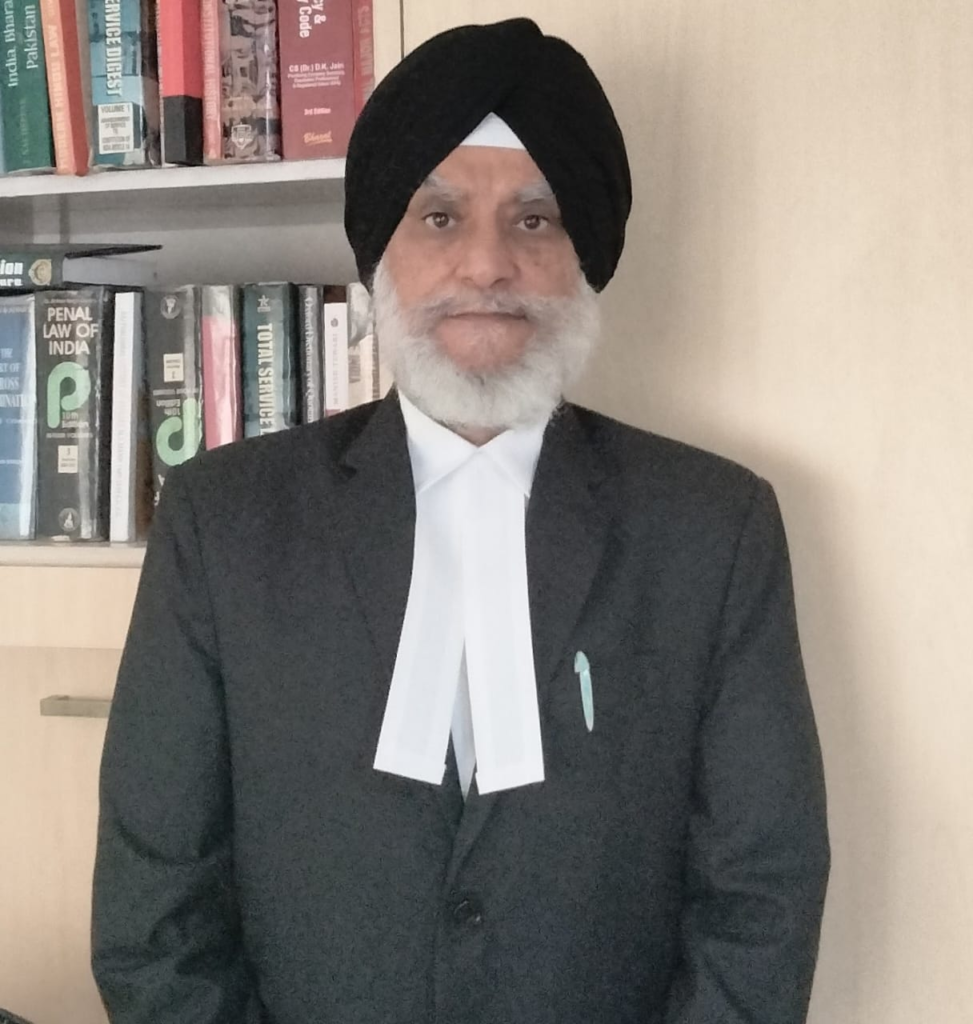
Lt Col Gurparkash Singh Virk
9876558525
colgpsvirk@gmail.com

Terming the disciplinary proceedings as “colourable” and “malafide”, the Armed Forces Tribunal (AFT) has set aside the dismissal of a Colonel who had faced 18 charges of inappropriate behaviour and professional misconduct while he was commanding an infantry battalion about 15 years ago.
Observing that by now he would have crossed the age of superannuation in the rank of Colonel and therefore cannot be reinstated, the Tribunal’s Bench comprising Justice Sudhir Mittal and Lt Gen Ranbir Singh, in their order of July 8, directed that the officer would be deemed to have been removed from service by the Chief of the Army Staff and he would be entitled to grant of pension and other pensionary benefits for the period of service rendered by him.
Col NS Grewal had been posted as the Commanding Officer of an Infantry battalion in October 2008 and in November 2017 his services were terminated by way of dismissal without pension and gratuity under provisions of Section 19 of the Army Act read with Rule 14 of the Army Rules.
In September 2010, based on complaints, including alleged misbehaviour with ladies, a court of inquiry (COI) was ordered, which was completed in March 2011. Based on its findings, recording of Summary of Evidence (SOE), a prelude to a possible trial by general court martial (GCM) was ordered which concluded in October 2011.
The battalion was selected for deployment in a UN peacekeeping mission and the officer submitted that witnesses who had deposed against him in the SOE not be sent abroad as it would delay the disciplinary proceedings. He also requested for early finalisation of the case. Thereafter, in December 2011, the Western Command intimated that the GCM was likely to commence in January 2012.
Finally, the GCM assembled in January 2014 and the officer raised a plea in bar, claiming that the GCM was barred by limitation. The plea was accepted and was confirmed in July 2014. A year and two months later a notice was issued to the officer to show cause why his services not be administratively terminated.
Senior Advocate Rajeev Anand contended on behalf of the petitioner that that administrative action can be taken if a GCM becomes time barred, but if the delay is found to be attributable to the authorities, the exercise of administrative power to punish an individual may be declared to be without jurisdiction being colorable exercise of power.
The Bench observed that recording of SOE was concluded on 18.05.2011. On 28.07.2011, a representation was made for early conclusion of proceedings or to at least not to send the essential witnesses abroad. In fact, all essential witnesses were in India and the move of the unit to Congo need not have resulted in delay in convening the GCM. Even then the GCM was not convened. The unit returned from Congo in October 2012. Yet, convening of the GCM was delayed till 18.01.2014.
“It is thus evident that there is no material available on record to justify the delay. Inference of malafide intentions can thus be safely drawn. Clearly, the SOE revealed that the court martial proceedings would not have resulted in an adverse action against the appellant. We are thus, left with no option but to conclude that the delay was malafide and colorable exercise of administrative power. In view of above, order of dismissal dated 27.11.2017 is not sustainable. It is accordingly quashed,” the Bench ruled.
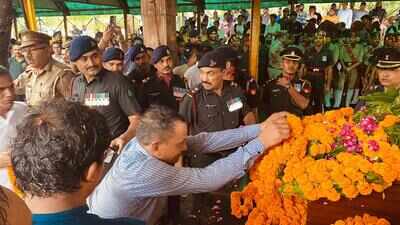
Havildar Chandramohan Singh was cremated with full military honours
Ghaziabad: Havildar Chandramohan Singh (49) of the Assam Rifles, who was killed in a militant ambush in Manipur on July 6, was cremated with full military honours at Hindon ghat on Wednesday. Cabinet minister Sunil Sharma, Sadar SDM Arun Dixit and Colonel Naveen Sharma of 56 Field Regiment, Meerut, paid tribute as his mortal remains reached his Nandgram home.Singh was part of a patrol team that was ambushed by unidentified gunmen while travelling from Ukhrul headquarters to their battalion base at Shangshak. Warrant officer Balwant Singh was also killed in the attack.Singh’s son, Rahul, said his father joined the Army in 1996 and the family moved to Ghaziabad from Pauri Garhwal, Uttarakhand, in 2008. Singh had returned home last month for his own father’s funeral. “On June 3, my grandfather passed away. My father was here for his last rites and returned to Manipur on July 3. He joined duty on July 5 and died just a day later during a patrol,” Rahul said.The back-to-back losses have devastated the family. “My mother, Manju Devi, has been inconsolable since the news of his death came,” Rahul said, recalling that his father always brought sweets and a sari for his mother whenever he came home on leave, and that neighbours would gather to hear stories of Army life.
Rahul said Singh’s comrades told him how his father kept firing at the militants even after being hit. “He was hit by nine bullets in the chest, yet he continued shooting until his very last moments. He had them completely overwhelmed,” he said.The Army accorded Singh a guard of honour at the cremation. Despite heavy rain, a large crowd, including public representatives and administrative officials, gathered to pay their respects.Singh is survived by his wife, Manju Devi, son Rahul, and daughters Ritika and Yashika.
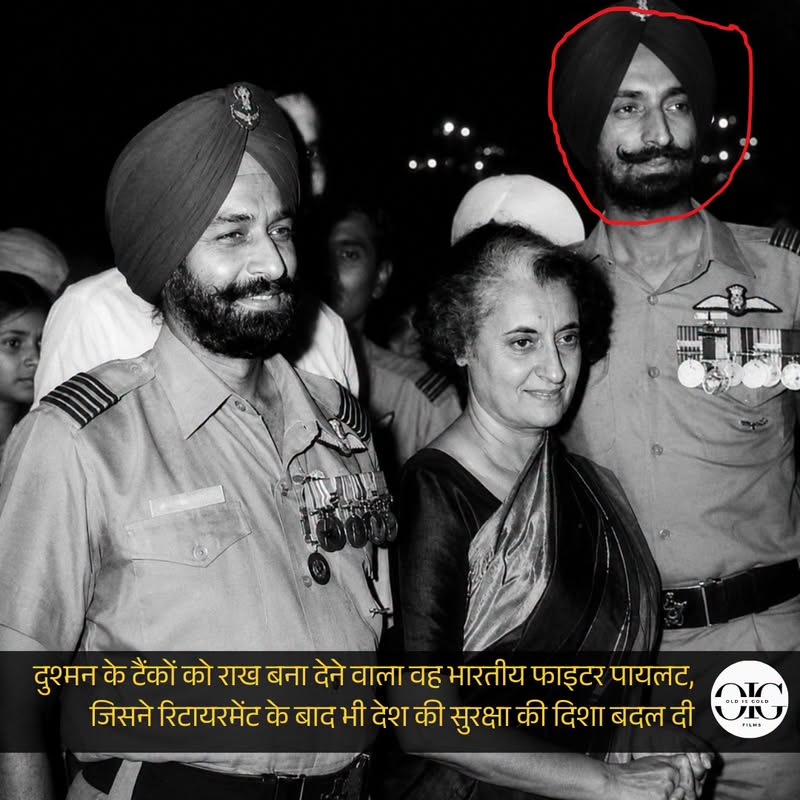
here are some names in the military history of India, whose bravery is not limited to the battlefield, but becomes part of thinking and strategy of future generations. Such a great personality Air Commodore Jasjit Singh. Calling them only a fighter pilot would be injustice to their personality. He was a warrior who challenged the enemy in the sky, showed extraordinary courage in the war, and also tasked to give new direction to India’s defence policy even after uniform.
But the biggest question is, what was it in this officer that he received respect for heroic chakra, lotushan for outstanding services, and strategic thinking all over the world? Why do Indian Air Force, Defence Specialists and Strategic Researchers still read and quote their thoughts? Let’s know the inspiring story of that person whose life became an important chapter of India’s security journey.
Did an ordinary young man make the sky his dream in his childhood?
Jasjit Singh, born on 8 July 1934, spent his childhood in that time when India was fighting for independence. The country was changing and new dreams were taking shape in front of the youth. There was a dream in those dreams—protecting the country. This dream took them to Indian Air Force.
On April 1, 1956 they received commission in Indian Air Force. He was selected in Fighter Stream, considered one of the most challenging and prestigious areas for any young officer. Being a fighter pilot is not just flying a plane. It is the responsibility of fighting death every second, making decisions in a pulse and giving the nation’s security a top priority. Jasjit Singh proved from the beginning of his career that he has the amazing ability to make decisions while staying calm even in difficult situations.
When rising tensions on the eastern border become the first test of their courage
During 1961-62 he served as flight commander in an operational squadron in the eastern region. There was constant tension on India’s borders at that time. This was the era when the Indian Air Force was rapidly moving towards its modern form and the role of veteran pilots was very important.
After some years he was made instructor at flying instructors school located in Tambaram, Tamilnadu. Here they not only taught flying plane, but also explained the importance of war mental preparation, discipline and leadership to new pilots. Going forward in 1968, he received higher military training at Defence Services Staff College, Wellington, which made him stronger towards becoming a skilled strategist.
The India-Pakistan war of 1971 is counted among the most glorious chapters of Indian military history. In this battle, squadron leader Jasjit Singh showed the courage that left him immortal forever.
They were part of the number 3 squadron of Indian Air Force. During the war they were sent on missions where strong air and ground security of the enemy were present. Entering such areas under normal circumstances is considered extremely risky, but Jasjit Singh continuously completed several operational missions regardless of the danger.
They accurately attacked enemy tanks, bunkers and cannons bases. They completed their mission even between heavy shelling and anti-aircraft fire. Not only that, they also took the responsibility of ensuring the service of aircraft, so that more fighter jets can participate in continuous war. This was the identity of not just a pilot, but a true military leader.
What did they do that they got the heroic chakra?
On 17 December 1971, the Government of India honored him with the Veer Chakra for his unique courage and duty.
His letter of honor was clearly mentioned that he completed several missions in the enemy’s heavy protection areas, destroying the enemy’s military resources and introduced exceptional bravery, professional efficiency and supreme dedication to duty.
Heroic Chakra is not just a medal. This is given to the soldier who has shown extraordinary courage for the country regardless of his lives on the battlefield. Jasjit Singh was the full officer of this honor.
Did their greatest achievement start after the war?
Often the story of soldiers ends with the end of war, but Jasjit Singh’s real journey probably started here.
On 20 January 1975, he was appointed the Commanding Officer of the Indian Air Force No. 17 Squadron. After this he was promoted to group captain and got the responsibility of director of flight safety at the air headquarters.
He later worked on very important positions like Director (Offensive Operations) and Director (Air Induction). During these responsibilities, they contributed significantly in strengthening the Indian Air Force strategies not only prepared for current wars, but also considering the potential future threats.
Even after retiring, they did not take the uniform, but responsibility
Most people choose quiet life after retirement, but Jasjit Singh started a new chapter of nation service.
In 1987, he was made the director of the Institute for Defense Studies and Analysis (IDSA). He led this prestigious institution till 2001 and gave India’s Defence Studies a new identity globally. Their research on defense policy, nuclear strategy, air power, regional security and international relations are still considered extremely important today.
He established Center for Air Power Studies (CAPS) in New Delhi in 2001. This institution became the leading think tank doing serious study on Indian air power, defence strategy and national security. He acted as its director till his last minute.
When the pen showed the same strength as his fighter jet
Air Commodore Jasjit Singh was not the only war hero. He was also an excellent author and defense analyst.
He wrote several books on topics such as national security, air power, nuclear policy, defense improvement and strategic balance. His books were read seriously not only by India, but also by foreign defence experts.
He believed that future wars will be won not only by weapons, but by ideas, technology and visionary strategy. Maybe this is why they became dear advisors to soldiers as well as policymakers.
Even the country has not forgotten their contribution
On March 29, 2006, the Government of India honored him with the country’s third highest citizen honor Padma Bhushan. The then president Dr. A.P.J. Abdul Kalam awarded him this honour. It was not just the respect of one person, but the thinking that gave new direction to India’s air power and national security.
4 August 2013… When a warrior left, but his thoughts still fly
Air Commodore Jasjit Singh bid farewell to this world on August 4, 2013. But great people are never limited to their lifetime. His views, his decisions, his books and the institutions they established are still directioning India’s defence system.
Today as the Indian Air Force heads to new technologies, modern fighter jets and future challenges, the thinking of visionary strategists like Jasjit Singh seem more relevant than ever.
India’s history is not only of those who won the war, but also of those who taught the preparation to win the war to the coming generations. Air Commodore Jasjit Singh had such rare personality. They showed courage in the sky, led the war, renewed thinking in strategy and strengthened national security through writing.
OLDISGOLDFILMS pays a humble tribute to him on his birth anniversary today. His life teaches us that a true soldier not only protects the borders but also prepares the foundation for the security of the upcoming India. His courage, his knowledge and his vision will always inspire the countrymen.
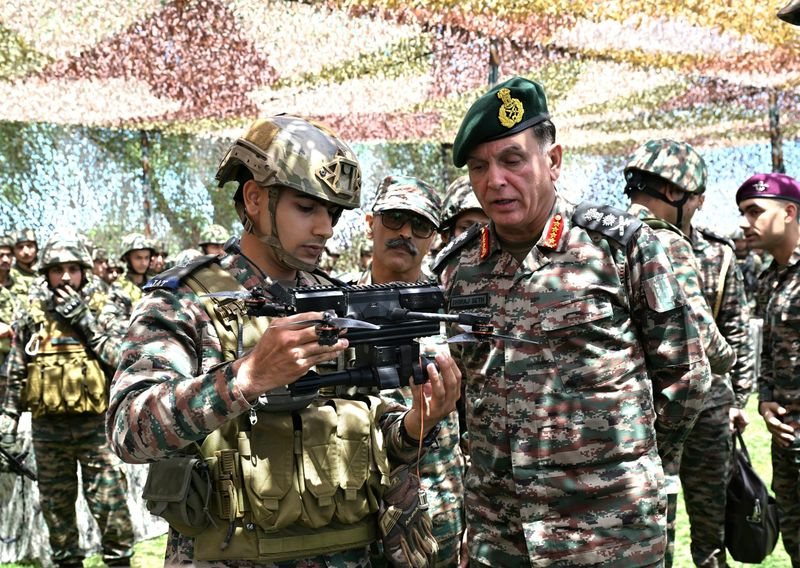
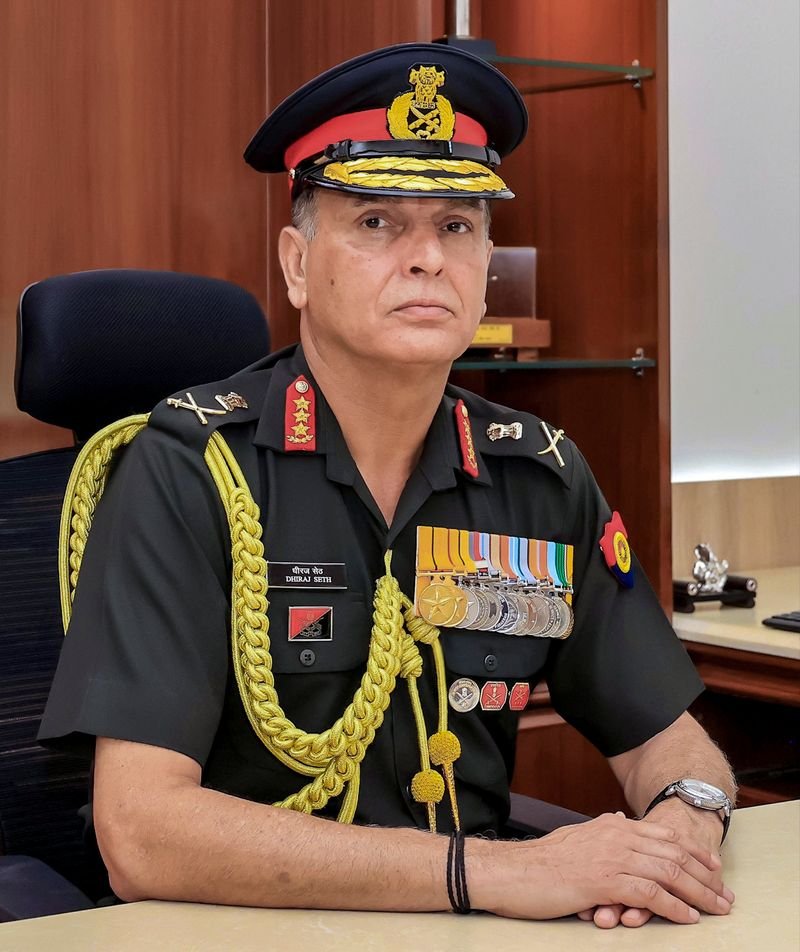
Chief of Army Staff General Dhiraj Seth on Thursday visited the forward areas along the Line of Control (LoC) in the Rajouri and Poonch sectors to review the operational preparedness of troops deployed along the border.
The Army Chief, who is on a visit to Jammu and Kashmir, assessed the security situation along the LoC and held discussions with senior Army commanders on the prevailing operational scenario.
An Army statement said, “General Dhiraj Seth, COAS, visited forward areas along the Line of Control in Poonch, Rajouri and Sunderbani. He reviewed the prevailing security dynamics along the Line of Control and the counter-insurgency grid of the White Knight Corps.”
The COAS was briefed on the evolving security environment, operational deployments, surveillance architecture, field innovations and integrated operational readiness. He also reviewed infrastructure development and the formation’s sustained efforts to empower residents of the border villages through people-centric initiatives.
“The COAS commended all ranks for their operational excellence and unwavering commitment and exhorted them to remain mission-focused, operationally agile and continue striving for excellence,” the statement said.
On Wednesday, General Seth reviewed the security situation in the Kashmir Valley and assessed arrangements for the ongoing Amarnath Yatra.
“General Dhiraj Seth visited the headquarters of the Chinar Corps and its formations to review the prevailing security situation, operational preparedness and combat readiness along the LoC and in the hinterland,” the statement said.
The Army Chief also reviewed initiatives aimed at technology absorption, capability enhancement and integrated combat readiness across the full spectrum of operations.
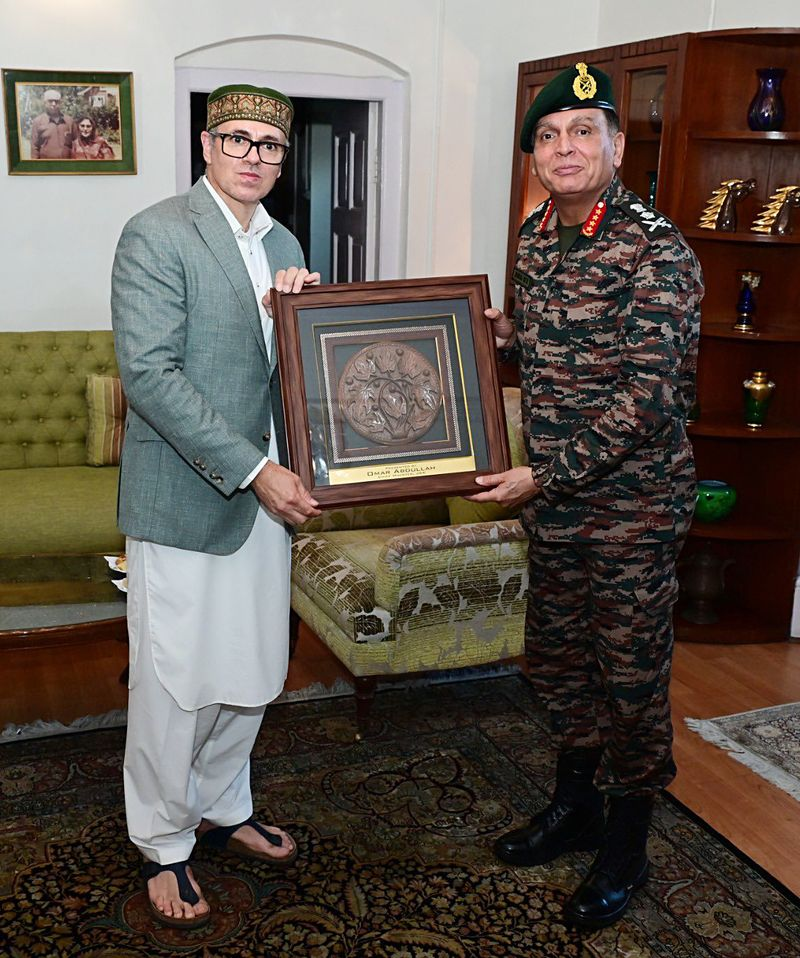
Chief of Army Staff General Dhiraj Seth on Tuesday called on Jammu and Kashmir Lieutenant Governor Manoj Sinha at Lok Bhavan here, officials said.
The Chief of Army Staff was on his first visit to Jammu and Kashmir after assuming charge, according to a spokesperson. The Lieutenant Governor and the Army Chief reviewed the prevailing security situation in the region, he said.
The Army chief was accompanied by Lieutenant General Balbir Singh, General Officer Commanding, Chinar Corps.
Later, Gen Seth also met Chief Minister Omar Abdullah at his residence here.






























