The Government on Wednesday expressed concern over the new username feature introduced by social messaging platform WhatsApp, with highly placed sources indicating that the issue is being monitored closely as it poses possible risks to digital security and the company could be sent a notice on the matter.
Sources said that social media platforms must ensure that their products are not misused for impersonation, scams or misinformation, while adding that misuse through usernames, edited messages, fake groups or impersonation could invite regulatory action similar to the measures taken against Telegram during the NEET examination controversy.
“Platforms must ensure their architecture is not used to create mischief. If it is, the response will be calibrated but firm,” an official said.
Features like username registration may pose risks to digital security as it could be misused by creating usernames in anyone’s name, therefore the ministry is looking into the issue and will discuss the matter with the relevant departments and every legal aspect of the issue will be examined.
WhatsApp is expected to roll out the username feature later this year, which will allow users to communicate without sharing their phone numbers. While privacy advocates say the move could reduce exposure to risks such as contact scraping and SIM-swapping attacks, as experts have raised concerns about identity fraud, impersonation and data-sharing implications.
WhatsApp is expected to roll out the username feature later this year, which will allow users to communicate without sharing their phone numbers
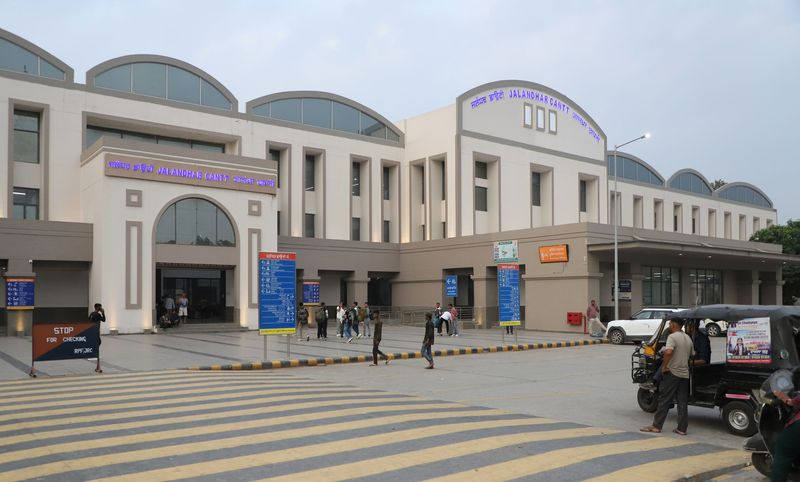
110-year-old Jalandhar Cantt railway station gets ₹99-cr makeover
MoS Bittu highlights heritage, modern features at revamped station
After years of delays, the 110-year-old British-era Jalandhar Cantonment Railway Station has finally undergone a major transformation.
Unveiling its upgraded look through a video shared on social media on Tuesday, Minister of State for Railways Ravneet Bittu showcased the redeveloped station, highlighting improved passenger amenities and modernised infrastructure.
The video, titled “Jalandhar Cantt da Shaandar Railway Station”, attracted widespread attention online, with commuters and residents welcoming the makeover of one of Punjab’s key railway junctions.
According to officials, the station is currently handling the movement of over 62 trains, including Vande Bharat. The redevelopment has been carried out at an estimated cost of Rs 99 crore.
The officials said the upgrade has reshaped the Jalandhar Cantonment Railway Station, introducing wider platforms, arched-shaped roofing and improved passenger movement areas.
Platform number 1 has been expanded nearly four times to ease congestion and improve movement during peak hours. All three platforms have been completed under the redevelopment plan, with staircases improving access across levels.
Passenger mobility has also been enhanced with the addition of lifts and escalators, aimed at improving accessibility for elderly passengers and those with reduced mobility. Waiting facilities have been upgraded with expanded seating areas and air-conditioned waiting rooms.
As part of the redevelopment plan, several passenger-focused amenities have also been introduced, including modern ticket counters, food plazas, retail kiosks, and luggage scanning systems to improve security and convenience. Separate dormitory facilities for male and female passengers have also been added to support long distance travellers, requiring rest facilities, the officials said.
The station’s exterior and interior have also been significantly upgraded, featuring a redesigned main entrance with dome style architectural elements improving lighting and ventilation. Heritage themed installations at the entrance showcase Punjabi cultural motifs and traditional artwork, giving the station a distinct regional identity alongside its modernised infrastructure.
Indian Army rescues 79-year-old woman from quake rubble in Venezuela
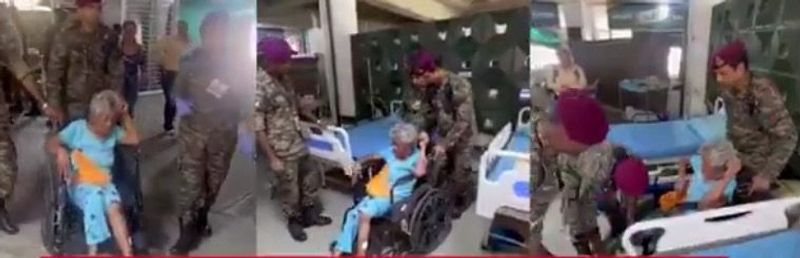
The Indian Army has rescued a 79-year-old woman from the rubble in earthquake-hit Venezuela and begun advanced medical treatment under Operation Amistad, India’s humanitarian relief mission in the country.
The Army said its medical team stabilised her fracture, initiated advanced wound care and started daily follow-up treatment, providing specialised medical support and “renewed hope for recovery.”
Earlier, Venezuelan citizens expressed gratitude to India for its relief efforts. The Ministry of External Affairs shared videos on X showing families thanking Indian medical teams for treatment at the Army Field Hospital, with one patient praising the quality of care provided by the specialists.
The humanitarian mission comes as Venezuela grapples with the aftermath of twin earthquakes that struck the country on June 24.
According to CNN, citing the National Assembly, the death toll has risen to 1,719, while 22,619 people have been affected, including 5,034 injured. Of the 855 buildings reported damaged, 189 have collapsed completely.
NASA researchers estimate that nearly 58,870 buildings were damaged or destroyed, while 609 aftershocks have been recorded since the earthquakes. The US Geological Survey has estimated a 44 per cent chance that the final death toll could exceed 10,000.
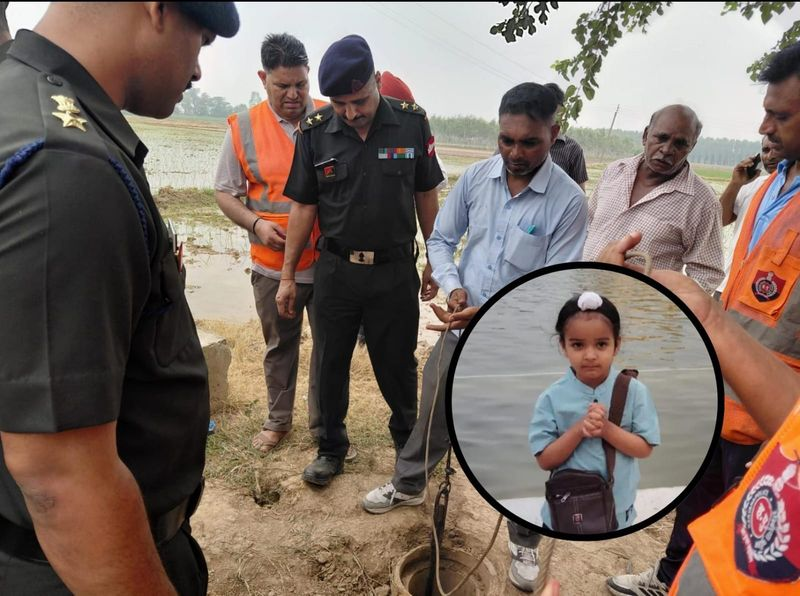
4-year-old boy who fell into borewell at Ambala village brought out dead
Nirvair, a resident of Dhanaura village, had fallen into the borewell while playing in the fields on Tuesday morning
The dead body of four-year-old Nirvair Singh, who fell into a borewell in Ambala on Tuesday morning, was retrieved in the early hours of Wednesday after an around-the-clock rescue operation.
The rescue operation was completed at around 3:25 am. The boy was taken to the Civil Hospital, Ambala, where doctors declared him brought dead.
Medical Officer Dr Rishipal said that the boy was examined as soon as he was pulled out of the borewell and rushed to the hospital.
“Despite all efforts, he was declared brought dead. The body has been shifted to the mortuary for post-mortem examination. Since there was water in the borewell, the exact cause of death will be clear after the post-mortem,” he said.
Nirvair, a resident of Dhanaura village, had fallen into the borewell while playing in the fields on Tuesday morning. A rescue operation was launched to rescue him.
Personnel from the police, National Disaster Response Force (NDRF), State Disaster Response Force (SDRF) and the Army, along with heavy machinery, were deployed to rescue the child.
According to the family, Nirvair and his father, Manjeet Singh, had gone to their fields at around 6:30 am to give food to the boy’s grandfather. While playing, he accidentally fell into a borewell on a neighbouring field. On hearing his screams, his father and grandfather raised the alarm. Local residents and an emergency response team rushed to the spot and launched rescue efforts, but they could not pull him out.
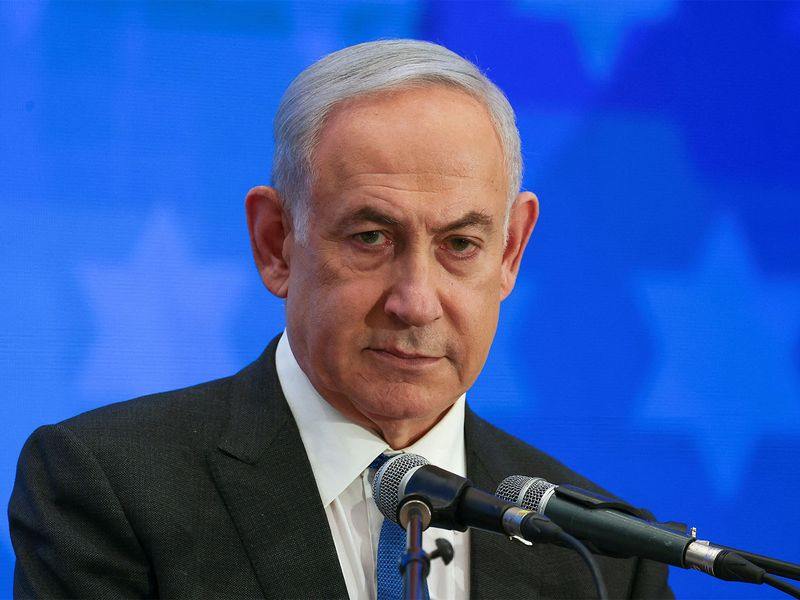
‘Want to stop American aid’: Netanyahu says Israel no longer needs US assistance
Asserting the nation’s economic self-reliance, Israeli Prime Minister Benjamin Netanyahu announced an ambitious policy shift aimed at ending American financial assistance, declaring that the country’s robust economy no longer requires foreign subsidies.
Making the remarks on Tuesday, the Prime Minister outlined his administration’s comprehensive strategy across critical security and geopolitical fronts, including state sovereignty, regional military presence, and diplomatic manoeuvres.
Addressing the financial relationship with Washington, Netanyahu stated, “I want to stop American aid. It’s like welfare; I don’t want it.”
He emphasised that Israel’s contemporary fiscal strength renders outside funding negligible, adding, “Our economy is no longer a small economy… we can finance ourselves with this fraction of a per cent of our GDP that we receive from the United States. I want this process to start this year.”
Turning to core territorial and sovereignty matters, the Prime Minister re-emphasised his administration’s unyielding opposition to Palestinian statehood.
He reaffirmed, “Israel is the nation-state of the Jewish people. No Palestinian state will be established here.”
Netanyahu detailed an aggressive stance on national defence, underscoring that the military will maintain a proactive posture against external adversaries.
He asserted, “We will pursue an active security policy–we won’t sit back and wait behind fences.”
When questioned about the potential re-establishment of Israeli communities within the Gaza Strip, the Prime Minister maintained a calculated diplomatic silence.
He noted, “As for rebuilding settlements in Gaza, you have to be ready to act first and talk afterwards. Sometimes it’s better to separate the two. That’s why I’m not going to add anything further on that subject.”
Elaborating on his approach to governance and international relations, Netanyahu suggested that strategic ambiguity remains paramount.
He stated, “You have to understand that the art of statecraft isn’t limited to domestic politics. I don’t have to declare everything to the whole world at every moment.”
Highlighting Israel’s persistent operations against regional threats, the Prime Minister issued a direct warning regarding cross-border pre-emptive strikes against Tehran’s nuclear and military infrastructure.
He remarked, “We entered Iran twice to save ourselves from destruction. There will be a third time if necessary.”
Netanyahu also confirmed that Israeli defence forces will maintain their operational positions within Lebanese territory to counter hostile factions.
He explained, “We didn’t leave Lebanon. We have effectively established this security belt–about 10 kilometres inside Lebanon–with the agreement of the Lebanese government. And, of course, Hezbollah is outraged. The same is true of Iran.”
During a physical assessment of troop deployments in the northern sector, the Prime Minister reiterated that the military presence would persist until cross-border threats were neutralised.
He told the gathered forces, “Our position is clear: we will not leave southern Lebanon until the threat has disappeared. And as long as Hezbollah, armed, is here and threatening us, we will stay here.”
The declaration follows the recent signing of a Washington-brokered framework pact between Beirut and Tel Aviv, intended to establish long-term stability and ensure the demilitarisation of the Iran-backed Shiite militia.
Under the stipulations of the diplomatic accord, any eventual troop drawdown by Israeli forces remains strictly contingent upon the Lebanese government successfully establishing specialised operational sectors where the state military takes over security control.
State Stalwarts
DEFENCE MINISTER
Minister Rajnath Singh
ALL HUMANS ARE ONE CREATED BY GOD
HINDUS,MUSLIMS,SIKHS.ISAI SAB HAI BHAI BHAI
CHIEF PATRON ALL INDIA SANJHA MORCHA
LT GEN JASBIR SINGH DHALIWAL, DOGRA
SENIOR PATRON ALL INDIA SANJHA MORCHA
MAJOR GEN HARVIJAY SINGH, SENA MEDAL ,corps of signals
.
.
PATRON ALL INDIA SANJHA MORCHA
MAJ GEN RAMINDER GURAYA ,MADRAS REGIMENT
sanjhamorcha303@gmail.com
PRESIDENT SOUTH ALL INDIA SANJHA MORCHA
COL SS RAJAN BOMBAY SAPPERS,
PRESIDENT UTTARAKHAND ALL INDIA SANJHA MORCHA
COL B M THAPA ,BENGAL SAPPERSS
PRESIDENT HARAYANA STATE CUM COORDINATOR ESM
BRIG DALJIT THUKRAL ,BENGAL SAPPERS
PRESIDENT TRICITY
COL B S BRAR (BHUPI BRAR)
PRESIDENT CHANDIGARH ZONE
COL SHANJIT SINGH BHULLAR
.
.
PRESIDENT PANCHKULA ZONE AND ZIRAKPUR
COL SWARAN SINGH
INDIAN DEFENCE FORCES
DEFENCE FORCES INTEGRATED LOGO
INDIAN AIR FORCE
Air Officer C-in-C WESTERN AIR COMMAND
AIR MSHL S PRABHAKARAN AVSM VM
AOC-IN-C, EASTERN AIR COMMAND
Air Marshal Inderpal Singh Walia
AOC-in-C SOUTH WESTERN AIR COMMAND
Air Marshal Vikram Singh
AOC-IN-C, SOUTHERN AIR COMMAND
Air Marshal J.Chalapati
AOC-IN-C TRAINING COMMAND
AIR MARSHAL SK GHOTIA VSM
AOC-IN-C MAINTENANCE COMMAND
Air Marshal Jagdish Chandra
Flag Officer Commanding in Chief, Western Naval Command
ice Admiral R Hari Kumar, PVSM, AVSM, VSM
Flag Officer Commanding in Chief, Eastern Naval Command
Vice Admiral Sanjay Bhalla, AVSM, NM
Flag Officer Commanding in Chief, Southern Naval Command