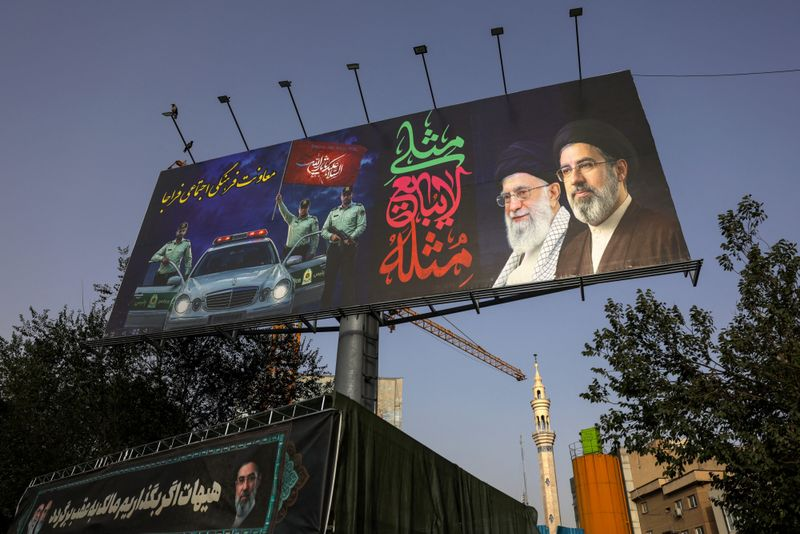
A billboard depicting Iran’s late Supreme Leader Ayatollah Ali Khamenei and Iran’s Supreme Leader Ayatollah Mojtaba Khamenei at Valiasr Square in Tehran on Thursday. Image credit/Reuters
A powerful general who leads Iran’s paramilitary Revolutionary Guard emerged from hiding as Tehran prepared Friday for the dayslong funeral for the late Supreme Leader Ayatollah Ali Khamenei.
Photos published online by Iranian state media showed Gen Ahmad Vahidi attending a meeting about the funeral of Khamenei, 86, then sitting alongside his casket as Iran’s theocracy held a smaller service for him on Thursday night near the supreme leader’s former home in downtown Tehran.
Beginning Saturday, Iran will hold a dayslong funeral for Khamenei, and his body will be transported to cities in both Iran and neighbouring Iraq.
The funeral will begin at the Grand Mosalla in Tehran, where authorities plan to shut down streets and daily life as mourners commemorate the life of Khamenei, who led Iran for decades with an iron fist while confronting the West.
Ayatollah Khamenei’s coffin taken to the site of assassination: Iranian media
Iranian state media said that in an unannounced event, the coffin carrying the body of former Supreme Leader Ayatollah Ali Khamenei was taken to the site where he was killed. According to the Islamic Republic of Iran Broadcasting (IRIB), “In an unannounced event, the coffin carrying the body of the martyred leader Ayatollah Khamenei was brought to the site of his martyrdom.” The multi-day public farewell, scheduled to take place on July 4 and 5 in the capital city, is anticipated to draw a record-breaking crowd of up to 20 million participants, according to the Islamic Revolutionary Guard Corps (IRGC).
27 killed, 91 injured as Russia launches massive attack on Ukraine’s capital Kyiv
Russia launched hundreds of drones and dozens of missiles at Ukraine’s capital Kyiv in the early hours of Thursday, killing at least 27 people, wounding scores more and damaging around 130 buildings in the deadliest attack on the capital this year.
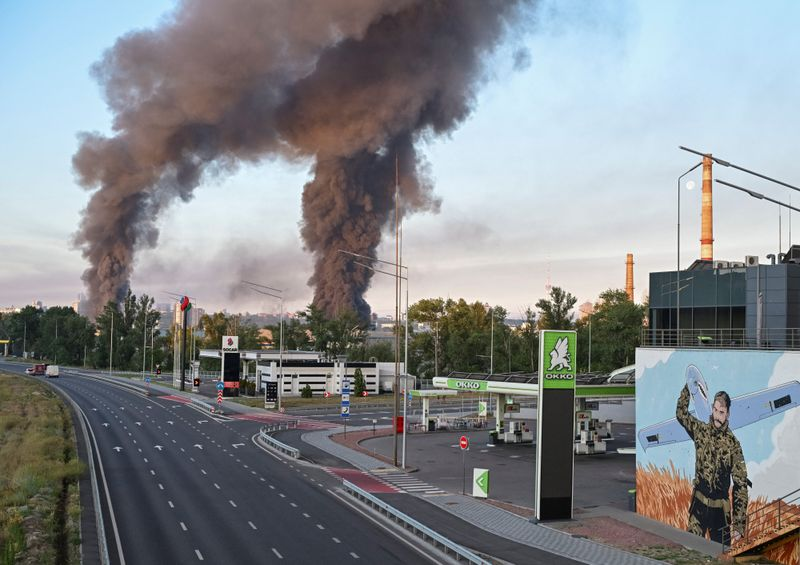
Multiple explosions shook central Kyiv and reverberated across the capital throughout the night as thousands of residents rushed to bomb shelters and underground metro stations. Huge columns of smoke filled the skyline.
The death toll climbed to 27 after an injured person died in hospital, and 91 were injured, the head of the capital’s military administration, Tymur Tkachenko, said on Telegram.
Tkachenko had earlier warned that the toll was likely to rise as rescue teams worked through the night, sifting through rubble in search of trapped residents.
He said teams at one site in an eastern suburb on the capital’s left bank of the Dnipro River had recovered five bodies while eight residents were unaccounted for.
“Rescue crews will work without interruption until all the debris is cleared,” he wrote. “Unfortunately, more victims may still be found.”
The scale and spread of destruction across the breadth of the capital had little precedent even in a war now in its fifth year. Twenty-four people died in an attack on Kyiv in May.
President Volodymyr Zelenskiy, who cut short his visit to Ireland and rushed home, visited the site where a nine-storey residential building was half destroyed. He blamed the destruction in part on a failure of allies to deliver promised air defenses.
“If our partners had delivered on their promises in a timely manner, I think we could have saved more homes and lives today,” said Zelenskiy, who looked tired and frustrated. “All we ask of our partners is simply to do what we’ve agreed on. We’re not even asking for more.”
Later, in his nightly video address, Zelenskiy said the issue of air defences would be “one of the key outcomes” of next week’s NATO summit in Turkey, as he repeated his call for the development of European air defences.
“If, of course, NATO still means anything to the allies,” he said. “Europe must have its own sufficient capability to defend against all types of threats, including this one – from Russian ballistic missiles.”
Russia launched 74 missiles and 496 drones overnight, the Ukrainian air force said. Yuri Ihnat, the Air Force spokesperson, said the number of ballistic missiles was unusually high and the interception rate was low. Ukraine has struggled with shortages of Patriot missiles in recent months.
The Russian Defence Ministry, in a Telegram post, said its “massive attack” using long-range, high-precision air-, land- and sea-launched weapons and drones hit military and energy facilities, as well as airports in Kyiv and other locations.
Moscow said the attacks were retaliation for Ukrainian drone strikes on Russia. Kyiv, which has stepped up strikes in recent weeks on Russia’s domestic fuel supply, said it had hit an oil refinery overnight in the Russian region of Nizhny Novgorod, where the governor reported one person killed in a strike on an industrial facility.
The Kremlin said Russian military commanders had briefed President Vladimir Putin about the Russian attacks, adding that Moscow would increase pressure to achieve its war aims.
DAY OF MOURNING ANNOUNCED IN KYIV
Kyiv Mayor Vitali Klitschko announced a day of mourning in Kyiv for Friday. He said that damage was recorded across the city of about 3 million, with some buildings heavily damaged.
The Ukrainian Red Cross, in a post on X, said its humanitarian warehouse in Kyiv has been destroyed in the assault and posted pictures of a shattered building interior. It said 320,000 relief items had been lost, “affecting emergency response and humanitarian operations across Ukraine”.
Katarina Mathernova, the EU ambassador to Ukraine, said that “Russia unleashed hell on Kyiv” overnight, and had struck accommodation used by diplomatic personnel. Diplomats were unharmed, but their belongings were damaged in a fire.
City officials said that the injured included children, paramedics and drivers at an ambulance station.
“Our house is on fire. Oleg was pulling our neighbour out of the burning house, while I was phoning all the emergency services during the explosions,” Kyiv resident Iryna Plekhova said on Facebook, posting a picture of a half-destroyed apartment building. “We do not have an apartment anymore.” The National Institute of Biochemistry was among many buildings damaged: its state-of-the-art biochemistry laboratory and other offices were gutted during the attack.
“This is a catastrophe for medical and biological science of Ukraine,” biologist Yurii Danylovych told Reuters.
Ukraine’s neighbour Poland, a NATO and EU member, briefly scrambled fighter jets as a preventive measure. Finland also briefly issued a temporary aviation restriction zone in the eastern Gulf of Finland, its defence forces said.
MORE PRESSURE ON RUSSIA NEEDED
After years of enduring relentless long-range attacks from Russia, Ukraine has intensified its own strikes deep into Russian territory, mainly on energy targets. That has triggered a fuel crisis in Russia, forcing the world’s third-biggest oil producer to import gasoline from as far away as India.
Russia has responded with a stepped-up air campaign against Ukrainian cities, last month hitting a 1,000-year-old Kyiv cathedral foundational to the Orthodox faith in both countries.
Kaja Kallas, the EU’s foreign policy chief, said only sustained military support for Ukraine and increased pressure on Moscow could help stop Russian attacks.
“Today, I will propose to sanction more entities supporting Russia’s military-industrial complex in response to the strikes,” she said in a post on X. “The more Moscow attacks civilians, the more sanctions must be imposed.” U.N. Secretary-General Antonio Guterres condemned the attacks, his spokesman Stephane Dujarric said, describing them as part of a “deadly pattern” of strikes on populated areas.
Zelenskiy has proposed peace talks with Putin, which the Kremlin leader has rejected. Zelenskiy said that Ukrainian and US negotiators held talks in the past two days, and that he hoped to meet U.S. President Donald Trump on the sidelines of the NATO summit.
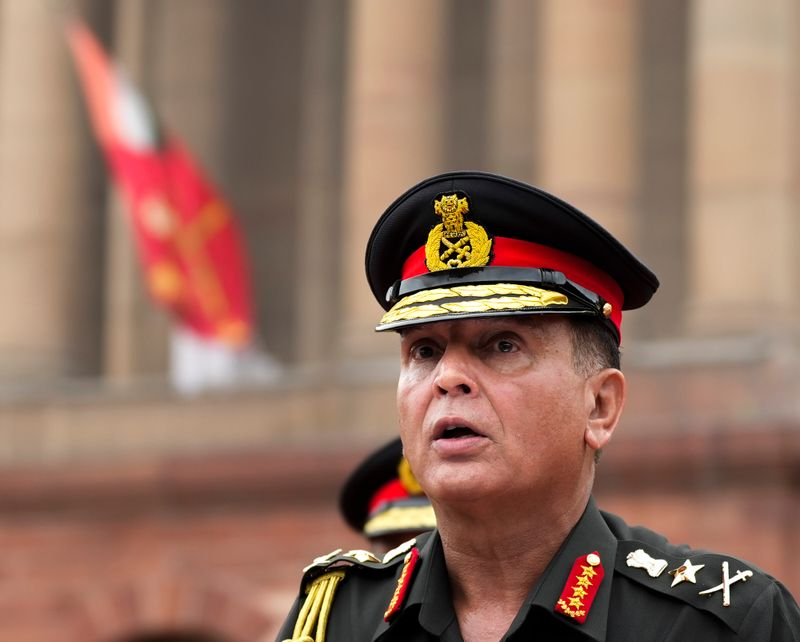
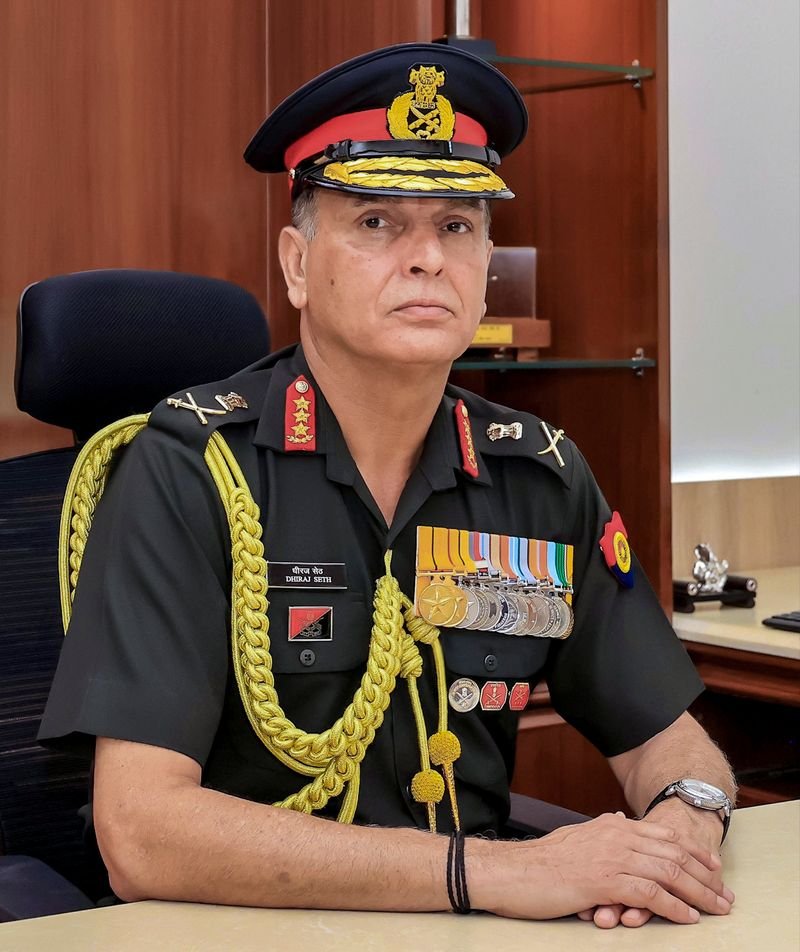
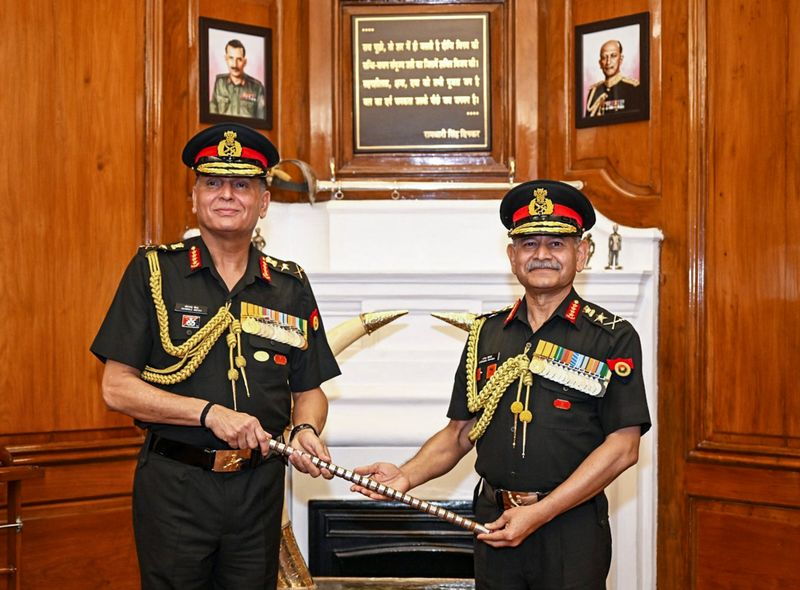
An officer of the Armoured Corps, Gen Seth was commissioned into the Army in December 1986
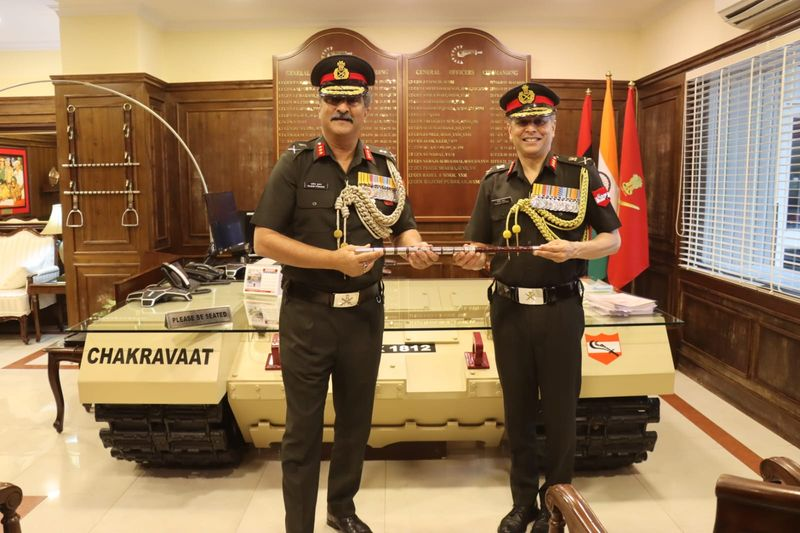
Gen Dhiraj Seth on Tuesday took over as the 31st Chief of the Army Staff, succeeding Gen Upendra Dwivedi, who superannuated after more than four decades of service.
Gen Dwivedi said, “Future wars will be more joint, integrated and theatre-oriented. Therefore, the direction for the armed forces is clear: to see together, decide together and act together.”
An officer of the Armoured Corps, Gen Seth was commissioned into the Army in December 1986. It is the first time in more than three decades that an Armoured Corps officer has become the Army Chief. The last officer from the Armoured Corps to hold the post was Gen Shankar Roychowdhury, who retired in September 1997.
Gen Seth has extensive experience across the operational, strategic, capability development and institutional domains, contributing significantly to the Army’s combat effectiveness and long-term transformation.
He is an alumnus of the National Defence Academy, Khadakwasla.
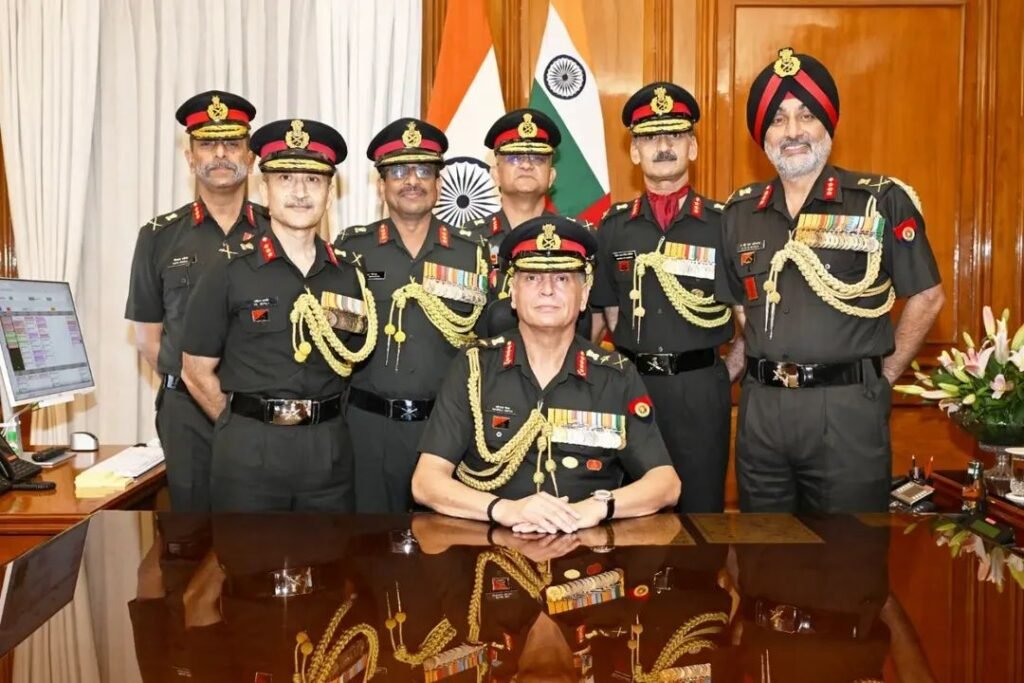
The Chief with his Team
The General Officer has commanded formations at every level in diverse operational environments. His command assignments include an Armoured Regiment in the desert sector, an Armoured Brigade in the western theatre and a counter-insurgency force in Jammu and Kashmir. As a Lieutenant General, he commanded both the South Western Command and the Southern Command, which are responsible for operations along India’s western front.
Commanding two operational Army Commands is a rare distinction. In these roles, he provided strategic oversight across critical theatres for more than two-and-a-half years. He has also held several key staff and strategic appointments that have significantly influenced operational planning, force management and capability development.
Widely recognised for his contributions to force modernisation, Gen Seth has served in strategic planning and capability development roles at Army Headquarters, helping shape the Army’s modernisation trajectory, capability roadmap and long-term force-structuring initiatives. His contributions have been instrumental in aligning operational requirements with emerging technologies and future battlefield needs.
An accomplished military professional, Gen Seth has consistently excelled in professional military education, securing top positions in several courses of instruction. He is a graduate of the Higher Command Course and the National Defence College and has also attended the prestigious Command and Staff Course in Paris, reflecting his broad strategic outlook and deep understanding of contemporary military affairs.
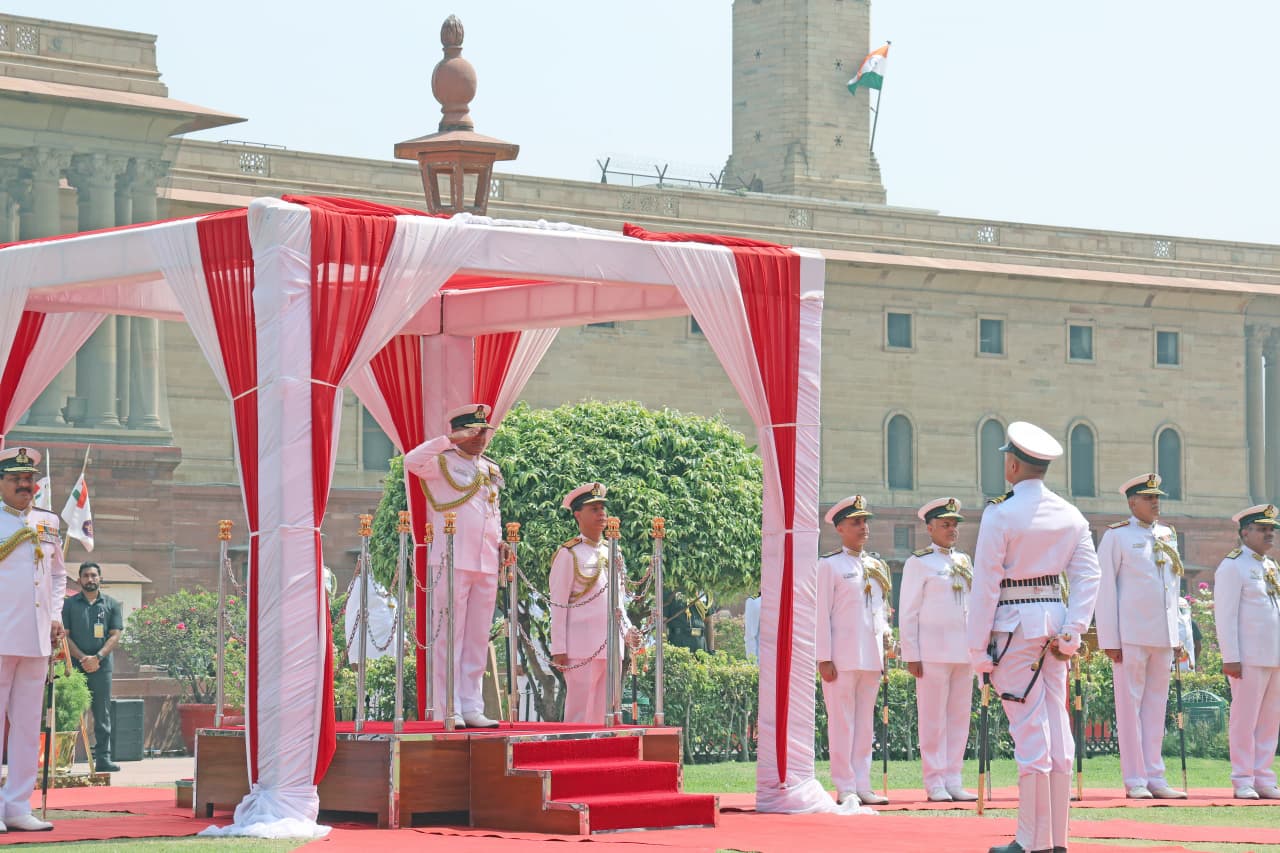
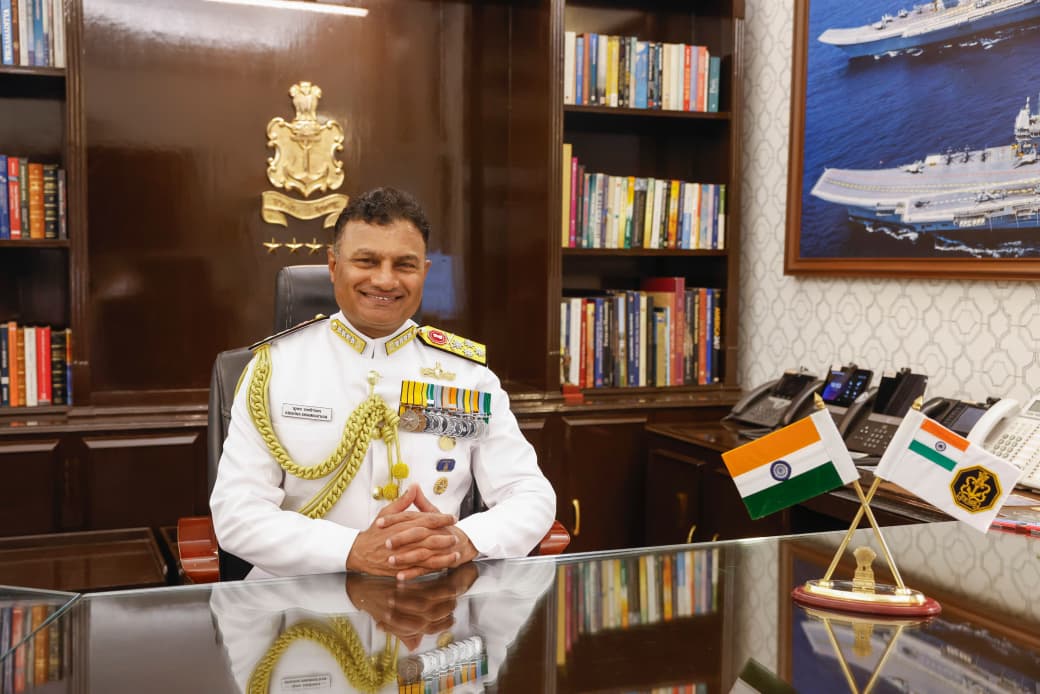
ADMIRAL KRISHNA SWAMINATHAN, PVSM, AVSM, VSM ASSUMES CHARGE AS THE 27th CHIEF OF THE NAVAL STAFF OF INDIAN NAVY
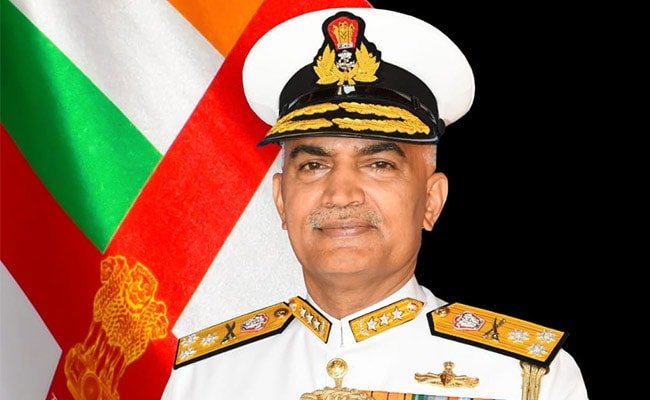
Admiral Krishna Swaminathan, PVSM, AVSM, VSM assumed charge as the 27th Chief of the Naval Staff of the Indian Navy on 31 May 2026. He succeeds Admiral Dinesh Kumar Tripathi, PVSM, AVSM, NM who superannuated after 41 years of distinguished service.
Admiral Krishna Swaminathan was commissioned into the Indian Navy on 01 July 1987. A Communication and Electronic Warfare specialist, he has held a wide range of operational, staff and training appointments during a distinguished career spanning nearly four decades. Admiral Swaminathan’s sea commands include the guided missile vessels INS Vidyut and INS Vinash, guided missile corvette INS Kulish, guided missile destroyer INS Mysore and aircraft carrier INS Vikramaditya.
On promotion to the rank of Rear Admiral, he served as the Chief Staff Officer (Training) at Headquarters, Southern Naval Command, Kochi. He was subsequently appointed as Flag Officer Sea Training and later commanded the Western Fleet, the Sword Arm of the Indian Navy. Subsequently, he was appointed as Flag Officer Offshore Defence Advisory Group and Advisor, Offshore Security and Defence to the Government of India.
On promotion to the rank of Vice Admiral, he tenanted the appointments of Chief of Staff, Western Naval Command; and Controller Personnel Services, Chief of Personnel and Vice Chief of the Naval Staff at Naval Headquarters. Prior assuming charge as the Chief of the Naval Staff, Admiral Swaminathan was the Flag Officer Commanding-in-Chief of the prestigious Western Naval Command.
He is an alumnus of the National Defence Academy, Khadakwasla; Joint Services Command and Staff College, Shrivenham, United Kingdom; College of Naval Warfare, Karanja; and the United States Naval War College, Newport, Rhode Island. His academic qualifications include a BSc degree from Jawaharlal Nehru University, New Delhi; MSc in Telecommunications from Cochin University of Science and Technology, Kochi; MA in Defence Studies from King’s College, London; MPhil in Strategic Studies from Mumbai University; and a PhD in International Studies from Mumbai University.
Admiral Krishna Swaminathan is a recipient of the Param Vishisht Seva Medal, Ati Vishisht Seva Medal and Vishisht SevaMedal for distinguished service.
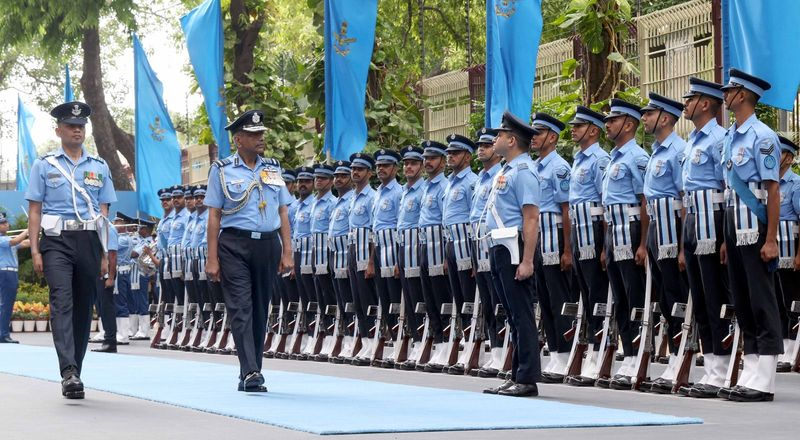
Air Marshal Ashutosh Dixit takes over as IAF vice chief
During his career, he has been actively involved in numerous operations and exercises, including Operation Safed Sagar, launched during the Kargil conflict in 1999, and Operation Sindoor in 2025
Air Marshal Ashutosh Dixit, a fighter pilot with more than 3,500 hours of flying experience, will notably be the senior-most officer in line when the present IAF Chief, Air Chief Marshal AP Singh, superannuates in October this year.
Air Marshal Dixit, in his previous appointment as Chief of Integrated Defence Staff (CISC) — a tri-services organisation under the Chief of Defence Staff — was part of the process of fostering jointness and setting up the theatre commands.
Air Marshal Dixit was commissioned into the fighter stream of the IAF in December 1986. He is an alumnus of the National Defence Academy, the Defence Services Command and Staff College (Bangladesh), and the National Defence College.
The Air Marshal has extensive flying experience on various aircraft, including the Mirage 2000, variants of the MiG series of jets, the Jaguar, the Tejas, and the Hawk. He has also flown transport aircraft such as the AN-32 and the Avro, as well as the mid-air refueller.
He is an Experimental Test Pilot and a Qualified Flying Instructor. During his service career, spanning approximately four decades, he has been actively involved in numerous operations and exercises, including Operation Safed Sagar, launched during the Kargil conflict with Pakistan in 1999, and Operation Sindoor in 2025.
During his career, Air Marshal Dixit commanded a frontline fighter air base in the Western Sector and a premier fighter training base in the Southern Sector. He has also served as a Directing Staff at the Air Force Test Pilots School.
Air Marshal Dixit has commanded the Central Air Command.
During his tenure at the tri-services organisation, he was part of the jointness and integration process. Multiple joint doctrines were released, and various initiatives were conceived to strengthen the Defence Forces across all domains.
Air Marshal Dixit takes over from Air Marshal Nagesh Kapoor, who superannuated.
Two key Army corps, II and XIV, get new commanders
Lieutenant General Manish Luthra has assumed charge as the General Officer Commanding of II Corps at Ambala
As part of the ongoing reshuffle at the Army’s top level, new commanders have been appointed to head two key corps base in north-western India.
Lieutenant General Manish Luthra has assumed charge as the General Officer Commanding of II Corps at Ambala. Also known as the Kharga Corps, it is the Army’s most potent strike formation and had played a significant role during Operation Sindoor in May 2025.
Earlier, he served as the Director General Military Operations at Army Headquarters from September 2025 onwards.
He takes over from Lt Gen Rajesh Pushkar who has been elevated as the General Officer Commanding-in-Chief of the Southern Command at Pune. During his tenure at Ambala, he spearheaded the Corps’ transformation towards multi-domain operations, integrating emerging technologies, modern warfighting concepts and enhanced jointness into operational planning and execution.
His tenure also witnessed the successful validation of new organisational structures and innovative operational concepts, significantly strengthening the Corps’ future warfighting capability, a defence spokesperson said on Tuesday.
Lieutenant General Madanraj Pande has taken over as the General Officer Commanding, 14 Corps at Leh from Lt Gen Hitesh Bhalla.
Lieutenant General Madanraj Pande (R).
Known as the Fire and Fury Corps, it was set up in the aftermath of the 1999 Kargil conflict and is responsible for operations in Eastern Ladakh, including the Line of Actual Control and Siachen Glacier. It also undertakes community development programmes for the civilian populace residing in remote areas.
On the occasion, the outgoing Corps Commander conveyed his appreciation to all ranks for their professionalism, dedication and unwavering commitment, while the incoming Corps Commander exhorted the troops to continue upholding the highest traditions and ethos of the Indian Army in the service of the Nation, according to a defence spokesperson.
Army Chief Gen Dhiraj Seth outlines ‘VIJAY’ roadmap, pushes modernisation and self-reliance
Says ‘vigilance, innovation, jointness, atmanirbharta and yodha’ will guide Army’s future priorities; stresses technology-enabled, future-ready force
ndian Army Chief General Dhiraj Seth on Wednesday stressed the need to speed up modernisation and laid out his five priorities, forming the acronym ‘VIJAY’, with each letter of the word signifying a key focus area.
General Seth, who took over on Tuesday, inspected a guard of honour at the lawns of the South Block on Wednesday, after which he saluted his father Lt Gen KM Seth (retd), who was present in the audience.
Gen Seth said the word ‘VIJAY’ stands for ‘Vigilance, Innovation and Transformation, Jointness and Integration, Atmanirbharta, and Yodha’. He said these priorities cover the entire gamut of tasks he has set out for the Army.
The words ‘Atmanirbharta’ and ‘Yodha’ refer to self-reliance and soldier, respectively.
Explaining ‘Vigilance’, the Army Chief said the force will maintain constant watch along borders and against emerging threats, ensuring a high level of operational readiness to respond effectively to any challenge to national security.
On ‘Innovation and Transformation’, he said the focus will be on innovation in both doctrine and technological solutions. Innovation will remain integral to thinking, systems and capability development, while necessary transformations will be undertaken in line with the changing character of warfare.
The letter ‘J’, standing for ‘Jointness and Integration’, will enhance operational effectiveness of the Indian Army and ensure complete synergy and coordination with the Indian Air Force and the Indian Navy.
He said national security is not limited to military strength alone but requires military-civil fusion. This integrated approach will also enable us to contribute to nation-building and the goal of a developed India by 2047.”
The letter ‘A’ stands for ‘Atmanirbharta’. With indigenous capabilities and technologies developed within the country, the Army must build a self-reliant force. “To win our wars with indigenous solutions” will be the overall aim, he added.
The final letter ‘Y’ stands for ‘Yodha’, Gen Seth said, adding that from the Agniveer to the senior-most veteran, each one is a yodha (warrior) and the greatest strength of the Army. He said enhancing the technological threshold and training standards of soldiers will remain a foremost priority.
He added that veterans are an integral part of the Army family, and their welfare, empowerment and professional growth will remain important.
Calling the Indian Army a combat-ready and battle-hardened force, he said it is fully prepared to meet every challenge in the operational domain.
He further said that to respond to the evolving security environment, we must push modernisation with renewed energy and firm resolve, aiming to build a technology-enabled, future-ready force capable of operating across multiple domains.
General Seth expressed gratitude to Prime Minister Narendra Modi and Defence Minister Rajnath Singh for reposing trust in him and entrusting him with the responsibility of leading the Indian Army.
Venezuela appreciates Indian team’s efforts to help earthquake victims
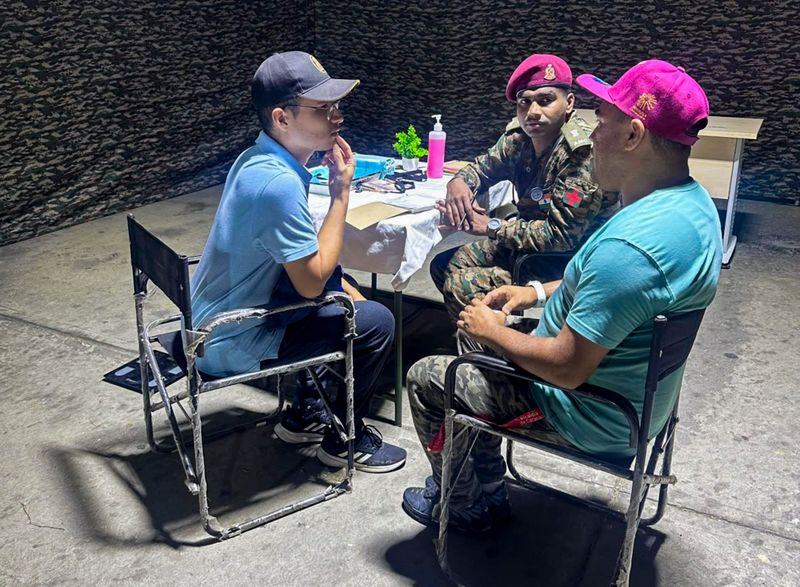
Under Operation Amistad, Indian Army established a field hospital comprising highly experienced doctors at the International La Rinconada Racetrack in Caracas
Venezuela has appreciated the Indian medical team’s efforts to help victims of the earthquake that rocked the South American nation, killing over 1,700 people.
Under Operation Amistad, the Indian Army established a field hospital comprising highly experienced doctors at the International La Rinconada Racetrack in Caracas after arriving in the country.
The Indian Embassy in Venezuela on Monday said that India has intensified its efforts to provide disaster relief “with a healing touch to those affected by the earthquake.”
Advertisement“Minister of People’s Power for Foreign Minister, Andrea Corao Faria, visited our Field Hospital and appreciated our efforts to help the earthquake victims,” the Indian mission said. The 7.2 and 7.5-magnitude earthquakes that struck on Wednesday evening were among the strongest in Venezuela in more than a century and were felt throughout the region.
The death toll from two powerful quakes in Venezuela crossed 1,700 people on Monday, with thousands more injured and many more missing.
Under Operation Amistad, two IAF C-17 Globemaster aircraft transported 66 tonnes of aid, including the Indian Army field hospital, over 35 tonnes of relief supplies, medicines and medical equipment, and two BHISHM Cubes, the Indian Air Force (IAF) said on Sunday.
Bharat Health Initiative for Sahyog Hita & Maitri (BHISHM) cubes are mobile hospitals aimed at providing emergency medical care. Working alongside Venezuelan authorities, Indian rescue and medical teams are providing emergency medical care and conducting search and rescue missions, the Indian mission said.
Amid the passport row, it’s evident that voter deletion unplugs the citizen from the State
IN Punjab, the passport is not really a document. It is a lifeline. No state in India holds them in such numbers. The rate at which Punjab issues passports per head of population is among the highest in the country. By common reckoning, more than one in five Punjabis carries one. The reason is plain. Almost every family in the state has someone abroad. Someone has a son in Brampton, another a brother in Southall or in Surrey.
The passport is the thread that ties the pind to Canada, the United States, England, Australia and the Gulf. Haryana lives much the same way. The northwestern plains have sent their young across the seas for a century, since the Ghadar men first sailed to America.
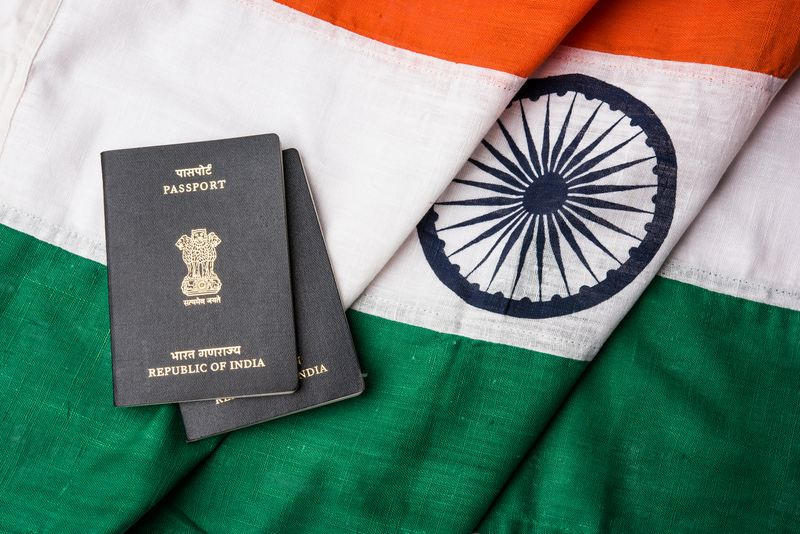
So, the recent statement from New Delhi was heard with particular unease in this part of the country. On Passport Seva Divas (June 24), the Ministry of External Affairs told the nation that a passport is a travel document and not a document of citizenship. As a matter of strict law, the ministry was right. The passport is issued under the Passports Act. Citizenship is governed by the Citizenship Act of 1955. One law regulates a document; the other regulates a status. But the law and the street do not always speak the same language.
What is technically legal is not the common understanding of how things work. For most Indians, the passport is the most authoritative thing the Republic has ever given them. It bears the name of the country. It carries their face. It is honoured at every border in the world because foreign governments trust that India checked before issuing it. The State does not hand out passports to all and sundry. It issues one only after it has satisfied itself that the holder belongs. So, when a citizen is told that the document proves nothing about belonging, the natural question follows: if the passport is not proof, then what is?
The word itself carries the older meaning. “Passport” comes from passing through a port or a gate. It began as a letter from a sovereign, a safe conduct, the State’s blessing on a traveller who wished to leave and return. The sovereign vouched for the bearer because the bearer was his own. A passport was an authorisation to leave a country with that country’s blessing. A State does not bless a stranger out into the world. It blesses one of its own.
Many Indians knew this in their bones. India does not allow dual citizenship. To keep an Indian passport is to refuse every other. Many an Indian achiever finds that passports of the West are theirs for the asking, as a recognition of their talent. Some, however, prefer to keep the Indian one. For them, as for the Punjabi woman flying out to her grandchild’s wedding, the passport was never merely a travel paper. It was a statement of who they were.
So, the timing was cruel. Passport Seva Divas marks the day the Passports Act came into force. It is meant to be a day of quiet pride. Instead, the spokesman made more people anxious than proud. He spoke a legal truth and left a public bruise. Call it the demonetisation effect, applied to passports. In November 2016, the citizen woke up to find that the currency notes that were legal last night were now to be doubted. The notes were still the Republic’s. The promise was still printed on them. Yet people stood in queues, unsure whether what they held was good. The passport statement did the same to belonging. It took a thing nobody questioned and taught a nation to question it.
But the real machinery is not in the passport office. It is in the electoral rolls. We have already seen it work. In West Bengal, the Special Intensive Revision (SIR) struck off 63 lakh names from the rolls. The new government has now ordered that the ration cards of deleted voters be switched off. Strike a name off the voter list and you do not merely remove a vote. You unplug the citizen from the State. The deletion is the kill switch of citizenship.
Now, carry that machinery to Punjab. The Assembly election is due in early 2027. The house-to-house enumeration for the SIR has begun. The revision works by matching names across the old rolls and the new, and flagging what it calls logical discrepancies. Consider what that means for a Sikh name written in English by one clerk, in Punjabi by another, and back into English by a third.
Amreek Singh on one roll becomes Amrik Singh on the next. Jasvinder turns into Jusvinder or Jaswinder. Gurmeet and Gurmit are the same man. So are Harpreet and Harprit, Kuldeep and Kuldip. None of this is fraud. It is the ordinary friction of carrying a Gurmukhi name through three scripts and four clerks. To a matching machine, it is a discrepancy. To the citizen, it is a summons to prove that he is himself.
Imagine then the Punjabi household. The vote goes first. Then the ration card. Then the passport will not be renewed, because the police verification leans on the rolls. The thread to Brampton and California is cut, not by any court that found the man a foreigner, but by a misplaced vowel. Why should a proud border state, which has sent its sons to fight the country’s wars and its children to build lives across the world, be put through the wringer of proving its citizenship merely to keep the passports that hold its families together?
Here the Supreme Court was petitioned, and it has so far faltered. In Association for Democratic Reforms v. Election Commission of India, decided this year, the Court upheld the SIR of Bihar. Nearly 47 lakh names had been struck off there. The Court found the exercise proportionate and lawful. It held that a place on the rolls raises only a rebuttable presumption of citizenship, and that asking a citizen to prove himself afresh does not offend the Constitution.
Thus, the Court tacitly drew a line through the people. On one side stand the voter citizens, secure in their papers. On the other stand the non-voter doubtful inhabitants, the man with the misspelt name, upon whom administrative vengeance may be wreaked at leisure. Article 14 promises equal protection of the laws. A court that lets the State quietly raise two classes of inhabitants, and protect only one, has not kept that promise. It has failed in its duty as a sentinel on the qui vive.
Fifty years ago, in the ADM Jabalpur case, the Court held that even the right to life could be suspended in an Emergency. The judiciary never lived down that judgment and Justice Chandrachud the younger was among those who specifically overruled Justice Chandrachud the elder’s concurrence in the habeas corpus judgment.
The Bihar judgment has now taken away, in ordinary times and with no Emergency declared, the right to vote, and with it the ration card and the passport. In the ADM Jabalpur case, the judiciary at least had the excuse of the Emergency. This judgment has none.
Yet the account is not closed. The challenge to the SIR in West Bengal is still pending before the Court, because the judgment has not been delivered. One may still hope that when the Court turns to Bengal, it will see what it failed to see in Bihar. A citizen long on the rolls ought not to be struck off on proof demanded from him, but only on proof brought against him. That the vote, the ration card and the passport are not favours to be switched off by a clerk or an electoral officer; they are the inalienable rights of an inhabitant of the Republic.
So, the country still keeps a question open. Do we have an occasionally fallible Supreme Court or one that repeatedly fails its citizens? When the Bengal judgment comes, Punjab will be listening.
State Stalwarts
DEFENCE MINISTER
Minister Rajnath Singh
ALL HUMANS ARE ONE CREATED BY GOD
HINDUS,MUSLIMS,SIKHS.ISAI SAB HAI BHAI BHAI
CHIEF PATRON ALL INDIA SANJHA MORCHA
LT GEN JASBIR SINGH DHALIWAL, DOGRA
SENIOR PATRON ALL INDIA SANJHA MORCHA
MAJOR GEN HARVIJAY SINGH, SENA MEDAL ,corps of signals
.
.
PATRON ALL INDIA SANJHA MORCHA
MAJ GEN RAMINDER GURAYA ,MADRAS REGIMENT
sanjhamorcha303@gmail.com
PRESIDENT SOUTH ALL INDIA SANJHA MORCHA
COL SS RAJAN BOMBAY SAPPERS,
PRESIDENT UTTARAKHAND ALL INDIA SANJHA MORCHA
COL B M THAPA ,BENGAL SAPPERSS
PRESIDENT HARAYANA STATE CUM COORDINATOR ESM
BRIG DALJIT THUKRAL ,BENGAL SAPPERS
PRESIDENT TRICITY
COL B S BRAR (BHUPI BRAR)
PRESIDENT CHANDIGARH ZONE
COL SHANJIT SINGH BHULLAR
.
.
PRESIDENT PANCHKULA ZONE AND ZIRAKPUR
COL SWARAN SINGH
INDIAN DEFENCE FORCES
DEFENCE FORCES INTEGRATED LOGO
INDIAN AIR FORCE
Air Officer C-in-C WESTERN AIR COMMAND
AIR MSHL S PRABHAKARAN AVSM VM
AOC-IN-C, EASTERN AIR COMMAND
Air Marshal Inderpal Singh Walia
AOC-in-C SOUTH WESTERN AIR COMMAND
Air Marshal Vikram Singh
AOC-IN-C, SOUTHERN AIR COMMAND
Air Marshal J.Chalapati
AOC-IN-C TRAINING COMMAND
AIR MARSHAL SK GHOTIA VSM
AOC-IN-C MAINTENANCE COMMAND
Air Marshal Jagdish Chandra
Flag Officer Commanding in Chief, Western Naval Command
ice Admiral R Hari Kumar, PVSM, AVSM, VSM
Flag Officer Commanding in Chief, Eastern Naval Command
Vice Admiral Sanjay Bhalla, AVSM, NM
Flag Officer Commanding in Chief, Southern Naval Command





















CNS-BatonHandingOverZHE2.JPG)
OONY.jpeg)