
Amid the passport row, it’s evident that voter deletion unplugs the citizen from the State
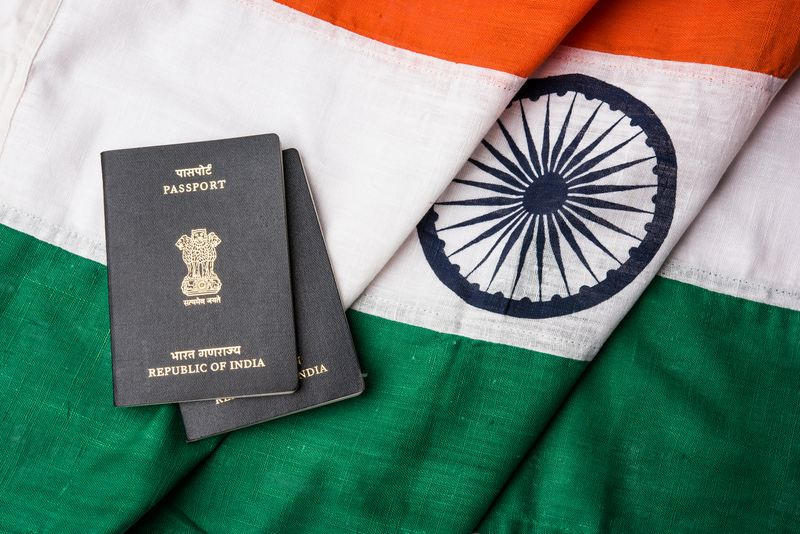
IN Punjab, the passport is not really a document. It is a lifeline. No state in India holds them in such numbers. The rate at which Punjab issues passports per head of population is among the highest in the country. By common reckoning, more than one in five Punjabis carries one. The reason is plain. Almost every family in the state has someone abroad. Someone has a son in Brampton, another a brother in Southall or in Surrey.
The passport is the thread that ties the pind to Canada, the United States, England, Australia and the Gulf. Haryana lives much the same way. The northwestern plains have sent their young across the seas for a century, since the Ghadar men first sailed to America.
So, the recent statement from New Delhi was heard with particular unease in this part of the country. On Passport Seva Divas (June 24), the Ministry of External Affairs told the nation that a passport is a travel document and not a document of citizenship. As a matter of strict law, the ministry was right. The passport is issued under the Passports Act. Citizenship is governed by the Citizenship Act of 1955. One law regulates a document; the other regulates a status. But the law and the street do not always speak the same language.
What is technically legal is not the common understanding of how things work. For most Indians, the passport is the most authoritative thing the Republic has ever given them. It bears the name of the country. It carries their face. It is honoured at every border in the world because foreign governments trust that India checked before issuing it. The State does not hand out passports to all and sundry. It issues one only after it has satisfied itself that the holder belongs. So, when a citizen is told that the document proves nothing about belonging, the natural question follows: if the passport is not proof, then what is?
The word itself carries the older meaning. “Passport” comes from passing through a port or a gate. It began as a letter from a sovereign, a safe conduct, the State’s blessing on a traveller who wished to leave and return. The sovereign vouched for the bearer because the bearer was his own. A passport was an authorisation to leave a country with that country’s blessing. A State does not bless a stranger out into the world. It blesses one of its own.
Many Indians knew this in their bones. India does not allow dual citizenship. To keep an Indian passport is to refuse every other. Many an Indian achiever finds that passports of the West are theirs for the asking, as a recognition of their talent. Some, however, prefer to keep the Indian one. For them, as for the Punjabi woman flying out to her grandchild’s wedding, the passport was never merely a travel paper. It was a statement of who they were.
So, the timing was cruel. Passport Seva Divas marks the day the Passports Act came into force. It is meant to be a day of quiet pride. Instead, the spokesman made more people anxious than proud. He spoke a legal truth and left a public bruise. Call it the demonetisation effect, applied to passports. In November 2016, the citizen woke up to find that the currency notes that were legal last night were now to be doubted. The notes were still the Republic’s. The promise was still printed on them. Yet people stood in queues, unsure whether what they held was good. The passport statement did the same to belonging. It took a thing nobody questioned and taught a nation to question it.
But the real machinery is not in the passport office. It is in the electoral rolls. We have already seen it work. In West Bengal, the Special Intensive Revision (SIR) struck off 63 lakh names from the rolls. The new government has now ordered that the ration cards of deleted voters be switched off. Strike a name off the voter list and you do not merely remove a vote. You unplug the citizen from the State. The deletion is the kill switch of citizenship.
Now, carry that machinery to Punjab. The Assembly election is due in early 2027. The house-to-house enumeration for the SIR has begun. The revision works by matching names across the old rolls and the new, and flagging what it calls logical discrepancies. Consider what that means for a Sikh name written in English by one clerk, in Punjabi by another, and back into English by a third.
Amreek Singh on one roll becomes Amrik Singh on the next. Jasvinder turns into Jusvinder or Jaswinder. Gurmeet and Gurmit are the same man. So are Harpreet and Harprit, Kuldeep and Kuldip. None of this is fraud. It is the ordinary friction of carrying a Gurmukhi name through three scripts and four clerks. To a matching machine, it is a discrepancy. To the citizen, it is a summons to prove that he is himself.
Imagine then the Punjabi household. The vote goes first. Then the ration card. Then the passport will not be renewed, because the police verification leans on the rolls. The thread to Brampton and California is cut, not by any court that found the man a foreigner, but by a misplaced vowel. Why should a proud border state, which has sent its sons to fight the country’s wars and its children to build lives across the world, be put through the wringer of proving its citizenship merely to keep the passports that hold its families together?
Here the Supreme Court was petitioned, and it has so far faltered. In Association for Democratic Reforms v. Election Commission of India, decided this year, the Court upheld the SIR of Bihar. Nearly 47 lakh names had been struck off there. The Court found the exercise proportionate and lawful. It held that a place on the rolls raises only a rebuttable presumption of citizenship, and that asking a citizen to prove himself afresh does not offend the Constitution.
Thus, the Court tacitly drew a line through the people. On one side stand the voter citizens, secure in their papers. On the other stand the non-voter doubtful inhabitants, the man with the misspelt name, upon whom administrative vengeance may be wreaked at leisure. Article 14 promises equal protection of the laws. A court that lets the State quietly raise two classes of inhabitants, and protect only one, has not kept that promise. It has failed in its duty as a sentinel on the qui vive.
Fifty years ago, in the ADM Jabalpur case, the Court held that even the right to life could be suspended in an Emergency. The judiciary never lived down that judgment and Justice Chandrachud the younger was among those who specifically overruled Justice Chandrachud the elder’s concurrence in the habeas corpus judgment.
The Bihar judgment has now taken away, in ordinary times and with no Emergency declared, the right to vote, and with it the ration card and the passport. In the ADM Jabalpur case, the judiciary at least had the excuse of the Emergency. This judgment has none.
Yet the account is not closed. The challenge to the SIR in West Bengal is still pending before the Court, because the judgment has not been delivered. One may still hope that when the Court turns to Bengal, it will see what it failed to see in Bihar. A citizen long on the rolls ought not to be struck off on proof demanded from him, but only on proof brought against him. That the vote, the ration card and the passport are not favours to be switched off by a clerk or an electoral officer; they are the inalienable rights of an inhabitant of the Republic.
So, the country still keeps a question open. Do we have an occasionally fallible Supreme Court or one that repeatedly fails its citizens? When the Bengal judgment comes, Punjab will be listening.