Sanjha Morcha

LeT militant killed in Shopian encounter

article_Author
Adil Akhzer

A Lashkar-e-Toiba (LeT) militant was killed in an encounter between militants and security forces in south Kashmir’s Shopian district.

Police officials said the encounter broke out in Channapora village of Shopian after security forces launched a cordon-and-search operation in the village following specific inputs about the presence of terrorists in the village.

As the security forces zeroed in, the hiding militants opened fire, which was retaliated by the security forces. The two militants were also captured on a surveillance camera.

On Wednesday, the police said security forces recovered the body of an LeT militant during a search operation. He has been identified as Zakir Ahmad Ganie.

Srinagar-based Chinar Corps said based on specific intelligence input from Jammu and Kashmir Police, a joint search operation was launched

“During the search operation, an exchange of fire took place between security forces and terrorists,” the Army said.

The Army said one LeT terrorist, identified as Zakir Ganie, has been eliminated in the firefight. “Arms, ammunition and other war-like stores were seized. The operation is in progress,” the Army said.

Sources said Zakir hails from neighbouring Kulgam and was active since 2024.

J&K Police posted on X, “You can run but you can’t hide! One Lashkar terrorist was neutralised by SOG (Special Operation Group of J&K Police) Shopian in a joint operation along with RR (Rashtriya Rifles) and CRPF.”Apart from Ganie, the other trapped terrorist is believed to be Latif, who joined the outfit last year.

This encounter is the first gunfight between militants and the security forces in the Kashmir Valley this year.The Army’s specialised counter-insurgency unit, Victor Force, has deployed additional personnel to seal all possible escape routes through the thick orchard foliage, besides lighting up the area.

Shopian has historically served as a critical transit corridor connecting south Kashmir to central Kashmir and the Pir Panjal range.


India, Australia boost defence ties to counter China’s influence in Indo-Pacific

The two countries batted for rule-based architecture on adherence to international law along with respect for sovereignty and territorial integrity

India and Australia on Thursday committed to accelerating their defence and security partnership, which subtly announced a renewed determination to counter Chinese hegemony in the region.

The two sides made a ‘Joint Declaration on Defence and Security Cooperation’, promising to work together on maritime security, defence industry collaboration, information sharing, terrorism and enhancing deployments of planes in each other’s territories. The declaration was made after Prime Minister Narendra Modi met his Australian counterpart Anthony Albanese in Melbourne on Thursday.

India and Australia agreed to ‘evolve’ their partnership to meet changing strategic circumstances. “We commit to an acceleration in our advanced, integrated and top-tier defence and security partnership,” the declaration said. “It’s a long-term vision of defence and security collaboration to enhance collective strength. This collaboration will make an important contribution to regional peace and security,” it added.

Focusing on China, the two sides — partners in the Quad — said the declaration was based on the ‘determination’ to “strengthen their partnership and motivated by a common ambition for an open, peaceful, stable and prosperous Indo-Pacific”.

In strategic circles, the phrase ‘open, peaceful, stable and prosperous Indo-Pacific’ is a euphemism for opposing Chinese hegemony and attempts to impede traffic at sea and in air.

The two countries batted for rules-based architecture based on adherence to international law along with respect for sovereignty and territorial integrity. The 1982 United Nations Convention on the Law of the Sea (UNCLOS) is cited in the ‘declaration’. Under the same law, China has lost its case over demarcation of the maritime boundaries of the South China Sea.

On their bilateral defence cooperation, India and Australia committed to strengthening their ‘comprehensive strategic partnership’. This will include consultation on defence-related developments in the Indo-Pacific that affect shared interests. The areas of cooperation include enhancing the complexity of military exercises, accelerating interoperability and information sharing between defence forces, expanding aircraft deployments from each other’s territories, deepening defence personnel exchanges, education and training, and exploring opportunities to recruit skilled defence workforces.

The two sides aim to encourage industry engagement to deepen collaboration between their defence innovation ecosystems and develop arrangements for advanced defence science and technology collaboration.

The two sides also committed to increasing information sharing on terrorist threats in the region, including entities and individuals, and exploring opportunities for enhanced collaboration to counter extremism and terrorism.

On the cooperation in the Quad – where the US and Japan are partners – the declaration said, “We will expand our cooperation”. This will be for building capability and cooperation towards an open, stable, peaceful and prosperous Indo-Pacific region, the two sides said.


Indian Army uses drones to deliver medical aid to 69-year-old earthquake survivor in Venezuela

As the Indian Army contingent deployed in Venezuela under Operation Amistad to provide assistance to victims of a devastating earthquake that hit the South American country in June begins to wind up its operations, it leaves behind tales of innovation and compassion.

A 69-year-old woman, Zunilde Silva, the oldest survivor under treatment at the Indian Army Field Hospital, faced difficulty in moving across the facility for medical requirements. Troops devised an innovative solution by employing mini drones to deliver medicines and laboratory reports.

“Rising to the challenge, the innovative minds of Shatrujeet Brigade employed a customised drone-based delivery solution within the hospital. The drone transported blood test reports, prescriptions and essential medicines between departments, ensuring timely care without requiring the patient to move,” the Indian Army said.

“When mobility was a challenge, technology carried care to the patient. This seamless integration of technology and empathy reflects the Indian Army’s commitment to finding innovative solutions in the service of humanity.”

For another 79-year-old survivor, being rescued from a collapsed building marked only the beginning of her ordeal. Trapped beneath the debris with a fractured leg and suffering from peripheral arterial disease, delayed access to medical care led to a severe arterial ulcer and intense pain, according to the Army.

“The medical team stabilised her fracture, initiated advanced wound care and established daily follow-up treatment, providing not only specialised medical support but also renewed hope for recovery,” the Army said.

“Venezuela thanks Indian rescuers for their attention,” the country’s foreign ministry, Ministerio del Poder Popular para Relaciones Exteriores, said on its official X handle on July 8.

“The humanitarian mission set up a field hospital at the National Hippodrome Institute in La Rinconada, Caracas, a space where more than 1,900 people were treated,” the post added. Elements of the 60 Para Field Hospital, a mobile hospital that is part of the Agra-based 50 (Independent) Parachute Brigade, were mobilised on June 26.

The IAF deployed two C-17 heavy-lift aircraft to ferry the team along with its equipment and medical supplies over 14,000 kilometres across Africa and the Atlantic in 23 hours.

The composite task force established a fully operational field hospital by June 28. During the mission, the medical team provided critical medical care to earthquake-affected people, working in close coordination with the local authorities to support relief efforts.

“Following the successful completion of its Humanitarian Assistance and Disaster Relief mission, Operation Amistad, the Indian Army contingent has commenced its de-induction from Venezuela,” the Army said on July 8.

“The Bolivarian Government of Venezuela bid farewell this Wednesday to 41 doctors and paramedics from the Army of the Republic of India, who arrived on June 27 as part of the international brigades that the South American country has received after the double earthquake of June 24,” the Venezuelan government said.


Satluj’ takedown reaches HC, plea seeks restoration

Petitioner argues abrupt removal of film curtails public’s right to receive information and artistic expression under Article 19(1)(a) of the Constitution

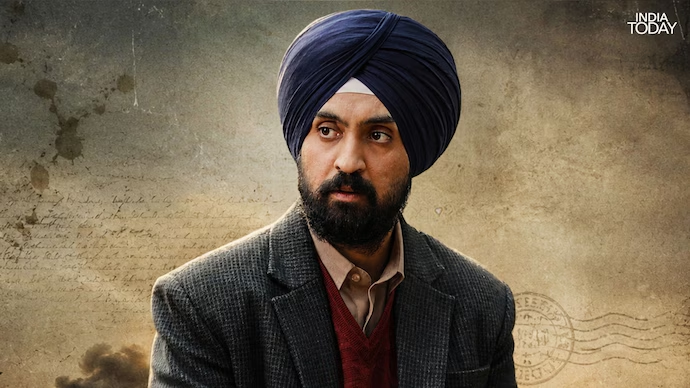
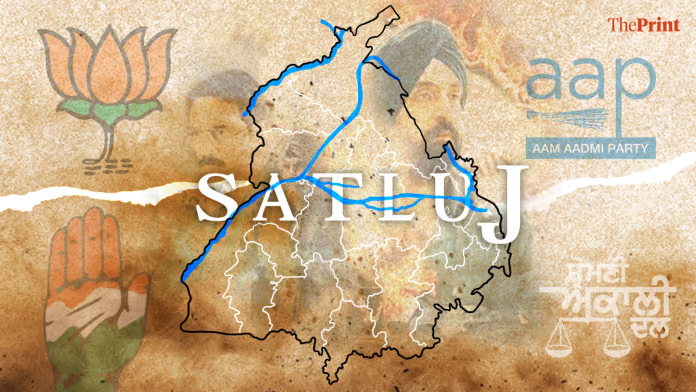
A petition has been filed in the Punjab and Haryana High Court seeking directions for the restoration of the film “Satluj” on ZEE5 platform after it was made unavailable for viewing in India.

The plea has been filed by Sharwan Singh, who has contended that no statutory order, judicial direction or other lawful authority prohibiting the exhibition of the film has been disclosed.

According to the petition, “Satluj”, earlier titled “Punjab ’95”, is based on the life and work of late human rights activist Jaswant Singh Khalra. The plea states that the film was released on ZEE5 on July 3 and was subsequently made unavailable in India on July 5.

The petitioner argued that the abrupt removal of the film curtailed the public’s right to receive information and artistic expression under Article 19(1)(a) of the Constitution and also deprived paid subscribers of access to content that had been lawfully made available on the platform.

The petition further stated that the main questions arising for the court’s consideration included whether the abrupt withdrawal of a duly released and lawfully exhibited feature film from an OTT platform — in the absence of any disclosed statutory order, judicial direction or authority of law — violated the fundamental right to freedom of speech and expression guaranteed under Article 19(1)(a) of the Constitution.

Another issue raised was whether the right guaranteed under Article 19(1)(a) included the right of the public to receive information and to access and view a lawfully released cinematographic work, and whether such right could be curtailed except by a procedure established by law. The petition also questioned whether any executive authority, directly or indirectly, could compel, induce or otherwise secure the withdrawal of a lawfully released cinematographic work without issuing a reasoned order traceable to any statutory provision.


HEADLINES :07 JULY 2026

Captain Shiva Chouhan first woman of Indian Army a Bengal sappers officer operationally deployed at the Siachen Glacier

A Squadron Deccan Horse counter attacks to recover company position on 05 Dec 1971 in the Chhamb Sector, Point 303

Indian Army rolled out Integrated Battle Groups (IBG) designed to enable rapid deployment and flexible

आपकी सतर्कता , ECHS की बचत; ECHS की बचत, पूर्व सैनिकों की ताकत।”हर जागरूक लाभार्थी का जिम्मेदार व्यवहार ECHS को और अधिक सशक्त बनाता है

Holding higher civil post does not grant right to promotion in Army if eligibility norms not met: HC

Stealth frigate ‘Mahendragiri’ to be commissioned into Navy on July 11

9,909 forgotten WWI Indian Soldiers Commemorated in UK

How do I prove my Indian citizenship BY MP MANISH TEWARI

2 of Assam Rifles shot in Manipur ambush

First person account: ‘What Jaswant Singh Khalra told me before he died’

kHALARS WIFE VEDIO AND EYE WITNESS VEDIO S


Captain Shiva Chouhan first woman of Indian Army a Bengal sappers officer operationally deployed at the Siachen Glacier

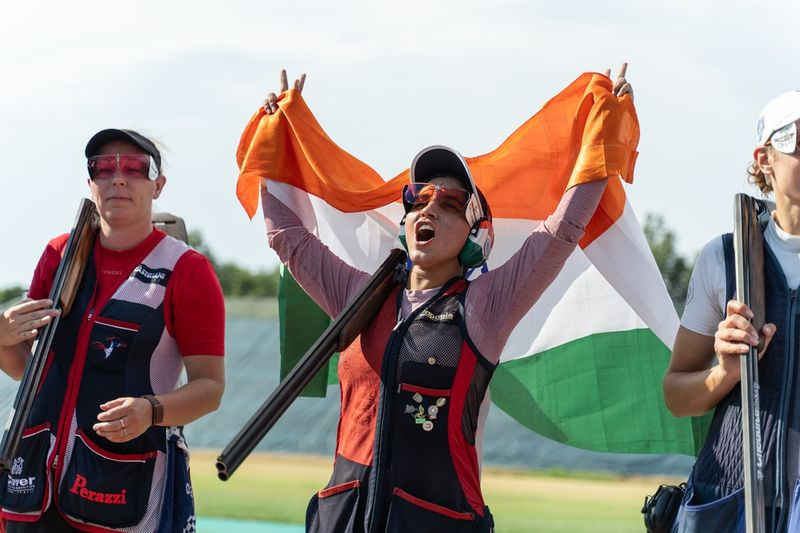
Captain Shiva Chouhan made military history on January 2, 2023, by becoming the first woman officer of the Indian Army to be operationally deployed at the Siachen Glacier, the world’s highest and coldest battlefield. She belongs to the Indian Army’s elite Fire and Fury Corps (Corps of Engineers / Bengal Sappers) and was stationed at the forward Kumar Post, situated at a grueling altitude of 15,632 feet.

Hailing from Udaipur, Rajasthan, she lost her father at the young age of 11. Her mother took sole responsibility for her upbringing and education.

She graduated with a bachelor’s degree in Civil Engineering from the NJR Institute of Technology in Udaipur in May 2021.

Driven by a childhood dream to join the armed forces, she secured the All India Rank 1 in the SSC-Tech 25 entry. She trained at the Officers Training Academy (OTA) in Chennai and was commissioned into the Engineer Regiment.

In July 2022, she displayed immense physical grit by leading the 508-km Sura Soi Cycling Expedition from the Siachen War Memorial to the Kargil War Memorial to commemorate Kargil Vijay Diwas.
.
.
.


A Squadron Deccan Horse counter attacks to recover company position on 05 Dec 1971 in the Chhamb Sector, Point 303

On 5th December 1971, in the Chhamb Sector, Point 303 was once again, for the third time, in the hands of Pak. The previous two times A Squadron Deccan Horse led by Major (Brigadier) Iesh Rikhye had counter attacked and recovered the company position. The company commander was Major Devinder Singh ‘Dove’ Pannu of 5 Sikh, a friend and coursemate of Iesh, both of 19th NDA Course. Dove had been killed that morning and so had his dog (Dove was awarded the VrC). In the afternoon of 5 December, Captain Surendra ‘Batsy’ Batra with two troops of A Squadron, Deccan Horse countereattacked at Point 303 and recovered the comapany position. That evening orders were received from HQ 191 Infantry Brigade to withdraw East of the Mannawar Tawi. The order was received with astonishment and anger as this comapany had been recovered three times! A Squadron had one officer killed, one wounded; one JCO killed and several OR including Amar Singh, the reigning pole vault champion of the Regiment; Nanna the washerman, the fearsome left back of the squadron in hockey who followed the simple dictum ‘gitta nan rawwe te banda nan jawe’ had also been killed. The squadron withdrew at night. Lt Col Batsy Batra (SS, 1966) has written a book of Hindi poetry that will soon be released and available on Amazon; I have attached the cover. M


Indian Army rolled out Integrated Battle Groups (IBG) designed to enable rapid deployment and flexible

operations, especially in mountainous terrain along the northern borders
The Indian Army on Tuesday rolled out its long-awaited Integrated Battle Group (IBG) concept, marking the beginning of one of its most significant organisational reforms in recent times. Conceived as agile, brigade-sized and self-sufficient combat formations, the IBGs are intended to enable faster mobilisation and more integrated operations along India’s sensitive frontiers.

The rollout follows the Ministry of Defence’s approval last year for raising IBGs for the mountainous sectors along the Line of Actual Control in Arunachal Pradesh and Sikkim. Acting on the approval, the Army undertook a major restructuring exercise, culminating on July 1 with six Major Generals taking command of five newly raised IBGs and a dedicated Fire Support Group (FSG) under the 17 Mountain Strike Corps (Brahmastra Corps) deployed along the northern border with China.

The formations have been raised under the Army’s ongoing transformation programme to create leaner, mission-ready forces capable of responding to emerging threats at short notice.

“Every IBG will be self-contained, mixing elements of every arm and service according to the terrain and operational requirements,” noted General Upendra Dwivedi during media interaction last year, who demitted the COAS office on June 30. In the event of hostilities, the IBGs will be able to launch swift strikes against the enemy.

IBGs were at the forefront of the changes in the Northern Theatre Command and are understood to have applied lessons learned from the unprecedented military exercise ‘Himvijay’ held in October 2019.

IBGs are larger brigade formations that integrate infantry, artillery, tanks, air defense, attack helicopters, and logistics units.

As reported earlier, two Integrated Battle Groups (IBGs) were initially planned. One IBG was expected to be under the command of the 9 Corps, which operates along the western border with Pakistan, while the other would be under the 17 Strike Corps, which operates along the northern border with China, which has been operationalised.

Army sources said the current exercise is a pilot project, with the 17 Mountain Strike Corps serving as the test bed for the new organisational model. The performance of the five IBGs and the Fire Support Group will be evaluated under operational conditions before a decision is taken on extending the concept to other Corps across the Army.

Each IBG will consist of approximately 5,000 personnel, making it larger than a brigade (3,000 to 3,500 troops) but smaller than a division (10,000 to 12,000 troops), headed by a brigadier and commanded by a Major-General officer.

As part of the restructuring, the Army has also introduced the appointment of a Chief Operations Officer (COO), a Brigadier-level officer who will oversee operational planning, intelligence, logistics and battlefield coordination within each IBG. The new appointment is intended to streamline operational decision-making and allow the General Officer Commanding to concentrate on higher-level operational and strategic direction during both peacetime and conflict.

Alongside the five IBGs, the Army has also raised a Fire Support Group under the command of a Major General. The formation brings together long-range artillery, rocket systems, precision-strike capabilities, and surveillance assets, providing concentrated firepower to support combat operations rather than relying on dispersed artillery resources.

Unlike a conventional division, which assembles infantry, armour, artillery and supporting arms from different formations during mobilisation, each IBG integrates infantry, mechanised forces, armour, artillery, engineers, air defence, signals and logistics under a single commander. The objective is to reduce mobilisation time and improve battlefield coordination by fielding a combat-ready formation from the outset.

Officials said the restructuring also shortens the chain of command by delegating greater operational authority to field formations, enabling quicker decision-making and faster employment of combat power during rapidly evolving situations.

The IBG initiative forms part of the Army’s wider modernisation drive, which gathered pace after the 2020 military standoff with China in eastern Ladakh. Since then, the Army has accelerated efforts to build more agile formations, integrate drones and loitering munitions into combat operations, strengthen network-centric warfare capabilities, deepen jointness with the other services and decentralise operational command.

The latest restructuring is expected to shape the future organisation of the Indian Army as it adapts to the demands of high-tempo, technology-driven warfare.


आपकी सतर्कता , ECHS की बचत; ECHS की बचत, पूर्व सैनिकों की ताकत।”हर जागरूक लाभार्थी का जिम्मेदार व्यवहार ECHS को और अधिक सशक्त बनाता है।


Holding higher civil post does not grant right to promotion in Army if eligibility norms not met: HC

The Delhi High Court had ruled that holding an equivalent or higher civil appointment, or completion of qualifying service, does not create an enforceable right to substantive military rank if the norms for promotion—including medical eligibility and selection requirements—are not met by the individual concerned.

A Colonel permanently seconded to the Survey of India (SOI) as part of the organisation’s defence stream officers in 2005 was elevated to the level of Director in the SOI in 2012 and then to Additional Surveyor General in 2020, which are equivalent to the ranks of Brigadier and Major General, respectively, in the Army.

In 2023, the defence stream officers were reverted from the SOI back to the Army’s Military Survey.

The officer contended that he had completed the requisite length of service and that, under the equivalence framework contained in the 1989 Rules, he had become eligible for the substantive ranks of Brigadier and Major General.

In this regard, the SOI sent communications to Army Headquarters for consideration of the grant of corresponding military ranks.

The Army, however, declined to confer the said ranks on the officer on the grounds that he was placed in a low medical category and did not satisfy the promotable medical standards applicable for the grant of higher substantive military ranks under the Army Regulations and administrative policies.

The officer moved the Armed Forces Tribunal, which directed the Army to grant him the ranks of Brigadier and Major General with retrospective seniority corresponding to his approved civil appointments in the SOI. The Tribunal’s orders were challenged by the Army before the High Court.

Overturning the Tribunal’s orders, a Division Bench of the High Court, comprising Justice Anil Kshetarpal and Amit Mahajan, held that the conferment of substantive military rank is inseparable from the statutory promotion framework governing the Army.

The Bench observed that the 1989 Rules recognise equivalence between specified civil appointments and military ranks for purposes of organisational parity and functional coordination between the civil and defence streams.

However, a careful reading of the Rules reveals that they do not create an independent promotional channel nor provide that conferment of substantive military rank shall automatically follow civil promotion, particularly upon repatriation of officers to the defence forces.

The Bench also pointed out that Defence Service Regulations clearly contemplate assessment of overall suitability, including medical fitness and comparative evaluation within the promotion stream.

“Promotion to a higher substantive rank in the Army, therefore, cannot be reduced to a ministerial consequence flowing merely from civil advancement. Military promotion remains a specialised domain where considerations of medical category, cadre management, operational readiness and organisational balance legitimately operate,” the Bench said.

Holding that a low medical category may not operate as an absolute bar in every situation, and that the regulations vest discretion in competent military authorities to determine promotability, the Bench said that medical categorisation constitutes an essential component of promotability and eligibility for conferment of higher rank, and is not confined merely to suitability for a particular posting.

An officer granted substantive rank remains liable for deployment across the full spectrum of responsibilities attached to that rank.

“Conferment of a higher substantive rank therefore carries implications extending beyond individual status and directly impacts promotion avenues and seniority alignment within the regular Army cadre,” the Bench said.

“Once the officer stood permanently repatriated and his case came to be reconsidered by the competent Army authorities, the issue of promotability necessarily fell for assessment in accordance with the norms and standards applicable within the Indian Army and not merely on the basis of functional requirements communicated by the SOI,” the Bench added.