




Sanjha Morcha

What’s New

Click the heading to open detailed news

Current Events :

web counter

Print Media Reproduced Defence Related News

The Farmer Has Bypassed Delhi and That Should Worry Modi

The Farmer Has Bypassed Delhi and That Should Worry Modi

The irony of this is lost on a government drowning in its testosterone: with every nail-studded barricade installed at Tikri, Ghazipur or Singhu, Delhi is making itself progressively redundant to the ongoing course of events, and perhaps even to the future shape of things in India. A subterranean tsunami is slowly building in the country, and the power elite, the pampered middle class and wheeler-dealers of the capital are blissfully unaware of it.

The farmers do not need Delhi to survive or even to prosper, they are creatures of the soil and the elements, and know how to live in harmony with them. They have been at our borders for almost three months now and have taken nothing from Delhi, except, perhaps water, and the Internet – and a lot of abuse. Now the rulers have stopped even the supply of these essentials, having practiced the art for a long time in Kashmir. But the farmers are unfazed – they now get them in abundance from their villages.

Also read: The Shame of Fortress Delhi

For me, in fact, Narendra Modi’s cat was let out of the bag by an economist friend who (in defence of the farm laws) informed me that rural unemployment on a huge scale was inevitable as a country progressed to “developed nation” status. He sent me some charts to establish the correlation between gross domestic product (GDP) and rural unemployment: the higher the GDP, the higher the unemployment in agricultural communities! This is the neoliberal, International Monetary Fund-cum-World Bank formula which has ensured that 100 of the world’s richest billionaires have more wealth than half the world’s population. Modi’s farm laws will be the Indian version of this formula.

The insidious objective is to create cheap labour for industry and big capital. This is already happening in India – 36 million farmers have left farming between 2004 and 2012, 50 million have been “displaced” by capital projects and 500,000 more are uprooted every year, tribals are being evicted from forests. There are already 120 million migrant labourers. It is a dismal picture but not dismal enough for our politicians and wanna-be billionaires. The farm laws were intended to speed up this process, and the barricades are a statement that the government will enforce them, come hell, high water, Rihanna or Greta Thunberg…

But our sturdy farmers, who are more intelligent than we Dilliwallahs give them credit for, have little interest in the barricades, the concertina wires, the foot-long embedded nails blocking their way to Delhi –  the product of the fear, paranoia, incompetence and malice of those who rule in Delhi. For the farmers have no reason to go to Delhi anymore, after leaving their visiting card there on January 26.

Every institution they appealed to for the last six months has let them down: parliament, the Supreme Court, the media, mainstream political parties, even the wealthy burghers of South Delhi. The lawyers are silent, the veterans are citing discipline as an excuse for their timidity, the celebrities have tucked their heads beneath their tails, the embassies are “watching the situation”, the IMF and World Bank are hopeful that Modi would carry the day. Delhi has let down the farmer, and he no longer has any need for India’s capital – the word “capital” signifying many things.

And so the farmer has decided to ‘Bypass Delhi’ and take it out of the equation: Rakesh Tikait went to Jind to attend a mahapanchayat on February 3; he avoided Delhi and took the longer route via Haryana. The symbolism of this cannot be ignored. And at Jind, he announced that he will now take the protests to other parts of India. This reminds me of two historical events.

One: the Maginot line was built by France on its borders with Germany to deter any invasion by Hitler. It was so heavily fortified that it was considered impregnable. But when the time came, the Germans simply bypassed it and rolled their Panzers through the Ardennes forest into France without any opposition.

Two – I am thankful to Punya Prasun Bajpai for pointing this out in a video – when Mahatma Gandhi saw that he was making no progress with the British in Delhi and Shimla, he decided to head in the opposite direction – to Dandi in Gujarat – to get a pinch of salt. That further helped to spread his message to the rest of India, to universalise it and give it more strength.

BJP shot itself in the foot

By closing off Delhi, literally and figuratively, to the farmers, Modi and Amit Shah may have committed their biggest miscalculation. They have forced Tikait to change his strategy midway. He is doing three things now: one, he has made Western Uttar Pradesh, not Punjab, the hub of the movement.

This is the region that enabled the BJP to come to power in the state in 2017, winning more than 100 Vidhan Sabha seats in just this belt. The BJP did so by creating a communal rift (remember the Muzzafarnagar riots?) between the dominant communities here, the Jats and the Muslims. Now, Tikait has healed the rift, united both against the government, and demolished the formula that won BJP western UP.

Two, as the de-facto supremo of the farmers’ movement now, Tikait is more acceptable to the rest of the Hindi (or Hindu) heartland than the earlier Sikh leaders and he will be able to take the protests to the other states – Madhya Pradesh, Rajasthan, Haryana, Uttar Pradesh, Uttarakhand, Himachal, Bihar, Chhattisgarh, Jharkhand – more successfully. This is precisely the belt that allows BJP to win big in parliamentary elections, and the spread of the agitation here does not augur well for it. It would have made more sense for the BJP to have limited the protests to Delhi and its vicinity.

Also read: Watch | Rakesh Tikait: The Man Behind the Revival of the Farmers’ Protest

Third, in India, political parties have always won elections, not on the basis of their track records or manifestos, but on the manipulation of identities – religion, caste, backwardness, region. The BJP has been particularly smart at this.

But the farmers’ movement has now begun to erase these sub-identities in favour of a larger one – the farmer identity (which includes the landless labourer, the artisan, even the village shopkeeper). There will be only one identity now, one concern and one demand. With nothing to divide, the Great Divider will not be able to rule: it was a lesson the British had finally learnt, and the BJP will now learn it the hard way.

The game has changed, but the farmers have made it clear that the rules have not – winner takes all. This rule had been made by an arrogant and over-reaching government and it may just come back to bite it.

The nails on the road at Ghazipur could well be the nails in the BJP’s coffin. The pampered and indifferent upper middle classes of Delhi can now live in peace – the battle has been taken away from them, they no longer count.

Avay Shukla is a retired IAS officer. A version of this article appeared on his blog and has been edited by The Wire for style.


Thousands of farmers gather at Haryana mahapanchayat; leaders call for ‘turning point’ in agitation

http://

Deepender Deswal

Tribune News Service

Hisar, February 7

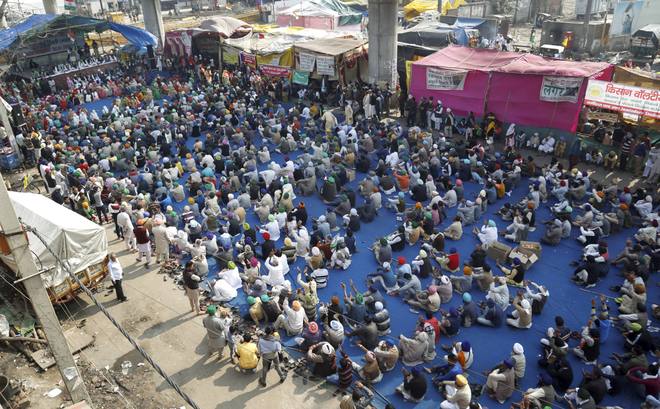
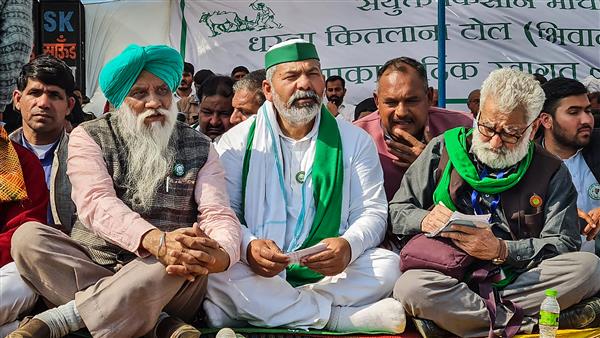
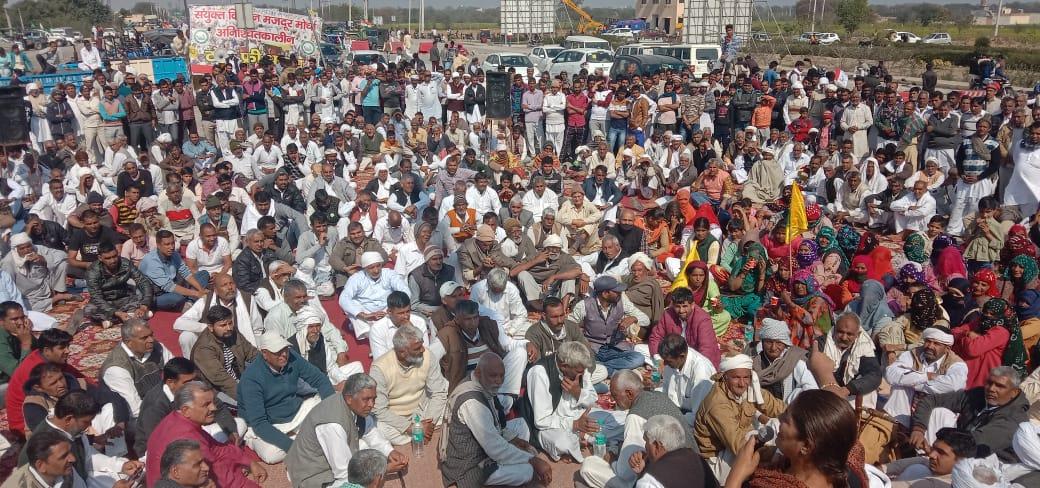
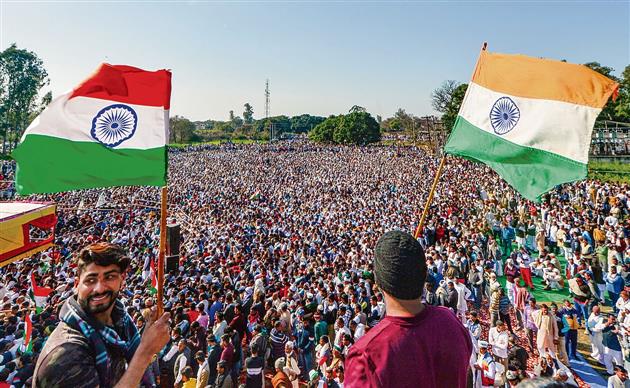
Farmer leaders Rakesh Tikait, Balbir Singh Rajewal and Darshan Pal Singh were among the thousands of farmers gathered at a mahapanchayat in Haryana’s Charkhi Dadri on Sunday to garner support for the protest against the three contentious farm laws.

Farmer leader Darshan Pal Singh gave a call to intensify the agitation in Haryana.Farmers attend the ‘mahapanchayat’ in Charkhi Dadri, Haryana, on Sunday. Tribune Photo

“The Haryana BJP government has let down people and has no right to stay in power,” he said.

He said he had cautioned the government about the new Bills during the initial discussion but his voice was not heard.

Also read: Farmer unions write to India head of UNHRC, seek intervention in farmers’ arrest

No ‘ghar wapsi’ till farmers’ demands are met: Tikait

Farmer commits suicide near Tikri border; large number of villagers and farmer activists attend cremation

Taking a lesson from the Jind ‘mahapanchayat’, organisers of the ‘mahapanchayat’ at Kitlana have set up a brick-lined stage and enclosed it with pipes to ensure the safety of the farmer leaders at the stage.

Singh urged the youth to come ahead and take forward the agitation.

“We have debated clause-wise on the law but lies have been spread about the discussion. Union Ministers have realised their mistake in the enactment of laws. Sarv khap panchayat has immense strength to take the stir ahead and we hope that a united struggle will ensure win of the farmers,” Singh reiterated.

Haryana Deputy Chief Minister had stated that he would resign from the government if issue not resolved by January 26.

Rakesh Tikait said khap panchayats had emerged as a strong social set up during the times of Raja Harshvardhan.

“The government tried to divide people on the basis of Haryana and Punjab, Sikh and non-Sikh but you should stay strong. There is not a single weak link in the agitation,” he assured the kisan morcha leaders.

On the violence of Republic Day, he alleged: “Our young people were misguided and taken to the Red Fort by government agencies.”

“Two government representatives came to meet me yesterday but I refused to meet them separately as every discussion will be held collectively in the presence of 40 members of the kisan morcha,” Tikait said.

The MLA from Charkhi Dadri and Sangwan khap pradhan, Sombir Sangwan, on Saturday had said the ‘mahapanchayat’ would be a ‘turning point’ in the agitation of the farmers against the farm laws.


Non-Jats too at Shamli meet It’s now about rural, not agri economy | Haryana gears up for ‘chakka jam’ today

Non-Jats too at Shamli meet

Farmers wave the Tricolour during a ‘kisan mahapanchayat’ in Shamli district of Uttar Pradesh. PTI

Vibha Sharma

Tribune News Service

New Delhi, February 5

Amid the growing opposition to the Centre’s agri laws, thousands of farmers today turned up for a “kisan mahapanchayat” in western Uttar Pradesh’s Bhainswal village in Shamli. The protesters reached the village on tractors, two-wheelers, four-wheelers as well as on foot, defying prohibitory orders under Section 144 of the CrPC.

  • Also read: Protest limited to farmers of one state: Narendra Singh TomarAhead of the 2022 Assembly elections, this is the fourth major farmers’ meeting in western UP after Muzaffarnagar, Mathura and Baghpat. Sources say BJP’s rivals in the state are trying to make it an agitation regarding rural economy, not just farm economy, by including non-Jats, especially the Dalits.The meeting today was attended by members from “all castes and professions,” they say. So far, the protests against the farm laws have been led by ‘Jats’ and ‘Gujjars’, the land-owning castes.
BKU national spokesperson Rakesh Tikait at the Ghazipur border. Manas Ranjan Bhui

Prof Sudhir Panwar, who belongs to Bhainswal and is affiliated with the Samajwadi Party, said: “The aim is to make it all about rural economy instead of agri economy. After all, non-farming castes in the village are largely dependent on farmers for their income.”

http://

Meanwhile, the Haryana Government has extended the suspension of mobile Internet services in Sonepat and Jhajjar districts till 5 pm tomorrow in view of the three-hour “chakka jam” by farm unions. The farmers, however, say emergency and essential services will not be hindered.

Farmers’ leader Rakesh Tikait is expected to arrive at the Kitlana toll plaza in Charkhi Dadri on February 7 to participate in a mahapanchayat, Independent MLA and Sangwan khap pradhan Sombir Sangwan said.

Trudeau’s remarks can harm ties: Govt

The Centre has told Canada that remarks on its internal affairs by its top leaders, including PM Justin Trudeau, had the potential to harm bilateral ties between the two countries. TNS

Unhrc for restraint

UN Human Rights Commission has called for ‘max restraint’ by the govt & protesters. Amid Internet ban, it said peaceful assembly and expression should be protected offline and online.

Tricolour row: Kin of deceased booked

Kin of a Pilibhit farmer, who died in a road mishap near Ghazipur, have been booked for allegedly insulting the Tricolour after a video of his last rites showed the body draped in the Tricolour.


Three more farmers die at Tikri One from Jind hangs himself, two others from Punjab die of heart attack

Three more farmers die at Tikri

Farmers protesting against the three farm laws listen to a leader at the Tikri border on Sunday. PTI

Tribune News Service

Sonepat, February 7

Three more farmers died at the Tikri border on Sunday during the ongoing farmers’ protest against the three farm laws. A farmer from Singwal village in Jind district reportedly hanged himself.

Heart attack was suspected to be the reason behind the death of two farmers from Punjab.

Karambir (52) of Singwal village in Jind district reportedly ended his life by hanging himself from a tree near the Sector 9 bypass. He was a part of the protest since the last week of November.

One of them was BKU leader

  • Karambir (52) of Jind’s Singwal village reportedly ended his life by hanging himself from a tree
  • In the suicide note, he blamed the three farm laws and the Cente for taking the extreme step
  • BKU leader Sukhjinder Singh (57) of Moga district and Lakha Singh of Sangrur district died of heart attack

Fellow farmers said they played cards till 11 pm last night, after which they went to bed. They said they found his body hanging from a tree in a park this morning.

The police reached the spot after getting information. The police recovered a suicide note from a pocket of the deceased, in which he blamed the three agricultural laws and the Centre.

The police handed over the body of the deceased to his kin after postmortem.

A large number of villagers and farmer activists attended his cremation. ‘Kisan ekta zindabad’ slogans reverberated as his body was being taken for cremation. The deceased is survived by his wife and three daughters.

Two farmers from Punjab also died at the Tikri border today. One of them was identified as Sukhjinder Singh (57) of Dhulkot Ransi village in Moga district. He was president of the Nihal Singhwala block of the BKU (Qadian).

He was part of the first group which reached the Tikri border on November 26 and had been putting up in a trolley near pillar number 75.

Another farmer, Lakha Singh of Kalondi village in Sangrur district, died today. He had arrived at the Tikri border on February 3 and had been putting up with a group of farmers near the Sector 9 bypass.

He went for a morning walk today and lay down after coming back. When other farmers called him for tea, he did not respond. They took him to the General Hospital, where doctors declared him dead.


We stand with farmers, Greta: Young protesters

We stand with farmers, Greta: Young protesters

Greta Thunberg. Reuters file photo

Amarjot Kaur
Tribune News Service
Chandigarh, February 5

Young guns of ‘generation Z’ today gathered at Matka Chowk here to support farmers and Greta Thunberg, a Swedish environmental activist known for challenging world leaders to take immediate action against climate change. Moved by her tweets and the plight of farmers protesting against the new agricultural laws, the children expressed concern over food security and the future of India.

Udaybir Singh (12) said: “I support Greta for standing up for the farmers. I read her tweet and was deeply moved by her concern for the country.”

Nine-year-old Harveer Pratap Singh stood at the chowk, shouting slogans of ‘Jai Jawan, Jai Kisan’. He said: “I am here to support the farmers who are rightfully asking for the black laws to be repealed. The government is calling us terrorists, but we are farmers. Farmers are not terrorists.”

Jiya, a 15-year-old city student, backed Greta’s tweet ‘I still stand with farmers’, and said: “I like that Greta’s speaking about the farmers plight and she’s right in supporting the farmers. The government should at least address the issue.”

Zorawar Singh (12) shared: “My father’s in the Army and my family has been farming for generations. The farmers are not anti-nationals. They are fighting for their rights. I am here to support them, just like Greta did.”

Anvi Gupta (12) said: “I saw the news yesterday about Greta and I don’t like what the government is doing. They are hurting farmers for no apparent reason and are supporting private companies. I don’t think the future of this country is secure.”

Protests at Sector 20, Marriot Chowk

People protested at the Sector 20 roundabout and the Marriot Chowk. Parneet Kaur, a teacher, said: “I’m here because these farm laws are not just anti-farmer, but anti-consumer too.” At the Sector 35 roundabout, the protesters from Dhanas distributed badges and flags of the Bhartiya Kisan Union to supporters.


At Singhu border, Rakesh Tikait’s cutouts, posters & badges of farmers stir draw crowd

At Singhu border, Rakesh Tikait's cutouts, posters & badges of farmers stir draw crowd

BKU spokesperson Rakesh Tikait during a Mahapanchayat, organised by Bharatiya Kisan Union (BKU) and khap panchayat, to mobilise support for their ongoing agitation against Centre’s farm reform laws, near Kitlana toll in Charkhi Dadri district on Sunday. PTI photo

New Delhi, February 7

The demand for cutouts of Rakesh Tikait at Singhu border underlines the growing popularity of the farmer leader credited with reviving the farmers’ movement against the Centre’s farm laws following violence during a tractor rally on Republic Day.

Roadside stalls selling badges, posters and other literature related to the farmers’ stir are a common sight at Singhu border.

Wasim Ali, who has set up such a stall at the protest site, says hand-held cutouts of Tikait are a big hit among the crowd.

“Each cutout of Tikait is priced at Rs 20. I have been selling the cutouts since the last few days as they are in high demand,” he said.

Around 700-800 such cutouts are sold every day, said Ali, a resident of Bawana in north west Delhi.

“I usually buy these cutouts from Sadar Bazar and sell them here. These are the most demanded items at my stall,” he added.

Tikait’s image received a massive boost after he defiantly announced to continue the agitation, even as a large posse of Uttar Pradesh police personnel gathered at Ghazipur protest site after the Republic Day violence, with rumours rife that he might be arrested.

A section of protesting farmers had entered Delhi and reached up to ITO and Red Fort in the heart of the national capital during their tractor rally on January 26. In clashes between police and farmers, scores were injured and property, including buses, were vandalised.

The Bharatiya Kisan Union (BKU) leader was unwell when a large number of UP police personnel gathered at Ghazipur border where he had been camping for over two months in protest against the contentious farm laws.

A cornered Tikait, however, addressed a huge crowd at the protest site, which has now become a focal point of the agitation, after his teary-eyed speech was beamed by news channels amid dwindled presence at Ghazipur border after the January 26 violent clashes.

He had reaffirmed the resolve of the farmers, saying “they won’t relent or retreat”.

Tikait’s emotional appeal galvanised thousands of farmers from western UP as well as Punjab and Haryana, who took to road to join the agitation that had faced the threat of petering out in the wake of the January 26 episode. PTI


Farmers block Chandigarh-Zirakpur, Panchkula-Zirakpur border points Traffic has come to a complete halt on both sides of the highways

Farmers block Chandigarh-Zirakpur, Panchkula-Zirakpur border points

Farmers block the Panchkula-Shimla highway as part of their ‘Chakka Jam’ on Saturday. Tribune Photo

Tribune News Service

Zirakpur, February 6

Several light points on Saturday were blocked by protesters in Zirakpur during the ‘Chakka Jam’ announced by farmers.

Farmers’ union on Friday had announced a ‘Chakka Jam’ to protest against the Internet ban on Singhu, Tikri and Ghazipur borders.

Villagers blockLandran Mohali-Kharar road on Saturday. Tribune Photo: Vicky

The Chandigarh-Zirakpur border and the Panchkula-Zirakpur border have been blocked. Traffic has come to a complete halt on both sides of the highways.

Meanwhile, in Mohali, main light points and T-points have been blocked by protesters.

Vehicles return following farmers’ protest at the Chandigarh-Zirakpur border. Tribune Photo: Nitin Mittal

Protesters have parked personal vehicles in the middle of the roads.

DSP (Traffic) Guriqbal Singh said: “We are trying to divert the traffic and managing U-turns. The situation is peaceful. No untoward incident reported till now.”


60-yr-old man from Chandigarh held in connection with Red Fort violence

60-yr-old man from Chandigarh held in connection with Red Fort violence

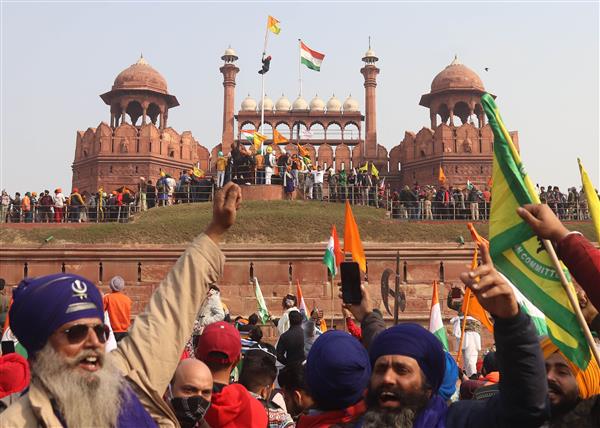
Many of the protesters, driving tractors, reached the Red Fort and entered the monument on Republic Day. Tribune file

New Delhi, February 7

The Delhi Police on Sunday arrested a 60-year-old man from Chandigarh in connection with the violence that took place at Red Fort during the farmers’ tractor parade on Republic Day, officials said.

With his arrest, the total number of people nabbed by Delhi Police in connection with the violence that took place across the national capital on January 26 has gone up to 127.

Sukhdev Singh was arrested from Chandigarh by the Crime Branch team, which is probing 13 cases registered in connection with the Republic Day violence, they said.

The police had earlier announced a cash reward for Singh and three others for allegedly instigating protesters.

The police have also announced cash reward of Rs 1 lakh for information that can lead to the arrest of actor Deep Sidhu, Jugraj Singh, Gurjot Singh and Gurjant Singh who hoisted flags at the Red Fort or were involved in the act.

A senior police officer said Singh was allegedly leading the mob at the Red Fort on the day of incident and he was found to have an “active presence” at the spot.

So far, a total of 127 people have been arrested in connection with the Republic Day violence across the national capital, police said.

Thousands of farmers protesting the Centre’s new agri laws had clashed with the police during the tractor parade on January 26.

Many of the protesters, driving tractors, reached the Red Fort and entered the monument. Some protesters even hoisted religious flags on its domes and a flagstaff at the ramparts, where the national flag is unfurled on Independence Day. PTI


Farmers protest in Ambala, Kurukshetra

Farmers protest in Ambala, Kurukshetra

Farmers blocked national and state highways for three hours at Ambala and Kurukshetra.

Tribune News Service

Ambala, February 6

On the call of a nationwide chakka jam given by farmer unions, farmers today blocked national and state highways for three hours at seven locations each in Ambala and Kurukshetra.

Farmers from Haryana and Punjab held a joint protest near the Shambhu toll plaza and raised slogans against the Union Government. Farmer leaders accused the government of making attempts to disturb harmony and not accepting farmers’ demands.

The farmers also blocked the highways near Devi Nagar, Saini Majra near Karasan and Hema Majra in Ambala, Rattangarh near Pipli, Teokar, Ladwa road and Karah Sahib in Kurukshetra.

united they stand

Earlier, we had planned to hold our protest at the Shambhu toll plaza, but a few farmers from Punjab suggested that we should hold a joint protest as it is an area on the border of Haryana and Punjab. It is also an attempt to give a clear message to the government that it should stop making attempts to create differences between Haryana and Punjab. —Gulab Singh, Farmer leader

Due to these blockades, the local police diverted traffic towards alternative routes. However, a large number of vehicles and roadways buses of Punjab preferred to wait till the blockades were lifted. Some people were also seen travelling on foot.

Harmit Singh, who was waiting near the Shambhu toll plaza, said, “I drive a commercial vehicle and after offloading some stock, I was on my way back to Punjab. I extend my full support to the farmers and I will keep waiting here till the blockade is lifted.”

Bhartiya Kisan Union (Charuni) Ambala district vice-president Gulab Singh said, “Earlier, we had planned to hold our protest at the toll plaza but around three days ago, a few farmers from Punjab suggested that we should hold a joint protest as it is a bordering area of Haryana and Punjab. Following their suggestion, we held a joint protest. It is also an attempt to give a clear message to the government that it should stop making attempts to create differences between Haryana and Punjab. We have held a peaceful agitation, the government is under pressure and we are hopeful that our demands will be met soon.”


Deafening sound & torrents of water, recall shocked villagers

Deafening sound & torrents of water, recall shocked villagers

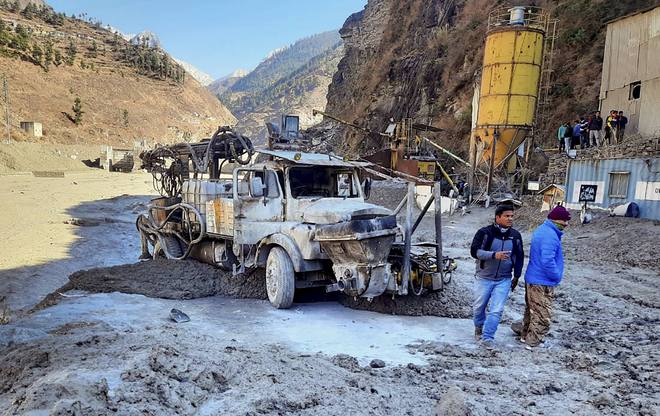
Locals at the damaged Dhauliganga hydropower project site at Raini village. PTI

Raini (U’khand), February 7

It was a tranquil winter morning in Raini village until the residents were jolted at around 10 am on Sunday by a loud sound and the sight of huge torrents of water and sludge in the Rishi Ganga river hurtling towards them.

“Before we could make out what was happening, the raging muddy waters of Rishi Ganga had devastated the landscape,” says Dharam Singh (50), a resident of the village. The scenes brought back to the people horrifying memories of the 2013 Kedarnath deluge that killed thousands.

Many were feared swept away in the sudden floods on Sunday, including those who were working near the river.

Three residents of the village, including a 75-year-old woman identified as Amrita Devi who had gone out to work in her field close to the bridge on the Rishi Ganga, are missing since the avalanche struck after the Nanda Devi glacier burst.

Others missing include Yashpal Singh of Valli Raini, who had gone to the fields to graze his livestock and disappeared along with them.

Ranjit Singh (25) of the village, who worked in the Rishi Ganga hydel project, is also missing after the avalanche.

Pradeep Rana of Juwa Gwan village said Sanjay Singh, a resident of the same village who had gone out to the fields to graze his goats, was also missing. Some ancient temples built about 20 metres above the confluence of Rishi Ganga and Dhauli Ganga rivers have also been swept away by the violent avalanche.

Umeli Devi (34), who had come from Nepal to work in the Rishi Ganga hydel project, said 10 of her colleagues had been swept away in the avalanche. — PTI