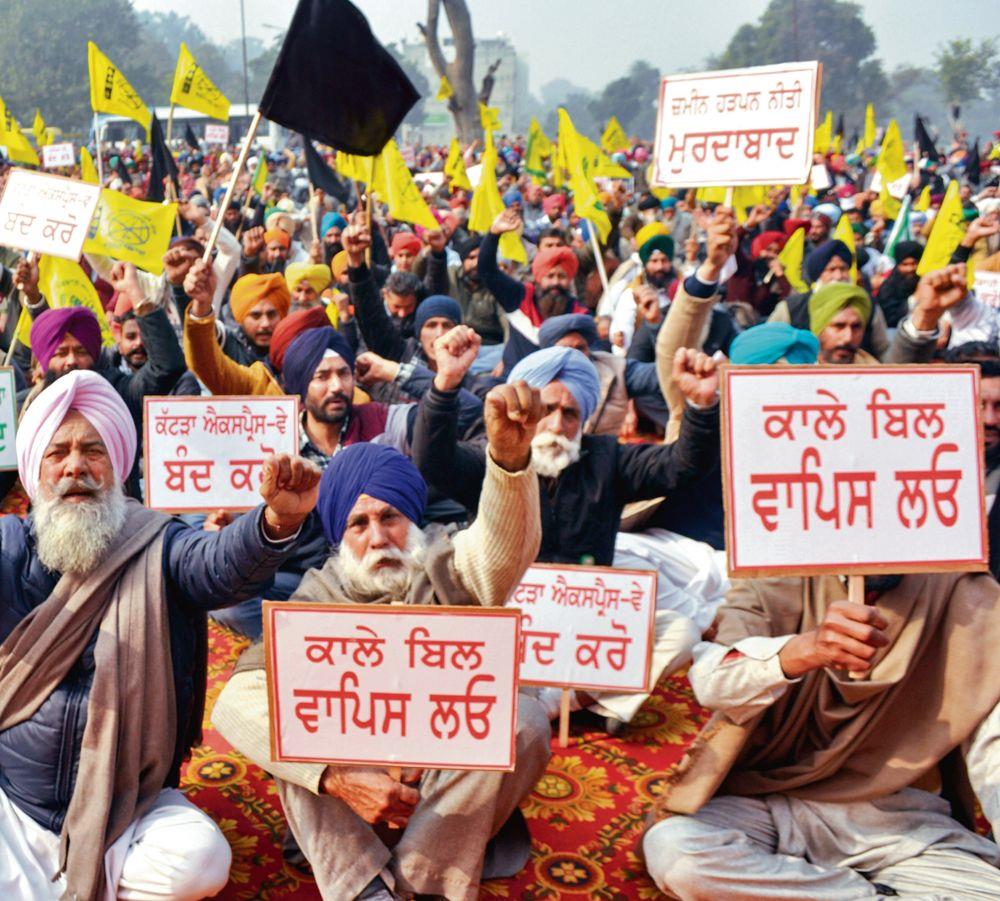
Delhi Police have arrested Deep Sidhu, singer and activist and one of the prime accused of the January 26 violence.
The Special Cell of Delhi Police was involved in the operation. Police are yet to disclose the details as to how they zeroed in on the actor who was on the run for the past two weeks.
Reports suggest that he was found through his social media uploads as he was using his California-based friend for updates.
Deep Sidhu and a few others, including Lakha Sidhana, moved towards the Red Fort after breaking the barriers near Mukarba Chowk.
The protesters had ignored a pre-decided route on Republic Day, resulting in clashes with the police. It is alleged that Deep Sidhu handed the flag to another accused Jugraj Singh and it was hoisted at the Red Fort.
After registering an FIR in connection with the violence at Red Fort, Delhi Police had announced cash rewards of Rs 1 lakh each leading to the arrests of Deep Sidhu and three others.
Meanwhile, a Punjab Police spokesperson in Chandigarh declined to confirm if Deep Sidhu was arrested from Zirakpur or from any part of the state. “Punjab Police were not in the loop regarding this operation. We have no information from where he was arrested,” the spokesperson said.
Sukhmeet Bhasin
Tribune News Service
Mansa, February 8
The family members of martyr Sepoy Gurtej Singh of Mansa, who sacrificed his life in a clash with the Chinese army at Galwan valley in Ladakh last year, are upset over farmers being called terrorists, Naxals and separatists.
Gurtej’s father Virsa Singh, a resident of Birewala Dogra village in Budhlada subtehsil, is a marginal farmer and does farming on around three acres. He said: “We are opposing the farm laws as these will hit the marginal farmers like me hard. We demand the repeal of the laws at the earliest.”
He said even he had gone to the Tikri border on his tractor to protest the three farm laws. “Our son gave his life guarding the country’s border. It really pains us when we hear media houses and politicians terming us terrorists, Naxals and separatists. But we cannot do anything,” he said.
On January 26, martyr Sepoy Gurtej Singh was conferred with Param Vir Chakra posthumously. Manmander Singh Birewala, relative of the martyr, said: “We are proud that my nephew laid down his life fighting for the nation. We are part of India and nobody is demanding a separate state. We just want the three farm laws to be repealed”. He said he was not happy how the things unfolded at the Red Fort on Republic Day.
The martyr’s family has made an NGO, Shaheed Gurtej Singh Welfare Foundation. In June, 2020, Sepoy Gurtej Singh was amongst the 20 soldiers who attained martyrdom fighting with the Chinese army in Galwan valley
Slush, screams, darkness: Survivors recount horror ITBP men prove a godsend to many
Family members of trapped workers wait outside Tapovan tunnel. PTI
Mukesh Ranjan
Tribune News Service
Joshimath, February 8
Away from the anxieties dotting the flashflood-ravaged sites in Chamoli where rescue operation is underway, the ITBP’s base hospital at Joshimath in Uttarakhand presents a picture of hope.
Recuperating at this facility are 12 workers of the NTPC’s Tapovan hydel project, devastated by Sunday’s Nanda Devi glacier burst that left at least 26 dead while over 171 are missing. In shock, the rescued workers recount their brush with death and how they held on to life trapped in a slush-filled tunnel for over five hours on Sunday until ITBP teams arrived and pulled them out using ropes. “I was working in the tunnel when alarm bells suddenly went off.
Within seconds, there was frenzied commotion. All were shouting ‘bhago paani ka sailaab aa raha hai’ (save yourself from the deluge). I felt numb for a second, but mustered courage to run—albeit in the direction of water.
“The last thing I remember was getting stuck in slush until I was pulled out. Those six hours were the darkest in my life,” says Himachal Pradesh’s Satish Kumar, 31, among the first few to be rescued.
Andhra Pradesh’s KS Reddy, an electrician, says it’s surreal to be alive. “I normally don’t work in the tunnel but yesterday around 9.30 am, I went in to fix some lights. Around 10.15 am, water gushed inside, sweeping along several workers. The electrical wire I was carrying proved my saviour as I used it to anchor myself along the tunnel wall,” the 50-year-old recounts.
Among the survivors are Nepali nationals Chitra, Kiran, Basant and Sant Bahadur, all in shock, speechless, barely able to fold hands in gratitude when asked, “Are you fine?”
Uttar Pradesh’s Virendra Kumar, pulled out with ropes as machines could not work inside the tunnels, recalls, “I fell unconscious as the wall of water hit us. Don’t remember what happened next and regained consciousness only after reaching the hospital.”
Four Chamoli residents—Lal Bahadur, Rakesh Bhatt, Suraj and Vinod Singh—too survived, courtesy ITBP personnel who proved to be a godsend amid the catastrophe.
Lok Sabha logjam ends after Rajnath Singh appeals ‘to not break tradition’ Members free to speak on farm laws during discussion on Motion of Thanks, says Defence Minister
Defence Minister Rajnath Singh speaks in the Lok Sabha during ongoing Budget Session of Parliament, in New Delhi, on Monday, February 8, 2021. LSTV/PTI photo
New Delhi, February 8
Lok Sabha resumed normal functioning Monday after a week-long disruption over the three Central farm laws following an appeal by Defence Minister Rajnath Singh that it was a duty of every member to maintain the tradition of passing the Motion of Thanks to President’s address.
After the House convened at 5 pm, Singh said the tradition of thanking the President has been continuing for long and it should not be broken in a healthy democracy.
He also said that Rajya Sabha has already passed the Motion of Thanks after Prime Minister Narendra Modi’s reply and “I appeal to members not to break this tradition in the Lok Sabha”.
Singh said members are free to speak on farm laws during the discussion on the Motion of Thanks.
Congress Leader Adhir Ranjan Chowdhury too said this tradition has been continuing since 1921 and should not be broken.
“Our demand was to discuss the issue of farmers who have been sitting in the cold on the borders of Delhi in protest against farm laws. It is regrettable that they are being stopped from entering the capital by sharp nails and barbed wires,” he said referring to the reinforced barricading at the farmers’ protest sites.
He said the Opposition wanted an assurance from the government for a standalone discussion on the farmers’ issue either after the debate on Motion of Thanks or after the discussion on Budget.
Speaker Om Birla also appealed to the members to allow the House to function and not indulge in sloganeering.
The House was repeatedly disrupted by the Opposition members from February 2 over the three farm laws which was passed by Parliament in September last year.
Earlier Birla had called a meeting of leaders of different political parties to break the impasse in the House.
In the meeting, an agreement was reached to resume its normal functioning with Singh making an appeal to start the debate on President’s address. PTI
The Army recruitment rally for the posts of soldier general duty, military clerk/ storekeeper, military technical, aviation, ammunition examiner and military technical nursing will be organised at Palampur in Kangra district for the youths of Mandi, Kullu and Lahaul and Spiti district from March 1 to 12.
Col M Raja Rajan, Recruitment Director of the Army at Mandi, said, “Due to the Covid-19 outbreak in the state, the recruitment rally could not conducted from October 6 to 14 last year”. He said the recruitment process would be conducted on the premises of Chaudhary Sarwan Kumar Himachal Pradesh Agricultural University at Palampur.
“Only those candidates can participate who had registered themselves for these posts by September 20, 2020. The candidates can download their admit cards February 10 onwards. The candidates are advised to visit the recruitment site at Palampur only on the day and time of recruitment given in the admit cards,” he said.
Col Rajan said it was mandatory for all candidates to use masks, gloves and sanitiser during the recruitment rally. He added, “The recruitment process is completely computerised and transparent. So, candidates are advised to not come under the influence of any broker on the promise of a job. Candidates with fake certificates will be handed over to the police and legal action will be taken”.
No ‘ghar wapsi’ till farmers’ demands are met: Tikait Tikait claimed the campaign against the agriculture laws is going strong
BKU spokesperson Rakesh Tikait during a Mahapanchayat, organised by Bharatiya Kisan Union (BKU) and khap panchayat, to mobilise support for their ongoing agitation against Centre’s farm reform laws, near Kitlana toll in Charkhi Dadri district. PTI
Charkhi Dadri (Haryana), February 7
Asserting that the agitation against the Centre’s farm laws is a people’s movement that will not fail, Bharatiya Kisan Union leader Rakesh Tikait on Sunday said there will be no “ghar wapsi” till protesting farmers’ demands are met.
Tikait lauded the role of “khap panchayats” (caste councils) and their leaders in supporting the farmers’ stir.
Addressing a “Kisan Mahapanchayat” near here, Tikait said the government should rollback the contentious farm laws, frame a new legislation to assure the continuation of the minimum support price (MSP) for crops and release the farmers arrested recently.
“There will be no ‘ghar wapsi’ till farmers’ demands are met,” he said.
“Yeh jan andolan hai, yeh fail nahi hoga (this is a people’s movement, this will not fail),” he added.
Tikait claimed the campaign against the agriculture laws is going strong.
Dadri MLA and chief of the Sangwan Khap, Sombir Sangwan, who in December withdrew support to the BJP-JJP government in Haryana, and another Independent MLA, Balraj Kundu, were also present at the event.
Earlier on February 3, Tikait had addressed his first “Kisan Mahapanchayat” in Jind’s Kandela.
The BKU leader from Uttar Pradesh has been camping at Ghazipur on the Delhi-UP border as part of a campaign by farmer unions against the central laws enacted in September.
Tikait said “khaps” go back to the days of King Harshvardhana and have been playing their role in society ever since.
“We need these khap panchayats today. You should not let anything divide you,” he said, adding that when the stir started, attempts were made to divide farmers.
Cautioning the protesting farmers against such attempts, Tikait said some people will try to divide them in Sikh or non-Sikh, Jats or non-Jats, but they should remain united.
Tikait said he salutes the 40 farmer leaders spearheading the agitation. There is not a single weak link in the agitation, he claimed.
Seeking to project unity among farmer unions, Tikait said the “manch (stage) and panch (leaders leading the stir) will not change”.
The BKU leader, whose emotional appeal recently had revived the protest that was losing momentum after the January 26 violence in Delhi, said people from different sections of society are part of the stir.
Tikait praised BKU leader from Punjab, Balbir Singh Rajewal, who was present on the occasion, for providing a sound leadership to the stir.
“Rajewal is our elder leader, he is very wise. We will fight this battle strongly,” he said.
Hitting out at the Centre, Tikait said, “This government is pro-capitalist.”
Tikait also made a mention of the tragedy caused by a glacier burst at Joshimath in Chamoli district of Uttarakhand, leading to a massive flood and causing large-scale devastation in the upper reaches of the ecologically fragile Himalayas.
“A big tragedy has struck Uttarakhand. I appeal to the BKU family and other farmer organisations to lend a helping hand and assist the local administration,” he said.
He appealed to all to conserve water and plant trees to protect the environment.
Taking a lesson from the Jind Mahapanchayat where the stage had collapsed, the organisers had brick-lined the stage this time.
Meanwhile, another “Kisan Mahapanchayat” was organised at Sunehda in Nuh district, where Haryana BKU chief Gurnam Singh Chaduni accused the government of being stubborn and not considering farmers’ demands.
The laws will destroy farmers, Chaduni said at the event, which was attended by Congress leader Aftab Ahmed. —PTI
In recent years, China’s technological strides and development of a wide range of air-to-air missiles (AAM) has prompted some nations to integrate these missiles on their fighter fleet, or simply go in for collaboration/purchase of a Chinese combat aircraft like the Chengdu JF-17 Thunder. The JF-17, developed in partnership with Pakistan, has been exported to Myanmar and Nigeria and promises to equip a host of third world countries with an affordable option towards beyond visual range (BVR) needs for domination of the skies.
The Chinese are also aggressively marketing their now highly mature fourth generation platform — the Chengdu J-10C Vigorous Dragon equipped with an active electronically scanned array (AESA) radar developed by No. 14 Institute and a potent suite of AAMs — for the export market, including the LETRI PiLi-15 or the PL-15, the most advanced long-range BVR AAM in service with People’s Liberation Army Air Force (PLAAF).
Meanwhile, the world is taking note of these fast-paced developments towards China’s quest to develop next generation AAMs, which beyond the massive scaling up of PLAAF’s ability to hold its own in contested airspace will also affect the market share of other nations in the AAM export arena in the coming years.
The pace of development of AAMs in China has been nothing short of remarkable, with the focussed and near clinical might of the powerful Chinese state thrown behind this key capability, specifically being developed to counter the global expeditionary deployment and air domination of the United States Air Force (USAF) and the United States Navy (USN).
Interestingly, in the 1990s, China’s AAM inventory consisted of weapons purchased from Russia or direct copies of them and western AAMs like the AIM-9 Sidewinder and Matra Magic.
China also secured a large number of Python 3 AAMs from Israel, which were licensed as the Luoyang PiLi-8 or PL-8. The transformation to an indigenous AAM development pipeline took place with induction of the Russian Su-27 Flanker platform, wherein the Chinese closely took a look at the advances made by the Russians in this domain and blatantly reverse engineered Russian AAMs.
Access to a host of technologies and scientists working in the field of AAMs after the collapse of the Soviet Union also helped China’s cause.
The Leihua Electronic Research Institute (LETRI) and the No. 607 institute’s PiLi 12/PL-12 BVR active homing AAM was the first potential success story for the Chinese home industry, development for which was started in the 1990s.
Based on the Russian R-77, the PL-12 was developed specifically to counter the US AIM-120 AMRAAM. The miniaturised AMR-1 active seeker, a copy of the Russian 9B-1348 seeker on the R-77, was developed with help from AGAT Research Institute in Moscow.
The datalink and actuators also needed support from the Russians. In comparison to the AMRAAM, the PL-12 is longer, wider and heavier, with tail mounted control fins having distinctive notch cuttings at their base. The PL-12 has two datalink antennas for mid-course guidance and houses a radio proximity command fuse for the warhead. A variable thrust solid fuel motor offers two levels of power for use during boost phase trajectory, providing a decent no escape zone (NEZ).
With development of follow-up versions, improved ECCM is now available. The overall performance of the PL-12 possibly rivals the R-77 (RVV-AE) and AIM-120 C-4.
A J-10A armed with PL-12 AAMs. | Photo: sameerjoshi73.medium.com
Significantly, the PL-12A/B/C (the C version having foldable tail fins) allowed the Chinese industry to understand the nuances of this high technology domain very well, primarily how a modern AAM development looked like; spawning a wide range of in-house R&D while gradually reducing their reliance on external support from Russia.
Ramjet propulsion has been believed to be tested on the PL-12D variant. The PL-12 AAM has been exported under the designation SD-10A with the JF-17 platform. The SD-10B promises a far greater NEZ, better anti-jam capability and possible passive homing ability against Airborne Early Warning & Control (AEW&C) aircraft. The maximum range of the PL-12 varies between 60 and 90 km.
China’s roadmap of development expanded beyond the PL-12 with the Luoyang PiLi-10/ PL-10, an advanced dogfight weapon developed to counter western missiles like the AIM-132 ASRAAM, IRIS-T, A-Darter and the AIM-9X.
Development began at the Luoyang Electro-Optical Centre around 2004-05. The PL-10 features a multi-element imaging infrared (IIR) seeker, laser proximity fuse, a thrust vectoring motor, with an off bore-sight capability of 90 degrees. It has a lock on after launch (LOAL) capability, which gives it beyond the within visual range engagement capability, much like the MBDA ASRAAM and the South African A-Darter.
It is believed to have entered initial production in 2013 equipping all fighter types in the PLAAF, as well as export JF-17 sales. This missile will be effective out to 30-40 km and in terms of performance, may rival similar within visual range (WVR) designs across the world.
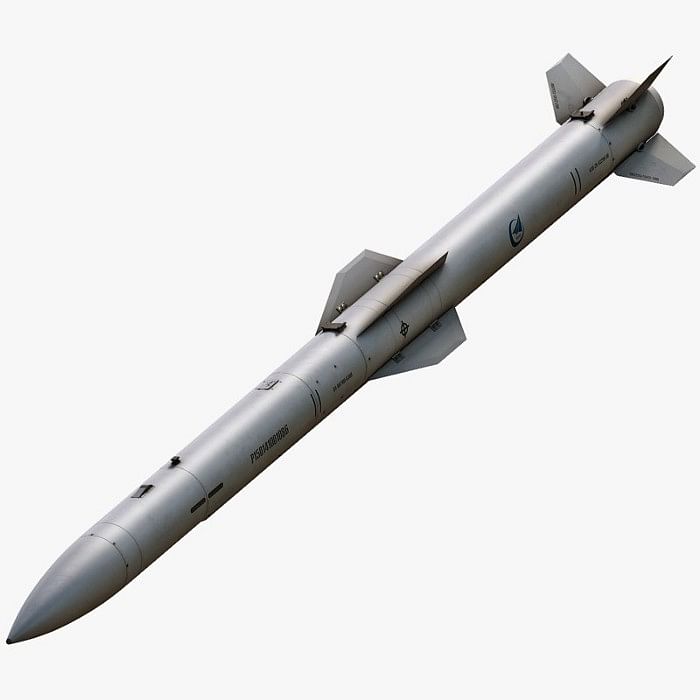
The LETRI PiLi-15/PL-15 is the most advanced AAM deployed by the PLAAF in recent years. An evolution of the PL-12, the PL-15 has been redesigned with a cropped main and tail control fins with a smaller wingspan to fit into the internal weapon bay of the next generation J-20 and the J-31 fighters.
It is powered by a dual pulse rocket motor, giving it an estimated range of 200 km with a large NEZ. It is equipped with a two-way datalink for dynamic re-targetting in air. The active seeker uses an AESA aperture developed by No. 607 institute, which has a narrow target acquisition beam. The AESA seeker also gives robust ECCM capability. The missile was tested in 2015 and now equips the J-10C and the J-16s, as well as the limited number of J-20s in service.
The PL-15 is the most advanced BVR missile in service with the PLAAF/PLAN. | Photo: sameerjoshi73.medium.com
Incidentally, all carrier types are equipped with an AESA airborne interception (AI) radar, which gives them ability to launch the missile in LOAL mode and guide the PL-15 through the datalink in an active or a passive mid course guidance routine from the same/different platform till such time the AAM goes active (A-Pole). This works well for slashing and stealthy attacks by these fighters, especially the J-20 with its low observable (LO) features.
It is also believed that mid course target update may also be available vide special mission aircraft like the KJ-2000/500/200 AEW&C, much similar to the passive guidance available on the AIM-120D AMRAAM.
Like the US, China has realised the challenges of squeezing more missiles into the weapons bay of the LO fighter, with four PL-15s fitting into the bay of the J-20. However, the Chinese may be working on a further compressed version of the PL-15 (PL-16?), with a performance similar to the PL-15. This will ensure that more long-range AAMs can be carried inside the conformal weapons bay of the J-20.
Nonetheless, the PL-15 is the weapon of concern for the rest of the world, having an ability to match up to the long-range engagement envelope of the MBDA Meteor and the Russian R-37M. It possibly outranges the USAF’s latest version of the AMRAAM, the AIM-120D; precisely the reason why Lockheed Martin has been urgently tasked to develop the AIM-260 and restore the balance back in favour of the United States Air Force.
And then there is the very long-range PL-XX (possibly PL-17?) AAM. First seen on a PLAAF J-16 in late 2016, this massively lengthy missile has been dubbed the ‘flying telegraph poles’ in the West. The PL-XX is most surely meant to engage and hold at risk assets like AEW&C aircraft and air refuelling tankers out to 300+ km. It most probably has a large dual pulse rocket motor and equipped with an AESA terminal homing radar seeker.
Some reports also indicate a secondary imaging infrared seeker, which will help increase the kill probability (PK). The VLRAAM is expected to fly a ballistic trajectory in the stratosphere to achieve its long range much like the erstwhile AIM-54 Phoenix. Presently the PL-XX has no match in the West, though the R-37M has a similar high trajectory interception profile. The first successful test flight of the missile was carried out in 2016 and as of now, it is mated only with the Shenyang J-16 fighter.
China is also exploring ramjet technology, experimenting with variants on the PL-12 and other types to develop a missile like the MBDA Meteor. While it is a matter of time before such technology is available to the Chinese, the ongoing production focus is on dual pulse, large form factor, solid fuel rocket motors to increase the range, as well as the no escape zone (NEZ).
Newer captive technology is also being acquired from Russia like the R-77–1 (RVV-SD) with a range of over 100 km, which is the primary armament on the newly acquired Su-35 fighters of PLAAF.
This weapon, especially its active seeker and datalink, will be studied for its worth and benefit the future versions of the PL-12/15s. Ironically, the Chinese achievements in development of AESA seeker for its AAMs, has outpaced similar efforts in Russia.
In fact, the newer generation of Chinese AAMs, especially the PL-15, may be half a generation ahead of the Russian AAM development effort. If one takes a look at what the Chinese have invested into their AAM development in terms of raw capital and weighs it against the Russian equivalent, there is simply no comparison. But are the Russians really behind in the air-to-air missile arms race?
Russia’s AAM industry has been steadily bouncing back in the past decade. It was severely restricted by very limited internal investment post the collapse of the Soviet Union. Only the exports kept the missile complexes going.
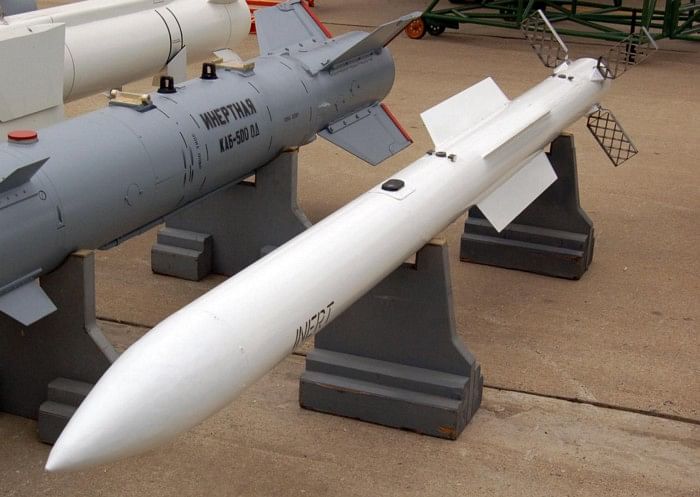
The Vympel R-77 (RVV-AE) NATO designation AA-12 Adder and the Russian equivalent of the AIM-120 AMRAAM, entered Russian Air Force (RuAF) service only around 2015 when it was available for export in the end 1990s. The RuAF has now widely deployed the advanced variant of the missile, the R-77–1 (RVV-SD) on its Sukhoi fleet. This has an engagement range of 100+ km with a redesigned active radar AGAT seeker and new fins. Russian Su-35s have routinely been seen with this type during practice intercepts of NATO assets in the Baltic zone, over the Black Sea and Syria.
A R-77 on static display. | Photo: sameerjoshi73.medium.com
The R-77 also has a testbed ramjet version designated the R-77-PD. A more advanced version designated the R-77M or izdeliye 180, is being developed for Russia’s Sukhoi Su-57 Felon low observable fifth generation fighter and the existing Su-35S Flanker-M. The missile features an under development AESA active seeker head and has a large solid state, dual pulse motor with conventional fins. A ramjet version of the same designated K-77ME is also under development.
The K-77M is intended to match up to the AIM-120D and the PL-15, while the K-77ME is meant to take on the ramjet approach demonstrated on the MBDA Meteor. The targeted range of the R-77M will be between 130 and 150 km.
For targets beyond 200 km, the RuAF has inducted the R-37M (NATO designation AA-13 Axehead). The missile and its variants also have the names K-37, izdeliye 610 and RVV-BD. The R-37M is an updated version of the R-37 AAM, which was meant to be the primary armament of the MiG-31 Foxhound against stand-off targets like tanker and AWACS aircraft.
Testing of the R-37 continued through the 1990s. In 1994, a trial round scored a kill at a range of 162 nautical miles (300 km). However, the programme appears to have been dropped around 1998 over cost.
Work on the missile was restarted in late 2006 as part of the MiG-31BM programme to update the Foxhound with a new radar and LR air engagement capability. In 2018, the R-37M finished its operational validation tests. It flies at hypersonic (Mach 5+) speeds and has a range exceeding 300 km. The range depends on the flight profile, from 150 km for a direct shot, to 400 km for a cruise glide profile in the stratosphere.
It may well also be carried by the Su-35 and the Su-57. The missile can be guided semi-actively or actively through AGAT 9B-1388 active seeker. The R-37M is said to have the ability to engage supersonic cruise missile carrying bombers like the B-1 Lancer as well as the cruise missile projectiles. The weapon deployed on the MiG-31BM, offers a very unique long-range interception capability to the RuAF, unbeaten by any air force in the world at present. A likely upgrade with an AESA seeker may happen in the near future.
Russia is also grappling with a need to replace its R-73/4 (NATO codename AA-11 Archer) WVR AAM for some time. Although a game changer when introduced in the 1990s with its massive off-bore sight lock on capability, the lack of an imaging infrared (IIR) seeker makes it very vulnerable to modern countermeasures.
An improved version of the R-74, the K-74M izdeliye 750 has been developed, which features fully digital and re-programmable systems and an IIR seeker, intended for use on the Mig-35/29 and the Su-30/34/35 family. A further upgrade, known as the K-74M2 izdeliye 760, is intended for the Su-57 aircraft. This missile has reduced cross section to fit in internal weapon bays and will match the performance of the AIM-9X, ASRAAM and the PL-10. The K-74M has an effective range of 35km.
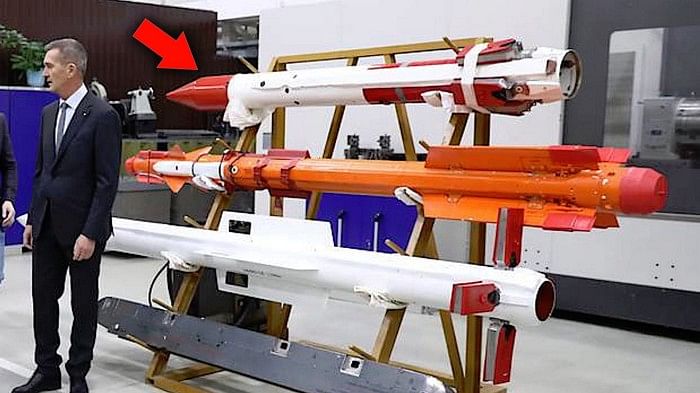
A recent snap at the Vympel factory shows the presence of another AAM, which is distinctively shorter than the R-74. While no information is available on this type, it is believed to be a WVR development for the Su-57 platform and may be carried in the internal weapons bay. It is indicated by the red arrow in the photo below.
The R-77–1 (bottom), the R-74 (centre) and the unknown Russian AAM at the Vympel factory. | Photo: sameerjoshi73.medium.com
What is noteworthy is the rapid spike in China’s AAM development ability, which has unnerved the Russians to a great extent. Investments in Russian programmes in the last decade have partially been spurred by China’s ability to fast track this vertical. Concerns that China will undercut the Russian AAM export market share have proven to be correct.
China is positioning its military hardware with its economic Belt and Road Initiative (BRI), tactically pushing its military hardware on third world nations at a cost effective price point. A prime example of this effort is Myanmar, which has received Russian military aid in the past. While Russia does not have an economic might to put behind defence development initiatives the way China does, a resurgent nationalistic agenda in Moscow is helping the revival of next generation aerospace and defence programmes to an extent.
It is here that the Sukhoi Su-57 development and upgrades to the MiG-31 and Su-35 fleet, will drive induction of more competitive AAMs in the near future geared to counter the NATO alliance. These will also more often than not, find their way to the export market dovetailed with the sale of Russian fighter aircraft.
The Russians, however, seem to very well realise that unless they promptly scale up research in next generation AAM technologies, the capability gap between the West as well as China, will only keep widening — especially on the bang for the buck scale. That would crucially hit Russia’s profitable defence export market share.
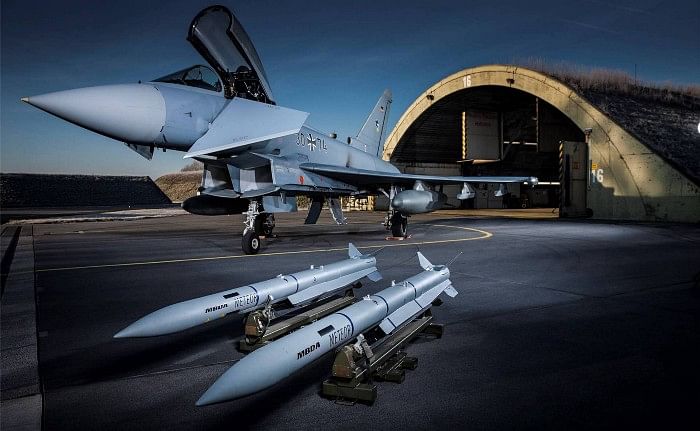
The deadliest air-to-air missile in the world is the MBDA Meteor, which got operational in 2016 on the SAAB Gripen fighter fleet and now also equips the Eurofighter Typhoon and the Dassault Rafale.
The MBDA Meteor with a Luftwaffer Eurofighter Typhoon. | Photo: sameerjoshi73.medium.com
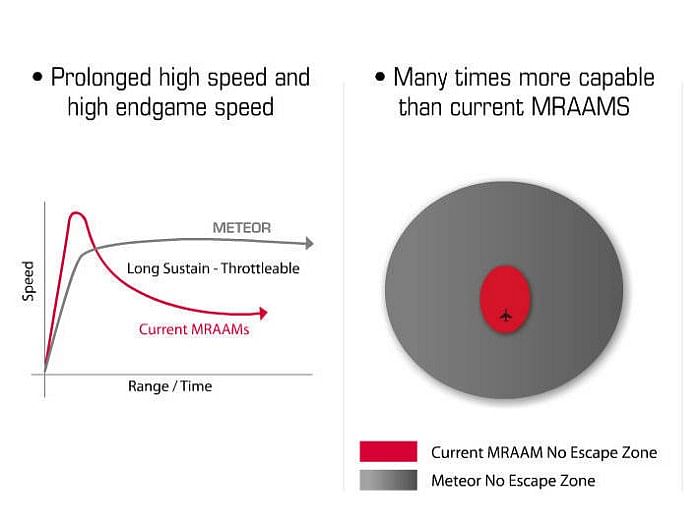
The Meteor possibly outranges all missiles in the world while engaging manoeuvring targets at long-range. A core capability on the Meteor is the world’s first operationalised ramjet motor. At launch, the Meteor is boosted to a speed above Mach 2 by a conventional motor, propelled by fuel from a chamber, which eventually becomes the ramjet combustion chamber when the rocket fuel expends. Above Mach 2, the missile transitions to ramjet operations, maintaining a ‘throttle able’ speed up to Mach 5.
This massively boosts the range and the Meteor’s PK — achieved through a very large No Escape Zone (NEZ) — till within which the target cannot kinematically outrun the missile.
The AIM-120D and the PL-15 have a NEZ much smaller than the Meteor since the Meteor with its throttle capable engine can vary and use optimal fuel during cruise, and accelerate toward the target during the terminal phase of the engagement (endgame) with a far higher potential energy state.
Photo: sameerjoshi73.medium.com
In contrast, while the AMRAAM has a dual impulse engine, once the boost phase is over and the missile coasts, it will fly unpowered for a larger portion of the NEZ. The Meteor with its Ramjet propulsion, sidesteps the second way to boost range as in the PL-15, PL/XX and the R-37M, which carry more propellant. This leads to bigger and heavier missile systems, limiting the number of fighters types which may be able to carry them.
The Meteor thus is a weapon of choice for the current crop of fighters in European service. What the Meteor has done is to make sure that European Air Forces have a weapon that maintains long-range superiority over the Chinese PL-15 and the Russian R-77–1 in a way that the US AIM-120 cannot.
So while ramjets are a way forward for the AAMs to extend their engagement range and envelope, it comes with a cost intensive premium tag and may not be the first choice for all end users, including the United States.
The AIM-120 AMRAAM is the West’s most proliferated air-to-air missile and the US has concentrated on miniaturisation of technology rather than increasing the size of the AIM-120 through its life cycle to expand its range, engagement envelope and PK over the past few decades.
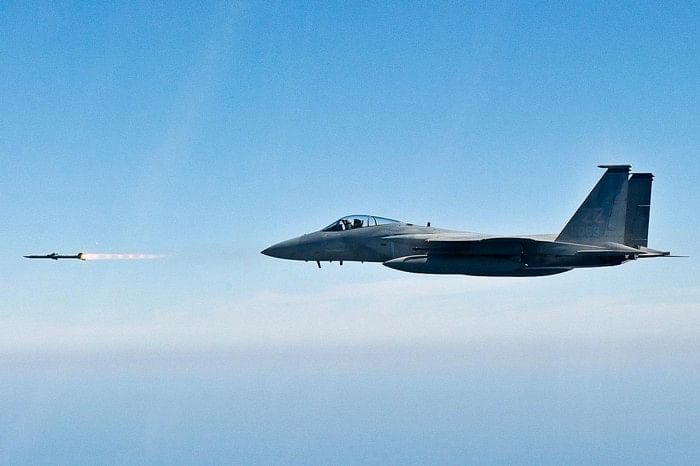
It has largely succeeded and the present top of the line iteration, the AIM-120D is propelled by a dual pulse solid fuel motor, a superbly jam resistant RF seeker and a bidirectional data link, achieving a range which is classified, but may be to the tune of 150-180 km. This has been achieved maintaining reliability within the original form factor, albeit with minor changes to control surfaces over the previous iterations. The AIM-120D equips USAF’s premier fighters like the F-22, F-35, F-15 and the F-16s, giving them a measure of long-range air domination across a variety of missions.
An AIM-120D fired by a F-15 Eagle. | Photo: sameerjoshi73.medium.com
The new dynamics for US Air Force
However, the arrival of the Chinese PL-15 AAM in 2016, has changed the dynamics of air supremacy as perceived by the USAF.
For the first time, the US faces a near peer state competitor, capable of engaging its air assets at ranges equal to or greater than the engagement capability of the USAF missiles, effectively outranging them. The PL-15 mated with a LO platform like the J-20, as well as the incoming Russian Su-57 armed with a R-77M/ME, could well erode away the supremacy enjoyed by US fifth generation fighters like the F-22 and the F-35.
In addition, the AIM-120 is fast reaching a stalemate in the miniaturisation effort to performance achieved matrix. Further reduction in size of internal components may not be able to give any worthwhile increase in long-range performance even with the use of newer grades of chemical propellants.
Interestingly, while research is taking place in the development of newer propellant mixes to increase the pulse peak power, nothing seems to be available for porting onto the AIM-120 family. In addition, measures to clean up the existing aerodynamic form factor will only yield minor results in the existing design. The USAF realises that it needs a newer and more potent BVR AAM for carriage in the internal weapons bays of its premier LO fighter fleet.
Towards this, the US Air Force and the Navy have been quietly working together to develop a new AAM called the AIM-260 that will replace AIM-120 AMRAAM.
The AIM-260 programme, also known as the Joint Air Tactical Missile (JATM), has been going on since 2017, but was publicly discussed for the first time in 2019. JATM has hired Lockheed Martin to develop a new AAM.
According to USAF, the AIM-260 will maintain the form factor of the AIM-120 and not use a ramjet motor like the Meteor. At the same time the missile will outclass the competition from the PL-15 and expected versions of the R-77 in Russia. It is possible that advances in rocket motor and warhead technology may be enough to provide a considerable boost in range when combined with a new, streamlined body.
It may have a set of miniaturised electronics and a warhead that offers improved lethality in a smaller package to create space for additional rocket fuel. The AIM-260 may employ a mixed propellent, as is envisaged for France’s Mica NG missile, which intends to use a dual pulse motor developed by Roxel that provides the weapon with up to 30 per cent more range. The pulse will also provide more power when dealing with engagement of highly manoeuvrable targets. The new version of Mica is set to debut in 2026.
The AIM 260 may employ a technologically advanced philosophy of the Israeli I-Derby ER (Extended Range) AAM. The upgraded I-Derby missile is equipped with a software-defined active radar seeker, which activates the warhead, doing away with any manner of proximity fuse. This creates additional space for the rocket propellent, which boosts the range.
Further, an AESA based RF seeker with its low energy requirements and good counter measures, will help reduce the size and shape of core electronics further, extending the target acquisition and lock on envelope.
Japan’s AAM-4B missile has an AESA seeker, which can switch to its own active guidance (A-Pole) at 40 per cent greater range than the AIM-120. This allows the fighter updating the missile towards mid course guidance to ‘snip’ at a further stand-off range, thus allowing the fighter far greater flexibility in the engagement zone.
AESA is also the way forward for the RF guidance Mica NG discussed above. Hence, while the AIM-260 is still three-five years away from active service, there are enough indicators to what technologies the missile is likely to utilise.
It is also worth noting that the AIM-260 appears to be just one part of a future family of advanced air-to-air weapons.
The JATM programme is separate from the Long Range Engagement Weapon (LREW) project. This programme has worked as an exploratory initiative used to identify the overall concept, technologies, kill chain structure, and baseline requirements for a new long-range AAM or family of missiles.
Such a weapon could well leverage a new family of small, hit-to-kill, intermediate to short-range air-to-air missiles as primary payload attached to a booster. This would maximize weight for propellant and the payload. The weapon could also be used without a booster for far shorter range engagements. A part of them would also be utilised as defensive hard kill missiles, which could react along with defensive suites like chaff and flares.
Progressive and meaningful upgrades have also kept the West’s shorter range weapons relevant. The AIM-9X Sidewinder is the top dog NATO missile with thrust vectoring flight controls, a strengthened airframe to cope for extreme maneuvering and a high resolution IIR staring focal plane array seeker in the nose.
Raytheon has also added a smarter fuse and datalink to the AAM for LOAL options, much like the Python -5, MBDA ASRAAM and IRIS-T, which share similar technologies.
The Chinese PL-10 and the Russian K-74 also come close in matching up to these western IIR AAMs. Hence, engagements in the WVR bubble would always pose problems for the engaging assets with equivalent technologies where ECM and ECCM measures would play a dominant role in aircraft survivability.
While the existing European fourth generation platforms will continue to harness the potential of missiles like the Meteor and the planned Mica NG for long-range engagements while increasing their carriage options, for the USAF, it will be low observable aircraft which will drive the next genre of AAMs developments.
These platforms may be able to approach their targets using stealth, but will be restricted by the few weapons they carry in their internal weapons bay (6 x AIM-120, 2 x AIM-9 for F-22 and 4 x AIM-120 for the F-35) to shoot down threats in contested airspace. And this is where small form factor, yet missiles with a high PK are likely to proliferate.
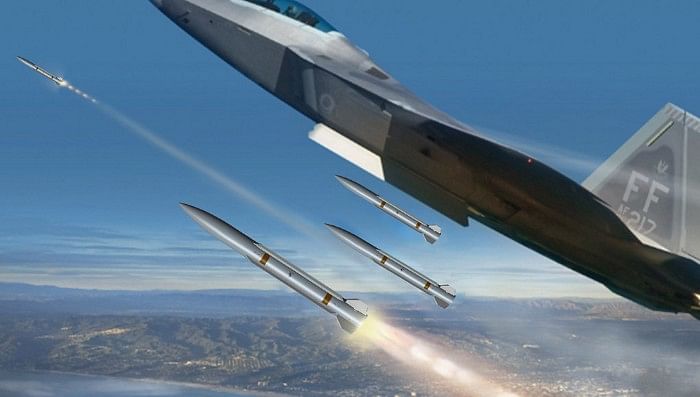
Raytheon has proposed the 1.8m long Peregrine AAM with a multi-mode autonomous seeker, with the range of the AIM-120D and the manoeuvrability of the AIM-9X. Lockheed Martin has also unveiled its CUDA hit to kill weapons technology.
A depiction of launch of the Raytheon Peregrine from a F-22 Raptor. | Photo: sameerjoshi73.medium.com
Simply put, smaller missiles with advanced capabilities may be the next major step in evolution of future AAMs for the USAF, which having spent so much on stealth aircraft, would certainly like to boost their cost effectiveness per kill.
The only worthwhile effort in the BVR missiles domain outside the US, Europe, Russia, Israel and China is taking place in Japan and India.
In 1999, the Japanese unveiled the Mitsubishi AAM-4 Type 99 air-to-air missile, 99 Shiki Kūtaikū Yūdōdan, which is a medium range active radar homing BVR developed in Japan, to replace the AIM-7 Sparrow for service on the F-15J and F-2.
The remarkably improved AAM-4B, which entered production in 2010, was the world’s first AAM with an AESA radar. The AAM-4B is however large to be carried in the weapons bay of the newly inducted F-35 Lightning II. Hence, in 2014 Japan announced collaboration with the United Kingdom to study the development and integration of a new Joint New Air-to-Air Missile (JNAAM) for service on JSDAF F-35s. MBDA UK is the prime contractor on the slightly modified Meteor missile, which can fit in the internal weapons bay of the F-35.
The JNAAM will combine the UK’s missile-related technologies and Japanese AESA seeker technologies, possibly with some adjustments to help the missile fit better in the F-35 weapons bay.
JNAAM will address the threat posed to Japan by the Chinese PL-15 and Pl-XX. By amalgamating the long-range, large NEZ USP of the Meteor with the highly advanced Japanese AESA seeker with greater detection ranges than the AIM-120D, the Japanese will have a very unique and deadly missile in their arsenal.
The Defence Research and Development Organisation (DRDO) in India has indigenously developed the Astra, an all-weather medium range AAM. Astra is equipped with a locally developed RF active seeker with a good anti-jam capability for terminal homing. It has a dual pulse rocket solid motor, which offers decent potential during endgame manoeuvres.
A dual axis datalink connects the missile to the carrier aircraft during mid course guidance and terminal targeting phase. It is capable of engaging targets at varying range and altitudes, allowing for engagement of both short-range targets at a distance of 10 km and long-range targets up to a distance of 110 km.
Astra has been integrated with the Indian Air Force Su-30MKI and the HAL Tejas fighters. Limited series production of Astra missiles began in 2017. In terms of capability, the Astra Mark 1 is equivalent to the AIM-120 C-7 and the R-77–1 AAMs.
After the development of Astra Mark 1, three new variants are planned for future — Astra IR close combat missile with IIR for shorter range up to 40 km; Astra Mark 2 with larger engagement envelope and a range of 160 km equivalent to AIM-120D (towards this, propulsion systems under consideration includes liquid-fuel ramjet, solid-fuel ramjet and a larger dual pulse solid motor); and the Astra Mark 3 with solid fuel ducted ramjet is planned to have a range in excess of 200 km.
Interesting trends emerge after reviewing the AAM development philosophies across the world.
— There is a clear race to dominate and engage the adversary at the longest possible range in the battle space. This involves development of missiles which can reach afar faster and have a large NEZ, resulting in a greater kill probability.
— Russia & China have developed large sized AAMs, with oversized rocket motors and large propellent carriage. They have the complimentary fighters for carriage of large stores in greater numbers.
— The Europeans have bet big on the Ramjet route to increase engagement envelope and PK at long ranges. In addition, mixed propellents are being experimented with, which provide a bump up in the maximum range.
— Ramjet propulsion is a challenge for most nations due to investments in cost and technology. However, Russia and China will achieve parity in this field by early 2020s. This will filter down to all class of AAMs in their inventory, adding increased PK at longer ranges within layered Anti Access/Area Denial (A2/AD) zones.
— The current crop of Chinese and Russian AAMs are a cause for major worry for NATO and especially for the United States, with the PL-15 possibly outranging the AMRAAM.
— The United States fifth generation LO fleet made up of the F-22 and F-35 is overshadowing the development of small form factor missiles, which will be exceed the existing performance capability of the AIM-120D. The number of missiles carried in internal weapons bay, will increase. This will convert into larger engagement cycles per sortie. The Chinese J-20 and the Russian Su-57 are adopting a similar strategy.
— In addition, shorter range, very high PK missiles are concurrently being developed. These will aid in engaging targets at closer ranges, when taking advantage of stealth.
— Miniaturisation of electronics and adoption of lightweight AESA active seekers will be preferred.
— There is enough room for proliferation of WVR missiles, which dominate engagements at shorter ranges with effective IIR technologies.
— Rapid stride of an order of magnitude in ECM and ECCM techniques will take place, especially within the NEZ.
— Engagement of stand-off assets like AWACS, AAR etc will be possible at VLR of 300+ km.
— The longer reach of AAMs will force the contemporary attack platforms to invest in air to surface payloads, which will now need to be launched even further away from the target zone.
— An air force equipped with medium range AAMs and low NEZ, will be at a disadvantage in offensive/defensive missions in any future air war. The combination of low signature fighters, mated to high kill probability AAMs will be a normal in 2030s.
— Loyal wingman platforms (highly intelligent UCAVs) and optionally manned fighters, as well as their teaming with manned assets is being tested worldwide. Their employment will spur the next iteration of the AAM development cold war in the years ahead.
So how good the Chinese air-to-air missiles really are? While little open source details are available about the flight testing aspects and operational use of Chinese AAMs, experts believe it would be premature to dismiss indicative capabilities in light of the achievements in the field of science and technology by China in the last few decades.
Here the PL-15 AAM development has been a game changer, which leapfrogs the Chinese ability to engage in offensive operations in a contested environment.
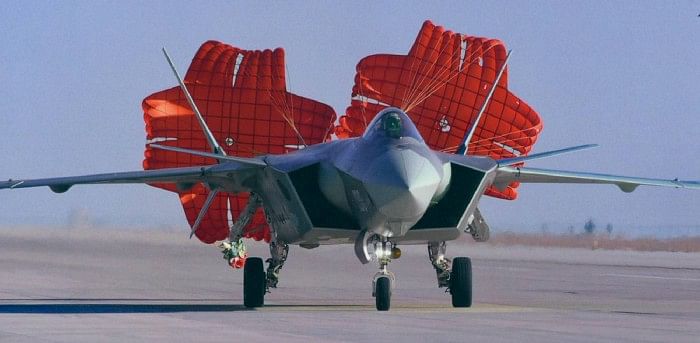
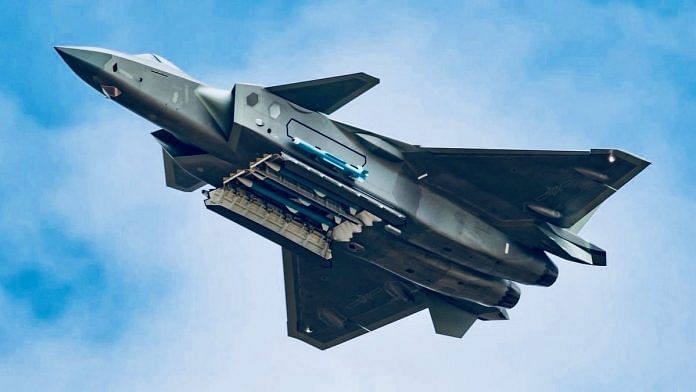
The J-20 will benefit from the Chinese AAM developments in the coming decade. | Photo: sameerjoshi73.medium.com
Whereas the Chinese air-to-air missile capability may not be at par with sophisticated western missiles like the MBDA Meteor, there is more than enough technological evidence that China, along with Russia, is fast closing the AAM capability gap with the West, with the western nations no longer in a position to take air dominance missions for granted.
Sameer Joshi is a retired Indian Air Force fighter pilot with experience on the MiG-21 and Mirage-2000 jets. Besides being a start-up entrepreneur, he has serious interests in aerospace & defence and military history.
He has referred extensively to, and would like to acknowledge, the superb source material and work done on the subject by Andreas Rupprecht, Warzone, Janes Defence Weekly, Airpower Australia and Tony Osborne in the Aviation Week.
The farmers’ protests have attracted the Opposition, whereas several political parties refrained from supporting the anti-CAA protests, barring the Left and a few others. They were even muted in their criticism of the govt’s handling of communal riots in north-east Delhi. The Supreme Court was willing to suspend the farm laws, while it declined to stay the CAA in 2019.
Up in arms: The government’s response makes it clear that it is not willing to tolerate protests. PTI
Zoya Hasan
Professor emerita, JNU
The past one year has witnessed major protests which are signposts of a country in ferment. The winter of 2019-20 saw protests, rallies and sit-ins against the discriminatory Citizenship Amendment Act (CAA) across India, the most famous of them led by the women of Shaheen Bagh in south Delhi.
In the winter of 2020-21, India is amid a massive sit-in on Delhi’s borders led by farmers protesting the contentious farm laws that they see as a threat to their livelihood. Both protests have made it clear that mass movements are the most effective way of standing up to an authoritarian regime.
These agitations are watershed moments in the history of public protests in modern India. Both the anti-CAA stir and the agitation by farmers were resolute, dignified and peaceful. Although the farmers’ protest had largely been peaceful, it took a violent turn on January 26 when a group of protesters clashed with the police within the precincts of the Red Fort. Both protests are reminiscent of ‘Occupy protests’ that have emerged over the past decade in other parts of the world.
Both protests happened in public spaces, for example, on major highways, calling attention to their opposition to the new laws. They have created a new grammar of protest and called for resistance outside institutional spaces by invoking a ‘citizen activist’ strand. Both protests have defined their grievances by identifying how the respective laws undermine broader economic and political rights. These protests challenged authoritarianism and majoritarianism by demonstrating in their everyday practices a commitment to democratic methods and inclusive politics. Most occupy protests remain confined to the distinctive spaces where they emerge, but these protests have inspired similar ones across the country. They defied the odds in their refusal to disband despite huge pressure to do so and the government’s refusal to concede their demands. The very act of patiently waiting through prolonged sit-ins in biting cold offers a sharp contrast to the state’s paranoid, confrontational, and aggressive stance.
However, politicians, public institutions, courts and the police system have treated them very differently. The differences in response to the two protests are instructive in itself and worth noting. Within days of the farm protests, the government began negotiations. It has offered to temporarily suspend the legislations which were reiterated by the Prime Minister recently, even though it failed to break the impasse. Nothing like this happened during the anti-CAA protests. Farm laws can be reviewed, but the CAA cannot be reviewed. For the Hindu Right, CAA is part of a longer battle to redefine secular India as a Hindu nation. For them, Muslims exist in a state of exception, where they cannot take their rights for granted or protest when these rights are denied to them.
The farmers’ protests have attracted the support of most of the Opposition, whereas several of these political parties refrained from supporting the anti-CAA protests, barring the Left and a few other parties. They were even muted in their criticism of the government’s handling of communal riots in northeast Delhi and the targeting of Muslims and civil society activists, many of whom are still under detention.
While the activists and protesters, in both cases, believed in the potentially progressive power of the courts, the courts regarded them differently. The Supreme Court was willing to suspend the agricultural laws and appoint a committee, although packed with pro-farm law voices, to examine the issue, while it declined to stay the implementation of the CAA in December 2019 and did not suggest expert arbitration.
While hearing a batch of petitions against the anti-CAA protesters for allegedly causing inconvenience to the general public with a road blockade, the top court ruled that the right to protest in public places is not absolute, and public places cannot be occupied indefinitely. The court said that while dissent and democracy go hand in hand, protests must be carried out in designated areas. In the case of the tractor parade, the court left it to the Delhi Police to decide whether it should be allowed to enter the Capital on Republic Day.
The government’s response to the two agitations makes it clear that it is not willing to tolerate protests; in fact, it is determined to de-legitimise and criminalise them. This was most visible in the wake of the anti-CAA protests. A similar treatment is being meted out to the protesting farmers. It has followed a standard playbook which involves demonising and attacking protesters — in the case of the farmers, they are being discredited with labels such as Khalistanis and terrorists. But this did not gain the same traction as the ‘othering’ of Muslims during the anti-CAA protests. Given the failure to vilify the protesting farmers in the name of nation or religion, it has found it difficult to contain their protests.
Bhartiya Kisan Union leader Rakesh Tikait’s defiance appears to have energised farmers in western Uttar Pradesh and Haryana and this could have wider political implications in the coming months. To counter it, the government is making every effort to convert the January 26 violence into an opportunity for greater repression — threatening arrests, stifling dissenting voices and blocking Internet services and Twitter handles of those critical of state excesses. The Delhi Police putting up fences, welding iron rods into flyovers and embedding big nails on streets to prevent farmers from assembling, is unprecedented. No government has gone this far to stop protests. The ridiculous response to global pop star Rihanna’s six-word tweet and the full-scale kerfuffle over it shows how rattled the government is by the increasing support for these protests.
The official response to these two protests underlines the government’s determination to continue on the authoritarian path. Although these very similar occupy-type protests have evoked very different responses, the regime’s ultimate strong-arm tactics in both cases show how an authoritarian (and majoritarian) government is incapable of resolving crises or tolerating any criticism or dissent. Both sit-ins remain a testimony to the power of public protest and the possibility of facilitating political change. Regardless of the outcome of farmers’ protests and the government’s refusal to retract the CAA, if the government continues to demonise and attack all protesters, it will only lose.
State Stalwarts
DEFENCE MINISTER
Minister Rajnath Singh
ALL HUMANS ARE ONE CREATED BY GOD
HINDUS,MUSLIMS,SIKHS.ISAI SAB HAI BHAI BHAI
CHIEF PATRON ALL INDIA SANJHA MORCHA
LT GEN JASBIR SINGH DHALIWAL, DOGRA
SENIOR PATRON ALL INDIA SANJHA MORCHA
MAJOR GEN HARVIJAY SINGH, SENA MEDAL ,corps of signals
.
.
PATRON ALL INDIA SANJHA MORCHA
MAJ GEN RAMINDER GURAYA ,MADRAS REGIMENT
sanjhamorcha303@gmail.com
PRESIDENT SOUTH ALL INDIA SANJHA MORCHA
COL SS RAJAN BOMBAY SAPPERS,
PRESIDENT UTTARAKHAND ALL INDIA SANJHA MORCHA
COL B M THAPA ,BENGAL SAPPERSS
PRESIDENT HARAYANA STATE CUM COORDINATOR ESM
BRIG DALJIT THUKRAL ,BENGAL SAPPERS
PRESIDENT TRICITY
COL B S BRAR (BHUPI BRAR)
PRESIDENT CHANDIGARH ZONE
COL SHANJIT SINGH BHULLAR
.
.
PRESIDENT PANCHKULA ZONE AND ZIRAKPUR
COL SWARAN SINGH
INDIAN DEFENCE FORCES
DEFENCE FORCES INTEGRATED LOGO
INDIAN AIR FORCE
Air Officer C-in-C WESTERN AIR COMMAND
AIR MSHL S PRABHAKARAN AVSM VM
AOC-IN-C, EASTERN AIR COMMAND
Air Marshal Inderpal Singh Walia
AOC-in-C SOUTH WESTERN AIR COMMAND
Air Marshal Vikram Singh
AOC-IN-C, SOUTHERN AIR COMMAND
Air Marshal J.Chalapati
AOC-IN-C TRAINING COMMAND
AIR MARSHAL SK GHOTIA VSM
AOC-IN-C MAINTENANCE COMMAND
Air Marshal Jagdish Chandra
Flag Officer Commanding in Chief, Western Naval Command
ice Admiral R Hari Kumar, PVSM, AVSM, VSM
Flag Officer Commanding in Chief, Eastern Naval Command
Vice Admiral Sanjay Bhalla, AVSM, NM
Flag Officer Commanding in Chief, Southern Naval Command





































































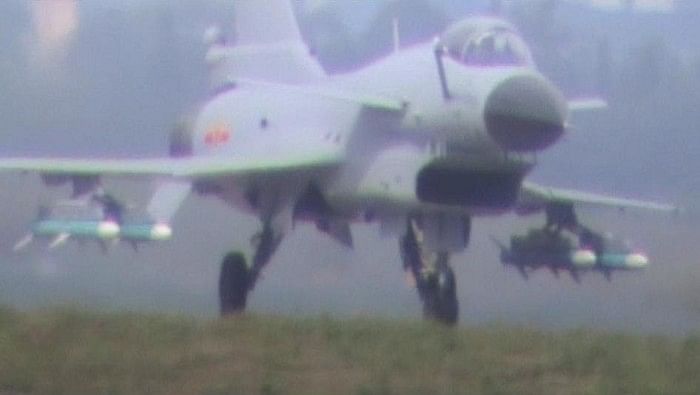 A J-10A armed with PL-12 AAMs. | Photo: sameerjoshi73.medium.com