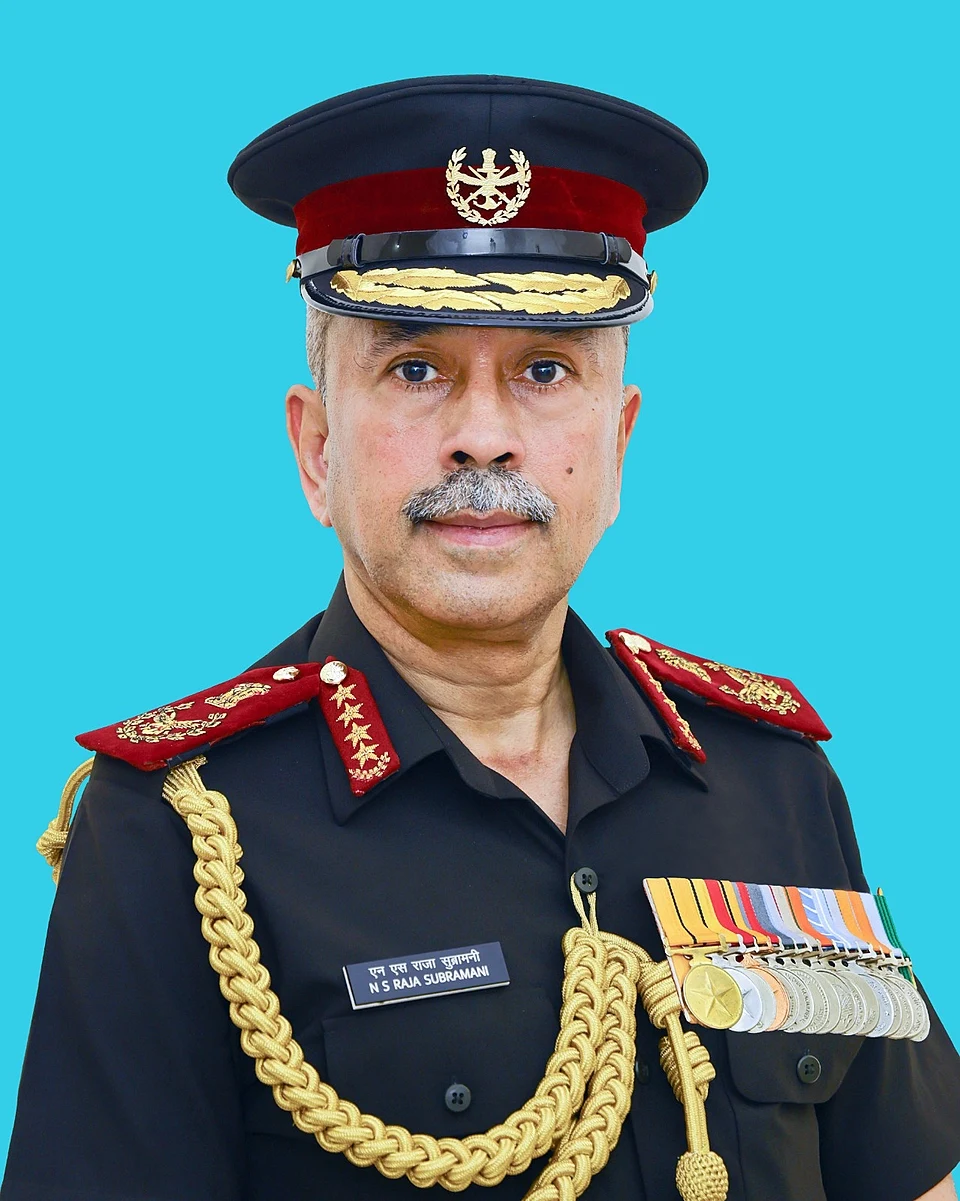
Capt Prabhjot Singh from Mohali, who was adjudged the best all-round officer of the Medical Officers’ Basic Course.
Tribune News Service
Chandigarh, February 9
An officer from Mohali, Capt Prabhjot Singh, has been adjudged the best officer of the Medical Officer Basic Course (MOBC). He passed out from the Officers Training College at the Army Medical Corps Centre and College, Lucknow, today.
The nine-week MOBC imparts intensive combat medical support training to newly commissioned armed forces’ medical and dental officers to empower them for effectively performing their duties in peace and operational areas.
The course batch comprised 113 officers, including 17 women, 13 air force, five navy and 10 dental officers.
Prabhjot’s father Devinder Singh, a former programme executive with All-India Radio, said his son had been a topper in the school and had joined the Armed Forces Medical College, Pune, in 2014 for pursuing the MBBS course. He is fond of trekking, calligraphy and playing the guitar.
After being commissioned in 2019, he also served at the Command Hospital, Chandimandir, and has now been posted in Himachal Pradesh.
CORPORATE ELECTIONS MOHALI : ESM FULLSUPPORT CONGRESS CANDIDATES
Though there are number of Societies in Mohali where ESM reside like Jal vayu Vihar,Joginder Vihar ,Darshan Vihar . However a meet of solely ESM was organised and coordinated by Col Charanjit Khera(Retd) ,Gen secy Sanjha Morcha ( a ESM welfare association) to apprise and highlight various problems faced with suggestions for improvement to Punjab Health Minister Balbir Singh Sidhu , who is also a local MLA Mohali.
Hundreds of ESM attended including many Senior veteran officers like Brig Avtar Singh, Brig Harwant Singh, Brig Manohar Singh, Brig Bawa Grewal, Brig HPS Bedi VSM, Brig Jagtar Singh Grewal. Many burning issues regarding ESM were projected by various speakers . An issue of a widow Rajinder Kaur w/o H/Capt Balwant Singh was also highlighted . She has been asked by Military authorities Bhatinda to vacate the shop No P90/3 at Bhatinda Military station allocated to her husband in 1989 under resettlement scheme for ESM by 31 Mar 2021.The widow says they have invested 15 to 20 lakhs on the infrastructure of the shop. Many liability like house loan, car loan and education of grand-children. The Mil Authorities wants to implement new policy of 2018 laid down by central govt by misinterpreting the letter; The minister promised to take up the matter with the CM and the Defence minister at the centre. The widows is running from pillar to post to save her only source of earning, and looking for justice not to uproot her as she has no other means of lively hood to support her family. Sanjha Morcha appeals to The Military authorities to use their good judgement and discretion for the benefit of the widow.
ESM of Mohali also suggested to have separate sector for ESM in Mohali like in panchkula, Chandigarh,Nioda etc In order to have all facilities available in one locatin. A collective voice of ESM to Support farmers agitation with slogan “Jai Jawan Jai Kissan” was also expressed by Col Ranjit Singh Boparai,President Sanjha Morcha who conducted the meet. Long pending One Rank One Pension was brought out by Sgt Jaswant Singh Khumbra.
BRIGHT PUNJAB NEWSPAPER :: Pdf FORM::CLICK TO READ
Balbir Singh Singh Sidhu as Health Minister Punjab received lot of appreciation the way he saved Punjab from Covid’s ruthless attack. During his address Brig HPS Bedi ,VSM cited personal example , wherein wonderful care was taken by the Punjab health department of a member of his family, who had tested positive. He also pointed out that the minister was always and his available to all citizens irrespective of any differentiation of cast, creed or political affiliation. He has brought number of new projects in Mohali like world class universities, Hospital and given grants to market and residential societies for development, which were standstill in previous govt regime and Municipal corporation.
The Hon’ble Minister in his address to the ESM , said that he being from Army family he is committed to welfare of ESM in his constituency . He highlighted that the present ESM residential societies were private hence govt could not give any type of grant for their development and maintence. ESM welfare has been and will be his top priority in future too. He assured that all possible help will be provided to societies within means. He suggested one and all to opt for Solar energy in domestic and societies residences reduce cost of electricity Bills and use savings in development activities .The ESM equally assured him that they will go all out to ensure victory of congress candidates in MC Mohali for its development.
India and China’s disengagement process to pull back their militaries from the Line of Actual Control (LAC) is expected to be carried out in multiple phases.
Along the 823-km LAC in eastern Ladakh, both militaries are eyeball to eyeball at some locations. The disengagement process, which commenced yesterday, is only restricted to both banks of the Pangong Tso, a 135-km glacial lake. It is expected to complete in four weeks.
After Pangong Tso pullback, the next phase will include resumption of patrolling limits in certain LAC areas claimed by both sides. Thereafter, the issue of the 900-sq km Depsang plains located north of the Shyok river will be tackled. Located at an altitude of 16,000 feet, the Indian Army occupies a large portion of the Depsang plains while the People’s Liberation Army (PLA) of China holds its eastern edge. There was a massive build-up by both sides in 2020, which needs to be scaled down. Defence Minister Rajnath Singh told the Rajya Sabha on Thursday about the future course to ease the standoff. “There are some outstanding issues with regard to deployment and patrolling at some other points (besides the Pangong Tso) along the LAC in eastern Ladakh. These will be the focus of further discussions with the Chinese side,” he said.
Sources said the next phase would start after full verification of the completion of the first phase in the Pangong Tso area.
From India’s perspective, Depsang is vital as the PLA could threaten the Indian strategic airfield at Daulat Beg Oldie (DBO), located at 16,700 feet. The DBO is just 20 km south of 18,176-foot-high Karakoram pass, which divides Ladakh and Xinjiang in China.
Also the 255-km Darbuk-Shyok-DBO (DSDBO) road close to the LAC is vulnerable to threat, and any attempt to cut off DBO could restrict access to the Karakoram pass.
3 Key principles
India stresses both sides should strictly respect LAC
Neither side should attempt to alter status quo unilaterally
All pacts must be fully abided
Future course
Disengagement for now only focuses at Pangong Tso
Build-up at Depsang to be taken up in next phase
Resumption of patrolling on at least six routes to be sorted out
China to return to Finger 8: Rajnath Says won’t cede an inch | Indian troops to be based at Finger 3 | Pullback in phases
Defence Minister Rajnath Singh in the Rajya Sabha on Thursday
Tribune News Service
New Delhi, February 11
India and China have started disengaging from the north and south banks of the Pangong lake with a temporary moratorium on patrolling in the areas being vacated by both sides. A meeting of senior commanders within 48 hours of the complete disengagement will sort out the remaining wrinkles in the Pangong Tso sector, Defence Minister Rajnath Singh announced in the Rajya Sabha today.
Structures built since April 2020 on both banks to be removed
Temporary moratorium on patrolling in north bank
Patrolling to be resumed after pact
Next commanders’ meet within 48 hours of total disengagement in Pangong area
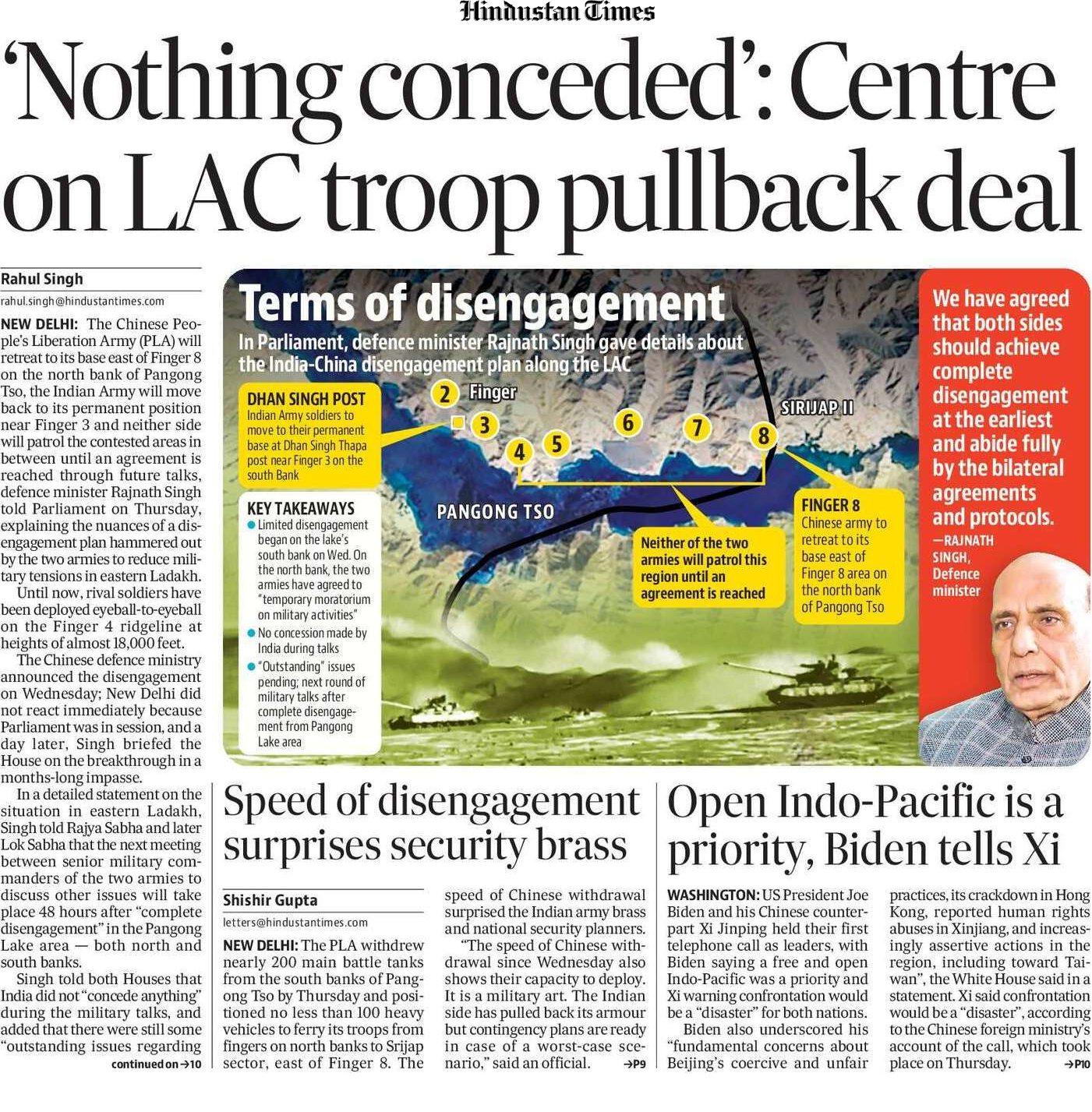
The Minister revealed specifics of the withdrawal on the north bank which began on Wednesday. The Chinese army will pull back its troops to the east of Finger 8 and Indian troops will be based at their permanent location near Finger 3 area. The area between Finger 3 and Finger 8 will not be patrolled till a resolution on future deployment is reached.
The bunkers and other structures built by the Chinese army between Finger 4 and 8 will be dismantled.
Some outstanding issues regarding deployment and patrolling at some other points along the LAC in eastern Ladakh will be the focus of further discussions with the Chinese side. “This pact will substantially restore the situation to that existing prior to the commencement of the standoff last year,” Rajnath said, adding the aim is to achieve complete disengagement and restoration of status quo.
The disengagement will take place in a “phased, coordinated and verified” manner. “I want to remind the House we haven’t lost anything,” Rajnath declared. “Our approach has been guided by the resolve that we will not give even an inch of Indian territory. Our tenacity and approach during talks have yielded results,” he said.
With the backing of the Chairman M Venkaiah Naidu, Rajnath did not provide clarifications to members on grounds of national security considerations. The Defence Minister complimented the troops for their valour and courage on both banks of the Pangong Tso and said the nation would always remember the sacrifices by the soldiers which have been the foundation of the disengagement from the Pangong lake.
“Our armed forces proved yet again that territorial integrity of our country remains safe in their hands,” he added.
To ensure disengagement, the Indian side had insisted that troops of both sides, who are now in close proximity, should vacate the forward deployments made in 2020 and return to the permanent and accepted bases.
“Our approach and strategy for negotiations with the Chinese side has been guided at the highest level by the PM’s resolve that we will not give even an inch of the Indian territory,” he said.
Disengagement process
China to pull back to east of Finger 8 of Pangong lake north bank
Indian troops to be based at Dhan Singh Thapa post near Finger 3
Area between Finger 3 and 8 to be no-patrolling zone
China had built structures between Finger 4 and 8, blocking Indian patrols beyond Finger 4
Withdrawal also in south bank
5 months ago, India occupied strategic heights in south bank
VICTIM OF COORPORATE FARMING :: HOW FARMERS WILL LOOSE THEIR LANDS UNDRER NEW FARM LAWS
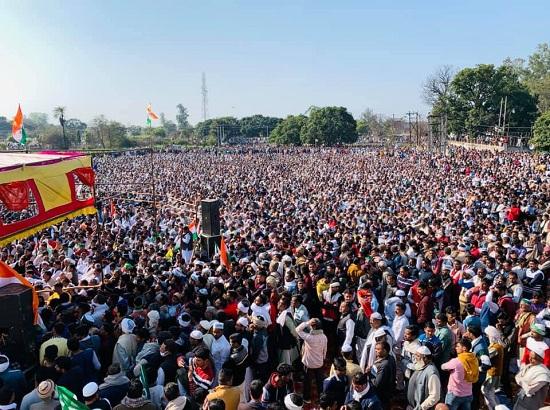
New Delhi, February 12, 2021: Samyukta Kisan Morcha announced scheduled of Kisan Mahapanchayat. The organization also condemned the anti-farmer statements of the Prime Minister. Saying that many laws have been made in this country without demanded by people, the Prime Minister has proved that these laws have not been demanded by the farmers. Opposite to it, the government is not serious on fair and genuine demand of “Karja Mukti; Pura Daam”.
“The round of Kisan Mahapanchayats continues against farm laws. A massive rally was organized in Jagraon of Punjab today in which farmers, as well as other citizens, showed huge participation. Farmers also held panchayat on Shambhu border,” said farmer leader Dr. Darshan Pal.
Addressing from the stage, the farmers’ leaders on the Singhu border expressed their views on the implementation of the upcoming programs of the Samyukta Kisan Morcha. The farmers opposed the proposal of the Haryana government to install CCTV on Tikri morcha.
Kisan Mahapanchayats will be organized all over the country in the coming days. The teams of the SKM are planning the programs of the state-wise Mahapanchayats. Samyukta Kisan Morcha will not take back the protest until the repeal of three farm laws and legal recognition to MSP.
Schedule of some Mahapanchayats is given below 12 Feb – Bilari, Moradabad 13 Feb – PDM College Bahadurgarh Bypass 18 Feb – Raisingh Nagar, Sri Ganganagar Rajasthan 19 Feb – Hanumangarh, Rajasthan 23 Feb – Sikar, Rajasthan
45 Chinese soldiers killed in Galwan clash June last year, Russian news agency TASS says
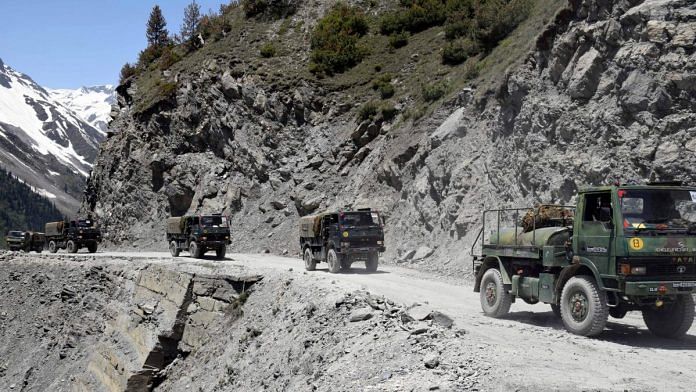
Representational image of the Indian Army in Ladakh | ANI File Photo
New Delhi: Russian news agency TASS Wednesday claimed that “at least 20 Indian soldiers and 45 Chinese servicemen” were killed during the clashes at the Galwan Valley in eastern Ladakh in June last year.
In an article detailing the statement by the Chinese Defence Ministry on China and India withdrawing troops from the shared border near Pangong Tso lake, TASS said that “Chinese and Indian forces clashed in the region in May and June 2020, resulting in at least 20 Indian and 45 Chinese servicemen dead.”
The report also said that it is only after the ninth round of negotiations at the army commanders’ level that an agreement was reached for a simultaneous withdrawal of forces, which had increased to 50,000 on each side.
In June 2020, China had termed reports of more than 40 Chinese soldiers being killed in the face-off in eastern Ladakh as “fake news”.
Chinese Foreign Ministry spokesman Zhao Lijian had said, “As for what you saw in the media, for example some people alleged that casualties on the Chinese amounted to 40. I can tell you for sure this is fake news,’’ he said, without giving any details.
China refused to reveal casualties
While 20 Indian soldiers were killed in Galwan Valley clash, China did not reveal its casualty figure. When asked at a webinar about reports from US intelligence which said the China’s People’s Liberation Army has suffered 34 casualties, Beijing’s Ambassador to India, Sun Weidong did not answer the question and said it would not help in improving the situation.
Since the clash at Galwan Valley on 15 June last year, China has declined to comment on the casualties. However, reports said that a Chinese army commanding officer was among those killed.
There were also reports putting a number to the deaths on the Chinese side. BJP leader Kapil Mishra, who has also been accused of inciting mobs prior to the Delhi riots, falsely claimed that 100 Chinese soldiers were killed. While an American weekly news magazine, NewsWeek, claimed that over 60 Chinese soldiers were killed in the clash with India.
China, Russia and India are all part of the group of emerging national economies called BRICS (Brazil, Russia, India, China and South Africa).
China’s realisation that India won’t back down — that this stand-off could last longer than it calculated — was a key factor in forcing Beijing to agree to disengagement at Pangong Tso.
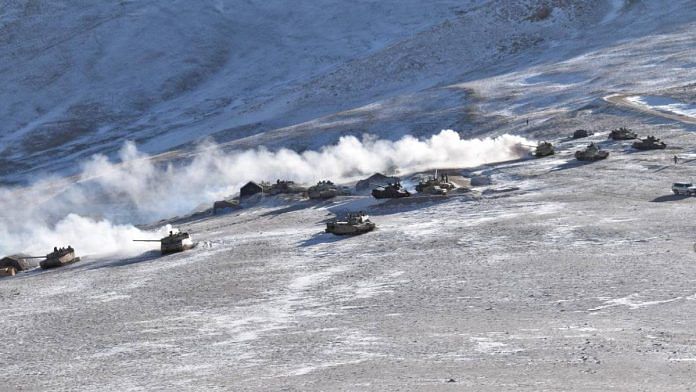
Indian and Chinese armoured columns pulling back from Rechin La on the southern side of Pangong Tso Wednesday | Credit: Army
New Delhi: A grueling winter deployment resulting in higher Chinese casualties than Indian, Beijing’s understanding that New Delhi is not backing down, coupled with the upcoming 100th anniversary of the Chinese Communist Party in July — these are believed to be the reasons why China finally came around to disengaging at Pangong Tso in Ladakh, ThePrint has learnt.
Government sources said the disengagement process, which began Wednesday, was not sudden but had actually been under discussion since September — the same month that the Indian and Chinese foreign and defence ministers met in Russia. Since then, the sources added, there had been several rounds of discussion during which both India and China eased their stands.
The proposal for a phased disengagement, sources said, actually came from the Chinese after a call was set up between National Security Adviser Ajit Doval and Chinese Foreign Minister and State Councillor Wang Yi in July.
The call saw both sides agree to the “earliest complete disengagement of the troops along the LAC and de-escalation from India-China border areas for full restoration of peace and tranquility”, for the first time after tensions erupted in Ladakh in April.
When External Affairs Minister S. Jaishankar subsequently met his Chinese counterpart Wang on the sidelines of the Shanghai Cooperation Organisation (SCO) foreign ministers’ meeting in Moscow two months later, both sides agreed to a step-by-step plan on “disengagement, de-escalation and finally restoration of status quo”, sources said.
Union Defence Minister Rajnath Singh formally announced Thursday that India and China have agreed to disengage at Pangong Tso, one of the three flashpoint areas in the ongoing stand-off — the others are Gogra-Hot Springs and the crucial Depsang Plains.
According to Singh, the agreement reached will see the Chinese soldiers retreat to east of Finger 8 on the northern bank of the Pangong Tso, which marks the Line of Actual Control (LAC). During the stand-off, the Chinese had moved to Finger 4. Indian troops will be based at their permanent base at Dhan Singh Thapa Post near Finger 3, he said, adding that a similar action will be taken by both sides in the South Bank area.
Experts in defence and diplomacy have greeted the development with caution — noting that disengagement may be a tactical move by China in the face of its deteriorating relationship with the US, they said India should remain “vigilant”.
Over the course of the stand-off, India and China have conducted multiple rounds of talks at the military and diplomatic levels, but the stalemate, sources said, was finally tackled during the Corps Commander dialogue last month.
The stalemate was caused as India and China struggled to see eye-to-eye on how exactly to move forward with resolving the stand-off.
In September, China asked India to withdraw from certain crucial heights on the southern banks of the Pangong Tso — heights Indian soldiers occupied in an operation on the intervening night of 29-30 August that took the People’s Liberation Army by surprise.
India, meanwhile, insisted on disengagement at all friction points in Ladakh. However, the Chinese were not open to withdrawing from Finger 4, which they had captured in May 2020.
As the Chinese realised that India was not budging, sources said, China modified its proposal in October and brought in a plan for phased withdrawal. They said the PLA would withdraw from Finger 4 to Finger 5 and called for making Finger 4 a no-go area. This proposal, too, was rejected by India as it wanted the PLA to move behind Finger 8.
With the icy-cold Ladakh winter bringing temperatures as low as minus 20 degrees Celsius in November, China agreed to go behind Finger 8, sources said.
According to the proposal agreed to by both sides, the Chinese were to move back beyond Finger 8 and also remove all tents and observation posts set up in an 8-km area. Similarly, Indian troops were to move back to the Dhan Singh Thapa post, which is between Finger 2 and Finger 3.
After this broader agreement, the talks again went into a stalemate, and the next round of Corps Commander dialogue was not held until 24 January.
In the interim, India and China withdrew over 10,000 troops each from depth areas as part of a joint understanding while keeping soldiers untouched in forward locations.
Speaking to ThePrint, sources refused to get into the reasons for the stalemate. On 24 January, after talks lasting 16-and-a-half hours, the stalemate ended and both sides decided to go ahead with the disengagement.
Multiple talks were held at the local commanders level, sources said, to work out the nitty gritty of disengagement, which began Wednesday.
The row at the two other points — Gogra-Hot Springs and Depsang Plains — will take time to resolve, sources added.
Indian government sources said the Chinese had been keen to disengage before the winter set in, but India did not play ball.
According to them, Chinese troops were being posted to such forward locations for the first time and, contrary to belief that they were well-settled, the medical casualties were higher. The current stand-off marks the first time that India and China have deployed soldiers in forward areas in Ladakh during the region’s bitter winter.
Sources said the Indian operation in August had surprised the Chinese and they realised that India was not backing down and this face-off could last much longer than they had calculated.
Also on the Chinese mind, sources said, was the 100th anniversary of the Chinese Communist Party in July and the “image President Xi Jinping wanted to portray”.
Xi, sources added, could not have a situation where the Chinese celebrated even as the stand-off with India continued.
M. Taylor Fravel, an eminent China scholar at the Massachusetts Institute of Technology (MIT), said the two sides have been working towards this disengagement for quite some time.
“Although it remains early days, my view is that China is responding to the significant deterioration of US-China relations in the past year, and the way in which its international image has suffered in many countries, at a time when the party will launch the 14th five-year plan that is critical to its development goals,” Fravel added.
The 14th five-year plan (2021-2025) was unveiled by Xi in October 2020 at the fifth Plenum of the 19th Central Committee of the Chinese Communist Party.
“The success of this plan requires China’s greater engagement with the world and thus greater stability and fewer points of friction with other states,” he said. “Thus, China seeks to prevent any further deterioration in ties with India and to prevent the risk of escalation that might upset its development plans.”
Former foreign secretary Kanwal Sibal said India should remain vigilant, noting that disengagement at Pangong Tso can resolve the present stand-off, but the fundamental challenge of defining the LAC remains.
“This is a period of interregnum because uncertainty in bilateral relations continues to prevail… Xi has a ‘certain vision’ of the world and he will continue to pursue it relentlessly,” he added.
“The latest move can be seen as a tactical move because China’s relations with the US will deteriorate in the times to come. Signals from the Biden administration are not going in Beijing’s favour,” he said.
The US Department of Defense Wednesday announced the creation of a 15-member China Task Force to reassert its vision for the Indo-Pacific, which America believes China is “seeking to overturn”.
Jayadeva Ranade, former member of the National Security Advisory Board and an expert on China, welcomed the disengagement but remained sceptical of China.
“I don’t trust the Chinese and I am sure the government and the forces also don’t,” he said.
The withdrawal is not sudden and had been a matter of talks for some time, he added. One will have to wait and see the reaction in China to the disengagement process because “that will be a factor in how China carries the process forward”, he said.
One main reason for Chinese disengagement is that Beijing never calculated that India will be willing to carry forward the stand-off for so long, Ranade added.
Defence Minister Rajnath Singh told the Rajya Sabha that India & China have agreed to disengage from the Pangong Tso area in eastern Ladakh. Read his full statement here.
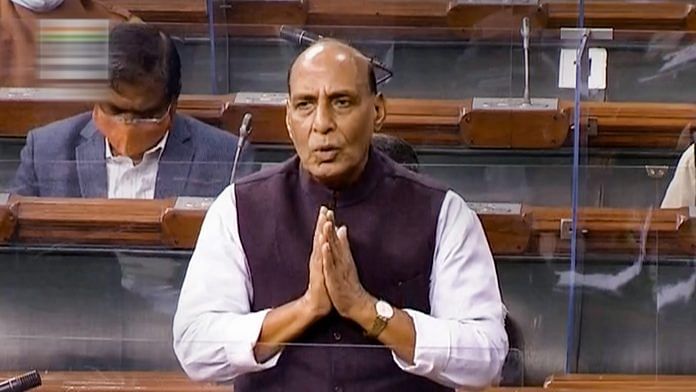
Union Defence Minister Rajnath Singh speaks in the Lok Sabha during ongoing Budget Session of Parliament, in New Delhi | PTI
New Delhi: Addressing the Rajya Sabha Thursday, Defence Minister Rajnath Singh said India and China have agreed to disengage from the Pangong Tso area in eastern Ladakh and go back to status quo ante after nearly nine months of stand-off.
“I am happy to inform the House today that as a result of our well thought out approach and sustained talks with the Chinese side, we have now been able to reach an agreement on disengagement in the north and south bank of the Pangong Lake,” Singh said.
Giving details of the disengagement, the Defence Minister said the agreement that both sides have reached envisages that both will cease their forward deployments in a phased, coordinated and verified manner.
Read his full speech here:
Hon’ble Chairman,
The House would recall that I had made a detailed statement on the developments in the India-China border areas in Eastern Ladakh during the last session in September last year. I had highlighted that the Chinese side had since April/May 2020 amassed large number of troops and armaments in the border areas adjacent to Eastern Ladakh. It had also made several attempts to transgress the Line of Actual Control (LAC) in various parts. These actions of the Chinese side had been detected and appropriately responded to by our armed forces. The House and the Nation had also paid homage to the brave Indian soldiers who had made the supreme sacrifice and laid down their lives in the cause of defending the territorial integrity of India. I would today like to apprise the House of certain important developments since then.
Since last September, both sides have maintained communication with each other through military and diplomatic channels. Our objective was to effect disengagement and maintain status quo along the LAC so as to restore peace and tranquility.
Let me briefly recapitulate the main aspects of the situation on the ground. As the House is aware, China illegally occupied approximately 38,000 sq. kms in the Union Territory of Ladakh, mainly during the 1962 conflict. In addition, under the so-called Sino-Pakistan ‘Boundary Agreement’ of 1963, Pakistan illegally ceded 5,180 sq. kms. of Indian territory in Pakistan Occupied Kashmir to China. China, thus is in illegal occupation of more than 43,000 sq. kms of Indian territory. It also claims approximately 90,000 sq. kms. of Indian territory in the Eastern Sector of the India-China boundary in Arunachal Pradesh. India has never accepted this illegal occupation of our territory or the unjustified claims.
I would like to add here that India has consistently maintained that while bilateral relations can develop in parallel with discussions on resolving the boundary question, any serious disturbance in peace and tranquility along the LAC in the border areas is bound to have adverse implications for the direction of our bilateral ties. The Chinese side is well aware of our position. In fact, various high level Joint Statements have acknowledged this point that maintenance of peace and tranquility along the LAC in the border areas is a fundamental premise for development of relations.
The actions by the Chinese side since last year have seriously disturbed peace and tranquility. Consequently they have also had an impact on the overall relationship. In our various high level interactions with the Chinese side, including in my own meeting with Chinese Defence Minister last September, my colleague the External Affairs Minister Shri Jaishankarji’s meeting with Chinese Foreign Minister and NSA Shri Doval’s conversation with his Chinese counterpart, we have made it clear that the foremost need was to ensure disengagement in all the friction points along the LAC in the Western Sector so as to help restore peace and tranquility.
Hon’ble Chairman,
I had apprised the House last year that there were several friction areas in Eastern Ladakh along the LAC. In addition, the Chinese side had mobilized a large number of troops and armaments along the LAC as well as in the depth areas. Our armed forces too had made adequate and effective counter deployments in these areas to ensure that India’s security interests were fully protected.
I am proud to say that our Armed Forces have responded to the challenges posed by the unilateral Chinese action and have shown valour and courage on both South and North bank of Pangong Tso. Many strategically important points were identified and our troops positioned themselves at those Hill Tops and at locations which were very important from our point of view. It is because of this great bravery of our Armed Forces in the face of harsh adverse climatic conditions that we maintained the edge. Our Armed Forces proved yet again that territorial integrity of our country remains safe in their hands and their grit and determination to safeguard our borders is unwavering.
Over the last year, we have maintained diplomatic and military engagement with the Chinese side. In these discussions, we have maintained the three key principles that determine our approach: (i) both sides should strictly respect and observe the LAC; (ii) neither side should attempt to alter the status quo unilaterally; and (iii) all agreements and understandings between the two sides must be fully abided by in their entirety. To ensure disengagement in friction points along the LAC, it was our view that troops of both sides, who are now in close proximity, should vacate the forward deployments made in 2020 and return to the permanent and accepted bases.
Hon’ble Chairman,
Our approach and strategy for negotiations with the Chinese side has been guided at the highest level by the Hon’ble Prime Minister’s resolve that we will not give even an inch of Indian territory. Our tenacity and approach during talks have yielded results.
Since September 2020, based on the policy guidance, military and diplomatic officials of both sides have met several times to work out a mutually acceptable solution for disengagement. Till date, there have been 9 rounds of meetings of the Senior Commanders of both sides. Diplomatic talks have continued in parallel under the Working Mechanism for Consultation and Coordination on India-China Border Affairs (WMCC).
Hon’ble Chairman,
I am happy to inform the House today that as a result of our well thought out approach and sustained talks with the Chinese side, we have now been able to reach an agreement on disengagement in the North and South Bank of the Pangong Lake. It has also been a greed to convene the next meeting of the Senior Commanders within 48 hours after the complete disengagement in the Pangong Lake area so as to address and resolve all other remaining issues.
The agreement that we have been able to reach with the Chinese side for disengagement in the Pangong lake area envisages that both sides will cease their forward deployments in a phased, coordinated and verified manner. The Chinese side will keep its troop presence in the North Bank area to east of Finger 8.Reciprocally, the Indian troops will be based at their permanent base at Dhan Singh Thapa Post near Finger 3. A similar action would be taken in the South Bank area by both sides. These are mutual and reciprocal steps and any structures that had been built by both sides since April 2020 in both North and South Bank area will be removed and the landforms will be restored. It has also been agreed to have a temporary moratorium on military activities by both sides in the North Bank, including patrolling to the traditional areas. Patrolling will be resumed only when both sides reach an agreement in diplomatic and military talks that would be held subsequently. The implementation of this agreement has started yesterday in the North and South Bank of the Pangong Lake. It will substantially restore the situation to that existing prior to commencement of the standoff last year.
13. I want to assure this House that in these talks we have not conceded anything. The House should also know that there are still some outstanding issues with regard to deployment and patrolling at some other points along the LAC in Eastern Ladakh. These will be the focus of further discussions with the Chinese side. We have agreed that both sides should achieve complete disengagement at the earliest and abide fully by the bilateral agreements and protocols. By now, the Chinese side is also fully aware of our resolve. It is therefore our expectation that the Chinese side will work with us in full sincerity to resolve these remaining issues.
Hon’ble Chairman,
I would like this House to join me in paying gratitude to our armed forces who have shown grit and resolve under these extremely harsh climatic conditions of Ladakh which has resulted in the present agreement. Our Nation will always remember the sacrifices made by our brave soldiers which has been the foundation of this disengagement at Pangong Tso Lake.
Hon’ble Chairman,
I am confident that this entire House, irrespective of political affiliations, is united together for upholding our sovereignty, unity, territorial integrity and national security. And further, this House is one in sending out the same message demonstrating the strength and unity of our Nation to the entire world.