Sanjha Morcha

What’s New

Click the heading to open detailed news

Current Events :

web counter

Print Media Reproduced Defence Related News

PROTEST AGAINST FARM LAWS-FEB.2021 Heavy security deployed at Ghazipur border (Watch video)

Heavy security deployed at Ghazipur border (Watch video)

hoto Source: ANI

Heavy security deployed at Ghazipur border (Watch video)

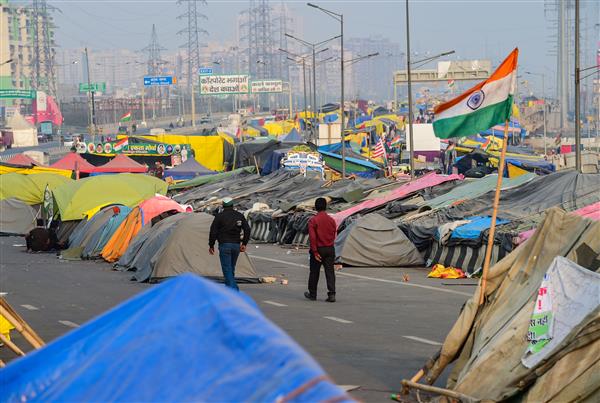
New Delhi, February 6, 2021: In the view of the protest against farm bills and chakka jam that is being observed nation-wide today, heavy security has been deployed at Ghazipur border (Delhi-Uttar Pradesh).

Watch video:

#WATCH: Heavy security deployment at Ghazipur border (Delhi-Uttar Pradesh), in view of protests against the farm laws.

(Video source: Delhi Police) pic.twitter.com/yyQGSj393R

— ANI (@ANI) February 6, 2021


3 more held in connection with Red Fort violence on R-Day Total 126 arrested so far, police say have released pictures of over 70 who were involved in violence

3 more held in connection with Red Fort violence on R-Day

View of damage at Red Fort in New Delhi. Tribune file photo

New Delhi, February 6

The Delhi Police have arrested three more people in connection with the Red Fort incident on Republic Day, taking the total number of those in its custody for the violence that took place across the national capital during the farmers’ tractor parade to 126, officials said on Saturday.

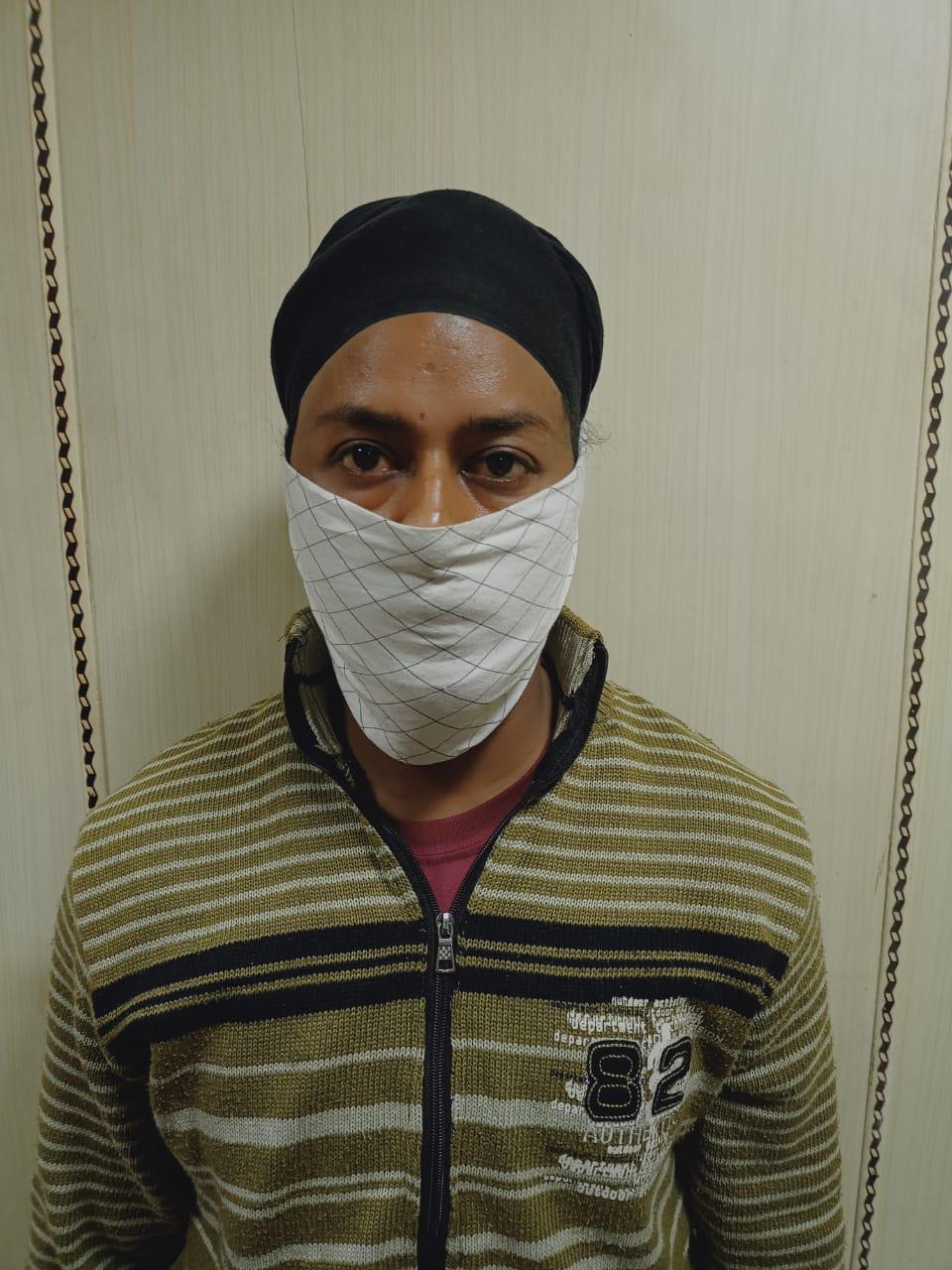
The three have been identified as Harpreet Singh (32), Harjeet Singh (48) and Dharmender Singh (55), all residents of Delhi, they said.

They were nabbed by the special investigating team (SIT) of north district on Wednesday. The crime branch, which is also investigating the cases, formally arrested them on Friday, police said.

Thousands of farmers protesting the Centre’s new agri laws had clashed with the police during the tractor parade on January 26.

Many of the protesters, driving tractors, reached the Red Fort and entered the monument. Some protesters even hoisted religious flags on its domes and a flagstaff at the ramparts, where the national flag is unfurled on Independence Day.

Police said they have released pictures of over 70 people who were involved in the violence on January 26. Now their identification is underway, they said.

So far, a total of 126 people have been arrested in connection with the Republic Day violence across the national capital, police said.

“We are constantly examining the videos and footage which we have received to get clear picture of the people involved in the violence. The process of identification is underway,” Delhi Police PRO Chinmoy Biswal said.

The objectionable videos on farmers’ issue being uploaded from locations out of India are also being examined. The Cyber Cell of the Delhi Police is investigating the matter, he added.

The Cyber Prevention Awareness and Detection (CyPAD) unit of Delhi Police has served around seven to eight notices.

“We have sent notices to around seven to eight people. However, only two of them have responded. They have asked for some time to join the investigation,” a senior police officer said.

The Delhi Police on Wednesday arrested a man named Dharmendra Singh in connection with the violence at Red Fort during the farmers’ tractor parade on Republic Day.

Earlier, the police had announced cash reward of Rs 1 lakh for information that can lead to the arrest of actor Deep Sidhu, Jugraj Singh, Gurjot Singh and Gurjant Singh who hoisted flags at the Red Fort or were involved in the act.

A cash reward of Rs 50,000 each was also announced for Buta Singh, Sukhdev Singh, Jajbir Singh and Iqbal Singh for allegedly instigating protesters. PTI


PROTEST AGAINST FARM LAWS-FEB.2021 Chakka Jam: Farmers block Dappar Toll Plaza, Lalru (View Pictures)

Chakka Jam: Farmers block Dappar Toll Plaza, Lalru (View Pictures)

    • Chakka Jam: Farmers block Dappar Toll Plaza, Lalru (View Pictures)

      Malkit Singh Malikpur

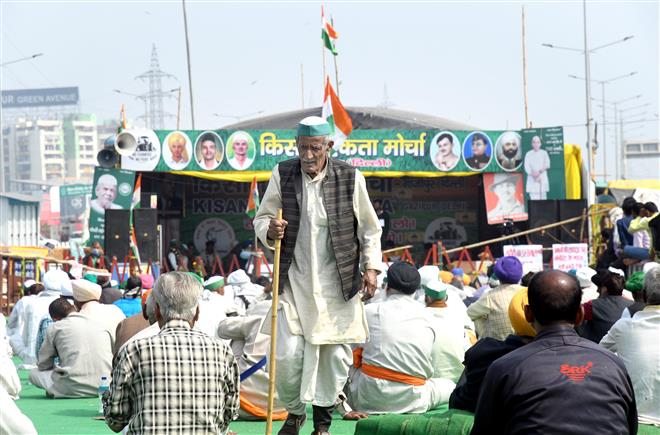
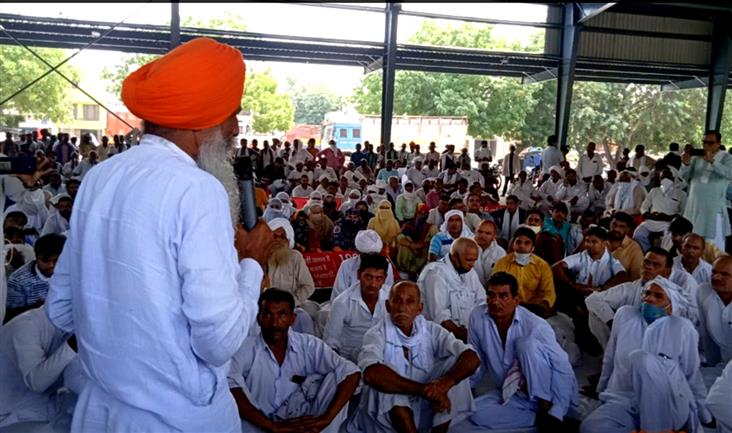
      Chandigarh, February 6, 2021: A large number of people took part in the dharna on the occasion of Chakka Jam today. Various speakers presented their views on the occasion. Most of the speakers talked about BKU spokesperson Rakesh Tikait. He said that it was the tears of ‘Tikait’ that had revived the Delhi Kisan Morcha.

      The commuters hassled as the trafffic remained blocked from all kinds of vehicles.

      The Delhi-Chandigarh highway was closed at Dappar Toll Plaza today

      View in pictures how farmers observed Chakka Jam: 


Country’s first blade runner motivates NCC air squadron

Country’s first blade runner motivates NCC air squadron

Kargil veteran and India’s first blade runner Major DP Singh (third from left) at the NCC Air Wing’s annual training camp in Chandigarh on Friday. Tribune photo

Tribune News Service
Chandigarh, February 5

A Kargil war veteran and India’s first blade runner, Major DP Singh, today interacted with cadets of the Chandigarh NCC air squadron and motivated them to set high ideals in life and strive for excellence, at the squadron’s annual training camp.

The officer had lost his right leg due to enemy fire in the Akhnoor Sector. He gradually started running using a prosthetic limb and has run in 26 half marathons, including several in high altitude.

As many as 33 cadets, including 13 girls, from city colleges are attending the camp being conducted here.

Inaugurating the camp, Col Amitesh Verma, Deputy Commander, Chandigarh NCC Group, exhorted the cadets to excel in all fields, enjoy the training activities and develop camaraderie and friendship among themselves.

The camp commandant, Group Capt MR Pandeya, said the camp aimed at imparting quality training to the cadets in flying, drill, weapon training and aero-modelling, besides conducting sessions on personality development, national integration, road safety, fire safety and health and hygiene.


PROTEST AGAINST FARM LAWS-FEB.2021 Chakka Jam:

uge gathering of women observed at Jida & Lehra BegaToll Plazas (View pictures)

Chakka Jam: Huge gathering of women observed at Jida & Lehra BegaToll Plazas (View pictures)

PROTEST AGAINST FARM LAWS-FEB.2021

Hyderabad: Police remove people taking part in ‘chakka jam’

Hyderabad: Police remove people taking part in 'chakka jam'

Hyderabad: Police remove people taking part in ‘chakka jam’

Hyderabad (Telangana), February 6, 2021 (ANI): Hyderabad Police and other security forces on Saturday removed protesters agitating on a highway on the outskirts of Hyderabad as part of the countrywide ‘chakka jam’ called by farmers today.

The police and security forces were seen dispersing a crowd of protestors. The protests caused a huge traffic jam in the area. Farmer unions on Monday announced a countrywide ‘Chakka Jaam’ on February 6 from 12 pm to 3 pm.

Farmers have been protesting at different borders of the national capital since November 26 last year against the three newly enacted farm laws: Farmers’ Produce Trade and Commerce (Promotion and Facilitation) Act, 2020; the Farmers Empowerment and Protection) Agreement on Price Assurance and farm Services Act 2020 and the Essential Commodities (Amendment) Act, 2020. (ANI)


PROTEST AGAINST FARM LAWS-FEB.2021 Centre has time till Oct 2 to repeal laws, says Rakesh Tikait

Centre has time till Oct 2 to repeal laws, says Rakesh Tikait 

Centre has time till Oct 2 to repeal laws, says Rakesh Tikait 

New Delhi, February 6, 2021: Amid ongoing deadlock between farmers and central government over farm bills, Bhartiya Kisan Union (BKU) spokesperson Rakesh Tikait said that the government has time till October 2 to repeal farm laws after which there will be no further discussion in the matter.

He said that the protesting farmers under various unions will collectively do further planning if the government fails to meet their demand within the time-frame.

“We have given time to the government till 2nd October to repeal the laws. After this, we will do further planning. We won’t hold discussions with the government under pressure: Rakesh Tikait, Bharatiya Kisan Union


Don’t hold back the tears

Don’t hold back the tears

Rakesh Tikait – File photo

Rajbir Deswal

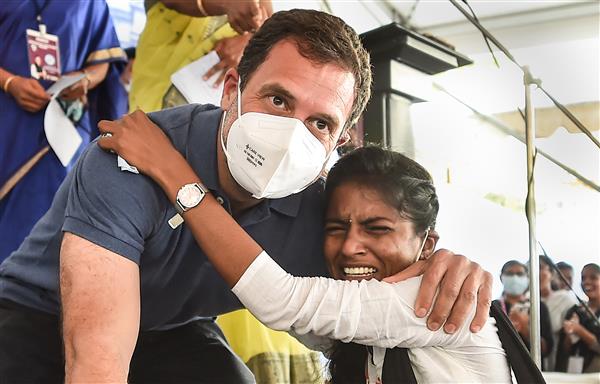
An emotional averment, natural, and not manoeuvred like maverick demagogues, by the farmers’ leader, Rakesh Tikait, did what a million implorations couldn’t do. It generated unsolicited and free-flowing support from the hoi polloi, especially the farming community in UP, Punjab and Haryana. They all seemed to tell, and not ask Tikait — ‘Aap kyun roye!’

Crying is human to the core, and essentially balances the upheavals felt within. Lord Ram’s father Dashrath wailed for days over the former’s separation and going in exile, till he died. Even Lord Ram cried upon seeing his brother Laxman faint. It’s believed that Nehru cried when Lata Mangeshkar rendered the patriotic number, ‘Aye mere watan ke logon, tum aankh main bhar lo pani.’ So, nothing wrong, or unusual, even for the iconic figures to be human-like and not just flaunt the royals’ ‘stiff upper lip’.

I recall Shylock, in The Merchant of Venice, ‘If you prick us, do we not bleed?’ In a similar vein, if you torment the bread-giver, does he not cry and bleed tears? Here, Tikait’s feelings of concern for his ilk have surfaced.

Crying elders move people even if they are stone-hearted. Look at the parents who lament their children deserting them! It may be only the kids and infants who may be just throwing tantrums, and feeling agitated, and making a song and dance about anything trivial, but when a mature person cries, it moves everyone around, for it’s just not for a naught that he might be thus painfully hurt. And Tikait is not a thespian, but a simpleton who bears his cross, valiantly.

In his seminal work, Home They Brought Her Warrior Dead, Tennyson talks about this very emotion, which if remains bottled up and doesn’t find an outlet, explodes. ‘She should weep or she’ll die’ — everyone is concerned about the soldier’s widow in the poem.

There is yet another story in which a tombstone cutter, who is approached by a widow for making her late husband’s tombstone, keeps standing like a statue, unmoved and listless for three days, without saying a word, and finally collapses and dies. The stone-cutter has to make two tombstones then. A tear says a million unsaid and pent-up emotions.

I once saw my father crying at the suggestion of our family’s separation. I couldn’t bear it then and to date it nearly eats up my entrails in pain. Similarly, when I came to know that my mother wept having seen me off to stay in a hostel, I cried endlessly for days together.


A long list of opponents Sedition charge is being brought against anyone critical of the governmen

A long list of opponents

State’s might: Farmers, activists, journalists and stand-up comics are all in the firing line now. Tribune photo

Julio Ribeiro

I marvel at the insatiable appetite of the Modi-Shah government and its satraps in the BJP-ruled states to take on every opponent who dares to oppose its policies and actions. It reminds me of the Great Khali and his tribesmen in the world of freestyle wrestlers, all brawny men. They challenge anyone who cares to oppose them to step into the arena and fight!

It does not appear that Shashi Tharoor or Rajdeep Sardesai or Mrinal Pande had deliberately or otherwise thrown their hat in the ring. Yet, they became the objects of ire because in their hurry to be the first to break the news, they individually tweeted that a protesting farmer on a tractor had died by a bullet injury in the melee that took place in Delhi on Republic Day. They had watched on TV a tractor breaking the police cordon. It was travelling at what could be considered reckless speed. If the police present there to stop the tractors at a predetermined line was forced to take a split-second decision, I would not fault them if they had fired and thereby prevented others from resorting to similar tactics. Both the police and farmers were keen to show restraint, and a genuine misunderstanding on the part of some journalists and a political opponent could, and should, have been overlooked.

However, our brand of the Great Khalis took advantage, more than umbrage, of the tweeters mistaken notion that the farmer had died in police firing, and filed FIRs against Shashi Tharoor and the journalists, accusing them of causing dissension between communities and sedition, of all things! The recourse to accusing opponents of the government of sedition has become a standard practice with the police in particular, despite the Supreme Court’s clear view that sedition is not to be cited unless the clear intention of fomenting violence and civic unrest against the lawfully-installed State is apparent.

Incidentally, this government has developed the fine art of turning legal process into punishment, knowing fully well that the case will not stand the test of legal scrutiny. The Unlawful Activities Prevention Act (not yet applied to this case) makes it almost difficult for the judiciary to release the accused on bail. So, if the trials linger, as they always do, the arrested persons are kept in judicial custody interminably. Some of the Bhima Koregaon detainees have spent more than three years in prison without trial, which in a democracy is unacceptable.

Stan Swamy, a 83-year-old Jesuit priest, whose mission in life was to stand up for the rights of Jharkand’s Adivasis, has spent close to four months in jail, with no hope of the trial beginning in the near future. When his request for bail was heard by the designated judge, the Public Prosecutor declared that Fr. Swamy was ‘accomplishing the agenda of the CPI Maoists’! The NIA in its charge sheet in the Elgar Parishad case had described the 30-year-old People’s Union for Civil Liberties (PUCL), a human rights body, as a frontal organisation of the banned CPI (Marxist)! These accusations do not have the ring of truth.

BJP ministers, the late Arun Jaitley, and Ravi Shankar Prasad, were associated with the PUCL, which was born out of the Emergency of 1975, and was founded by no other than Jai Prakash Narain! The PUCL is a well-known rights organisation and many citizens respect the intentions of its members and appreciate the work it has accomplished in the sphere of human rights.

The SC should study the UAPA and its use by the government to convert its process into actual punishment. Should people accused of unlawful activities be kept in jail for years together without trial in a civilised society? As a Jesuit priest, conditioned to obey his superiors, I cannot envisage this old man helping the Maoists in any manner. He would be contravening Church diktats and could even be defrocked if this were true.

But reverting to the original reason for this article and that is this government’s anxiety to rid itself of all critics of its policies, I have a gut feeling that the list of such opponents of the regime is lengthening so fast that the government will have to expand its security arms exponentially to keep pace. It was the cattle traders and beef eaters to begin with, then the left-wing students at the JNU and Jamia Millia, the anti-CAA/NRC protesters, the farmers opposing laws that were supposed to ameliorate their quality of life, stand-up comics and cartoonists poking gentle fun at these policies or their implementation, the Muslim boys in love with Hindu girls, and now the journalists who in their hurry to ‘break the news’ repeated what they were told by the dead man’s relatives.

I know Rajdeep Sardesai personally. His father was the one and only Test cricket player born in my ancestral state of Goa. He was my friend. His mother was the daughter of a senior member of my own service, the police. PM Pant retired as the police chief of Modiji’s own state of Gujarat. His grandmother’s brother, Gen GG Bewoor, was the Army Chief and his great-grandfather, Sir Gurunath Bewoor, ICS, was my father’s immediate boss as the Post-Master General of Bombay Presidency. My association with his family goes back 85 years when I was a boy of six.

But just as I am troubled by the sedition charges against Rajdeep, I am also troubled by the continuous assaults by this government on all and sundry who do not concur with its policies and actions. Is it that Mr Modi and Mr Shah do not want any opposition at all in this land of argumentative Indians? Or are they keen to follow the Chinese path where no contrarian voices are heard?

All along I had imagined that their goal was a ‘Hindu rashtra’ which, like Pakistan, would ensure that only the majority religion would determine the course of events and politics. But now I am confused. Farmers, journalists and stand-up comics are also in the firing line. Just like they would have been in China!


Drone technology critical to ward off threats

India is facing and may continue to face low-level conflicts which necessitate low intensity of retaliation to avoid the risk of escalation into an all-out war. Our adversaries, especially Pakistan, should not be permitted to get away with the idea that India would hesitate to hit back militarily following terrorist attacks. Therefore, drones can help in low-intensity retaliation by inflicting pointed damage on distant targets.

Drone technology critical to ward off threats

Eye In Sky: Drones enhance situational awareness and target damage assessment. PTI

Lt Gen Gyan Bhushan (retd)

Former South Western Army Commander

Employment of unmanned aerial vehicles (UAVs) or drones is a revolution in the making. Drone warfare is one of the most important combat-strategy developments of this century. It is proliferating rapidly and is likely to become even more potent in the coming years.

Drones are designed to deliver air strikes in a ground-guided, pilotless flight that is capable of dropping bombs, firing missiles, or even crashing into a target. These UAVs are equally useful in peacetime too, for gathering critical intelligence.

Development of drones was originally driven by commercial and agricultural demands, later finding a market in the military. Today, its presence in the armed forces is as crucial as that of tanks, mechanised armoured vehicles and fighter aircraft in the last century. As compared to fighter jets, drones serve as a low-cost weapon system, affordable to poor countries that could potentially become capable of damage and creating chaos against powerful adversaries with better traditional military capability.

Battle using drones helps reduce loss of human life. Precision is yet another advantage of using drones in the battlefield. It lowers the risk to military personnel and has less political and military ramifications.

A remote control war through the use of drones has become institutionalised as one of the major counter insurgency/terrorist strategy of the US since 9/11. The US has conducted a large number of drone strikes in Iraq, Afghanistan, Yemen, Pakistan and Somalia, including attacks on non-state actors and important terrorist leadership. Turkey has employed drones against the Kurdistan Workers’ Party, Nigeria has used it against the Boko Haram, Iraq against the ISIS and Saudi Arabia and the UAE in Libya and Yemen. Because of the widespread use of drones in conflicts, their employment in military operations is no longer a taboo as is apparent from the recent conflict in Armenia-Azerbaijan (Nagorno-Karabakh).

Employment of drones for offensive operations has been extremely effective from Syria to Libya and on to Nagorno-Karabakh. It is important to note that in these conflicts, drones were employed against well-equipped and well-trained forces, and not against the ill equipped armies of poor countries. In all three conflicts, employment was in the face of some of the best anti-aircraft missile defence system produced by Russia. The victory of Azerbaijan over Armenia showed the perfection of the art of drone. Azerbaijan employed Turkish and Israeli-made drones and exhibited the disparity of costs between the drone and the military assets it can destroy.

Being UAVs, drones are able to digitally and instantly provide precious operational information about the battlefield. They enhance situational awareness and target damage assessment. They have the ability to hover over a target, watching it continuously in remote and difficult areas. They are able to reach targets and obtain similar impact with lesser consequences than the penetration of hostile airspace by an aircraft.

Drones have applications beyond military use. Some regulatory frameworks exist for commercial and civilian purposes, but there are no guidelines for military application. Therefore, the use of drone technology by the military is likely to proliferate making it a lucrative option for terrorists, insurgents and non-state actors. It could become an ideal low-cost weapon system for state-sponsored terrorism.

Drones, when combined with human intelligence, can also be effective in locating and targeting known terrorist operatives. They can be employed with comparatively lower risk to life unlike piloted aircraft or ground forces. They can be employed for limiting terrorist capabilities and reducing collateral damage. This makes it more suitable for covert warfare.

We have approximately 15,000 km of land border and a coastline of over 7,500 km, including island territories. We have a turbulent and unstable neighbourhood and a wide range of non-traditional threats. China and Pakistan are our two nuclear neighbours with whom we have unresolved border disputes. Our external threats range from traditional land-centric due to disputed borders to sub-conventional, including the export of terror from across the borders. There are reports of Pakistan and China routinely sending drones into the Indian airspace. Securing the borders against hostile forces is critical to the country’s security.

The Indian armed forces have been using drones for intelligence, surveillance and reconnaissance. Weaponised drones which are emerging as an essential technology in asymmetric warfare have not been employed by the forces. It is, therefore, important to take a note of key developments in drone warfare to cater to these threat manifestations.

India is facing and is likely to continue to face low-level conflicts which necessitate low intensity of retaliation to avoid an all-out war. Our adversaries, especially Pakistan, should not be permitted to get away with the idea that India would hesitate to retaliate militarily against terrorist attacks. Therefore, there is a need to have low intensity retaliation capacity. Drones can inflict pointed damage on distant targets as they are particularly suitable for low-level conflicts and appropriate response in the event of Pathankot and Pulwama-like incidents. Along with focusing on expensive fighter planes, there is a need to lay emphasis on low-cost drones also and develop a comprehensive strategy for their use in our offensive as also defensive plans.

China has emerged as a major player in global arms trade. From being one of the biggest importers, it has become a leading global arms supplier, including that of UAVs. The known capability of China and Turkey in drone technology and their relationship with Pakistan is a cause of concern for India. There is a likelihood of these technologies falling in the hands of extremist groups, posing a big security risk. Therefore, a need to take note of these developments and work on a roadmap and strategy for acquisition and employment of drones is critical. It is needed to counter the envisaged drone threat to India from the neighbourhood.