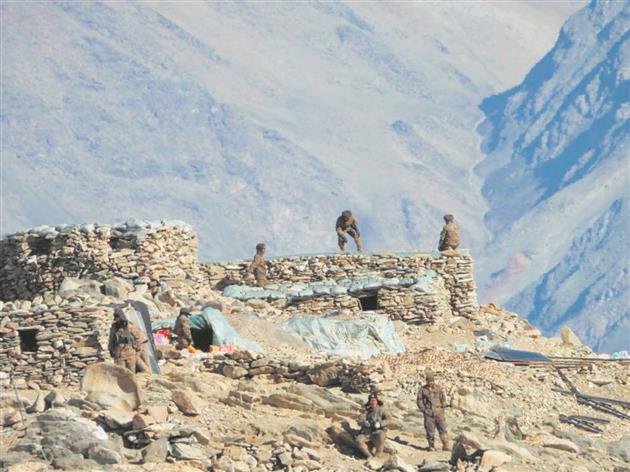
Special forces and others using these assault rifles used to import them from the Israel Weapons Industry, a former Israeli government firm that was privatised in 2005.
New Delhi: In a boost to the ‘Atmanirbhar Bharat’ initiative, India-made Israeli Tavor X 95 rifles are now being supplied to central forces and various state police teams, ThePrint has learnt.
Until now, special forces and others using these assault rifles used to import them from the Israel Weapons Industry (IWI), a former Israeli government firm that was privatised in 2005.
The Indian Army has also issued a fresh Request for Information (RFI) to fast-track procurement (FTP) of 93,895 carbines, after the last process, under which UAE firm Caracal was shortlisted, was scrapped.
The Army has issued RFI to all major foreign small arms manufacturers, including Caracal, Colt, SiG Sauer, Beretta and Kalashnikov. But the significant change in FTP this time is that the RFI has also been sent to multiple Indian firms like the Ordinance Factory Board, Reliance Defence, SSS Defence, Bharat Forge of the Kalyani Group and the Adani-PLR Systems, besides others.
“Under the FTP process, it is usually ‘Buy Global’ category, as the forces buy a global product off the shelf which is then supplied to, in a specific short period. But this time, Indian firms will be participating in the FTP process for carbines,” said a source in the defence and security establishment.
The front runner is likely to be the Adani-PLR Systems, which is fielding the Israeli Galil Ace 21 carbine that is now manufactured in India.
The Ace 21 was chosen by the Army in an earlier attempt (2013-14) to buy carbines, but the deal could not go through because of single vendor situation, a development which is not allowed under the Indian defence procurement rules.
The IWI, however, did not take part in the FTP (2017) because it was eyeing a deal for assault rifles (won by an American firm) and the Light Machine Guns (LMGs) — that it had won and is in the process of delivering to the Army.
Sources said that a large tender for over 3 lakh carbines is also in the process and could be issued later this year. This would be a ‘Make in India’ initiative.
ThePrint, in September last year, had reported that the Caracal deal was being scrapped. By December, it was reported that the UAE firm had offered to manufacture them in India.
The Adani-PLR Systems also manufactures the 56×45 mm chambered Tavor X 95 which are used by the special forces and others. These rifles come with ‘Made in India’ markings and were showcased during the recently-held Aero India 2021.
Sources said that the CISF has procured these ‘Made in India’ rifles, along with other state police forces. They also said that Adani-PLR Systems is in the process of setting up India’s first private barrel manufacturing plant in Gwalior. With this, the indigenous manufacture of rifles will go up to about 75 per cent.
The Gwalior facility would be functional by the end of this year and it is expected that other Indian private small arms players will be using it, rather than importing barrels from outside the country.
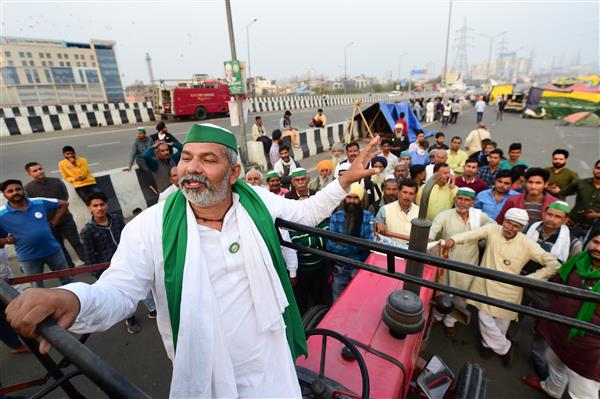
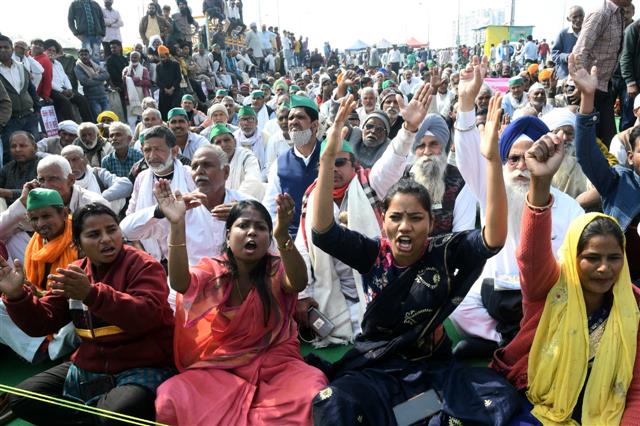
Unlike the American farmers, the protesting Indian farmers are not using the word ‘parity’. What they are demanding is an income assurance by way of an assured price. Knowing that farmers everywhere have suffered the brutality of markets, farmers want MSP to be made a legal right. This will impact trade policy, but that is a small price compared to the loss of livelihood millions of farmers suffer year after year.
Protest on wheels: The use of the tractor as a symbol of farm discontent is a throwback to the 1979 Tractorcade in the US. PTI
Devinder Sharma
Food & Agriculture Specialist
On a cold winter morning, hundreds of tractors had rolled down the streets of Washington DC. This was on February 5, 1979, when more than 900 tractors (some estimates say more than 1,500) had descended on the American capital to protest against policies which depressed farm prices, resulting in declining income, and
to demand a guaranteed farm income to enable them to stay on the farm.
Forty-two years later, the iconic farm movement — unprecedented in recent Indian history — echoes the same sentiments, with almost similar demands.
The American Agricultural Movement (AAM) — as it was called — arose after the 1977 US Farm Bill failed to protect farm prices at a time of surplus food production. While commodity prices continued to decline, farmers found it difficult to cover even the cost of production. This resulted in small farmers increasingly quitting agriculture, and in the process leading to soaring auction of farm lands. Farmers argued that the government was more concerned about keeping food prices low for consumers than caring for farmers. Sounds familiar, isn’t it?
Wheat price for instance, when adjusted for inflation, was lower than what the American farmers had received after the Second World War. Another study showed that adjusted for inflation, the US farm income in 1976 was less than the annual farm income during the Great Depression years in the 1930s.
It was then that a group of farmers met at Campo, in Colorado, and decided to launch a series of strikes across state capitals to show how the rural family structures were crumbling, increasingly leading to agricultural population declining to obscurity. Using the tractor as a symbol of farm discontent, thousands of tractors were used in the next two years to demonstrate in the state capitals. These tractor demonstrations — which began to be known as Tractorcade — helped take the message of agrarian distress to the urban population, which knew little about the economic disparities plaguing rural America.
According to the US Senate Committee on Agriculture, Nutrition and Forestry, what the farmers wanted was ‘100 per cent parity on domestic and exported agriculture products, all agriculture products contracted at 100 per cent parity, food imports prohibited until domestic supplies were used to fulfil domestic demand, agriculture policy announcements made in advance to give farmers time to adjust production, and a way to give farmers an influence in policy matters’. In other words, American farmers were seeking a price assurance, and even wanted protection at times of trade distortions.
When I look at the demands of the protesting Indian farmers, and compare with what the American farmers were asking for, I see a similarity. While the Indian farmers are not using the word ‘parity’, what they are demanding is an income assurance by way of an assured price. Knowing that farmers everywhere have suffered the brutality of markets, farmers want Minimum Support Price (MSP) to be made a legal right. This will definitely impact trade policy, but that is a small price compared to the loss of livelihood that millions of farmers suffer year after year. When they ask for repealing the three Central laws, which were pushed in without any meaningful consultation with stakeholders, they are in reality seeing a role in formulating future farm policies.
The historic 1979 Tractorcade that stormed Washington DC had attracted farmers from across the country. In an interview, Beverly Anderson, probably the only woman who drove a tractor from 1,300 miles away, recalls: “Sometimes, the tractorcaders were fed by people of the communities where they stayed, and people took notice of them as they drove down the highways. In that respect, their mission was a success — the contacts allowed farmers to tell their stories — that wheat was selling for about the same price as it had at the end of World War II, while production prices increased, that it cost more to put in a crop than they would realise at sale, and that failure of the family farm system would make the country dependent upon imported food.”
Initially, the residents were unhappy, wanted the farmers to be moved out. But then, it so happened that the city was hit with a blizzard and life came to a halt. Public transport was all shut down. It was at that time farmers used the tractors to clear the streets, pull out the cars from under the snow, and take doctors and nurses to hospitals and so on. This helped develop bonhomie with the urban population that began to see farmers as fellow citizens. For several weeks, farmers would drive their tractors daily through various parts of the city appraising people of their plight. Some farmers even stayed back for months.
The then American President, Jimmy Carter, himself a farmer, was sympathetic. “I don’t know of any other group that has suffered more from inflation than farmers,” he had reportedly said. The bureaucracy of course was not convinced. They had more faith in the markets.

As Anderson reminisced: “We were successful in telling the story of the plight of the American farmer. As far as any legislation that helped, not really.”
If only the policy makers had listened to the farmers’ woes, and provided them with at least a guaranteed price, American farming wouldn’t have been left devastated, with farm lands gobbled up, forcing small farmers to move out. Intensive agriculture has destroyed the soil, polluted the groundwater, and chemical pesticides have contaminated the food chain. With the real cost of cheap feed externalised, American agriculture is crying for regeneration. Decades later, the headline of a Time cover story (November 27, 2019) says it all: “They’re trying to wipe us off the map’. Small American farmers are nearing extinction.”
There are lessons here. Free market orthodoxy hasn’t helped increase farm incomes in America, and for that matter, anywhere in the world. It has only pushed small farmers out of agriculture. To make farming an economically viable and sustainable enterprise for small farmers, India needs to carefully listen to the protesting farmers. There may not be another opportunity again.
A tribute to Major Hoshiar Singh, Param Vir from 3 Grenadiers The Tribune begins a series on gallantry award winners of 1971 India-Pak War
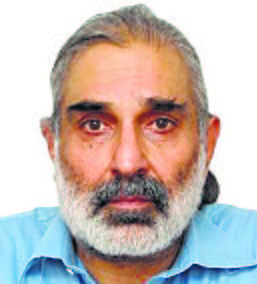
A photograph of Maj Hoshiar Singh, who retired as Colonel
Lt Col Dilbag Singh Dabas (Retd)
Col Hoshiar Singh, PVC, undoubtedly, is a shining jewel in 3rd Grenadiers’ crown but old-timers from 2nd Jat Battalion too claim him as theirs, and rightly so; they fondly refer to him as “Mhara Hoshiare”.
Maj Hoshiar Singh being awardedthe Param Vir Chakra by President VV Giri.
Son of Ch Hira Singh Dahiya, Hoshiar Singh was born on May 5, 1936, at Sisana village in Rohtak district of undivided Punjab. Sisana is now in Sonepat. After matriculation from Jat Heroes Memorial High School, Rohtak, and first year at Jat College, also in Rohtak, he was enrolled as a Sepoy in 2nd Jat Battalion (Mooltan). An outstanding volleyball player, Hoshiar Singh was referred to as Hoshiare by his teammates. For possessing leadership and officer-like attributes, Hoshiare was selected for the Army Cadet College and commissioned into 3rd Battalion of the Grenadiers in June 1963.
3 Grenadiers, one of the oldest infantry battalions, was raised on August 4, 1768, at Bombay as 1st Sepoy Battalion. Since then, it has fought gloriously in all the wars, inland and overseas. The impressive tally of the gallantry awards won by its tall and sturdy Grinders (Grenadiers are commonly referred to as Grinders) is testimony to the stuff they are made of. Hoshiar Singh carried forward the rich legacy and took it to the highest level by earning the Param Vir Chakra during the Battle of Basantar (Jarpal) in the 1971 third round with Pakistan in the western theatre.
The Battle of Basantar encompasses the entire gamut of battles and skirmishes that took place in the Shakargarh sector, that includes ‘Jarpal Complex’ and the surrounding areas. It was an area of strategic importance. If the enemy continued to hold Jarpal and the area around, it would threaten the Pathankot-Jammu road, the lifeline of Jammu and Kashmir. 3 Grenadiers was tasked with capturing Jarpal across Basantar nullah before the enemy reinforced the defences around it.
It was for his exploits during this iconic battle to capture and hold Jarpal that Hoshiar Singh, now a Major commanding Charlie company of 3 Grenadiers, was awarded the PVC, the highest gallantry decoration in the face of the enemy.
The battle account reads:
“On December 15, 1971, 3 Grenadiers Battalion was given the task of establishing a bridgehead across Basantar river in Shakargarh sector. For accomplishment of the mission, the enemy locality named Jarpal had to be captured first. Major Hoshiar Singh, who was commanding the left forward company, was ordered to attack and capture Jarpal, which was well fortified and held in strength by the enemy. During the assault, his company came under intense artillery shelling and effective crossfire from the enemy medium machine guns. Undeterred, Major Hoshiar Singh led the charge and captured the objective after a fierce hand-to-hand fight.
The enemy reacted sharply and put in three successive counter-attacks supported by armour on December 16. Major Hoshiar Singh, unmindful of heavy shelling and tank fire, went from trench to trench motivating his men and encouraging them to remain steadfast and fight. Inspired by his dauntless leadership, his company repulsed all counter-attacks, inflicting heavy casualties on the enemy. Again, on December 17, the enemy launched another massive counter-attack with a battalion supported by medium artillery fire. Though seriously wounded, Major Hoshiar Singh, with total disregard to personal safety, continued to inspire his men by going from platoon to platoon even under intense artillery shelling.
When an enemy artillery shell landed near the machine gun post seriously injuring the crew and rendering the machine gun inoperative, Major Hoshiar Singh, realising the importance of machine gun fire, immediately rushed to the machine gun pit and though seriously wounded, manned the gun inflicting heavy casualties onto the enemy. The counter-attack was repulsed yet again and the enemy retreated, leaving behind 85 dead, including Lieutenant Colonel Akram Raja, their commanding officer, and three other officers. Major Hoshiar Singh, though seriously wounded, remained with his Charlie company and refused to be evacuated till the ceasefire.
Throughout the operation, Major Hoshiar Singh displayed most conspicuous gallantry, indomitable fighting spirit and unparalleled leadership.”
From the Battle of Basantar emerged not just one but two Param Virs; on one flank of Jarpal, while Major Hoshiar Singh was beating back infantry counter-attacks one after another, on the other, a young subaltern, Second Lieutenant Arun Khetrapal of Poona Horse, took on the enemy armour within 200 yards and knocked down the enemy tanks one after another till his own tank was hit and the fearless boy from Poona Horse went down with his tank named ‘Famagusta’, posthumously earning the topmost honour for his regiment.
After the war, the Indian Army did well to post Major Hoshiar Singh, PVC, to the Indian Military Academy as company commander, Sinhgarh Company, where he proved to be a tremendous inspiration for the cadets and turned the company into the champion company for much of his tenure there. Later, as Colonel, he commanded 3 Grenadiers, his own battalion, with distinction.
After 35 glorious years in olive greens, the Param Vir from 3 Grenadiers retired in 1988. He made Jaipur his second home but frequently spent time in his village Sisana and motivated the young generation to continue to follow the good old Haryanvi tradition of being part of the defence services.
After a brief illness, Col Hoshiar Singh, PVC, breathed his last on December 6, 1998. The ace volleyballer Hoshiare of 2nd Jat and the fearless Hoshiar Singh of 3rd Grenadiers had been an epitome of regimental spirit. All his three sons consciously attempted to follow in his footsteps. Two made the grade and were commissioned into Grenadiers. One even availed the parental claim and served in 3 Grenadiers, his father’s battalion, the PVC Battalion.
Col Hoshiar Singh, PVC, undoubtedly, is a shining jewel in 3rd Grenadiers’ crown but old-timers from 2nd Jat Battalion too claim him as theirs, and rightly so; they fondly refer to him as “Mhara Hoshiare”.
Param Vir Chakra
Established: A draft royal warrant was prepared in October 1948 for the institution of Param Vir Chakra in the name of the British sovereign as, during the dominion period, such a step would have been necessary to give the award status within the Commonwealth. On further consideration, this course was abandoned and the medal was created and was instituted by the President of India on January 26, 1950, with the award effective from August 15, 1947.
Eligiblility: Officers, men and women of all ranks of the Indian military, paramilitary and members of the nursing services of the Armed Forces.
Awarded for: The most conspicuous act of bravery, or some daring or pre-eminent act of valour or self-sacrifice in the face of the enemy on land, at sea or in the air. The decoration may also be awarded posthumously.
The award of the decoration carries with it the right to use PVC as a post-nominal abbreviation. Provision has also been made for the award of a Bar for second (or subsequent) award of the PVC.
First recipient: Major Som Nath Sharma of 4th Battalion of the Kumaon Infantry Regiment.
Youngest awardee: Grenadier
(now Honorary Lieutenant) Yogender Singh Yadav, the living legend. He was just 19 years and two months old when he displayed the stuff he was made of during the Kargil war in 1999.
21 recipients: 20 from the Army
and one from the Air Force. However, no PVC awardee has so far won the award the second time.
Toll plazas in Punjab shut, uncertainty looms over mandatory use of FASTag
Toll collection in 25 toll plazas, including both public-funded and BOT (built, operate and transfer) and on national highways (NHs) in Punjab have been directly or indirectly affected due to farmers’ protests since October last year.
Vijay C Roy
Tribune News Service
Chandigarh, February 15
Although the Union Ministry of Road Transportation and Highways has said the Radio Frequency Identification tag (FASTag) will become mandatory from Monday midnight and vehicles without it will have to pay twice the toll, its implementation is uncertain in Punjab as currently all plazas in the state are closed due to farmers’ protest.
“Since the toll collection in all the plazas is suspended, uncertainty prevails over the implementation of this decision. Once toll collection resumes only then we will be able to implement it,” said a senior NHAI official.
Toll collection in 25 toll plazas, including both public-funded and BOT (built, operate and transfer) and on national highways (NHs) in Punjab have been directly or indirectly affected due to farmers’ protests since October last year. It is worth mentioning that members of different farm unions forced all 51 toll plazas across Haryana and Punjab to close, giving a free pass to motorists.
However, the official said except Punjab and Haryana, FASTag would be made compulsory from Monday midnight across the country where the operations had not been disrupted.
The government said the complete migration to FASTag would help promote fee payment through the digital mode, reduce waiting time and fuel consumption, and provide a seamless passage through the plazas.
Vehicle owners can buy FASTag for their vehicles at certain toll plazas across the state by producing identification and vehicle registration documents. They can also buy it online on e-commerce portals and on the websites of certain banks such as HDFC Bank, SBI, ICICI Bank, Axis Bank, Kotak Bank, etc.

Customers can recharge their FASTag digital wallet using Internet banking, credit and debit cards or UPI.

Multiple options for recharge
Customers can recharge their FASTag digital wallet using Internet banking, credit and debit cards or UPI. Vehicle owners can buy FASTag for their vehicles at certain toll plazas across the state by producing identification and vehicle registration documents.

To give protest impetus, unions plan mahapanchayat on February 18 Mass contact drive launched for event
Farmers during their ongoing protest against the farm laws at Ghazipur on Monday. MR Bhui
Our Correspondent
Abohar/Sriganganagar, February 15
After the Kisan Sammelan was organised by the Congress last week at Padampur and Peelibanga, some farmer organisations have decided to hold a mahapanchayat at Raisinghnagar on February 18.
The organising committee said Samyukt Morcha’s senior leaders Balbir Singh Rajewal, Dr Darshan Pal Singh, Yoginder Yadav, Joginder Singh Ugrahan, former CPM MLA Amra Ram, Raja Ram Meel of the Jat Mahasabha and Tara Singh Sidhu of the CPI will participate in it.
Separate teams of All India Kisan Sabha, Gramin Mazdoor Kisan Samiti, Kisan Sangharsh Samiti, Jai Kisan Andolan and Etah Singrasar Canal Construction Committee have launched a mass contact drive to motivate people for the mahapanchayat.
Sheopat Ram Meghwal, Jagtar Singh Brar, Balwinder Singh, Dalip Saharan, Harsh Khosa, Harbhajan Singh, Mangal Singh Randhawa and Manish Kantiwal today held corner meetings in some villages. Meghwal is a member of the national executive of the kisan sabha.
Describing the policies of the central government as anti-people, they appealed to the people to unite to save the country from clutches of the BJP. “Farmers are struggling not only to secure their future, but also to save the country as BJP leaders have conspired to make it a slave to a few corporates,” said Harvinder Singh Gill.
Government insulted farmers, ministers called them traitors: Priyanka Gandhi She was addressing kisan panchayat in Uttar Pradesh’s Bijnore
Congress National General Secretary Priyanka Gandhi Vadra during a Kisan Mahapanchayat in support of farmers agitation against the three farm laws, at Chandganj in Bijnor district on February 15, 2021. PTI
Lucknow, February 15
Accusing the Narendra Modi-led Union government of insulting farmers, Congress general secretary Priyanka Gandhi Vadra on Monday said the men who protect the country’s borders are sons of farmers.
Addressing a “kisan panchayat” in UP’s Bijnore, the Congress leader said farmers were ridiculed in Parliament and dubbed as traitors by ministers.
“The farmer who is standing on your door, his son is standing at the border of the country. The farmer whom you are insulting, his son is safeguarding the country’s border,” she said referring to the protest against the farm laws at the Delhi borders.
“They were given a new name ‘aandolanjivi’ and ‘parijivi’. All of you know the meaning of ‘parijivi’. Your ministers called the farmers traitors,” she said.
Priyanka also criticised Haryana minister J P Dalal, who had stoked a controversy on Saturday saying the farmers who died during the course of the agitation would have passed away even if they had stayed back home.
Stressing that “martyrdom” is a significant thing, she said, “No one has the right to raise a finger on a person who has attained martyrdom while protesting for his rights, be it the prime minister or any other minister”.
Attacking the prime minister, the Congress leader alleged that the central laws are not for farmers but for his capitalist friends.
“The country is not blind and every citizen is watching as to what is happening in the country for the past seven years. His capitalist friends are running the entire media, his capitalist friends run his elections,” she said.
“All big industries set up in the past 75 years have been sold and plans are afoot to sell the unsold ones. What will such a government do for you,” Priyanka Gandhi Vadra asked.
Further lashing out at the PM, she said, “The prime minister can go to the US, hold a gathering for Trump (ex-US president), visit China and Pakistan, and there is no country which he has not visited. And you could not go two-three kilometres from your house and meet the farmers who are saying please come and talk to us”.
“There are two types of leaders. There are some leaders who have a lot of arrogance and they forget as to who gave them power. In the history of the country, whenever a leader has become arrogant, the people of the country have taught him a lesson, and he feels ashamed.
Then he understands what his religion is. His religion is not to divide people but to work for their development. Top priority should be given to the public and you (leader) should be behind them,” she said.
After the Congress leader ended her speech, a two-minute silence was observed for the farmers who died during the course of the protest.
The farmer unions protesting against the centre’s farm laws have claimed that over 200 farmers have died during the course of the agitation that started in November last year. — PTI
SC panel on farm laws holds consultations with agri-professionals, academicians Seventh meeting held by panel
Farmers at Ghazipur border during their ongoing protest agianst New farm laws in New Delhi on Monday. Tribune photo: Manas Ranjan
New Delhi, February 15
The Supreme Court-appointed committee on the new farm laws on Monday said it held consultations with eminent academicians and agri-professionals on the legislations against which farmers have been protesting at Delhi’s borders for over two months now.
This is the seventh meeting the panel has held so far. The three-member committee is holding consultations with stakeholders both online and in person.
In a statement, the committee said it held a detailed discussion with academicians and professionals on Monday through video conferencing.
“In total, 7 eminent academicians and professionals in the field participated through video conferencing for detailed deliberations with the committee members,” it said.
The committee members requested the participants to give their views on the three farm laws. “All the participating professionals and academicians gave their detailed views and suggestions…,” the statement said.
The Supreme Court had on January 12 stayed the implementation of the three contentious farm laws for two months and asked the committee to submit a report within two months after consulting the concerned stakeholders.
Thousands of farmers, especially from Punjab, Haryana and parts of Uttar Pradesh, have been camping at Delhi’s borders for over two months now seeking repeal of the new legislations, introduced by the Centre last year, saying they are pro-corporate and could weaken the mandi system.
The 11 rounds of the talks between the Centre and 41 protesting farmer unions has so far remained deadlocked even though the former has offered concessions including suspension of the legislations for 18 months, which the unions have rejected. PTI
Your protest has brought new ray of hope: Maulana Sajjad Nomani to farmers The spokesperson of All India Muslim Personal Law Board was speaking at the Singhu border
Makeshift shelter for farmers at Ghazipur border during their ongoing agitation against the three farm laws, in New Delhi. PTI
New Delhi, February 15
The ongoing farmers’ protest against the three farm laws has brought a new ray of hope against injustice in the country, Maulana Sajjad Nomani said on Monday.
The spokesperson of All India Muslim Personal Law Board was speaking at the Singhu border, one of the major sites of the farmers’ agitation.
“So many organisations have been, for years, trying to create awareness about the injustices in the country, and this movement has brought a new ray of hope from Kashmir to Kanyakumari.
“Thanks to you and your leadership, who realised that ‘enough is enough’ and decided to raise your voices, we have been reassured that the era of darkness in the country is ending and that justice is not very far away,” Nomani said.
Ever since the farmers’ agitation started in November last year, the Islamic scholar has regularly been extending his support to the movement through his YouTube channel.
On Monday, he said the Muslims of the country were standing behind the farmers in their fight.
“On behalf of the Muslim society, I assure you that we are all standing behind you and support you, and request you to not lose hope and continue this fight.
“It is because of your strength that God has chosen you to lead this movement,” he said.
Criticising the government’s decision to introduce the laws during the difficult period of the pandemic, Nomani said the farmers’ movement was not just a protest against the three laws, but also a “freedom struggle”.
“The three laws ensure that the produce generated out of the blood and sweat of lakhs of Indian farmers gets locked up in the hands of private businessmen.
“The protest is not just a fight against the three laws, but a fight for freedom. The country that became independent after so much struggle, is being made a slave again, but India is not meant to be a slave,” he said.
“The government has constantly been saying that the MSP (Minimum Support Price) was, is and will be there, but why isn’t it making it a written law?” he added.
Farmers, mostly from Punjab, Haryana and western Uttar Pradesh, have been camping at three Delhi border points—Singhu, Tikri and Ghazipur—for nearly 80 days, demanding a repeal of the three agri laws and a legal guarantee on the minimum support price (MSP).
In the absence of the MSP, the farmers fear they will be left at the mercy of private corporations.
Nomani also warned the protesting farmers against attempts to divide their movement.
“There is a conspiracy to divide this movement, but we should all remain united, because India is a country of love and brotherhood,” Nomani said. — PTI
The terror attack site at Lethpora in Pulwama district. File
New Delhi, February 14
The Central Reserve Police Force (CRPF) that lost 40 troopers in the 2019 Pulwama terror attack said on Sunday that the country “did not forgive” and “will not forget” the supreme sacrifice made by its personnel.
A wreath-laying ceremony was held at the CRPF camp in Lethpora to mark the second anniversary of the deadly attack. Senior officers of the paramilitary based at its headquarters in Delhi participated in the event in the virtual mode, CRPF spokesperson Deputy Inspector General (DIG) Moses Dhinakaran said.
“Did not Forgive, will not Forget: Salute to our brothers who made the supreme sacrifice for the nation in #PulwamaAttack.
“Indebted, we stand with the families of our valiant Bravehearts,” the force said in a Twitter post.
India will never forget their sacrifice
I bow down to the brave martyrs who lost their lives in the gruesome Pulwama attack on this day in 2019. India will never forget their exceptional courage and supreme sacrifice. —Amit Shah, Home Minister
Soon after the Pulwama attack, the Indian Air Force had carried out an airstrike in Pakistan’s Balakot on February 26, 2019, targeting terrorist camps.
CRPF Director General AP Maheshwari also unveiled a video book dedicated to the 40 personnel killed in the line of duty.
“We have inherited bravery which flows like blood in our veins,” he was quoted as saying by the spokesperson.
“The video book has a content of 80 episodes and 300 minutes. A copy of the book will also be sent to the families of each of the personnel killed in the Pulwama suicide bombing attack,” Dhinakaran said.
A CRPF bus in the fifth position of a 78-vehicle convoy was targeted by a Jaish-e-Mohammad (JeM) suicide bomber who detonated his explosives-laden SUV near it on the Jammu-Srinagar highway in Pulwama on February 14, 2019.
The convoy was ferrying over 2,500 personnel and all 39 in the bus and a sub-officer stationed on the ground, as part of a road sanitisation party, were killed in the blast.
CRPF Assistant Sub-Inspector (ASI) Mohan Lal (50), who had “chased and fired” at the explosives-laden car, was named for the highest police medal for bravery, the President’s Police Medal for Gallantry (PPMG), this Republic Day. — PTI
39 personnel in bus, sub-officer killed
The convoy was ferrying over 2,500 personnel and all 39 in the bus and a sub-officer stationed on the ground, as part of a road sanitisation party, were killed in the blast.
Karnal Jail Superintendent refuses to allow Punjab Women’s Commission chairperson to meet Nodeep Kaur
Punjab State Women’s Commission Chairperson Manisha Gulati has been denied permission by Jail Superintendent Karnal to meet labor rights activist Nodeep Kaur, who has been in custody for over a month now.
A spokesperson of the commission said that this morning the Superintendent of Karnal Jail called up the office of Punjab State Women’s Commission and said that Gulati would have to get the approval of the Haryana Government to meet Nodeep Kaur, an activist of the Mazdoor Adhikar Sangathan.
Nodeep Kaur was granted bail in an extortion case on Thursday but remains in jail because she faces another criminal case.
State Stalwarts
DEFENCE MINISTER
Minister Rajnath Singh
ALL HUMANS ARE ONE CREATED BY GOD
HINDUS,MUSLIMS,SIKHS.ISAI SAB HAI BHAI BHAI
CHIEF PATRON ALL INDIA SANJHA MORCHA
LT GEN JASBIR SINGH DHALIWAL, DOGRA
SENIOR PATRON ALL INDIA SANJHA MORCHA
MAJOR GEN HARVIJAY SINGH, SENA MEDAL ,corps of signals
.
.
PATRON ALL INDIA SANJHA MORCHA
MAJ GEN RAMINDER GURAYA ,MADRAS REGIMENT
sanjhamorcha303@gmail.com
PRESIDENT SOUTH ALL INDIA SANJHA MORCHA
COL SS RAJAN BOMBAY SAPPERS,
PRESIDENT UTTARAKHAND ALL INDIA SANJHA MORCHA
COL B M THAPA ,BENGAL SAPPERSS
PRESIDENT HARAYANA STATE CUM COORDINATOR ESM
BRIG DALJIT THUKRAL ,BENGAL SAPPERS
PRESIDENT TRICITY
COL B S BRAR (BHUPI BRAR)
PRESIDENT CHANDIGARH ZONE
COL SHANJIT SINGH BHULLAR
.
.
PRESIDENT PANCHKULA ZONE AND ZIRAKPUR
COL SWARAN SINGH
INDIAN DEFENCE FORCES
DEFENCE FORCES INTEGRATED LOGO
INDIAN AIR FORCE
Air Officer C-in-C WESTERN AIR COMMAND
AIR MSHL S PRABHAKARAN AVSM VM
AOC-IN-C, EASTERN AIR COMMAND
Air Marshal Inderpal Singh Walia
AOC-in-C SOUTH WESTERN AIR COMMAND
Air Marshal Vikram Singh
AOC-IN-C, SOUTHERN AIR COMMAND
Air Marshal J.Chalapati
AOC-IN-C TRAINING COMMAND
AIR MARSHAL SK GHOTIA VSM
AOC-IN-C MAINTENANCE COMMAND
Air Marshal Jagdish Chandra
Flag Officer Commanding in Chief, Western Naval Command
ice Admiral R Hari Kumar, PVSM, AVSM, VSM
Flag Officer Commanding in Chief, Eastern Naval Command
Vice Admiral Sanjay Bhalla, AVSM, NM
Flag Officer Commanding in Chief, Southern Naval Command