








































OPEN LINK BELOW

ARMY DAY -2021-Salute The Soldier



Current Events :


















All stake holders including Veterans and their dependents, ECHS employees at all echelons and hospitals / other service providers are invited for direct communication with Central Organisation ECHS to reduce complaints and litigation. This will assist them in increased focus on formulation of caring policy and implementating initiatives preserving the time and resources of our veterans who have served the nation in a selfless manner.
Please speak to the officer handling
non medical complaints on Tele No 09648786013
 Download ECHS Mobile App for Android
Download ECHS Mobile App for IOS
Aarogya Setu App Download Andriod
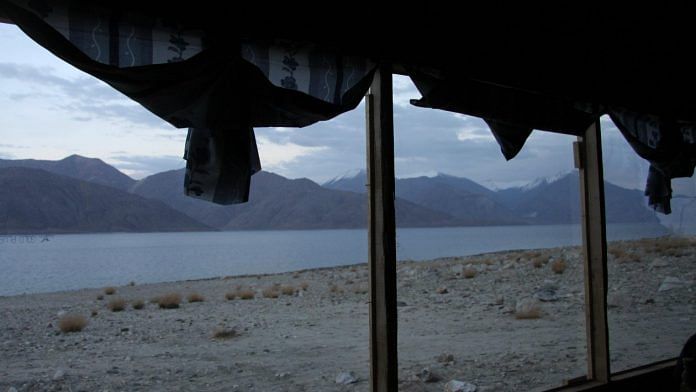
New Delhi: China has dismantled its jetty at Finger 5 on the northern banks of the Pangong Tso, as well as a helipad, besides being in the process of taking down tents and observation posts in the area as part of the disengagement agreement reached with India, ThePrint has learnt.
The dismantling of all structures created after April 2020 — when Chinese aggression in Ladakh triggered a stand-off at the border — was one of the conditions of the disengagement process, which was initiated last week in the southern and northern banks of the Pangong Tso.
India has been closely monitoring the disengagement process at the northern bank while conducting simultaneous withdrawal at the southern bank.
The whole process, sources said, will take “a few more days” if all goes as planned.
“Among the major structures created by China in the Finger Area were the jetty (a structure built out into a waterbody to help people get on and off a vessel), a helipad and a makeshift hospital. According to the last information that came in, the jetty, helipad along with various structures at Finger4 area have been dismantled,” a source said.
“The Chinese are to dismantle all new structures that were created since April 2020 in that area.”
Also Read: How India stood its ground and forced China to end Pangong Tso aggression
The developments are backed by satellite images. Sim Tack, a military analyst at Belgium-based security analysis firm Force Analysis, said the Chinese have begun dismantling structures.
Speaking to ThePrint, he said he is yet to have a total count of structures removed. “I don’t have a total count of individual structures right now but the jetty was the main permanent structure in the withdrawal area north of the lake. Then, there were lots of tentage and temporary shelters that appear to have been removed from their positions between the mountain ranges,” he said.
Tack works closely with a satellite imagery expert who tweets through his handle @detresfa_.
According to the disengagement agreement reached between India and China, the troops around the lake are going back to pre-April 2020 locations.
Indian soldiers will move back to their last permanent base in the Finger area, the Dhan Singh Thapa post of the Indo-Tibetan Border Police (ITBP), near Finger 3.
Similarly, Chinese troops will go back to their permanent post, which is beyond Finger 8 and is known as Sirijap, a location that was captured by the People’s Liberation Army (PLA) in the 1962 War.
Sources said the disengagement process is likely to be completed by 20 February.
The verification process through Unmanned Aerial Vehicles and satellites is on, they added, saying a full-fledged review will be taken before the next round of Corps Commander level talks.
It is known that the Chinese have pulled back their armoured and mechanised columns and men from the southern banks to the Rutog military base, where the PLA had developed a lot of infrastructure during the stand-off.
Also Read: Those criticising troop pull-back at Pangong Tso are ignorant of facts — Army ex-chief Malik

Photo credit: iStock
New Delhi, February 16
A Delhi court has said the law of sedition cannot be invoked to quieten the disquiet under the pretence of muzzling miscreants.
Additional Sessions Judge Dharmender Rana made the observation while granting bail to two persons—Devi Lal Burdak and Swaroop Ram—arrested by Delhi police earlier this month for allegedly committing sedition and spreading rumours by posting fake video on Facebook during ongoing farmers’ protest.
The court said that the law of sedition was a powerful tool in the hands of the state to maintain peace and order in society.
“However, it cannot be invoked to quiet the disquiet under the pretence of muzzling the miscreants. Evidently, law proscribes any act which has a tendency to create disorder or disturbance of public peace by resort to violence,” the judge said in an order passed on February 15 .
“In the absence of any exhortation, call, incitement or instigation to create disorder or disturbance of public peace by resort to violence or any allusion or oblique remark or even any hint towards this objective, attributable to the accused, I suspect that Section 124 A (sedition) IPC can be validly invoked against the applicant,” the order said. — PTI
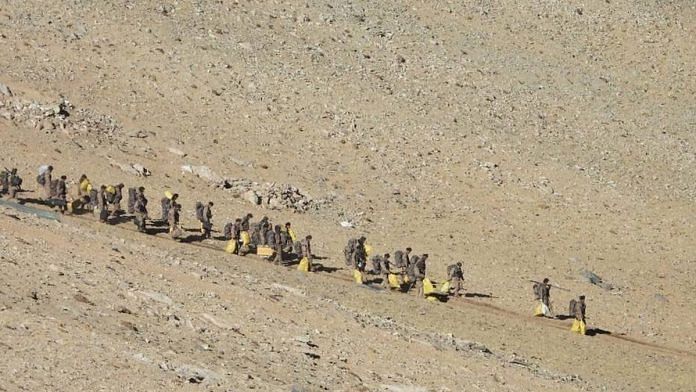
New Delhi: After armoured and mechanised columns, Indian and Chinese infantry soldiers have begun disengaging from the Kailash Range south of the Pangong Tso. The process is set to be completed by Friday.
The Indian Army has released visuals of the ongoing pull-back, showing soldiers of the People’s Liberation Army dismantling their tents and camps and carrying loads to light vehicles. Large groups of soldiers can be seen ‘de-inducting’, and vehicles moving towards the rear with troops and equipment.
The visuals also show the Chinese using earth-movers or ‘JCBs’ to restore soil that was dug up to set up various pieces of infrastructure on the north and south bank of the Pangong lake. According to the disengagement deal agreed to by the two countries, all landforms are to be restored by both the sides.
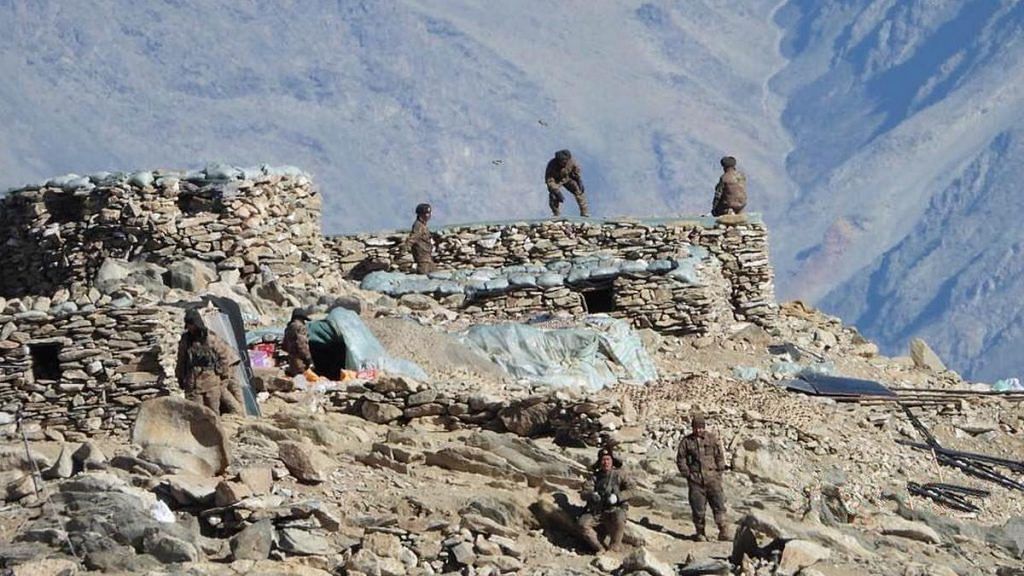
Sources in the defence and security establishment said the disengagement process is “on the right track”, and as part of the agreement, soldiers have started withdrawing from the heights on the southern bank, which were occupied in an operation on the night of 29-30 August.
The withdrawal is taking place from the Gurung and Magar Hills, besides Rechin La and Rezang La on the southern bank, and from the ‘Finger Area’ on the northern bank.
“Both India and China are pulling back according to the agreement. The first focus on the south bank was the armoured and mechanised columns. China has, in total, withdrawn about 200 such vehicles. India has pulled back too. Now the focus is on infantry elements,” a source said.
As reported by ThePrint on Monday, the Chinese have already dismantled their jetty at Finger 5 and a helipad, and are in the process of taking down tents and observation posts.
Sources said that while the disengagement process is on, the verification is being done through Unmanned Aerial Vehicles and satellites.
The next round of corps commander-level talks is to be held 48 hours after withdrawal from both banks of the Pangong Tso is completed to the satisfaction of both sides.
Also read: Those criticising troop pull-back at Pangong Tso are ignorant of facts — Army ex-chief Malik
China has pulled back its armoured and mechanised columns and troops from the southern bank to the Rutog military base, where the PLA had developed a lot of infrastructure during the stand-off.
After nine months of stand-off, India and China had finally agreed to disengage from the Pangong Tso, and the withdrawal was initiated last Wednesday.
According to the disengagement agreement, the troops around the lake will go back to pre-April 2020 locations.
On the northern bank, Indian soldiers will move back to their last permanent base in the Finger area, the Dhan Singh Thapa post of the Indo-Tibetan Border Police (ITBP), near Finger 3. Chinese troops will go back to their permanent Sirijap post beyond Finger 8, a location that they captured in the 1962 war.
However, disengagement from the strategic Depsang Plains, Gogra Post and Hot Spring area is yet to be finalised.
Also read: India hasn’t ceded territory, Depsang issue will be taken up in next round — defence ministry

A view of the site of farmers agitation against new farm laws at Singhu border, in New Delhi, on February 15, 2021. PTI photo
Saurabh Malik
Tribune News Service
Chandigarh, February 16
The Punjab and Haryana High Court on Monday issued notice of motion to the Union of India and other respondents on a petition seeking action against persons who had dug the national highways and other roads following farmers’ agitation against the farm bills.
The petitioner submitted that the persons had intentionally blocked the highways and the roads by putting nails, barricades and other “iron and allied items”. Directions were also sought Delhi Director-General of Police to remove the obstacle created by its force. A judicial inquiry in the matter was also prayed for.
The matter was brought to the high court’s notice by Ravinder Singh Bassi for issuance of directions for “opening” the national highways blocked/obstructed by the Delhi police. Among other things, the petitioner contended that the national highways could not be blocked. Appearing before the Bench in person, the petitioner—ex-president of the UT district Bar Association—referred to the provisions of the National Highways Act, 1956, in support of his contentions. He added that the blocking of the highways had caused “a lot of inconvenience to the general public”. Taking up the matter, Justice GS Sandhawalia fixed March 15 as the next date of hearing.
The government, which has demonstrated immense resolve by matching soldier for soldier and height for height, determined to stand up to China, seems to have suddenly cracked and, surprisingly, given in to Beijing’s pressure. Unacclimatised to deployment in winter, it was the PLA that was keen to pull back and descend from the heights which it had occupied for the first time after 1962. The alacrity with which Chinese tanks, guns and troops pulled back last week was surprising.
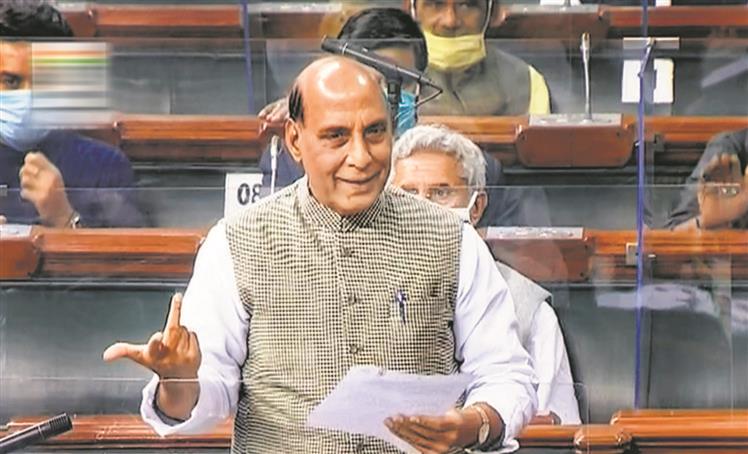
WORRISOME: Defence Minister Rajnath Singh’s statement in Parliament gave little reassurance of the status quo ante on the LAC as of April 2020. PTI
Keeping politics aside, relevant questions need to be asked about the ongoing LAC withdrawal plan. One of India’s worst fears of squandering gains on the ground for restoring the adverse situation on the LAC is turning out to be true. China looks set to get what it has wanted: not all, but most of it, including consummation of its 1959 claim line.
India has committed intelligence, operational and, now, negotiating lapses while managing the border standoff with China. After rejecting, it has conceded to a Chinese proposal of September 2020 containing a segregated agreement on phased disengagement, de-escalation and de-induction north and south of the Pangong Tso lake, according to which India will vacate the pivotal commanding heights on the Chushul range on its side of the LAC for a Chinese pullback from Finger 4 to Finger 8, an outright 8-km intrusion into Indian territory.
That is not all. Indian troops will move from Finger 4 to west of Finger 3. The space vacated will become a buffer zone in which patrolling will be suspended.
Still worse, there is no iron-clad linkage of this agreement with subsequent negotiations on the Gogra/Hot Springs, Demchok and especially Depsang where the Chinese have intruded 18 km and imposed a patrolling ban for the Indian forces.
After yielding so much, Defence Minister Rajnath Singh informed Parliament that he ‘did not concede anything’, which was clarified the next day by an MoD statement reading, ‘did not concede any territory.’ This is equivalent to the government’s earlier claims that the Chinese ‘have not intruded’ and ‘no territory has been lost’, when the facts on the ground were different.
The Chinese have imposed the Galwan model of disengagement weighted against India.
How can Singh describe the surrender of strategic space on the dominating Kailash heights as a tradeoff for withdrawal from the Fingers area astride the frozen lake along with the restriction of movement on the Indian side of the LAC as ‘not conceding’, especially after letting China cherrypick the withdrawal option?
In September 2020, the Chinese had posed this selective disengagement, but with the proviso that India, which had occupied Chushul heights on August 29/30, first withdraws from the heights and only then would the Chinese vacate the intrusion between Fingers 4 and 8.
At the time, many defence and strategic experts had warned the government against falling into China’s trap of conceding the one towering advantage it had gained and one which had unnerved the Chinese until the bottom line of restoration of status quo pre-April 2020 was achieved.
After a long rethink, China agreed to a simultaneous withdrawal, dropping the precondition that India, which moved first to occupy the Kailash range, should be the first to withdraw.
Clearly, the Chinese have brushed aside the demand for the restoration of status quo ante. The Chinese have never used the terminology of restoring status quo ante, but instead used restoring peace and tranquility in border areas. So far, the Chinese had categorically refused to discuss Depsang, which locks up the Indian strategic garrison of Daulat Beg Oldie (DBO).
Singh referred to this in Parliament: ‘The House should also know that there are still some outstanding issues with regards to deployment and patrolling at some other points along the LAC in eastern Ladakh.’
He did not name Depsang, a veritable dagger pointing towards DBO, the capture of which has for long been on the Chinese operational agenda. DBO links up with the 5,180-sq-km Shaqsgam valley — gifted by Pakistan to China in 1963 — which connects with the China-Pakistan Economic Corridor.
The loss of DBO will unhinge the India-occupied Siachen snow wall separating the Pakistani forces and the Chinese PLA. China has unilaterally established blocks at Depsang to prevent Indian troops from moving to their traditional patrolling points on the LAC.
The Congress has questioned the government on the selective disengagement, worrying that Singh’s statement gave little reassurance of the status quo ante as of April 2020.
It also lamented the fact that the government had agreed to withdraw from the dominating heights without any quid pro quo by China. When MP Adhir Ranjan Chowdhury sought a clarification in the Lok Sabha on these issues, strangely Parliamentary Affairs Minister Arjun Meghwal interrupted him, saying that he should be proud of the country’s defence forces.
In the Rajya Sabha debate, the Chair did not allow clarifications in order to uphold national unity and security. When former Defence Minister AK Antony rose to speak, Railway Minister Piyush Goyal rushed to urge his silence. During last year’s debate, the Chair, Vice President Venkaiah Naidu, had twice requested Singh to brief a select group of MPs on the situation along the LAC separately. But he has not done so till this day.
The government, which has demonstrated immense resolve by matching soldier for soldier and height for height, determined to stand up to China, seems to have suddenly cracked and, surprisingly, given in to Beijing’s pressure. Unacclimatised to deployment in winter, it was the PLA that was keen to pull back and descend from the heights which it had occupied for the first time after 1962. The speed and alacrity with which Chinese tanks, guns and troops pulled back last week was surprising.
To obfuscate the advantage-China withdrawal deal, government officials have been planting stories about the consummate skills of the national security trio — the Defence Minister, Foreign Minister and National Security Adviser — in achieving the breakthrough and restoring India’s image as well as its deterrence of defence, diplomacy and international partnerships.
The Chinese have a penchant for changing goalposts. They cite principles, with ‘those who advanced first must withdraw first’ being the most common and also the most flouted one.
The negotiations are likely to end up in China’s ‘two steps forward, one step backward’ approach, retaining Depsang, as predicted earlier, and Singh admitting to ‘substantially restoring the situation’ to that existing prior to the standoff.
By agreeing to the strategically stunted and segmented withdrawal plan north and south of the Pangong lake, and forfeiting the preponderant advantage of the commanding heights on the Chushul range for a couple of Fingers will probably go down as a ‘breakthrough blunder’ in ensuring that India’s quest for the restoration of status quo ante on the LAC is never met.
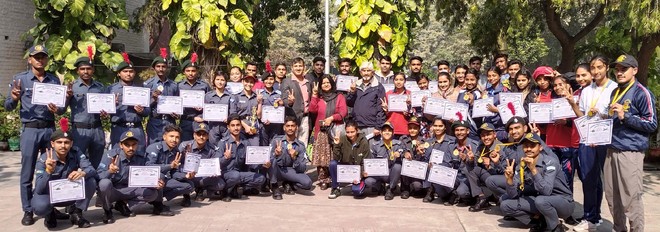
Karnal: Rajesh Rani, Vice Principal of Pandit Chiranji Lal Sharma Government College, gave a rousing welcome to the NCC Air Wing cadets and ANO Flying Officer Suresh Duggal, who returned after winning gold medals in the five-day ATC camp-134 held at Sainik School, Kunjpura. It was organised by No. 2 Haryana Air Squadron NCC, Karnal. The ANO Flying Officer said the cadets in the ATC camp were provided with all necessary training such as drills, 0.22 firing, 12 bore skeet shooting, tent pitching, subject special theory classes, obstacle training, PT Yoga and horse riding among others. Various contests like firing, drill, cross country, debate discussion, singing dance and cultural activities were also organised, in which NCC Air Wing cadets of the college showcased their talent.
Webinar on yoga for Covid survivors
Sonepat: Bhagat Phool Singh Mahila Vishwavidyalaya in collaboration with the Yog Bharti Foundation organised an international webinar on “Yogic interventions in post-Covid complications”. Keynote speaker Srinivas Murti, founder of Yog Bharti, said healthy lifestyle and eating habits facilitates happy and good life. He said by practising asanas, pranayama, ‘hast mudra’ and ‘panch kosh’ theory one could channel internal energy towards better actions and thoughts. Rambhakat from South California shared his views on Covid and its after-effects.
NCC Group Commander visits camp
Yamunanagar: NCC Group Commander Brig AS Brar visited the camp at Guru Nanak Khalsa College and Mukand Lal National College for the C-examination of 14 Haryana Battalion NCC. The camp is being run under the supervision of Command Officer Col Ajaypal Kaushish and administrative officer AJS Sandhu. Principal (Major) Harinder Singh Kang said about 250 cadets of educational institutions were participating in the camp.

BKU leader Rakesh Tikait addresses a mahapanchayat at Garhi Sampla village in Rohtak. Tribune photo
Sunit Dhawan
Tribune News Service
Rohtak, February 16
Bhartiya Kisan Union (BKU) national spokesperson Rakesh Tikait on Tuesday demanded the creation of an ‘agriculture cabinet’ for addressing the concerns of farmers effectively.
Addressing the gathering at a farmers’ mahapanchayat on Sir Chhotu Ram’s birth anniversary at his memorial in Sampla, Tikait said several ministries and departments were looking after the farm sector.
“There is no agriculture ministry or minister in the country. The minister we are talking to has only 18 per cent charge of agriculture while the rest is being taken care of by other ministries,” he stated.
Pointing to dismantling of the mandi regime, Tikait remarked that agriculture-related laws enacted during the tenure of Sir Chhotu Ram were now being “broken” in his state.
“The MSP regime brought prosperity to farmers in Punjab and Haryana. Farmers in Uttar Pradesh come to Haryana to sell their produce, but this practice has been stopped by the government,” he maintained. He exhorted farmers to stay united and appreciated the contribution of members of the Sikh community to the agitation. He said farmers’ panchayats would also be organised in West Bengal, Maharashtra, Gujarat and other states.
Balbir Singh Rajewal, Gurnam Singh Charuni, Inderjit Singh and other farmer leaders reiterated their resolve to strengthen the agitation.
Mahapanchayat calls for complete ‘rail roko’
Tributes to Chhotu Ram
Farmers paid floral tributes to Sir Chhotu Ram in Karnal on Tuesday. They garlanded his statue. Later, they proceeded to the Bastara toll plaza and chalked out their strategy for the ‘rail roko’. Farmer leaders visited villages to garner support for the protest on February 18. TNS

Tribune News Service
Sonepat/Chandigarh, Feb 15
Labour rights activist Nodeep Kaur was today granted bail in an extortion case, which was registered against her at the Kundli police station on January 12.
Advocate Jitender Kumar, counsel for Mazdoor Adhikar Sangathan activist Nodeep Kaur, said after hearing the arguments, the court of Judicial Magistrate First Class Ashok Kumar allowed her bail petition and ordered to furnish a bond of Rs 50,000.
However, she would still have to stay in jail as her bail petition in another case was pending in the Punjab and Haryana High Court, he said.
Earlier, she was granted bail in an extortion case registered against her on December 28.
Meanwhile, Punjab State Women’s Commission chairperson Manisha Gulati was today denied permission by the Jail Superintendent, Karnal, to meet Nodeep Kaur, who has been in custody for over a month.
“This morning, the Jail Superintendent of Karnal called up the office of the Punjab State Women’s Commission and said Manisha Gulati would have to get the approval of the Haryana Government to meet Nodeep,” a commission spokesperson said.






























