



Sanjha Morcha

What’s New

Click the heading to open detailed news

Current Events :

web counter

Print Media Reproduced Defence Related News

Lt Gen Pandey assumes command of 15 Corps

Lt Gen Raju to take up higher responsibilities as DGMO

Lt Gen Pandey assumes command of 15 Corps

Lt Gen BS Raju hands over the command of Kashmir-based 15 Corps to Lt Gen DP Pandey in Srinagar on Wednesday. PTI

Lt Gen Pandey assumes command of Srinagar-based 15 Corps

Tribune News Service

Chandigarh, March 17

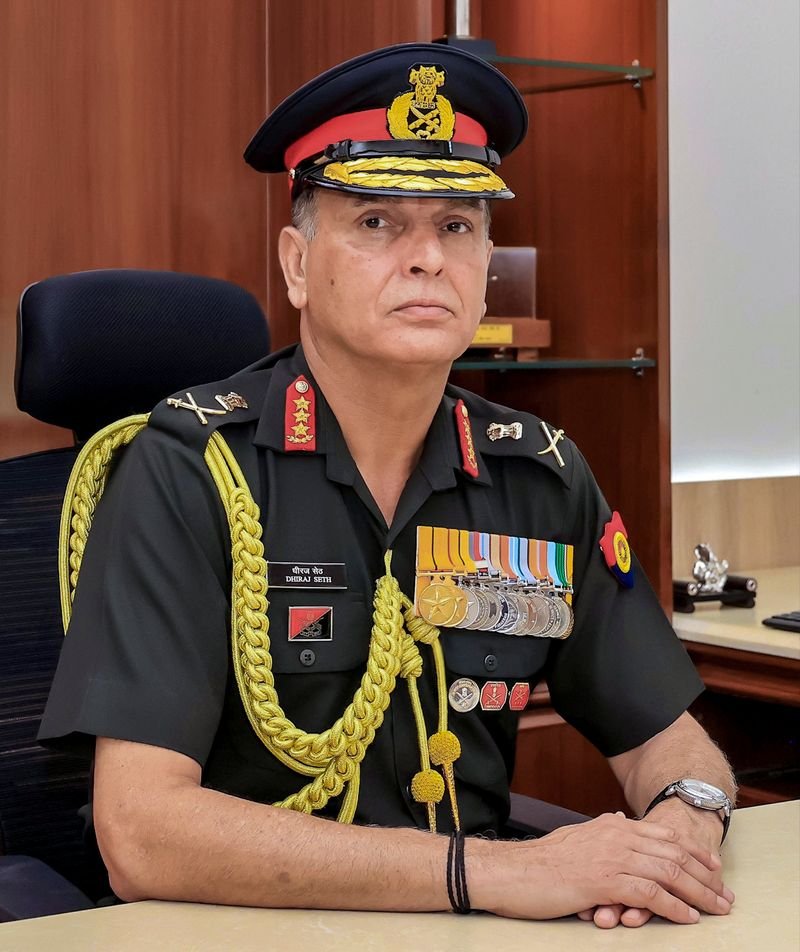
Lieutenant General DP Pandey has been appointed the General Officer Commanding of the Srinagar-based 15 Corps. Prior to this, he was serving as the first ever Director General Territorial Army at the Army Headquarters.

He took over from Lt Gen BS Raju who has moved to Army Headquarters as Director General Military Operations in place of Lt Gen Paramjit Singh, who has taken charge as Deputy Chief of the Army Staff (strategy).

An alumnus of the National Defence Academy, Lt Gen Pandey was commissioned into the Sikh Light Infantry in December 1985 and has held various command and staff appointments, including General Officer Commanding of the Kilo Force that is responsible for counter-terrorist operations in Kashmir Valley. He also served as a military observer in Cambodia.

In his farewell message to the 15 Corps, also known as Chinar Corps, Lt Gen Raju complimented all ranks for their dedication and hard work and thanked police, central armed paramilitary forces, civil administration and the people for their support to achieve peace.

Lt Gen Raju has strongly propagated for a second chance to the misguided youth as he believed it to be critical to achieving peace.


Keeping options open on strategic autonomy

India has been steadfast in staying on an alliance-free course. Being a founding member of the Non-Aligned Movement, it spelt out its political line in international affairs. NAM has since lost relevance, but multi-polar engagements without any treaty or alliance overtones have been the defining foreign policy architecture for India. It has always stood for strategic partnerships.

Keeping options open on strategic autonomy

PLAN OF ACTION: As India is in the pole position with its vaccine diplomacy, it needs to extract reciprocal benefits from Australia and other Quad members. PTI

Lt Gen Pradeep Bali (retd)

Ex-Commander, Sikkim-based 33 Corps

AMONG all evolving strategic partnerships, Quad seems to be a top priority for the two-month-old Biden administration. The foreign ministers’ meeting of the four Quad nations — the US, Japan, Australia and India — was followed by the first ever summit-level talks, which took place virtually on March 12 between the US President and the Prime Ministers of the other three countries.

The major concern of the three members of Quad, other than India, is primarily to counter and check Chinese influence in the Asia-Pacific and specifically in the South China Sea (SCS) in order to safeguard their geopolitical and maritime interests in this region.

India’s concerns with regard to China go much beyond this. Interestingly, during the recently held fourth session of the 13th National People’s Congress of the Chinese Communist Party, State Councillor and Foreign Minister Wang Yi stated that “China and India are each other’s friends and partners and not threats or rivals. The two sides need to help each other succeed instead of undercutting.”

This wooing of India not only highlights its geopolitical and strategic importance but also the weight it carries, politically, militarily and diplomatically. India has never been in an alliance with any other nation or nations. Post World War II, the Cold War came to be waged by forming alliances like Seato, Cento, Nato and the Warsaw Pact, to name a few. Smaller member countries have gone to the extent of even compromising on some aspects of sovereignty in exchange for the benefits of such alliances.

India, on the other hand, has been steadfast in staying on an alliance-free course. Being a founding member of the Non-Aligned Movement, it clearly spelt out its political line in international affairs. NAM has since lost relevance but multi-polar engagements without any treaty or alliance overtones have been the defining foreign policy architecture for India. It has always stood for strategic partnerships and not any bilateral or multi-lateral unions, be it with Russia or the US.

What price does an alliance extract? During 2003, the US was deeply embroiled in Afghanistan and Iraq, leading to the alliance of the willing. While the military muscle and finances were majorly provided by it, the US was very keen to have other nations show their flags alongside, howsoever nominally, as the operations were outside the UN umbrella.

There was tremendous pressure on India to dispatch troops to Afghanistan and at one stage, it seemed like a done deal. However, India refused military participation outside the UN ambit. Compared to this, countries like Japan and South Korea, despite domestic, public and political opinion being very strongly against any involvement in Iraq or Afghanistan, were compelled to dispatch military contingents (for logistic support in case of Japan).

While the events on the LAC in eastern Ladakh over the past 10-odd months have accentuated the adversarial relations with China, in the past both countries have been largely on the same page on subjects like environment, climate change and trade issues vis-à-vis the US. During the Cold War era, India depended heavily on the USSR for military hardware and diplomatic support in the UN.

However, this bonhomie between the world’s largest democracy and the strongest communist bloc country was bereft of any political concessions and India’s geopolitical autonomy was never in doubt. Whatever be the hues and colours of the government of the day, strategic autonomy is something which has never been diluted or compromised in any way. In 1965, Pakistan initiated operations against India, greatly bolstered by state-of-the-art military equipment and professional military training provided by the US.

India, on the other hand, had to purchase armaments in hard currency from the Soviets, without any alliance or partnership overtures. In 1971, despite the genocide unleashed in the east, the US backed the Pakistan military government till its final ignominious defeat and even sent a carrier task force towards the Bay of Bengal. India had signed a Treaty of Mutual Friendship with the USSR, but pursued its objectives quite independently, realising these through an outstanding military victory. In 1999, too, the Pakistani Prime Minister had to rush to Washington seeking US help to end its ill-fated Kargil misadventure.

All these were periods of trial and stress for India. However, it did not let its autonomy be eroded by adversity and prosecuted its national aims as it saw fit. It did get help from both the US and the USSR at different junctures, but this was never allowed to grow into a patron-client relationship. This strategic autonomy makes India a valued partner in any grouping of nations, Quad being the latest.

The Trump era saw an unprecedented haranguing of European Nato members for their propensity to take a free ride. However, these countries, which include an economic powerhouse like Germany, a nation with widespread interests and assets like France, as well as a “has been’ power like the UK, that still view themselves as world leaders, behaved like chastened schoolboys, realising that Nato was essential for their relevance in international affairs.

Another interesting case is that of the ASEAN nations, which stick together despite major political differences, due to compelling economic realities.

A major takeaway from the Quad leaders’ summit meeting is the focus on Covid-19 vaccine production in India to meet a target of one billion doses, with financial support from the US and Japan. This is a clear recognition of India’s capacity and capability in this vital area with the nations of the Indo-Pacific region looking to benefit from it. Other than the expected flagging of security issues in this region, there was a mention of synergised efforts on the subject of climate change and, interestingly, the setting up of a group of experts for joint development of emerging technologies.

While India is in the pole position right now with its very tangible vaccine diplomacy, it needs to extract reciprocal benefits from the other Quad members, especially the US. India’s security concerns are away from the murky waters of the SCS and centred on the Himalayan heights and this needs to be emphatically emphasised. Also, the US has stayed away from sharing vital niche technology with us and this too needs to be given a concrete positive direction.


Defence ties with US not without challenges

We are on the fringes of some dramatic defence cooperation agreements playing out. India would need to weigh in smartly on new arrangements such as the Quad, and its ability to contribute meaningfully to it, whilst arriving at an optimal path that protects our overall interests as an emerging world player. The upcoming visit by US Secretary of Defence Lloyd Austin to India needs to be seen in this light.

Defence ties with US not without challenges

CRUCIAL: Exercising with Western militaries is the sine qua non for meaningful international defence capabilities. PTI

Group Captain Murli Menon (retd)

Defence Analyst

A cursory look at the progress of military affiliation between India and the US, from the General Security of Military Information Agreement (GSOMIA) signed in 2002 to the Basic Exchange and Cooperation Agreement (BECA) signed last October during the 2+2 Indo-US talks, does show an impressive upgrade in defence ties.

With the inclusion of the Logistic Exchange Memorandum of Agreement (LEMOA) of 2016 and the Communications Compatibility and Security Agreement (COMCASA) of 2018, the spectrum of engagement between the militaries encompasses defence cooperation aspects from informational compatibility to logistics exchange. These are indeed foundational agreements, signalling the pathway to cutting-edge weapons technology and encrypted state-of-the-art communications on offer from the world’s leading military entity.

Notwithstanding this, one can’t but wish for some caution on how things could play out going forward. The historical backdrop to our military engagement has been worrisome during the Cold War era. The exasperation of our air wing staff at the Washington embassy caused by the dilly-dallying over the F-16 XL platform (then key to our LCA “control law’ requirements) comes to mind. Indeed that is why several of the subsequent defence programmes such as the Advanced Jet Trainer (AJT) had serious riders on technology traps inherent in such high value deals. Another factor that weighs in on such key defence agreements are of course the local political ambit, such as the Aatmanirbharta for India vis-a-vis the challenges faced by the F-16 production facilities in the US. Be that as it may, we are on the fringes of some dramatic defence cooperation agreements playing out. India would need to weigh in smartly on new arrangements such as the Quad, and its ability to contribute meaningfully to it, whilst arriving at an optimal flight path that protects our overall interests as an emerging world player.

The upcoming visit by the US Secretary of Defence, Gen Lloyd Austin (retd), to India needs to be seen in this light. We need to see “what’s in it for me” in all such defence cooperation agenda, realising the limitations of geopolitics. For instance , it would be naïve for us to expect that some of the existing agreements would entirely serve to counter threats from an assertive China, or indeed that we would get all our wish lists with respect to terrorism and threats emanating from Pakistan. During his confirmatory arraignment before the Senate Foreign Relations Committee in January this year, General Austin is reported to have expressed his desire to improve defence cooperation with Pakistan, seeing it as an inevitable ally in dealing with the Taliban in Afghanistan.

But the fact remains that the culprits of the Mumbai terror attack are yet to be brought to book and Hafiz Saeed still roams free in that country, despite a $10- million bounty offered on him by the US itself. We need to establish for ourselves whether any of the new agreements on intelligence and communication sharing would translate into real-time hard- kill on our enemies of state across the borders. Whilst doing so, we need to exercise practicality on how countries tend to prioritise international terror threats, like for instance did the just-concluded Yudh Abhyas series exercise. Exercising with Western militaries is the sine qua non for meaningful international defence capabilities. Exercise Red Flag, Malabar, Yudh Abhyas and their ilk need to be pursued incrementally no doubt, but with more attention to our national military objectives.

The other aspect in Indo-US military ties is of US weapon systems coming our way as part of the 126 MMRCA contracts (rumours abound about likely F-21/F-15/F-18 deals), space and satellite capabilities and the like. The Balakot experience would have taught us the need for indigenous military satellite capabilities, a la the Keyhole series of the Americans. India no longer has the luxury of not spending adequately on defence. The minimum requirement is to double our defence spending to 3 per cent of the GDP, to address all the key force structural and infrastructural shortfalls. The Americans have been traditionally charry about our strategic linkages to Russia and Iran. Whilst the old fears of technology being diverted from India to Iran may have abated over years of fruitful military co-operation, apprehensions exist on our deals with Russia. The S-400 deal and the likelihood of American sanctions there from is a definite bugbear alright. Are the Americans going to play ball on it or would there be a quid pro quo with respect to some American-made anti-missile system of the Patriot PAC-1 class? We need to work with our American friends to find a modus vivendi in such sticky issues. So far, we appear to be balancing our Russian and American baskets carefully.

The Quad would be an important arena to buttress Indo-US defence co-operation. But once again, we would need to weigh our maritime options carefully. Special forces’ training and cooperation and hard-kill UAV deals of the Predator/Reaper/Sea Guardian class are the other areas for mutually beneficial integration between our defence forces.

With Pakistan running afoul with the Financial Action Task Force (FATF) and its lack of will to enforce the UN-mandated anti-terror strictures, the US needs to work with India to achieve our goals in this arena. General Austin, along with USAF Chief General Charles Brown, is two senior black functionaries in the Biden administration and they would have their own compunctions in the post-Floyd anti-racist era still playing out in the US of A. Like the apparent glitches in the trade arena between our two countries, defence too would offer some challenges.


China-Pak nexus in Ladakh

The past year would hopefully have sent out a message that India is no pushover

China-Pak nexus in Ladakh

CLOSE WATCH: Developments in Ladakh have set the stage for an even closer collaboration between China and Pakistan in undermining India’s security. Reuters

G Parthasarathy

Chancellor, Jammu Central University & former High Commissioner to Pakistan

WHILE India has confronted difficult security challenges in J&K in the past, it has never faced a security situation when it was confronted by tensions across its borders in Ladakh and J&K with both Pakistan and China. The past year has seen the usual tensions, infiltration and exchanges and fire across the International Border and the LoC in J&K. But what really shook the world was the massive and well-planned Chinese incursion from Tibet into the UT of Ladakh from across the Depsang Plains. If left unchallenged, this incursion would have cleared the way for a Chinese move northwards towards India’s strategic air base of Daulat Beg Oldie. This air base is adjacent to China’s Aksai Chin region, which India regards as its territory.

China must learn that undermining India’s ties with its South Asian neighbours can hardly work in the long term.

If the Chinese chose to thereafter, proceed further northwards, they would reach the strategic Karakoram Pass, while also moving closer to the Siachen region claimed by Pakistan. Pakistan, however, had found that Indian forces had taken control of the Siachen Glacier in the 1980s. India and Pakistan had agreed in 1949 that beyond the Shyok river and Khor, the LoC proceeds ‘north to the glaciers’. While the Chinese have agreed to withdraw eastwards from the Pangong Tso, they have refused to withdraw from positions they occupied in 2020 in the Depsang Plains, where they blocked the area to entry by Indian forces. Control of the Depsang Plains provides China with an open road to the Daulat Beg Oldie airfield. It secures access to the Karakoram Pass that links Ladakh to the Aksai Chin region.

Pakistan is, however, very generous when it comes to the delineation of its border with China. The Shaksgam Valley in J&K was ceded to China by Pakistan in 1963, when they signed a boundary agreement to give an entirely new shape to their northern borders. Article 6 of the Boundary Agreement avers that ‘the two parties have agreed that after the settlement of the Kashmir dispute between Pakistan and India, the sovereign authority concerned will reopen negotiations with the Government of the People’s Republic of China, on the boundary, as described in Article 2 of the present agreement, so as to sign a formal border agreement.’ The agreement laid the foundation for constructing the Karakoram highway, built by Chinese and Pakistani engineers, in the 1970s. This highway links China’s Xinjiang province with PoK. It constitutes the basis for China to co-opt Pakistan militarily in its dealings with India.

Half a century later, one finds a growing Chinese economic and military presence alongside the Karakoram highway. The way is being cleared for a Chinese military presence across the PoK for transportation of Chinese goods, services and personnel across Pakistan, to the Arabian Sea Port of Gwadar in Balochistan, which has been built by China. It is only a matter of time before China takes control of the port from a bankrupt Pakistan, which is unable to repay its debts. This would not be different from how China has taken control of the Hambantota Port in Sri Lanka. Pakistan’s military, obsessed with seizing Indian territory, cannot be expected to look beyond its territorial ambitions in India.

China’s experiences in Ladakh over the past year would hopefully have persuaded Beijing that India is not a pushover, militarily. Foreign Minister Wang Yi’s statement averring: ‘The two sides need to help each other to succeed, instead of undercutting each other. We should intensify cooperation instead of harbouring suspicions’, sounded reassuring. It was, however, hardly credible. Chinese sincerity will, however, be tested and called into question, unless it moves back to positions it occupied before April 2020. Given past Chinese behaviour, India can expect very little movement by China on this score.

China will also hopefully learn that undermining India’s close relations with its South Asian neighbours by cultivating, financing and favouring political leaders and political parties known to be anti-India, can hardly work over the long term. Despite its efforts, China has been snubbed by Sri Lanka’s political leadership that has seen through its crude efforts to deny India a role in developing port facilities, whether in Jaffna or in Colombo. Taking over Hambantota Port by drawing Sri Lanka into a debt trap, China has sent a signal across the shores of the Indian Ocean that its interests are anything but altruistic. Astute analysts in Pakistan are also evaluating the implications of the growing debt they are accumulating, because of Chinese infrastructure projects for CPEC. Given Pakistan’s constant shortage of foreign exchange, it is not in a position to import defence equipment from the US, Europe or even Russia. China, will, therefore, inevitably remain the almost exclusive supplier of arms to Pakistan.

Developments in Ladakh have now set the stage for an even closer collaboration between China and Pakistan in undermining India’s security. Pakistan’s recent offer of a ceasefire in J&K is a welcome development, as long as infiltration across the LoC effectively ends. It does not, however, mean that China and Pakistan are not colluding in fulfilling their territorial ambitions. India would be well advised to keep track of how China and Pakistan are proceeding in fulfilling their territorial ambitions. The highly regarded president of the US Council on Foreign Relations, Richard Haass, recently noted: ‘China is bordered by 14 countries, four of which are nuclear armed and five of which harbour unresolved territorial disputes with Beijing. These include an aging, but wealthy Japan, a rising and nationalistic India, a revanchist Russia, a technologically powerful South Korea, and a dynamic and determined Vietnam. All these countries have national identities that resist subordination to China, or its interests. And the United States maintains a constant forward-deployed military presence in the region’.


26 outstanding Punjab athletes appointed cops

Process to appoint them got delayed because of medicals, over-age and documentation

26 outstanding Punjab athletes appointed cops

Gaurav Kanthwal
Tribune News Service
Chandigarh, March 17

Twenty-six outstanding sportspersons were given appointment letters by Rana Gurmit Singh Sodhi, Minister for Sports, Youth Services and NRIs Affairs here at Punjab Bhawan on Wednesday. 

Out of the total 79 left candidates, three sub-inspector and 23 constables, most of them gold medallists, have been provided with appointment letters in the first phase. 

Out of total 26 outstanding players of different games disciplines who get job letters included three sub inspectors Sarpreet Singh (Cycling), Gurinder Singh (Volleyball) and Jagdeep Kumar (Boxing), while 23 candidates—Gagandeep Singh (Kabaddi), Gurbazz Singh (Cycling), Rekha Rani (Cycling), Pushpinder Kaur (Cycling), Jasvir Kaur (Weightlifting), Neelam Rani (Fencing), Gagandeep Kaur (Handball), Ramanjot Kaur (Handball), Harvinder Kaur (Handball), Ravinderjit Kaur (Canoeing), Gurmeet Kaur (Fencing), Mandeep Kaur (Handball), Rupinderjit Kaur (Handball), Jaspinder Kaur (Kabaddi Circle Style), Anju Sharma (Kabaddi), Jatinder Singh (Boxing), Harpreet Kaur (Athletics), Palak (Basketball), Sandeep Kaur (Kabaddi), Preeti (Wrestling), Sarabjeet (Football), Ajay Kumar (Taekwondo) and Simarjit Kaur (Kabaddi) — have been appointed on the posts of constable.

Sodhi said, “When I presented the file regarding the appointment of these players before Chief Minister Capt Amarinder Singh, he cleared the file within a minute.”

He added that as there were some glitches on part of medical, over-age and documentation thus the process of appointing them has been delayed.


Pilot killed in MiG-21 Bison mishap

Accident while taking off for a combat training mission at an airbase in central India

Pilot killed in MiG-21 Bison mishap

Photo for representation only. — PTI

Tribune News Service
New Delhi, March 17

An Indian Air Force (IAF) pilot, Group Captain A Gupta, was killed on Wednesday when a MiG 21 Bison aircraft was involved in an accident while taking off for a combat training mission at an airbase in central India.https://platform.twitter.com/embed/Tweet.html?dnt=false&embedId=twitter-widget-0&frame=false&hideCard=false&hideThread=false&id=1372090642084421632&lang=en&origin=https%3A%2F%2Fwww.tribuneindia.com%2Fnews%2Fnation%2Fpilot-killed-in-mig-21-bison-mishap-226528&siteScreenName=%26via%3Dthetribunechd&theme=light&widgetsVersion=e1ffbdb%3A1614796141937&width=550px

In a tweet, the IAF said: “A MiG-21 Bison aircraft of IAF was involved in a fatal accident this morning, while taking off for a combat training mission at an airbase in central India.”

The IAF said a Court of Inquiry has been ordered to determine the cause of the accident.


Over 40,000 CAPF, Assam Rifles personnel sought VR, 6,529 resigned in 5 years: Govt

More than half of these voluntary retirements have been sought by the personnel of the BSF alone

Over 40,000 CAPF, Assam Rifles personnel sought VR, 6,529 resigned in 5 years: Govt

File photo for representation.

New Delhi, March 17

As many as 40,096 personnel of the Central Armed Police Force (CAPFs) and the Assam Rifles have sought voluntary retirement in the last five years, while another 6,529 resigned during the same period, Parliament was informed on Wednesday.

More than half of these voluntary retirements (VR) have been sought by the personnel of the Border Security Force (BSF) alone, while the maximum resignations have been witnessed in the Central Industrial Security Force (CISF), Minister of State for Home Affairs Nityanand Rai stated.

Rai furnished the figures from 2016 to 2020 in a written reply in the Rajya Sabha while responding to queries over resignations and VRs sought by personnel of the CAPFs and the Assam Rifles during the last five years.

The CAPFs comprise seven central security forces of the country under administrative control of the Ministry of Home Affairs. They are the Border Security Force (BSF), the Central Reserve Police Force (CRPF), the Central Industrial Security Force (CISF), the Indo-Tibetan Border Police (ITBP), the Sashastra Seema Bal (SSB), besides the Assam Rifles (AR).

According to the data, 40,096 personnel of the CAPFs and the Assam Rifles have sought voluntary retirement from 2016 till 2020 while another 6,529 tendered resignation during the five-year period.

Among the forces, a maximum 20,249 VRs were sought by personnel of the BSF during the period followed by the CRPF (11,029), the CISF (2,858), the Assam Rifles (2,279), the ITBP (1,912) and the SSB (1,769), the data showed.

During the same period, 2,919 CISF personnel tendered resignation followed by the BSF (1,708), the CRPF (796), the ITBP (620), the SSB (412) and the Assam Rifles (74), according to the data. PTI


Army phases out two artillery weapons that had been in service for over 50 years

These weapon systems have been a part of the Regiment of Artillery for over half a century

Army phases out two artillery weapons that had been in service for over 50 years

The decommissioning ceremony was held at the Mahajan Field Firing Ranges in north-western Rajasthan, where the last customary salvos were fired.

Vijay Mohan

Tribune News Service

Chandigarh, March 16

The Indian Army on Tuesday decommissioned two of the longest-serving artillery weapon systems, the 130mm M-46 Catapult self-propelled guns and the 160mm Tampella mortars.

These weapon systems have been a part of the Regiment of Artillery for over half a century. The decommissioning ceremony was held at the Mahajan Field Firing Ranges in north-western Rajasthan, where the last customary salvos were fired.

The Catapult was an integration of the Soviet origin M-46 towed artillery gun with the hull of the Vijayanta tank. While the Catapult was first produced in 1987, the army had started procuring the M-46 from 1986 onwards.

About 1,000 guns, which had a range of 27 km, had been inducted. In 2008, about 180 of these guns were upgraded to 155 mm caliber by Israel and some more were similarly modified by the Ordnance Factory Board.

Close to 100 Catapults using the 130 mm guns were built on the Vijayanta’s hull. Later, the Army carried out trials on the Arjun tank’s hull which reportedly proved to be successful and a requirement of 40 such systems had been projected.

The Tampella was a heavy mortar weighing 7,300 kg that fired a projectile weighing over 40 kg to a range of 8 km. Only a limited number of these weapons had been procured and given their weight, 7-member crew strength and range, were no longer relevant in today’s operational environment. They were last used in the Kargil conflict.

The K-9 Vajra 155 mm self-propelled howitzer, Dhanush 155 mm  towed artillery gun and the US made M-777 155 mm ultra-light howitzer are among recent inductions in Regiment of Artillery to replace old obsolete weapons.


Will target corporates’ godowns if ‘black laws’ not repealed: Tikait

Says Samyukta Kisan Morcha to soon give a call to gherao Delhi from all sides

Will target corporates’ godowns if ‘black laws’ not repealed: Tikait

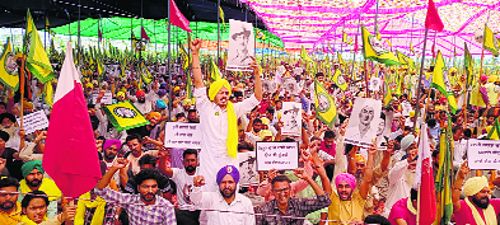
BKU spokesman Rakesh Tikait with other leaders at Kisan Mahapanchayat held at Sriganganagar. Tribune photo

Raj Sadosh

Abohar/Sriganganagar, March 17

BKU spokesman Rakesh Tikait on Wednesday warned the Central government in unambiguous terms that if the three “black” farm laws were not withdrawn, then the next action of the farmers’ ongoing agitation will be to demolish the huge godowns that some private companies had constructed to store grains.

At the Kisan Mahapanchayat held today on the call of United Kisan Morcha at the grain market in Sriganganagar, 40 km from Abohar, Tikait said a few private companies had constructed huge godowns and started storing grains at different places in the country even when new farm laws were yet to enacted.

“The BJP-led NDA government was planning to sell some banks, insurance companies and other government enterprises to private players. The government is going to bring laws that milk, electricity, fertilisers, seeds and motor vehicles marketing will go into the hands of a few corporates,” he claimed.

Giving a call to youth to take charge of the farmers’ movement, Tikait said there are no more jobs left in this country for them, youth should turn to their fields and create job opportunities in the fields itself.

He said in the districts of Barabanki and Muzaffarnagar in Uttar Pradesh, when paddy and sugarcane were not purchased at the MSP, the farmers piled up the agricultural commodities at the district collector’s offices. “The government will have to buy the produce on the MSP.”

Tikait said the media was not carrying the news of farmer movements in Karnataka, Tamil Nadu and other parts of the country, but we will reach out to people through social media. In Punjab, Haryana and parts of Rajasthan, agricultural produce was purchased on MSP only, but the farmers stir will get contentious agri laws repealed as well as implementing MSP across the country, he added.

In Odisha and Madhya Pradesh, the MSP procurement movement is going to start in the next 15-20 days. Farmers have made adequate arrangements in view of the scorching heat and the agitation will be intensified for the remaining eight months.

Revealing that the Samyukta Kisan Morcha will soon give a call to gherao Delhi from all sides, Tikait said millions of people will reach there. After Vidhan Sabha polls results in a few states, the NDA government will realise the heat of the farmers’ movement.

Morcha leader Yudhveer Singh said “Modi bhagao, desh bachao” call has to be given. Hardeep Singh Dibdiba, chairman of Rajasthan Gurdwara Parbandhak Committee (ad hoc), said he will not let the martyrdom of his grandson Navreet Singh go waste. A youth rally will leave Moga on March 25 for Singhu border, he said.


Army to equip all infantry battalions, not just frontline troops, with US Sig Sauer rifles

An Indian Army soldier with the Sig 716 rifle | Photo: Snehesh Alex Philip | ThePrint

An Indian Army soldier with the Sig 716 rifle | Photo: Snehesh Alex Philip | ThePrintText Size: A- A+

Chaubatia (Uttarakhand): With the much awaited deal for AK 203 getting delayed, the Army is equipping its over 400 infantry battalions with the American Sig Sauer assault rifles, procured under fast-tracked process (FTP), as against the original plan to arm only its frontline troops with the latest weapon.

The Army had initially bought the Sig 716 G2 Patrol assault/battlefield rifles, chambered for the 7.62×51 mm rounds, in 2019 under FTP for frontline soldiers — posted at the borders and involved in counter-terrorism and counter-insurgency operations.

However, all infantry battalions are now getting equipped with the American rifles, sources in the defence establishment said.

This will replace some of the obsolete Indian Small Arms System (INSAS) 5.56×45 mm rifles in use for over two decades.

According to the plan, at least two companies (about 100 soldiers each) in all the infantry battalions are being given the Sig 716 — irrespective of whether they are in the field or at peace stations.

The quantity will, however, differ with some of the battalions getting more weapons and the others.

Each infantry battalion of the Army has four companies, commonly referred to as the Alfa, Bravo, Charlie and Delta companies.

However, certain battalions have their own unique names. For example, 1 Mahar as the Whiskey, X Ray, Yankee and Zulu company. 13 Kumaon does not have a Charlie company but is called Rezang La company in honour of the fallen soldiers of C company.

ThePrint had in December 2020 reported that while the initial lot of the modern assault rifles from the US was sent to those guarding the Line of Control with Pakistan and for counter-terrorism operations in Kashmir, troops at the LAC in the northern sector in Ladakh are also being equipped with it now.

In December, the Defence Acquisition Council had accorded approval for the procurement of additional 72,400 Sig 716 rifles for approximately Rs 780 crore. This was also done under FTP and is part of the option clause of the original deal signed in 2019.


Also read: From next week, troops at LoC and LAC to get new & more lethal Israeli Light Machine Guns 


Shoot to kill

The Sig 716 rifles are more accurate and lethal than the INSAS because it has a higher caliber — 7.62 mm as against 5.56 mm.

It was in the 1980s that the Indian Army sought a lighter assault rifle chambered to fire the 5.56×45 mm cartridge. It was meant to provide relief to the Indian soldiers who fought the Siachen battle and the LTTE in Sri Lanka with the 5.1 kg Ishapore 7.62×51 mm rifle, but the INSAS has faced constant issues since its introduction in 1998.

At that time, the Army’s logic was that the rifle should injure an enemy soldier. This meant at least 2-3 other soldiers will be required to take away the injured soldier. However, with warfare tactics changing and the Army getting involved in counter-terrorism and counter-insurgency operations too, the force wanted a high caliber weapon that is a “shoot to kill system”.

SiG 716 an instant hit with soldiers

Weighing just 3.82 kg without the magazine, the American rifles were welcomed by the infantry soldiers that ThePrint spoke to.

They explained the rifle has an effective kill range of 600 metres and with greater accuracy than that of the INSAS.

With corking from behind than the side, which is the case in most of the small arms, the rifle becomes ambidextrous.

Even though the butt of the rifle is not collapsible, it comes with six adjustable positions, and hence comes handy in operations.

While the 2019 order for the Sig rifles included a limited set of ammunition, the Army is now using the Ordnance Factory Board rounds meant for the SLR rifles of the late 1980s.

“The Sig 716 is good for operations at the border and also in CI/CT. With a shorter barrel than that of the INSAS, it is good for room intervention operation and for urban warfare,” an officer explained.

AK 203 to be the mainstay of Army

The formal process to replace the INSAS began over a decade ago, but never saw the light of the day. Among the many reasons was the fact that the Army changed specifications for the replacement twice.

It first wanted a dual-caliber rifle which could shoot two types of cartridges — the AK-47 bullet and the INSAS bullet, much to the dismay of every small arms manufacturer in the world. The Army eventually scrapped the process and then demanded a modified INSAS.

However, in 2018, India and Russia announced a deal to jointly manufacture the AK 103, which was then upgraded to AK 203.

On 3 March 2019, Prime Minister Narendra Modi inaugurated an Indo-Russian joint venture, under which AK-203 will be manufactured at the Korwa Ordnance Factory in Uttar Pradesh’s Amethi district.

However, cost negotiations for the over 6 lakh rifles got stuck. This forces the Army to go in for emergency procurement of the SiG 716 rifles in 2019 and again in 2020.

Under the deal, the first 20,000 AK 203 rifles, which will be the mainstay of the armed forces for years to come, will be imported from Russia at a cost of about $1,100 (or Rs 80,000) a piece, depending on the conversion rate.

(Edited by Sanghamitra Mazumdar)


Also read: Anil Ambani’s Reliance firm still not ready to showcase LMG for Army, trials delayed again