



Sanjha Morcha

What’s New

Click the heading to open detailed news

Current Events :

web counter

Print Media Reproduced Defence Related News

The supreme martyrs

Bhagat Singh, Rajguru and Sukhdev are a source of inspiration for one generation after another. Bhagat Singh had said: ‘Individuals can be crushed, but not the ideas, which have a longer life than individuals.’ Bhagat Singh, Rajguru and Sukhdev were crushed as individuals by the British rulers, but their ideas continue to spread fragrance.
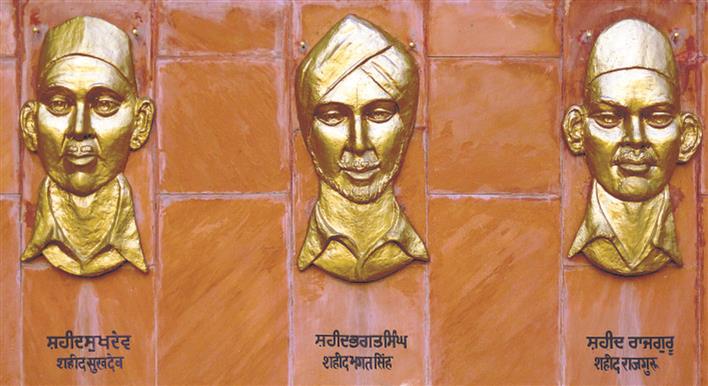
The supreme martyrs

BRAVE YOUNG MEN: The three comrades went to the gallows together on March 23, 1931. Tribune photo
Chaman Lal

90th death anniversary of Bhagat Singh, Rajguru & Sukhdev

BHAGAT Singh, Rajguru and Sukhdev are regarded as supreme martyrs of the Indian freedom struggle. On the 90th anniversary of the trio’s martyrdom, Bhagat Singh continues to be in the spotlight, even as Rajguru and Sukhdev find less mention.

Sukhdev was born on May 15, 1907, as per family records and on February 18, 1907, as per his school certificate mentioned date, in Naughara family house in a now crowded area of Ludhiana, although the family was living in Lyallpur where Bhagat Singh’s family also lived. Since Sukhdev’s father died early, he was brought up by his uncle Achint Ram Thapar, a nationalist in his own right of Lyallpur. Two biographies of Sukhdev are authentic, written by his brothers Jaidev Thapar and Mathura Das Thapar. Jaidev’s work is not available, while Mathura Das’ Mere Bhai Sukhdev has got many reprints and continues to be in circulation.

Mathura Das Thapar’s biography of his brother is well documented and carries a few writings of Sukhdev as well. A copy of the proceedings of the Lahore conspiracy trial with Sukhdev’s notes on the sidelines is part of the National Archives of India, gifted by Sukhdev’s family. Sukhdev, along with Bejoy Kumar Sinha and Bhagwati Charan Vohra, was an ideological comrade of Bhagat Singh. Mathura Das Thapar, in his memoirs of Sukhdev, had mentioned the titles of books which both Bhagat Singh and Sukhdev had read and discussed for hours, sometimes the whole night.

In their political organisation— Hindustan Socialist Republican Association Army (HSRA), while Bhagat Singh was the coordinator for all states, Sukhdev was the convenor of Punjab state. Both Bhagat Singh and Sukhdev were college mates at National College, Lahore. Sukhdev’s name figures nowhere in the Saunders assassination case, known as the second Lahore conspiracy case, the first one being the Ghadar Party case in which Kartar Singh Sarabha and six others were executed.https://1b4e7be1fb991778568c5cc708ce593a.safeframe.googlesyndication.com/safeframe/1-0-37/html/container.html

Sukhdev, being trapped in the usual police lies-based investigation of always saying that the other accused have already told the whole story, had made a statement, but still was being careful by not mentioning the party shelters. He was neither part of the assassination, in which Bhagat Singh, Rajguru and Jai Gopal had taken part and Chandrashekhar Azad had overseen the whole operation. Yet, he owned every part of the assassination plan and preferred to die with his comrades rather than save his own life. The farcical part of the trial and ‘colonial justice’ was the death sentence for Sukhdev, which could not have been given in any judicial system, as AG Noorani underlined in his classic book The Trial of Bhagat Singh.

There are two letters written by Bhagat Singh to Sukhdev. Both have been published, but Sukhdev’s letters to Bhagat Singh have not been found. Both letters deal with the philosophical themes of love and suicide. While Sukhdev’s ideas or perception of love was somewhat traditional and conservative, Bhagat Singh was more liberal and realist in his perception about love. He tells Sukhdev in his letter that love is a feeling which can give great strength to the revolutionaries, by giving an example of Italian revolutionary Giuseppe Mazzini: “In the context of discussing someone’s character, one thing that is worth thinking about is if love has ever proved to be helpful to any person. Let me answer this today — yes, it did — for Mazzini. You must surely have read that he was not able to endure the first unsuccessful rebellion, the grief of a heart-wrenching failure, and the memory of martyred comrades. He could have either gone mad or committed suicide, but with a letter from his beloved, he became not only as strong as the others, but stronger than everybody else” (Letter to Sukhdev, April 5, 1929).

Both friends had changed their opinion in jail. Sukhdev, who despised the idea of suicide outside, not tolerating the sufferings of jail, became a votary of suicide in prison, while Bhagat Singh outside jail was more sympathetic to a man who committed suicide due to sufferings in life. In a September 1930 letter, a few days before the death sentence to all three was announced, Bhagat Singh rebuked Sukhdev inside the jail itself on thinking about suicide: “Those of us who are certain to get the death sentence should wait patiently for the day when this sentence would be pronounced, after which they will be hanged. Even that death will be beautiful, but to commit suicide, to put an end to one’s life, to escape some suffering — that is cowardice. I wish to tell you that it is hardship that makes a person complete.”

Rajguru, born on August 24, 1908, at Khed village, now renamed as Rajguru Nagar near Pune, was a jolly fellow and wanted to be ahead of Bhagat Singh in everything. He was angry at not being sent to Central Assembly for throwing the bomb. He walked from his village to Benares where he got admission in a Sanskrit school and joined the HRA. Bhagat Singh was supposed to shoot Scott in front of SSP office in Lahore, while Jai Gopal was to give a signal of the SSP coming out of the office. While Jai Gopal gave the signal mistaking Saunders for Scott, who was the Deputy SP, Rajguru impulsively shot Saunders, while Bhagat Singh could recognise that it was not Scott, and shouted to Chandrashekhar Azad that the person was not Scott. But before he could even complete the sentence, Rajguru had shot Saunders, which compelled Bhagat Singh to shoot too. At the gallows also, it was Rajguru who first got the rope put around his neck to be hanged.

With such tales of bravery, the three martyrs are a source of inspiration for one generation after another. Bhagat Singh had said: “Individuals can be crushed, but not the ideas, which have a longer life than individuals.” Bhagat Singh, Rajguru and Sukhdev were crushed as individuals by the British rulers, but their ideas continue to spread fragrance.

Amarinder sanctions Rs 1.25 cr for development of native villages of 5 Punjab soldiers killed in Galwan Valley clash

Amarinder sanctions Rs 1.25 cr for development of native villages of 5 Punjab soldiers killed in Galwan Valley clash

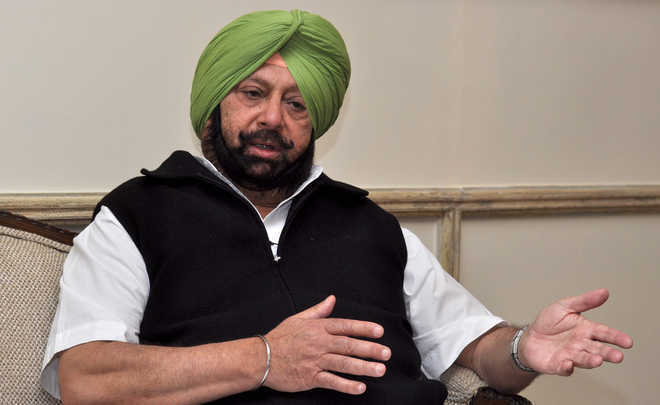
Punjab Chief Minister Amarinder Singh. File photo

Chandigarh, March 26

Punjab Chief Minister Amarinder Singh on Friday sanctioned Rs 25 lakh each for the development of native villages of five soldiers from the state killed during the Galwan Valley clash last year.

Reviewing the various welfare measures for ex-servicemen, he said it was a humble effort on the part of the state government to undertake the development of the villages of the soldiers killed in the Galwan Valley clash.

According to an official statement, Amarinder sanctioned Rs 25 lakh each for the development of Seel village in Patiala district from where Naib Subedar Mandeep Singh of 3 Medium Regiment belonged, Bhojraj village in Gurdaspur of Naib Subedar Satnam Singh of 3 Medium Regiment, Birewal Dogra in Mansa of Sepoy Gurtej Singh, a Vir Chakra awardee of 3 Punjab, Tolewal village in Sangrur of Sepoy Gurbrinder Singh of 3 Punjab, and Mardanheri village in Patiala of Lance Naik Saleem Khan of 58 Engineer Regiment.

Apart from the total Rs 1.25 crore sanctioned for the development of these five villages, the chief minister also approved Rs 18 crore for the Punjab State War Heroes Memorial and Museum at Amritsar, the statement said.

The Indian Army has built a memorial for its 20 personnel who were killed while valiantly fighting Chinese troops in Galwan Valley in eastern Ladakh on June 15 last year.

In order to provide boarding and lodging facilities to ex-servicemen, war widows and their family members, Amarinder sanctioned Rs 4 crore for the construction of Sainik Rest Houses at Mansa and Shaheed Bhagat Singh Nagar.

He also approved Rs 39.50 lakh for the construction of the Victory Tower and renovation of the War Memorial at Asafwala in Fazilka district.

This memorial was constructed to commemorate the gallantry deeds of the soldiers who laid down their lives during the 1971 Indo-Pak war in Fazilka sector. PTI


Farmers at Tikri border pay tributes to martyrs

Farmers at Tikri border pay tributes to martyrs

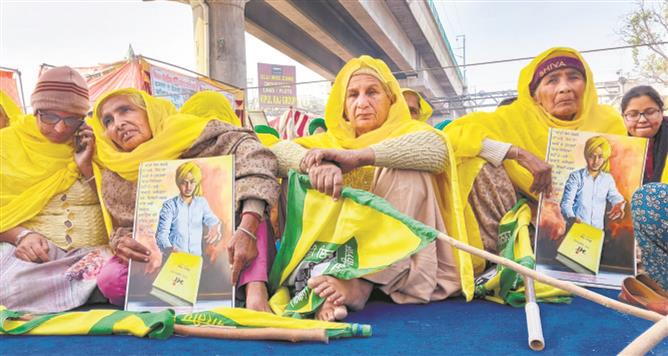
Youths and women attend the martyr day event at the Tikri border on Tuesday. PHOTO: SUMIT THARAN

Ravinder Saini

Tribune News Service

Jhajjar, March 23

A number of youths donning yellow turbans and women sporting “dupattas” today reached the Tikri and Singhu borders from Haryana and Punjab to pay tributes to martyrs Bhagat Singh, Rajguru and Sukhdev.

They took a pledge of continuing the stir until the three farm laws were repealed. A “padyatra” by farmers and agricultural labourers joined the function in the honour of the martyrs at Tikri. Women wearing traditional Haryanvi attire and youths singing patriotic slogans added colour to the occasion.

“Shaheed Bhagat Singh had once said independence was incomplete till farmers and labourers did not get equal rights. Youth have jumped into the battle for the rights of farmers and labourers. No one can stop them from winning this battle,” said Jaspreet Singh from Sangrur.https://153ee501c99fb9dd742e54e1e594be87.safeframe.googlesyndication.com/safeframe/1-0-38/html/container.html

Inderjit Singh, vice-president, All-India Kisan Sabha, said: “It was a massive show of strength at Tikri. It not only boosted the morale of protesting farmers, but also strengthened the protest.”

Another farmer leader Virendra Hooda described today’s event as another “nail in the coffin of the Centre”.

Local farmers took out a “Tiranga Yatra” from Bahadurgarh to Tikri.

Meanwhile, a youth suffered bullet injuries in his leg when someone opened fire following a minor dispute during the yatra. He is at the PGIMS.


Women power to fore at protest sites

Women power to fore at protest sites

Women farmers protest at Rampura Phul. Tribune photo

Tribune News Service
Chandigarh, March 26

Women power came to the fore today during the ‘Bharat bandh’ call given by farmers under the aegis of the Samyukt Kisan Morcha to protest against the three farm laws. As a result, the protest sites saw a sea of “kesari” and green from “dupattas” worn by them.

Across all dharna sites, including the ones on the railway tracks, women came out in large numbers to give a fillip to the protests. At some places such as Bhaini Bagha in Bathinda, women protesters outnumbered male counterparts, and blocked roads by staging a dharna.

Why the trend

  • Many women lost sons and husbands to suicide because of indebtedness
  • Most male members left for protest sites at the Delhi border on March 23
  • Many male members were busy making arrangements for wheat harvest

Even as the normal life in the state came to a grinding halt, women were seen leading the protests at many places, especially in the Malwa region.

In Jagraon, near Ludhiana, a number of women laid siege to the highway. In Mansa, women led a protest march in the city, while in Barnala, the maximum participation of women was seen at Dhanaula and Bhadaur protest sites.

Narinder Kaur Sohal, who led the protesting women in Moga, told The Tribune many women who had lost their sons and husbands to suicide because of rural indebtedness participated in huge numbers

“These women have suffered the ill effects of government policies, which are often made without checking the ground realities. They can sense what the farm laws can do to hit them economically. They are even inspiring other women from farm households to join the protest. That is why we are seeing a rapid increase in women protesters in the past one month,” she said.

Another reason for their good turnout was that most of the male members of the family had left for the protest sites at the Delhi border on March 23. Most are still camping and protesting at Singhu and Tikri borders, leaving the women and elderly here to join the protest here.

Amarjit Kaur, a retired lecturer, who was leading the protests at Barnala, said at each of the four protest sites in Barnala district, more than 1,000 women participated, as their men folk were in Delhi.

“The women are taking a lead role in protests across the state as the men folk and youngsters have been camping at the Delhi border,” she said.


Rekindling the revolutionary spirit

Bhagat Singh’s father Kishan Singh visited drought-hit Vidarbha in 1898. He did not merely distribute relief material and return; he took around 50 orphaned children from Vidarbha with him. These children were of the farmers who, unable to deal with their desperate situation, had committed suicide. Kishan Singh started an orphanage at Ferozepur for these children. At that time, he was just 20 years old.

Rekindling the revolutionary spirit

RELIVING HISTORY: The ideals of the martyrs find resonance in the ongoing agitation by the farmers against the farm laws. PTI

Sanjay Nahar

90th death anniversary of Bhagat Singh, Rajguru & Sukhdev

THIS incident dates back to 1898. The farmers in Vidarbha region were severely hit by a drought. When Sardar Kishan Singh came to know about this, he, along with Lala Bishambhar Sahay, Lala Shivram Vakil and other colleagues, reached Vidarbha. They had brought along foodgrains. Imagine the distance between Jalandhar in Punjab and Vidarbha region in Maharashtra, and that too nearly 125 years ago! However, Sardar Kishan Singh’s patriotism and his compassion for fellow farmers did not let him sit quiet. He did not merely distribute the relief material and return; he, in fact, took around 50 orphaned children from Vidarbha with him. These children were of the farmers who, unable to deal with their desperate situation, had committed suicide. Kishan Singh started an orphanage at Ferozepur for these children. At that time, Kishan Singh was just 20 years old. If you wonder who Sardar Kishan Singh was, well, he was the father of India’s great son Shaheed Bhagat Singh!

Bhagat Singh was born in such a patriotic family. He grew up seeing the life of farmers and the common people. No wonder, bringing about a change in the life of ordinary farmers was his idea of revolutionary work. Today is the 90th anniversary of the martyrdom of Bhagat Singh, Rajguru and Sukhdev. Unfortunately, the issues facing the farmers are just the same even today. One is pained to say that the dreams of the revolutionaries who made the supreme sacrifice for creating a new India are still unfulfilled.

The current issue of the farmers is not limited to Punjab, Haryana and the Jat farmers of western Uttar Pradesh; farmers across India face similar issues. Today, the farmers have taken to the streets raising the slogan ‘Pagdi Sambhal Jatta’, but the slogan echoes the feelings of farmers over a century ago. In 1907, the British had passed three Acts regarding agriculture. Bhagat Singh’s paternal uncle Ajit Singh had raised his voice against them by mobilising the farmers of Punjab. He addressed public meetings all over Punjab and had even invited Lala Lajpat Rai, a veteran Congress leader, to these meetings. Lala Banke Dayal had quit his job to join the agitation. He read out the poem ‘Pagdi Sambhal Jatta’during this agitation. The poem had a description of the farmers’ issues and the injustice being meted out to them. The poem became the signature slogan of the agitation. It became so popular that the agitation itself came to be known by that name. The agitation grew so strong that the British government had to withdraw the Acts. Today, it is our own government. Yet, the agitation has been going on for the past almost four months. History is being repeated.

During my meetings and discussions with Shaheed Bhagat Singh’s colleagues, Durga Bhabhi and Virendra ji, and his brother Kultar Singh, the topic as to why Bhagat Singh who had received the Arya Samaj doctrine and who belonged to a religious family, became an atheist, came up often. In this context, I was told about an incident when some of Bhagat Singh’s fellow revolutionaries talked about the help his family, Sardar Ajit Singh and Sardar Kishan Singh, extended to the countrymen affected by droughts, floods, earthquakes and other natural calamities. They especially praised the act of adopting orphaned farmer children from Vidarbha. Bhagat Singh had said then, “It was our duty but we need to bring about a change in the system so that no farmer or labourer is forced to commit suicide ever!” It is clear from his words that his journey towards atheism had begun with the farmers’ agitation in Punjab.

Bhagat Singh asked himself some questions after witnessing the plight of farmers and the ordinary people. These questions led him to atheism. He asked himself, ‘If this world is created by the Almighty, why is it filled with destitution and sorrow?’ Next, he asked, ‘Why doesn’t He free the entire humanity and the workers from the slavery of capitalism?’ Bhagat Singh had unequivocally said that the real age of freedom would truly begin only when countless men and women came forward thinking about the farmers and ordinary people and when they would be thinking only about serving the mankind and nothing else.

“The farmers and labourers are the most important elements of society; however, they are exploited the most by society. They are even deprived of their basic rights. The farmers who produce food for everyone are forced to die in hunger. Artisans who weave cloth for others cannot buy enough clothes for their own children. Those who build huge mansions do not have even a simple house to live in. On the other hand, the capitalists who exploit them live a comfortable life,” he said. These thoughts of Bhagat Singh clearly show that he was moved by the plight of farmers and the ordinary people.

A couple of months before he was hanged, Bhagat Singh had written a letter, in which he had highlighted issues such as ‘End of landlord system’, ‘Loan waiver for the farmers’, ‘Nationalisation of lands in order to boost community farming’, ‘Home for everyone’, ‘Complete exemption to farmers from taxation’, ‘Nationalisation of industries’, ‘Education for everyone’, ‘Reduction in the working hours of the labourers’, etc. As a nation, we are still grappling with precisely the same issues.

In this backdrop, the irony of the current farmers’ agitation in Delhi is worth noting. The agitators and the government both are using Bhagat Singh’s photos! Rekindling faith in the minds of hardworking farmers so that they can lead a life of dignity would be a true tribute to martyrs Bhagat Singh, Rajguru and Sukhdev.


3 soldiers burnt alive during Rajasthan drill

3 soldiers burnt alive during Rajasthan drill

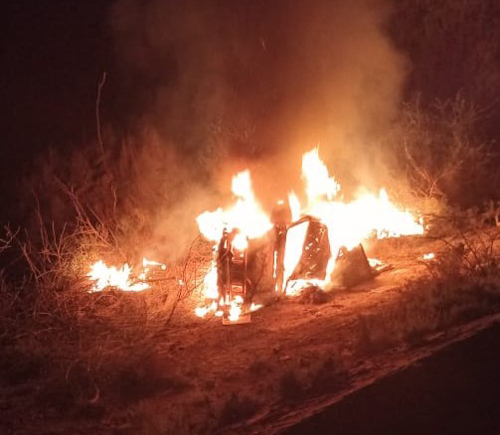
An Army Gypsy on fire in Sriganganagar district. Tribune photo

Our Correspondent

Abohar, March 25

Three soldiers were burnt alive and five others injured when a Gypsy overturned and caught fire during a training exercise on the Raziasar-Chhatargarh road in Sriganganagar district early today.

The incident took place around 1 am “near Gopalsar during the night training task when unfortunately 3 fatalities were reported”, said Defence PRO Lt Col Amitabh Sharma.

A source said eight soldiers of Bathinda-based 47-AD Army unit were in the vehicle when the mishap occurred. Three charred bodies were found from the wreckage, while five injured soldiers were admitted to the government hospital in Suratgarh, from where they were shifted to the Military Hospital.

Lt Col Sharma said the incident occurred during a routine exercise when the soldiers were being given different tasks.

Raziasar police station in charge Vikram Tiwari said the mishap occurred near Burji (pillar) No. 330 of the Indira Gandhi Canal. The vehicle rammed into shrubs, hit a tree before overturning. A fire erupted giving occupants little chance to escape, said the sources.

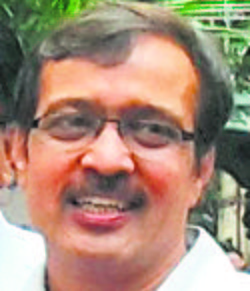
The deceased have been identified as Subedar EV Nazar of Andhra Pradesh, Havildars Dev Kumar Bhattacharya of West Bengal and SK Shukla of Uttar Pradesh.

Those injured are Captain Ankit Vajpayee (34), soldiers SK Prajapati (35), Umesh Yadav (27) Ashok Ojha (28) and Bhanwer Lal Bablu (27). Three of them suffered grievous injuries.

Senior Army officers visited the scene and initiated a probe. The police said an accident case had been registered. The bodies were being taken by the Army to native places of the deceased for last rites.

(With agency inputs )


Freedom fighter Bhagat Singh’s hideout in a shambles

Freedom fighter Bhagat Singh’s hideout in a shambles

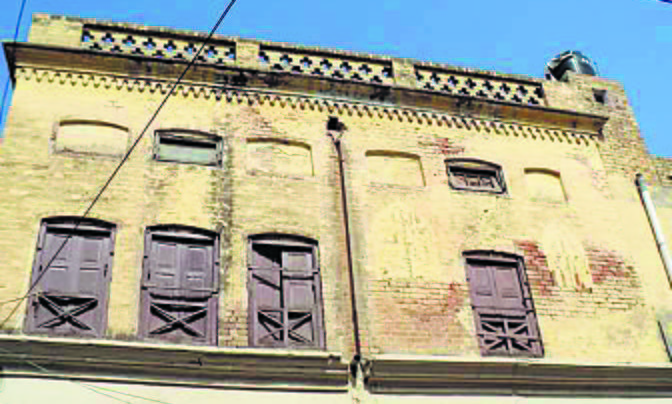
Bhagat Singh’s hideout : The old building at Turi Bazaar.

Our Correspondent

Ferozepur, March 22

Even six years after being notified as a ‘protected monument’, the state government has failed to make any concerted efforts for the development and preservation of the double-storey building that served as a hideout of the Krantikari Party led by legendary revolutionary Bhagat Singh.

After a prolonged legal battle by locals, the Department of Tourism and Cultural Affairs had declared the building as a ‘protected monument’ on December 17, 2015. Thereafter, neither any step was taken to take over the building nor any funds were allocated for it.

Modi pays tributes to Bhagat Singh, Sukhdev, Rajguru on ‘Shaheed Diwas’

At present, the building is under the control of the Krishna Bhagti Satsung Trust. Nand Kishore Sharma, one of the trustees, said his grandfather Lahori Ram Shastri had met Bhagat Singh here several times. “I am ready to do anything for the construction of a museum in the building,” he said. Earlier, the district administration had served a notice on the occupants not to alter the structure or sell the premises.

In 2016, the then Deputy Commissioner DPS Kharbanda had mooted a proposal to relocate the shop on the ground floor and family occupying the first floor to another location for which an agreement was also drafted. However, the matter is still stuck.

During his visit three years ago, former Tourism and Cultural Affairs Minister Navjot Sidhu had also promised to provide Rs 15 lakh for the renovation of the building.

Opinion: The supreme martyrs

Bhagat Singh, Rajguru and Sukhdev are a source of inspiration for one generation after another. Bhag…

“This building is no less than a pilgrimage centre for me. This was taken on rent by my father Dr Gaya Prashad under the fake name of Dr BS Nigam to run a pharmacy in 1928-29,” said Kranti Kumar Katiyar.

“While pharmacy was run on the ground floor, the first floor was used by the revolutionaries to make bombs and evolve strategy against the British rule,” said Rakesh Kumar, who has also authored several books on the monument.

Opinion: Rekindling the revolutionary spirit

When contacted, Deputy Commissioner Gurpal Singh Chahal said, “We will take up the matter with the higher authorities.” He said the state government was determined to develop all such memorials and efforts were being made for it.

NGOs ready to help

Certain NGOs have submitted proposals to the government, expressing their desire to make contribution for the restoration of the historical building. However, nothing has happened so far. Even the Sonalika Group had announced to contribute Rs10 lakh for the restoration of the martyr’s hideout.


INDIAN ARMY SPORTS TRIAL ARTILLERY CENTRE NASIK*

*ONLY FOR MALE*

*Games* 
Cross country Marathon Athletic  Kabaddi boxing Handball football hockey basketball Volleyball Archery

🏹

, fencing,, Wrestling, taekwondo,

*(swimming and diving  trial may be cancelled due to  Covid 19 Depending on recruitment authority)*

*Date of trials :-*  28 March 2021 & 29 March 2021

*Venue:-*  Artillery centre  Hyderabad Telangana

*TIMEING:-* 05:00AM

*Age limit :* 17.5 to 21years

*Qualification and education:-* 10th pass with 45%

*Only for national/State level/ District level senior and junior  medal list 1st /2nd positions. In last 2 years*

*Salary:- 40000*

*Documents to be brought :*
1. Birth Certificate
2. Caste Certificate
3. Education Certificate
4. Character Certificate from Gram Pradhan
5. Residential/Domicile Certificate
6. Six latest colour photos, one joint photo with parents & one with grandparents.
7. *Sports Participation Certificate in NATIONAL level & above.and 1ST AND 2ND POSTION IN senior category( last 2 yr)*
8. Aadhar Card.
*9. COVID 19 NEGATIVE REPORT*
All asked documents need to be shown in original and one copy of all needs to be submitted.

*“Rally can be cancelled / postponed at any time without giving any reason”*

*NO  TA/DA WILL BE GIVEN BY UNIT  HAVE TO ARRANGE OWN*

*Recruitment into the Army is a free service. Candidates are advised not to pay bribe to anyone for recruitment as it is based purely on merit. Selection process during recruitment at all stages is computerized and transparent. Therefore, candidates are advised to be beware of touts as they cannot help them at any stage.*

*FOR OFFICIAL NOTIFICATION:-* https://sikkusports.com/indian-army-sports-trial/


Defence ministry signs deal with Mahindra Defence to procure 1,300 light combat vehicles

The defence ministry says the vehicle will be authorised to various fighting units for carriage of medium machine guns, automatic grenade launchers and anti-tank guided missiles.

File photo of visitors at the Mahindra Defence Naval Systems booth during Aero India air show in Bengaluru | Representational image | Photo: Dhiraj Singh | Bloomberg

File photo of visitors at the Mahindra Defence Naval Systems booth during Aero India air show in Bengaluru | Representational image | Photo: Dhiraj Singh | BloombergText Size: A- A+

New Delhi: The defence ministry on Monday said it finalised a contract with Mahindra Defence Systems Ltd (MDSL) to procure 1,300 light combat vehicles for the Indian Army at a cost of Rs 1,056 crore.

The induction of the vehicles is planned to be completed in four years.

“Providing further boost to ‘Make in India’, the Ministry of Defence (MoD) signed a contract with MDSL for supply of 1,300 light specialist vehicles to the Indian Army,” the ministry said.

“The light specialist vehicle is a modern fighting vehicle and will be authorised to various fighting units for carriage of medium machine guns, automatic grenade launchers as well as anti-tank guided missiles,” it said in a statement.

The vehicle is indigenously designed and developed by MDSL.

The ministry said the vehicles are extremely agile with all-round protection against small arms fire and they will assist small independent detachments.

“This is a flagship project showcasing the indigenous manufacturing capabilities of the defence industry and will add another milestone to the ‘Atmanirbhar Bharat Abhiyaan’ and ‘Make in India’ initiative of the government,” the ministry said in a statement.

In the last few months, the ministry finalised a range of procurement projects for the three forces to enhance their overall combat capabilities.


Also read: Not military deals, but China & deeper India ties to be in focus on US defense secy’s visit


In a historic first, India could participate in military exercises in Pakistan later this year

Pakistan will hold Pabbi-Antiterror-2021, under the aegis of Shanghai Cooperation Organisation later this year. India’s participation would come amid fresh peace process between both nations.

Indian Army | Representational image | PTI

Indian Army (representational image) | PTIText Size: A- A+

New Delhi: In yet another signal that frosty ties between New Delhi and Islamabad are thawing, India could take part in a multi-nation exercise to be hosted by Pakistan later this year at its premier anti-terrorism centre in Pabbi in Nowshera district of Khyber Pakhtunkhwa. The exercise will be held under the aegis of Shanghai Cooperation Organisation (SCO).

If the plan goes through, it would be a historic event, given that it would be the first time that Indian forces will travel to Pakistan for any military exercise.

The development comes at a time when Pakistan Army chief General Qamar Javed Bajwa last week stressed on the need for India and Pakistan to “bury the past and move forward”. Just weeks ago, the two countries had agreed to observe ceasefire along the Line of Control (LoC).

Sources in the know remained non-committal about the actual participation of the Indian troops in the joint exercise “Pabbi-Antiterror-2021”, saying a final decision was yet to be taken.

The sources also said that the proposal is under consideration of the National Security Council Secretariat (NSCS). However, they did confirm that India will be participating in a joint Army exercise under SCO umbrella in Russia later this year.

The decision to hold “Pabbi-Antiterror-2021” was announced during the 36th meeting of the Council of the Regional Anti-Terrorist Structure (RATS) held in Tashkent, Uzbekistan, last week, China’s state-run Xinhua news agency reported Sunday.

Delegations of the competent authorities of India, Kazakhstan, China, the Kyrgyz Republic, Pakistan, Russia, Tajikistan, Uzbekistan and the RATS Executive Committee attended the meeting, Xinhua said, carrying a picture of the participants.

Meanwhile, sources in Pakistan said while dates and participants are yet to be confirmed, the exercise, under the aegis of the inter-governmental organisation comprising eight nations, will be held at the National Counter Terrorism Centre (NCTC) Pabbi, near Mangla Cantonment.

A Pakistani delegation had visited Tashkent-based Regional Anti-Terrorist Structure of the SCO in February to finalise the design and preparation of the Army exercise which is likely to be in second half of the year.


Also read: India, Pakistan foreign ministers likely to meet at ‘Heart of Asia’ conference in Dushanbe


What is NCTC

National Counter Terrorism Centre (NCTC) imparts specialised pre-induction training to Pakistan Army units earmarked for Federally Administered Tribal Areas (FATA) and SWAT. It also offers counter terrorism training services to law enforcement agencies including Pakistan Air Force, Pakistan Navy, Defence Services Guards, Strategic Plans Division, Punjab Rangers, among others.

The Centre, which was set up in 2014 by then Pakistan Army chief Gen. Raheel Sharif, also imparts anti-terror training to other countries.

Located near Kharian, a military station and headquarters of an infantry division, the training institution comes under the direct supervision of Kharian Division and Mangla Corps.


Also read: Bajwa’s change of heart on India isn’t enough. All of Pakistani military must be on board


India withdrew from SCO exercise in 2020

India had withdrawn from a multilateral military exercise — Kavkaz-2020 — that was scheduled to be held in southern Russia in September last year as it did not want to perform drills with Chinese soldiers amid tensions at the Line of Actual Control (LAC).

While India planned to send 200 military personnel, including 180 soldiers from an infantry battalion and observers from the IAF and the Navy, to take part in the exercise, it decided not to participate at the last minute following a high-level military and diplomatic meeting.

It was in 2018 that India and Pakistan had come together for a joint military exercise under the umbrella of the SCO. At that time, a video of Indian and Pakistani troops dancing together had gone viral.

The SCO was founded in Shanghai in 2001 by the then presidents of Russia, China, Kyrgyz Republic, Kazakhstan, Tajikistan and Uzbekistan. India and Pakistan were admitted as observers in 2005 and both countries were admitted as full members of the bloc last year.

(Edited by Neha Mahajan)


Also read: Why distrust-but-verify is a prudent response to Pakistan Gen Bajwa’s call to bury the past