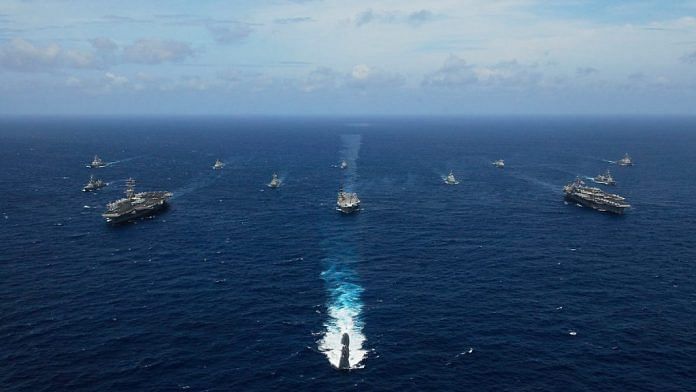
File photo of naval ships during the Malabar exercise | Commons
New Delhi: The high-voltage Malabar exercise featuring the navies of all four Quad countries — India, the US, Australia and Japan — began on Thursday off the coast of Guam in the backdrop of the resolve by the four nations to work towards a free and open Indo-Pacific in view of China’s expansionist behaviour in the region.
A range of complex drills involving warships, aircraft and helicopters will be carried out during the four-day exercise which is being hosted by the US Navy in the Western Pacific, officials said.
The Indian Navy has deployed its stealth frigate INS Shivalik, anti-submarine warfare corvette INS Kadmatt and a fleet of P8I maritime surveillance aircraft, they said.
The 25th edition of the Malabar exercise is taking place in the midst of growing convergence of interests in the maritime domain among the four Quad countries.
“Malabar-21 would witness complex exercises including anti-surface, anti-air and anti-submarine warfare drill, and other manoeuvres and tactical exercises. The exercise will provide an opportunity for participating navies to derive benefit from each other’s expertise and experiences,” Indian Navy Spokesperson Commander Vivek Madhwal said.
In an interactive session at the Observer Research Foundation (ORF), Commander of the US Indo-Pacific Command Admiral John Aquilino on Wednesday spoke about key challenges facing the Indo-Pacific and delved into China’s rapid military build-up including in the maritime domain.
Admiral Aquilino also hinted at the possibility of increasing the number of participants at the Malabar naval exercise if leaders of the four participating countries concur with it.
Following India’s invitation, Australia participated in the Malabar exercise last year that effectively made it a drill by all four member nations of the Quad.
China has been suspicious about the purpose of the Malabar exercise as it feels that the annual wargame is an effort to contain its influence in the Indo-Pacific region.
The Malabar exercise started in 1992 as a bilateral drill between the Indian Navy and the US Navy in the Indian Ocean.
Japan became a permanent member of the exercise in 2015. This annual exercise was conducted off the coast of Guam in 2018 and off the coast of Japan in 2019.https://b331e719b8f6b3b081f59ab1d780fe66.safeframe.googlesyndication.com/safeframe/1-0-38/html/container.html
Last year, the exercise was hosted in two phases in the Bay of Bengal and the Arabian Sea.
There have been mounting global concerns over China’s growing military assertiveness in the Indo-Pacific region.
India, the US, Australia, Japan and many other like-minded countries are working towards ensuring a free, open and inclusive Indo-Pacific.
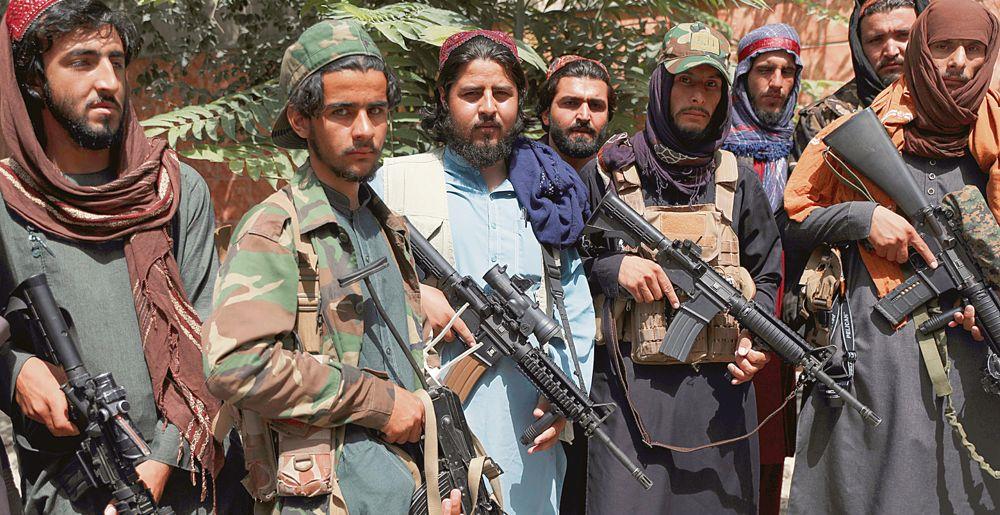
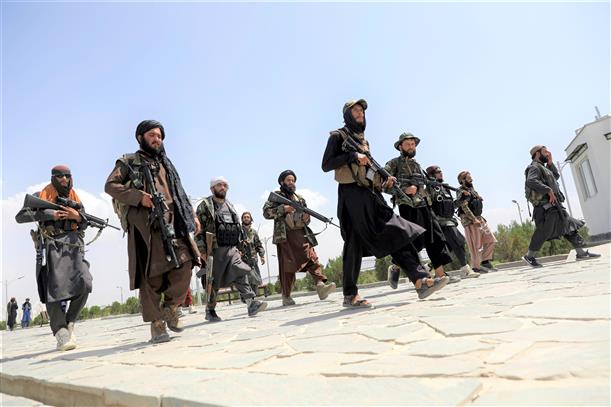
Despite promises that Taliban 2.0 will be different, not many are convinced
Legitimacy: The Taliban’s endeavour will be to get other nations to recognise its government, which will not be easy. AP
Julio Ribeiro
The Taliban is anathema to me. It is also anathema to many Afghans who had grown up in the last 20 years of US presence and domination in their not-easily governed country. Students, women and sportsmen come first to mind. They flowered in these two decades. They tasted the freedom that liberal democracies offered and they liked what they saw and what they experienced. The girls, in particular, shed their outsized tents that passed off as burqas, restricting their movements. They took to schooling in a big way, became doctors and lawyers, got elected to what we in India call Legislative Assemblies, sought and succeeded in obtaining jobs as TV news anchors and even formed an Afghan women’s football team!
All that has vanished with the departure of the Americans and the simultaneous entry of the Taliban. The very mention of the word ‘Taliban’ induces fear. Even though the Taliban has proclaimed that Taliban 2.0 will be different, not many Afghans believe them. The memory of their earlier rule still lingers ominously in their mind’s eye.
In their approach to the Taliban, western democracies have chosen caution, so has India. We have decided to wait and watch, a decision that was readily taken in the absence of other options. The great majority of our countrymen, employed or doing business in Afghanistan, are anxious to exit that country and return home. A great many have done so already. They are the lucky ones, evacuated by the IAF or Indian airlines. They went through a trying time, full of adventure and anxiety. Their tales will reverberate with their children and grandchildren before they go off the storytelling grid.
Some Afghan nationals have managed to leave their country to escape from the clutches of the Taliban. They are those whose services were used by the US and other embassies for logistical needs. They had become a part of the ethos of the embassies they served and got accustomed to the goodies those countries provided. In short, they had a taste of the good life, certainly a better life than they were accustomed to.
The US will probably accommodate those who worked for them in their immigration quotas. The UK has also promised British citizenship to a few. Other democracies will follow suit. So, what about India? Our Afghan connection harkens back to the time of Tagore’s Kabuliwala, or even earlier. In fact, a small Afghan settlement has taken root in Kolkata over the past few decades. In Delhi, we have many more Afghan nationals staying for many years.
Union minister Hardeep Puri has cited the present crisis in Afghanistan as justification for the CAA legislated by Parliament in 2019. Since the Act was enacted two years before Taliban 2.0, it cannot be counted as justification for the CAA. Puri may boast of a brilliant ‘forecast’ of probabilities, but the Act is applicable to only those who entered India before 2014!
Hindu and Sikh traders whose forebears had settled in Afghanistan decades ago were also evacuated by our Air Force. Some Afghans who follow the Islamic faith were also among the rescued. They were locals who had helped our embassy or other agencies in supplies and logistics. They would be sitting ducks in the emirate once the Taliban settle down! How are they going to be treated by our present government? Here, too, we can only play the watching game!
These Afghans and the Afghan students now studying in our universities, the Afghan military cadets at present undergoing training at the IMA, Dehradun; the OTA, Chennai; and the NDA, Khadakwasla; as well as the police officers training at the NPA, Hyderabad, need sympathetic consideration devoid of religious bias. We have to rise to the occasion, adopting the secular approach of the US, Canada and Europe. The CAA may need course correction! A great Hindu country like ours cannot let Hinduism down.
To a comparatively uninformed citizen whose knowledge of happenings in Afghanistan is founded entirely on newspapers and the television, the biggest problem the Taliban will face is money to run their administration. The Afghans employed in the US-sponsored government were paid with American assistance. That will not be available now. Smuggling of narcotics and arms has always been a source of income in the countryside. If smuggling routes are effectively sealed, the Taliban will be in big trouble.
The Taliban’s immediate endeavour will be to get other nations to recognise its government. That will not be easy. China and Russia, besides Pakistan, of course, will be ready. Pakistan is almost bankrupt. Only China is economically capable of propping up a nascent emirate which lacks domain experts to run a state.
I presume China with its Belt and Road Initiative will be interested in wielding influence in its own backyard. It has the support of Pakistan, whose sole interest is to use the Taliban and its religious zealots to inflict the ‘thousand cuts’ on us. China will certainly not mind that!
The Taliban have made some conciliatory statements about Indian infrastructure initiatives in their country (we have invested $3 billion), but our leaders will ‘wait and watch’. The dice is certainly loaded against us after the Americans left. The Chinese will probably pick up the slack left by us. We now have the Chinese to watch besides our neighbour to the west. The going will be tough.
The goalposts keep changing every few days and will continue to do so till the Taliban consolidate their hold on the country. The various factions and the numerous warlords will keep the situation fluid. Rumours, not confirmed, suggest that the Taliban have declared August 31 as the last day for ‘foreigners’ (including Indians) to leave the country. If true, such orders will complicate evacuation plans.
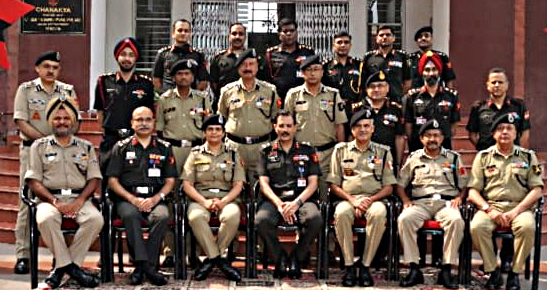
Delegates at the Army-BSF synergy conference in Chandimandir on Wednesday. Tribune photo
Chandigarh, August 25
The Indian Army and the Border Security Force (BSF) held a synergy conference at the headquarters of the Western Command in Chandimandir today.
It was attended by senior officers of the Western Command as well as senior officers from the BSF’s Western Command Headquarters in Mohali and Punjab and Jammu Frontiers.
The conference was chaired by Major General Devendra Sharma, Major General General Staff (Operations), Headquarters Western Command. Senior officers representing the BSF included NS Jamwal, Inspector General, Jammu Frontier, and Sonali Mishra, Inspector General, Punjab Frontier.
The agenda included discussions on issues of convergence to further enhance the operational efficiency between the Indian Army and the BSF. Common issues of training and equipment profile of the BSF and challenges of border management were deliberated upon.
The chairman highlighted the importance of developing a joint security force culture to thwart nefarious designs of inimical elements. During the wars of 1965, 1971 and Operation Parakram, the Army and the BSF operated together towards a common purpose of defending the national borders. — TNS
Chandigarh, IAF to ink pact on vintage aircraft museum tomorrow
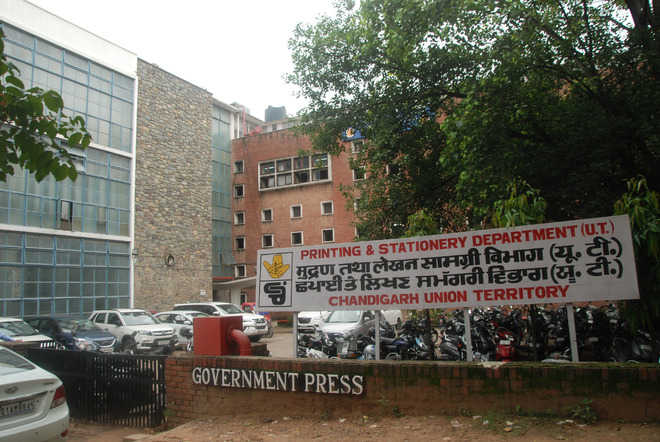
The UT Administration is likely to sign a memorandum of understanding (MoU) with the Indian Air Force (IAF) for setting up a vintage aircraft museum at Government Press Building on August 27. File photo
Tribune News Service
Chandigarh, August 25
The UT Administration is likely to sign a memorandum of understanding (MoU) with the Indian Air Force (IAF) for setting up a vintage aircraft museum at Government Press Building on August 27.
The IAF will showcase vintage aircraft, including Dakota and armaments at the museum. There will also be a flight simulator at the museum. There will also be audio video galleries and a space for showcasing documentaries related to the IAF history.
The museum will bring greater awareness in the region, particularly among children, about the role and contribution of the IAF.
After closing down the building in 2019, the UT Administration then decided to set up a vintage car museum there. After the UT Administration failed to get any response even after floating tenders twice, it was decided to convert the museum into an IAF vintage museum.
Modi to dedicate renovated complex of Jallianwala Bagh Memorial to nation on Saturday
The event will showcase the multiple development initiatives taken by the government to upgrade the complex
Prime Minister Narendra Modi. — File Photo
Tribune News Service New Delhi, August 26
Prime Minister Narendra Modi will dedicate the renovated complex of the Jallianwala Bagh Memorial to the nation on August 28, 2021 via video conferencing.
He will also inaugurate museum galleries developed at the Smarak.
The event will showcase the multiple development initiatives taken by the government to upgrade the complex.
Four Museum galleries have been created at the memorial through adaptive reuse of redundant and under-utilised buildings, a PMO statement said.
The galleries showcase the historical value of events that unfolded in Punjab during that period, with the fusion of audio-visual technology, including projection mapping and 3D representation, as well as art and sculptural installations.
A Sound and Light show has been set up to display the events of April 13, 1919.
“Elaborate heritage restoration works have been carried out in sync with the local architectural style of Punjab. The Shaheedi well has been repaired and restored with a redefined superstructure. The heart of the Bagh, the flame monument, has been repaired and restored, the water body rejuvenated as a lily pond, and the pathways made broader for better navigability,” the government said.https://698da3255f314553da37c6b5621818e8.safeframe.googlesyndication.com/safeframe/1-0-38/html/container.html
The PMO added that several modern amenities have been added at the site, including redefined paths of movement with appropriate signage; illumination of strategic spots; landscaping and hardscaping with native plantation; and installation of audio nodes throughout the garden.
Also, newer areas have been developed for housing the Salvation Ground, Amar Jyot and Flag Mast.
Union Minister of Culture, Union Minister of Housing and Urban Affairs, Ministers of State for Culture, Governor and Chief Minister of Punjab; Chief Ministers of Haryana, Uttarakhand and Himachal Pradesh; all Lok Sabha and Rajya Sabha MPs from Punjab, members of Jallianwala Bagh National Memorial Trust, among others, will be present on the occasion of the dedication of the memorial to people.
Four-day Malabar wargame begins off coast of Guam in Western Pacific
Indian Navy has deployed its stealth frigate INS Shivalik, anti-submarine warfare corvette INS Kadmatt and a fleet of P8I maritime surveillance aircraft in the 25th edition of the mega exercise
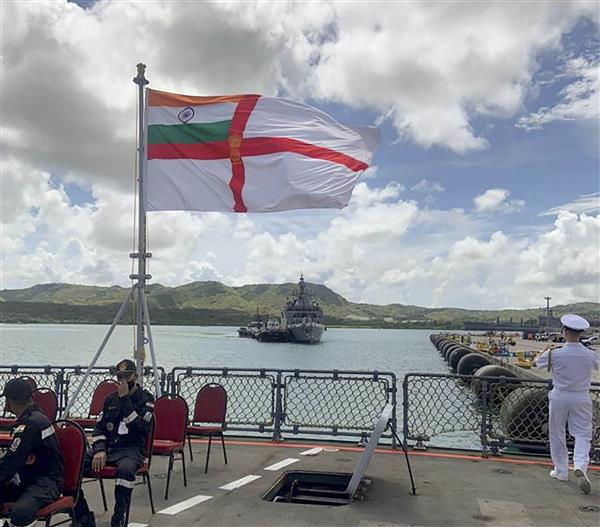
Indian Naval Ships Shivalik and Kadmatt arrived at Guam, an Island Territory of the USA, Saturday, August 21, 2021 as part of their on-going deployment to nations in South East Asia and the Pacific Ocean. — PTI
New Delhi, August 26
The high-voltage Malabar exercise featuring the navies of all four Quad countries—India, the US, Australia and Japan—began on Thursday off the coast of Guam in the backdrop of a resolve by the four nations to solidify cooperation for a free and open Indo-Pacific in view of China’s rouge behaviour in the region.
A range of complex drills involving warships, aircraft and helicopters will be carried out during the four-day exercise, being hosted by the US Navy in the Western Pacific, officials said.
The US Seventh Fleet, in a statement, said the exercise demonstrated the commitment among the like-minded nations to uphold a rules-based maritime order in the Indo-Pacific.
The Indian Navy has deployed its stealth frigate INS Shivalik, anti-submarine warfare corvette INS Kadmatt and a fleet of P8I maritime surveillance aircraft in the 25th edition of the mega exercise.
The US Pacific Fleet’s Arleigh Burke-class guided-missile destroyer USS Barry, naval special warfare forces, maritime patrol and reconnaissance aircraft from Task Force 72, and military sealift command’s Henry J Kaiser-class underway replenishment oiler USNS Rappahannock are among the assets deployed by the US Navy in the exercise.
Under Commander, US Pacific Fleet, 7th Fleet is the US Navy’s largest forward-deployed numbered fleet and routinely interacts and operates with 35 maritime nations in preserving a free and open Indo-Pacific region.
“Malabar-21 would witness complex exercises including anti-surface, anti-air and anti-submarine warfare drill, and other manoeuvres and tactical exercises. The exercise will provide an opportunity for participating navies to derive benefit from each other’s expertise and experiences,” Indian Navy Spokesperson Commander Vivek Madhwal said.
The US 7th Fleet said the first phase of the exercise is an opportunity for the four Indo-Pacific navies to operate together to strengthen their skills in “combined maritime operations, anti-submarine warfare operations, air warfare operations, live-fire gunnery events, replenishments-at-sea and cross-deck flight operations.” “Malabar 21 is an excellent opportunity to conduct multi-national training to hone warfighting and maritime security skillsets,” said Capt. Chase Sargeant, Commander, Task Force (CTF) 71 of US 7th Fleet.
“US destroyers closely integrating with our partners and allies builds the foundation for regional security and stability that benefits all Indo-Pacific nations,” he said.
In an interactive session at the Observer Research Foundation (ORF), Commander of the US Indo-Pacific Command Admiral John Aquilino on Wednesday spoke about key challenges facing the Indo-Pacific and delved into China’s rapid military build-up including in the maritime domain.
Admiral Aquilino also hinted at the possibility of increasing the number of participants at the Malabar naval exercise if leaders of the four participating countries concur with it.
Taliban denying Afghan Hindu, Sikh pilgrims to come to India, claims Indian World Forum
The Taliban swept across Afghanistan this month, seizing control of almost all key towns and cities including Kabul in the backdrop of the withdrawal of the US forces
Taliban fighters patrol in Kabul, Afghanistan. — AP/PTI
New Delhi, August 26
The Taliban is not allowing 140 Afghan Hindus and Sikhs to visit India on the occasion of the 400th birth anniversary of Sikh Guru Tegh Bahadur, Delhi-based think tank Indian World Forum claimed on Thursday.
According to the statement, the Sikh Guru’s birth anniversary that is scheduled to be celebrated on Sunday with a ‘kirtan darbar’, and is expected to witness attendance by pilgrims of the Hindu and Sikh communities from different parts of the world, is a “life-time event”.
“A group of 140 Afghan Hindus and Sikhs who were supposed to board a special flight yesterday evening were prevented from entering the airport at Kabul at the last minute,” claimed Puneet Singh, president of the Indian World Forum.
The Forum added that the group was travelling to India to attend the celebrations organised to commemorate the 400th birth anniversary of Guru Tegh Bahadur.
The India World Forum has appealed to the Taliban to facilitate an early departure for these pilgrims to ensure that they can participate in the celebrations in India, it said.
“I appeal to the Taliban to facilitate an early departure of Afghan Hindu and Sikh pilgrims in the interest of humanity at the highest level.
“The Hindu and Sikh communities in Afghanistan have significantly contributed to the development and economic growth of the islamic nation, and they should be granted free and safe access to arrive and depart,” said Singh.
The Taliban swept across Afghanistan this month, seizing control of almost all key towns and cities including Kabul in the backdrop of the withdrawal of the US forces.
“A group of 140 Afghan Hindus, Sikhs were scheduled to arrive later today at Delhi from Kabul on an annual pilgrimage tour and to attend the celebrations organised to commemorate the 400th birth anniversary of Guru Tegh Bahadur.
“A ‘kirtan darbar’ is scheduled for August 29. Many members of our community from various parts of the world have already arrived to attend the same. Unfortunately, the Taliban has denied them access to the Kabul Airport,” the statement quoting Partap Singh (Afghan Origin), President of Gurdwara Sri Guru Arjan Dev Ji in New Mahavir Nagar, said.
Guljeet Singh (Afghan Origin), president of Gurdwara Guru Nanak Sahib Ji at Vikaspuri said it is sad to note that our brothers and sisters from Afghanistan aren’t being allowed the pilgrimage.
“Each year, our Afghan origin community organises tours to India to visit historical gurdwaras. After suspension of commercial international flights from Afghanistan due to the political situation, we had requested the Indian government to facilitate their attendance at the celebrations.
“Regret to note that last night the pilgrims were turned back by Taliban security forces from the airport after waiting for more than 15 hours in their convoys,” the statement quoting Singh claimed.
Meanwhile, several gurdwaras across India, including those in Simla, Bhopal, Kanpur and Jammu organised ‘sukran ki ardas’ to express gratitude to Prime Minister Narendra Modi and the Indian government for ensuring the return of three copies of the Sikh holy book Guru Granth Sahib that were flown in from Kabul on Tuesday. — PTI
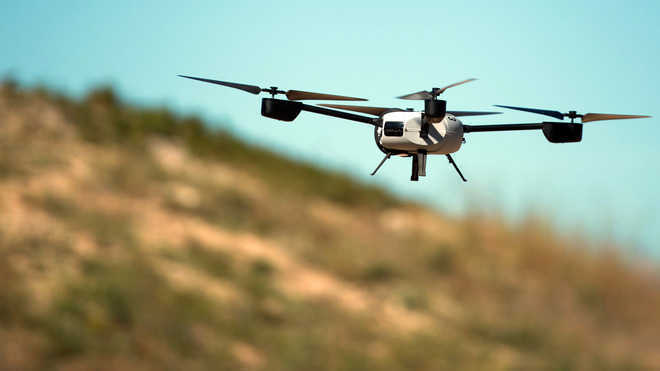
New drone policy notified: Air taxis may be a reality soon, says Scindia
The government today notified the new liberalised drone use policy rules
Tribune News Service
New Delhi, August 26
The government today notified the new liberalised drone use policy rules, as Minister for Civil Aviation Jyotiraditya Scindia said with these norms in place cities could soon witness the running of air taxis.
Easing rules
Forms to be filled to operate drones reduced from 25 to 6
Pilot licence fee cut from Rs3,000 to Rs100
No licence needed for micro drones
The progressive and liberalised rules aim to promote drone usage across sectors, including transportation, logistic, defence and infrastructure, officials in the Ministry of Civil Aviation said, adding that these would ensure ease of using unmanned aerial vehicles (UAVs) as several of the regulations have been done away with. Scindia, while briefing media on the issue, said the new rules aimed at simplifying procedures and reducing compliance burden for drone operation. “We are all set to usher in a new era of drone usage in India… Our aim is to make India a global drone hub by 2030,” he said.
The minister said the new drone rules were very likely to make air taxis traversing the airspace in the coming days.
“Air taxis are being researched and invented globally and many startups are coming up…. That time is not far when taxis that you see on roads, you will see in the air under the drone policy. I believe this is very much possible,” he said. Under the new rules, the regulator has done away with too many approvals and the number of forms to be filled to operate drones has been reduced from 25 to 6.
PM Narendra Modi tweeted to highlight the significance of the new rules. “The new drone rules usher in a landmark moment for this sector in India. The rules are based on the premise of trust and self-certification. Approvals, compliance requirements and entry barriers have been significantly reduced,” the PM said.
Govt directs CRPF to adopt strict provisions to punish its officers
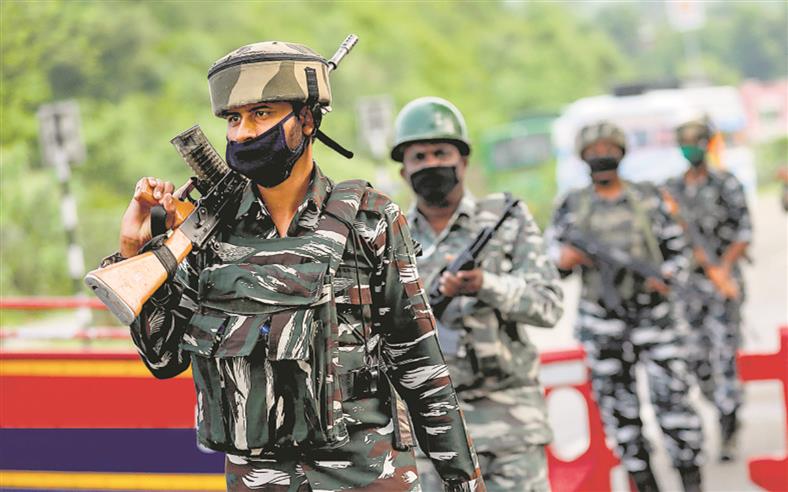
Keeping in view inordinate delay in deciding and finalising disciplinary actions against cadre officers, the Union Ministry of Home Affairs (MHA) has issued an order directing the country’s largest paramilitary force CRPF to take immediate action for incorporating the provisions of “Security Force Court” in the “Act and Rules” for expediting the process against Group ‘A’ personnel.
What MHA’s August 23 order says
The Home Ministry order said ‘a large number’ of disciplinary action cases of officers in the CRPF pertained to “unauthorised absence or desertion” from duty and these were taking a long time to conclude.
It said including the ‘security force court’ provisions by the CRPF will help in “initiating disciplinary action against the delinquent officers, so that such cases are finalised within minimum time”.
In the order titled “Disciplinary action against Group A officers of CRPF”, which the MHA had sent on Monday to the Inspector General (Personnel) of the force and Legal Officer of the Ministry, it underscored that the officers were governed by the provisions of Central Civil Service (Classification, Control and Appeal) Rules, 1965. “It has been observed that the disciplinary cases being initiated against Group ‘A’ officers of the CRPF take a very long time to reach the finalisation and a large number of such cases pertain to unauthorised absence/desertion from duty,” the order read.
In forces like the BSF, Sashastra Seema Bal (SSB) and the ITBP, there is a provision for “Security Force Court” where disciplinary action is concluded in a short period of time. “Undue long time in finalisation of disciplinary cases in the CRPF has been viewed seriously by the competent authority,” the MHA said. — TNS
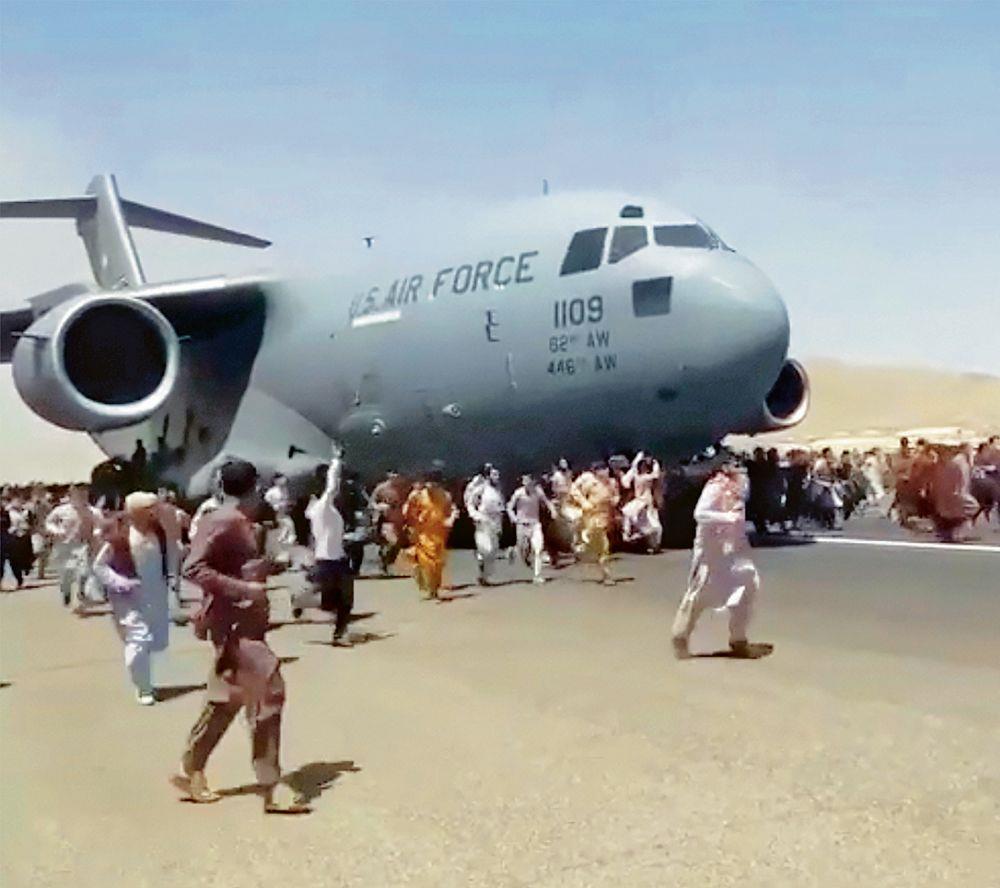
It is to be believed that the Kabul airfield would have had some qualified military personnel to alert the pilot about trespassers in the wheel bay or on the runway. Then how could such an unsafe takeoff be allowed by the authorities? It is providential that the surge of people in the vicinity of a plane on its takeoff did not cause an even more catastrophic incident on the runway.
Pretext: Blind anger to avenge 9/11 led the US to wreak havoc on innocents in Afghanistan. AP
Group Captain Murli Menon (Retd)
Defence analyst
The scenes of scary air evacuation of the hapless people from Kabul after the Taliban takeover should put any professional airman to shame. The reported clinging on to the aircraft fixtures and scores of aspiring evacuees running behind a C-5A Galaxy transporter was unbelievable indeed.
American President Joe Biden has gone on record to say that a chaotic exodus from Afghanistan was inevitable. But surely, any professional military would ensure flight safety and ethics of airmanship, however unplanned the airlift turned out to be?
Other clips showing a couple of people falling to their deaths from an airborne transport plane, and reportage of a 19-year-old Afghan national footballer apparently being one of them, was heartrending indeed.
These happenings only go to show the utter indifference and ensuing panic at the Kabul runway whilst the evacuation from Kabul was underway. Around 20 lives have been lost in the stampede and melee that took place.
Talking of holding an inquiry by the US authorities now is infructuous as the damage has already been done.
The buck, of course, stops with the captain of the plane or the planes involved. No pilot in his senses would leap off into the air with an uncontrolled mob of locals running alongside on the tarmac.
The manner in which the fiasco played out, it would not be unthinkable that some of the intruders could have got ingested into the huge engine intakes of the aeroplanes, besides other plausible injuries from being trampled upon by its huge undercarriage and fuselage.
Besides, where even a hovering bird on the takeoff path could cause catastrophic damage, how can the desire to evacuate from a trouble-torn locality make the operators throw caution to the wind, literally?
Quite clearly, the people controlling the evacuation military flights out of Kabul had no idea of the mob frenzy that would ensue. But then, the rustic Afghans, with little education or other worldly awareness, could not be expected to look out for danger to their lives from such inane actions of clambering on to accelerating aeroplanes on a runway. Some of them are reported to have tied themselves onto the undercarriage with the hope of staying airborne somehow. These, apparently, were the poor souls who got dislodged and fell to their deaths as the plane got airborne.
It is to be believed that the Kabul airfield would surely have had some qualified military personnel to alert the pilot about trespassers in the wheel bay or on the runway. Then how could such an unsafe takeoff be allowed by the authorities?
It is providential that the surge of humans in the vicinity of a large plane on its takeoff did not cause an even more catastrophic incident on the Kabul runway, leading to some horrendous damage to the aircraft and its occupants.
The IAF has since been able to evacuate around 390 Indians and some Afghans from Kabul to Hindon via its C-17 airlifters, an exercise bound to generate considerable goodwill all around.
More than the poor airmanship displayed by the Americans, there are larger issues about how they have caused unspeakable harm and inhuman treatment to scores of innocents, from Vietnam to Cambodia to Iraq and now Afghanistan.
From the travails of the Cold War to the blind anger to avenge the 9/11 attacks, there have been no dearth of excuses for the world’s only superpower to wreak havoc on innocents all over the weak world. Biden’s popularity rating is stated to have declined by 7.5 per cent post the Afghan fiasco.
The terrible reportage about young children being flung across barbed wire fencings by helpless Afghan mothers to the British and other soldiers on the safe side of Kabul’s airport and likewise treatment of women and minorities by the rampaging Taliban are other sights and happenings that will not be forgotten in a hurry.
Another aspect is the grossly inadequate training imparted by the Americans and NATO to the Afghan National Army, leading to their total capitulation to the opportunistic Taliban. Biden is on record as having said that they went into Afghanistan to neutralise the al-Qaeda, and not to impart democratic values to the Afghans.
Surely, India will have some soul-searching to do too in this regard as some of our arms and military training have gone to the Afghan establishment, albeit with good intent under the overhang of a Pakistan-sponsored Taliban.
In this context, whatever be the compulsions for our country to provide succour to our Afghan brethren in their days of anguish, military involvement will have to be thought through very carefully, not for the fear of getting embroiled in an avoidable war alone, but also to not have blood on our hands in the unpredictable ill-treatment that is bound to be meted out by the extremist jihadi Talibs to the war-torn populace of a well-meaning friendly nation in our neighbourhood, something we ought to cherish, considering the other ill-intentioned jackals awaiting their prey.
And, as for the Americans, their government and intelligence agencies will need to recalibrate their worldview, especially in light of their poor record with the handling of the Covid pandemic and the beating that it has caused to the world economy and US coffers overall.
Clearly, the US cannot afford to fight other peoples’ wars any more, concentrating instead, on their own nation-building and strengthening of their social fabric, torn asunder by irritants such as racism and gun lobbyists.
Taliban 2.0 is bound to take its toll in more ways than one and the Ahmad Massoud-led resistance movement in the Panjshir Valley would not cut much ice.
State Stalwarts
DEFENCE MINISTER
Minister Rajnath Singh
ALL HUMANS ARE ONE CREATED BY GOD
HINDUS,MUSLIMS,SIKHS.ISAI SAB HAI BHAI BHAI
CHIEF PATRON ALL INDIA SANJHA MORCHA
LT GEN JASBIR SINGH DHALIWAL, DOGRA
SENIOR PATRON ALL INDIA SANJHA MORCHA
MAJOR GEN HARVIJAY SINGH, SENA MEDAL ,corps of signals
.
.
PATRON ALL INDIA SANJHA MORCHA
MAJ GEN RAMINDER GURAYA ,MADRAS REGIMENT
sanjhamorcha303@gmail.com
PRESIDENT SOUTH ALL INDIA SANJHA MORCHA
COL SS RAJAN BOMBAY SAPPERS,
PRESIDENT UTTARAKHAND ALL INDIA SANJHA MORCHA
COL B M THAPA ,BENGAL SAPPERSS
PRESIDENT HARAYANA STATE CUM COORDINATOR ESM
BRIG DALJIT THUKRAL ,BENGAL SAPPERS
PRESIDENT TRICITY
COL B S BRAR (BHUPI BRAR)
PRESIDENT CHANDIGARH ZONE
COL SHANJIT SINGH BHULLAR
.
.
PRESIDENT PANCHKULA ZONE AND ZIRAKPUR
COL SWARAN SINGH
INDIAN DEFENCE FORCES
DEFENCE FORCES INTEGRATED LOGO
INDIAN AIR FORCE
Air Officer C-in-C WESTERN AIR COMMAND
AIR MSHL S PRABHAKARAN AVSM VM
AOC-IN-C, EASTERN AIR COMMAND
Air Marshal Inderpal Singh Walia
AOC-in-C SOUTH WESTERN AIR COMMAND
Air Marshal Vikram Singh
AOC-IN-C, SOUTHERN AIR COMMAND
Air Marshal J.Chalapati
AOC-IN-C TRAINING COMMAND
AIR MARSHAL SK GHOTIA VSM
AOC-IN-C MAINTENANCE COMMAND
Air Marshal Jagdish Chandra
Flag Officer Commanding in Chief, Western Naval Command
ice Admiral R Hari Kumar, PVSM, AVSM, VSM
Flag Officer Commanding in Chief, Eastern Naval Command
Vice Admiral Sanjay Bhalla, AVSM, NM
Flag Officer Commanding in Chief, Southern Naval Command