Sanjha Morcha

What’s New

Click the heading to open detailed news

Current Events :

web counter

Print Media Reproduced Defence Related News

Eradicating Military Traditions

“A strong nation thrives on its history, its past, its successes and failures, its customs and its traditions. Its diversity. So does the Indian Military”

Eradicating Military Traditions

Eradicate poverty, misogyny,  unemployment. Eradicate casteism, religious bigotry, corruption  in the government; eradicate corrupt politicians; eradicate the non-accountability of govt officials in the corridors of power. Eradicate the sickening VIP culture– this sense of ‘entitlement’ of the elected representatives of India.

Unfortunately, the leadership at the helm is hell bent on re-writing history and destroying the very fabric which makes a  successful ‘nation state’– a homogenous collection of citizens, ideas, philosophies, religions, colours, ethnicities. A  shared history woven with diverse cultures and language

In a mature democracy, you have the freedom to wear what you want. To eat what you want. To drink what you want. And an absolute freedom to believe in what you must. All this, as long as established societal norms are followed. In a true democracy the citizens are guaranteed not only equality before law but also equal protection of laws.

And we are India- not some tin pot state like Iran or Pakistan or Saudi Arabia or Uganda or N Korea. Our state power is meant to look outwards not inwards. And if the major threat is from within; then we too are a failed state and our governance needs a relook. In our misguided quest to rewrite and modify history combined with a misplaced urge to ‘undo past wrongs’, we are on a national binge to change names of cities, places, roads, buildings and monuments, traditions and culture. Soon we will have it that the British never even came to India! And the ‘mughals’ were foreigners! And that past governments stood for all that was wrong in India!

A strong nation thrives on its history, its past, its successes and failures, its customs and its traditions. Its diversity. So does the Indian Military. Ever thought as to why some states are able to convert their basic resources and human strengths into credible fighting power despite limited resources. And why do some states perform poorly despite material and equipment advantages? It is because military and thereby  national power, depends on the political culture, the prevalent social structures; beliefs, doctrines, traditions and cohesion of their armed forces. Culture and traditions shape the behaviour of a body of men in peace and war. Camaraderie and brotherhood in uniformed men springs from customs, traditions, shared hardships and legacy. Traditions and unit ‘individualities’ are the essence of what binds military units together, providing a cohesiveness among the individual members, which allows the unit to function effectively as a collective entity. Those units that foster a sense of tradition, belonging, teamwork and  a sense of collective pride possess a unified strength, which enhance accomplishments, endure challenges and overcome hardships. Because of this, unit cohesion is a powerful mission multiplier that instills soldiers to perform to the utmost of their abilities for the benefit of each other, the unit and ultimately the country.

And now start destroying the ‘distinctiveness’ of the Indian military system. The ethos, traditions, history, glamour and the ‘binding force’ of the Indian military– convert it into another ‘CAPF’! A ‘numbered’ police or CRPF/BSF/ITBP battalion. No traditions to go by, no culture, no pride of ‘belonging’ — just a bare  railway waiting room. Enter, while-away your time and leave. Neither will the unit remember you, nor will you ever visit the unit again.
No, they will not climb Tiger Hill again if they belong to a number with no history and tradition.

Cut out the bands, military parades, raising days, fanfare, the aura, the pomp and show which makes the military of any nation a force to be reckoned with. Forget past glories, rich histories. Forget the customs and traditions imbibed over centuries. Forget the battles fought by Indian soldiers/units all over the world, the medals won, the citations given, the battle honours, the war cries, the lanyards. The issue is more of a  ‘no body’ imposing his thoughts on a military system. One man who has come temporarily into the political system and made an offhand (uncalled for) remark about ‘sabhyata’ has caused turbulence in the entire military environment. A person who is least qualified, a person who has never donned the uniform is today telling the Indian military ‘how it should behave and modify its trappings, culture, traditions and ethos’!  The problem lies here.

We forget that motivation, belief, cohesion and traditions maketh an army not just equipment alone. The US had the best equipment and war material in Vietnam and Afghanistan. It failed. Because the soldiers and the country did not have the cohesion, pride and belief in themselves- the leadership and the cause. Ukrainian soldiers have the motivation, the belief, the pride, the cohesion, but for the Russians- its just ‘another job’. Motivation comes from ethos, belief, traditions — naam, namak, nishan. Most people forget that the Indian soldier fights first for the honour and name of his unit and the collective reputation of the soldiers who make this ‘unit’– and then the country. Distinct but interlinked.

Saragarhi was not for India. It was not even in India. Rezang La too was for the Battalion and for that intangible ‘unit brotherhood’ among those soldiers who decided to give their all; last man last bullet. A brotherhood which had been nurtured as part of unit ethos, a sense of belonging, pride mixed with traditions imbibed over a period of time. For them, after this had  come the thought of the hinterland, motherland and loved ones behind. Nepali Gurkhas too do not die for India. They die fighting ferociously for their unit and the Gurkha tradition.

Tinker with the military now, regret later. Change the tunes (hum honge kamyab) by all means, but do not eradicate the past (auld lang sayne). Why not let the men in uniform decide all this? Why not let the col of the regiment or the military hierarchy take a call on the lanyard or the colour of the belt or whether to retain battle honours or mess/regimental  traditions or the regimentation of the Indian Army or its recruitment/service norms or its dress codes; all hugely successful till today, and since centuries. Whenever a  change was required, it was done by the military machine itself. By competent uniformed men who are most qualified to carry the rank and file with them.

This is a classic case when three and four star generals of all three services can join hands and tell the establishment, ‘Lay off– this is purely our domain’.  
Alas, even Krishna Menon and Nehru will be turning over in their graves.


Brig D S Sarao, is a veteran army aviator who has flown extensively in J&K. He was seriously injured in Op Meghdoot during a casualty evacuation. He is a prolific writer, academic & lecturer.

(Views expressed are the author’s own and do not reflect the editorial stance of Mission Victory India)

https://missionvictoryindia.com/p/adf2ef11-1154-4b3d-87be-0a9e4723417d/


LIST OF FIVE PATHBREAKING WEAPONS THAT WILL BOOST INDIA’S FIREPOWER IMMENSELY

Pralay (“Destruction”) is a cannisterised tactical, surface-to-surface, and SRBM for battlefield use
From Rafale Jets to S-400 Missile Defence System, here are five pathbreaking weapons that would boost India’s firepower immensely. Take a look at the complete list here
Five Pathbreaking Weapons to Boost India’s Firepower: The past few quarters have been eventful for India as it witnessed many changes in the security dynamics near its borders. This was amid the rising tensions between India and China.
However, this period was also marked by improvements in defence capabilities which were necessitated due to the rise in hostility between India and China.
Here is a list of five pathbreaking weapons that will be boosting India’s firepower immensely in the coming days.
Rafale Fighter Jets
Rafale is a next-generation combat aircraft manufactured by Dassault Aviation, France. India has received 32 of the 36 combat aircraft as a part of the deal between India and France, the rest of the 4 aircraft are going to be delivered in the coming days after making India-specific enhancements to the aircraft.
Currently, there are two active squadrons of Rafale in India operating from Hashimara Air Base, West Bengal and Ambala.
It is a 4.5th Generation aircraft with the ability to carry a wide range of short and long missions. It can carry out ground and sea attacks, reconnaissance, and high-accuracy strikes with relative ease.
It is equipped with Meteor which is a beyond visual range air-to-air missile with a range of 100 km, SCALP cruise missile and HAMMER precision guided ammunition.
The acquisition of Rafale Jets will boost air defence capabilities and help in combating threats on both sides of the borders.
S-400 Missile Defence System
India has obtained the S-400 Missile Defence System from Russia in the wake of increasing border tensions between India and China. China is known to have installed the same across the Line of Actual Control or LAC which prompted the deal.
This deal attracted the disapproval of the USA to the extent of it threatening India to implement the Countering America’s Adversaries Through Sanctions Act (CAATSA) against India, which allows it to sanction any country that purchases this missile defence system from Russia.
However, the United States hasn’t implemented the same, as India maintained a fine balance between its relations with USA and Russia.
The S-400 defence system is capable of taking down UAVs, hostile aircraft, and ballistic and cruise missiles that were released by the enemy.
The ability to hit mobile targets like fighter planes is achieved by its ground-to-air missiles 9M96E and 9M96E2. These missiles can hit a moving target from a 120 km distance range with high precision.
MQ-9 Reaper Drones
The MQ-9 Reaper Drones that India has obtained from the USA is a potent surveillance drone and can also be equipped with missiles which can be used for offensive purposes. India is looking to acquire 30 MQ-9 Reaper Drones ( 10 each for Army, Navy and Air Force).
The ability to strike with precision, and perform reconnaissance and covert operations, the MQ-9 predator drones are ideal for use in battlefield operations against high-value, time-sensitive and transitory targets.
The most exciting feature of MQ-9 Reaper Drones is the addition of four hellfire missiles that are very precise and destructive. The most recent attack by a Hellfire missile was done to take down Al Qaeda chief Ayman al-Zawahiri.
TEJAS Light Combat Aircraft
The procurement of the homemade Tejas Light Combat Aircraft is going to boost the aerial capability of the Air Force. India has made a deal to procure 83 TEJAS Light Combat Aircraft of which 73 will be MK- 1A Aircraft and 10 will be trainer planes.
There has been talks of equipping Tejas with HAMMER missiles in order to increase its firepower.
The strengths of TEJAS lies in its less weight due to use of composites, low radar signals, supersonic speed, and role in offensive air support.
The Tejas is going to replace the MiG-21-Bison soon.
Missiles By DRDO
DRDO has been instrumental in testing new missiles as the threat of attack looms large over the horizon.
The first of such tests was of Agni-P or Prime which is a medium-range ballistic missile that has a range of 2000 kilometres. It has improved accuracy and provides the ability to be launched from rail or road, these missiles can be stored in canisters for an extended period of time.
Among other missiles that were tested are Pralay, which is a surface-to-surface short-range ballistic missile. The missile has a range of 150km to 500km.
The other missiles being tested were helicopter-launched Stand-Off Anti-Tank Missile, Long Range Supersonic assisted Torpedo and Pinaka-MK2 Extended range rockets.
The most notable development in the case of ICBMs is the successful launch of Agni-5 which is an Inter Continental Ballistic Missile or ICBM capable of hitting targets at a 5,500 (capable of 8,000 km) range.


DEPENDENCE ON RUSSIAN DEFENCE EQUIPMENT NOT LACK OF TRYING ON INDIA’S PART: JAISHANKAR

India’s dependence on Russian defence equipment and the strong defence ties with Moscow is not because New Delhi did not approach the US to get those from the United States, External Affairs Minister S Jaishankar said Sunday.
“One of the changes in our relationships has actually been the defence cooperation which has really come about in this current form maybe the last 15 years,” Jaishankar told Indian Americans here during an interactive discussion with him organized by the US India Friendship Council and Foundation for India and Indian Diaspora Studies.
“From 1965 pretty much for the next 40 years, there was no US defence equipment to India. This was, in fact, a period when the India Soviet, India Russia relationship became very strong,” he said.
“This was not due to a lack of trying on India’s part. I can vouch for it myself. I’ve had my relatives, my father, my grandfather, they worked with the defence ministry. So, I know first hand what great efforts were made over those years to try to make the US understand that it was in American interest to have a strong, united, independent, prosperous India,” Jaishankar said.
“At that time, they did not succeed, maybe the state of the world was such,” he noted. “The change that started was really triggered by the nuclear deal that removed a very big obstacle to go forward and then to actually take the relationship to a new level requires leadership in India,” that did not had reservations.
“It takes two hands to clap. It was not just that all the problems are on the American side they were visitations on the Indian side as well,” he said.
“So we also have to address the institutions on our side. I think today, the relationship is on a very different footing. We have possibility of working together in many more areas, especially the security domain. Some of our major exercises are with the American military. We fly a number of American planes today, the C-17,” the minister said.
Very bullish on the future of India-US relationship, he said: “I think there are really deep convergences, which will sustain it over many, many years.”


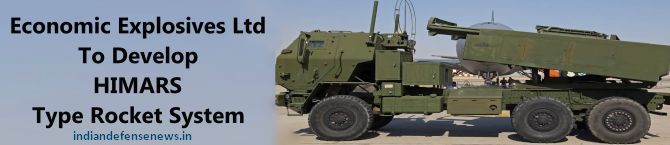
SOLAR GROUP’S ECONOMIC EXPLOSIVES LTD TO DEVELOP ‘HIMARS’ LIKE ROCKET SYSTEM

n Indian private sector defence equipment manufacturer has proposed to develop a “High Mobility Artillery Rocket System (HIMARS)” multiple rocket launcher system similar to the ones used by the US army. The HIMARS has come into limelight after it was deployed by the Ukrainian forces in the Russo-Ukraine war recently, which has clearly shifted the momentum and in the process turning the tide in favour of Ukraine in the fight against Russia. The Russians have nothing equivalent to the HIMARS.
Manufacturer Lockheed Martin describes the M142 HIMARS as having “shoot and scoot” capability, referring to the fact it is a highly mobile weapons system that can fire and retreat at speed, reducing the chance of being targeted by the enemy.
India’s Multi-Barrel Rocket Systems
Currently the Indian Army has the Soviet/Russian BM-30 Smerch which is a heavy self-propelled 300 mm multiple rocket launcher. The system is intended to defeat personnel, armoured, and soft targets in concentration areas, artillery batteries, command posts and ammunition depots.
The army also operates the BM-21 Grad a self-propelled 122 mm multiple rocket launcher. The complete system with the BM-21 launch vehicle and the M-21OF rocket is designated as the M-21 field-rocket system and is more commonly known as a Grad multiple rocket launcher system.
Mobility Philosophy of The Indian Army
Indian army has focused on the mobility philosophy and has hence developed the indigenous Pinaka MBRL which uses 214mm instead of 300mm rocket like the ones used in BM-30 and is mounted on a 8X8 BEML made truck chassis. The advanced guided version of the MBRL consists of 8 rockets in total installed on 2 pods, whereas the unguided version has 12 rockets in total.
New “Shoot And Scoot” Capability
Solar Group’s Economic Explosive Ltd has submitted a proposal to MoD for the developed a HIMARS kind of a rocket system, this system will carry only 1 pod. The system will have a range of 250km surface-to-surface rocket. The MBRL may use the improved version of the Prahaar solid-fuel road-mobile tactical ballistic missile which has since been designated as Pranash by DRDO. It is designed to carry a conventional high explosive warhead or clustered munition, and significantly the missile is powered by single-stage solid propellant motor. This missile can be launched within 2–3 minutes without any preparation, providing significantly better reaction time than liquid-fuelled missiles.
Pranash is being developed to provide a cost-effective, quick-reaction, all-weather, all-terrain, highly accurate battlefield support tactical weapon system.


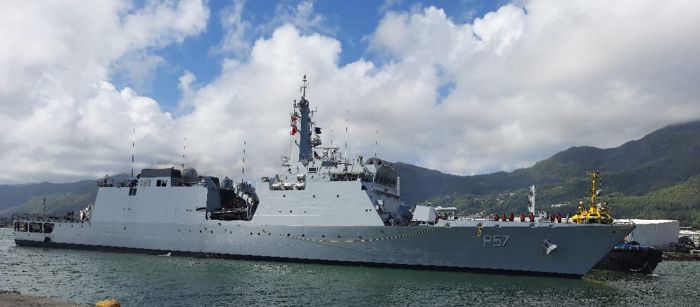
INS Sunayna in Seychelles for naval exercise

INS Sunayna in Seychelles for naval exercise

Tribune News Service

New Delhi, September 26

INS Sunayna has reached Seychelles, an island off the coast of East Africa, to participate in the annual training exercise “Operation Southern Readiness” of Combined Maritime Forces (CMF).

“This not only reinforces Indian Navy’s commitment to maritime security in the Indian Ocean region, but also marks the maiden participation of an Indian Navy ship in the CMF exercise,” the Ministry of Defence said in a statement.

The US, Italy, Australia, Canada, New Zealand, the UK, Spain and India are among the participants.

The Seychelles People’s Defence Force, European Union Naval Force and United Nations Office on Drugs and Crime are part of the exercise. Forces of multiple nations will conduct training on boarding a ship, search and seizure techniques, search and rescue operations, maritime law and information-sharing.

In a separate development, Indian Navy’s surveillance plane, P8-I, landed at Seychelles yesterday morning for undertaking a joint surveillance on the request of the Government of Seychelles.

Commissioned in 2013

INS Sunayna, the second of the NOPV (Naval Offshore Patrol Vessel) class of ship was commissioned at Kochi on October 15 in 2013 by Vice Admiral Satish Soni, Flag Officer Commanding in Chief Southern Naval Command


DISCONTINUATION OF ANNUAL RENEWAL OF CSD SMART CARDS

Mil: 35222

Wing-Ill, West Block- 111, Second Floor

RK Puram, New Delhi- 66

95350/Q/DDGCS/Canteen Smart Cards

As Per Distribution List

2.1  Sep 2022

DISCONTINUATION OF ANNUAL RENEWAL OF CSD SMART CARDS

  1. Annual Renewal of Canteen Smart Cards was instituted vide Para 8 (c) of instructions on CIMS issued in 2006, Para 7 of policy letter No 95286/SG/Q/DDGCS dated 26 Sep 2012 & later amplified vide letter of even No dated 08 Mar 2021.
  • Vide letter under ref, cards of ESM, Veer Naris and Civil Defence Employees ceased functioning and were reqd to be renewed annually by physically vis the URC & submitting PPO / Pension Slip.
  • It is felt that the policy on ‘Annual Renewal of Canteen Smart Cards’ causes significant inconvenience to our veterans, Veer Naris and Civil Defence Employees (Serving & Retired). In order to assuage inconvenience to beneficiaries, it has been decided that the policy on ‘Annual Renewal of Canteen Smart Cards’ be discontinued wef 01 Jan 2023. A mechanism is being established to deactivate the cards of deceased ESM / beneficiaries in coord with PCDA & SPARSH.
  • However, URCs will continue to ensure that only valid CSD Smart Card holders are permitted entry to the Canteens to purchase CSD items. Necessary measures to this effect be implemented by the URC Mgt at fmn & unit levels.
  • The following procedure will be adopted by URCs:-
  • On intimation of the demise-of an ESM / beneficiary, the Widow / NoK shall be advised to apply for a ‘Widow I NoK of ESM’ CSD Smart Card.                    ·
  • The URC shall assist in prep of the Card on priority.
  • The Widow / NoK shall continue to avail CSD facilities with cards of the deceased husband/ beneficiary till the new cards are received.
  • Once the new cards are received and activated the old cards of the deceased husband / beneficiary will auto get deactivated.

(APS Chahal) Brig

Brig CS for QMG

Contd….. 2

2

Distribution List :-

HQ Northern Command (OL) HQ Southern Command (OL) HQ Central Command (OL)

HQ ARTRAC (Q), Naval HQ (POPS)

Air HQ (Accts), HQ Coast Guard (AO) HQ DGBR (Q), HQ NSG, IG SFF, DIAV

RR Force HQs, All Trg Ests & Trg Centres


How many times India Partition was Done .

How many of you know that ..

Q: Partition of India was done how many times ?

Answer- SEVEN times in 61 years by the British rule.

Afghanistan was separated from India in 1876,

Nepal in 1904,

Bhutan in 1906,

Tibet in 1907,

Sri Lanka in 1935,

Myanmar (Burma) in 1937

and…

Pakistan in 1947.

India’s Partition of Akhanda Bharat

Unbroken India extended from the Himalayas to the Indian Ocean and from Iran to Indonesia. India’s area in 1857 was 83 lakh square kilometers, which is currently 33 lakh square kilometers.

Sri Lanka
The British separated Sri Lanka from India in 1935. The old name of Sri Lanka was Sinhaldeep. The name Sinhaldeep was later renamed Ceylon. Sri Lanka’s name was Tamraparni during the reign of Emperor Ashoka. Mahendra, son of Emperor Ashoka and daughter Sanghamitra went to Sri Lanka to propagate Buddhism. Sri Lanka is a part of united India.

Afghanistan
The ancient name of Afghanistan was Upganasthan and Kandahar’s was Gandhara. Afghanistan was a Shaivite country. The Gandhara described in the Mahabharata is in Afghanistan from where the Kauravas’ mother was Gandhari and maternal uncle Shakuni. The description of Kandahar i.e. Gandhara is found till the reign of Shah Jahan. It was a part of India. In 1876 Gandamak treaty was signed between Russia and Britain. After the treaty, Afghanistan was accepted as a separate country.

Myanmar (Burma)
The ancient name of Myanmar (Burma) was Brahmadesh. In 1937, the recognition of a separate country to Myanmar i.e. Burma was given by the British. In ancient times, the Hindu king Anandavrata ruled here.

Nepal
Nepal was known as Deodhar in ancient times. Lord Buddha was born in Lumbini and mother Sita was born in Janakpur which is in Nepal today. Nepal was made a separate country in 1904 by the British. Nepal was called the Hindu nation of Nepal. Nepal was called as Hindu Rashtra Nepal. Until a few years ago, the king of Nepal was called Nepal Naresh. Nepal has 81 percent Hindus and 9% Buddhists. Nepal was an integral part of India during the reigns of Emperor Ashoka and Samudragupta. In 1951, Maharaja Tribhuvan Singh of Nepal appealed to the then Prime Minister of India, Pandit Jawaharlal Nehru to merge Nepal with India, but Jawaharlal Nehru rejected the proposal.

Thailand
Thailand was known as Syam until 1939. The major cities were Ayodhya, Shri Vijay etc. The construction of Buddhist temples in Syam began in the third century. Even today many Shiva temples are there in this country. The capital of Thailand Bangkok also has hundreds of Hindu temples.

Cambodia
Cambodia is derived from the Sanskrit name Kamboj, was part of unbroken India. The Kaundinya dynasty of Indian origin ruled here from the first century itself. People here used to worship Shiva, Vishnu and Buddha. The national language was Sanskrit. Even today in Cambodia, the names of Indian months such as Chet, Visakh, Asadha are used. The world famous Ankorwat temple is dedicated to Lord Vishnu, which was built by the Hindu king Suryadev Varman. The walls of the temple have paintings related to the Ramayana and the Mahabharata. The ancient name of Ankorwat is Yashodharpur.

Vietnam
The ancient name of Vietnam is Champadesh and its principal cities were Indrapur, Amravati and Vijay. Many Shiva, Lakshmi, Parvati and Saraswati temples will still be found here. Shivling was also worshiped here. The people were called Cham who were originally Shaivites.

Malaysia
The ancient name of Malaysia was Malay Desh which is a Sanskrit word which means the land of mountains. Malaysia is also described in Ramayana and Raghuvansham. Shaivism was practiced in Malay. Goddess Durga and Lord Ganesha were worshiped. The main script here was Brahmi and Sanskrit was the main language.

Indonesia
The ancient name of Indonesia is Dipantar Bharat which is also mentioned in the Puranas. Deepantar Bharat means the ocean across India. It was the kingdom of Hindu kings. The largest Shiva temple was in the island of Java. The temples were mainly carved with Lord Rama and Lord Krishna. The Bhuvanakosh is the oldest book containing 525 verses of Sanskrit.

The names or motos of the leading institutions of Indonesia are still in Sanskrit :

Indonesian Police Academy – Dharma Bijaksana Kshatriya

Indonesia National Armed Forces – Tri Dharma Ek Karma

Indonesia Airlines – Garuda Airlines

Indonesia Ministry of Home Affairs – Charak Bhuvan

Indonesia Ministry of Finance – Nagar Dhan Raksha

Indonesia Supreme Court – Dharma Yukti

Tibet
The ancient name of Tibet was Trivishtam which was divided into two parts. One part was given to China and the other to Lama after an agreement between the Chinese and the British in 1907. In 1954, India’s Prime Minister Jawaharlal Nehru accepted Tibet as part of China to show his solidarity to Chinese people.

Bhutan
Bhutan was separated from India by the British in 1906 and recognized as a separate country. Bhutan is derived from the Sanskrit word Bhu Utthan which means high ground.

Pakistan
There was partition of India on August 14, 1947 by the British and Pakistan came into existence as East Pakistan and West Pakistan. Mohammad Ali Jinnah had been demanding a separate country on the basis of religion since 1940 which later became Pakistan. In 1971 with the cooperation of India Pakistan was divided again and Bangladesh came into existence. Pakistan and Bangladesh are parts of India.*

How many of you are aware of this history?

MUST READ TO KNOW THE HISTORY AND SHARE….


FAQ SPARSH :SPARSH RELATED QUIERIES

Dear Esteemed Members,
Now that FAQ is around our necks, we better try to educate ourselves about SPARSH (I have no idea of this devil SPARSH as SBI, Trimulgherry, Secunderabad is giving me excellent service).
Read the FAQs sent by Maj SK Jain, a one man Army fighting for our rights.
This is attached.
Warm regards,
Brig CS Vidyasagar (Retd)

FAQ SPARSH

(NOTE: All Bank Branches are expected to be Common Service Centers)

(ह िंदी में जानकारी के हिए हनम्नहिखित हििंक पर जाएँ)  

Videos of SPARSH PCDA Bing video

SPARSH RELATED QUIERIES

  • How can I change or update my login password?

You can update your password as applicable.

Go to: My Profile > Change Password, and update as applicable.

  • I have forgotten my login password. What should I do ?
    • You can change your forgotten password. Click on Forgot Password on the

Login Screen, and update as applicable

  • You can call the SPARSH Helpline, provide necessary details and access using temporary password provided
    • You can visit the nearest Service Center, provide necessary details and access using temporary password provided
  • Will login in portal available 24*7 hours ?

Yes. You can access the SPARSH portal anytime & anywhere

  • Where can I find out the list of service centers in my area ?

The list of active Service Centers is available on SPARSH.

Go To: Contact & Support > SPARSH near You > Service Center Locator

  • How can I avail services through Service Center ?

You can visit your nearest Service Center & request for services to be availed by providing necessary identification data for verification.

Verify yourself using OTP sent to your Registered Mobile Number (RMN), or answer a set of Security Questions

  • Can I be entertained at a Service Center if I visit there without my phone?

To avail services at a Service Center, you need to verify yourself using OTP sent to your Registered Mobile Number (RMN), or answer a set of Security Questions

  • Are the services provided at service centre different from pensioner’s portal?

All services available on SPARSH can be availed via Pensioner Portal as well as Service Centers without any charges.

  • What are the timings of Service Centers ?

Working Hours: 9:30 AM – 6:00 PM (Monday to Friday)

  • What should I do if I am facing troubles while availing services on SPARSH Portal?
    • Check internet connection
    • Check browser compatibility

You can alternatively reach out to us via SPARSH Helpline or visit the nearest Service Center to avail services

  • What should I do if an error message is displayed for ‘Services Temporary Unavailable’ while using SPARSH Portal?
    • Check internet connection
    • Check browser compatibility

You can alternatively reach out to us via SPARSH Helpline or visit the nearest Service Center to avail services

PENSION RELATED QUERIES

  • How can I view my pension details? (Basic Pension, Disability Element, Gratuity, Other Entitlements etc.) ?

You can view your pension details in SPARSH.

Log in to your SPARSH account, and go to: My Documents > Entitlements alternatively, you can access your PPO via My Documents > PPO

  • How can I view & download a copy of my monthly pension slips?

You can view & download your pension slip in SPARSH.

Log in to your SPARSH account, and go to: My Documents > Pension Slip

  • How can I view & download a copy of my Pension Payment Order (PPO)?

You can view & download your pension payment order (PPO) in SPARSH.

Log in to your SPARSH account, and go to: My Documents > Pension Slip

  • Where can I find the current & previous rates of DR applicable?

The table of Dearness Relief (DR) rates applicable till date is available on SPARSH.

Go To: Pension Orders & Information > Common Problems > Dearness Relief

  • How can I view the deduction of commutation amount from my pension?

You can view & download your monthly pension payments & deductions in SPARSH.

Log in to your SPARSH account, and go to: My Documents > Pension Slip

  • How can I view the date of restoration of the deduction of commutation amount?

You can view your commutation details in SPARSH.

Log in to your SPARSH account, and go to: My Documents > Entitlements Alternatively, you can access your PPO via My Documents > PPO

  • What to do if I am not getting correct rate of disability element?

You can raise a payment related grievance for the same by logging into your SPARSH account.

Log in to your SPARSH account, and go to: Grievances > Payment Related > Elements of Pension

  • How can I view that benefit of broadbanding has been given to me?

You can view your pension details in SPARSH.

Log in to your SPARSH account, and go to: My Documents > Entitlements alternatively, you can access your PPO via My Documents > PPO

  • How can I view my projected tax details of the financial year?

You can view your pension details in SPARSH.

Log in to your SPARSH account, and go to: Services > Projected Tax Summary

  • Where can I find the latest rates of Gallantry applicable?

The details for Gallantry Awards along with the applicable rates till date is available on SPARSH.

Go To: Pension Orders & Information > Common Problems > Gallantry Awards

  • Where can I find the current & previous rates of Fixed Medical Allowance applicable?

The details for Fixed Medical Allowance (FMA) along with the applicable rates till date is available on SPARSH.

Go To: Pension Orders & Information > Common Problems > Fixed Medical Allowance

PENSIONER DATA VERIFICATION QUERIES

  • What is Pensioner Data Verification? Applicable only for Service Pensioners.

Pensioner Data Verification (PDV) aims at enabling the retiree to verify his/her own details before sanction of pension. This activity should be completed within 15 days of notification via SMS/Email sent to your Registered Mobile Number/Email ID

  • My annual identification is due. How can I identify myself in SPARSH?

You can identify yourself using Aadhar, or provide life certificates issued by designated authorities to have the entitled pension credited to your bank account.

For identification using Aadhar (Digital Life Certificate): Go To: Services >

Identification > Digital Life Certificate

For identification using Manual Life Certificate: Go To: Services > Identification > Manual Life Certificate

PENSIONER VERIFICATION (Annual Life certificate)

  • How can I view my next identification date?

Go To: Services > Identification, and view details of your identification completed, including last identification date & next identification due date

  • How can I obtain a blank form of Manual Life Certificate?

You can identify yourself using Aadhar, or provide life certificates issued by designated authorities to have the entitled pension credited to your bank account.

For identification using Manual Life Certificate:

  1. Go To: Services > Identification > Perform Identification
    1. Generate your MLC Number & download the blank form for Manual Life Certificate
  2. Is there a time limit for uploading of Manual Life Certificate after download on Portal?

No. Manual Life Certificate can be uploaded anytime on SPARSH

  • Can a last year downloaded form be used this year for Manual identification?

No. Manual Life Certificate once submitted for identification cannot be reused.

  • Whether I would be able to receive all my pensionary arrears on delayed identification?

Yes. Upon delayed identification, all applicable pensionary arrears shall be paid.

  • Life Certificates can be issued/signed by one or other of the following authorities.
    • Any person exercising the power of a Magistrate under the Criminal Procedure Code, 1898 (5 of 1898).
    • A Registrar or Sub-Registrar under the Registration Act, 1908 (16 of 1908).
    • Any pensioned Officer who before retirement exercised the powers of a Magistrate.
    • Any Gazetted Officer of Government.
    • A Munsif.
    • A Post Master.
    • A Departmental Sub Post Master.
    • An Inspector of Post Offices.
    • A Class I Officer of the Reserve Bank of India.
    • An Officer of the State Bank of India.
    • An Officer of a subsidiary Bank of the State Bank of India.
    • Head of a Village Panchayat, Gram Panchayat or Gaon Panchayat.
    • Head of an Executive Committee of a village.
    • An officer of a bank included in the second Schedule to the Reserve Bank of India Act, 1934 (2 of 1934) in respect of pensioner drawing his/her pension through that Bank.
    • A Police Officer not below the rank of Sub-Inspector-in-Charge of a Police Station.
    • A member of Lok Sabha/Rajya Sabha/Vidhan Sabha/Vidhan Parishad or a Corporator of Municipal Corporation or a Councilor of a Municipality. (xvii) In the case of pensioners reemployed a life certificate furnished by the pensioner signed by the Head of the office, where he is re-employed. (xviii) A District Sainik Welfare officer- (DSWO).
  • What all biometric devices are compatible with SPARSH?

For recommended list of biometric devices: Click Here

  • SPARSH- Life Certificate through different modes Click Here
  • How do I report death of a family member in SPARSH?

Go To: Services > Report Event > Death, and provide required details along with copy of Death Certificate

  • How do I report about a missing family member in SPARSH?

Go To: Services > Report Event > Missing, and provide required details along with copy of FIR

SERVICE REQUEST

  • How do I report about a convicted family member in SPARSH?

Go To: Services > Report Event > Conviction, and provide required details along with copy of Judgment

  • What is Initiate Family Pension?

You can request for your share of pension via Initiate Family Pension Go To: Services > Report Event > Initiate Family Pension, and provide required details along with necessary documents as applicable

  • How do I update my basic details (Mobile Number, Bank Account Number, PAN etc.) in SPARSH?

After the identification process is complete and approved, you can manage & update your profile details like personal details, service details, family details etc. by logging in to your SPARSH account.

Log in to your SPARSH account, and go to: My Profile > Manage Profile

  • How do I add/remove family details (Spouse/Dependents) in SPARSH?

After the identification process is complete and approved, you can manage & update your profile details like personal details, service details, family details etc. by logging in to your SPARSH account.

Log in to your SPARSH account, and go to: My Profile > Manage Profile

  • My annual identification is due. How can I identify myself in SPARSH?

You can identify yourself using Aadhar, or provide life certificates issued by designated authorities to have the entitled pension credited to your bank account.

For identification using Aadhar (Digital Life Certificate): Go To: Services >

Identification > Digital Life Certificate

For identification using Manual Life Certificate: Go To: Services > Identification > Manual Life Certificate

  • How can I declare my investments or proof of savings for tax purposes in SPARSH?

You can declare & manage your investments in SPARSH by logging into your SPARSH account.

Log in to your SPARSH account, and go to: Service Requests > Investment Declarations

  • How can I apply for commutation in SPARSH?

You can apply for commutation by logging into your SPARSH account.

Log in to your SPARSH account, and go to: Service Requests > Commutation Requests

  • I have registered a Service Request in SPARSH. How can I track it?

You can raise a payment related grievance for the same by logging into your SPARSH account.

Log in to your SPARSH account, and go to: Grievances > Payment Related > Deduction

  • How can I report or update re-employment details including discharge from re-employment?

After the identification process is complete and approved, you can report your employment/re-employment details by logging in to your SPARSH account.

Log in to your SPARSH account, and go to: My Profile > Employment/ReEmployment

  • How can I report my marriage/re-marriage?

After the identification process is complete and approved, you can report your marriage/remarriage details by logging in to your SPARSH account. Log in to your SPARSH account, and go to: My Profile > Report Remarriage

  • How can I request to stop my Fixed Medical Allowance for availing ECHS facility?

For Indian resident pensioners: If you don’t wish to continue availing Fixed Medical Allowance (FMA), you need to update the FMA option in your personal profile by logging in to your SPARSH account.

Go to: My Profile > Manage Profile > Personal Details > Fixed Medical Allowance

  • How to draw Fixed Medical Allowance if I am not availaing any ECHS facility?

For Indian resident pensioners: If you wish to opt for Fixed Medical

Allowance (FMA), you need to update the FMA option in your personal profile by logging in to your SPARSH account.

Note: Your address should be part of the districts eligible for FMA. Please verify your address before applying for FMA.

Go to: My Profile > Manage Profile > Personal Details > Fixed Medical Allowance

  • How can I claim death gratuity of my late husband?

The demise of the deceased member needs to be reported first

Go To: Services > Report Event > Death, and provide required details along with copy of Death Certificate

Once approved by the competent authority, apply claim for Family Pension & Death Gratuity.

Go To: Services > Report Event > Initiate Family Pension, and provide required details along with necessary documents as applicable

  • What are straight through profile requests? How can I identify them?

Available to registered users on SPARSH, Straight Through Profile Requests don’t need authorization from the competent concerned authorities. You can refer the legends displayed on your profile page to identify such requests (My Profile > Manage Profile)

Example:

  1. Change in personal details like Residential Address, Mobile Number, Email ID, Aadhaar Number, PAN etc.
    1. Change in Bank Details (For Indian Nationals)
  2. What are approval based profile requests? How can I identify them?

Available to registered users on SPARSH, Straight Through Profile Requests don’t need authorization from the competent concerned authorities. You can refer the legends displayed on your profile page to identify such requests (My Profile > Manage Profile)

Example:

  1. Change in personal details like Name, Date of Birth etc.
    1. Change in Service Details like Non Qualifying Service, Gallantry Awards etc.
    1. Addition/Removal of Spouse/Dependent Details

GRIVIEANCE

  • I am receiving lesser payment than the sanctioned amounts in my PPO. How do I report such incorrect payments in SPARSH?

You can raise a payment related grievance for the same by logging into your SPARSH account.

Log in to your SPARSH account, and go to: Grievances > Payment Related > Elements of Pension

  • My PPO doesn’t have some elements I’m entitled for, and I am not being paid the same. How do I report such incorrect payments in SPARSH?

You can raise a payment related grievance for the same by logging into your SPARSH account.

Log in to your SPARSH account, and go to: Grievances > Payment Related > Elements Not Sanctioned in Pension

  • My tax has been deducted wrongly. How do I report such incorrect deductions in SPARSH?

You can raise a payment related grievance for the same by logging into your SPARSH account.

Log in to your SPARSH account, and go to: Grievances > Payment Related > Deduction

  • My amount for recovery is being displayed incorrectly in my PPO. How do I report such incorrect deductions in SPARSH?

You can raise a payment related grievance for the same by logging into your SPARSH account.

Log in to your SPARSH account, and go to: Grievances > Payment Related > Deduction

  • I have registered a Grievance in SPARSH. How can I track it?

You can raise & track grievances in SPARSH.

For unregistered users (without login credentials), For registered users (with valid login credentials)

  • How can I claim Constant Attendant Allowance?

You can raise a payment related grievance for the same by logging into your SPARSH account.

Log in to your SPARSH account, and go to: Grievances > Payment Related > Elements Not Sanctioned in Pension

  • How to intimate about overpayments to the disbursing agency?

You can raise a payment related grievance for the same by logging into your SPARSH account.

Log in to your SPARSH account, and go to: Grievances > Payment Related > Elements of Pension

  • What should I do if I am not getting dearness relief?

You can raise a payment related grievance for the same by logging into your SPARSH account.

Log in to your SPARSH account, and go to: Grievances > Payment Related > Elements of Pension

  • Can I raise a grievance against a service request?

Yes. You can raise a grievance against a completed Service Request by providing details of the service request for reference (Request ID, Request Date etc.)

  • Whom and how to approach if I am not getting correct pension?

You can raise a payment related grievance for the same using any of the following modes:

  1. Log into your SPARSH account
    1. Call the SPARSH Helpline
    1. Visit the nearest Service Center

Manish Tewari | What India can do to end the Ukraine war

Former Union Minister and Present MP from Anandpur Sahib

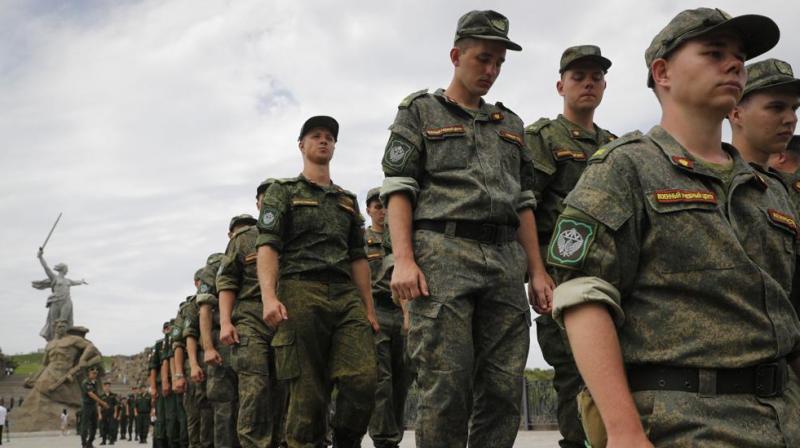
File photo of Russian army soldiers marching during an action in support for the soldiers involved in the military operation in Ukraine. (Photo: AP)

On the 5th of April earlier this year, while leading the debate on the Russia-Ukraine crisis in the Lok Sabha, I had prophesied that the aggression unleashed on February 24, 2022, by Moscow on Kyiv may not end well for the former.


With referendums now being conducted in Russian occupied areas the self-styled Donetsk (DPR) and the Luhansk People’s Republics (LPR), which Russia recognised as independent just before the aggression and Russian-installed administrations in the Kherson and Zaporizhzhia regions to legitimise an illegal occupation, these seemingly farcical exercises in democratic expression are  comical if they would not have been tragic.

The announcement of partial mobilisation through conscription that has created consternation among young people in Russia after Ukraine took back 9,000 square kilometres of its territory in the south and northeastern blitzkrieg in the Kharkiv region the war could truly be at an inflection point.

Russia on the backfoot?

The recent Ukrainian offensives have taken back Kupyansk, an important rail head, and Izium, a major logistics base for the Russians. The Russians had to pull back thousands of troops from the Kharkiv region. The Russian response to these reverses is predictable: “We are moving troops from these areas to  reinforce our operations in Donbas.”

A similar justification was trotted out for withdrawing forces from Kyiv earlier. Ukraine’s gains have surprised most. Yet, many had predicted this would happen. Even with an overwhelming superiority in weapons and ammunition, Russian troops do not seem to be sufficiently blooded in combat except for their elite troops and militias of the Chechen strongman Ramzan Kadyrov.

Imperial hubris

The mandarins in the Kremlin want to model themselves on Peter the Great — known for his expansionist wars in the 18th century. To buttress this self image rhetoric has been deployed that harks back to “reclaiming” lost lands and past glory.


The war in Ukraine is thus seen by Kremlin not as a war, but a mere “military operation” to reclaim what belongs to Russia. In their vision, Ukrainians, Russians and Belarusians are but one people, a Slavic nation stretching back to the time of Kievan Rus. However, Ukraine and even Belarus for that matter have a different perspective about both their history and sovereignty. Unfortunately, the Russian vision of the Slavic lands precludes it from acknowledging Ukrainian sovereignty. Ukraine must be kept under Russian influence, come what may.

These ambitions in Ukraine tie up with the overarching goal of making Russia a pre-eminent Eurasian power. A position that it still believes it currently occupies but feels threatened by Nato’s eastward expansion. In fact, it is no stretch to argue that the casus belli for the current crisis was Russia’s apprehensions  about  Ukraine joining Nato, though that process is itself both convoluted and time consuming and Moscow is well aware that between an expression of intent and actual membership there is a considerable time lag.

Undoubtedly Nato’s three-wave expansion since the collapse of the erstwhile Soviet Union in 1991 has tried to whittle down  Russia’s sphere of influence, especially in its near abroad. It sees Nato as a tool for the United States and its allies to continue dominating Europe. This narrative regarding Nato has been critical in Russia’s war rhetoric and in its claims that it had no choice but to violate Ukraine’s territorial sovereignty in order to prevent Nato from coming to its borders. However Moscow miscalculated on how the West would respond?

For, Russia has achieved the exact opposite of what it set out to do. With war fatigue plaguing the US and much of Europe after the two-decade involvement in Iraq, Afghanistan and the broader Middle East and North Africa, Western foreign policy was seemingly in disarray. But Russian actions in Ukraine precipitated a robust response that has consolidated Nato like never before.

Initially, there was cynicism that the West was planning to fight Russia to the last Ukrainian. However Ukraine’s resilience and capacity to resist, consolidate and assault has surprised even a lot of analysts whose sympathies lay with the Ukrainians in the first place. The US has so far given $12.5 billion in military aid while Poland, UK, Canada, Germany. Australia, and Denmark are among the other large donors.

The M-142 High Mobility Artillery Rocket System or Himars sent by the US have been crucial to beating back Russian troops. Similarly, anti-tank weapons, drones, missile systems, and tanks supplied by different Western countries are a testament to how Russia’s offensive has led to the opposite of what Russia set out to achieve.

In the din of strategic affairs and geopolitical considerations, however, one must not forget the larger humanitarian issues in Ukraine. Hundreds of people have been killed and buried in forest graves in Izium, a town now recaptured by Ukrainian forces. There are calls for an investigation into alleged war crimes committed by Russian troops in that town. These allegations follow earlier horrors in Bucha. The European Union has called for a war crimes tribunal to be set up, à la Yugoslavia. Attacks on critical infrastructure and power plants have rendered Ukrainians vulnerable to a harsh winter. And if Russia ends up controlling Odessa and other Black Sea ports, Ukrainians are only looking at further discomfiture.

India’s role

The world must, therefore, urgently push Russia to negotiate and accept the fact that Ukraine is, after all, a sovereign nation. Ukraine’s recent territorial gains, even if ephemeral, should mellow the Kremlin a little bit. In this context, India has a critical role to play. While, undoubtedly, Russia has been an all-weather friend to us, we have also grown closer to the West over the past two decades with a multitude of military and economic agreements. It, therefore, is incumbent on India as a multi-aligned power not to  tell our Russian friends that  they were  in the wrong when they transgressed into Ukraine. If reports about what Prime Minister Narendra Modi ostensibly told President Vladimir Putin that this is not the era of war are correct then the candour is indeed refreshing.

The recent Shanghai Cooperation Organisation (SCO) summit in Samarkand was, therefore, another great opportunity for India to help arbitrate in the issue and make clear its position. Indeed, the difference in Mr Putin’s response to German Chancellor Olaf Scholtz and to Prime Minister Modi could not have been starker. Mr Putin ostensibly told Mr Scholtz that the war in Ukraine was not a mistake. By contrast, he told Mr Modi that he wants the war to come to an end. There is, therefore, much that India can do to help persuade Russia to negotiate a settlement and end this pointless loss of human lives.