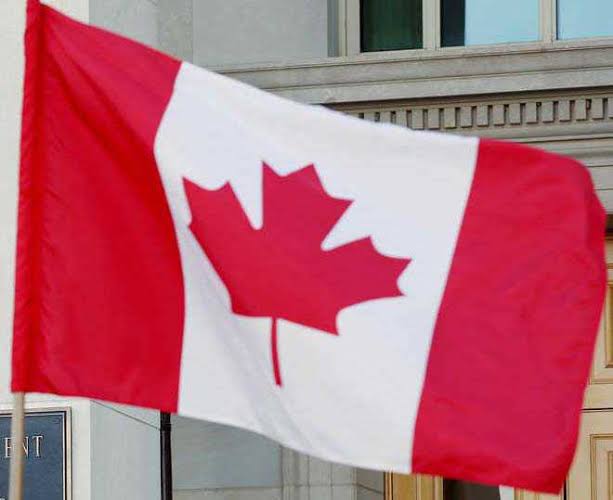
In an updated travel advisory for India, Canada has advised its citizens to exercise a high degree of caution while visiting some states, including Punjab, Gujarat and Rajasthan.
The Canadian update comes days after the Ministry of External Affairs (MEA) advised “due caution and remain vigilant in view of the sharp increase in incidents of hate crimes, sectarian violence and anti-India activities” in Canada.
The updated travel advisory also advised Canadians to avoid traveling to Assam, Manipur and the UTs of J&K and Ladakh due to insurgency and terrorism.
For the states of Gujarat, Punjab and Rajasthan which border Pakistan, the Canadian government cited the ‘presence of landmines’ along with ‘unexploded devices’.
“Avoid all travel to areas within 10 km of the border with Pakistan in the following states due to the unpredictable security situation and presence of landmines and unexploded ordnance: Gujarat, Punjab Rajasthan,” says the advisory.
The MEA had issued an advisory on September 25 warning Indians of hate crimes, sectarian violence and anti-India activities in Canada.
Analysts said the Indian advisory, if repeated again and advertised, would impact student outflow to Canada. Since 2016, the number of Indians in Canada’s international student market has grown by 220 per cent. Indians received 1.25 lakh student visas in 2021. On the other hand, a large number of Canadians travelling to India head for Punjab and Gujarat. But most of them are people of Indian origin and are aware of the actual situation in these states.
A day before India issued the advisory MEA spokesperson Arindam Bagchi had expressed dissatisfaction over the manner in which the Canadian government dealt with India’s complaints regarding the so-called Khalistan referendum held in Brampton.
“We find it deeply objectionable that politically motivated exercises by extremist elements are allowed to take place in a friendly country. You’re all aware of the history of violence in this regard. And the government of India will continue to press the government of Canada on this matter,” he had observed at a media briefing.
Brig Sanjay Sangwan (Retd.) is an Indian Army Armoured Corps Veteran and has commanded an Armoured Regiment and an infantry brigade on the Western Border with Pakistan. * Views are personal.
While preparing for Staff College in the mid-90s, I read an article in Outlook/ Sunday which quoted a Rand Incorporation study on the Indian Army, making two pertinent observations. First was that IA is a victim of Protocol; secondly, IA has too many thinkers and few Doers. It immediately resonated with my experiences as a young Major and immediately became a guiding principle for me. I have tried to be a Doer in my professional and personal life, and in most circumstances of application, it has proved beneficial. From the vigorous execution of operational staff work in the Rashtriya Rifles to the operationalisation of discarded Vijayant tanks on the orders of Gen SS Mehta – Western Army Commander during Operation Parakram, to the receipt and operationalisation of T-90 tanks, including operational benchmarking and technical shortcoming rectification with Rosoboronexport and Thales, to operational planning in Punjab, being a Doer has aided in assessing an issue thoroughly and ensuring its resolution.
Change is the only constant in life, and technology has compressed space and time and synergised diverse fields, thereby hastening the pace of change which demands greater flexibility and adaptability, and we see the impact all around us. Militaries tend to work on traditions and customs, which are proven as it facilitates continuity and integration of new members with a fair degree of assurance of outcomes. Hence it is said that “more difficult than getting a new idea into a military mind is to get an old one out”. It is partially due to our aversion to change and want to remain in our comfort zone and partly due to the human defence mechanism and structure of our neuro system, in which the initial reaction is an emotional one, followed by a few milliseconds of logical analysis. The profession of arms and warfare demands a certain degree of rigidity and unquestioned adherence inculcated by tradition and customs, but modern technology is changing that need too.
In 2004 General SS Mehta suggested a permanent integration of Armoured Regiments and Mechanised Infantry battalions instead of coming together to form combat groups and teams just before an operation. It would have facilitated better integration, joint training during peace, and a better understanding amongst the members. All Brigade Commanders and Commanding Officers (COs) of Mechanised Forces were grouped into syndicates, not per reporting hierarchy, to elicit honest opinions and all senior officers were moderators in the discussion. Most COs of old units of both armoured corps and mechanised infantry were somewhat sceptical of the proposal, fearing a loss of heritage, customs, and traditions. Our syndicate supported integration on the understanding that unit names, battle honours, traditions and customs will not be affected, nor will their heirloom be taken away. On the other hand, living together, sharing everything, and training together will result in greater integration and professionalism.
I dare say our syndicate leader was from one of the most decorated and illustrious units of the Army. During the discussion, the house seemed divided, and as a leading supporter of integration, a challenge was thrown to me if I was willing to try exchanging a subunit for a month. I accepted it immediately though mine was a very young regiment, having been raised in 1984, while the unit I was exchanging a subunit with was an old one raised in 1887 and with an illustrious history, battle honours and war trophies. Their mess was a veritable museum. Both units were sent across a subunit each; lock, stock and barrel and trained as new entities for a month. The little confusion we faced was in the maintenance and repair aspects due to an increased inventory of spares and broader technical expertise, which too settled soon.
Although the trial seemed successful, it had to be shelved, given continued resistance to change. Interestingly, one officer who had voiced an opinion against the integration then changed his view 15 years later when he was a corps commander and had been exposed to the Integrated Battle Group concept. Some changes need to be experienced for acceptance.https://934cc8d3525b12227b1d6f75e2079051.safeframe.googlesyndication.com/safeframe/1-0-38/html/container.html
The veteran’s group has demonstrated great opposition to the Agniveer and now to the removal of colonial-era markers. Resistance as the first response is predictable. I, too, had initially written against Agniveer, but as I considered its implications from a broader national perspective in the country’s current environment and did not limit myself to a military standpoint, I came to see that the benefits outweighed the risks, including for the military, and wrote a second article supporting it a few days later. In a nutshell, only the military can complete the mission for the desired changes.
Eventually, I reduced the understanding of the variations in responses to three variable factors impacting the cumulative view. These are a ‘Combined Pol-Eco-Social Perspective’ (P) with a Global/ National perspective on the higher end and a purely Military/ Local perspective on the lower end. The second factor impacting is the ‘Personal Inclination’ (I) of the commentator, with the two extremes being Aggressive and Passive. The third factor influencing the commentator’s final view is his ‘Selected Depth of Understanding.’ (U) With over three decades of experience in uniform, all veterans have a detailed understanding of most military issues; however, his personal experience makes him predisposed to accept or resist the proposed change, and he chooses issues accordingly, hence the ‘Selected Depth of Experience.’ An interactive combination of these three positions gives the final position in support of or against the proposal.
I have made a simple model explaining it as given below. There can be eight blocks or positions with varying combinations of the three factors. Block 3 represents the Aggressive view supporting the policy, while Block 4 represents the most vocal resistance. Blocks 1 and 2 are somewhat hesitant voices. 5 and 6 are loud but casual, while 7 & 8 are subdued views. It is not doubting the competence or experiences of the writer but indicates the position his beliefs make him take. Like most life lies in shades of grey and not in pure black or white, this policy would have a few solid points and possibly a few weaknesses too. A lot would depend on the diligence of execution and reducing gaps between expectations and delivery. That lies mainly in the hands of the serving people, regimental centres, units and formations. The initial response of the youth is quite encouraging. https://934cc8d3525b12227b1d6f75e2079051.safeframe.googlesyndication.com/safeframe/1-0-38/html/container.html
Since the proposed changes influence the known strength of IA, it raises a valid question on what constitutes Heritage, Customs and Traditions. The best traditions inherited from the British are the Regimental System and its corollary, ‘the Regimental Spirit,’ according to Gen Hanut Singh, the leader of mechanised warfare in India. It is this spirit which binds disparate people and disparate communities into one close-knit family. And these ties endure, not only while in service but beyond that into retirement. The Regiment and the Regimental Spirit are great heritage; it is this heritage we must nurture, for, as the Regimental spirit is alive, so long will the Regiment live.’ At the core of this spirit is trust and bonhomie amongst all ranks.
The Oxford dictionary defines heritage as the traditions, qualities and culture that have existed for a long time and have great importance for the country. On the surface, the Indian cultural legacy seems to be older, more abundant, and more robust than the history of units and formations; therefore, the move essentially entails shifting to the broader Indian heritage. Here it pertains to the units that form the operational Army’s primary block. Like any other organisation, army units have an internal environment and culture. Subject to the ethnicity of troops, customs and traditions may vary a bit. But the result is an environment of professionalism, bonhomie and trust weaving all personnel into a close-knit family, which continues post-retirement and for generations through sons opting for the same unit because of an assurance that their interests will be looked after. The Army, despite its hardships, offers one of the most honourable, clean and attractive life in the country with a good remuneration package.
Even a young regiment like mine boasts of three generations having served, and more definitely would come. That results from a bond built amongst the members during peacetime, which gets reinforced during operations. Getting an opportunity to go in for operations is a matter of chance and multiple other factors, but that does not imply that units not exposed to operations aren’t professional or are any less potent. Rashtriya Rifles is a proven case. Even in peace, the military has its means of assessment of a unit’s efficacy through exercises, inspections and impromptu tasking, apart from the performance analysis of other peacetime activities like sports, aid to civil authorities, disaster relief operations and other administrative activities. Taking an example of my own Regiment, we haven’t had an opportunity to go into operations being a young tank regiment, but we have benchmarked the T-90 performance, which is yet to be improved upon, and I am sure in the event of war, we will emerge victorious.https://934cc8d3525b12227b1d6f75e2079051.safeframe.googlesyndication.com/safeframe/1-0-38/html/container.html
Battle honours and awards add to honour and pride but can traditions like crests and names of British royalty or officers be critical to the morale and self-worth of the units? Likewise, do glamorous uniforms add to morale? Till the 80s, the Quarter Guard standard, which was largely drill, paint and polish, used to be an essential component of annual inspections, but by the 90s, it was changed to working dress instead of ceremonials and then even combat dress and finally the visit to Quarter Guards by the inspecting officer almost stopped since they had no material impact on unit’s operational or administrative efficiency.
Similarly, Dinner Nights in Officers Mess was a significant event but gradually shifted focus to mobilisation and operational aspects. Our Corps Commander, in 2007, mobilised our Division HQ and deployed us tactically for the annual inspection. His logic was simple, if the HQ can mobilise in time and be functional for 72 hours, then administration and logistics are in shape. In 1956 when words of command for drill were being changed to Hindi from English, there was lots of resistance, but today Hindi words of command come naturally to all men in uniform.
Traditions like glamorous uniforms, shiny Quarter Guards, Beating the Retreat, and British names do not serve any functional purpose today. Maintaining all these is a burden in today’s hectic environment in terms of effort and resources. It doesn’t mean we don’t maintain them, but they could be given an Indian identity based on unit, regiment, or corps heroes. Europeans have given up these and have simple uniforms with badges of rank and other embellishments made of cloth that are maintenance-free. https://934cc8d3525b12227b1d6f75e2079051.safeframe.googlesyndication.com/safeframe/1-0-38/html/container.html
The focus has to shift from appearances to greater functional efficiency. There are two broad styles of command, authoritative (autocratic) based on legal authority was preferred by the British commanders to govern the armies comprising poor native soldiers as it suited them better, and glamour was an inherent part of it. Post-independence and with Indian officers replacing the British, the Autocratic style gradually was replaced by the Inspirational style of the command executed through personal example and leading from the front.
There should be just two uniforms to maximise functioning – the Combat Dress and an Office Dress that may be worn in the mess. Of course, a regimental games dress is necessary. Aspects like Army Law may be tweaked for the odd technical lacuna, but the essence shouldn’t be tinkered with, or else it will become like Indian Penal Code – ineffective. Battle Honours such as 1857 may be replaced since it is now considered the First Battle of Independence, but others must survive, along with regimental histories and war trophies/relics gained by forebears of units by sheer bravery and determination.
Shifting parades like the Army Day parade to new venues every year would encourage the development of these second and third-rung cities and expose newer segments of the populace who have had nil or very little exposure to the military.
More important is to make it a participative exercise and let the units and regiments/ formations decide on the changes they deem fit. It would also make the entire process better accepted and facilitate smooth implementation.
Manoj Joshi Distinguished Fellow, Observer Research Foundation
According to the dictionary, ‘red herring’ is something that distracts or misleads attention from a much more important subject. It seems to clearly describe the current government’s defence policy. Where there are important issues, such as the continued lag in the modernisation of the military, its budgetary shortfalls and the strange refusal to appoint a CDS in succession to Gen Bipin Rawat, the debate is being conducted on how to ‘de-colonise’ the Indian military.
Doctrines are not about nationalism, but about winning a war, and what matters is how successfully you can adapt to the state-of-the-art.
Having fought several wars in defence of India since 1947 and sacrificed thousands of lives, the Indian military shouldn’t need to prove its Indian-ness, but it is being made to do so. The tone was set in a March 2021 speech of the Prime Minister to the meeting of the military’s Combined Commanders held at Kevatia, Gujarat. The PM called for the enhancement of ‘the national security system’ not only in acquisitions ‘but also in the doctrines, procedures and customs practiced in the armed forces’.
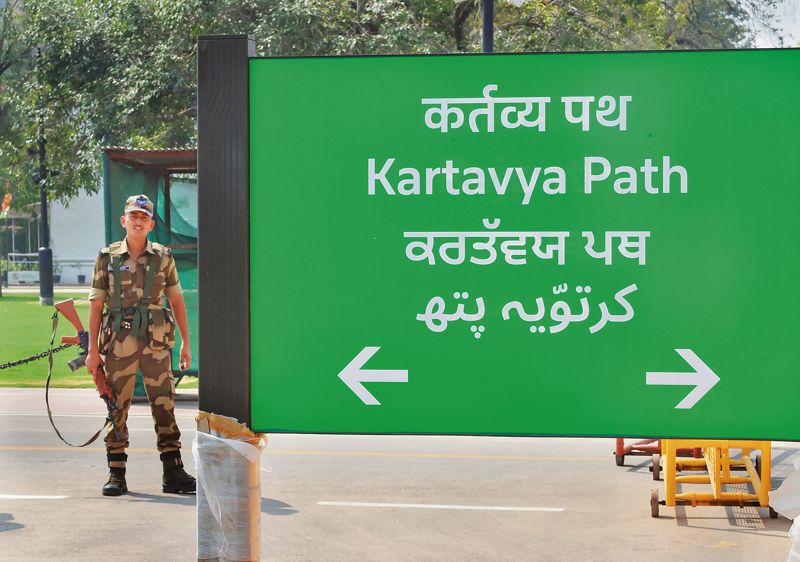
Last week, according to reports, the Army’s Adjutant-General, Lt Gen CB Ponappa, reviewed regulations, policies, and practices from the colonial times with a view to changing them. If Rajpath could give way to the Kartavya Path, the Army review could lead to a wholesale change of names of units, establishments, roads and parks that are named after British commanders.
Now, the PM’s call for promoting indigenous systems by the military is unexceptionable and indeed been the policy of all governments since the time of Nehru. Given their nature, there are some military systems that India simply must have based on its own design and development. But we know that even, as of now, we are only taking baby steps in creating a viable military industrial complex.
Indigenous systems are the key to the second issue flagged by the PM — desi doctrines. Platforms and weapons shape doctrines and this was evident in the use of elephants by Indian rulers and their infirmity was evident when confronted by the horse and mobile artillery of the invading Mughals. The Indian way of war, dependent on the elephant and a mass of soldiery, was no proof against the tactics of manoeuvre and deception. Doctrines are not about nationalism, but about winning a war, and what matters is how successfully you can adapt to the state-of-the-art.
But before that, there is another important issue here. Our dependence on imported equipment has shaped our doctrines as well. The Army Plan 2000 was built around Soviet-era tanks, BMPs and mobile air defence systems which they had developed for use in the plains of eastern Europe. Unless we have the ability to design and develop our own weapon systems, it will not be possible to have Indianised doctrines.
We can adapt some systems for our use, but it is not an optimal solution.
Just how difficult things are is evident from India’s efforts to develop the GTX Kaveri jet engine that was to be optimised for the ‘hot and high’ conditions Indian fighter jets are expected to fight in. Unfortunately, this engine remains in the works after nearly 40 years.
Sadly, these are not the issues that are preoccupying our armed forces and their political bosses. The government of the day is content to wrap the flag of nationalism around itself, as it did in pushing the Navy to introduce Shivaji’s seal in its new ensign. On the other hand, it has yet to authorise a follow-up on aircraft carrier to the Vikrant. Likewise, it is worked up over the colonial origin of our military, but is doing little to appoint a CDS who is also the head of the crucial Department of Military Affairs in the Ministry of Defence and must lead the much-needed systematic reform process.
Rewriting history is not the same as actually changing it. Though it may not matter to our latter-day nationalists who are trying to insert themselves into the annals of the national movement, history and myth are two different things. The former does involve the process of determining facts through a variety of processes, including numismatics, archaeology, epigraphy, contemporary narrative, travellers’ accounts, and so on. While the victor has an advantage in writing history, there are enough instances of historical detective work to provide a correction. Like in instances of crime, the historical record is not easily obliterated.
Unlike the People’s Liberation Army or the Israel Defence Forces, the Indian Army does have a history that goes back to the 18th century. Like it or not, it was involved in the colonial conquest of India, a process that took roughly a century.
If indeed Modi and the BJP find colonial history unbearable, they could start with doing much more substantial things, like eliminating the British imprint on our penal code, our police service, and doing away with their ‘favourite’ law — that of sedition.
For India to have wiped the colonial slate clean would have required a revolution of the Soviet and Chinese type where millions of the old elite were simply killed and hundreds of thousands fled. We are lucky we did not have to go through that bloody process. We had the benefit of picking and choosing what was best for us, and, by and large, we have done so.
What is happening now is the wanton use of a red herring of colonialism which comes on top of the misguided Agnipath. With active fronts facing China and Pakistan, India cannot afford to unbalance its forces. But that is what the current policies will end up doing.
Army boosting surveillance, fire power capability along frontier with China
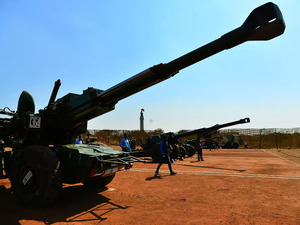
The Army has significantly bolstered its fire power along the frontier with China by deploying a range of rockets and artillery weapons and plans to procure an array of additional systems, including 100 K9 Vajra howitzers and UAVs, to augment combat prowess. The Artillery units of the Indian Army already deployed K-9 Vajra Tracked Self-Propelled Howitzers, ultralight M-777 howitzers, Pinaka rocket systems and Dhanush gun systems. Sources in the defence establishment said the Army plans to equip its Artillery units along the Line of Actual Control (LAC) with Unmanned Aerial Vehicles (UAV) with a range of up to 90 kms. “We are looking at procuring UAVs having a range of 15-20 kms as well as those having capabilities to carry out surveillance at a range of up to 80kms having an endurance of four hours,” said a source. At present, almost all UAVs in the Army’s inventory are being operated by the Army Aviation units. The sources said the Army is set to procure a new batch of 100 more K9 Vajras howitzers, in addition to 100 such guns ordered in 2017. “The Defence Acquisition Council has cleared the proposal for ordering 100 more K9 Vajras. The Request for Proposal (RFP) will be issued soon,” the source said. The K9 Vajras were originally procured for deployment in deserts, but following the eastern Ladakh standoff, the Army deployed a significant number of the howitzers in that high-altitude region. The sources said minor adjustments were made for deployment of the tracked howitzers in eastern Ladakh. “We are also procuring winterisation kits so the howitzers work in sub-zero temperature,” the source said, adding the Vajra guns are roaring in high altitude area along Northern borders. The sources said the Army is also in the process of procuring Advanced Towed Artillery Gun System, commonly known as ATAGS, and Mounted Gun Systems (MGS). PTI
India peace-loving, but not afraid of war: Rajnath
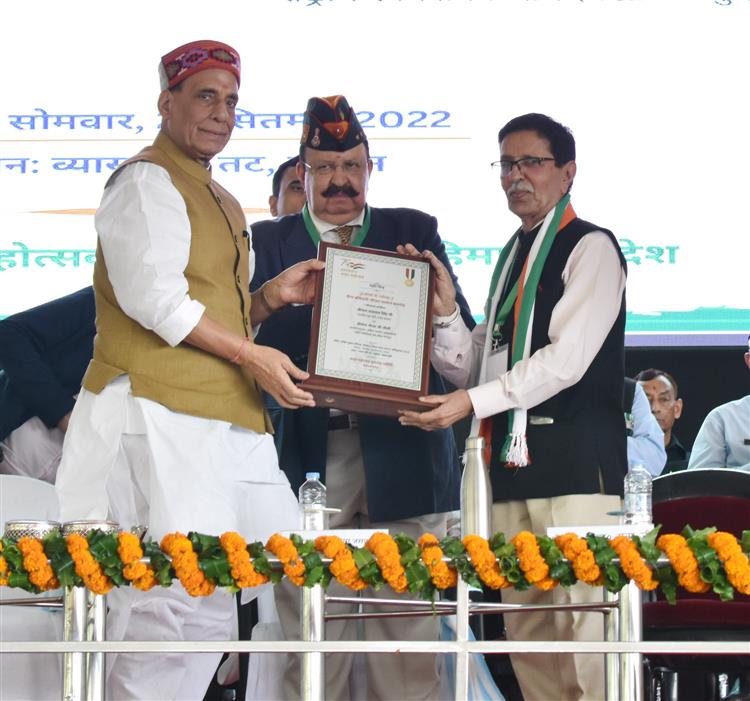
Defence Minister Rajnath Singh honours Capt Vikram Batra’s father at Dehra in Kangra district on Monday. Photo: Kamaljeet
Union Minister for Defence Rajnath Singh today said, “India is a peace-loving country but it should not be mistaken that we are afraid of war. India has never attacked any country, nor has it captured an inch of foreign land. However, if any attempt is made to disturb harmony, a befitting reply will be given.” The minister, while addressing a rally of ex-servicemen in Kangra, said, “At a time when we were dealing with Covid, we faced tension on the northern front with China. The courage of our soldiers during the Galwan incident proved that no matter how big the power is, India will never bow down.” He felicitated the families of martyrs of armed forces hailing from Himachal Pradesh at a ceremony organised at Badoli in Kangra district. He paid tributes to Param Vir Chakra (PVC) awardees Major Somnath Sharma (1947), Lt Col Dhan Singh Thapa (1962), Captain Vikram Batra (1999), Subedar Major Sanjay Kumar (1999) and Maha Vir Chakra awardee Brig Sher Jung Thapa (1948). He said their names are etched in the hearts of every Indian for their unmatched bravery. On the 2016 surgical strikes and the 2019 Balakot airstrike, Rajnath said India’s new strategy against terrorism has broken the back of those who tried to attack unity and integrity of the nation. He said, “Earlier, India was an importer of defence equipment. Today, it is one of the top 25 exporters in the world. From about Rs 900 crore eight years ago, defence exports have crossed Rs 13,000 crore. We are hopeful that the exports will touch Rs 35,000 crore by 2025 and a target of Rs 2.7 lakh crore worth exports set for 2047 will be met,” he said. He said the post of CDS and the Department of Military Affairs are some of the major reforms taken to bolster the national security.
R USSIAN President Vladimir Putin is an old master of the strategy of “escalating to deescalate”. It means that by threatening a nuclear retaliation, he plans to continue fighting a long war of attrition to serve his strategic agenda. These could be: First, prolong the conflict to wear down the Ukrainian resistance, as he steadily absorbs the border regions of Donetsk, Luhansk, Mariupol and Kherson, with a referendum followed by annexations. These territories give Russia the land buffer against a NATO-EU-led expansion towards Russia’s borders. Secondly, it shows the impotency of the US and NATO, whatever the sanctions. In fact, the rise in Russia’s industrial output in recent months has foxed western analysts. Thirdly, as long as this conflict continues, Russia can continue to sell its massive gas reserves — on which there are no sanctions yet, for EU’s sake — and make tidy profits over it. Finally, the US in particular also is in no hurry to end the conflict for its own strategic reasons. And it is for these reasons, the conflict in Ukraine isn’t likely to end soon, even as the expectations rose that Russia would sue for peace after the recent Ukrainian counter-offensive and its success around Kharkiv. Few, if at all, had explained why the Russians allowed their forces to be pushed back or did they pull back as part of a bigger battle plan of Moscow? One cannot rule out that the Russians had pulled back to regroup their forces for another fight elsewhere on another day. It is for this reason that President Putin has ordered the largest ever post-war mobilisation of three lakh reservists. From the early days of Russia’s offensives in Ukraine, its approach smacked of hubris, an excessive confidence in their ability to steamroll over Ukraine. However, Ukraine’s defences were strengthened by its ability to quickly mobilise its population and its reservists, that more than matched the numbers of Russian troops on its land, and additional US and NATO troops — over 1,00,000 — deployed in various forms in Ukraine and on Russia’s borders with the NATO. But it is the reported deployment of an estimated 100 nuclear gravity bombs in NATO bases that Russia has had eyes on, and, hence, the threat of using nuclear arsenal by Putin, when he renews his offensive next month before Europe’s harsh winter sets in. Here, it is important to understand the essentials of the nuclear strategy. First, the history of nuclear threats is based on non-use of nuclear weapons. And the only occasion nuclear weapons were used, as was the case in August 1945, was done with the devastating effect on Hiroshima and Nagasaki in Japan. It led to Japan’s surrender and checked Soviet plans to capture Japan in World War-II. Moscow hasn’t forgotten that. Secondly, the use of nuclear weapons is not the first option of a nuclear-weapon state. It’s in fact their last option, when their survival — as a nation-state — is at stake. And even then, as massive nuclear bombings would lead to a simultaneous counter-force response from the other side, the fear of mutually assured destruction is enough to withhold even a deranged dictator from using his nukes. But finally, there is still the possibility that ‘tactical nukes’ — small bombs to be used in battles — could be used to prevent major reverses in battles. Here the warnings by the US may not stop the Russians, because the Americans hadn’t in the past enforced their threats if their ‘red line’ was crossed, as was done with the use of chemical weapons in Syria during Obama’s days. So, Russia isn’t likely to buckle down that easily. For one, a super power of the size of Russia with the scale of resources it has — being the largest producer of oil and gas — outside the Organisation of the Petroleum Exporting Countries, can last out much longer than the US expects. Remember, the US was stuck in Afghanistan for two decades and is still raring to go. The immediate impact of the US-led sanctions was mitigated by the Russian Central Bank with capital control measures and hikes in interest rates. It is estimated that the Russian state controls more than 60 per cent of the large businesses that influence the GDP and 25 per cent of its MSMEs. This imbalance does restrict growth, but it also insulates the economy in a crisis. And as the Russians have faced financial challenges in the past — this is their fifth since 1991 — they could tide over this one for longer than the West assumes. Most importantly, President Putin still holds the keys to the “gas supplies” to Europe and gives them the taste of a freezing winter, regardless of the claims of the EU that they’ll be prepared for a gas supply crunch by early December. In reality, the Europeans are buying gas from wherever they can, even China, as China doesn’t come under the sanctions initiated by the US. So, Beijing buys Russian gas and is selling it with a tidy profit in containers to the Europeans, since the Chinese economy has currently slowed down, and China has surplus of gas for now. By knowledgeable accounts, Russia has made over $175 billion with the sales of oil and gas since the sanctions were announced. Finally, what is less talked about is why the US wants to let the conflict in Ukraine continue. For one, its aim is to deplete Russia’s military capabilities, and thus decrease the threat to Europe, since the leadership of Europe has given the US a new purpose in geopolitics after its humiliation in Afghanistan. The other is that the conflict in Ukraine (being fought by proxy) unites the Americans and spares them the return of body bags, as they witnessed in the past two decades of wars in Asia. And finally, it gives the US’s arms industry a new market — in Ukraine and Europe — to arm and test their new weapon systems, with sales and lend-lease debt agreements. In short, the US has turned the Cold War strategy on its head: earlier, the purpose was to exhaust the Soviet Union economically with an arms race; and now, it is to exhaust the Russians by getting them to pour their man-machine mix into the quagmire that is Ukrain
ACAVALRY veteran, I respect change but get distraught when, at times, our armed forces violate their understated fail-safe ‘hastening slowly’ rule in invoking radical change. The need to break free from our colonial past is incontestable but how much is irrelevant needs a sense-and sensibility-driven approach. ‘Hastening slowly’ can be re-positioned from being a smart oxymoron to a status wherein our haste to dump the past doesn’t return to haunt us. These conflicting thoughts were temporarily overwritten in my mind by the superbly choreographed spectacle of Queen Elizabeth’s earthly journey ending as her coffin was carried to St George’s Chapel for burial by her scarlet-uniformed Grenadier Guards, escorted by her resplendent, mounted Household Cavalry. Draped in her Royal Standard, her coffin shorn of its symbols of royalty and power — her bejewelled orb, sceptre and Koh-i-noor-embellished crown — a poignant, haunting, traditional lament, ‘Sleep, dearie, sleep’ was played out by Paul Burns, her Scottish Royal Bagpiper. As the lament faded away, the lone piper symbolically walked out of the chapel… Elizabeth’s story had ended. My mind did a royalty redux as I recalled the shock and awe when I, a Short Service Commission (SSC) officer, was posted to the National Defence Academy (NDA). It had received orders to accept SSC officers but rigorous ‘performance appraisal’ of those posted was imperative; an unprecedented change inviting mutual apprehension. In the hard work that followed, I saw the first of three chances to clear the prestigious, tough-as-nails Defence Services Staff College (DSSC) examination disappear: I was on ‘probation’, I was told. When the second chance came, it was announced that Queen Elizabeth II was visiting the NDA for the 65th Course Passing Out Parade. The Commandant, Rear Admiral Ravi Sawhney from NDA’s first batch — a handsome, florid man in knifeedged ceremonials, sword, aiguillette and medals — made it clear in the Queen’s English that the parade would be memorable not just for the visiting royalty but also in making a statement with a performance of ‘NDA’, not ‘Sandhurst’, standards by proud cadets of a resurgent India. I didn’t bellyache. Officers don’t. That pleasant winter day of November 21, 1983, the Queen’s gracious words of praise and endearment for the meticulously-choreographed parade and linked ceremonial/social events made us walk tall. ‘They’ve set world standards’; so the Queen implied, as did proud Air Chief Dilbagh Singh who’d reviewed the parade. The bursting-with-pride cadets marched out on Scot poet Robert Burns’ poesy/music of Auld Lang Syne…. I followed their lead, clearing the DSSC exam on the last chance. The Queen has departed. Auld Lang Syne has departed, as has ‘Abide with me’. Our colonial past, however, needs time before deciding what’s worth trashing or retaining. Hasten slowly.
(The writer is author of Himalayan Stalemate: Understanding the India China Dispute)
INDIAN historian John Lall once observed, “Perhaps nowhere else in the world has such a long frontier been unmistakably delineated by nature itself”. How then, did India and China defy topographical odds to lock into an impasse that was ultimately tested on the battlefield?
In retrospect, certain fundamental factors can be identified that framed the context of India-China interactions in the 1950s. Despite attaining a bloody independence in 1947, a truncated India viewed itself as the inheritor of the legacy of British India’s frontiers. While the Nehru regime was acutely aware of the changed geopolitical context, its perception of the northern frontiers was based on the institutional memory of a century of frontier making by British strategists.
Let’s briefly deconstruct this legacy. It is now accepted that British India’s frontier policies had failed to produce a single integrated and well-defined northern boundary separating the Indian subcontinent from Xinjiang and Tibet. The legacy, however, was more nuanced. In the eastern sector, the British had largely attained an ethnically and strategically viable alignment via the 1914 Simla conference of India, China and Tibet, even though the Chinese repudiated the agreement itself.
The underlying rationale for British policy was to carve a buffer around an autonomous ‘Outer Tibet’ not very dissimilar to the division of Mongolia in 1913 that Russia and China had agreed upon. While this policy of an attempted zonal division of Tibet never materialised, the fortuitous byproduct of this episode was the delimiting of a border alignment between India and Tibet that mirrors more or less the de facto position today. It is instructive to note that China’s principal concern back then was not the precise boundary between Tibet and India but the borders and the political relationship between Tibet and China.
In contrast, the legacy of the western sector was more blurred. This sector, the crux of the dispute, was never formally delineated nor successfully resolved by British India. The fluid British approach in this sector was shaped by the geopolitical and geoeconomic goals of its empire, and was never designed to meet the basic requirements of a sovereign nation state.
NEW POWER EQUILIBRIUM
There were almost a dozen attempts by the British to arrive at exactly where the boundaries should lie. Most, however, were exploratory surveys by frontier agents reflecting British expansion in the north-west frontiers rather than a concerted pursuit of an international border. And, they varied with the then geopolitical objectives of London, vis-à-vis the perceived Russian threat. For instance, when Russia threatened Xinjiang, some British strategists advocated an extreme northern Kashmiri border. At times, opinion favoured a relatively moderate border, with reliance even being placed on Chinese control of Xinjiang as a buffer against Russia.
The only serious, albeit futile, attempts by the British to map the border east of the Karakoram pass with China were made in 1899 and 1905. The Chinese never responded to these proposals. Interestingly, Alastair Lamb’s 1973 study argues that the 1899 line when plotted on a modern map rather than on one relying on surveys done in the nineteenth century would place the eastern portion of Aksai Chin, including the area covering the Xinjiang-Tibet road, in China.
Areas (in red) claimed by China in Ladakh, Himachal Pradesh, Uttarakhand and Arunachal Pradesh
In 1947, no definite boundary line to the east of the Karakoram Pass existed. On the official 1950 India Map, Kashmir’s boundary east of this pass was expressed as ‘Boundary Undefined’, while the 1914 McMahon Line was clearly shown as the boundary in the eastern sector. The only two points accepted by India and China was that the Karakoram Pass and Demchok, the western and eastern extremities of this sector, were in Indian territory. Opinion differed on how the line traversed between the two points. Thus, in effect, India and China were faced with a ‘no man’s land’ in eastern Ladakh, where the contentious Aksai Chin lay.
On May 18, Russian unmanned aerial vehicles (UAVs) and artillery reconnaissance near Podgornoe in Sevastopol detected the firing position of the U.S. supplied 155mm the M777 towed howitzers firing position of the Ukrainian Armed Forces (UAF). The UAV operators fired a missile at the firing position causing damage to several guns. Being a lightweight gun, the UAF gunners quickly towed the M7772A guns into a wooded area to conceal. A video released by the Russian Ministry of Defense, shot by an ariel platform, shows these concealed guns were destroyed by artillery fire, possibly a multiple rocket launcher (MRLS). The failure of the M777 gun is too early to predict. But it does show a pattern of failures of the American weapons, both operational and in doctrine.
Javelin was supposed to burn all Russian equipment
The United States has delivered about 7,000 Javelin anti-tank missile systems (ATGM) to Ukraine. According to the American Insider Magazine, the ATGM stocks in the U.S. reserves were reduced by about a third and now 20-25 thousand sets are left. At the same time, the fighting in Ukraine showed the insufficient effectiveness of this so-called man-portable weapon.
The FGM-148F Javelin anti-tank missile system was developed in 1989 to destroy armoured vehicles and low-flying low-speed targets like helicopters, drones and light aircraft. An infrared homing head (GOS) detects the target and ensures its capture at any time of the day. After firing the Javelin missile, the shooter can immediately change his position to avoid being hit by return fire.
The target is hit by a tandem HEAT warhead capable of penetrating 600-800 mm of armour. The rocket hits a tank or other armoured vehicle in the upper part, where the armour is the weakest.
Javelins did live up to a fraction of its fearsome reputation as it managed to knock off an unspecified number of tanks. However, it was the Ukrainian ATGM Skif or Stugna-P, developed by the Luch Design Bureau, that did the most damage. While it should be a surprise for most analysts, Ukrainian soldiers are well trained in Skif ATGM handling. N-LAWs from the United Kingdom were comparatively better performers as they were lighter to carry around in urban combat. Another issue was the limited space, and tall buildings interrupted the Javelin firings. One unverified issue is that the Javelins couldn’t distinguish the targets in the urban scenario. It was not a surprise for Ukrainians as one of the opposition members, just before the war, had stated that junk was being poured into the country, and Skif’s could perform better.
The problem with Javelins is both tactical and doctrinal. The Ukrainian Prisoners of War state that the U.S. help was overhyped. The Javelins were either outdated or unkempt and often misfired. The instructors ignored the misfires and gave them basic information on how to fire the missiles. The heavy Javelins were unsuitable for urban combat, as well as in rural and remote areas. In rural and remote areas, the possibility of meeting Russian armour was remote, and the operators were exposed to spying Russian UAVs and helicopters.
The Javelins, which ended up as trophies with the Russians and Donetsk Militia, were termed ‘junk’. In fact, in the initial days of the war, the Russians spoke about the U.S. establishing an office in Lviv to prevent Ukrainians from speaking out on Javelins’ issues.
Russian tankers soon developed tactics against these man-portable ATGM’s. Russians argue that Javelins are weapons for infantry and not for large tanks
After the initial hype, even the Ukrainian propaganda department, which churns out ridiculous statistics, stopped talking about Javelins.
The U.S. assumption that the Javelins alone were enough to burn the Russian armour and military vehicles many times over was busted. Soon the U.S. started dolling out M777 155mm guns as their next doctrinal experiment.
As a side note, the Switchblade 300 loitering munition supplied to Ukraine for anti-armour uses is not much talked about, and the mythical Pheonix Ghost remains a myth.
Stinger Missiles that didn’t sting
Stinger MANPADS, which received fame in Afghanistan, were of very little effectiveness in Ukraine.
Just like the T-72’s on the ground, the Russian helicopters rule the air in Ukraine. There are few videos of Stingers shooting Russian helicopters, but largely they have been ineffective. The Russian MoD released a video of a Ka-52 gunship pilot who explained how to avoid a Stinger.
M777 Howitzers are too lightweight for this war
M777 howitzer represents a new high for the Ukrainian decision-makers as they often said in the past that the 155 mm was the ticket to NATO. Ukrainians used WW II era 152 mm guns before the U.S. donated the M777s. 152mm was the Soviet standard, and 155 mm was the U.K. standard used by the U.S. and NATO. The difference is just 3 mm, and they both fire the similar weight to a similar distance with similar types of explosivesl
The United States has supplied Ukraine with 155-mm M777A2 towed howitzers. In total, 89 guns out of 90 donated were delivered. Some of the guns are already in the Donbas, and a few of them were promptly busted by the Russians today.
On May 7, the Pentagon reported that more than 200 Ukrainian troops were trained to use these howitzers. The deliveries are a part of the $800 million aid package to the Ukrainian Armed Forces. The package includes 180,000 shells for the M777s, out of which 120,000 are reportedly delivered.
The videos and images from the UAF propaganda department show that the M777A2 howitzers delivered by the Americans to Ukraine are a simplified version of the gun, from which the digital fire control system (FCS), which made this howitzer a truly highly effective artillery piece with high accuracy, was removed. In the Armed Forces of Ukraine version, aiming is carried out in the old fashioned way, using optical sights and tables. The Americans removed the FCS from the howitzers, knowing that some of the guns would fall into the hands of the Russian army.
It means the M777 version delivered to Ukraine can’t fire the M982 Excalibur guided round and can’t use the M1156 guided fuze.
As per the visuals from Ukrainian positions, the gun fires M795 High Explosive projectile with M739A1 Point Detonating Fuze and M232 MACS charge, which aren’t the most modern M777 combination. M777 are regular artillery guns but with a lower weight for easy transportation.
It remains to be seen if the M777s will make a difference in the war or will be a myth buried in the Ukrainian propaganda books.
State Stalwarts
DEFENCE MINISTER
Minister Rajnath Singh
ALL HUMANS ARE ONE CREATED BY GOD
HINDUS,MUSLIMS,SIKHS.ISAI SAB HAI BHAI BHAI
CHIEF PATRON ALL INDIA SANJHA MORCHA
LT GEN JASBIR SINGH DHALIWAL, DOGRA
SENIOR PATRON ALL INDIA SANJHA MORCHA
MAJOR GEN HARVIJAY SINGH, SENA MEDAL ,corps of signals
.
.
PATRON ALL INDIA SANJHA MORCHA
MAJ GEN RAMINDER GURAYA ,MADRAS REGIMENT
sanjhamorcha303@gmail.com
PRESIDENT SOUTH ALL INDIA SANJHA MORCHA
COL SS RAJAN BOMBAY SAPPERS,
PRESIDENT UTTARAKHAND ALL INDIA SANJHA MORCHA
COL B M THAPA ,BENGAL SAPPERSS
PRESIDENT HARAYANA STATE CUM COORDINATOR ESM
BRIG DALJIT THUKRAL ,BENGAL SAPPERS
PRESIDENT TRICITY
COL B S BRAR (BHUPI BRAR)
PRESIDENT CHANDIGARH ZONE
COL SHANJIT SINGH BHULLAR
.
.
PRESIDENT PANCHKULA ZONE AND ZIRAKPUR
COL SWARAN SINGH
INDIAN DEFENCE FORCES
DEFENCE FORCES INTEGRATED LOGO
INDIAN AIR FORCE
Air Officer C-in-C WESTERN AIR COMMAND
AIR MSHL S PRABHAKARAN AVSM VM
AOC-IN-C, EASTERN AIR COMMAND
Air Marshal Inderpal Singh Walia
AOC-in-C SOUTH WESTERN AIR COMMAND
Air Marshal Vikram Singh
AOC-IN-C, SOUTHERN AIR COMMAND
Air Marshal J.Chalapati
AOC-IN-C TRAINING COMMAND
AIR MARSHAL SK GHOTIA VSM
AOC-IN-C MAINTENANCE COMMAND
Air Marshal Jagdish Chandra
Flag Officer Commanding in Chief, Western Naval Command
ice Admiral R Hari Kumar, PVSM, AVSM, VSM
Flag Officer Commanding in Chief, Eastern Naval Command
Vice Admiral Sanjay Bhalla, AVSM, NM
Flag Officer Commanding in Chief, Southern Naval Command