














Sanjha Morcha

What’s New

Click the heading to open detailed news

Current Events :

web counter

Print Media Reproduced Defence Related News

Light tanks to guided bombs, defence ministry approves capital procurement proposals worth Rs 84,328 crore

Light tanks to guided bombs, defence ministry approves capital procurement proposals worth Rs 84,328 crore

PTI

New Delhi, December 22

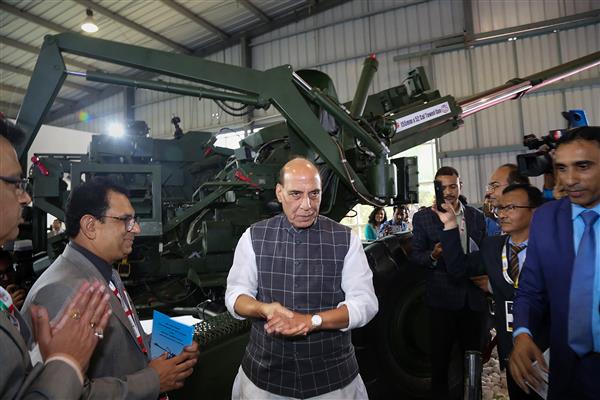
The defence ministry on Thursday approved the procurement of a number of military platforms and weapons, including light tanks, anti-ship missiles and long range guided bombs at a cost of Rs 84,328 crore to boost combat capabilities of the armed forces.

The procurement proposals were cleared by the Defence Acquisition Council (DAC) headed by Defence Minister Rajnath Singh.

The Acceptance of Necessity (AoN) for the procurement came amid a spike in tensions between India and China after troops from the two sides were engaged in a clash along the Line of Actual Control (LAC) at Yangtse in the Tawang sector of Arunachal Pradesh.

Sources said the light tanks and mounted gun system are set to be deployed in high-altitude forward areas, including along the LAC.

The defence ministry said the DAC accorded approval for 24 capital acquisition proposals which include six for Indian Army, six for Indian Air Force, 10 for Indian Navy and two for Indian Coast Guard, adding the total value of the procurement would be Rs 84,328 crore.

It said the proposals include procurement of futuristic infantry combat vehicles, light tanks, naval anti-ship missiles, multi-purpose vessels, new range of missile systems, long range guided bombs and next generation offshore patrol vessels.

The ministry said 21 proposals worth Rs 82,127 crore will be procured from indigenous sources

“It is pertinent to mention that 21 proposals, worth Rs 82,127 crore (97.4 per cent), are approved for procurement from indigenous sources. This unprecedented initiative of DAC will not only modernise the armed forces but also provide substantial boost to the defence industry to achieve the goal of ‘Aatmanirbhar Bharat’,” the ministry said.

It said the procurement for the Army included futuristic infantry combat vehicles, light tanks and mounted gun system, adding they will provide a quantum jump to the force’s operational preparedness.

“Proposals approved also include procurement of ballistic helmets, with enhanced protection level, for our soldiers,” the ministry said in a statement

“Approvals for procurement of naval anti-ship missiles, multi-purpose vessels and high endurance autonomous vehicles will further enhance maritime strength giving a boost to the Indian Navy’s capabilities,” it said.

The ministry said the Indian Air Force will be further strengthened with enhanced lethal capabilities by induction of new range of missile systems, long range guided bombs, range augmentation kit for conventional bombs and advanced surveillance systems.

“The procurement of next generation offshore patrol vessels for the Indian Coast Guard will enhance surveillance capability in the coastal areas to new heights,” it said.

India has been focusing on enhancing the combat capabilities of the armed forces deployed along the LAC following the eastern Ladakh row.


Plea against nod to Sikhs for ‘kirpan’ on flights junked

Plea against nod to Sikhs for 'kirpan' on flights junked

Tribune News Service

New Delhi, December 22

The Delhi High Court on Thursday dismissed a PIL challenging a government notification allowing Sikhs to carry the “kirpan” in domestic civilian flights. “Dismissed”, said a Bench led by Chief Justice Satish Chandra Sharma, which had on December 15 reserved its verdict on the PIL by Harsh Vibhore Singhal. Singhal, a lawyer, had demanded that a committee of stakeholders should be constituted to “apply its mind” to the issue. He had challenged a March 4, 2022, notification by the Centre.


MoD okays proposal for combat vehicles, missiles

MoD okays proposal for combat vehicles, missiles

Tribune News Service

New Delhi, December 22

The Defence Acquisition Council (DAC), the apex decision-making body of the Ministry of Defence (MoD), at its meeting on Thursday approved a proposal to procure 24 major equipment, including longer-range missiles for the Indian Air Force, futuristic combat vehicles and light tanks for the Army and long endurance autonomous vehicles for the Navy.

The acceptance of necessity (AoN) is the first step in the acquisition process of the MoD and is like a greenlight to the forces to frame the tenders for procurement. Defence Minister Rajnath Singh chaired the meet, the MoD said.

These proposals collectively cost Rs 84,328 crore and include six projects for the Army, six for the Indian Air Force, 10 for the Navy and two for Indian Coast Guard.

The Army proposals okayed include futuristic infantry combat vehicles, light tanks and mounted gun system. These will provide a quantum jump to the Army’s operational preparedness. Proposals approved also includes procurement of ballistic helmets with enhanced protection level for soldiers.

The Navy projects include the naval anti-ship missiles, multi-purpose vessels and high-endurance autonomous vehicles.

The IAF proposals okayed include new range of missile system, long-range guided bombs, range augmentation kit for conventional bombs and advanced surveillance systems.


IAF’s critical deficiencies must be addressed on priority: Air Chief

Highlights shortage of fighter squadrons

IAF's critical deficiencies must be addressed on priority: Air Chief

Tribune News Service

New Delhi, December 22

Air Chief Marshal VR Chaudhari today said there were certain critical deficiencies like shortage of fighter squadrons and force multipliers that must be addressed on priority to retain combat edge.

He was speaking at the inaugural function of the 19th Subroto Mukerjee seminar. From an airpower perspective, the IAF will be expected to contribute across the full spectrum of conflict and it needs to evolve into an aerospace power, the IAF Chief said.

“There is a need to develop capability to fight and win future wars. Multi-domain operations and hybrid warfare are here to stay and we must realign and reform to keep pace with technology to remain relevant,” he said. “We must enhance our collective strength by partnering with nations that share common beliefs and values. We must use our image as a stable country with considerable economic heft to forge mutually beneficial relationships and strategic partnerships. It is important we retain our strategic autonomy,” he said. “When we look at the Indo-Pacific region, we see great power politics at play, where an established superpower (US) is increasingly being challenged by an established regional power (China) with global ambitions. The outcome of this great power competition will have repercussions for all major players in the region,” said Chaudhari.


Deadlock persists after 17th round of India-China talks

Corps Commander-level meet held on Dec 20 after 5 months

Tribune News Service

New Delhi, December 22

India and China have not been able to come up with a resolution to end the military standoff along the Line of Actual Control (LAC) in eastern Ladakh.

Also Read

Two sides agree to maintain dialogue

The two sides agreed to maintain stability on the ground. They decided to stay in close contact and maintain dialogue through military and diplomatic channels

Depsang issue raised at meeting

At the meeting, the issues of the Depsang Bulge, a 972-sq km plateau, and troop build-up at the LAC by both armies were taken up. The 16th round of talks was held in July


India, China, Russia abstain on UN resolution on Myanmar


The 17th round of Corps Commander-level military talks was conducted on December 20 at the Chushul-Moldo border meeting point on the Chinese side of the LAC.

A joint statement issued simultaneously by India and China tonight on the meeting said: “The two sides exchanged views on the resolution of the relevant issues along the LAC in the western sector (military nomenclature for the LAC in the eastern Ladakh) in an open and constructive manner.”

“They had a frank and in-depth discussion to work for the resolution of the remaining issues at the earliest which would help in the restoration of peace and tranquillity and enable progress in bilateral relations,” the statement said. In other words, the deadlock continues, sources said. In the interim, the two sides agreed to maintain the security and stability on the ground. The two sides agreed to stay in close contact and maintain dialogue through military and diplomatic channels and work out a mutually acceptable resolution of the remaining issues at the earliest, the statement said.

This was the 17th round of talks since June 2020 to end the military build-up that has occurred on both sides of the LAC since April 2020 with troops, guns, tanks and missiles deployed on either side. The previous round of talks was held in July.

At the meeting, the issues of the Depsang Bulge, a 972-sq km plateau, and troop build-up at the LAC by both armies were taken up. India has suggested a graded resolution and a three-step process to ease the standoff: disengagement of troops, de-escalation of tension followed by de-induction of all troops, weapons and equipment.

Till these steps are completed, Indian troops intend to remain at the LAC, which is un-demarcated on the ground. India shares a 832-km LAC with China in the eastern Ladakh sector.


No VIP passes for Shaheedi Jor Mela

More than 10L devotees to pay obeisance

No VIP passes for Shaheedi Jor Mela

Our Correspondent

Fatehgarh Sahib, December 21

The administration has completed all arrangements for the smooth conduct of the annual Shaheedi Jor Mela. The mela will be held here from December 26 to 28 in the memory of Guru Gobind Singh’s younger Sahibzadas.

An official said no VIP passes would be issued except duty passes. The administration has established night shelters for the pilgrims. E-rickshaws and minibuses will take senior citizens and disabled persons to the gurdwara free of cost, the official added.


TRUE LEGENDS —A VERY INFORMATIVE AND FACTUAL ACCOUNT OF VALOUR AND WAR ,THOUGH A BIT LONG , BUT A VERY INTERESTING READ NEVERTHELESS

(From the wall of Attar Singh Rathee)

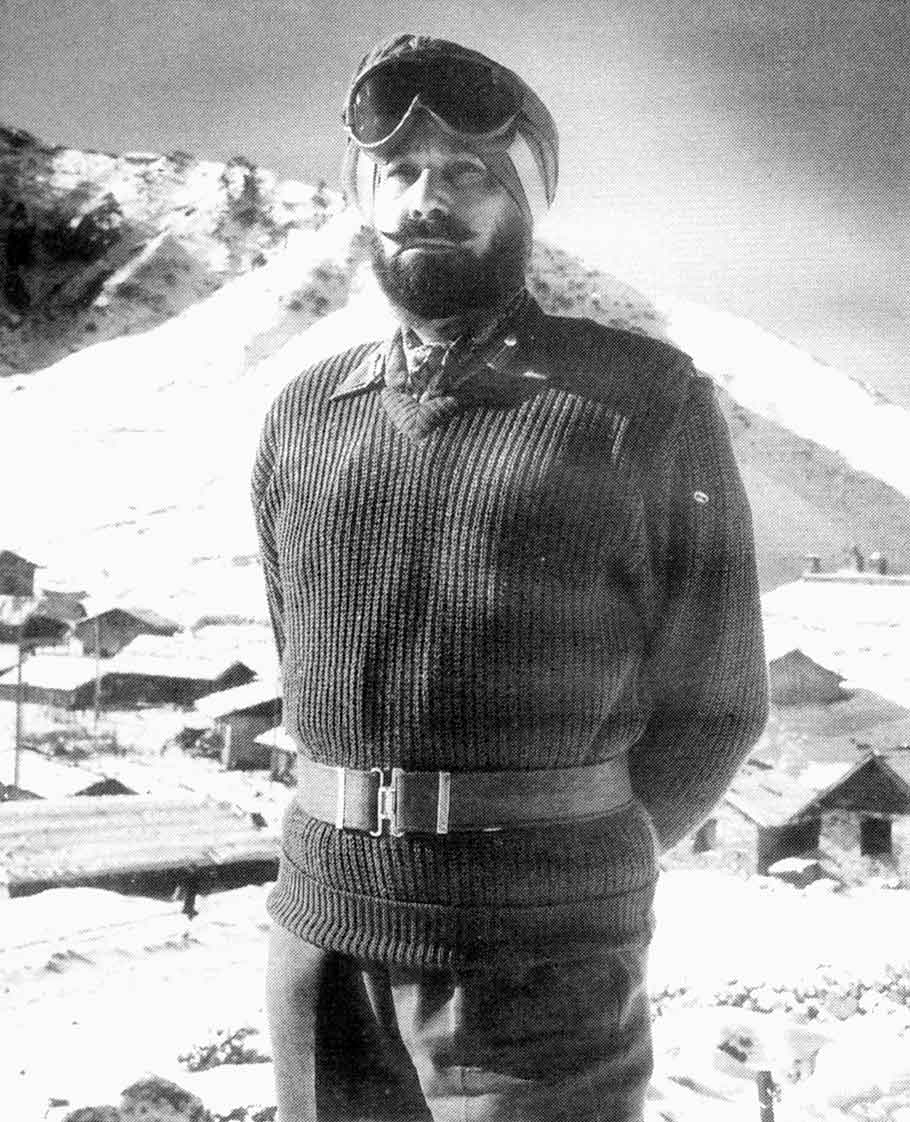
It’s a known fact in history, that in September of 1965 when Pakistan was on the verge of victory in Kashmir with the Chhamb offensive, a three pronged attack on Jammu Akhnoor and Pathankot to cut off Kashmir from the rest of India; one man stood up… Lt Gen Harbaksh Singh the Western Army Commander.


The towering Khalsa, took upon himself to break the defensive mindset, and went on the offensive… thus, for the second time in history after the Khalsa offensive by the legendary Sardar Hari Singh Nalwa against the Pathans in 19th century; the Indian Army went on the offensive… Lahore was attacked.


Since early days, Harbaksh was destined to always save India out of trouble. 13 Years of combat experience with his parent unit 5 SIKH, fighting the Japanese in WWII, Harbaksh had seen it all from capturing posts, to being ambushed, injured and taken as Prisoner of War. By 1947 Harbaksh a senior Military officer and brilliant battle hardened soldier had just completed Staff College at quetta and was ready to take on the higher echelons of the military. As a full Colonel, he was the Deputy Commander of the famous 161 Infantry Brigade in Uri in 1947. He had volunteered to command a unit in battle but was denied as he was a full Colonel (units were commanded by Lt Cols).
During the offensive by 1 SIKH the CO Lt Col Dewan Ranjit Rai got Killed in Action, Harbaksh Singh again volunteered and this time removed a star from his shoulders (for the first time in history an officer demoted himself to lead his men in battle). The battered battalion regrouped and fought like lions under Harbaksh to reclaim Farkian Gali and drove out Pakistanis from the valley.
Harbaksh Singh was promoted as Brigadier in 1948. As the Commander of 163 Infantry brigade Harbaksh again conducted daring operations in Tithwal and captured Tithwal. He at the rank of Brigadier, was awarded Veer Chakra, the third highest gallantry award of India.
In September 1965, the Indian Army went on the offensive with Jalandhar based 11 Corps launched all of its infantry divisions (7th Inf Div, 15th Inf Div and 4th Inf Div) launched towards Lahore and Army HQ Reserve 1 Strike Corps with the elite 1 Armoured Division launched further North Towards Sialkot to not only thwart the Pakistani Juggernaut but also to crush Pakistan feeling of supremacy and regain the pride of the Indian Army licking its wounds from 62 China debacle. Bitter battles followed with both sides fighting even for an inch of land. The Indian Armoured Corps came into its own with destruction of Pakistani counterparts despite having inferior Sherman tanks as compared to the modren Patton Tanks of Pakistan. Legends were created on the battle field with units like 17 Poona Horse, 4 Horse, 3 Cavalry writing history in blood and gold.
The infantryman went beyond the call of duty and beyond imagination to fight with tanks, the likes of Abdul Hamid showed the true colour of the sons of the soil. India regained its pride as not only Pakistani offensives were crushed, but Indians were now ready to capture Lahore. Pakistan however launched another offensive this time towards south Punjab in Ferozpore sector. In Hussainiwala, Pakistan cracked up Indian defences and a crisis developed. The Army Chief Gen JN Choudhary ordered 11 Corps, which was in offensive to withdraw and take defensive positions. Lt Gen Harbaksh Singh Western Army Commander refused, defied the Army Chief and instead ordered GOC 11 Corps to attack, thereby saving Punjab and India from a certain defeat.
Meanwhile in Kashmir, during the progress of operations history was in the making. The Operation Gibralter combined with the Pakistani offensive in Jammu, initially had succeeded due to the surprise and speed. It was a precarious situation as Poonch was threatened. The only possible way to recapture territory and save poonch was to go behind the enemy lines and destroy his flanks. Pakistanis knew India would loose Kashmir if the old road to valley from Poonch was lost. Doom prevailed on the horizon of the future of an integrated India. At this time a miracle happened. It is often said that the outlaws create history, same thing happened when Maj Megh Singh of the 3RD BATTALION BRIGADE OF THE GUARDS, a superseded officer who had been denied promotion, volunteered to the Western Army Commander to carry out commando raids behind the enemy lines. A preposterous idea given the time and situation and with no resources at hand. India had no commando units. Nor were there any plans to raise any.
Gen Harbaksh listened patiently, and asked Megh Singh, “Son if you succeed in this, I will put that star on your shoulder with my own hands.” And without the govt’s approval, Harbaksh gave a nod to raise this force. Maj Megh Singh organised a force of volunteer dare devils personally chosen by him, A few Good Men. This force, known as the ‘MEGHDOOT FORCE’ after Megh Singh, the forgotten men not even recognised by the govt of the day, formed the nucleus of the first special forces unit in India. Thus was born the elite 9 PARA COMMANDO or the 9th BATTALION THE PARACHUTE REGIMENT SPECIAL FORCES.
Maj Megh Singh proved his mettle and carried out not one but three of the most outstanding and daring raids and link ups ever in history of warfare. His raids took Pakistanis completely off the guard as nothing this spectacular was ever expected by them from the Indians. Today Poonch stands with India courtesy Megh Singh. Maj Megh Singh the outlawed man facing court martial charges before the raids, came back home with a bullet in his thigh and was pipped Lt Col by Gen Harbaksh Singh himself and became the first CO of 9 PARA.
By the time ceasefire was declared on 23 Sep 65, the Indian army had not only recovered from the initial losses, but instead captured large chunks of vital Pakistani territory in North Punjab. War as a whole was a stalemate but the Indian army was able to thwart the Pakistani intentions of capturing Kashmir with force, their Operation Gibralter proved to be an utter failure.Truly Harbaksh was the saviour of Kashmir, Punjab and that of the honour of India.
For saving India, Lt Gen Harbaksh Singh was awarded with Padma Vibhushan and Padma Bhushan both the second and the third highest honours in the country. For inconspicuous bravery in the face of the enemy and outstanding leadership under fire Lt Col Megh Singh was awarded with Veer Chakra.
Today the Indian Parachute Regiment and Special Forces are considered amongst the best in the world including the British SAS, US Special Forces, Navy SEALs and Israeli Sayeret Matkal and Flotila 13. Few outlaws, few good men started a tradition of valour and sacrifice. The saga continues till date with Parachute Regiment being the most decorated regiment in the world despite it being only raised in WWII and despite it competing amongst the best of the best who have been there for centuries. The Maroon Berets are truly a different breed, and it all started with one man who said, “Who dares wins”.
This post is dedicated to Lt Gen Harbaksh Singh Padma Vibhushan, VrC, Padma Bhushan GOC-in-C Western Command 1965 and Lt Col Megh Singh Rathore VrC CO 9 PARA CDO BN….. True legends
I hope a war movie is made on these raids on Poonch.
PS:- For all those who are sharing this post.
The idea is to highlight a military personality, I deliberately combined two personalities, to negate the efforts of giving it a religious colour by certain kind of people who might portray Gen Harbaksh’s prowess as something related to his religious believes, which certainly is not the case. This post is not a “Sikh” praise post. It is a post on two brilliant military commanders.
A man’s ability has nothing to do with religion. and this post is equally for Lt Col Megh Singh Rathore and I want it to be that way if anyone shares this post.