The sportswomen include Sakshi, Arundhati Choudhary (both for boxing), Bhateri and Priyanka (both for wrestling)
Chandigarh, December 23
The Army has recruited four meritorious sportswomen into the Corps of Military Police as Direct Entry Havildars under its Mission Olympic Programme and also as part of its efforts to give an impetus to women power.
The sportswomen include Sakshi, Arundhati Choudhary (both for boxing), Bhateri and Priyanka (both for wrestling), according to an official statement issued today.
They have created history by becoming pioneers to represent the Army in women category at the national level championships in boxing and wrestling by participating in the 6th Elite Women National Boxing Championship 2022 at Bhopal and Senior National Wrestling Championship at Vishakhapatnam, both of which were held in December.
The Army has a long tradition of promoting and nurturing sports personnel and runs a well-structured programme named “Mission Olympics”.
Earlier in the year, Summy, an international level sportswoman, who excels in 400 metres athletics, and Jasmine Lamboria, Commonwealth Games-2022 bronze medalist in boxing, were also recruited by the Army.
When groups of Sikhs started leaving the fortress and fought bravely while afflicting heavy causalities before laying down their precious lives, Sahibzada Ajit Singh sought permission of his father to also allow him to go out to fight side by side the brave Sikhs.
Guru Gobind Singh was immensely pleased at this and embraced his son. He himself armed his son and sent him out with the next group of five Sikhs whom he considered no less dear than his own sons. Their valor lent proof to Guruji’s saying that he would be worthy of being Gobind Singh when he would make a Sikh so brave and fearless that he would fight with one lakh and quarter enemies alone.
Emerging from the fortress, Ajit Singh, the brave son of the Tenth Master, attacked the enemy soldiers like a lion leaping on them as if to hungrily tear and shred sheep. Many enemy soldiers were both astonished and terrified on seeing the fighting caliber and methods of attack of this young boy. The accompanying Sikhs prevented enemy soldiers from other sides from encircling the brave Ajit Singh.
After the brave son of the Master exhausted his arrows, he attacked to enemy with his spear. However, the blade of spear which had penetrated into the chest of one of the adversaries piercing his steel dress, broke inside the body of the enemy solider, when Sahibzada Ajit Singh pulled his spear back. Taking advantage of this delay of Baba Ajit Singh, the enemy soldiers were successful in injuring his horse, which fell dead.
Sahibzada Ajit Singh’s Sacrifice. Bole So Nihal, Sat Sri Akal!
The Sahibzada swiftly dismounted the horse and pulling out his sword from its sheath, engaged the enemy soldiers. While he was cutting the adversaries to pieces by lightening strikes with his sword, an enemy soldier successfully attacked the brave son of Guru Gobind Singh with a sharp spear. This spear pierced deeply into the body of Baba Ajit Singh. The brave son of Guru Gobind Singh was fatally injured and the youth fell on ground.
He attained martyrdom under the watchful and appreciative eyes of his great father. Scores of enemy soldier’s bodies were lying in heaps around the fallen body of brave Ajit Singh.
Guru Gobind Singh was watching the brave acts of his son in the battlefield from the fortress. He had been keeping the enemy at bay by his arrows thus providing enough cover for his son to fight a prolonged battle with the enemy soldiers.
The Guru was immensely pleased at the courage shown by his son and the tactics employed by him while inflicting heavy casualties on the adversaries.
Guru Gobind Singh thanked God for helping Ajit Singh to live up to his father’s expectations. The Guru thus proved that for the cause he was fighting, he would not hesitate to offer his own sons for sacrifice, while demanding the same supreme sacrifice from his Sikhs. The Sikhs were as dear to him as his own sons.
Thus fell the brave son of the Great Guru providing inspiration to the Sikhs for generations to come. The Sikh community will remembering this young martyr son of the tenth master for all times to come.
Sahibzada Jujhar Singh’s Sacrifice
Sahibzada Jujhar Singh, the second son of Guru Gobind Singh had been keenly observing from the fortess Chamkor the heroic fight put up by his elder brother, Sahibzada Ajit Singh against overwhelming number and better equiped enemy soldiers. The brave fight put up by his elder brother filled Sahibzada Jujhar Singh with happiness and courage.
No sooner did Sahibzada Ajit Singh fell as a martyr, Sahibzada Jujhar Singh requested his dear father Guru Gobind Singh to grant him permission to accompany the next batch of Sikhs to repeat the heroic acts of his elder brother. He assured his father that he will not let him down and that he would attack the enemy soldiers and drive them away as a shepherd drives his flock of sheep.
Sahibzada Jujhar Singh’s Sacrifice. Bole So Nihal, Sat Sri Akal!
The Guru Father was filled with immense pleasure at the determination of his 16 year old second son. He armed his son with weapons and allowed him to go out with next batch of five Sikhs.
Once outside the fortress, the young Jujhar Singh fearlessly attacked the enemy soldiers like a lion, while accompanying Sikhs formed a protective ring around him. Guru Gobind Singh was watching his brave son’s deeds of valor and appreciated his courage and swordsmanship from atop the fortress.
The enemy soldiers could not help appreciating the ferocity and smartness of the young boy. They had never seen such bravery performed by anyone at such a young age against mighty enemy forces. Sahibzada Jujhar Singh using arrows, his spear and finally his sword felled numerous enemy soldiers. Headless bodies of enemy soldiers were piling up around him. The accompanying Sikhs were likewise putting to death many more enemy soldiers while keeping a protective ring around Sahibzada Jujhar Singh.
After a long drawn battle, the enemy soldiers attacked the young Jujhar Singh from all sides in large numbers, breaking the protective ring around him.
Under the appreciative gaze of his father and the accompanying Sikhs, Sahibzada Jujhar Singh put up a brave fight but was ultimately fatally injured and was martyred on amidst heaps of dead bodies of the enemy forces.
The way both these sons of Guru Gobind Singh achieved martyrdom, upholding the principles for which their father had been actively mobilizing within his disciples, showed that Guruji was able to show to all the Sikhs and the enemy that he did not value his own sons more than his Sikhs and that he would not hesitate even to sacrifice his own sons for the Sikh cause.
On seeing his second son falling martyr like his first son, Guruji thanked God for enabling his sons to live up to his expectations. There is no parallel in the world when a father had thanked God, instead of weeping, on the death of his sons witnessed in front of him.
The heroic deeds of these two elder sons Guru Gobind Singh will keep inspiring the young Sikh generations to rise to the occasion whenever called upon to fight for justice and rights against injustice and cruelty for all times to come.
Thus, Guru Gobind Singh sacrificed his dear and brave sons, only to prove that when it comes to making sacrifices for Sikh cause, he would not hesitate to offer his own sons to show to the world that the Sikh ideals alone, and not his own sons, were dearer to him.
Gurdwara Sri Chukhandgarh SahibBajrawar, Hoshiarpur, Punjab, India.Associated with Sahibzada Ajit Singh Ji.Sahibzada Baba Ajit Singh and 100 Sikhs stayed at the location of this Gurdwara for some time.
CBI gets nod to prosecute four Naval officers in bribery case
The CBI has received sanctions from the government to prosecute four serving and retired Navy officers in connection with alleged corruption in purchase of spare parts to retrofit Russian Kilo-class submarines, officials said today.
‘Irregularities’ in purchase of spare parts
Sanction given to prosecute Commander SJ Singh (retd) and three serving commanders Ajit Pandey, Abhishek Kumar Shar and Jagdeesh Chander
Their names figure in CBI chargesheets over alleged corruption in purchase of spare parts to retrofit Russian Kilo-class submarines
The officials said that the CBI had filed chargesheets in November last year, which was within two months of initiating a probe into a corruption case.
After filing the chargesheet, the CBI had sought the government’s sanction to prosecute accused Navy officers, including Commander SJ Singh (retired) and three serving commanders — Ajit Pandey, Abhishek Kumar Shar and Jagdeesh Chander, they said. The government has given the sanction to prosecute the four accused figuring in the the chargesheets, which means that the trial in the case was likely to begin soon, the officials noted.
Section 19 of the Prevention of Corruption Act makes it mandatory for the CBI to get the government’s nod before initiating the prosecution of an accused, they said.
The officials said the CBI had already intimated to the special court here that it had got the government’s nod to prosecute the officials.
The CBI had registered a case against the accused on the basis of inputs received by it that some serving officers at the Western Headquarters of the Navy, working on retrofitting Russian Kilo-class submarines, were allegedly influenced by retired officers and receiving pecuniary benefits, the officials said.
After registering a case on September 2, the agency conducted searches the next day, during which two retired officers, Commodore Randeep Singh and Commander SJ Singh were arrested in a trap operation, they said, adding that an amount of Rs 2.4 crore was recovered, which included the trap money. Subsequently, the CBI took Commander Ajeet Kumar Pandey into custody, they said.
The officials said an alleged “hawala” operator and the director of a private company were also taken into custody during the probe in connection with the case.
More than three months after the Chandigarh University girl ‘video leak’ case, main suspect Sanjeev Singh, an Army man from Samba, got the regular bail from the Punjab and Haryana High Court on December 19. – File photo https://cdn.vuukle.com/widgets/audio.html?version=1.0.3 Advertisement
More than three months after the Chandigarh University girl ‘video leak’ case, main suspect Sanjeev Singh, an Army man from Samba, got the regular bail from the Punjab and Haryana High Court on December 19. He was arrested on September 24 and since then he had been in custody. With this, all suspects in the sensational case are out of jail.
The Chandigarh University girl, an MBA first-year student, was released from jail earlier. Two HP youths were not chargesheeted after their involvement was not established in the case.
Suspect Sanjeev Singh had filed for a regular bail on December 18. Sanjeev’s counsel argued that there was nothing on record to show that he had circulated the video to anybody. His bail application had been declined twice, he stated.
In the chargesheet, the police had stated that suspect Sanjeev Singh was forcing the girl to send videos of other girl students but the suspect girl only sent her own photos/videos.
IS INDIAN NAVY’S SUBMARINE DEVELOPMENT LOSING EDGE OVER PAKISTAN?
While Pakistan, assisted by China, looks set to acquire eight submarines over the next decade, Navy veterans are concerned about India’s depleting underwater warfare capabilities, thanks to a submarine crunch Indian submariners, on December 8, took to social media to wish everyone on the occasion of Indian Submarine Day. It was on this very day in 1967 that the Indian Navy’s first submarine, INS Kalvari, was commissioned at the Soviet era seaport of Riga. But celebrations aside, submariners and Navy veterans are also concerned about the depleting underwater warfare capabilities of the Indian Navy, thanks to a submarine crunch. The Indian Navy, on November 20, received the fifth Scorpene-class submarine Vagir. The submarine was built at the Mazagon Dock Shipbuilders Limited (MDL) in Mumbai in collaboration with the Naval Group of France, under the Indian Navy’s Project-75, which entails indigenously producing six Scorpene submarines. According to the developers, INS Vagir can undertake multifarious missions, such as anti-surface, anti-submarine, intelligence gathering, mine laying and area surveillance. It is designed to operate in all theatres of operation, showcasing interoperability with other components of a Naval Task Force. The developers see INS Vagir as a transformational shift in submarine operations. While INS Vagir will be commissioned shortly into the Indian Navy, INS Vaghsheer, the sixth and the last submarine of Scorpene class, is undergoing trials. India has 15 conventional and one nuclear submarine. But most of the fleet is three decades old. The navy needs at least 24 submarines to meet its 30-year submarine-building plan, which was approved by the Cabinet Committee on Security in 1999 after the Kargil War. The plan was to induct 12 diesel-powered submarines by 2012 and another 12 by 2030. But repeated delays have forced the Navy to rejig the plan. The revised plan is to have 18 diesel-powered submarines and six SSNs (nuclear-powered submarines). In a recent conversation, Vice Admiral A.K. Singh (Retd), who commanded India’s first nuclear-powered attack submarine INS Chakra, taken on lease from Russia, said that while China remains India’s biggest threat, even the smaller navy of Pakistan was leaping ahead of the Indian Navy. “Our underwater capabilities are pathetic and it’s high time we speed up,” said Singh. In 2015, Pakistan had signed a contract with China to build eight Yuan-class (Type 039-A) conventional AIP (air-independent propulsion) submarines for an estimated $5 billion. The first four submarines will be built in China and the remaining four by Karachi Shipyard and Engineering Works (KSEW). Going by the pace of Chinese shipbuilding, the first submarine is expected to be delivered to the Pakistan Navy by the end of 2023. Pakistan is likely to acquire all eight submarines over the next decade or so, which arguably puts it ahead of India in terms of underwater warfare capability. On the other hand, the Indian Navy’s Project-75, initiated way back in November 2007 with an estimated outlay of Rs 43,000 crore for building six conventional submarines with better sensors and weapons and an AIP system, ran into rough weather due to certain specifications demanded by the Indian Navy. These were not agreeable to the submarine manufacturers. In a bid to resolve the issue, the Indian Navy has approached the defence ministry for relaxation of certain specifications and extending the deadline for the shortlisted shipyard to respond to the RFP (request for proposal).
NUMBER OF HIGH-TECH WEAPONS ON KEY DEFENCE ACQUISITION COUNCIL MEETING TODAY
Defence Minister Rajnath Singh will chair a key Defence Acquisition Council (DAC) meeting on Thursday as several items on the shopping list of the Army, Navy and Air Force are under consideration The Council, including the chief of defence staff, General Anil Chauhan and the three chiefs, will look at a number of high-tech weapons. Defence minister Rajnath Singh will chair an important Defence Acquisition Council (DAC) meeting tomorrow (December 21, Thursday). It’s a big meeting as about two-dozen items of the army, navy and air force are on the agenda. The Council, including the chief of defence staff, General Anil Chauhan and the three chiefs, will look at a number of high-tech weapons. They include the acquisition of: * High Endurance Autonomous Underwater Vessels for the Navy. These will be unmanned and will have the capability to detect underwater mines. They can also be involved in surveillance, and if they have sonar, it is even possible for them to look for submarines. * The Navy also has a requirement for medium range maritime aircraft. The Navy does have the American P8Is, but they are primarily for anti-submarine warfare. These aircraft can also be used for surveillance, particularly along the coastline and in the Andaman and Lakshadweep areas. * The Navy is looking for a Multipurpose vessel, which can be used to ferry loads of different kinds. It can be a general-purpose ship that can carry different things from ammunition to other equipment. * On the agenda is an air-launched anti-ship missile. With a good range, this can be particularly effective against enemy shipping. Anti-ship missiles are sub-sonic at least and hard to counter and therefore, effective. *There is also a discussion on Shtil air-defence missiles, the Navy has already placed on some of its ships for over a decade. They began coming from Russia in the early 2000s. * The Indian Air Force is looking for ARMs or anti-radiation missiles. These are particularly potent against radars and missile batteries which usually have two radars. * An old requirement of the IAF – low level transportable radars – will also be discussed by the DAC.
India, China held constructive dialogue: Joint statement on fresh talks on eastern Ladakh row
India and China held a fresh round of high-level military talks on December 20 with a focus on resolving the remaining issues in eastern Ladakh, a joint statement said on Thursday.
It said the talks were “frank and in-depth” keeping in line with the guidance provided by the leaders of the two countries to work for the resolution of the remaining issues at the earliest.
“The 17th round of India-China Corps Commander level meeting was held at Chushul-Moldo border meeting point on the Chinese side on December 20,” Arindam Bagchi, the spokesperson of the Ministry of External Affairs, said at a media briefing, reading from the statement.
He said the two sides exchanged views on the resolution of the relevant issues along the LAC in the Western sector in an “open and constructive manner”.
“They had a frank and in-depth discussion, keeping in line with the guidance provided by the state leaders to work for the resolution of the remaining issues at the earliest which would help in restoration of peace and tranquillity along the LAC in the Western sector and enable progress in bilateral relations,” the statement said.
The eastern Ladakh region is referred to as Western sector by the government.
“In the interim, the two sides agreed to maintain the security and stability on the ground in the Western sector,” the statement said.
“The two sides agreed to stay in close contact and maintain dialogue through military and diplomatic channels and work out a mutually acceptable resolution of the remaining issues at the earliest,” it said.
The RPG attacks were carried out with a demonstrative intent rather than to cause large-scale collateral damage — to send out a message of the capabilities of anti-national elements to repeatedly carry out such strikes and gain experience for more effective and successful attacks in future. Attacks on the police and Army reflect the motive of the perpetrators to systematically undermine the government machinery.
Lt Gen SK Saini (retd)
Former Vice Chief Of Army Staff
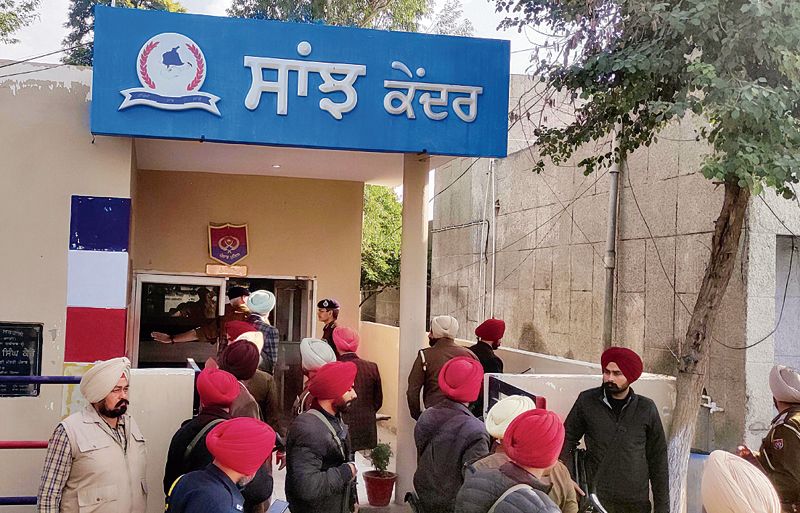
SARHALI police station in the border district of Tarn Taran (Punjab) was attacked by a rocket-propelled grenade (RPG) on December 10. Though no casualty was reported, windowpanes of the adjoining Saanjh Kendar and a portion of the wall were damaged in the attack.
According to the police, the recovered RPG seemed to have been smuggled from across the border. The Punjab Police have seized several drones, arms and ammunition this year in areas along the India-Pakistan border.
Earlier this year, an RPG was fired at the Punjab Police’s Intelligence headquarters in Mohali. There have been three other attacks in Punjab launched with weapons other than RPG, including a grenade blast outside the gate of the Army cantonment in Pathankot.
According to media reports, the police and investigation agencies have found a common thread in various attacks. The accused were lured with money and foreign dreams to carry out these strikes. Gangsters, shooters and even small-time criminals executed the attacks on the ground.
The second RPG incident in seven months has far-reaching security ramifications that need to be understood and corrective measures should be taken before the situation deteriorates.
Apparently, both RPG attacks were carried out with a demonstrative intent rather than to cause large-scale collateral damage — to send out a message of the capabilities of anti-national elements to repeatedly carry out such attacks at will and gain experience for more effective and successful strikes in future.
Attacks on the police and the Army reflect the motive of the perpetrators to systematically undermine the government machinery. This will, in time, lead to a perception of incompetence of the government to safeguard its citizens, creating alienation and insecurity.
The use of RPG in these two attacks is itself alarming. The RPG is a 70-mm heavy-calibre Soviet-era weapon used by regular armies to destroy hardened targets. According to South Asia Terrorism Portal, there were just 43 incidents of rocket attacks in J&K between 2000 and 2014. Availability of such weapons in Punjab at this juncture is a cause for concern. Incidents of drones being used to ferry weapons, ammunition and narcotics across the border are being regularly reported. Punjab has witnessed an alarming increase in drone activities across the international border with Pakistan this year as compared to previous years.
The Border Security Force (BSF), which guards the borders with Pakistan, has collated around 200 drone incidents this year at various points along the border, according to data available with the Punjab Police. Drones fly at low altitude above the ground level and are difficult to detect by conventional air-surveillance radars deployed along the border. Given their small size and minimal cost, they have become the preferred mode for cross-border ferrying of illicit consignments.
It is also apparent that these attacks were carried out by untrained persons rather than by trained terrorists as no casualties took place. Moreover, even the rocket launcher used in the attack was recovered from the scene, which a well-trained person will rarely do. It also indicates that such weapon systems are available in adequate numbers, making their retrieval after the attack unnecessary. More importantly, the execution of such attacks has been outsourced to criminals who are acting like overground workers of terrorist organisations. As time passes, they can enhance the survivability and relevance of the terrorists to further create a sense of lawlessness and insecurity.https://6b1799893559f4bc52b3923a6debe3e1.safeframe.googlesyndication.com/safeframe/1-0-40/html/container.html
The nexus between terrorist organisations and criminal elements is evident from the findings of the preliminary police investigation into the Tarn Taran incident. According to the police, the December 10 attack was masterminded by foreign-based wanted terrorists at the behest of Pakistan’s Inter-Services Intelligence (ISI) with the help of a prisoner currently lodged in the Goindwal Sahib jail.
The police also arrested four persons who provided logistical support to two juveniles who carried out the attack. The Punjab DGP told the media that foreign-based handlers used “cutouts and dead letter box techniques for retrieval of consignments and establishing contact so that the module members were assigned tasks directly by the handlers and were aware of their roles only.” Even the identities of sub-modules remained hidden from other sub-modules. Monetary allurement appears to be the main motivating factor for the attackers.
The security establishment also needs to recognise the fact that these anti-national elements have the ability to establish safe houses and weapon caches within rural as well as urban Punjab. While funds for such actions may be channelled externally, financing of terrorist activities internally needs to be looked into.
It is not too late to reverse this decline by breaking the terrorist-criminal-gangster nexus through coordinated and effective border management, including anti-drone measures, and relentless intelligence-based operations against anti-national elements. Anti-drone measures along the western border need to be put in place with the Ministry of Home Affairs taking the lead. It will entail inter-agency coordination, real-time intelligence-sharing, a surveillance grid, both technical and physical, and soft and hard kill counter-drone weapon systems deployment along the border.
‘Veer Guardian 23′: India, Japan to conduct first-ever air combat exercise
India and Japan are set to conduct their first-ever bilateral combat air exercise over 10 days in Japan next month.
The exercise named ‘Veer Guardian 23’ will be conducted from January 16 to January 26. The Japan Air Self-Defence Force (JASDF) will conduct a bilateral fighter training with the Indian Air Force (IAF).
The exercise aims to promote mutual understanding and strengthen defence cooperation between the air forces.
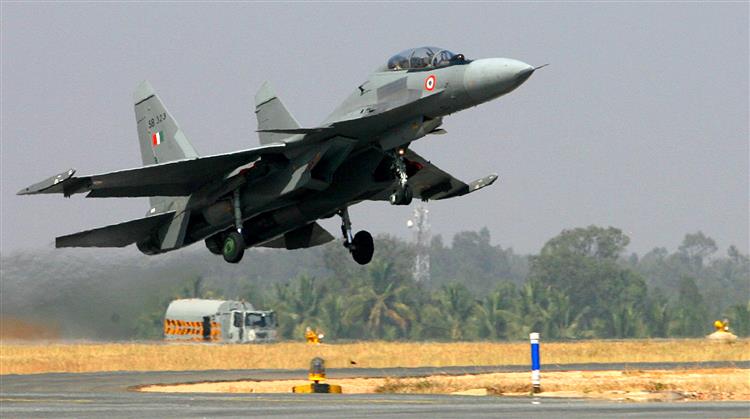
IAF will be fielding its Russian-origin Sukhoi-30MKI aircraft drawn from a squadron under the Western Air Command. The IAF 150 crew will be flying in IAF’s C-17 transport aircraft. The fighter jets on their journey from India to Japan will be re-fuelled mid-air using the IL-78 planes of the IAF.
Japan will field its F-2 jets which are derivatives of the F-16 plane of the US. It will also field the F-15, like the oones used by the US too.
The exercise will at Hyakuri Air Base north-west of Tokyo.
State Stalwarts
DEFENCE MINISTER
Minister Rajnath Singh
ALL HUMANS ARE ONE CREATED BY GOD
HINDUS,MUSLIMS,SIKHS.ISAI SAB HAI BHAI BHAI
CHIEF PATRON ALL INDIA SANJHA MORCHA
LT GEN JASBIR SINGH DHALIWAL, DOGRA
SENIOR PATRON ALL INDIA SANJHA MORCHA
MAJOR GEN HARVIJAY SINGH, SENA MEDAL ,corps of signals
.
.
PATRON ALL INDIA SANJHA MORCHA
MAJ GEN RAMINDER GURAYA ,MADRAS REGIMENT
sanjhamorcha303@gmail.com
PRESIDENT SOUTH ALL INDIA SANJHA MORCHA
COL SS RAJAN BOMBAY SAPPERS,
PRESIDENT UTTARAKHAND ALL INDIA SANJHA MORCHA
COL B M THAPA ,BENGAL SAPPERSS
PRESIDENT HARAYANA STATE CUM COORDINATOR ESM
BRIG DALJIT THUKRAL ,BENGAL SAPPERS
PRESIDENT TRICITY
COL B S BRAR (BHUPI BRAR)
PRESIDENT CHANDIGARH ZONE
COL SHANJIT SINGH BHULLAR
.
.
PRESIDENT PANCHKULA ZONE AND ZIRAKPUR
COL SWARAN SINGH
INDIAN DEFENCE FORCES
DEFENCE FORCES INTEGRATED LOGO
INDIAN AIR FORCE
Air Officer C-in-C WESTERN AIR COMMAND
AIR MSHL S PRABHAKARAN AVSM VM
AOC-IN-C, EASTERN AIR COMMAND
Air Marshal Inderpal Singh Walia
AOC-in-C SOUTH WESTERN AIR COMMAND
Air Marshal Vikram Singh
AOC-IN-C, SOUTHERN AIR COMMAND
Air Marshal J.Chalapati
AOC-IN-C TRAINING COMMAND
AIR MARSHAL SK GHOTIA VSM
AOC-IN-C MAINTENANCE COMMAND
Air Marshal Jagdish Chandra
Flag Officer Commanding in Chief, Western Naval Command
ice Admiral R Hari Kumar, PVSM, AVSM, VSM
Flag Officer Commanding in Chief, Eastern Naval Command
Vice Admiral Sanjay Bhalla, AVSM, NM
Flag Officer Commanding in Chief, Southern Naval Command



































































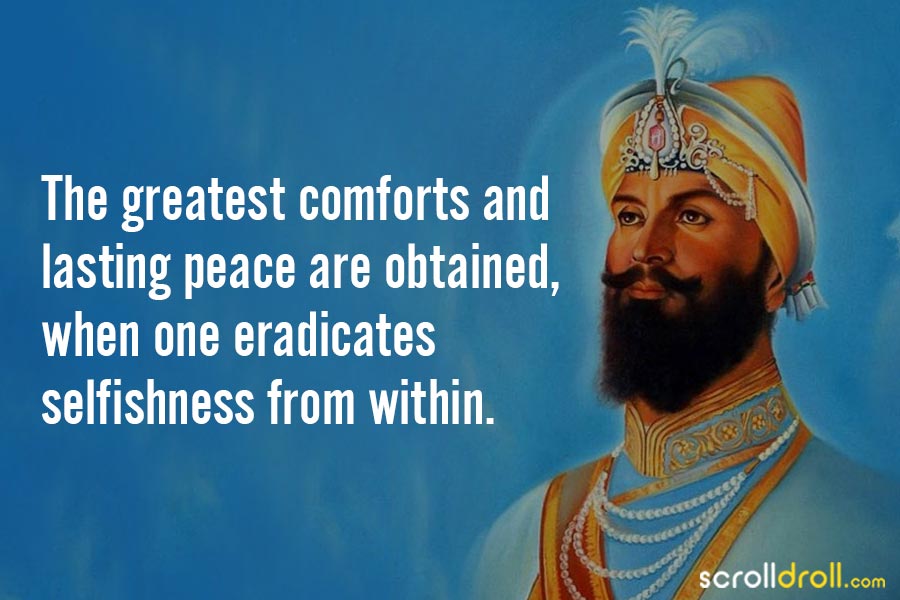


 Sahibzada Ajit Singh’s Sacrifice. Bole So Nihal, Sat Sri Akal!
 Sahibzada Jujhar Singh’s Sacrifice. Bole So Nihal, Sat Sri Akal!