










Sanjha Morcha

What’s New

Click the heading to open detailed news

Current Events :

web counter

Print Media Reproduced Defence Related News

A test of OLQs

With SSB interviews lined up over the next couple of months, it is time to gear up for this prestigious exam. Wear the most positive and outright attitude to ace this test of endurance and intelligence

Gauri Chhabra

One of the most prestigious and coveted body known for analysing candidates holistically is the Services Selection Board (SSB). It conducts personality and intelligence tests and interviews to determine suitability of a candidate applying for Indian armed forces. With SSB interviews lined up over the next couple of months, here’s a look at what this test is all about:

SSB Examination

Candidates applying for the Army/Navy/Naval Academy and Air Force have to secure the minimum qualifying marks separately in written test and clear the “officer potential” test. Candidates applying for the flying branch of the Indian Air Force,  also have to qualify the Computerised Pilot Selection System (CPSS) & Pilot Aptitude Battery Test (PABT) separately.

SSB Interview for NDA 142 course will commence in  January 2019.

SSB (Service Selection Board) is an organisation set-up by the Ministry of Defence that schedules, organises and conducts the SSB interview of the candidates applying for comissioned officers’ posts in short service and permanent commission. SSB interview is a five-day-long procedure, which includes two stages of testing as stage I & stage II. This test is organised at the SSB Centers (designated by SSB). The interview  includes intelligence & personality tests.

Interview procedure

Only those candidates that qualify the Stage I on the first day of reporting to the board are permitted to appear for Stage II. In case you do not clear Stage 1 screening test, then be prepared to be sent back on the very first day itself.

Stage 1: This stage consists of Officer Intelligence Rating (OIR) tests and Picture Perception & Description Test (PP & DT). Candidates are shortlisted on the basis of combined performance in OIR Test and PP & DT.

Stage 2: This stage is usually comprises a bateery of tests spread over a period of four days. The tests include  psychology tests, Group Testing Officer Tasks (GTO), Interview & Conference.

Scoring pattern

For selection in SSB, all three techniques — Psychology, Interview and Group Testing —  are important. Each technique has equal weightage. SSB is assessed out of 900 marks. Out of this, 225 marks are reserved for board conference and the remaining 675 marks are divided between the three techniques which mean each assessor has 225 marks to award. The conference marks are divided into three parts with the Interviewing Officer having a slightly larger share.It is not important to pass in all three techniques. In fact, most successful candidates  clear two out of the three techniques. Very few candidates clear all three, there are also a few candidates who actually pass in only one technique but get cleared by the Board after discussions during the board conference. It’s also possible that a candidate initially clears in all three techniques and yet fails at the Board conference.

When should you start preparing?

Well, the earlier you start  the better. The quantity of time never matters for preparations, what matters is the quality of time you put in and how sincerely you are preparing. The OLQ’s which are the most important aspect of SSB can’t be developed in a day.

Have an in depth knowledge of the pattern

To get through the SSB,  you should know what all would be asked in each test. What would be the pattern? What kind of candidates normally make it? The knowledge of all this would hold you in good stead since you will start practicing early. In the psychological tests, you cannot fake it. Give ample amount of time to know yourself, and analyse your positives and negative.

Introspect

Do a SWOT analysis of yourself. Write down everything you need to know about yourself and your near ones. This includes your positives, negatives, achievements. Basically an introspection of your personality. Your hobbies, interests and information related to that. Information related to your friends, family and their likes dislikes, and your likes and dislikes in them. Remember, you can’t fake it in SSB so either you have the personality they want or you don’t.

You come to know whether you have the right ethical values and whether you are cut out for the role.

Discipline your mind & body

The singular quality that would set you apart from others is discipline that becomes evident in the way you walk and talk. It is not just about walking in line and reaching on time. To be an officer you need to develop the qualities of an officer, and these cannot be developed overnight.

Therefore, if you have to gear up for the SSB, start preparing now. Wear the most positive and outright attitude you can and steal the show.

Selection drill

Day 0 (Reporting):

On this day candidates have to report at the selection center. Candidates’ original documents along with photocopies are verified on arrival. After this Personal Information Questionnaire (PIQ) forms are filled. In this form, the candidates have to fill their personal details regarding educational profile, family background, etc.

Day 1 (Screening Test):

Candidates have to take  an Intelligence Test (verbal & non-verbal) & Picture Perception Test. In PP test, slide (hazy or clear) is shown for 30 seconds and candidates have to write a story based on their perception. After this test, the group discussion round takes place. This sequence is commonly known as Picture Perception and Discussion Test (PPDT).

Intelligence Test: It comprises verbal as well as non-verbal questions. It is a written test that includes multiple choice questions. The time allotted to answering each question is 30 seconds.

Picture Perception and Discussion Test (PP & DT): This test includes story writing and discussion. A picture will be shown to the candidates for 30 seconds and candidates have to write a story based on the picture in 3 minutes.

Day 2 (Psychology Tests):

It is a set of written tests wherein candidates’ psychological suitability for the job is tested. These tests may include:

Thematic Apperception Test (TAT): It is called as picture story writing. This test is very similar to PPDT. In this test, about 11 pictures are shown. Each picture is displayed just for 30 seconds, after that candidates have to write a story based on the picture within four minutes. After four minutes another picture is  displayed and the same procedure is followed till the last slide. The twelfth slide is blank where a candidate is supposed to write any story of his own choice.

Word Association Test (WAT): It is the second psychological test of SSB selection procedure. In this test, 60 words are shown back to back for a period of 50 seconds. The candidates have to write the first thought that comes to their mind for those words.

Situation Reaction Test (SRT): In this test, candidates get a booklet with 60 situations written on it and  they have to write their responses based on those 60 situations.

Self Description Test (SD): In this test, candidates have to write their opinion about their parents, themselves, friends, teachers & others. The time will be allotted 15 minutes.

Day 3 & Day 4 – Group Testing Officer Tasks (GTO Tasks):

These tests involve interactive indoor and outdoor activities as a combination of mental and physical work. These tests are as follows:

Group Discussion: In this round, a certain situation or topic (mostly current affairs) is given to a group of candidates. They are expected to discuss the various aspects of the issue. Group Task Officer observes each candidate during the course of the group discussion.

Group Planning Exercise (Military Planning Exercise): In this round, a model of real life practical circumstances is presented to a group of applicants. They have to write their own plan of action for the mentioned problem.

Progressive Group Tasks (PGT): In this round, a group of candidates has to cross some obstacles with the help of supporting materials such as rope, plank, wood log etc.

Half Group Tasks: This round is the same as PGT,  but the number of group members is half. Thus, candidates get more chance to show their potential.

Individual Obstacles: In this round, candidates are required to attempt 10 obstacles individually.

Group obstacles race or snake race: In this round, all group members compete with other groups. Candidates are required to cross certain obstacles with the snake-like rope.

Command Task: In this task, one candidate is given the “role” of a commander. He will be required to cross some obstacles with the help of 2-3 subordinates.

Lecturette: In this round, each individual has to give a lecture for three minutes on a topic selected by them.

Final Group Task: It is same as PGT. Candidates have another chance to show their potential.

Day 5 (Conference):

On the final day, all candidates and SSB members sit together and have a chat wherein the candidates are asked a few general questions. The conference is just to decide whether a particular candidate has been recommended as an officer or not.

Medical

After the SSB result, the recommended candidates have to appear before the medical board for their medical test. This also takes 4 to 5 days.  NDA candidates are examined both for Army and Navy unless otherwise instructed and endorsement of fitness status will be made accordingly.


Stone-pelters overground workers of terror groups: Army Chief

Stone-pelters overground workers of terror groups: Army Chief

Gen. Rawat pays tribute to infantry soldiers at the Amar Jawan Jyoti in New Delhi. PTI photo

New Delhi, October 27

Stone-pelters in Jammu and Kashmir are overground workers of terror groups and should be dealt with sternly,  Army Chief General Bipin Rawat said on Saturday, a day after a 22-year-old jawan was killed in stone-pelting in Kashmir, even as he warned Pakistan to desist from supporting cross-border terrorism.

Sending a tough message to Pakistan, Gen. Rawat said if Islamabad continues to support cross-border terrorism, then the Indian Army can resort to “other actions” too.

Speaking to reporters on the sidelines of an event to mark the Infantry Day, the Army Chief, however, did not elaborate on what could be the possible action he was talking about.

The Army had carried out “surgical strikes” on terror launchpads across the Line of Actual Control (LoC) in Jammu and Kashmir on September 28, 2016, following a string of terror attacks on military installations in India by Pakistan-based terror groups.

The Army Chief also asked Pakistan to desist from aiding and abetting terrorism in Jammu and Kashmir, asserting that the Indian State was “strong enough” to ensure that the border state remains a part of India and no one can take it away by force or any other means.

On the death of jawan Rajendra Singh in stone-pelting in Jammu and Kashmir’s Anantnag district, Gen. Rawat reiterated his earlier stand that the stone-pelters are nothing but overground workers of terror outfits. “I still say the same… If they (stone-pelters) can kill people with such acts, are they not becoming like terrorists.” The 22-year-old Singh died at a hospital in Srinagar Friday after he sustained head injuries during stone-pelting by a group of youths on Thursday.

“I want to tell them (stone-pelters) that no one will benefit from stone-pelting,” said the Army Chief, adding tough action should be taken against them. He said the Army has got an FIR lodged in the case.

Talking about Pakistan’s support to cross-border terrorism, Gen. Rawat suggested that the neighbouring country was resorting to a “proxy war” to avenge its defeat at the hands of India in the 1971 War when Bangladesh was liberated.

The aim of Pakistan, he said, is to keep the Indian Army “embroiled in this proxy war that they have lost.” “But, let me assure you, Indian Army and the Indian State is strong enough to ensure that Jammu and Kashmir remain part of India… No one else can take it away by force or by any other means, because legally, legitimately J&K is an integral part of India,” he said.

Asked about the cross-border infiltration, he said Pakistan would be wise to know that by indulging in such activities, harm is coming to Pakistan only.

“We are capable of finishing any infiltrators who reach our side. But, if Pakistan continues to support infiltration, we can use other kind of action too,” Rawat said. He said Pakistan was continuing to fuel disturbances in Jammu and Kashmir, fully knowing that they will never succeed.

“Legitimately, legally and by all rights, J and K is part of India. Pakistan somehow has been trying to annex this part of the country, more so after they lost East Pakistan with liberation of Bangladesh,” he said.

The Army Chief said despite the passage of so many years, Pakistan still has a desire to succeed in that.

“And, with liberation of Bangladesh they decided to create a similar situation in Kashmir… Has Pakistan succeeded? They have not. And, Pakistan is fully aware they cannot succeed in Jammu and Kashmir, but they still hope they can succeed. It is just another way to keep the turmoil going and not allow development in the state,” he said.

The Infantry Day is observed every year to commemorate supreme sacrifices made by Indian Army’s infantry against Pakistan in Jammu and Kashmir.

Rawat earlier laid a wreath at the Amar Jawan Jyoti to pay tribute to numerous infantry soldiers who died in the line of duty. PTI


Slain Army jawan’s village in mourning

Slain Army jawan’s village in mourning

A file photo of Brijesh Sharma, an Army jawan from Nanavin village in Bangana, who was martyred in a grenade attack in Jammu and Kashmir on Friday.

Our Correspondent

Una, October 26

A pal of gloom descended on Nanavin village in the Dhundla panchayat of Bangana subdivision after the news of the death of an Army jawan, belonging to the village, reached here.

Brijesh Sharma (36) was killed in a grenade attack by terrorists while on duty in Shopian district of Jammu and Kashmir on Friday.

He is survived by his mother, wife and a six-year-old daughter. Recruited in 2003 in the 14 Punjab Regiment, Brijesh was currently deployed with the 22 Rashtriya Rifles.

His wife Shweta was inconsolable. It is learnt that Brijesh had rejoined duty after vacation 20 days ago. Bangana SDM Sanjeev Kumar said the body was expected to reach the village on Saturday. He would be cremated with full military honours. Local MLA and Rural Development Minister Virender Kanwar expressed grief over the jawan’s death.


War memorial at Mandi’s Indira Market

Mandi, October 19

Ex-servicemen chairperson Brigadier Khushal Thakur (Retd) said the proposed Kargil War memorial would to be constructed at Indira Market, Mandi. The project has been hanging fire since long. He said on Thursday, a delegation of ex servicemen met Deputy Commissioner Rugved Thakur to discuss the issue.

He said earlier, the war memorial was proposed to be constructed at Kargil Park in Mandi town, but due to some reasons it could not executed. Now, the district administration had decided to construct it at Indira Market. “The apathy of the state government has led to the inordinate delay in the construction of the Kargil War memorial,” he added.

He said the thought of constructing war memorial at Kargil Park had come up post Kargil War by the then state government as there were 12 martyrs from Mandi district alone. The objective of the war memorial was aimed to honour the martyrs who laid down their life for the country.

Union Minister Jagat Prakash Nadda had announced a grant of Rs 50 lakh for the war memorial, while Mandi MP Ramswaroop Sharma had announced Rs 20 lakh, but the project did not see the light of day. — TNS


Four Indian Army Personnel Booked For Raping, Molesting a Speech-impaired Woman in Pune

gangrape

Pune: Four Indian Army personnel, who are posted at Khadki Military hospital in Pune, were booked for molesting and raping a speech-impaired woman. As per reports, the crime took place in the hospital premises.

The victim had filed a complaint in Indore with the help of an NGO. A report states that the letter was also sent to Defence Minister Nirmala Sitharaman and Army Chief Bipin Singh Rawat.

As per Army sources, the matter dates back to 2015. It escalated in May this year after an NGO approached the Army. Court of inquiry was ordered in May and is believed to be in progress.

Pune ACP Kalyanrao Vidhate, while speaking to media, informed that the incident took place between January to June 2015. “Victim and accused used to work in night shifts at the same organisation. She can’t speak, so accused took advantage of her condition and committed sexual assault. She told her colleague and he also committed sexual assault. Two other men did the same thing,” he informed.

The Khadki police station on Tuesday registered an FIR against all four Army personnel, as per ANI. While FIR was registered against three of them under Section 376 of the Indian Penal Code (IPC), one was booked under Section 354 of IPC.

In a similar incident last month, an Army Major was booked for allegedly raping his domestic help in southwest Delhi. In her complaint, the woman also accused the Army Major and his relative of killing her husband.

The woman, in the complaint, stated that she was raped by the Major on July 12. The same day her husband allegedly killed himself.

In another incident, an Army man was arrested on September 25 in connection with the gangrape of a 19-year-old woman from Rewari district in Haryana. Identified as Navin alias Nikku, the Army personnel was nabbed by the SIT in Odisha.

The woman was abducted from a bus stop in Kanina town in Mahendragarh district, neighbouring Rewari, on September 12 while she was on the way to a coaching class. She was allegedly drugged and gang-raped at a room housing a tubewell for irrigation.


Pakistan violates truce pact in Arnia sector

Tribune News Service
Jammu, October 17

The Pakistan Rangers on Wednesday violated the truce agreement by opening small arms fire on a forward post of the Border Security Force (BSF) in the Arnia sector of Jammu district.

Intelligence sources said the Pakistan Rangers resorted to ceasefire violation by opening small arms fire on the Pittal Post in Arnia sector at 1.15 pm. The BSF personnel of the 62 Battalion retaliated in equal and calibrated measure.

Sources said the exchange of fire lasted for a few minutes. “There was no loss of life or injuries on the Indian side,” sources said.

They said the extent of damage on the other side was not known but there was a possibility that the Pakistan side might have suffered a casualty.

BSF officers, however, remained tight-lipped over the incident.


WW-II soldier’s family awaits his ashes

Deepender Deswal

Tribune News Service

Hisar, October 14

The family of sepoy Palu Ram of Nagathla village, who went missing during World War II in Italy fighting the German army, was taken by surprise when the Indian Army broke the news about the recovery of his mortal remains.

The reports said Palu Ram was 19 years old and unmarried when he took part in the war. He participated as a soldier of the 4th Battalion of the 13th Frontier Force Rifles, which was under the British Indian Army, in 1944.

He went missing on September 13, 1944, fighting the German Infantry division at Poggio Alto in Italy.

Leelu Ram, a villager, said that it was a big surprise when the Army authorities approached him to inquire about Palu Ram’s family.

“After some inquiry, I came to know that his family is still live in the village. He is related to the family of Ramji Lal, a farmers’ family in the village. It was also news for his own family,” he said.

He said Palu Ram was one of the two sons of Pat Ram, Moji Ram being the other one. While the unmarried Palu Ram, who joined the British Army, went missing, his brother Moji Ram had two sons — Kana Ram and Ramji Lal.

Kana Ram has died. The family members of Kana Ram and Ramji Lal are marginal farmers.

Ramesh, grandson of Moji Ram, said that the Army contacted him on the basis of the pension records of Palu Ram. “My great grandfather Pat Ram had been getting pension for Palu Ram after he went missing in action. In fact, my grandfather Moji Ram too died early. My great grandfather Pat Ram brought up my father Ramji Lal and uncle Kana Ram,” he said.

“We are feeling relieved that the last rites of the mortal remains will be performed after 74 years of his demise. We will be able to immerse his ashes as per our religious rites. We are proud that our ancestor participated in World War II,” Ramesh said.

Reports had said that in 1996, human bones were found in Poggio Alto. The Italian authorities in 2010 began investigations to identify the remains. The DNA tests in 2012 revealed that the remains belonged to non-European adults aged 20-21 years who were later identified as Palu Ram of Nangthala and Hari Singh of Rohtak.

The last rites would be performed at Girone monumental cemetery in Florence, Italy, the Indian Army is reported to have decided.


Indian Army Recruitment 2018: Apply for Junior Commissioned Officer posts before November 3, check details

Indian Army Recruitment 2018: Applications have been invited from eligible candidates for the post of Religious Teachers (Junior Commissioned Officers). Interested candidates can apply before the last date on the prescribed format.

Indian Army Recruitment 2018: The Indian Army recruitment wing has released a notification regarding the recruitment of Junior Commissioned Officers in the department. According to reports, there are 96 vacancies for Religious Teachers for RRT 87 and 88 courses. Interested and eligible candidates can apply through the prescribed format. Candidates are advised to check the official notification before filling up the application form.

As per reports, the last date for filling up the application form through the prescribed format has been scheduled for November 3, 2018. Moreover, the candidates applying for the posts must have the necessary educational qualifications for being eligible to apply for the post. Candidates must note that they should be in between the age of 25 and 34 years as on 01 Oct 2019 for being eligible for application.

Educational Qualification:

For Pandit: Hindu candidates with Acharya in Sanskrit language or Shastri in Sanskrit language along with one-year diploma in ‘Karam Kand is mandatory

For Granthi- Sikh Candidates and should be Gyani in Punjabi.

For Maulvi (Sunni) and Maulvi (Shia): Muslims candidates who have Maulvi Alim degree in Arabic or Adib Alim in Urdu are eligible for the post.

For other eligibility criteria, candidates can log in to the official website and go through the detailed notification online.

Important Dates for Indian Army Recruitment 2018:

Online registration starts: October 5

Closure of online registration: November 3,

Vacancy Details of Army Recruitment for Religious Teachers 2018:

Maulvi (Sunni) – 5 posts

Maulvi (Shia) -1 post

Padre – 2 posts

Pandit – 78 posts

Pandit (Gorkha) – 3 posts

Granthi – 6 posts

Bodh Monk (Mahayaana) – 1 post


The Danger Of Flying Helicopters At The Line Of Control by Lt Gen Syed Ata Hasnain

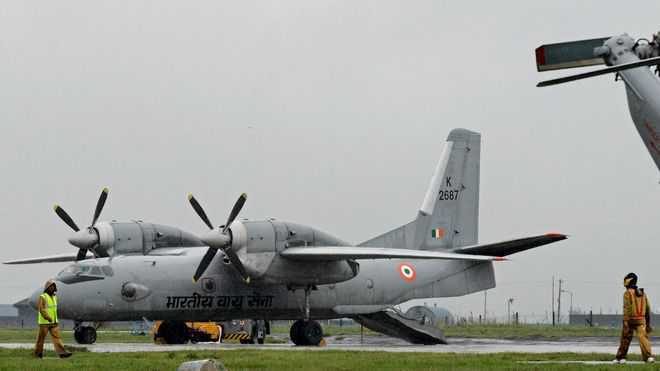
Aircraft breaches over the Line of Control, which is a difficult geographical terrain, can happen due to human error. A call for action, or a lack of it, then needs to be taken by the forward troops.

Aircraft breaches over the Line of Control, which is a difficult geographical terrain, can happen due to human error. A call for action, or a lack of it, then needs to be taken by the forward troops.
Snapshot
  • There is always a possibility of a helicopter straying across the Line of Control and breaching the rules of engagement set by both nations.

    It’s important to understand that it doesn’t necessarily indicate malicious intent. The region and terrain is such that mistakes can occur.

    There is no black-and-white to-do list that can account for all such contingencies. Much is left to the discretion of the forward troops, who are trained for it.

Opinion is divided even among experienced veterans about what must be done when an adversary’s helicopter enters the Indian airspace at the Line of Control (LoC) or breaches an agreement with reference to the rules of engagement. A minority says simply shoot the helicopter down and send the occupants to their doom. However, a prudent majority, well-versed in the dynamics of the LoC, has a different opinion.

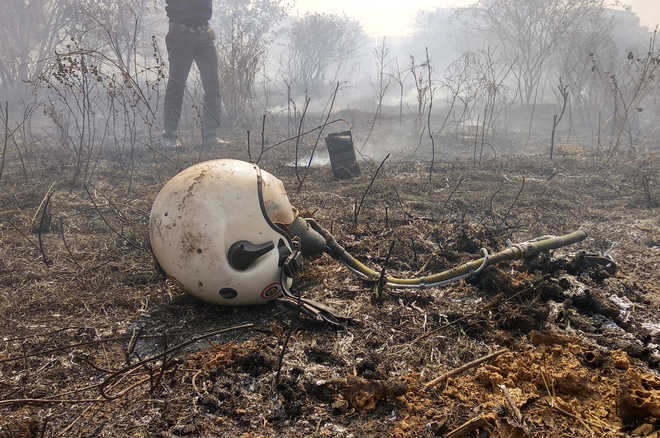
The context for this essay is the 700-metre intrusion by a civilian helicopter, carrying the so-called Pakistan-occupied Kashmir (PoK) prime minister on 30 September 2018, across the LoC in the Gulpur segment of Poonch sector. Sporadic sounds of fire by the Indian Army posts in the area are heard in a video clip that was aired on television that night. There has been fervent discussions on social media about the incident, but no conclusive opinion on how to deal with such an incident, which is not unusual, even if a civilian helicopter near the LoC, and straying, too, has a one-in-a-million chance.

For an informed opinion to be formed on the subject, some facts need to be placed on record. The rules of engagement clearly state that there will be no flying by fixed-wing aircraft within 10 kilometres of the LoC on either side. For rotary-wing aircraft (helicopters), the limit is 1 km. It is quite easy to follow such rules when the terrain is plain, with lots of definable landmarks and a boundary between nations clearly demarcated on a map as well as on the ground. Not so when the terrain is mountainous, at a high altitude, and with jagged rocky outcrops and jungle interspersed all over. Sticking to the 1-km rule is nearly impossible because while helipads may fall outside of that distance, the approach to them could involve circuitous flying that could easily breach the rule. For casualty evacuation, too, breach of rule is permitted after appropriately informing the other side.

The primary issue here is the feasibility of mistakes occurring in the recognition of features that supposedly help in understanding the alignment of the LoC. Ideally, a distance of 1.5-2 km should be kept as a leeway to prevent mistakes, but, again, that is not always possible, as already set out on account of operational constraints and the technical necessity of approaches. This is applicable to both sides. The issue could have been easily resolved had there been trust between the two sides. Flying close to the LoC at an appropriate height and for a degree of time provides an excellent visual peep into areas that cannot be seen from the ground. It helps in mapping potential targets for fire assaults and even photographing facilities. However, there is an argument that in today’s environment, whatever can be seen by a close-flying helicopter along the LoC is also visible through satellite technology but with lower resolution.

In an editorial, Pakistani daily Dawn writes: “The line between catastrophe and the tension-ridden norm along the LoC in the disputed Kashmir region has yet again been shown to be unbearably thin.” There is no doubt that in the current condition of a complete breakdown of trust, both sides can ill-afford any military advantage to the other through close visual reconnaissance from the air, the very purpose of the restrictions on flying being just that. The question is whether these rules of engagement can be followed implicitly. A military opinion will always suggest implicit execution and any breach of rule drawing an expected military response by the other. Yet, how does one account for the factors outlined earlier—the high feasibility of breaches on account of constraints of terrain, weather, and human error.

An opinion of reasonable consensus on social media points to discretion being with the troops and commanders on the ground with sound training, situational gaming practices, and effective communication, so that each such breach is taken based on its characteristics. It is clear that the amount of time available for an effective response will always be limited, putting pressure on those who have to take the decision. What, therefore, needs to be included in the rules of engagement is the methodology of indication to a pilot (flares and use of other illuminating devices) that he has strayed. Persistent presence in the area of breach or circling around it would draw a conclusion of unsavoury intent, which would give ground troops the freedom to act unilaterally.

There are case studies from the past that can help in determining a response and laying down self-explanatory instructions to forward troops. An example is the alleged shooting down of a Pakistani helicopter in August 1995 at Siala in the northern Siachen Glacier. Helicopter intrusions occurred every day over a period of time and in the same circuit over a given area. Ideally, this should have been referred to the Director General of Military Operations (DGMO) of the Pakistan Army by the Indian DGMO with adequate warning. However, because of the persistence seen from the Pakistani side, an Indian Army air defence detachment deployed at the Glacier fired an Igla missile, causing the helicopter to crash, killing both pilots.

In late 2011, one of our Army aviation helicopters with two pilots, who were on a routine flight from Leh to Kargil, strayed across the LoC deep into PoK; it landed by mistake at a Pakistan Army helipad. However, the response from Pakistan was positive. There was no interrogation of the pilots. A request from our DGMO led to the immediate return of the helicopter and the pilots, and it was considered an excellent goodwill gesture on their part. Between these two responses lies a yawning gap where contingencies can be immeasurable. I can state from personal experience in command of troops that there were many instances when our pilots flying me to certain important posts at the LoC could not but help breach the 1-km rule while landing, although the helipads were well outside that distance. Similarly, there have been instances of breach by Pakistani helicopters.

In the case of the Poonch intrusion by a civilian helicopter, our troops cannot be faulted for having engaged it with small arms before the chopper returned to PoK. That is because of the uniqueness of the event; civilian helicopters are rarely seen at the LoC. I always had the apprehension that there could exist a contingency wherein Pakistan-based terrorists steal or hijack a helicopter and attempt to target an important facility on our side to cause serious triggers in further upsetting India-Pakistan relations. I am sure such perceptions prevail in other minds, too. That is why it is key for the DGMOs of the two sides to get together and resolve such issues.

Even under the circumstances of better and updated rules of engagement, no one should expect black-and-white directions on every contingency. There will be much left to the discretion of forward troops, who need to be fully aware of potential contingencies and the flexibility of response with which they have been empowered. It’s old world thinking to imagine that a soldier on the ground needs “yes” or “no” directions for every situation. The “maybe” is equally a part of the lexicon for use at a location as dynamic as the LoC. Translating that “maybe” effectively in the right direction is what training is all about.


Surgical strike: Govt fooling itself

Army Chief General Bipin Rawat

Army Chief General Bipin Rawat

Surgical strike in fact doesn’t find mention in any standard global glossary of military terms and one suspects that the Indian Army would be the butt of ridicule of other uniformed forces

Stereotypical speeches and chest-thumping marked the second anniversary of the much-hyped surgical strike by the Army. Criticism of the Modi government’s immoderate celebration of the second anniversary has legitimately raised the question why the government and the Army did not think of ‘celebrating’ the first anniversary last year if they thought it was a big deal.

The conclusion that the spectre of looming elections in states to be followed by a general election drove the government to cover up its failures by hiding behind the Army, is, thus, not misplaced. Event managers of the government, forever coming up with one event after another, thus came up with the idea of ‘Parakram Parva’, which loosely translated stand for a festival of valour. A government adrift and clueless about the economy appears to be hard at work to deflect public attention by taking recourse to such gimmicks and politicising the Indian army.

The Indian Army continues to celebrate ‘Vijay Divas’ to mark the liberation of Dhaka in Bangladesh in December, 1971. The landmark event then had marked the surrender of 100,000 Pakistani soldiers, who were taken in as prisoners of war. The short and decisive military action then had led to the creation of an independent nation, Bangladesh and dismemberment of Pakistan, which led to marked changes in the political map of the world. But successive governments have made little song and dance around ‘Vijay Divas’, rightly believing that a mature nation and a professional army need not depend on exhibitionism or ostentatious celebrations. But the Modi government’s insistence to celebrate a three-kilometre incursion in POK has few parallels in the world.

Not only did the caretaker government of Pakistan, before Imran Khan was sworn in as Prime Minister, release 20 commemmorative postage stamps on militancy in Kashmir, crackdown by Indian security forces, Kashmiris blinded by the use of pellet guns and even one on the slain militant, Burhan Wani, even Imran Khan took a pot shot at Indian leaders.

“Surgical strike” in fact doesn’t find mention in any standard global glossary of military terms and one suspects that the Indian Army would be the butt of ridicule of other uniformed forces.

While a section of the jingoistic media is credited for the coinage, former Vice Chief of the Army Staff Lt Gen Milan Naidu recently scoffed at the term and said that it might have served those seeking political mileage from the raids that destroyed the terror launch-pads in Pakistani territory two years ago. If teaching Pakistan a lesson was the objective, several Army officers have pointed out, the strike does not seem to have achieved it, subdued infiltrators or slowed down attacks on Indian defence establishments. What then is the government celebrating?

For all the song and dance that we see now, incursions on the international border have been fairly commonplace. They keep the armed forces pumped up and battle-ready. The 2016 PoK strikes were conducted as a retaliation for the Uri Attack. A similar strike the previous year in 2015 was prompted by the ambush on a convoy of the 6 Dogra Regiment. Indeed, such strikes have been taking place since 1965 when the first ad-hoc commando unit named Meghdoot was formed. It later came to be known as 9 Para SF. The Special Forces had conducted another cross-border raid in 1998 but details were not divulged. Yet another strike was conducted on 29 August 2011, which was named Operation Ginger when three Pakistani soldiers were allegedly beheaded by Indian Special Forces and the heads brought back to India in response to the alleged beheading of two Indian soldiers by Pakistani BAT Operatives.

Against this backdrop, claims of the current government were not backed by any substantive evidence of its cross-border adventures. It had initially tried to pass on a video as proof of the surgical strike conducted in 2016 and reduced itself to a laughing stock. It is unfortunate, therefore, that the Indian Army is paying a price for the government’s lies and bombast and the Prime Minister’s fast eroding credibility. The standing of Army officers, who are frequently appearing on TV to defend the political establishment, has also suffered as a consequence.

The government is paying for its hunger for headline management and the limelight. The first press conference of the Army’s Director General of Military Operations (DGMO) was marked by the use of vague terms like “along the LOC” and “LOC kay nazdeek” and raised doubts. The DGMO claimed there was no loss of life on the Indian side. No detail of course was provided on the number of terrorists killed, the locations, the methodology, the time and targets etc. Questions were also not entertained. Pakistan, on the other hand, had then claimed that there were two casualties on its side and that one Indian soldier was taken into custody. Unofficial claims from the Pakistani media had claimed that 14 Indian soldiers had died, and their dead bodies were seen in the area the morning after the attack. While Pakistani claims can certainly be dismissed as propaganda, the Indian version was weakened by the decision to hold back details and eventually circulating a video of the strike a year later.

Statistics in the public domain suggest that as against 153 violations of ceasefire in 2015, Pakistan violated the ceasefire on the Indian border 1046 times in the current year. There were 228 attacks from Pakistan based terrorists in 2016 and last year the figure jumped to 860. There has been an increase in the killing of terrorists. The figure was 110 in 2014. It rose to 213 in 2015. The next year it declined to 165 and last year went up to 218. This year security forces claim to have killed 173 terrorists so far.

While the government can pat itself on the back, the truth is that casualties on Indian forces have also been on the rise. The year-wise break-up of Indian jawans killed in the last five years: 2014 (51), 2015 (41), 2016 (88), 2017 (83) and 83 so far in 2018, which tell a grim story.

Nor has the surgical strike made any difference to provocations from the Pakistani side. Not only did the caretaker government of Pakistan, before Imran Khan was sworn in as Prime Minister, release 20 commemmorative postage stamps on militancy in Kashmir, crackdown by Indian security forces, Kashmiris blinded by the use of pellet guns and even one on the slain militant, Burhan Wani, even Imran Khan took a pot shot at Indian leaders. Responding to the refusal by India to his offer for a dialogue, Khan acidly tweeted that he expected the response from ‘small men occupying high offices’.

Rousing speeches at the United Nations and celebrating a two-year old, overnight military operation of questionable outcome, can do little to control the damage. Who is the government fooling, except itself?