Sanjha Morcha

What’s New

Click the heading to open detailed news

Current Events :

web counter

Print Media Reproduced Defence Related News

Pakistan invites Sushma, Capt for groundbreaking

MINISTERS HARSIMRAT KAUR BADAL, HARDEEP SINGH PURI WILL REPRESENT INDIA, SAYS SUSHMA IN A TWEET

NEW DELHI/ISLAMABAD: India on Saturday said ministers Harsimrat Kaur Badal and Hardeep Singh Puri would represent the country at the Pakistan’s groundbreaking ceremony for a corridor to Kartapur Gurdwara, the first major contact between the two sides after months of strained ties.

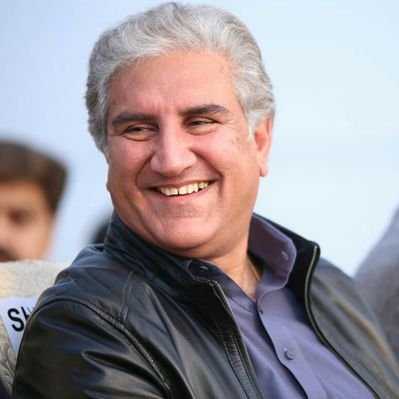
The announcement, made by external affairs minister Sushma Swaraj on Twitter, came hours after Pakistan foreign minister Shah Mahmood Qureshi invited her, also through a tweet, to the ceremony on November 28. In a set of tweets, Swaraj thanked Qureshi and said “we welcome this proposal and we are sending two ministers”.

Swaraj said she would be “unable to travel” to Kartarpur and India would be represented by food processing minister Badal and minister of state for housing and urban affairs Puri.

People familiar with developments said Swaraj would be unable to travel to Pakistan on the day because of prior commitments, including her involvement in the election campaign in Telangana. They said the decision to send the ministers had been made in view of the importance of facilitating smooth access to the Kartarpur shrine for Sikh pilgrims.

Qureshi had also invited Punjab chief minister Capt Amarinder Singh and state minister Navjot Singh Sidhu to the ceremony but it was not immediately clear whether they too would be part of the Indian delegation.

Swaraj also tweeted that India hoped Pakistan would expedite construction of the corridor on its side so that Indian pilgrims could use it “as soon as possible”.

On Thursday, India and Pakistan announced separately they would create corridors on their sides of the border to facilitate visa-free visits by Indian pilgrims to Kartarpur Gurdwara, located 120 km from Lahore on the banks of the Ravi river. The gurdwara, built at the site where Guru Nanak died, is about four kilometres from Dera Baba Nanak shrine in India. The move came ahead of the celebration of Guru Nanak’s 550th birth anniversary in 2019. The demand to build a corridor linking India’s border district of Gurdaspur with the historic gurdwara has been a long-standing one from the Sikh community. It returned to focus when Pakistan Army chief Gen Qamar Bajwa told Sidhu on the sidelines of the swearing-in ceremony of Prime Minister Imran Khan in August that Islamabad planned to open a corridor for Indian pilgrims.

This will be the first high-level contact between the two sides since India called off a planned meeting of the foreign ministers on the margins of the UN General Assembly in September because of terror-related concerns.

On Friday, Prime Minister Narendra Modi had invoked the fall of the Berlin Wall to talk about the potential ramifications of the Kartarpur corridor.

Qureshi, while briefing the National Assembly the same day, said Prime Minister Khan would inaugurate the groundbreaking ceremony on November 28.

clip


This brave Pak woman officer stopped terrorists from reaching Chinese consulate staff

This brave Pak woman officer stopped terrorists from reaching Chinese consulate staff

Senior Superintendent Police Suhai Aziz Talpur led the security operation that foiled the brazen attack by members of the Baloch Liberation Army, or BLA, in Karachi. Photo: Twitter

Karachi, November 23

A fearless woman officer of the Karachi Police, who was once abandoned by relatives in her village for joining a private school, on Friday saved the lives of many Chinese diplomatic staff when heavily-armed terrorists stormed the mission in the Pakistani city.

Senior Superintendent Police Suhai Aziz Talpur led the security operation that foiled the brazen attack by members of the Baloch Liberation Army, or BLA, in Karachi.


She ensured the terrorists, armed with nine hand-grenades, assault rifles, magazines and explosives, did not reach the diplomatic staff inside the consulate building.

Police said the terrorists were carrying food supplies and medicines, suggesting they had planned to take hostages.

But as soon as they reached the gates of the consulate, the police team took positions and retaliated. Two police officials were killed in the gunfight in which all the attackers were also neutralised.

Suhai hails from a lower middle-class family of Bhai Khan Talpur village in Tando Muhammad Khan district of Sindh province. She joined the police force after clearing elite Central Superior Services exam in 2013, The Express Tribune reported.

“When my parents decided to enrol me at a school, most of our relatives started taunting my family. So much so, that my family had to leave our village and move to a nearby town,” she told the daily.

Her father Aziz Talpur, a political activist and writer, always dreamt big for his daughter.

“My relatives cut off ties with me because I wanted Suhai to study as they were only in favour of religious education,” Aziz told the daily. “But I vowed to provide my daughter quality education.”

Suhai started her primary education at a private school in Tando Muhammad Khan and joined Bahria Foundation for her intermediate studies.

Her educational path then led her to pursue B.Com from the Zubaida Girls College, Hyderabad in Sindh province.

“My family wanted me to become a chartered accountant but I found the job to be very dull as it had no social value,” she said. “That is when I appeared for CSS and cleared it in the first attempt.”

She credited her success to hard work and her upbringing. “My parents are nationalists. As a child, they used to emphasise that I memorise Sindhi poetry. This developed my interest in literature and history, leading me to secure top marks in both the subjects in the CSS (Central Superior Services) exams.” PTI


First drill with China post Doklam 2-week military exercise from Dec 10 at Kunming in south-east China

First drill with China post Doklam

Wave of friendship

Ajay Banerjee
Tribune News Service
New Delhi, November 22

India and China have finally firmed up dates for resumption of their bilateral military exercise ‘Hand-in-hand’, with the two-week drill set to kick off at Kunming in south-east China on December 10.

The Indian Army will be represented by the 11th battalion of the Sikh Light Infantry. The exercise was originally planned in October-November last year, but China backed out in May following the 73-day (June 16-August 28) Doklam standoff. China was to be the host, as per an arrangement to conduct it in each country by rotation. India had hosted it in 2016.

So far, there have been six editions of the exercise. It was suspended for five years (2010-14) after China refused visa to then Northern Army Commander Lt Gen BS Jaswal claiming Jammu and Kashmir was a “disputed” territory. In a turnaround to that stance, the two armies conducted their first-ever joint drill in eastern Ladakh (Jammu and Kashmir) in October 2016.

The talk of resuming the exercise had started in March this year when Prime Minister Narendra Modi and Chinese President Xi Jinping had met at an informal summit in Wuhan and issued “strategic guidance” to their respective militaries. “Build trust and have a mechanism to prevent incidents in border regions,” said a statement issued from Wuhan.

In June, almost an year after Delhi and Beijing were locked in military stand-off at Doklam, the People’s Liberation Army troops conducted a three-day tactical exercise close to last year’s confrontation point at the tri-junction of India, China and Bhutan border. The only difference was India was informed in advance. The drill was conducted from June 6-8 near Chumbi Valley, a Chinese territory located between Sikkim and Bhutan that India literally overlooks — 25 km at widest and 2 km at its narrowest. 


India: The Forgotten Army

In 1914, India sent nearly 1.5 million men to fight alongside the British in World War I. When Britain denied the colony greater autonomy at the end of the war, the men were swiftly forgotten.

http://

 Over 100 years ago, nearly two million men in Asia were recruited to fight in the greatest war humanity has ever witnessed.

Read more at https://www.channelnewsasia.com/news/video-on-demand/asia-in-the-great-war/india-the-forgotten-army-10909062


Not all lost in Afghanistan by Vivek Katju

Not all lost in Afghanistan

The moderator: With the US in retreat mode, Russia wants to fill in its shoes.

Vivek Katju
Ex-secretary, Ministry of External Affairs

President Donald Trump’s aggressive Afghanistan and South Asia policy has proved to be a hollow bombast. The US is in strategic retreat in Afghanistan and Pakistan and the Taliban is in the ascendant; it has lost the will to militarily stem the Taliban’s creeping influence, if not, control, amid continuing instability. The world’s pre-eminent power has also given in to Taliban demand for direct diplomatic engagement.

US special adviser Zalmay Khalilzad’s meetings with the Taliban and his interactions with regional countries lead to the inevitable conclusion that the peace-making process will not be entirely Afghan led or owned but that deals will be cut between the US and the Taliban who will be guided by Pakistan. Such a process has the danger of further eroding NUG’s (National Unity Government) already strained cohesion and image. The unity of the army depends on Afghan politics holding together. It is important to ensure that different ethnic groups do not adopt independent means to safeguard their individual interests. The recent Taliban assault on the Hazaras in Ghazni may impel them to do so, for instance. President Ashraf Ghani is consulting with all political entities to form a multi-ethnic advisory group so that peace making is broad based. As the Taliban raises atavistic fears among many non-Pushtoons, it is uncertain if Ghani’s attempts to instil confidence will succeed.

Just before Khalilzad began his second regional tour, Russia organised an inter-governmental multilateral meeting on Afghanistan in Moscow on November 9. The Taliban and NUG’s High Peace Council representatives attended the meeting. Afghanistan’s neighbours and other Central Asian states also participated. The US attended as an observer. India attended the meeting through two retired diplomats. In not sending serving officials, India followed the NUG example. India and NUG’s attempts to create ‘non-official’ characters to the representations cannot mask the reality of the two countries being in the room as participants with the Taliban. While in the past Russia had failed in such endeavours, it succeeded on this occasion. This was because regional countries are sensing that international diplomacy on Afghanistan is changing. Therefore, participation in new multilateral processes is in their interest.

The Russian initiative was a valid exercise in the present Afghan context. However, along with some other countries it can only play positive or negative roles, encourage or complicate peace making. It cannot make peace. That can only be done by the principal parties to the continuing conflict — NUG, Taliban, the US and Pakistan. The last two may deny that they have a direct role in making peace. However, there can be no movement without them.

The US-Taliban negotiation process would not be easy, though some goodwill gestures may be made to show apparent progress. These may include the release of some prisoners and occasional ceasefires. Pakistan released Taliban leader Mullah Baradar who had been in its custody for many years, but his present influence on the group is unknown. Major problems between the Taliban and Pakistan, on the one side, and the US and NUG on the other include the presence of foreign troops and power sharing between the Taliban and NUG.

At the Moscow meeting, the Taliban maintained its stand that the first requisite to peace was the departure of foreign forces. Expectedly, it did not show a willingness to engage NUG. It is, though, signalling a readiness to talk to NUG, but only if the US indicates a firm withdrawal time table and some physical movement in that direction takes place. Some months ago, President Ghani had accepted that the withdrawal of foreign forces can be part of NUG and Taliban negotiations. The Taliban had then rejected the entire Ghani package.

Taliban’s intransigence flows from the US and NUG’s inability to militarily weaken it. Therefore, it has no need to be flexible. Besides, the Taliban retains full Pakistani support. It remains to be seen if it has modified its approaches on governance and human rights. Power sharing will not be easy if it wishes to restore the entire theological structure of the Islamic emirate as obtained under Mullah Omar. At the Moscow meeting, the Taliban claimed credit for eliminating opium cultivation during its rule in Afghanistan. This was no doubt to demonstrate the efficacy of its administrative systems in comparison to NUG’s weak governance and continued opium production. These Taliban claims are false: opium production was stopped for a year during its rule to staunch oversupply, and today, it benefits from the opium trade.

As a new chapter opens in Afghan affairs, India has to employ a supple strategy to safeguard its interests. This should include the continuance of full support for the Afghan government and also vigorous pursuit of its assistance programme. This is a fundamental basis of the goodwill that India has across all sections in Afghanistan. India should separately interact with all ethnic groups, especially those with whom it has had excellent ties in the past. There is a coincidence of interests with them both in the Afghan and the regional contexts.

The Modi government did well to send representatives to the Moscow meeting even if they had formally only a listening brief. It is inconceivable though that on the meeting’s sidelines Indian representatives would not have exchanged salaams, and, perhaps, more with Taliban representatives. These contacts should continue. In the past Pakistan ensured that India was out of international diplomacy on Afghanistan. Now, it will be a pity if India voluntarily shuts itself out by refusing to develop contacts with the Taliban. Contacts do not imply either support or endorsement but generally they are essential for participation in the game of nations.


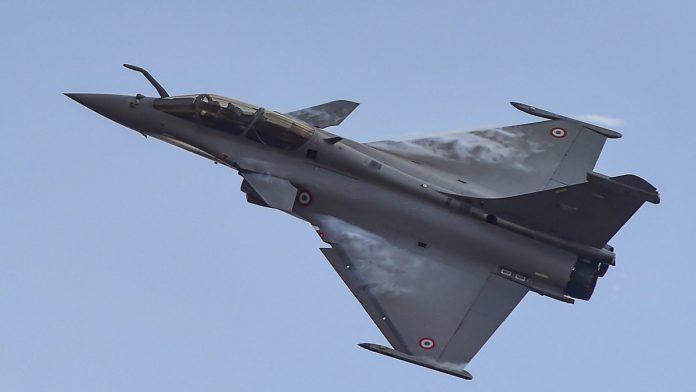
n Supreme Court, Centre Explains Why HAL Was Not Picked as Offset Partner in Rafale Deal

The government said HAL required 2.7 times higher man-hours compared to the French side for the manufacture of Rafale aircraft in India.

New Delhi: The Centre told the Supreme Court on Monday that state-owned Hindustan Aeronautics Ltd (HAL) failed to become an offset partner in the Rafale deal as there were several unresolved issues it had with French company Dassault.

In the documents submitted before the top court, the government claimed that the issues pertained to lack of common understanding between HAL and Dassault Aviation.

“The contract negotiations could not conclude mainly due to unresolved issues related to 108 aircraft to be manufactured in India. These issues pertained to lack of common understanding between HAL and Dassault Aviation on following,” the documents said.

It said HAL required “2.7 times higher man-hours compared to the French side for the manufacture of Rafale aircraft in India”.

Congress has claimed that Dassault has been pressurised by the government to do away with the HAL as strategic offset partner by saying the future of India’s aerospace industry has been destroyed by snatching Rafale from HAL.

Referring to earlier aborted deal, the document said Dassault was required to undertake necessary contractual obligation for 126 aircraft (18 direct flyaway and 108 aircraft manufactured in India) as per request for proposal  requirements and contractual issues with HAL on manufacturing of 108 jets in India could not be resolved.

The submissions were made in the document titled “Details of the steps in the decision making process leading to the award of 36 Rafale fighter aircraft order”, which were made public by the Centre on Monday. The inter-government agreement (IGA) was signed by the defence ministers of both countries on Sept 23, 2016.

Congress President Rahul Gandhi has been accusing Prime Minister Narendra Modi of forcing the French company to select a Reliance group firm of Anil Ambani as an offset partner to help it “pocket” Rs 30,000 crore.

Congress has also alleged the government was procuring each aircraft at a cost of over Rs 1,670 crore as against Rs 526 crore finalised by UPA government when it was negotiating a deal for procurement of 126 Rafale jets.

However, the document, placed by the NDA government, said, “It is reiterated that the procurement process as laid down in the Defence Procurement Procedure (DPP)-2013 was followed in procurement of 36 Rafale aircraft.


Army’s unorthodox strategy pays off Over 200 ultras killed in Valley this year

Army’s unorthodox strategy pays off

Tribune News Service

Jammu, November 13

Even the cold statistics speak a lot. Today, when the number of terrorists killed this year so far crossed 200 in Kashmir, it became clear that the unorthodox counter-terrorism strategy of coordination and compassion was working.

On Tuesday, the Army’s Srinagar-based 15 Corps that has been fighting Pakistan-sponsored terrorism almost for 30 years in the Valley found that with the killing of two terrorists along the Line of Control in the Keran sector in north-west Kashmir this morning, the number of terrorists killed reached 201.

This number inspired mixed feelings – one, that those who picked up the gun against the state at the behest of Pakistan and the Islamic extremist forces had been neutralised for the good of the people and the state at large. The poignant point, however, was that 102 of them were local militants who could have survived and gone back to their families had they heeded the repeated calls to realise the

futility of violence.

This year offered unique challenges to the Army as anti-militancy operations had to be put on hold during the unilateral ceasefire period of Ramzan and there was restrained action during the two-month-long Amarnath yatra.

This means that 200-plus militants were killed in less than eight months. Some of the top militants who fell this year were Abu Mateen, Abu Hamaas, Samir “Tiger”, Saddam Paddar, Abu Qasim and Abu Maviya. As many as 27 militants were neutralised in the month of October alone – the prominent among them were Manan Wani, Sabzar Sofi and Meraj-ud-Din Bangroo. South Kashmir witnessed 109 deaths of militants while north recorded 45 and 47 others were neutralised at the LoC.

Lt Gen A K Bhatt, Commander of 15 Corps and the author of this strategy, wanted that the local militants be given all options before they were taken on, sources told The Tribune.

This led to a drastic reduction in local recruitment, as confirmed by Governor Satya Pal Malik, who recently observed that “the recruitment level has come down to zero.”

The Army has had bigger challenges to confront —— machinations of the deep state of Pakistan that wanted to bleed Kashmir to force India to talk. The designs are being defeated as evident by the killing of 47 terrorists along the LoC.

Now the next challenge is how to deal with the militants sitting across the LoC during winter. And, the Army hopes that the strategy would yield further dividend during the period of snow.


MILITARY LITERATURE FESTIVAL– 7TH TO 9TH DEC-2018–Participants submit details by Nov 20,2018.

clip

Calling out to Surviving family members/successors/children/grandchildren of Victoria Cross/Military cross/George Cross awardees of World War-I. 

Join us in honoring the Service, Courage ,Supreme sacrifice and Valour of our War heroes.

 clip
Interested Participants may submit details by Nov 20,2018.
The successors/surviving children/grandchildren of Waqr heros are also requested to share their Names,Supporting Documents, Medals along with residential adres, email adress and Contact Numbers

for further details Contact

Col Jarnail Singh,Dy Dir ( Monitory ),Dept of Defence Services Welfare Punjab,phone- +91  8146264455

Image result for victoria cross

Victoria X

THE Military Cross MOD 45147519.jpg
Military cross

Image result for George Cross

George X


US exempts India from certain sanctions over Chabahar Port in Iran

US exempts India from certain sanctions over Chabahar Port in Iran

The port of Kalantari in Iranian city of Chabahar. Reuters file photo

Washington, November 7

The United States has exempted India from imposition of certain sanctions for the development of the strategically-located Chabahar Port in Iran, along with the construction of the railway line connecting it with Afghanistan, a State Department spokesperson said.

The decision by the Trump administration, which a day earlier imposed the toughest ever sanctions on Iran and is very restrictive in giving exemptions, is a seen as a recognition by Washington of India’s major role in the development of the port on the Gulf of Oman, which is of immense strategic importance for the reconstruction of war-torn Afghanistan.

“After extensive consideration, the Secretary (of State) has provided for an exception from imposition of certain sanctions under the Iran Freedom and Counter-Proliferation Act of 2012, with respect to the development of Chabahar Port, construction of an associated railway and for shipment of non-sanctionable goods through the port for Afghanistan’s use, as well as the country’s continued imports of Iranian petroleum products,” a State Department spokesperson told PTI.

The US on Monday imposed “the toughest ever” sanctions on a defiant Iran aimed at altering the Iranian regime’s “behaviour”. The sanctions cover Iran’s banking and energy sectors and reinstate penalties for countries and companies in Europe, Asia and elsewhere that do not halt Iranian oil imports.

However, Secretary of State Mike Pompeo said eight countries-India, China, Italy, Greece, Japan, South Korea, Taiwan and Turkey-were temporarily allowed to continue buying Iranian oil as they showed “significant reduction” in oil purchase from the Persian Gulf country.

To a question on the fate of Chabahar Port after the US reimposed all its sanctions on Iran, the spokesperson said, “This exception relates to reconstruction assistance and economic development for Afghanistan. These activities are vital for the ongoing support of Afghanistan’s growth and humanitarian relief.”  In May 2016, India, Iran and Afghanistan inked a pact which entailed establishment of Transit and Transport Corridor among the three countries using Chabahar Port as one of the regional hubs for sea transportation in Iran, besides multi-modal transport of goods and passengers across the three nations.

The port in the Sistan-Balochistan province on the energy-rich nations southern coast is easily accessible from India’s western coast and is increasingly seen as a counter to Pakistan’s Gwadar Port, which is being developed with Chinese investment and is located at distance of around 80 kms from Chabahar.

The Chabahar Port is considered a gateway to golden opportunities for trade by India, Iran and Afghanistan with central Asian countries besides ramping up trade among the three countries after Pakistan denied transit access to India.

Pompeo’s decision to give India exemption from imposition of certain sanctions for the development of the port is driven by the South Asian strategy, which was announced by President Donald Trump in August. It states that India has a major role in bringing peace and development in Afghanistan.

“The president’s South Asia strategy underscores our ongoing support of Afghanistan’s economic growth and development as well as our close partnership with India,” the state department spokesperson said.

“We seek to build on our close relationships with both the countries as we execute a policy of maximum pressure to change the Iranian regime’s destabilising policies in the region and beyond,” the spokesperson added.

Reacting to the Trump administration’s decision, US experts said it was a “right move”.

“Trump administration made the right move by exempting India for the development of the Chabahar port,” Jeff Smith of the Heritage Foundation told PTI.

India, Smith argued, “made a convincing case” that its principal interest in the port was to develop alternative infrastructure links to Afghanistan that bypass Pakistan, which also serves the US national security interests.

“Delhi also made clear that it does not support Iran’s destabilising activities in the Middle East or an Iranian nuclear weapons program, and that any involvement in Chabahar will not advance those two agenda,” he said.

Smith said, Delhi credibly argued that if it were to abandon development efforts at Chabahar the void would most likely be filled by others, including China.

“Combined with the importance, this administration places on developing good ties with India, there was a compelling geopolitical case to be made for a waiver,” he said.

Aparna Pande of Houston Institute think-tank said that to give an exemption to India’s development of Chabahar port was a welcome decision that comes on the heels of the US granting India – along with a few others – a waiver and temporarily allowing these countries to import oil in reduced quantities from Iran.

“Both these decisions demonstrate that the Trump administration values the deep strategic relationship with India. It understands India’s national security interests. Where Chabahar is critical to India’s access to and assistance towards ensuring a stable Afghanistan, India’s energy needs require a basket of energy suppliers,” Pande said.

Rick Rossow of the Center for Strategic and International Studies said: “Chabahar’s role to transport key logistics to Afghanistan will continue to grow over time. So this waiver is squarely aligned with the US interests,” he said. – PTI