Sanjha Morcha

What’s New

Click the heading to open detailed news

Current Events :

web counter

Print Media Reproduced Defence Related News

Search and rescue on the high seas by Lt Gen Bhopinder Singh

Search and rescue on the high seas

Rescue on high seas can also be highly political and divisive. But maintaining good maritime order can only be ensured with jointmanship as demonstrated by the timely rescue of Commander Abhilash Tomy by both the French and Australian navies

Befittingly, the hardened men-in-white of the Indian Navy promise ‘an ocean opportunities’ as they tease the Josh-types to choose between becoming ‘General Manager Arun Kumar’ or ‘Commander Arun Kumar’, in their luring advertisements. For eons, sayings like “hearts of oak are our ships, gallant tars are our men”, have romanced the young and seeped into their bloodstreams before luring them into the Navy — a decision that they seldom regret.

One such seafarer with the wanderlust for the open oceans and brazen adventures is Commander Abhilash Tomy KC, a quintessential Indian Navy man who had braved come-hell-or-high-water as the first Indian to sail and circumnavigate across the globe solo, non-stop and unassisted in 2013.

The expanse of 23,000 nautical miles across four oceans had taken 150 days for Tomy’s sheer daredevilry, earning him a Kirti Chakra for gallantry. Such restless seafarers are cut from a different cloth, where the spirit of challenge never dims and on July 1, 2018, Commander Abhilash Tomy took to sails again in the Golden Globe Race, which pits 18 of the finest and fittest sailors from across the world in a grueling round-the-globe challenge.

Except this time, fate and nature had different plans and his 36-foot boat, Thuriya, was hit by an extreme storm with 80 mph winds and 46-foot sea waves that left the tireless yachtsman, badly injured and in desperate need for rescue.

Since time immemorial there have been traditions and unwritten codes of seamanship that governed the conduct of rescue in high seas, and in 1979, an international convention pertaining to search and rescue (SAR) was adopted for the rescue of persons in distress at sea.

The common procedures, protocols, pooling of resources et al were established to ensure a robust mechanism. In this particular rescue operation that occurred a good 2,000 miles off the coast of Australia, help was taken from the French and Australian elements, besides the Indian Navy committing its own resources. Finally, it was the French patrol vessel, Osiris, that reached Abhilash Tomy, as the Indian long-range P8 Poseidon reconnaissance aircraft kept circling overhead.

India heaved a collective sigh of relief as the Indian President took the lead in rightfully thanking the foreign navies for their unstinted rescue efforts and obvious, spirit of seamanship. The parallel spirit exhibited by Irish yachtsman and fellow-competitor Gregor McGuckin and Estonian yachtsman Uku Randmaa, in making efforts to reach out to Abhilash Tomy, were in keeping with the sportsmanship, seamanship and camaraderie at its finest.

This unique race that is a virtual ode to the oft-forgotten DNA of sailing in the era of modern technology and aids, deliberately disallows any technological help and affords simple reliance on stars, sun and a magnetic compass to navigate the frequently punishing and choppy waters.

This was in stark contrast to the horrific tragedy which struck the supposedly ‘unsinkable’, Oscar-class Russian nuclear submarine, ‘Kursk’, where all 118 personnel on board had died in 2000. The sinking of the pride of the Russian fleet had been vociferously criticised for its slow, inept handling and delay in accepting help from foreign navies in the vicinity of the said accident. It was only on the fifth day of the disaster that Russian President Vladimir Putin had agreed to take British and Norwegian help.

Even then, the Russians enforced certain constraints on the Norwegian team from desisting on working on the stern of the submarine, even though the rescue team thought it impeded the rescue operations, especially since the fate of all the crew members had not yet been fully established.

Later, head of the Kursk incident cell, Vice Admiral Vladislav Ilyin concluded that some of the crew had lived up to three days and the formal investigation had slammed the delay in rescue operations.

Rescue on high seas can also be highly political and divisive. Successful search and rescue operations of the fleeing Middle Eastern and North African immigrants onto to the European lands was seen as a ‘pull factor’ for more immigration. Even though reports from agencies like Médecins Sans Frontières (MSF) countered the allegation with data that showed that defending humanity at sea did not deteriorate maritime safety and only saved lives — the haunting image of the washed-ashore body of a tiny three-year-old Syrian boy, Alan Kurdi, pricked the collective conscience of the Western world.

Countries like Australia have aggressive ‘turn back’ and ‘push-back’ policies for incoming asylum boats. Closer home, the Rohingya ‘boat people’ or the ‘nowhere people’ are also a subject of much debate and polarisation. While Thailand has a strict push back policy for fleeing Rohingya’s by boat, others like Malaysia, Bangladesh and India, remain more nebulous in handling the issue.

Beyond overtly political issues like the Rohingya crisis and the geopolitical issues like the Chinese assertions, expansion and belligerence in the South China Seas — the human angle of search and rescue operations remains fairly universal.

Earlier this year, the Pakistani Navy is said to have provided “medical and humanitarian assistance” to 12 Indian fishermen who were stranded and lost for eight days after developing engine trouble, whereas last year the Indian Navy was involved in saving a Chinese merchant vessel  from pirate attack in the Arabian Sea.

In March this year, the Indian Navy held the 10th edition of MILAN Exercise, entailing 20 ships from nine countries, off the coast of Andaman and Nicobar Islands. Besides enhancing interoperability and exchanging best practices, search and rescue operations and medical evacuation drills were part of the training.

HMAS Larrakia (ACPB 84) of Australia was one of the participants in the biennial congregation of friendly navies. Maritime good order can only be ensured with such jointmanship in the high seas as the timely rescue of Commander Abhilash Tomy demonstrated by both the French and Australian efforts, besides the obvious blessings of Varuna, the God of skies and oceans.

As the passionate seafarer Commander Tomy would probably agree: “On life’s vast ocean diversely we sail. Reasons the card, but passion the gale.”

(The writer, a military veteran, is a former Lt Governor of Andaman & Nicobar Islands and Puducherry)


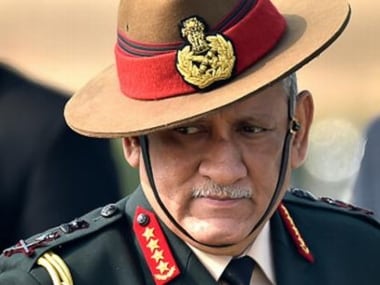
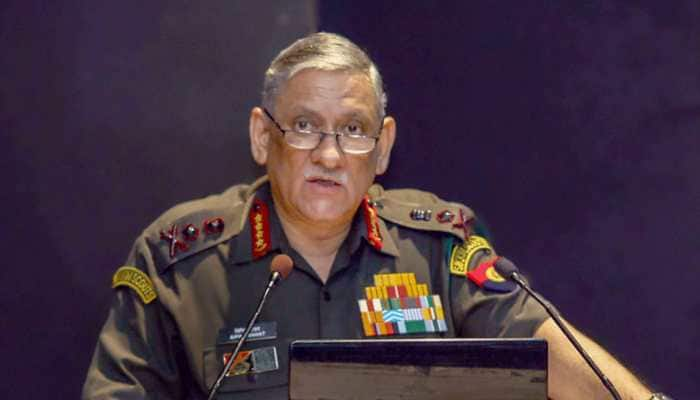
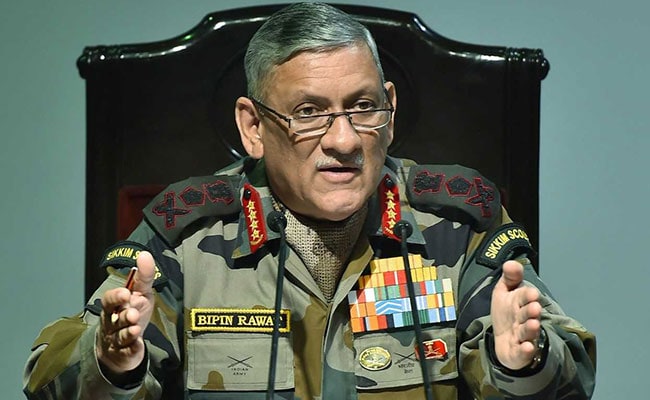
I Don’t Need To Give Any Message To Pak Army Chief, Only Need To Give A Message To My Army,” Says General Bipin Rawat

  • Making it clear that the Indian army is well prepared to undertake any given task at any point of time, Army chief Bipin Rawat stated that ‘he doesn’t need to give any message for his counterpart (Pakistan Army chief)’
  • Another major topic which General Rawat spoke about during the interview was the kind of reply which India may give to Pakistan for the barbaric acts they have been committing at the border in recent times

Making it clear that the Indian army is well prepared to undertake any given task at any point of time, Army chief Bipin Rawat, in an exclusive with Republic TV, stated that ‘he doesn’t need to give any message for his counterpart (Pakistan Army chief)’.

http://


On the matter of the kind of message he intends to deliver to General Qamar Jawed Bajwa, the Chief of Army Staff said, “I don’t think I need to give any message (to General Bajwa). I need to give a message only to my army, and the message, which I’ve given to my army from day one is we have to always be prepared for any task that is entrusted to us by the government. And we will undertake any task, anytime and anywhere.”

Another major topic which General Rawat spoke about during the interview was the kind of reply which India may give to Pakistan for the barbaric acts they have been committing at the border in recent times.

“I have said there are options available, and what options can be undertaken are always planned and the execution when necessitated will be done. These kind of barbaric acts which are carried out by the terrorists are completely supported by the Pakistani Army and the ISI.

“When the time come they’ll be punished, but not in the same manner, I mean if the Indian army ever punishes or the security forces ever punish, we do not carry out such barbaric acts. We are a very professional army. All acts that we conduct or any actions that we take are completely within the framework of Geneva conventions,” he added.

READ: EXCLUSIVE: ‘When The Time Comes They Will Be Punished But Not In The Same Manner,’ Says Army Chief While Issuing A Warning To Pakistan Over Barbaric Acts

Further divulging into the topic of elections in J&K, the COAS said, “We would like the elections to happen as it is for the benefit of the people. On the one hand, the local population has been complaining about the governance of Kashmir and has been talking about unemployment, lack of job opportunities, they have been talking about development. If the panchayat elections go through, then all these issues will be addressed because the power devolves to the people, jobs will be available and development activity according to the wishes of people can continue in the valley, in the Kashmir valley.”



J-K: Martyred soldier’s wife joins Indian Army as Lieutenant

 Neeru_Sambyal

Setting an exemplary precedence of strong grit and indomitable strength, Neeru Sambyal, wife of late army personnel Ravinder Sambyal has joined Indian army as a lieutenant after successfully acing her army training.

Neeru’s husband, late Rifleman Ravinder lost his life while serving in his regiment in 2015. Neeru had married him in April 2013 itself and had a two-year-old daughter when she received the news of her husband’s demise.

Not one to break, she carried forward the responsibilities of a mother while deciding to step into shoes of her late husband.

Speaking for her struggles and motivation behind the decision, Lt. Neeru says, “I was married to Lt Riflemen Ravinder Singh Sambyal in April 2013. My husband was in the infantry. It was really difficult to accept the reality after he got martyred. But for me, my daughter is my inspiration. I never wanted her to feel the absence of her father and wished to fill for both roles, of a father and mother. That’s the motivation that helped me complete the 49 weeks of training. I got commissioned on 8th September 2018. Being in army one has to be mentally strong as there are times when one has to face situations where physical strength won’t matter much.”

Lt. Neeru got full support of her family. Both paternal and maternal sides backed her, in achieving her dreams.

Expressing delight over the success of her daughter, Neeru’s father Darshan Singh Slathia says, “I am very happy and proud of her achievement. I did whatever it took to support her. Her maternal family also deserves credit for the same. It was my daughter’s choice to join the army. Initially, it was a little difficult for us to accept her decision but after consultations, we decided to support her wholeheartedly in achieving her dreams. During her journey of becoming an officer, Commanding Officer of my late son-in-law also provided great support.”

Talking about the struggles of her daughter he adds, “She was competing against 26 ladies during her Sashastra Seema Bal (SSB) selection exam. Today I am happy and proud that her struggles have borne fruits. What more a parent can ask for?”


Police suspect Hizb hand in soldier’s killing in Kulgam

Police suspect Hizb hand in soldier’s killing in Kulgam

Soldiers carry the coffin of Lance Naik Mukhtar Ahmed Malik in Shurat village. Tribune Photo: Amin War

Majid Jahangir

Tribune News Service

Srinagar, September 18

The J&K Police’s preliminary investigation into the killing of Lance Naik Mukhtar Ahmed Malik of the Territorial Army in south Kashmir’s Kulgam has pointed towards the involvement of local Hizbul Mujahideen militant group as the assailants had posed as journalists to gain entry into the house of the Army man.

“We have found the involvement of a local Hizb group in the killing,” a senior police officer said, requesting not be quoted.

The police have so far identified three members of the group who had posed as journalists and shot dead the off-duty soldier inside his house at Shurat village in Kulgam. Lance Naik Malik, 43, had gone home to mourn the death of his 17-year-old son who died on Friday.

“Terrorists are under immense pressures, especially in south Kashmir, and are carrying out such dastardly acts,” the officer said.

No militant group has so far owned the responsibility for the attack.

Before joining the Territorial Army, Lance Naiik Malik was associated with ‘Ikhwan,’ a government-backed counter-insurgency militia in the 1990s.

He is the second Army man killed by militants in Kashmir. On June 15 this year, Army jawan Aurangzeb was abducted and later killed in south Kashmir’s Pulwama district. Last year, Lt Umar Fayaz was killed by militants in Shopian.

Meanwhile, the Army on Tuesday paid befitting tributes to Lance Naik Malik.

In a solemn ceremony at Badamibagh Cantonment , Lt Gen AK Bhatt, Chinar Corps chief, and all ranks paid homage to the slain soldier, an Army spokesman said. Representatives from other security agencies also joined in paying their last respects to Lance Naik Malik.

“Late Lance Naik Mukhtar Ahmad Malik bravely resisted the attack by the terrorists but was overpowered and killed by them,” the spokesman said.

Lance Naik Malik had joined the Army in 2004. He is survived by his wife and two children.

Army pays tributes 

  • The Army on Tuesday paid befitting tributes to Lance Naik Malik n In a solemn ceremony at Badamibagh Cantonment, Lt Gen AK Bhatt, Chinar Corps chief, and all ranks paid homage to the soldier
  • Representatives from other security agencies also joined in paying their last respects to Lance Naik Malik


Why Air Force Officials Are Being Forced To Defend Rafale Deal

Last week, three French Air Force Rafale jet fighters landed at the Air Force Station in Gwalior with a view to conducting joint operations with their IAF counterparts. The French contingent was in transit after having participated in the multi-nation combat exercise named Pitch Black held in Australia in which IAF Sukhois had also participated. On this occasion, the French Embassy lauded the depth of the Indo-French strategic partnership and the trust that prevails in the relations between the respective armed forces.

Brijesh D. Jayal

Neither the French Embassy nor their contingent in Gwalior would have been unaware of the political slugfest that has embroiled the name of the Rafale fighter and silently wondered whether their hosts actually understood the vital strategic potential of the proposed Rafale weapon system in the shadow of a nuclear threat environment.

The French would not have been the only ones to be so confused. We also had the first 2+2 dialogue being held between the Indian Foreign and Defence Ministers and their respective US counterparts where the future direction of the evolving strategic partnership would be under discussion. At that session, it would be the US government teams, conscious of the Rafale controversy, who would wonder whether some of the past procurements through government-to-government programmes with the US like the C17 heavy-lift transport aircraft, C 130 Hercules, P 81 Maritime Reccee aircraft, Chinook heavy-lift helicopters and others, along with their offset obligations, could fall prey to a similar controversy, thus harming their reputation.

Clearly, the ominous cloud of daily political recrimination must have cast a deep shadow not only over the skies of Gwalior, but across IAF crew rooms and messes, deeply undermining the confidence and morale of the force. This would perhaps explain why the IAF leadership was compelled to take the unprecedented step of making public statements, indirectly jumping into what is essentially a political fray. The VCAS or Vice Chief of the Air Staff responsible for operations, when questioned, termed the Rafale a ‘very capable aircraft that will give India unprecedented advantage over its adversaries, a capability that was needed very quickly’.

The DCAS or Deputy Chief of Air Staff, who as head of Plans and Procurement would have intimately been involved in the entire process, went a step further and countering allegations of any wrongdoing said “What is being alleged does not match with facts at all.” On the question of higher costs, he clarified, “I can tell you that the Rafale that we have gone for is substantially lower than the price that was on the table in 2008.” And finally, on allegations that the offset contract had been awarded to certain private players, he said, “The facts on record indicate that there is no truth in those allegations.”

It needs recalling that similar sentiments were expressed by the Chief of the Air Staff late last year and repeated in Adampur in July. Clearly, the IAF leadership appears concerned that this public slugfest is having an adverse impact not just on the morale of the force, but their confidence in the professional integrity of its leadership as well.

Unknown to those who hold forth daily in TV studios and the media and more importantly, their minders, what should have been a giant strategic step forward in the modernising and strengthening of Indian air power is turning out to be unsettling and self-defeating. If combat pilots across our northern and western frontiers are chuckling, we have only our politics to blame.

As if to remind the nation of the dire straits that the IAF finds itself in, flying obsolete platforms amidst a declining combat force level, the IAF has these last three months lost two MiG-27s, one MiG-21 and one Jaguar aircraft with the sad loss of two lives. A cruel reminder of the shape of things to come. Unmindful, the sterile debate rages on, demonstrating that political one-upmanship means far more to our democracy than the operational capability and safety of our armed forces.

Ironically, even as the government is being accused of favouring a private offset partner, Tata Advanced Systems and Lockheed Martin Corp have announced an agreement whereby TASL will manufacture in Hyderabad wings for all future Lockheed F-16 customers. This should have been a matter of jubilation for our Make-in-India efforts. Instead, since Lockheed are also amongst the potential bidders for a new IAF tender, they have been defensive and declared that this agreement is not contingent on the success or otherwise of that bid! Clearly, international weapon system suppliers are mindful of having not only to compete in the technical and commercial domains, but in a political minefield as well!

The price issue is a red herring and cost comparisons to be meaningful must be based on the total system cost on a like-to-like basis. This would need a detailed cost benefit analysis by a body of specialists, who would still be left guessing about weighing operational value, not readily quantifiable monetarily. One example is the commitment to providing product support for five years, ensuring 85% fleet availability in the IAF’s operating conditions. None, including HAL, have ever committed to such an in-service operational fleet availability.

In an unprecedented low, a petition has recently been filed in the Supreme Court by over 300 serving army officers, JCOs and NCOs on issues relating to their duties in disturbed areas and the dilution of AFSPA. Close on its heels, we are now witness to another low point where the highest IAF leaderships have been compelled to wade into a political controversy in order to shield their force from its corrosive and negative consequences. The world is witness to nations where their militaries have undermined democracies. Indian democracy seems determined to be experimenting with the reverse. Time for the nation to pause and reflect.

Air Marshal Brijesh D. Jayal (retired) is former Air Officer Commanding-in-Chief of the South Western Air Command, Indian Air Force.

65 COMMENTS

Disclaimer: The opinions expressed within this article are the personal opinions of the author. The facts and opinions appearing in the article do not reflect the views of NDTV and NDTV does not assume any responsibility or liability for the same.


Army chief reviews security in Valley

Srinagar, August 24 
Chief of Army Staff Gen Bipin Rawat visited the Chinar Corps on Friday to review the prevailing overall security situation in the Valley, an Army spokesman said.
On his sthe Army chief interacted with former Governor NN Vohra at Raj Bhawan in Srinagar.

“Later in the day, the Army chief was given an update by the Chinar Corps commander in the Badami Bagh cantonment on the latest security scenario in the Kashmir valley, including the details of counter-infiltration and counter-terrorist operations undertaken in the recent past and the Amarnath yatra,” the spokesman added.
General Rawat was appreciative of the measures initiated, which have significantly contributed towards improving the security situation.
The Army chief also interacted with other senior functionaries of the security forces, the spokesman said.

Soldier killed in mine blast in Kupwara

Tribune News Service
Srinagar, August 25

A soldier was killed in a mine blast in north Kashmir’s frontier Kupwara district on late Friday, officials said.
The mine blast took place at around 10 pm on Friday when army was patrolling an area close to the Line of Control.
“A soldier of 3 JAK RIF got injured due to mine blast and succumbed to his injuries,” a security official said.
The identity of the soldier could not be established immediately.


Army offers help to ultra’s ailing parents

Tribune News Service

Srinagar, August 21
The Army has extended a helping hand to the ailing parents of a Lashkar-e-Toiba militant commander in Pulwama district.
Ahead of Eid, the Army went to the house of Riyaz Ahmed Dar alias Khalid and interacted with his ailing parents, who are in their sixties. Dar, who had taken up arms in 2015, is the only son of his elderly parents.
“With Eid-ul-Zuha around the corner, soldiers from the Kakapore-based Army camp interacted with the couple and brought some shine on their faces. During the interaction, their problems were discussed and medical aids were ensured to Dar’s father,” an Army spokesman said.

He said Dar’s father was partially paralysed and under medication for one year.
“Facing constant hardships, the couple even had to shift to their relatives’ house. They have been taking shelter there for four months. The family was assured that the Army will continue to stand with them in all circumstances,” the spokesman said.
“The Army also said it would provide full assistance and cooperation to the family in case he wishes to return and wants to join the mainstream,” he added.


Indian, Pakistani troops take part for the first time in SCO military drill

Indian, Pakistani troops take part for the first time in SCO military drill

India is participating in the drill for the first time since becoming a full member of the SCO in June 2017. PTI file

Beijing/Moscow, August 23 

For the first time, the militaries of India and Pakistan are taking part in a mega anti-terror drill of the Shanghai Cooperation Organisation (SCO) in Russia aimed at expanding cooperation among the member countries to deal with the growing menace of terrorism and extremism.

India is participating in the drill for the first time since becoming a full member of the SCO in June 2017. As part of the SCO initiatives, the SCO Peace Mission Exercise is conducted biennially for the SCO member states.

The joint exercise is being conducted by the Central Military Commission of Russia from August 22 to August 29 at Chebarkul, Russia.

The exercise will involve tactical level operations in an international counter insurgency or counter terrorism environment under the SCO Charter.

At least 3,000 soldiers from China, Russia, Kazakhstan, Tajikistan, Kyrgyzstan, India and Pakistan are participating in the drill, according to the Chinese media reports.

Ten representatives from Uzbekistan will serve as observers, state-run Global Times reported.

The Indian contingent of 200 personnel is primarily composed of troops from infantry and affiliated arms and services along with the Indian Air Force. The Indian contingent has been put through a strenuous training schedule which includes firing, heliborne operations, combat conditioning, tactical operations and house intervention drills, according to curtain raiser of the exercise released by the Ministry of Defence in New Delhi.

The joint exercise will strengthen mutual confidence, interoperability and enable sharing of best practices among armed forces of the SCO nations.

The previous SCO counter-terrorism drills were mainly limited to the Central Asian nations, the Chinese media said.

But due to the entry of India and Pakistan, the SCO’s counter-terrorism mission has expanded to South Asia, Li Wei, a counter-terrorism expert at the China Institute of Contemporary International Relations in Beijing, told the Global Times.

The SCO was established in Shanghai in 2001, with China, Russia, Kazakhstan, Kyrgyzstan, Tajikistan and Uzbekistan as founding members.

It expanded to include India and Pakistan in 2017.

“The effective counter-terrorism cooperation among SCO countries has greatly undermined terrorist groups in Central Asia in recent years, and it’s expected that this effective cooperation will also boost stability in South Asia, a region facing a more complicated counter-terrorism situation with a variety of active terrorist groups,” Li said.

Sun Zhuangzhi, a professor at the Chinese Academy of Social Sciences said Peace Mission 2018 will also greatly improve military and political mutual trust among SCO countries, especially between India and Pakistan.

“It’s a rare opportunity for Pakistan and India, which have long been involved in military conflict, to enhance military exchanges and trust. This could improve regional stability,” Sun said.

Li said future counter-terrorism drills among SCO countries have to come up with new drills on targeting terrorist groups in South Asia. He suggested that the SCO further expand to include Afghanistan, which is currently an observer country, to strengthen counter-terrorism efforts in South Asia.

The Peace Mission 2018 also created a historic chance for four major military powers in Eurasia – China, Russia, Pakistan and India – to participate in the same military drill, Sun said. PTI


Army floats tender for 41,000 LMGs

Ajay Banerjee

Tribune News Service

New Delhi, August 20

In a major change of weaponry for the Army, a tender was issued today seeking supply of some 41,000 new light machine guns (LMGs) to equip its infantry battalions.This is the first change of an LMG—basic weapon of infantry units— in the Army’s armoury in two decades. A request for information (RFI), the first step of a tender, looking for additional vendors was issued today, complete with details of requirements.The RFI was first issued in October last, but the parameters on its numbers, method of sourcing, firing capabilities, etc, were issued today after the Defence Acquisition Council (DAC) okayed the need for 40,949 LMGs. Of these, 30,712 will sourced from private Indian industry and another 10,237 from the Ordnance Factory Board. The indent to OFB will be placed after successful completion of trials.The 7.62×51 mm LMGs are to be procured under the ‘Buy and Make Indian’ category.