









Sanjha Morcha

What’s New

Click the heading to open detailed news

Current Events :

web counter

Print Media Reproduced Defence Related News

India, US to discuss jet engine technology

India, US to discuss jet engine technology
Manohar Parrikar’s three-day visit to US begins today

Ajay Banerjee

Tribune News Service

New Delhi, August 28

Apart from expected inking of the India-US agreement on sharing “military logistics”, Defence Minister Manohar Parrikar shall discuss jet-engine technology development with the US during his three-day (August 29-31) visit commencing tomorrow.The Jet Engine Technology Joint Working Group (JETJWG) comprising officials of the two countries has already concluded its terms of reference for cooperation in this area. The matter will be discussed when Parrikar meets his US counterpart Ashton Carter in the US.The Indian side is hopeful that a formal agreement on logistics exchange memorandum of agreement (LEMOA) will be signed. In April, the two countries had announced in New Delhi the decision to conclude LEMOA. LEMOA is the new name for the Logistics Support Agreement (LSA), which the two countries have been discussing for over a decade.What has been okayed is a re-jigged version of the LSA, a cast-in-iron framework, which the US was keen on getting India to sign. India asked the US to make it India-specific and not the standard LSA draft, which the US has with its allies like the UK.New Delhi reserves the discretion to withdraw in case it feels the US had gone to war with a country that India sees as a friend.The two countries have agreed upon the text for the agreement and this will, however, not entail “positioning of the US troops on Indian soil”. LEMOA will cover four aspects — training, exercises, port calls and the humanitarian assistance. It will be facilitator as earlier matters of refuelling and repair were considered on case-to-case basis.In case of jet-engine technology, the US told India in December last year that it had changed its policy on gas turbine engine technology transfer, allowing technology to be shared with Indian companies.The move, if it comes through, will change the way India makes engines for its warships and fighter jets. Gas turbine engines are largely used in big warships for the Navy and have a big market.Forty-seven naval ships are under construction and each needs at least two such engines — costing millions of dollars.


clip

clip

clip


Abandoning the ‘Army Doctrine’ in Kashmir?:::::::::——— M.G. Devasahayam

is it bullets by the Army against pellets from misguided youth? Is it that while the civil forces responsible for dealing with the situation are allowed to abdicate their role and bloat at the expense of the exchequer, the Army is asked to carry the can?

Abandoning the ‘Army Doctrine’ in Kashmir?
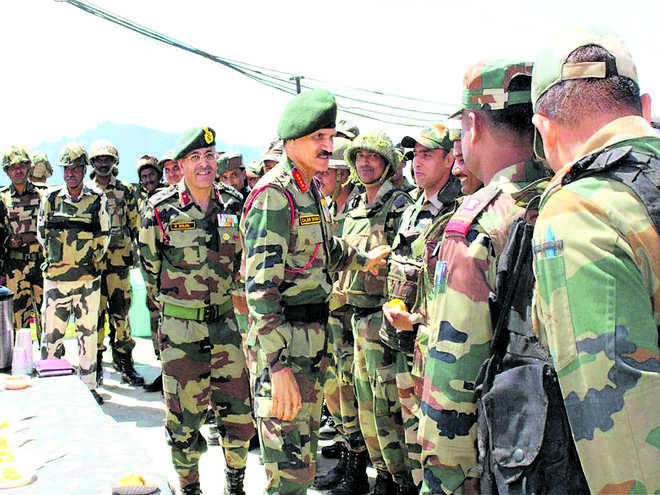
The Army Chief Gen Dalbir Singh Suhag on a visit to the Kashmir Valley to review the security situation. PTI

ACCORDING to Kautilya, there are four distinct threats to the State: that which is of external origin and of internal abetment; that which is of internal origin and of external abetment; that which is of external origin and of external abetment; and that which is of internal origin and of internal abetment.Drawing on this wisdom, the Army Doctrine-2004 addresses these threats and defines the role of the Indian Army to deal with them. As per the Doctrine, the Army’s primary role is to preserve national interests and safeguard the sovereignty, territorial integrity and unity of India against any external threats by deterrence or by waging war. The secondary role of the Army is to assist government agencies to cope with “proxy war” and other internal threats and provide aid to civil authority when requisitioned for the purpose. Insurgency is the most serious “internal threat” faced by India.Lest there be any confusion, the Army Doctrine clearly defines “proxy war” and “insurgency”. Proxy war is a war conducted between nations utilising non-state players to fight on their behalf. Insurgency is an organised armed struggle by a section of the local population against the State. The many possible causes of an insurgency include nationalistic, ethnic, linguistic, religious or cultural separatism, poor governance, economic deprivation, corruption, discrimination and oppression.  The Army Doctrine-2004 triggered a shift in the Army’s counter-insurgency operations — from emphasising terrorist casualties, euphemistically called “kills,” to not harming an innocent person “even if a terrorist escapes”. The Army units were not to be judged on the basis of “kills” but on the basis of feedback from the local population about their behaviour. The success of a commander would be his ability to make a militant surrender. As a practical example, the soldiers would hold their guns downwards and not in a manner to intimidate people. Soldiers will be told as well not to enter settlements at night.Twelve years down the line, it seems that this Doctrine is sought to be abandoned, at least in Kashmir. In his article, (“Army’s task in Kashmir: Restoring order,” published in The Tribune on September 15), Lt Gen (retd) Syed Ata Hasnain gives a new twist to the long-dragging counter-insurgency operations in the Valley. According to him, the Army is not restoring law and order but a virtual public order situation which has seen complete paralysis and inability of the police forces to handle. This is the classic situation in which the Army steps in to execute its responsibilities in the realm of operations other than war, hybrid in nature. He wants this task, presently confined to south Kashmir, to be extended to north Kashmir where too there is huge deployment of troops. Hasnain wants the Army to resort to maneouvres and strategies normally reserved for military operations. His view is it is not flag marches but the show of force through domination of both the physical and the moral kind and the moral domination of the Army has always been its chief weapon. In all parts of the country, the Army’s arrival to handle law and order is accompanied by a sigh of relief because the people trust it to do the “right thing, the fair thing.” Indeed so, provided the engagement is short and sharp and not the decades-long “virtual war” between soldiers and civilians, with the former indiscriminately resorting to the draconian AFSPA. So, the General’s hope that Army would achieve “moral domination” in the Kashmir situation is misplaced. Similar is his notion that through such an operation the Army can bolster the morale and functioning of the Rashtriya Rifles, CRPF and the JK police. In fact, it is the reverse that is happening. In the event, there is growing apprehension that retired Army top-brass, while spitting venom against civil servants, are not only justifying, but advocating the misuse of the military by the ruling politicians for power games. Is it bullets by the Army against pellets from misguided youth? Is it that while the civil forces responsible for dealing with the situation are allowed to abdicate their role and bloat at the expense of the exchequer, the Army is asked to carry the can?  The new concept — the Army restoring public order situation and then restoring civil governance — is akin to the Sri Lankan army’s advocacy of the “changing role of armed forces from countering insurgency to ‘territorial defence’.” According to this hypothesis, developed after the defeat of the LTTE, counter-insurgency operations would take the form of “territorial defence” of a country, which is vital for its survival. Notably, in Sri Lanka the conflict between the State and the LTTE involved a huge part of its territory, wherein the latter was running a parallel government with law and order, revenue, administration and police systems. In the case of Kashmir, it is a microscopic fraction of the Indian State and the Sri Lankan model is irrelevant there.It is different if martial law is imposed in the Valley and the military authorities take control of the normal administration, thus removing all power from the previous executive, legislative, and judicial branches of the government. It is usually imposed temporarily when the government or civilian authorities fail to function effectively to maintain order and security, or to provide essential services. The Article 34 of the Indian Constitution provides for restriction on rights conferred by Part III (Fundamental Rights) while martial law is in force in any area. But declaration of martial law is obscure and there is no specific provision in the Constitution or any law that authorises the executive or any other authority to declare it. Probably, the Indian armed forces can do it due to vagueness in its declaration procedure as defined by the Indian Constitution. However, the ethos and working style of the Indian Army is such that a declaration like this is unlikely to happen. Martial law imposes restrictions and regulations on the fundamental rights and civil liberties of the citizens, and can punish the civilians and even condemn them to death. Though the Supreme Court has held that the declaration of martial law does not ipso facto result in the suspension of the writ of habeas corpus, this also could happen. Declaring martial law under Article 34 is different from the promulgation of national Emergency under Article 352.  While the entire country has gone through the rigour and trauma of Emergency (1975-77), declared under Article 352, not even a small area has been put under martial law till now. This is because India’s armed forces are defenders of democracy and work in tandem with the executive, legislature and judiciary.The imposition of martial law in Kashmir by the military is a far cry, it could happen if the political leadership at the top induces the armed forces to do so in conformity with National Security Adviser Ajit Doval’s advocacy of a strong-arm strategy because “in the game of power, the ultimate justice lies with the one who is strong.” Is there a move to abandon the “Army Doctrine” in favour of the “Doval Doctrine”? The jury is out. The writer is a former IAS officer.


Pakistan PM Sharif appoints 22 MPs as special envoys to ‘fight Kashmir cause’

NEW DELHI/ISLAMABAD: Pakistan Prime Minister Nawaz Sharif on Saturday appointed 22 parliamentarians as special envoys “for fighting the Kashmir cause in different parts of the world”.

“I am standing behind these special envoys to ensure their toil for highlighting the Kashmir cause resonates across the world so that I can shake the collective conscience of the international community during my address at the UN this September,” Sharif said in a statement.

The move marks an escalation in Pakistan’s ongoing row with India over the unrest in Kashmir following the killing of militant commander Burhan Wani.

Sharif said Pakistan will remind the United Nations of its long-held promise of “right selfdetermination for the Kashmiri people” and would make it clear to India that it was them that had approached the inter-governmental organisation several decades ago on Kashmir dispute, but are not fulfilling its promise.

“Generation after generation of Kashmiris have seen only broken pledges and ruthless oppression,” the prime minister added in his statement. Sharif added, “The Kashmir dispute is the most persistent failure of the United Nations; the UN must establish its relevance. We cannot relent from the Kashmir cause by any stretch of imagination.”

The parliamentarians who have been nominated to lobby for the Kashmir cause in various countries include Ejazul Haq, the son of former military strongman Ziaul Haq. The prime minister also nominated Maulana Fazlur Rehman, who heads his faction of the Jamat-ulem Islam (JUI) party, a right wing party.

His remarks came on the 50th day of violent protests in Kashmir. India has accused Pakistan of inciting violence in Kashmir and supporting cross-border terrorism.


MiG-21 overshoots runway, pilot safe

Srinagar, September 20

Flight operations at the Srinagar airport were halted for over half an hour today after an Air Force jet overshot the runway. The pilot eject safely as the jet came to a halt.The mishap happened during a routine exercise conducted in the area on the defence side for IAF jets to take off and land. An official at the airport said the MiG-21 of the IAF overshot the runway, hitting a safety barrier as it attempted to land.The jet came to the halt after skidding slightly to one side, the official said, forcing a halt to flight operations at the airport, which besides IAF jets, handled civilian aircraft. He added that during this mishap, one of the tyres of the aircraft suffered some damage, but there was no major damage to the jet.“The pilot managed to eject safely. Flight operations at the airport were resumed after remaining suspended for over half an hour. There was no loss of life or damage to the aircraft,” he added.“It was a kind of emergency landing by the pilot as the aircraft developed some minor technical snag,” said Anupam Bannerjee, PRO, IAF. — TNS


Let’s talk terror, PoK, Jaishankar tells Pak

Tribune News Service

New Delhi, August 25

As the India-Pakistan “war of letters” continues, Foreign Secretary S Jaishankar has shot off another letter to his Pakistani counterpart Aizaz Choudhary.Sources in the government confirm that in the letter, Jaishankar has made it clear to Pakistan that the India-Pakistan talks should focus on terror emanating from Pakistan to India and to the region.The letter is India’s response to Choudhary’s August 19 invitation to Jaishankar, asking him to travel to Islamabad and discuss the current situation in Jammu and Kashmir. Sources said the letter was handed over by Indian High Commissioner Gautam Bambawale to Choudhary yesterday in Islamabad.Sources said the Foreign Secretary, in the letter, has pressed upon Islamabad once again for the need to move out of Pakistan-occupied Kashmir (PoK). Sources add that India has upped the ante this time with the Foreign Secretary raising the issue of terror emanating from Pakistani soil and targeting not just India but also the region. It is learnt that the decision on whether Jaishankar would travel to Pakistan at the end of the month would be determined once Pakistan responds to the latest letter.India-Pakistan relations show no signs of improvement with Kashmir having emerged as the main issue. The dialogue process has been in a state of suspension since the January Pathankot attacks and the recent exchange of letters between the two Foreign Secretaries is an effort to create ground for talks.

Visit to Islamabad may depend on Pak reply

  • The letter is India’s response to Pakistani Foreign Secretary Aizaz Choudhary’s August 19 invitation to S Jaishankar, asking him to travel to Islamabad and discuss the situation in J&K
  • It is learnt that the decision on if Jaishankar would travel to Pakistan at the end of the month will be determined once Pakistan responds to the letter

clip


Uri attack: Tell-all map in Pashto exposes plotters

NEW DELHI: The suicide squad that attacked the Army camp at 12 Brigade headquarters in Uri+ carried along with their arms and ammunition a mission plan which was annotated in Pashto, highly placed sources said.

The map retrieved from the terrorists revealed that they were to kill unarmed troops, then storm a medical aid unit near the brigade administrative block and blow themselves up in the officers’ mess.

Sources said the map deciphered by military experts indicated that the terrorists were drawn from the banned terror group, Sipah-e-Sahaba Pakistan (SSP) that recently started working under Jaish command and calls itself “Guardians of the Prophet”. The SSP cadre directly operates under Jaish-e-Mohammad+ chiefMasood Azhar, sources said.

Azhar has publicly likened JeM’s goals to that of the SSP, a Sunni Muslim terror group affiliated to Pakistani Deoband. Taliban draws its inspiration from the Pakistani Deoband.

Sources said the suicide aquad attackecd the administrative block where unarmed soldiers were refilling diesel in barrels from fuel tanks. The terrorists lobbed 17 grenades in three minutes, which ignited the dump and resulted in a massive fire burning barracks and tents in a 150-metre radius. Thirteen soldiers were burnt alive instantaneously and 32 soldiers were critically injured with severe burns.

With the diesel dump ablaze, due to smog and subsequent explosions, the terrorists got disoriented and headed straight towards soldiers’ barracks. One terrorist was gunned down in the barracks by a 19-year-old Dogra soldier, who, while challenging the other three, sustained a severe head injury when a bullet hit his helmet, sources said.
Since the barracks were vacant, the terrorists took a defensive position in the side barracks of two floors and 16 rooms. Later, four commandoes stormed the building and eliminated the other three terrorists.

Stay updated on the go with Times of India News App. Click here to download it for your device.


Search for missing AN-32 aircraft continues

Search for missing AN-32 aircraft continues
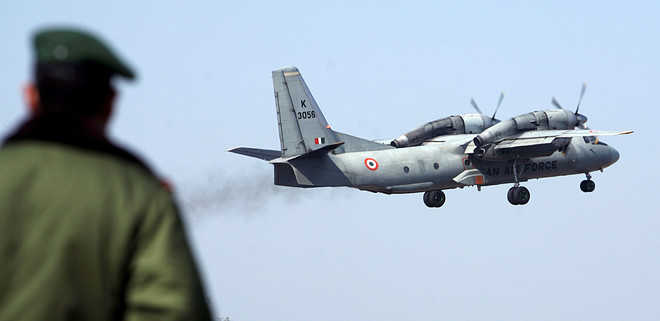
The plane with 29 persons on board went missing shortly after taking off from Chennai for Port Blair on July 22. Reuters file photo

New Delhi, August 22

A month since it went off radar en route Port Blair, the search for the missing AN-32 aircraft of Indian Air Force continues without any concrete evidence about the fate of the aircraft.

Meanwhile, as Geological Survey of India ship Samudra Ratnakar found some leads at a depth of around 3,000 meters, officials said it was not clear if it was the debris of the aircraft.

“The ship has tracked some echoes from the seabed but it will be a long process to verify if there is any debris belonging to the AN-32,” IAF spokesperson Wing Commander Anupam Banerjee told IANS.

According to the Geological Survey of India, the Samudra Ratnakar, which was part of the search operation, had detected some linear pieces.

A GSI official said the objects, around 200 to 300 nautical miles from Chennai, could even be rocks on the sea bed.

Indian Navy Spokesperson Captain D.K. Sharma said: “The search for AN-32 is in progress in right earnest.”  Sharma added that there were no concrete leads.

A month on, the search is being carried on with two Indian Navy and one Coast Guard ship for scanning the surface of the sea.

National Institute of Ocean Technology’s vessel, Sagar Nidhi, and Samudra Ratnakar are carrying on the sub-surface search, while aerial survey is being carried out by surveillance aircraft P8I, transport aircraft C130J Super Hercules and Coast Guard’s Dorniers.

The plane with 29 people on board went missing shortly after taking off from Chennai for Port Blair on July 22.

The recorded transcript of air traffic radar showed the last pick up of the aircraft was 151 nautical miles east of Chennai when it took a left turn with rapid loss of height from 23,000 feet.

A flotilla of Naval and Coast Guard ships and aircraft were deployed on the search operations hours after the aircraft went off radar.

Data from Indian satellites was scanned and help was also sought from other countries to locate the missing aircraft.

Defence Minister Manohar Parrikar, in a detailed statement made in parliament, also clarified that the aircraft, an upgraded version of IAF’s workhorse, had “adequate lifetime” and had undergone just one overhaul. — IANS


DGMO: Army ready for befitting reply

New Delhi: The Director General Military Operations (DGMO), Lt Gen Ranbir Singh, on Sunday said the Army was ready to give a ‘befitting’ reply to the adversary even as he blamed Pakistan-based Jaish-e-Mohammed for the Uri attack. Addressing the media at the South Block, he said: “The Indian Army remains prepared to thwart any nefarious designs and any evil designs of the adversary shall be given a befitting reply”. He said he had spoken to his counterpart in Pakistan over the hotline since the terrorists had equipment with Pakistani marking. “I have spoken to the Pakistan DGMO and conveyed serious concern.” — TNS


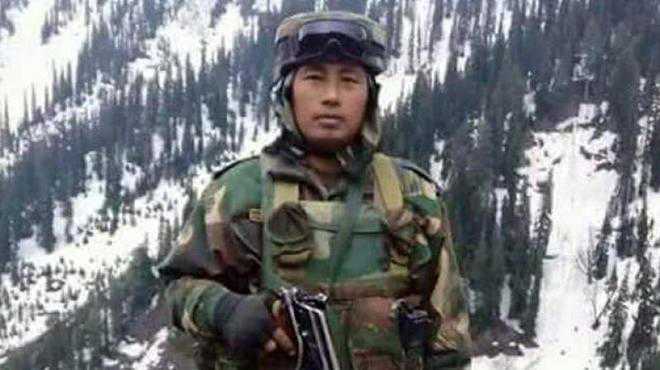
Ashok Chakra for Havildar Hangpan Dada

Tribune News Service

New Delhi, August 14

President Pranab Mukherjee today approved 82 gallantry awards for armed forces personnel and members of the paramilitary forces. These included one Ashok Chakra, 14 Shaurya Chakras, 63 Sena Medals (Gallantry), two Nao Sena Medals (Gallantry) and two Vayu Sena Medals (Gallantry).Havildar Hangpan Dada of Assam Regiment, who killed four intruding terrorists before laying down his life at a height of 13,000 feet in the harsh Himalayan terrain of North Kashmir on May 26, was awarded the Ashok Chakra, the highest peacetime gallantry award.(Follow The Tribune on Facebook; and Twitter @thetribunechd)Eight Army men from the Northern Command got the Shaurya Chakra, the third highest award for gallantry during peacetime. Five of them got this award posthumously, a Ministry of Defence statement said.Hangpan Dada laid down his life as he led a charge on hiding terrorists in Naugam (Jammu and Kashmir), resulting in neutralisation of four. Taking the enemy head-on, Dada killed two of them on the spot and the third one after a hand-to-hand scuffle as they slid down the hill towards the LoC. A fourth terrorist was also killed by him.Lt Col EK Niranjan, who lost his life during the Pathankot airbase attack, was among those awarded the Shaurya Chakra. He was attached to the National Security Guard and was part of their bomb-disposal squad.Captain Pawan Kumar and  Captain Tushar Mahajan of 9 Para Special Forces, who lost their lives during the Pampore attack, were awarded gallantry medals.


Commendation for NSG dog ‘Rocket’

  • NSG dog “Rocket”, who burnt its paws while scouring for terrorists in a burning billet during the Pathankot IAF base attack, has been awarded the Chief of Army Staff commendation for courage and obedience to command. The two-and-a-half-year-old Belgian Malinois is a soldier of the K9 unit based at Manesar. PTI

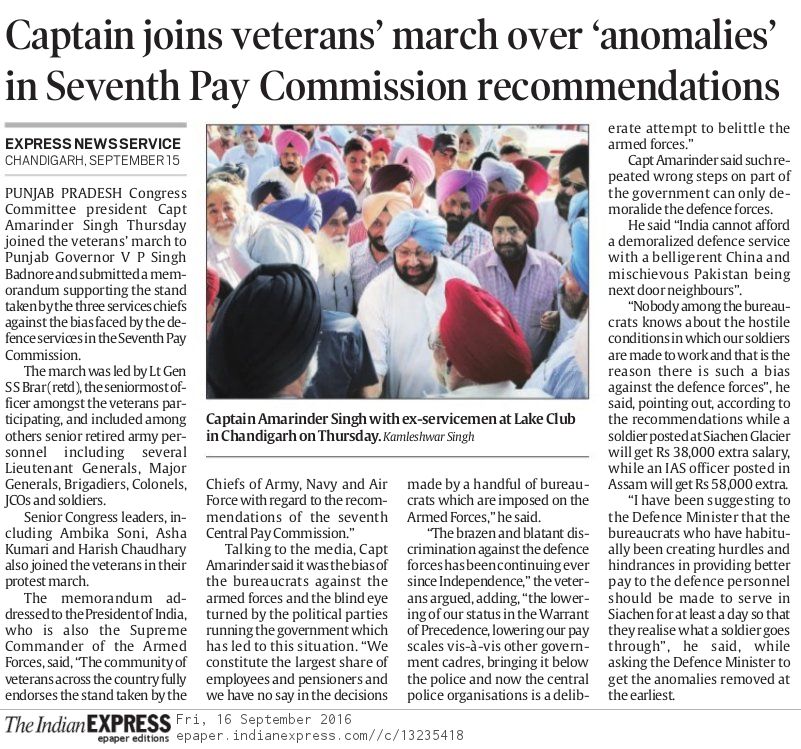
CAPT JOINS VETERANS’ MARCH AGAINST ANOMALIES IN 7TH PAY COMMISSION REPORT

Joining the veterans’ march to Punjab Governor VP Singh Badnore, Punjab Congress president Capt Amarinder Singh on Thursday submitted a memorandum supporting the stand taken by the three services chiefs against the alleged  bias against the defence services in the 7th Pay Commission. 

The march was led by Lt Gen (retried) SS Brar, the senior most amongst the veterans participating, and included among others senior retired army personnel including several Lieutenant Generals, Major Generals, Brigadiers, Colonels, JCOs and soldiers.

Senior Congress leaders including Ambika Soni, Asha Kumari and Harish Chaudhary also joined the veterans in their protest march.

The memorandum, addressed to the President, said: “The community of veterans across the country fully endorses the stand taken by the Chiefs of Army, Navy and Air Force with regard to the recommendations of the seventh Central Pay Commission.” Capt Amarinder and other veterans told reporters that it was the bias of the bureaucrats against the armed forces and the blind eye turned by the political parties which led to this situation.

He said that such repeated wrong steps on part of the government can only demoralize the defence forces. 

444d5208-c9ff-44be-93f3-9fb66e2f0c47