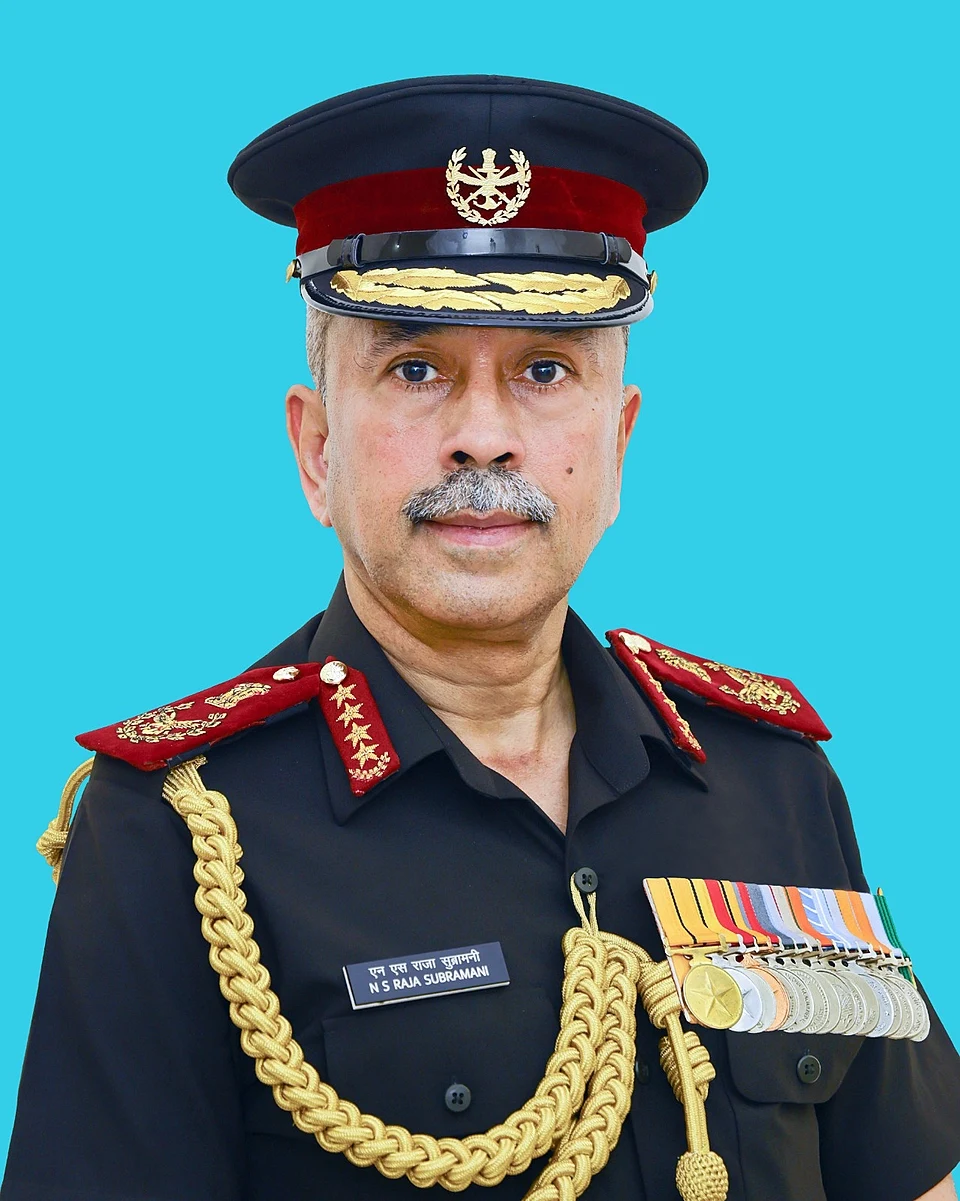
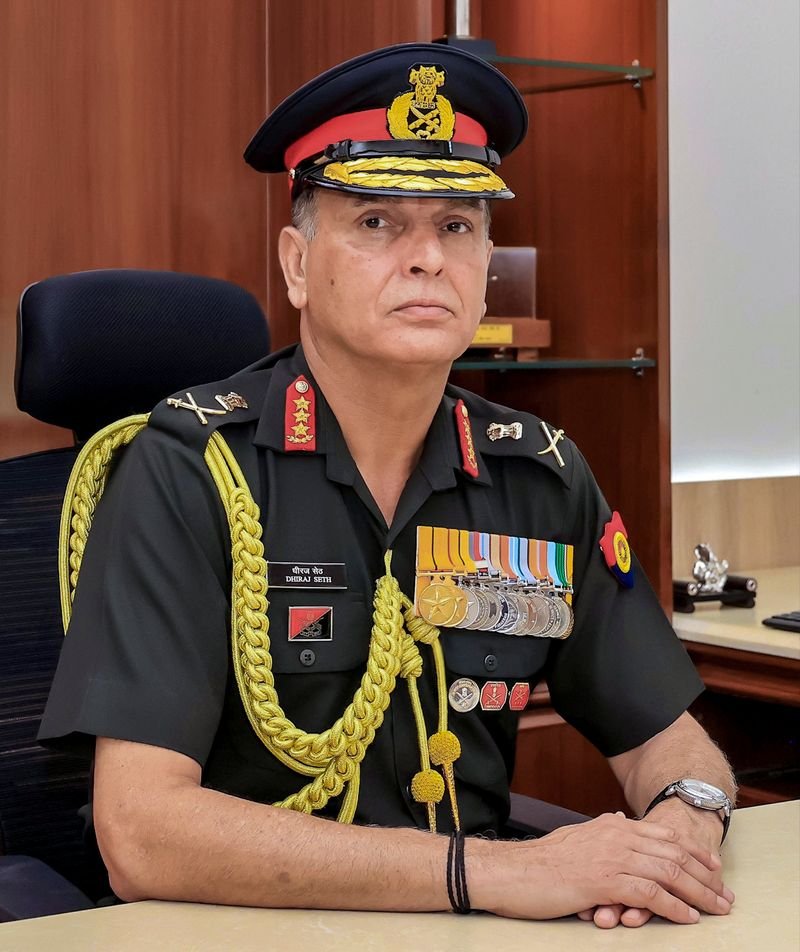
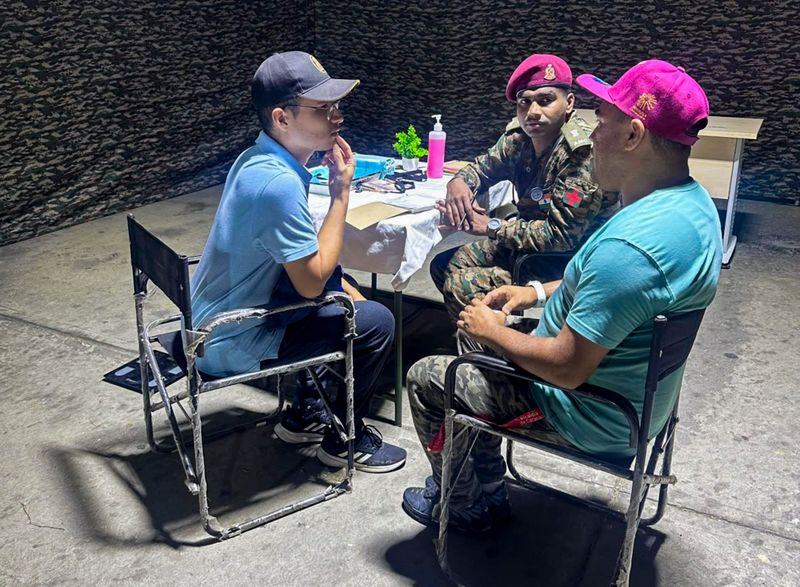
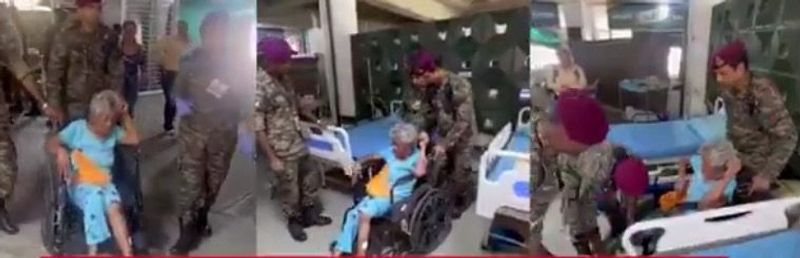
Under Operation Amistad, Indian Army established a field hospital comprising highly experienced doctors at the International La Rinconada Racetrack in Caracas
Venezuela has appreciated the Indian medical team’s efforts to help victims of the earthquake that rocked the South American nation, killing over 1,700 people.
Under Operation Amistad, the Indian Army established a field hospital comprising highly experienced doctors at the International La Rinconada Racetrack in Caracas after arriving in the country.
The Indian Embassy in Venezuela on Monday said that India has intensified its efforts to provide disaster relief “with a healing touch to those affected by the earthquake.”
Advertisement“Minister of People’s Power for Foreign Minister, Andrea Corao Faria, visited our Field Hospital and appreciated our efforts to help the earthquake victims,” the Indian mission said. The 7.2 and 7.5-magnitude earthquakes that struck on Wednesday evening were among the strongest in Venezuela in more than a century and were felt throughout the region.
The death toll from two powerful quakes in Venezuela crossed 1,700 people on Monday, with thousands more injured and many more missing.
Under Operation Amistad, two IAF C-17 Globemaster aircraft transported 66 tonnes of aid, including the Indian Army field hospital, over 35 tonnes of relief supplies, medicines and medical equipment, and two BHISHM Cubes, the Indian Air Force (IAF) said on Sunday.
Bharat Health Initiative for Sahyog Hita & Maitri (BHISHM) cubes are mobile hospitals aimed at providing emergency medical care. Working alongside Venezuelan authorities, Indian rescue and medical teams are providing emergency medical care and conducting search and rescue missions, the Indian mission said.
Amid the passport row, it’s evident that voter deletion unplugs the citizen from the State
IN Punjab, the passport is not really a document. It is a lifeline. No state in India holds them in such numbers. The rate at which Punjab issues passports per head of population is among the highest in the country. By common reckoning, more than one in five Punjabis carries one. The reason is plain. Almost every family in the state has someone abroad. Someone has a son in Brampton, another a brother in Southall or in Surrey.
The passport is the thread that ties the pind to Canada, the United States, England, Australia and the Gulf. Haryana lives much the same way. The northwestern plains have sent their young across the seas for a century, since the Ghadar men first sailed to America.
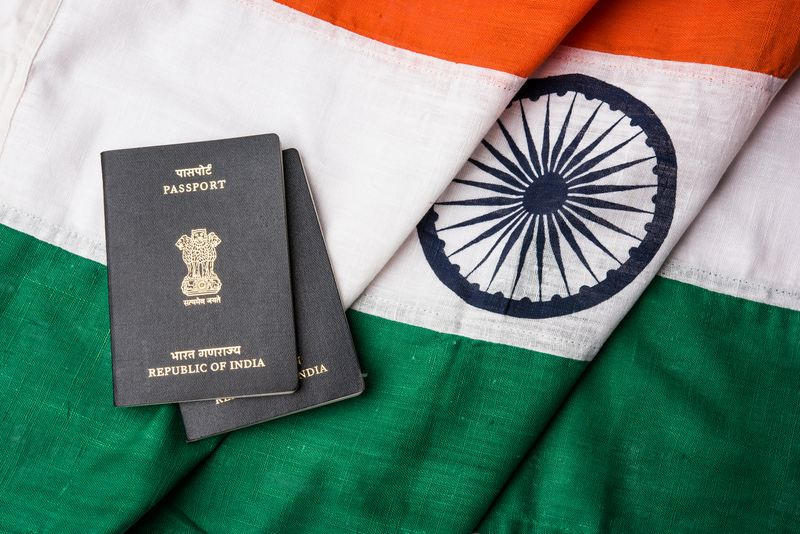
So, the recent statement from New Delhi was heard with particular unease in this part of the country. On Passport Seva Divas (June 24), the Ministry of External Affairs told the nation that a passport is a travel document and not a document of citizenship. As a matter of strict law, the ministry was right. The passport is issued under the Passports Act. Citizenship is governed by the Citizenship Act of 1955. One law regulates a document; the other regulates a status. But the law and the street do not always speak the same language.
What is technically legal is not the common understanding of how things work. For most Indians, the passport is the most authoritative thing the Republic has ever given them. It bears the name of the country. It carries their face. It is honoured at every border in the world because foreign governments trust that India checked before issuing it. The State does not hand out passports to all and sundry. It issues one only after it has satisfied itself that the holder belongs. So, when a citizen is told that the document proves nothing about belonging, the natural question follows: if the passport is not proof, then what is?
The word itself carries the older meaning. “Passport” comes from passing through a port or a gate. It began as a letter from a sovereign, a safe conduct, the State’s blessing on a traveller who wished to leave and return. The sovereign vouched for the bearer because the bearer was his own. A passport was an authorisation to leave a country with that country’s blessing. A State does not bless a stranger out into the world. It blesses one of its own.
Many Indians knew this in their bones. India does not allow dual citizenship. To keep an Indian passport is to refuse every other. Many an Indian achiever finds that passports of the West are theirs for the asking, as a recognition of their talent. Some, however, prefer to keep the Indian one. For them, as for the Punjabi woman flying out to her grandchild’s wedding, the passport was never merely a travel paper. It was a statement of who they were.
So, the timing was cruel. Passport Seva Divas marks the day the Passports Act came into force. It is meant to be a day of quiet pride. Instead, the spokesman made more people anxious than proud. He spoke a legal truth and left a public bruise. Call it the demonetisation effect, applied to passports. In November 2016, the citizen woke up to find that the currency notes that were legal last night were now to be doubted. The notes were still the Republic’s. The promise was still printed on them. Yet people stood in queues, unsure whether what they held was good. The passport statement did the same to belonging. It took a thing nobody questioned and taught a nation to question it.
But the real machinery is not in the passport office. It is in the electoral rolls. We have already seen it work. In West Bengal, the Special Intensive Revision (SIR) struck off 63 lakh names from the rolls. The new government has now ordered that the ration cards of deleted voters be switched off. Strike a name off the voter list and you do not merely remove a vote. You unplug the citizen from the State. The deletion is the kill switch of citizenship.
Now, carry that machinery to Punjab. The Assembly election is due in early 2027. The house-to-house enumeration for the SIR has begun. The revision works by matching names across the old rolls and the new, and flagging what it calls logical discrepancies. Consider what that means for a Sikh name written in English by one clerk, in Punjabi by another, and back into English by a third.
Amreek Singh on one roll becomes Amrik Singh on the next. Jasvinder turns into Jusvinder or Jaswinder. Gurmeet and Gurmit are the same man. So are Harpreet and Harprit, Kuldeep and Kuldip. None of this is fraud. It is the ordinary friction of carrying a Gurmukhi name through three scripts and four clerks. To a matching machine, it is a discrepancy. To the citizen, it is a summons to prove that he is himself.
Imagine then the Punjabi household. The vote goes first. Then the ration card. Then the passport will not be renewed, because the police verification leans on the rolls. The thread to Brampton and California is cut, not by any court that found the man a foreigner, but by a misplaced vowel. Why should a proud border state, which has sent its sons to fight the country’s wars and its children to build lives across the world, be put through the wringer of proving its citizenship merely to keep the passports that hold its families together?
Here the Supreme Court was petitioned, and it has so far faltered. In Association for Democratic Reforms v. Election Commission of India, decided this year, the Court upheld the SIR of Bihar. Nearly 47 lakh names had been struck off there. The Court found the exercise proportionate and lawful. It held that a place on the rolls raises only a rebuttable presumption of citizenship, and that asking a citizen to prove himself afresh does not offend the Constitution.
Thus, the Court tacitly drew a line through the people. On one side stand the voter citizens, secure in their papers. On the other stand the non-voter doubtful inhabitants, the man with the misspelt name, upon whom administrative vengeance may be wreaked at leisure. Article 14 promises equal protection of the laws. A court that lets the State quietly raise two classes of inhabitants, and protect only one, has not kept that promise. It has failed in its duty as a sentinel on the qui vive.
Fifty years ago, in the ADM Jabalpur case, the Court held that even the right to life could be suspended in an Emergency. The judiciary never lived down that judgment and Justice Chandrachud the younger was among those who specifically overruled Justice Chandrachud the elder’s concurrence in the habeas corpus judgment.
The Bihar judgment has now taken away, in ordinary times and with no Emergency declared, the right to vote, and with it the ration card and the passport. In the ADM Jabalpur case, the judiciary at least had the excuse of the Emergency. This judgment has none.
Yet the account is not closed. The challenge to the SIR in West Bengal is still pending before the Court, because the judgment has not been delivered. One may still hope that when the Court turns to Bengal, it will see what it failed to see in Bihar. A citizen long on the rolls ought not to be struck off on proof demanded from him, but only on proof brought against him. That the vote, the ration card and the passport are not favours to be switched off by a clerk or an electoral officer; they are the inalienable rights of an inhabitant of the Republic.
So, the country still keeps a question open. Do we have an occasionally fallible Supreme Court or one that repeatedly fails its citizens? When the Bengal judgment comes, Punjab will be listening.
Centre flags security concerns over WhatsApp’s upcoming username feature
The Government on Wednesday expressed concern over the new username feature introduced by social messaging platform WhatsApp, with highly placed sources indicating that the issue is being monitored closely as it poses possible risks to digital security and the company could be sent a notice on the matter.
Sources said that social media platforms must ensure that their products are not misused for impersonation, scams or misinformation, while adding that misuse through usernames, edited messages, fake groups or impersonation could invite regulatory action similar to the measures taken against Telegram during the NEET examination controversy.
“Platforms must ensure their architecture is not used to create mischief. If it is, the response will be calibrated but firm,” an official said.
Features like username registration may pose risks to digital security as it could be misused by creating usernames in anyone’s name, therefore the ministry is looking into the issue and will discuss the matter with the relevant departments and every legal aspect of the issue will be examined.
WhatsApp is expected to roll out the username feature later this year, which will allow users to communicate without sharing their phone numbers. While privacy advocates say the move could reduce exposure to risks such as contact scraping and SIM-swapping attacks, as experts have raised concerns about identity fraud, impersonation and data-sharing implications.
WhatsApp is expected to roll out the username feature later this year, which will allow users to communicate without sharing their phone numbers
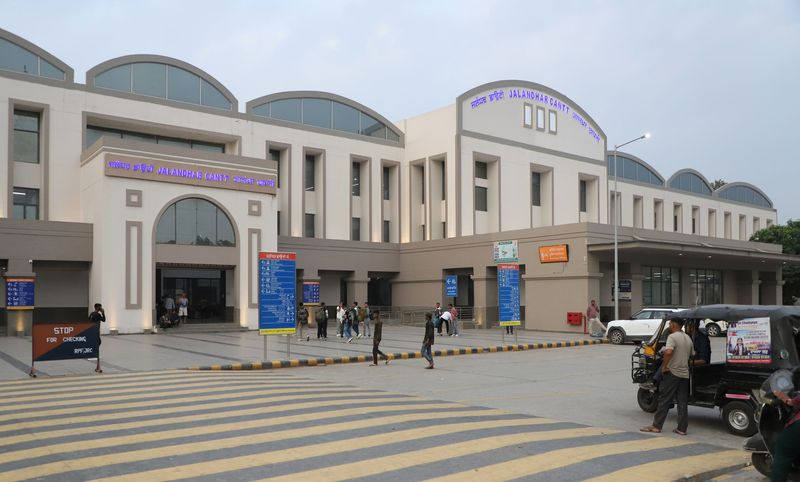
110-year-old Jalandhar Cantt railway station gets ₹99-cr makeover
MoS Bittu highlights heritage, modern features at revamped station
After years of delays, the 110-year-old British-era Jalandhar Cantonment Railway Station has finally undergone a major transformation.
Unveiling its upgraded look through a video shared on social media on Tuesday, Minister of State for Railways Ravneet Bittu showcased the redeveloped station, highlighting improved passenger amenities and modernised infrastructure.
The video, titled “Jalandhar Cantt da Shaandar Railway Station”, attracted widespread attention online, with commuters and residents welcoming the makeover of one of Punjab’s key railway junctions.
According to officials, the station is currently handling the movement of over 62 trains, including Vande Bharat. The redevelopment has been carried out at an estimated cost of Rs 99 crore.
The officials said the upgrade has reshaped the Jalandhar Cantonment Railway Station, introducing wider platforms, arched-shaped roofing and improved passenger movement areas.
Platform number 1 has been expanded nearly four times to ease congestion and improve movement during peak hours. All three platforms have been completed under the redevelopment plan, with staircases improving access across levels.
Passenger mobility has also been enhanced with the addition of lifts and escalators, aimed at improving accessibility for elderly passengers and those with reduced mobility. Waiting facilities have been upgraded with expanded seating areas and air-conditioned waiting rooms.
As part of the redevelopment plan, several passenger-focused amenities have also been introduced, including modern ticket counters, food plazas, retail kiosks, and luggage scanning systems to improve security and convenience. Separate dormitory facilities for male and female passengers have also been added to support long distance travellers, requiring rest facilities, the officials said.
The station’s exterior and interior have also been significantly upgraded, featuring a redesigned main entrance with dome style architectural elements improving lighting and ventilation. Heritage themed installations at the entrance showcase Punjabi cultural motifs and traditional artwork, giving the station a distinct regional identity alongside its modernised infrastructure.
Indian Army rescues 79-year-old woman from quake rubble in Venezuela
The Indian Army has rescued a 79-year-old woman from the rubble in earthquake-hit Venezuela and begun advanced medical treatment under Operation Amistad, India’s humanitarian relief mission in the country.
The Army said its medical team stabilised her fracture, initiated advanced wound care and started daily follow-up treatment, providing specialised medical support and “renewed hope for recovery.”
Earlier, Venezuelan citizens expressed gratitude to India for its relief efforts. The Ministry of External Affairs shared videos on X showing families thanking Indian medical teams for treatment at the Army Field Hospital, with one patient praising the quality of care provided by the specialists.
The humanitarian mission comes as Venezuela grapples with the aftermath of twin earthquakes that struck the country on June 24.
According to CNN, citing the National Assembly, the death toll has risen to 1,719, while 22,619 people have been affected, including 5,034 injured. Of the 855 buildings reported damaged, 189 have collapsed completely.
NASA researchers estimate that nearly 58,870 buildings were damaged or destroyed, while 609 aftershocks have been recorded since the earthquakes. The US Geological Survey has estimated a 44 per cent chance that the final death toll could exceed 10,000.
4-year-old boy who fell into borewell at Ambala village brought out dead
Nirvair, a resident of Dhanaura village, had fallen into the borewell while playing in the fields on Tuesday morning
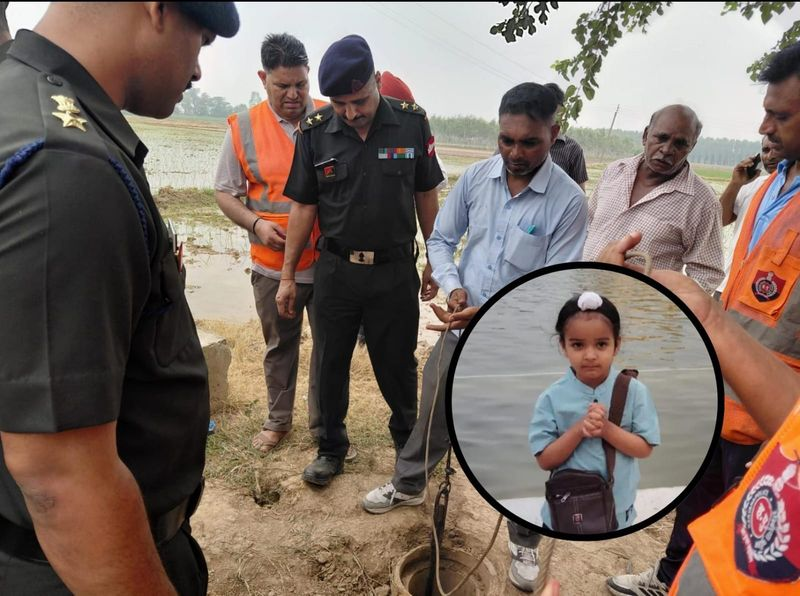
The dead body of four-year-old Nirvair Singh, who fell into a borewell in Ambala on Tuesday morning, was retrieved in the early hours of Wednesday after an around-the-clock rescue operation.
The rescue operation was completed at around 3:25 am. The boy was taken to the Civil Hospital, Ambala, where doctors declared him brought dead.
Medical Officer Dr Rishipal said that the boy was examined as soon as he was pulled out of the borewell and rushed to the hospital.
“Despite all efforts, he was declared brought dead. The body has been shifted to the mortuary for post-mortem examination. Since there was water in the borewell, the exact cause of death will be clear after the post-mortem,” he said.
Nirvair, a resident of Dhanaura village, had fallen into the borewell while playing in the fields on Tuesday morning. A rescue operation was launched to rescue him.
Personnel from the police, National Disaster Response Force (NDRF), State Disaster Response Force (SDRF) and the Army, along with heavy machinery, were deployed to rescue the child.
According to the family, Nirvair and his father, Manjeet Singh, had gone to their fields at around 6:30 am to give food to the boy’s grandfather. While playing, he accidentally fell into a borewell on a neighbouring field. On hearing his screams, his father and grandfather raised the alarm. Local residents and an emergency response team rushed to the spot and launched rescue efforts, but they could not pull him out.
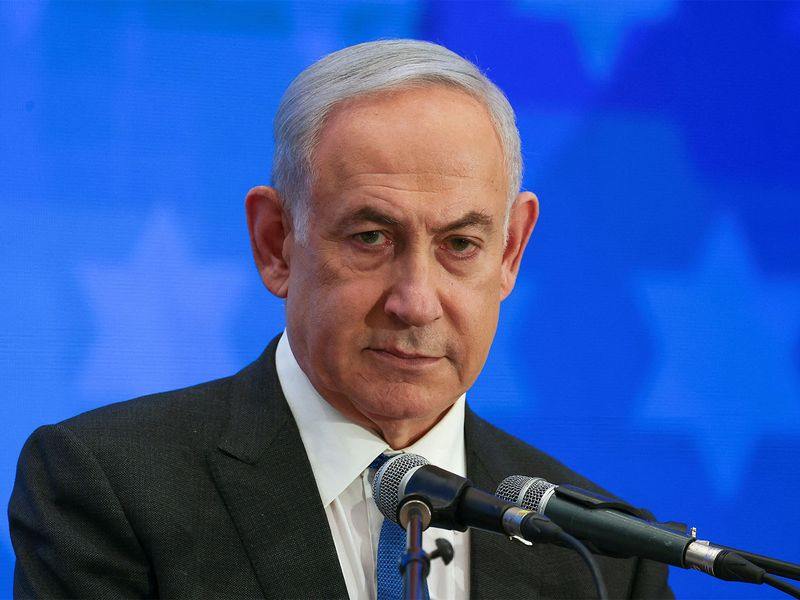
‘Want to stop American aid’: Netanyahu says Israel no longer needs US assistance
Asserting the nation’s economic self-reliance, Israeli Prime Minister Benjamin Netanyahu announced an ambitious policy shift aimed at ending American financial assistance, declaring that the country’s robust economy no longer requires foreign subsidies.
Making the remarks on Tuesday, the Prime Minister outlined his administration’s comprehensive strategy across critical security and geopolitical fronts, including state sovereignty, regional military presence, and diplomatic manoeuvres.
Addressing the financial relationship with Washington, Netanyahu stated, “I want to stop American aid. It’s like welfare; I don’t want it.”
He emphasised that Israel’s contemporary fiscal strength renders outside funding negligible, adding, “Our economy is no longer a small economy… we can finance ourselves with this fraction of a per cent of our GDP that we receive from the United States. I want this process to start this year.”
Turning to core territorial and sovereignty matters, the Prime Minister re-emphasised his administration’s unyielding opposition to Palestinian statehood.
He reaffirmed, “Israel is the nation-state of the Jewish people. No Palestinian state will be established here.”
Netanyahu detailed an aggressive stance on national defence, underscoring that the military will maintain a proactive posture against external adversaries.
He asserted, “We will pursue an active security policy–we won’t sit back and wait behind fences.”
When questioned about the potential re-establishment of Israeli communities within the Gaza Strip, the Prime Minister maintained a calculated diplomatic silence.
He noted, “As for rebuilding settlements in Gaza, you have to be ready to act first and talk afterwards. Sometimes it’s better to separate the two. That’s why I’m not going to add anything further on that subject.”
Elaborating on his approach to governance and international relations, Netanyahu suggested that strategic ambiguity remains paramount.
He stated, “You have to understand that the art of statecraft isn’t limited to domestic politics. I don’t have to declare everything to the whole world at every moment.”
Highlighting Israel’s persistent operations against regional threats, the Prime Minister issued a direct warning regarding cross-border pre-emptive strikes against Tehran’s nuclear and military infrastructure.
He remarked, “We entered Iran twice to save ourselves from destruction. There will be a third time if necessary.”
Netanyahu also confirmed that Israeli defence forces will maintain their operational positions within Lebanese territory to counter hostile factions.
He explained, “We didn’t leave Lebanon. We have effectively established this security belt–about 10 kilometres inside Lebanon–with the agreement of the Lebanese government. And, of course, Hezbollah is outraged. The same is true of Iran.”
During a physical assessment of troop deployments in the northern sector, the Prime Minister reiterated that the military presence would persist until cross-border threats were neutralised.
He told the gathered forces, “Our position is clear: we will not leave southern Lebanon until the threat has disappeared. And as long as Hezbollah, armed, is here and threatening us, we will stay here.”
The declaration follows the recent signing of a Washington-brokered framework pact between Beirut and Tel Aviv, intended to establish long-term stability and ensure the demilitarisation of the Iran-backed Shiite militia.
Under the stipulations of the diplomatic accord, any eventual troop drawdown by Israeli forces remains strictly contingent upon the Lebanese government successfully establishing specialised operational sectors where the state military takes over security control.
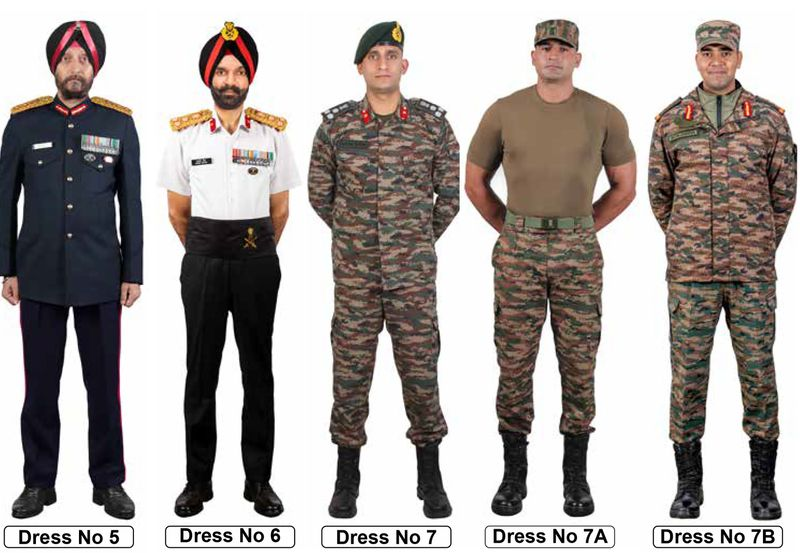
The Army’s new manual for uniforms to be worn by its personnel brings in a practical change to align the clothing to match Indian weather conditions and does away with the “residual” colonial-era practices.
Army personnel are needed to wear different uniforms for separate activities, including ceremonial functions, combat, mess, hot climates and high altitudes.
A 185-page booklet, ‘Army Uniforms 2026’, released earlier this month reflects a step towards aligning regulations with the contemporary Indian ethos through the progressive removal of residual colonial-era practices and non-essential accoutrements and the discontinuation of archaic terminology such as “Royal”.
The document removes ambiguity and provides flexibility, especially in winter clothing. Also, for civilian formal occasions, officers now have the option of wearing a half jacket – a ‘bandi’ jacket. The coat or the blazer has not been removed from the list; the bandi jacket is an additional option that can be used with a full-sleeved shirt and matching formal trousers and shoes.
It does away with the mandatory carrying of swords by parade reviewing officers and the use of pouch belts, worn across the shoulder with certain mess dresses. Swords may be carried only by parade commanders, contingent commanders and designated personnel during major ceremonial events such as Republic Day, Independence Day and Army Day parades and for the guard of honour.
The Army has also introduced a new winter working dress featuring a battle jacket, which will gradually replace the existing jersey-based winter uniform by June 2029. The battle jacket has been reintroduced as standard winter outerwear for all ranks, with a three-year transition period for implementation. This jacket has a provision to add or remove layers depending upon the weather.
The booklet bars radical hairstyles, unauthorised beards, visible electronic gadgets, tattoos, body piercings and cosmetic make-up while in uniform. It also prohibits the wearing of uniforms at political, religious or protest gatherings; weddings; private parties; and paid media appearances without authorisation.
The uniform shall not be worn when visiting restaurants, hotels or other public places in a personal capacity. It also can’t be worn in case of staying in a hotel on temporary duty or while travelling in public transport during leave.
There are norms for contact lenses too. The booklet says contact lenses may be used in place of spectacles. However, the colour of contact lenses must be natural and almost similar to the wearer’s eye colour.
Earlier this year, the Army undertook an initiative to discontinue colonial names and renamed 246 roads, buildings and facilities across its establishments. According to Army officials, the exercise covered 124 roads, 77 colonies, 27 buildings and other military facilities and 18 miscellaneous facilities, including parks, training areas, sports grounds, gates and helipads.
In Delhi Cantonment, Kirby Place (officers’ accommodation) has been renamed Kenuguruse Vihar, while Mall Road has been renamed Arun Khetrapal Marg. At the Indian Military Academy in Dehradun, Colins Block and Kingsway Block have been renamed Nubra Block and Kargil Block, respectively.
In Kolkata, Fort William has been renamed Vijay Durg.
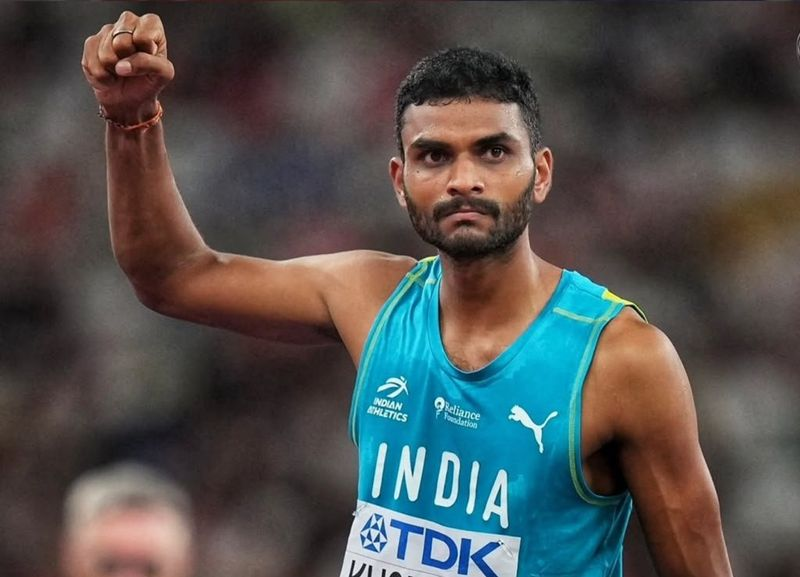
New national record in high jump: Army athlete becomes 1st Indian to clear legendary 2.30 metre barrier
Kushare has surpassed the earlier record of 2.29 metres set in 2018 by Tejaswin Shankar of New Delhi
With this, he has surpassed the earlier record of 2.29 meters set in 2018 by Tejaswin Shankar of New Delhi, and has qualified for the Asian Games. He has become the first Indian in history to clear the legendary 2.30 metre barrier.
Over the past few months, several Indian Army sports persons have won gold medals at various international and national competitive events. “The gold rush continues,” the Indian Army said after Kushare bagged the gold. Wishing Nb Sub Sarvesh all the very best for the Commonwealth Games and the Asian Games — fly high and bring home more glory!” the Army said.
The Asian Games record in High Jump is 2.35 meters, set by Mutaz Barsham of Qatar in September 2014 at Incheon in South Korea, while the Commonwealth Games record is 2.36 metres by Clarence Saunders of Bermuda, set in February 1990 at Auckland in Australia. The world high jump record is 2.45 metres, set by Javier Sotomayor of Cuba in July 1993, during the International Athletics Meet at Salamanca in Spain.
Belonging to Nashik district of Maharashtra, Kushare had joined the Army in 2016 and is posted at the Artillery Center, Bengaluru. He made his international debut at the 13th South Asian Games in Nepal in December 2019, where he won the gold medal in the men’s high jump. He has won several medals at national and international events.
As part of its Mission Olympics programme, the Army trains specially selected sportspersons at the Army Sports Institute, which is run in collaboration with the Sports Authority of India.
The ASI was established in July 2001 as a multi-disciplinary institute to identify and nurture the vast talent of sportspersons within the Armed Forces Army and recruit potential sportspersons from across the country.
State Stalwarts
DEFENCE MINISTER
Minister Rajnath Singh
ALL HUMANS ARE ONE CREATED BY GOD
HINDUS,MUSLIMS,SIKHS.ISAI SAB HAI BHAI BHAI
CHIEF PATRON ALL INDIA SANJHA MORCHA
LT GEN JASBIR SINGH DHALIWAL, DOGRA
SENIOR PATRON ALL INDIA SANJHA MORCHA
MAJOR GEN HARVIJAY SINGH, SENA MEDAL ,corps of signals
.
.
PATRON ALL INDIA SANJHA MORCHA
MAJ GEN RAMINDER GURAYA ,MADRAS REGIMENT
sanjhamorcha303@gmail.com
PRESIDENT SOUTH ALL INDIA SANJHA MORCHA
COL SS RAJAN BOMBAY SAPPERS,
PRESIDENT UTTARAKHAND ALL INDIA SANJHA MORCHA
COL B M THAPA ,BENGAL SAPPERSS
PRESIDENT HARAYANA STATE CUM COORDINATOR ESM
BRIG DALJIT THUKRAL ,BENGAL SAPPERS
PRESIDENT TRICITY
COL B S BRAR (BHUPI BRAR)
PRESIDENT CHANDIGARH ZONE
COL SHANJIT SINGH BHULLAR
.
.
PRESIDENT PANCHKULA ZONE AND ZIRAKPUR
COL SWARAN SINGH
INDIAN DEFENCE FORCES
DEFENCE FORCES INTEGRATED LOGO
INDIAN AIR FORCE
Air Officer C-in-C WESTERN AIR COMMAND
AIR MSHL S PRABHAKARAN AVSM VM
AOC-IN-C, EASTERN AIR COMMAND
Air Marshal Inderpal Singh Walia
AOC-in-C SOUTH WESTERN AIR COMMAND
Air Marshal Vikram Singh
AOC-IN-C, SOUTHERN AIR COMMAND
Air Marshal J.Chalapati
AOC-IN-C TRAINING COMMAND
AIR MARSHAL SK GHOTIA VSM
AOC-IN-C MAINTENANCE COMMAND
Air Marshal Jagdish Chandra
Flag Officer Commanding in Chief, Western Naval Command
ice Admiral R Hari Kumar, PVSM, AVSM, VSM
Flag Officer Commanding in Chief, Eastern Naval Command
Vice Admiral Sanjay Bhalla, AVSM, NM
Flag Officer Commanding in Chief, Southern Naval Command