





Sanjha Morcha

What’s New

Click the heading to open detailed news

Current Events :

web counter

Print Media Reproduced Defence Related News

4 Punjab cadets, including two women, commissioned as Lieutenants in Indian Army

The lady cadets are from Mai Bhago Armed Forces Preparatory Institute for Girls, while the men are from Maharaja Ranjit Singh Armed Forces Preparatory Institute
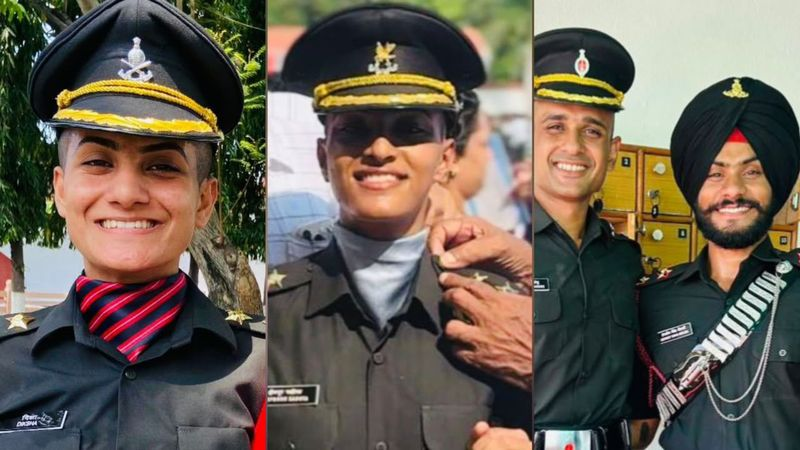
n a proud moment for Punjab’s military legacy, four cadets—two lady cadets from the Mai Bhago Armed Forces Preparatory Institute for Girls and two from the Maharaja Ranjit Singh Armed Forces Preparatory Institute (MRSAFPI)—were commissioned as Lieutenants in the Indian Army on Saturday.

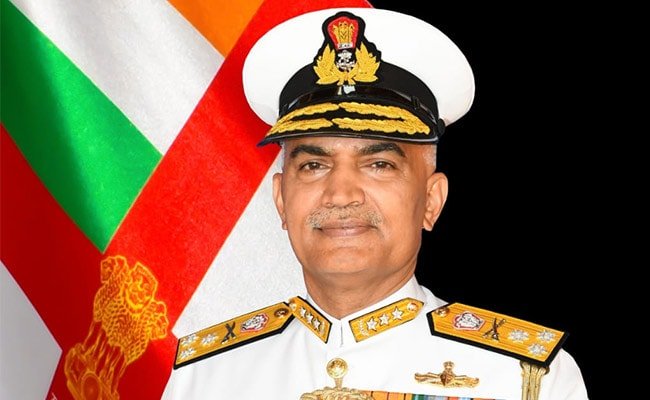
The commissioning took place at the Officers Training Academy (OTA) in Chennai during a spectacular passing out parade reviewed by Chief of Naval Staff Admiral Krishna Swaminathan, PVSM, AVSM & VSM.

Lady Cadet Deepnoor has been commissioned into the elite Army Aviation Corps, while Lady Cadet Diksha Dhiman joins the Army Ordnance Corps. Deepnoor is the daughter of S. Sukhbir Singh, Professor at Sardar Beant Singh State University, Gurdaspur and Ramanpreet Kaur, a Government School Teacher. Diksha is the daughter of Pawan Kumar, a businessman from Pathankot and Indu.

The MRSAFPI duo also made the state proud with Cadet Ishpreet Singh Dhillon, son of late Paramjit Singh Dhillon and Santosh Kaur, joining the Regiment of Artillery, and Lieutenant Arsh Singh, son of Maj Gen P.S. Sandhu (Retd), carrying forward his family’s legacy as a second-generation officer into the Judge Advocate General (JAG) Branch.

Congratulating the newly commissioned officers, Punjab Employment Generation, Skill Development and Training Minister Mr. Aman Arora said, “These young officers will inspire thousands of youth across Punjab to serve the nation. Under Chief Minister Bhagwant Mann’s leadership, the state government is fully committed to handholding and supporting every youth aspiring to join the Armed Forces as a commissioned officer.”

Expressing delight over the achievement, Maj Gen Jasbir Singh Sandhu, AVSM (Retd), Director, Mai Bhago AFPI, said, “This milestone will further energise our mission at Mai Bhago AFPI to prepare more daughters of Punjab for commissioning as officers in the Armed Forces.” He extended warm wishes to the newly commissioned officers.

Maj Gen Ajay H. Chauhan, VSM (Retd), Director, MRSAFPI, exhorted the new officers to uphold the nation’s ideals and make their alma mater proud. He added that 15 more cadets of MRSAFPI have cleared SSB and are awaiting joining letters for the December 2026 course.
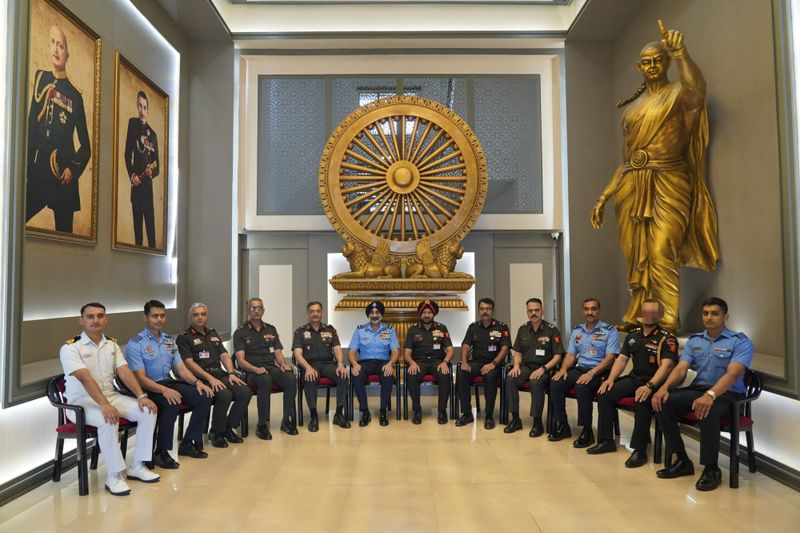
DRDO develops jammer to counter AI-enabled ‘smart’ radios

Smart Communication Jammer System to detect and disrupt cognitive radio networks that can rapidly switch frequencies to evade interception

With military communication systems becoming increasingly resilient to electronic countermeasures, the Defence Research and Development Organisation (DRDO) is developing an advanced system to counter ‘smart’ or cognitive radio networks that use artificial intelligence to evade detection and jamming.

Christened the Smart Communication Jammer System (SCJS), the system will be a large vehicle-mounted platform capable of detecting, analysing, classifying, direction-finding, monitoring and jamming tactical communication mobile ad hoc networks (MANETs).

Cognitive radios and MANETs are advanced wireless communication systems that can sense their surrounding environment and automatically alter their settings to use the radio spectrum more efficiently. They can continuously scan for unused or underutilised frequency channels and rapidly switch frequencies, making them difficult to monitor or intercept using conventional jamming systems.

The Defence Electronics Research Laboratory, a DRDO establishment, is the nodal agency for executing the project. It is seeking Indian industry partners for the design and development of the SCJS.

According to DRDO’s requirements, the system should be capable of monitoring and jamming radios operating in the 30 MHz to 6,000 MHz frequency range, with 360-degree detection coverage and a range of 20 km. It should also be capable of countering radios that change frequencies at rates of up to 2,000 hops per second.

The wide frequency range covers several tactical communication bands used by modern military systems, including unmanned aerial vehicles (UAVs), loitering munitions and software-defined radios.

Unlike conventional radios that operate on preset channels, cognitive radios use artificial intelligence and machine learning to analyse their operating environment and dynamically switch between spectrum channels, potentially within microseconds, to evade interference.

Traditional static or brute-force jammers, which use high-power radio-frequency signals across fixed bands, can therefore be less effective against such rapidly changing systems, an officer explained.

Army officers said cognitive radio networks improve the reliability of military communications and the availability of information, but also make it more difficult to monitor an adversary’s activity.

Such networks, however, have significant civilian applications as well, including reducing spectrum congestion and improving the efficiency of wireless communications.


Mecca defence pact has made Pakistan ‘overconfident’: Ex-CDS Gen Anil Chauhan

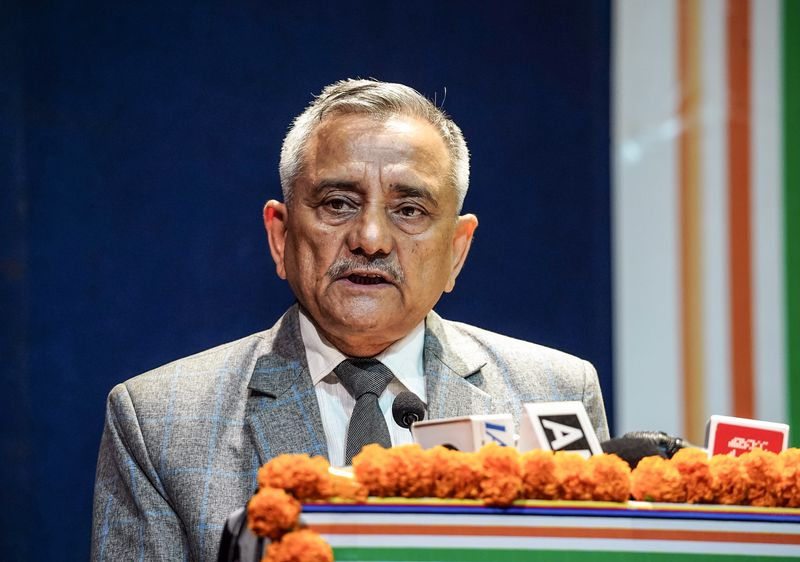
Former Chief of Defence Staff (CDS) General Anil Chauhan addresses the 22nd Bharat Ratna Pandit Govind Ballabh Pant Memorial Lecture on Threats and Challenges to India’s Security at the Pradhanmantri Sangrahalaya in New Delhi on Saturday. ANI

Pakistan remains a cause for concern, and the recently signed “Mecca Defence Agreement” with Saudi Arabia and Türkiye has made Islamabad “overconfident”, something India needs to remain watchful of, former Chief of Defence Staff General Anil Chauhan said on Saturday.

Speaking at the 22nd Govind Ballabh Pant Memorial Lecture here on the theme “Threats and Challenges to India’s Security”, Gen Chauhan, who retired as the country’s top military officer in May this year, also said the unresolved India-China boundary issue continued to carry the potential for friction.

Referring to the Mecca Joint Defence Agreement, Gen Chauhan said, “We have seen the accord and it seems to have induced a kind of overconfidence in Pakistan, and we have to be careful of that.”

The agreement, signed on August 7, 2026, is a mutual defence pact among Pakistan, Saudi Arabia and Türkiye. It states that “an armed attack on one member would be treated as an attack on all three”.

“Pakistan will remain, I think, a major issue of concern in the future,” Gen Chauhan said.

He said the presence of nuclear weapons had created a degree of “static stability” at every level, “but this had also induced instability at the lower levels”.

Pakistan, he said, sought to reduce the space for conventional military operations and relied on sub-conventional warfare, including cross-border terrorism and proxy war.

“Even if a terror network is dismantled, the system, the finance, propaganda and Pakistan’s state support means that terrorism and proxy war will remain a major challenge for us,” he said.

Citing Operation Sindoor and the Balakot strikes as examples of deterrence, Gen Chauhan said India needed to increase the cost of a proxy war for Pakistan.

“India must be able to increase the cost of a proxy war for Pakistan, so that it stops using this as an instrument of state policy,” Gen Chauhan said.

On China, he said it posed an “absolutely different and more long-term and comprehensive challenge”.

The boundary issue remained unresolved and there was no mutually agreeable definition even of the Line of Actual Control (LAC), he said.

“Differences in perception, combined with infrastructure development and power multipliers, create the possibility of friction,” he said.

Border stability required resilience, critical capabilities, clear agreements and consistent adherence to them, he said, in obvious reference to China having breached agreements during the May 2020 military stand-off in Eastern Ladakh.

India and China, he said, were two major nations that cooperated in some areas, competed for influence in markets and held divergent views on aspects of regional and global politics.

“There is a need to engage with China,” Gen Chauhan said, adding that the future of Asia would depend substantially on how India and China managed their relationship.


Air Chief Marshal Amar Preet Singh visits Army’s Western command, focuses on synergised operations

Chief of the Air Staff, Air Chief Marshal Amar Preet Singh, visited Headquarters Western Command, Chandimandir, and interacted with Lt Gen Pushpendra Singh, General Officer Commanding-in-Chief, Western Command and other senior officers.

The interaction focused on enhancing operational preparedness, strengthening joint planning and furthering integration between the Indian Army and the Indian Air Force for synergised operations.

During Operation Sindoor in May 2025, both the services had operated in close coordination for air defence as well as offensive operations through an integrated and networked environment.

The Air Chief also interacted with air warriors serving with the Western Command, acknowledging their vital role in fostering seamless Army-Air Force integration and reinforcing the shared commitment to mission readiness and decisive operational response.


Army Training Command chief retires, curtains fall on a century of family military service

With Lieutenant General Devendra Sharma, General Officer Commanding-in-Chief, Army Training Command (ARTRAC), superannuating on August 31, the curtains come down on a century of collective military service by a family.

A second-generation officer, he had rendered 39 years of service. His father, late Wing Commander Shiv Kumar Sharma, was an Indian Air Force fighter pilot who saw combat in four operations – Goa in 1961, Fukcheh and Demchok in 1962, Halwara in 1965 and Pathankot in 1971. Shot down over Sargodha in 1965 and ejecting with a spinal fracture, he fought his way back to fitness to fly fighters again by 1971.
His father-in-law, Brigadier Sarjeet Singh Kaler (retd), saw combat in all three major wars – Rezangla in 1962, with 1 Jat in the Amritsar-Lahore Sector in 1965 and as the Adjutant of 1 JAT in 1971. He later commanded 2 Mechanised Infantry (1 JAT).

General Sharma’s elder brother, Air Commodore Shailendra Sharma, (retd), was a Mirage 2000 pilot who had flown strike missions over Kargil, Dras and Mushkoh during the 1999 Kargil conflict.

An alumnus of Mayo College, Ajmer, and the National Defence Academy, Khadakvasla, General Sharma won the coveted Sword of Honour for being adjudged the best cadet and the Sikh Light Infantry Medal for being the best sportsman. He was commissioned into the Scinde Horse, an old armoured regiment, in December 1987. He is the first Lieutenant General and Army Commander from this regiment and its longest-serving officer.

Early in his career, while serving with 11 Rajputana Rifles in counter-insurgency operations in Jammu and Kashmir, he was decorated with the Sena Medal for Gallantry. He went on to command the Scinde Horse, an armoured brigade, an infantry division and a pivot corps – all along the Western Front. In addition, He has been deputed for foreign service twice, first with the Indian Military Training Team in Bhutan and later with the United Nations Peace Keeping Mission in Congo as the Chief Military Personnel Officer, administering over 21,000 troops from 52 Nations.

He took over as the ARTRAC chief in July 2024, following which the Command promulgated the Chief of Army Staff Quadrennial Training Directive 2025-2029; pioneered drone warfare training with over 50,000 personnel being trained in their domain.

During his tenure, ARTRAC initiated the establishment of Maneuver Warfare Ranges, Urban Warfare Nodes and Cyber and Electronic Warfare Ranges. The Command also institutionalised ‘Vidur Vakta’, the cognitive Red Teaming for pan-Army adoption and delivered 74 publications, five seminal doctrines and steered 15 establishments as Centres of Expertise to absorb 33 niche technologies by 2030.

ARTRAC is also working on the Land Warfare Doctrine 2026, a blueprint for the Indian Army Futures Training Command (IAFTC) to build a proactive, adaptive, technology-enabled and future-ready force, absorption of new-generation equipment and emerging technologies and exam cell reforms to preserve meritocracy.

In an address to all officers before hanging up his boots, General Sharma highlighted the transformation of ARTRAC into a key driver of multi-domain readiness and outlined crucial training imperatives for the 21st century battlespace while calling for an institutional shift from ‘process orientation’ to ‘product delivery’.


Several top-level Army appointments take effect

Lt Gen Deshpande takes charge of Chetak Corps in Bathinda; Lt Gen SS Kartikeya has taken command of the Brahmastra Corps

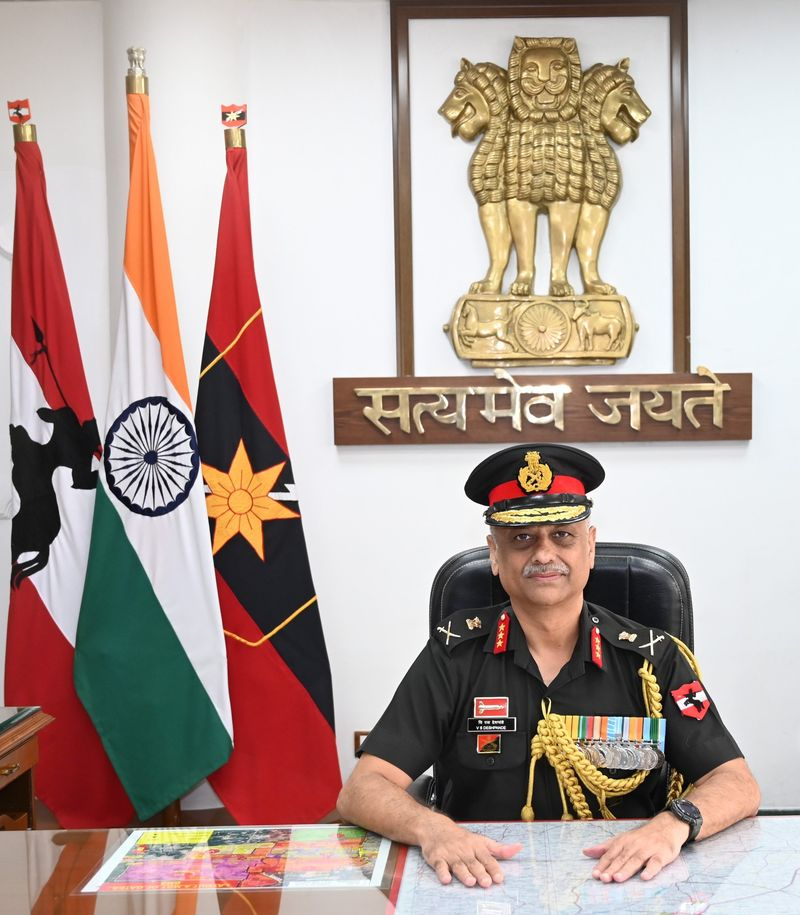
Lieutenant General Vikrant Suresh Deshpande has been appointed as the General Officer Commanding (GOC) of the Chetak Corps in Bathinda. He takes over the baton from Lt Gen Shamsher Singh Virk.

An infantry officer, Lt Gen Deshpande has extensive experience in counter-infiltration and counter-terrorist operations in Jammu and Kashmir and the north-east. He has also commanded an infantry division on the northern borders.

On assuming command of the Corps, tasked with the defence of southern Punjab and northern Rajasthan, he exhorted all ranks to continue their relentless efforts towards enhancing operational effectiveness and combat readiness.

Lt Gen Virk had led the Corps with distinction, reinforcing operational readiness, jointness and military-civil synergy since May 2025, the South Western Command said on September 1.

Lt Gen SS Kartikeya has taken command of the Brahmastra Corps from Lt Gen Yash Ahlawat. Based at Panagarh in West Bengal, the Corps is a strike formation specially raised for operations along the high-altitude border with China.

Lt Gen Kartikeya has earlier served as the GOC of the Red Shield Division based at Leimakhong in Manipur.

Lieutenant General IS Panjrath has assumed the appointment of Director General, Army Air Defence, at Army Headquarters, while Lt Gen Amit Rao has taken over as the Commandant of the Army Air Defence College in Gopalpur.

Lieutenant General Sandeep Narang has been appointed as the Commandant of the Military College of Materials Management in Jabalpur. He takes over from Lt Gen Sanjay Sethi, who has superannuated.

On the medical front, Surgical Vice Admiral Dilip Raghavan has been appointed as the Director General Hospital Services (Armed Forces) in the Directorate General of Armed Forces Medical Services. He is an alumnus of the Armed Forces Medical College (AFMC) and a renowned ENT and neuro-otologist.

Air Marshal Vivek Hande has taken over as the Director General Medical Services (Air). An alumnus of AFMC, he is a gastroenterologist and has commanded the Indian Naval Hospital Ship Asvini.


Facing contempt before High Court, Defence Ministry hikes payscale of 82 Major Generals getting lower pension than juniors

The Military Service Pay (MSP) component introduced under the Sixth Central Pay Commission has been restricted to officers up to the rank of Brigadier. This created an anomalous situation whereby Brigadiers and equivalent rank officers in the Navy and Air Force started getting higher pay and higher pension than Major Generals

Over three years after the Armed Forces Tribunal (AFT) directed the Union Government to step up emoluments of Major Generals who were drawing lesser pension than their immediate juniors at the level of Brigadiers, the Ministry of Defence, facing contempt notice from the High Court, has hiked the pension of 82 such affected Major Generals.

“Sanction of the Competent Authority is hereby accorded for conditional implementation of AFT (PB) New Delhi orders in Maj Gen Pay Anomaly cases in respect of applicants as mentioned at Appendix to this letter to step-up their pay retrospectively with effect from such date so as to bring it at par with their immediate juniors (Brigadier) and thereafter grant all arrears of pay retrospectively with effect from the date of assumption of Maj Gen rank till superannuation. The difference would be paid as ‘Personal Pay’ which would be treated as ‘Pay’ for all purposes,” a letter sent by Army Headquarters to the Principal Controller of Defence Accounts on August 31 states.

“Subsequently, pension to be fixed and all other consequential benefits including enhanced rate of leave encashment be granted to the applicants with effect from date of retirement along with applicable interest, if any from the date due till payment of arrears,” the letter adds.

The Military Service Pay (MSP) component introduced under the Sixth Central Pay Commission has been restricted to officers up to the rank of Brigadier. This created an anomalous situation whereby Brigadiers and equivalent rank officers in the Navy and Air Force started getting higher pay and higher pension than Major Generals.

A large number of officers moved the AFT, which by a common order in March 2023, ruled in favour of the affected Major Generals and equivalent ranks in the other services and directed the government to step up their pay and pension and ensure that under no circumstances they will receive lesser pay and pension than their immediate juniors.

However, the government did not implement the AFT’s order despite several execution orders issued by AFT. In one such case the government filed a writ petition in the Delhi High court challenging the AFT order.

“Though the High Court admitted the petition, it declined to stay the AFT judgement. The AFT issued an order directing the government to comply with the judgement conditionally after obtaining an affidavit from each petitioner that they would abide by the High Court order, if any, subsequently passed in the connected matter,” Col Indra Sen Singh (retd), counsel for some of the petitioners, said.

When the government still didn’t implement the AFT judgement despite all petitioners having rendered such undertaking in the form of affidavit, 82 affected Major Generals and some equivalent rank officers of Navy and Air Force filed a number of contempt petitions in the Delhi High court against the Defence secretary and Controller General of Defence Accounts (CGDA) among others.

The High Court issued contempt notices to the concerned officers, directing them to comply with the AFT judgement by the next date or be present before the High Court to answer the contempt.

The Army Headquarters’ letter of August 31 states that the implementation of the AFT’s orders are subject to the outcome of the matter pending before the Delhi High Court or any further appeal before the Supreme Court.

Each retired officer shall submit a fresh undertaking that he will refund the entire amount so paid in accordance with any order passed by the High Court or the Supreme Court in the future.

Sources said that same orders have been issued for Navy and Air Force officers who have obtained similar orders from the AFT in their favour, but the hike is only for those officers who filed cases and not for all affected officers


Air Marshal Jeetendra Mishra is ex-Western Air Command chief with 38-year experience

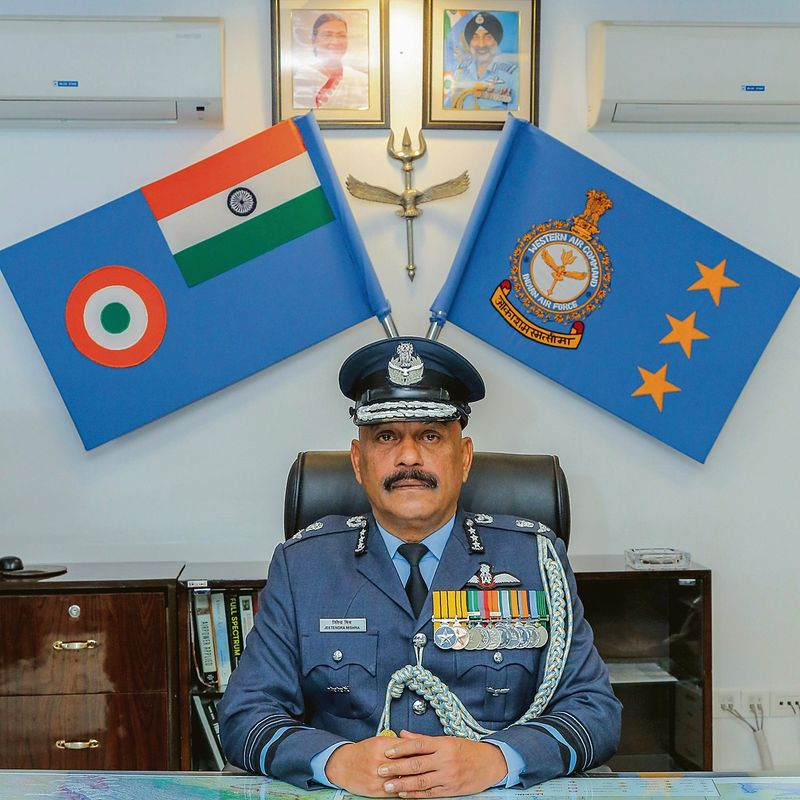
Air Marshal Jeetendra Mishra (retd), the newly appointed first CEO of the Shri Ram Janmabhoomi Teerth Kshetra Trust in Ayodhya, was commissioned into the Indian Air Force (IAF) as a fighter pilot in December 1986. He has logged more than 3,000 flying hours during his distinguished career.

He was heading the Western Air Command when India launched Operation Sindoor against Pakistan in May 2025. Following the operation, Prime Minister Narendra Modi visited the IAF frontline base at Adampur where Air Marshal Mishra briefed him on the operation.

The Western Air Command oversees key airbases, including Adampur, Halwara, Pathankot, Ambala, Chandigarh, Leh, Srinagar, Bathinda, Hindon and Sirsa. These bases are spread across Punjab, Haryana, Jammu & Kashmir, Ladakh and Uttar Pradesh.

Advertisement

Related news: Op Sindoor veteran Mishra named Ram Temple Trust’s first CEO

Air Marshal Mishra, who hails from Deoria district of Uttar Pradesh, headed the Western Air Command from January 1, 2025, till his retirement on April 30, 2026. Under his command were Rafale, Sukhoi 30-MKI and MiG 29 fighter jets, Apache and Mi-25 attack helicopters, a large transport fleet, S-400 air defence missile systems and BrahMos units.

During Operation Safed Sagar in Kargil in May-July 1999, Air Marshal Mishra, then a Squadron Leader, was tasked with test-flying the Mirage-2000 jets that had been rapidly integrated with laser-guided bombs to target Pakistani positions on mountain heights.

He is an alumnus of the National Defence Academy, Pune; Air Force Test Pilots School, Bengaluru; Air Command and Staff College, US; and Royal College of Defence Studies, UK.

During a career spanning over 38 years, he commanded a fighter squadron at Tezpur, Assam, and served as the Chief Test Pilot at Aircraft and Systems Testing Establishment, Bengaluru. As an Air Commodore, he commanded frontline airbases at Pathankot and Bareilly.

He also held several other posts, including IAF’s Director (Operational Planning and Assessment), Principal Director and Assistant Chief of Air Staff.

In the tri-services organisation, he was Deputy Chief of Integrated Defence Staff (Operations).

He has been awarded the Ati Vishisht Seva Medal and the Vishisht Seva Medal for his distinguished service.


How Group Captain Varthaman had downed an F-16 jet in a ‘dog fight’ lasting just 90 seconds in 2019

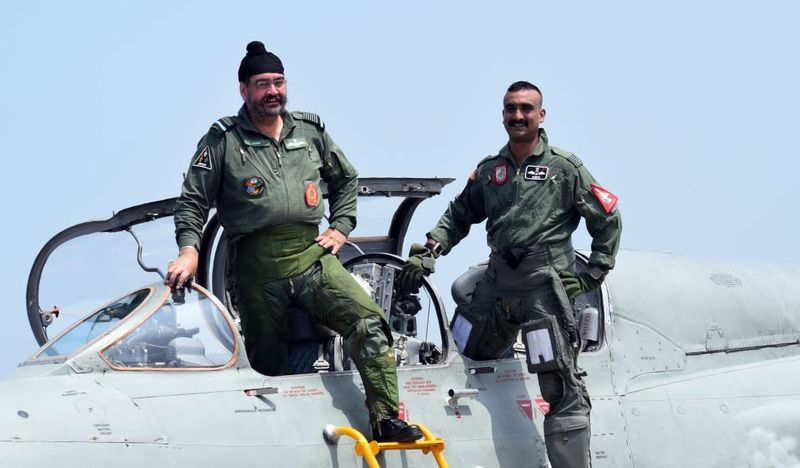
Group Captain Abhinandan Varthaman with former IAF Chief Air Chief Marshal BS Dhanoa at his first sortie after the ejection inside Pakistan in Sept 2019. Image credit/IAF

As Group Captain Abhinandan Varthaman (retd) has bid adieu to the Indian Air Force (IAF), his strike to bring down a US F-16 jet of the Pakistan Air Force seven years ago has etched his name in history of military aviation.

In a mid-air duel with the adversary, lasting just 90 seconds in the air, the IAF pilot had brought down an F-16 on February 27, 2019, while his own plane, a MiG 21, also got hit. He had ejected and landed inside Pakistan-occupied Kashmir (PoK) only to be released two days later on March 1, 2019.

On that day, Group Captain Varthaman, then a Wing Commander, was posted to Srinagar air base and tasked to be in a state of ‘operational readiness’ – in aviation parlance, it means the pilot and jet are ready to take off within a minute or so, of getting orders. At 10 am on February 27,  Varthaman was among the pilots tasked to intercept a ‘package’ of F-16 and Chinese-made J-17  jets of the Pakistan Air Force approaching the Line of Control (LoC).

Group Captain Varthaman was at an altitude of 15,000 feet in his MiG-21 when he spotted an F-16 at 8,000 feet, near Nowshera, close to the LoC. He alerted his mates, who were at lower altitudes to watch against missiles that the F-16 could launch. He then took on the jet, “I am going after him,” Varthaman had said over the secure radio to his mates flying in the patrol.

With this started a 90-second intense chase in the sky — called dogfight or close combat in military parlance — with jets flying at a speed of roughly 900 km per hour. The dogfight rose to an elevation of 26,000 feet and then swooped down a few thousand feet and then rose again. The two pilots were literally eye-to-eye and trying to get a “lock” for the missile to home in.  Both pilots, Varthaman and the adversary, were trying to get a ‘lock’— at 60° angle, in air force parlance. This angle provides the widest spectrum to be hit by a missile, a ‘lock’ means the missile’s trajectory has been fixed and its target is locked. The missile then homes-in onto the target.

An air-to-air missile called the “R-73” was fired from the MiG 21 and it hit an F-16 jet and it was downed. The MiG 21, piloted by Group Captain Varthaman was also hit by a missile fired by another PAF pilot. By then Varthaman’s plane was a couple of kilometres on the other side of the LoC.

Group Captain Varthaman had ejected at a fairly high altitude. The parachutes which fighter pilots use are not maneuverable and the wind draft took him at least 7 km away to the Pakistan side.

The entire thing was being tracked through airborne radars mounted on a plane.

Later, the government awarded him a Vir Chakra, the third highest battle honour. The citation for the award says “Wing Commander Varthaman pursued a retreating enemy fighter bomber aircraft, and in the ensuing aerial combat, shot down an F-16 aircraft with his on-board missile. However, in the melee, an enemy aircraft fired multiple advanced missiles, one of which hit his aircraft forcing him to eject in enemy territory”.

Despite the enemy’s immense numerical and technological superiority, Varthaman had proceeded to courageously engage the enemy aircraft with utter disregard to his personal safety, the citation reads. The ‘technological superiority’ being obliquely referred to in the citation, is that the F-16 is better equipped than the MiG 21 in terms of missiles, radars and avionics.

Upon parachuting down inside Pakistan, Varthaman sustained injuries while attempting to destroy classified documents and evade hostile locals. He was captured by the Pakistan Army. Videos released during his captivity showcased his composure, dignity and adherence to the Geneva Convention protocols regarding the disclosure of information under duress — earning widespread admiration across India.

Once back home, amid a frenzy in the media, Group Captain Varthaman recuperated and was back to flying on Sept 2, 2019. The then Air Chief Air Chief Marshal BS Dhanoa, had accompanied him on his first post-ejection sortie at the Pathankot air base in Punjab.

The air duel between IAF and PAF had ensued a day after IAF launched strikes on Balakot in Khyber Pakhtunkhwa of Pakistan to strike at terrorist camps. Days prior to the Balakot strikes, terrorists had struck at Pulwama in Jammu and Kashmir. 


First air duel, shooting down of Pakistani jets in 1965 war: Defence Ministry recalls IAF heroes

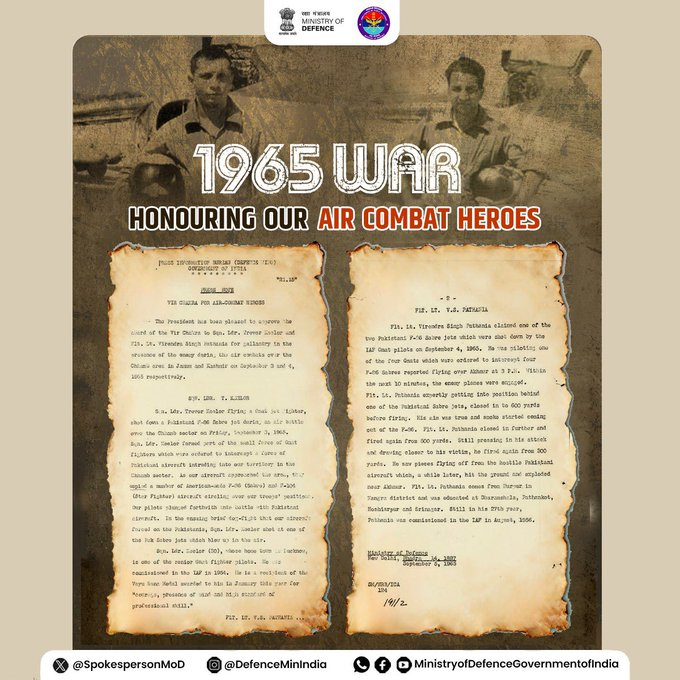
‘Squadron Leader Trevor Keelor and Flight Lieutenant Virendra Singh Pathania displayed exceptional gallantry during air combat on September 3-4, 1965,’ MoD says in a post on X

In remembrance of independent India’s first air battle with Pakistan, the Ministry of Defence (MoD) on Thursday marked the anniversary of the exploits of IAF pilots over Chhamb-Jaurian in Jammu and Kashmir during the 1965 war.

“The skies over Chhamb witnessed remarkable acts of courage during the 1965 War,” the MoD said in a post on X, terming the occasion a tribute to “our combat heroes”.

“Squadron Leader Trevor Keelor and Flight Lieutenant Virendra Singh Pathania displayed exceptional gallantry during air combat on September 3-4, 1965,” it said.

or their bravery, determination and valour, both air warriors were awarded the Vir Chakra, the country’s third-highest battle honour. The MoD also posted the citations of the two pilots on X.

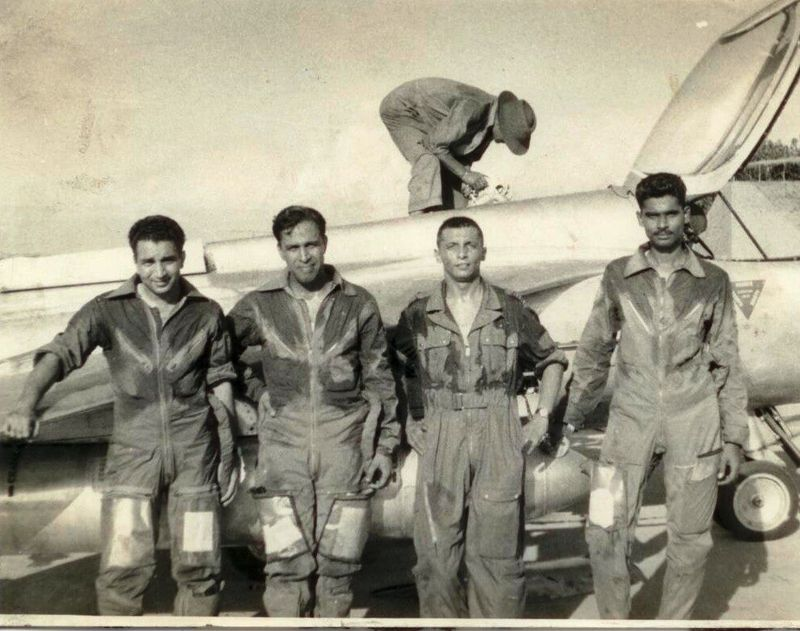
The MoD’s tribute recalled a significant air battle of the 1965 war. The sequence of events of September 3, 1965, was recorded by the MoD’s History Division. The pre-dawn briefing at Pathankot airbase that day was tense, with the tactical plan calling for an offensive response. The IAF was seeking to avenge the losses suffered a day earlier, when the Pakistan Air Force had shot down Indian Vampire aircraft, killing three pilots.

SN Prasad, in his book ‘The India Pakistan War of 1965’, an authorised account based on the Ministry of Defence archives, describes the aerial duel on September 3.

“Two Mysteres were sent on normal operational sorties with a high-altitude cover by a formation of Gnats. When Pakistan’s F-86 Sabres tried to shoot the Mysteres down, the Gnats pounced on them from above,” he wrote.

A Pakistani F-86 Sabre, a US-made fighter armed with missiles, appeared on the scene. Squadron Leader Keelor opened fire and shot down the PAF jet, etching his name in history as the first Indian pilot to “shoot down an enemy plane in mid-air”.

“Sqn Ldr T. Keelor shot down the first Sabre in a dog fight,” wrote Prasad, who was Director of the MoD’s History Division from 1964 to 1969.

The shooting down of the battle-hardened F-86 Sabre by the smaller Gnat had a major impact on the morale of IAF pilots. It was the first time the Gnat had been used in combat and it opened its account with a “kill” in its very first encounter, without suffering any loss to enemy action, Prasad noted.

Within hours of the first kill, Flight Lieutenant VS Pathania also claimed a PAF jet, according to the book.