Foreign Office spokesperson Tahir Andrabi’s comments during his weekly press briefing are in response to a question about India’s decision to put the Indus Water Treaty in ‘abeyance’
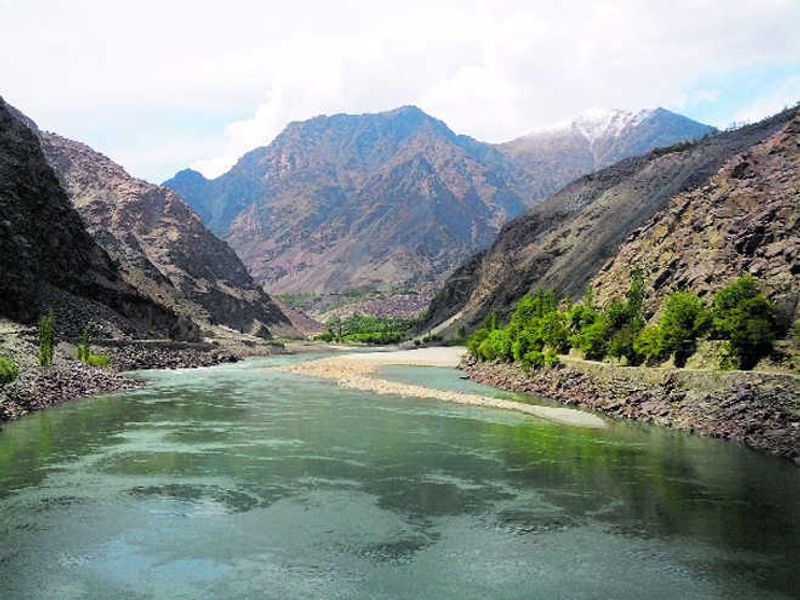
Pakistan on Thursday rejected the alleged Indian effort to control rivers by treating water as a “strategic asset,” especially in the case of the Indus basin.
Foreign Office spokesperson Tahir Andrabi’s comments during his weekly press briefing were in response to a question about India’s decision to put the Indus Water Treaty (IWT) in “abeyance”.
India took a series of punitive measures against Pakistan a day after last year’s Pahalgam terror attack on April 22. One of the major steps was putting in “abeyance” the 1960 vintage IWT, which has governed the distribution and use of the Indus river and its tributaries since then.
Andrabi said that Pakistan rejected “India’s attempt to invoke baseless allegations of terrorism as a pretext for placing the Indus Waters Treaty in abeyance and obstructing the lawful flow of the Pakistani share”.
“Let this be very clear: the real issue is not terrorism. The real issue is the growing disposition within the Indian leadership to treat a shared international river system as a strategic asset that can be controlled, withheld or diverted at will,” he alleged.
Andrabi said that water is not a tool of coercion or political pressure and any attempt to deny Pakistan its legitimate share of water under the IWT constituted a clear violation of the international legal obligations undertaken by India.
Under the IWT, brokered by the World Bank, Pakistan received the entire flows from the three western rivers, Chenab, Jhelum and Indus, while India had complete rights over the three eastern rivers, Sutlej, Beas and Ravi.
Tamil Nadu’s all-women police task force raises the bar; Punjab also on the right trac
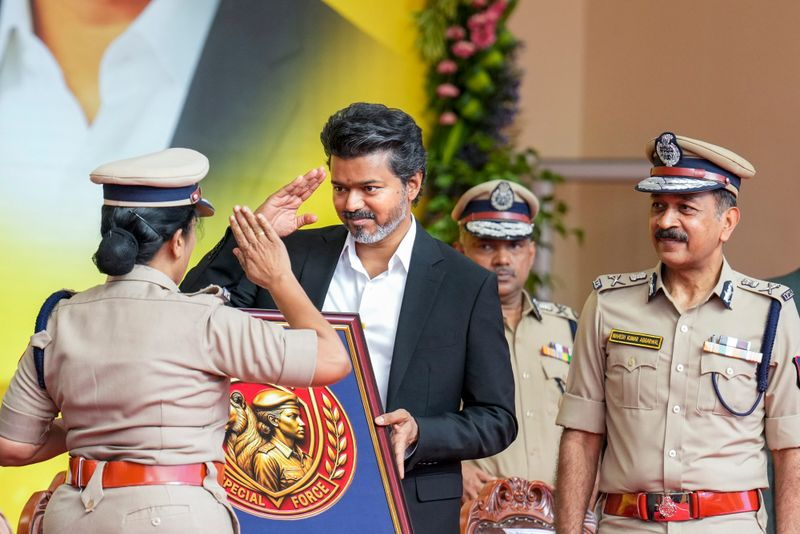
TAMIL Nadu Chief Minister C Joseph Vijay recently inaugurated an all-women police unit called the Singappen Special Task Force, aimed at ensuring the safety of women and children in his state. That was a promise he had made during electioneering after he formed the TVK (Tamilaga Vettri Kazhagam). He has decided that Singappen would be supervised by him.
Most chief ministers keep the Home portfolio in their own hands. This is not surprising as the police are the most visible agency of the government on the street; the image of the party in power depends a lot on how the cops behave in their daily interaction with the people they have sworn to serve.
Vijay has taken a resolute step forward. He has appointed a woman IPS officer, K Bhavaneeswari, to head the all-women unit and ordered that she report to him. That arrangement may not turn out to be practical, but the initiative is bound to send the desired message: the safety of women and children is of utmost importance to the CM and he is going to ensure that they go about their business without constantly looking over their shoulders.
In my city of Mumbai, the police have evolved the “Didi” project. Female cops are specifically designated as “Didis” in every police station’s jurisdiction to keep in touch with school authorities and monitor the safety of children from the moment they leave their homes to the time they return. Kids travelling in school buses are vulnerable to sexual harassment. The antecedents of bus drivers and conductors, besides toilet attendants and janitors in schools, need to be verified before they are employed.
The safety of women on the street is another problem altogether. As a trustee of the Public Concern for Governance Trust (PCGT), I was in contact with another NGO that had been involved in this work for several years. We joined forces and were successful in getting many spots in the city identified and equipped with better street lighting, to begin with.
That experience was enough for us to realise the magnitude of the problem. The incidence of misbehaviour with women has increased exponentially in the last few decades. It is difficult to put your finger on the exact causes of this phenomenon, but what is certain is that we need to sensitise young men about the importance of respecting their mothers, sisters and daughters, and to extend this respect to all women.
While it will be interesting to keep track of the Singappen project, the fact that women police officers in Punjab are leading major operations against criminals is another heartening trend. Some of them are involved in the anti-gangster drive (“Gangstran Te Vaar”).
Pragya Jain, Assistant Inspector General of Police (AIG, Law and Order) and former Faridkot SSP, believes that gender has nothing to do with the roles she has been asked to perform. “Policing is about competence, courage and commitment,” she says. I agree with her completely.
Much depends on the police leaders. If they can take all their juniors along to achieve various goals, their gender, religion, caste or economic status become irrelevant. The leaders need to be honest, fair and just in their dealings with the public as well as their subordinates.
Are women better than men in policing? I don’t think so. It all depends on individuals. I have come across outstanding women and men at different levels of the police force. I have also seen laggards in both genders. Even corruption has affected both of them. Much depends on those in the top echelons. Both male and female personnel will look up to them. If the leaders are persons of integrity and willing to lead from the front, they can transform the outlook of the personnel entrusted to their care.
There are some physical differences between men and women that have to be considered. For example, an all-out lathicharge should be assigned to men. Most other qualities required for getting a job done, like integrity, fair play, initiative and commitment, are common to them.
The Punjab Police have found that women are more open to sharing information about wrongdoers in their locality with police officers of their own gender. This is to be expected. Similarly, a victim of molestation may not be keen to share details of the agony she has suffered with policemen, but would be more comfortable with policewomen. These realities should be kept in mind by police leaders who have to make on-the-spot decisions.
I vividly remember an incident that happened decades ago. The late Jayawantiben Mehta, a feisty BJP leader from Mumbai, and others had blocked a key road prior to then Prime Minister Indira Gandhi’s arrival. I was the DCP sent to clear the road. I tried to persuade Jayawantiben, but she was adamant. She insisted on dealing with women cops who, in those days, were not as numerous as they are today. I told her I did not have any policewoman with me and requested her to permit the PM to proceed. On her refusal, I had to order the men to keep banging their lathis on the ground for making a racket to unsettle the protesters. That was the most viable alternative I could think of.
Several years later, Jayawantiben served as a Minister of State in Atal Bihari Vajpayee’s government. She asked me to visit her official residence in Delhi whenever I happened to be in the capital. Obviously, she held no grudge against me, just as I held none against her. We were both doing our respective duties.
Ayatollah Khamenei funeral LIVE: Powerful general in Iran emerges from hiding as Tehran prepares for Khamenei’s dayslong funeral
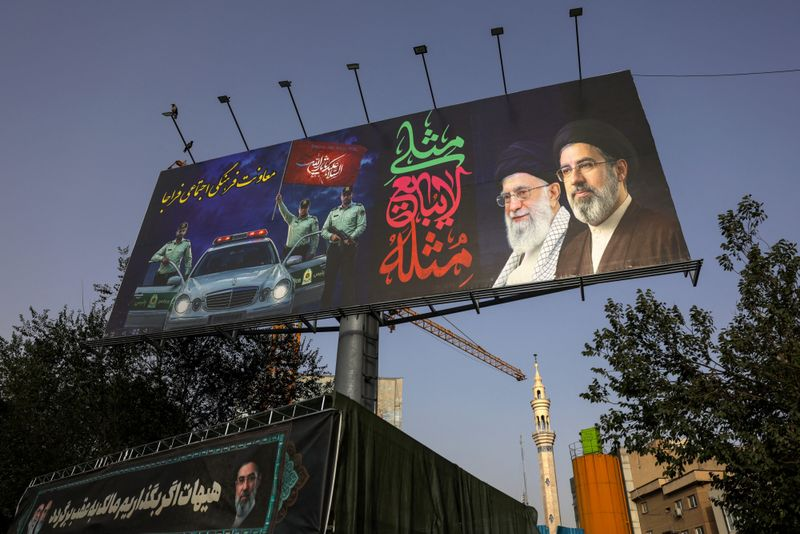
A billboard depicting Iran’s late Supreme Leader Ayatollah Ali Khamenei and Iran’s Supreme Leader Ayatollah Mojtaba Khamenei at Valiasr Square in Tehran on Thursday. Image credit/Reuters
A powerful general who leads Iran’s paramilitary Revolutionary Guard emerged from hiding as Tehran prepared Friday for the dayslong funeral for the late Supreme Leader Ayatollah Ali Khamenei.
Photos published online by Iranian state media showed Gen Ahmad Vahidi attending a meeting about the funeral of Khamenei, 86, then sitting alongside his casket as Iran’s theocracy held a smaller service for him on Thursday night near the supreme leader’s former home in downtown Tehran.
Beginning Saturday, Iran will hold a dayslong funeral for Khamenei, and his body will be transported to cities in both Iran and neighbouring Iraq.
The funeral will begin at the Grand Mosalla in Tehran, where authorities plan to shut down streets and daily life as mourners commemorate the life of Khamenei, who led Iran for decades with an iron fist while confronting the West.
Ayatollah Khamenei’s coffin taken to the site of assassination: Iranian media
Iranian state media said that in an unannounced event, the coffin carrying the body of former Supreme Leader Ayatollah Ali Khamenei was taken to the site where he was killed. According to the Islamic Republic of Iran Broadcasting (IRIB), “In an unannounced event, the coffin carrying the body of the martyred leader Ayatollah Khamenei was brought to the site of his martyrdom.” The multi-day public farewell, scheduled to take place on July 4 and 5 in the capital city, is anticipated to draw a record-breaking crowd of up to 20 million participants, according to the Islamic Revolutionary Guard Corps (IRGC).
27 killed, 91 injured as Russia launches massive attack on Ukraine’s capital Kyiv
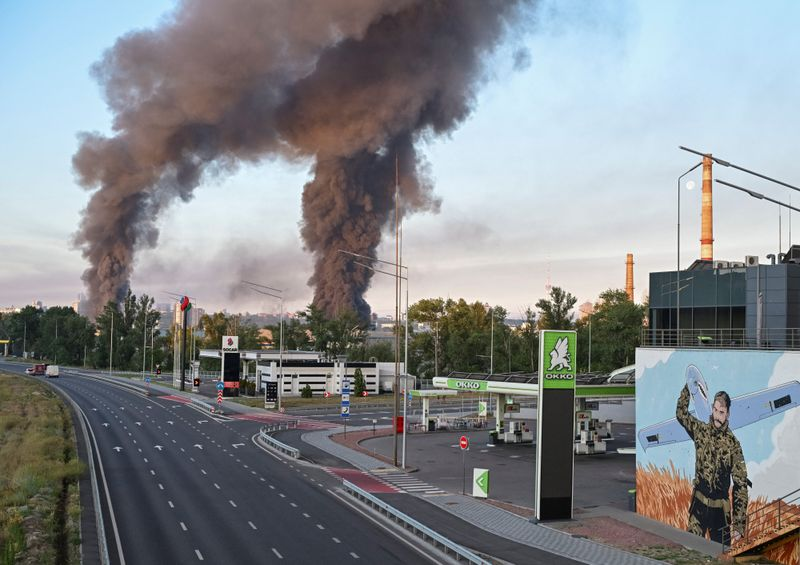
Russia launched hundreds of drones and dozens of missiles at Ukraine’s capital Kyiv in the early hours of Thursday, killing at least 27 people, wounding scores more and damaging around 130 buildings in the deadliest attack on the capital this year.
Multiple explosions shook central Kyiv and reverberated across the capital throughout the night as thousands of residents rushed to bomb shelters and underground metro stations. Huge columns of smoke filled the skyline.
The death toll climbed to 27 after an injured person died in hospital, and 91 were injured, the head of the capital’s military administration, Tymur Tkachenko, said on Telegram.
Tkachenko had earlier warned that the toll was likely to rise as rescue teams worked through the night, sifting through rubble in search of trapped residents.
He said teams at one site in an eastern suburb on the capital’s left bank of the Dnipro River had recovered five bodies while eight residents were unaccounted for.
“Rescue crews will work without interruption until all the debris is cleared,” he wrote. “Unfortunately, more victims may still be found.”
The scale and spread of destruction across the breadth of the capital had little precedent even in a war now in its fifth year. Twenty-four people died in an attack on Kyiv in May.
President Volodymyr Zelenskiy, who cut short his visit to Ireland and rushed home, visited the site where a nine-storey residential building was half destroyed. He blamed the destruction in part on a failure of allies to deliver promised air defenses.
“If our partners had delivered on their promises in a timely manner, I think we could have saved more homes and lives today,” said Zelenskiy, who looked tired and frustrated. “All we ask of our partners is simply to do what we’ve agreed on. We’re not even asking for more.”
Later, in his nightly video address, Zelenskiy said the issue of air defences would be “one of the key outcomes” of next week’s NATO summit in Turkey, as he repeated his call for the development of European air defences.
“If, of course, NATO still means anything to the allies,” he said. “Europe must have its own sufficient capability to defend against all types of threats, including this one – from Russian ballistic missiles.”
Russia launched 74 missiles and 496 drones overnight, the Ukrainian air force said. Yuri Ihnat, the Air Force spokesperson, said the number of ballistic missiles was unusually high and the interception rate was low. Ukraine has struggled with shortages of Patriot missiles in recent months.
The Russian Defence Ministry, in a Telegram post, said its “massive attack” using long-range, high-precision air-, land- and sea-launched weapons and drones hit military and energy facilities, as well as airports in Kyiv and other locations.
Moscow said the attacks were retaliation for Ukrainian drone strikes on Russia. Kyiv, which has stepped up strikes in recent weeks on Russia’s domestic fuel supply, said it had hit an oil refinery overnight in the Russian region of Nizhny Novgorod, where the governor reported one person killed in a strike on an industrial facility.
The Kremlin said Russian military commanders had briefed President Vladimir Putin about the Russian attacks, adding that Moscow would increase pressure to achieve its war aims.
DAY OF MOURNING ANNOUNCED IN KYIV
Kyiv Mayor Vitali Klitschko announced a day of mourning in Kyiv for Friday. He said that damage was recorded across the city of about 3 million, with some buildings heavily damaged.
The Ukrainian Red Cross, in a post on X, said its humanitarian warehouse in Kyiv has been destroyed in the assault and posted pictures of a shattered building interior. It said 320,000 relief items had been lost, “affecting emergency response and humanitarian operations across Ukraine”.
Katarina Mathernova, the EU ambassador to Ukraine, said that “Russia unleashed hell on Kyiv” overnight, and had struck accommodation used by diplomatic personnel. Diplomats were unharmed, but their belongings were damaged in a fire.
City officials said that the injured included children, paramedics and drivers at an ambulance station.
“Our house is on fire. Oleg was pulling our neighbour out of the burning house, while I was phoning all the emergency services during the explosions,” Kyiv resident Iryna Plekhova said on Facebook, posting a picture of a half-destroyed apartment building. “We do not have an apartment anymore.” The National Institute of Biochemistry was among many buildings damaged: its state-of-the-art biochemistry laboratory and other offices were gutted during the attack.
“This is a catastrophe for medical and biological science of Ukraine,” biologist Yurii Danylovych told Reuters.
Ukraine’s neighbour Poland, a NATO and EU member, briefly scrambled fighter jets as a preventive measure. Finland also briefly issued a temporary aviation restriction zone in the eastern Gulf of Finland, its defence forces said.
MORE PRESSURE ON RUSSIA NEEDED
After years of enduring relentless long-range attacks from Russia, Ukraine has intensified its own strikes deep into Russian territory, mainly on energy targets. That has triggered a fuel crisis in Russia, forcing the world’s third-biggest oil producer to import gasoline from as far away as India.
Russia has responded with a stepped-up air campaign against Ukrainian cities, last month hitting a 1,000-year-old Kyiv cathedral foundational to the Orthodox faith in both countries.
Kaja Kallas, the EU’s foreign policy chief, said only sustained military support for Ukraine and increased pressure on Moscow could help stop Russian attacks.
“Today, I will propose to sanction more entities supporting Russia’s military-industrial complex in response to the strikes,” she said in a post on X. “The more Moscow attacks civilians, the more sanctions must be imposed.” U.N. Secretary-General Antonio Guterres condemned the attacks, his spokesman Stephane Dujarric said, describing them as part of a “deadly pattern” of strikes on populated areas.
Zelenskiy has proposed peace talks with Putin, which the Kremlin leader has rejected. Zelenskiy said that Ukrainian and US negotiators held talks in the past two days, and that he hoped to meet U.S. President Donald Trump on the sidelines of the NATO summit.
An officer of the Armoured Corps, Gen Seth was commissioned into the Army in December 1986
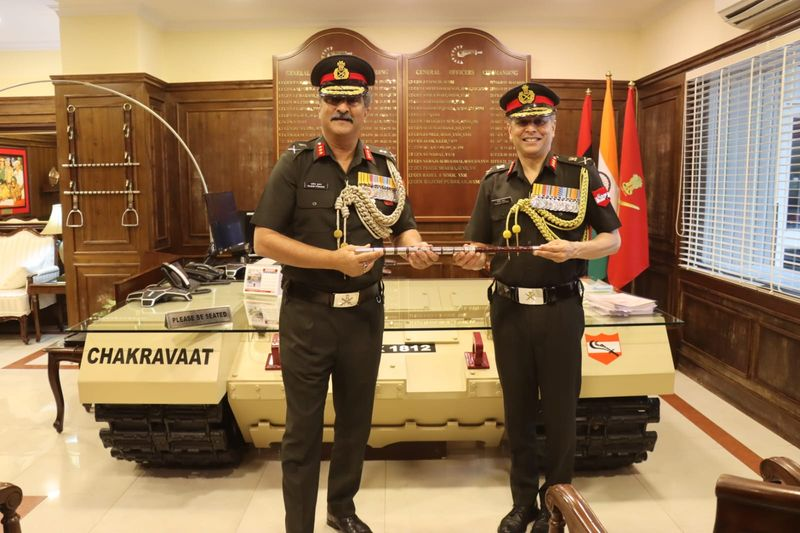
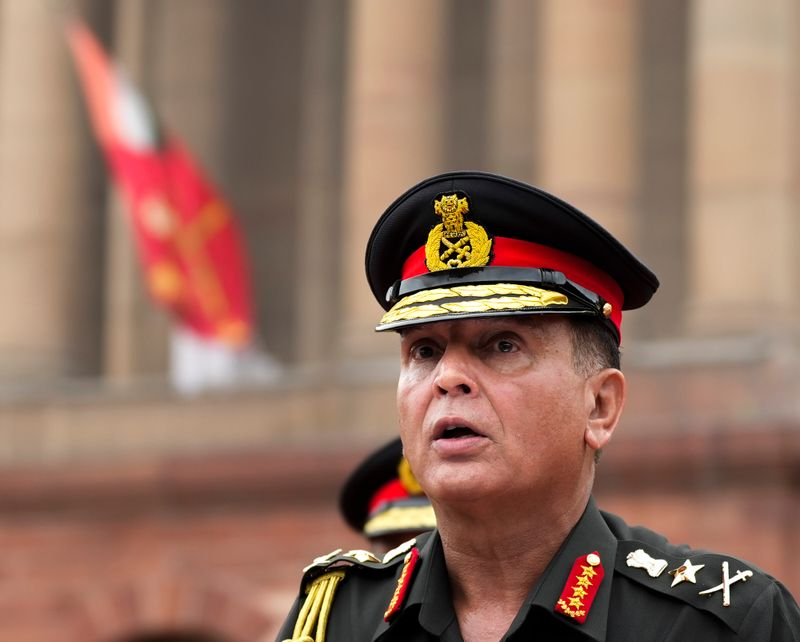
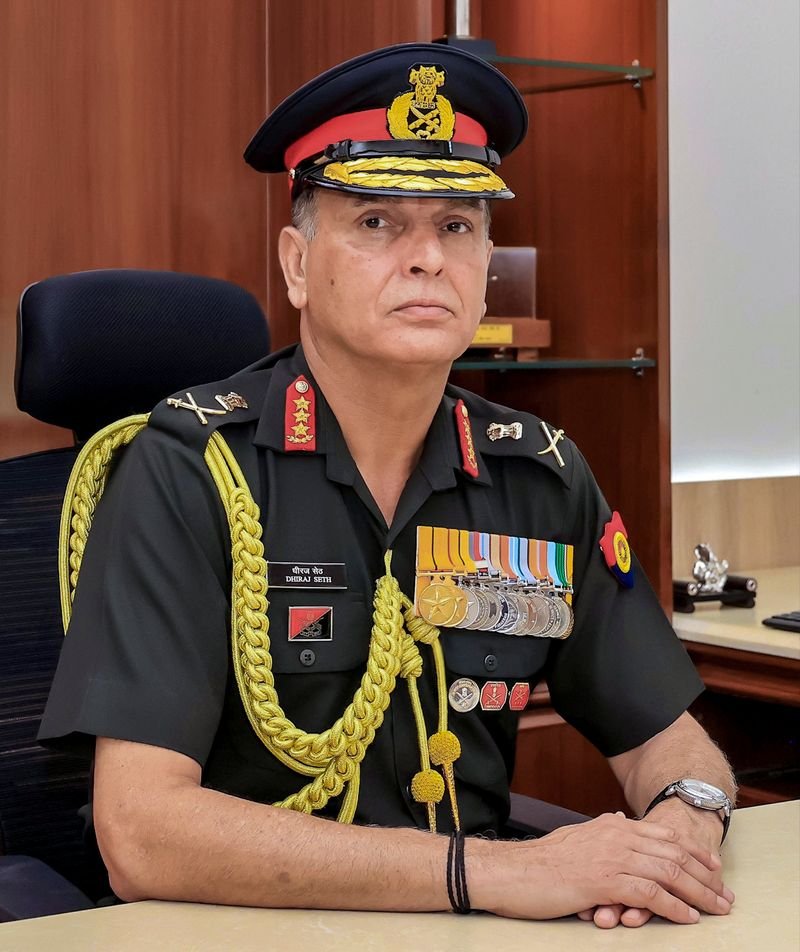
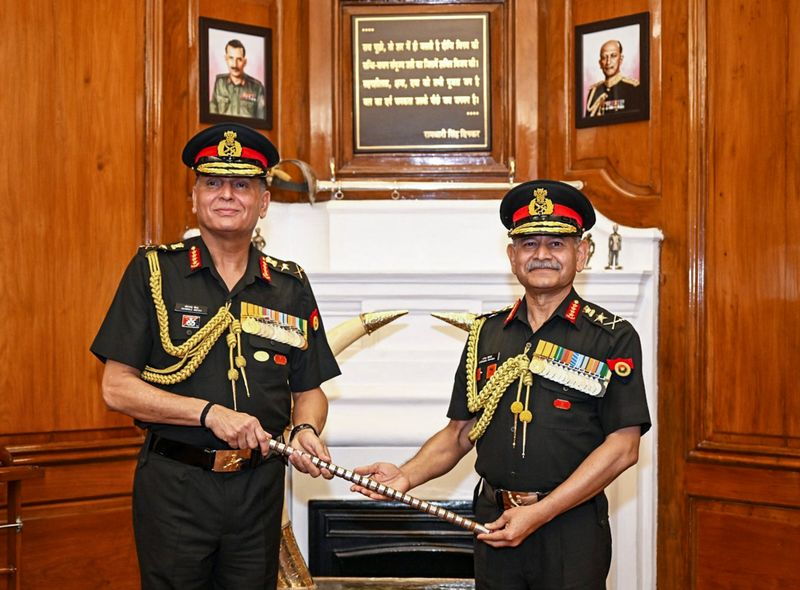
Gen Dhiraj Seth on Tuesday took over as the 31st Chief of the Army Staff, succeeding Gen Upendra Dwivedi, who superannuated after more than four decades of service.
Gen Dwivedi said, “Future wars will be more joint, integrated and theatre-oriented. Therefore, the direction for the armed forces is clear: to see together, decide together and act together.”
An officer of the Armoured Corps, Gen Seth was commissioned into the Army in December 1986. It is the first time in more than three decades that an Armoured Corps officer has become the Army Chief. The last officer from the Armoured Corps to hold the post was Gen Shankar Roychowdhury, who retired in September 1997.
Gen Seth has extensive experience across the operational, strategic, capability development and institutional domains, contributing significantly to the Army’s combat effectiveness and long-term transformation.
He is an alumnus of the National Defence Academy, Khadakwasla.
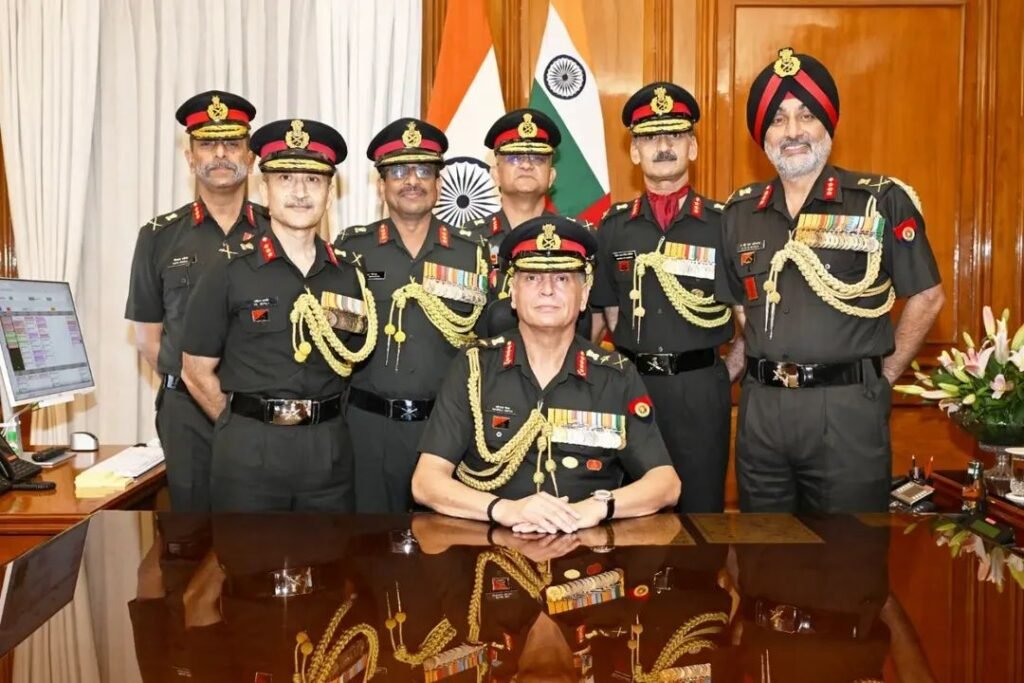
The Chief with his Team
The General Officer has commanded formations at every level in diverse operational environments. His command assignments include an Armoured Regiment in the desert sector, an Armoured Brigade in the western theatre and a counter-insurgency force in Jammu and Kashmir. As a Lieutenant General, he commanded both the South Western Command and the Southern Command, which are responsible for operations along India’s western front.
Commanding two operational Army Commands is a rare distinction. In these roles, he provided strategic oversight across critical theatres for more than two-and-a-half years. He has also held several key staff and strategic appointments that have significantly influenced operational planning, force management and capability development.
Widely recognised for his contributions to force modernisation, Gen Seth has served in strategic planning and capability development roles at Army Headquarters, helping shape the Army’s modernisation trajectory, capability roadmap and long-term force-structuring initiatives. His contributions have been instrumental in aligning operational requirements with emerging technologies and future battlefield needs.
An accomplished military professional, Gen Seth has consistently excelled in professional military education, securing top positions in several courses of instruction. He is a graduate of the Higher Command Course and the National Defence College and has also attended the prestigious Command and Staff Course in Paris, reflecting his broad strategic outlook and deep understanding of contemporary military affairs.
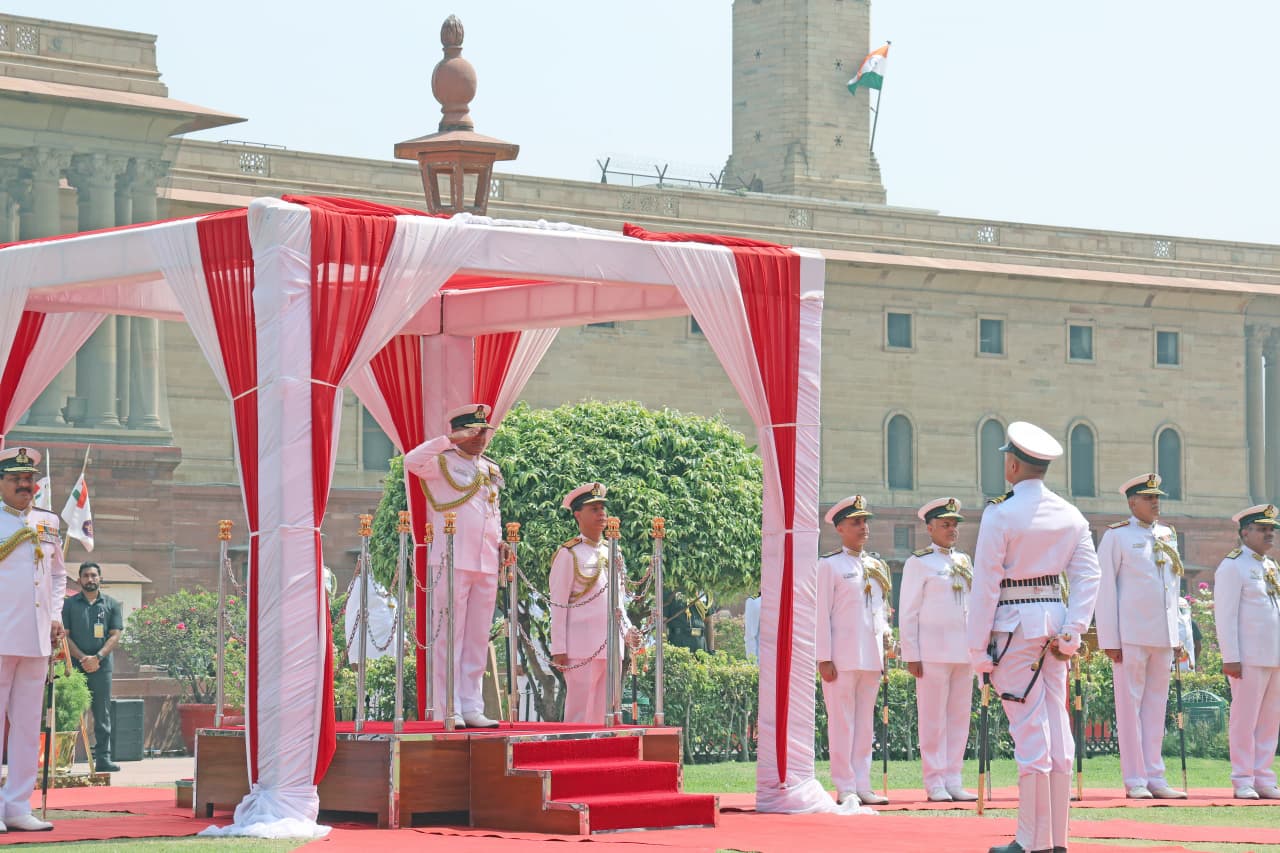
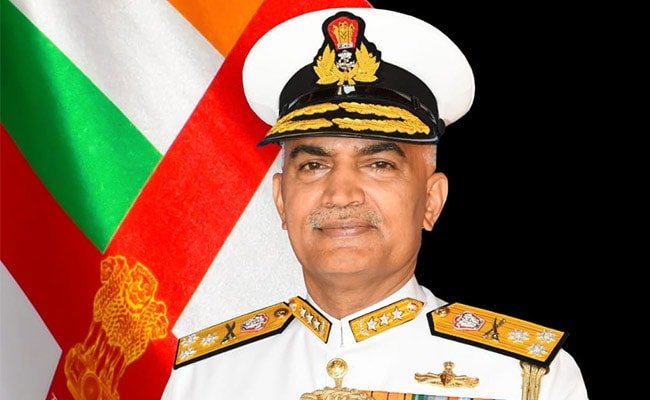
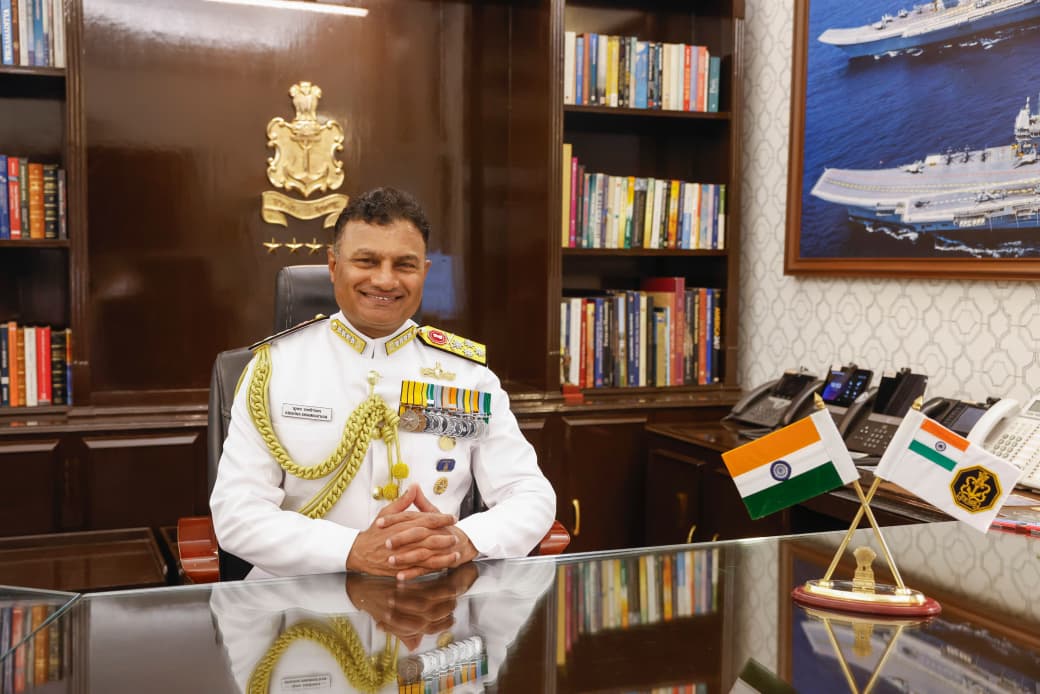
ADMIRAL KRISHNA SWAMINATHAN, PVSM, AVSM, VSM ASSUMES CHARGE AS THE 27th CHIEF OF THE NAVAL STAFF OF INDIAN NAVY
Admiral Krishna Swaminathan, PVSM, AVSM, VSM assumed charge as the 27th Chief of the Naval Staff of the Indian Navy on 31 May 2026. He succeeds Admiral Dinesh Kumar Tripathi, PVSM, AVSM, NM who superannuated after 41 years of distinguished service.
Admiral Krishna Swaminathan was commissioned into the Indian Navy on 01 July 1987. A Communication and Electronic Warfare specialist, he has held a wide range of operational, staff and training appointments during a distinguished career spanning nearly four decades. Admiral Swaminathan’s sea commands include the guided missile vessels INS Vidyut and INS Vinash, guided missile corvette INS Kulish, guided missile destroyer INS Mysore and aircraft carrier INS Vikramaditya.
On promotion to the rank of Rear Admiral, he served as the Chief Staff Officer (Training) at Headquarters, Southern Naval Command, Kochi. He was subsequently appointed as Flag Officer Sea Training and later commanded the Western Fleet, the Sword Arm of the Indian Navy. Subsequently, he was appointed as Flag Officer Offshore Defence Advisory Group and Advisor, Offshore Security and Defence to the Government of India.
On promotion to the rank of Vice Admiral, he tenanted the appointments of Chief of Staff, Western Naval Command; and Controller Personnel Services, Chief of Personnel and Vice Chief of the Naval Staff at Naval Headquarters. Prior assuming charge as the Chief of the Naval Staff, Admiral Swaminathan was the Flag Officer Commanding-in-Chief of the prestigious Western Naval Command.
He is an alumnus of the National Defence Academy, Khadakwasla; Joint Services Command and Staff College, Shrivenham, United Kingdom; College of Naval Warfare, Karanja; and the United States Naval War College, Newport, Rhode Island. His academic qualifications include a BSc degree from Jawaharlal Nehru University, New Delhi; MSc in Telecommunications from Cochin University of Science and Technology, Kochi; MA in Defence Studies from King’s College, London; MPhil in Strategic Studies from Mumbai University; and a PhD in International Studies from Mumbai University.
Admiral Krishna Swaminathan is a recipient of the Param Vishisht Seva Medal, Ati Vishisht Seva Medal and Vishisht SevaMedal for distinguished service.
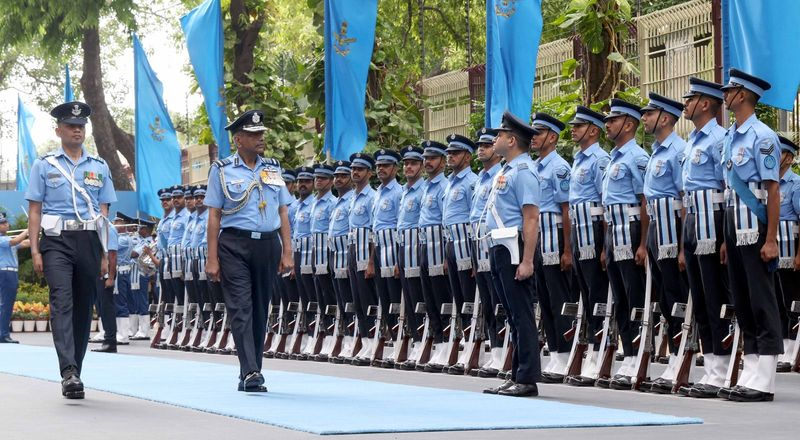
Air Marshal Ashutosh Dixit takes over as IAF vice chief
During his career, he has been actively involved in numerous operations and exercises, including Operation Safed Sagar, launched during the Kargil conflict in 1999, and Operation Sindoor in 2025
Air Marshal Ashutosh Dixit, a fighter pilot with more than 3,500 hours of flying experience, will notably be the senior-most officer in line when the present IAF Chief, Air Chief Marshal AP Singh, superannuates in October this year.
Air Marshal Dixit, in his previous appointment as Chief of Integrated Defence Staff (CISC) — a tri-services organisation under the Chief of Defence Staff — was part of the process of fostering jointness and setting up the theatre commands.
Air Marshal Dixit was commissioned into the fighter stream of the IAF in December 1986. He is an alumnus of the National Defence Academy, the Defence Services Command and Staff College (Bangladesh), and the National Defence College.
The Air Marshal has extensive flying experience on various aircraft, including the Mirage 2000, variants of the MiG series of jets, the Jaguar, the Tejas, and the Hawk. He has also flown transport aircraft such as the AN-32 and the Avro, as well as the mid-air refueller.
He is an Experimental Test Pilot and a Qualified Flying Instructor. During his service career, spanning approximately four decades, he has been actively involved in numerous operations and exercises, including Operation Safed Sagar, launched during the Kargil conflict with Pakistan in 1999, and Operation Sindoor in 2025.
During his career, Air Marshal Dixit commanded a frontline fighter air base in the Western Sector and a premier fighter training base in the Southern Sector. He has also served as a Directing Staff at the Air Force Test Pilots School.
Air Marshal Dixit has commanded the Central Air Command.
During his tenure at the tri-services organisation, he was part of the jointness and integration process. Multiple joint doctrines were released, and various initiatives were conceived to strengthen the Defence Forces across all domains.
Air Marshal Dixit takes over from Air Marshal Nagesh Kapoor, who superannuated.
Two key Army corps, II and XIV, get new commanders
Lieutenant General Manish Luthra has assumed charge as the General Officer Commanding of II Corps at Ambala
As part of the ongoing reshuffle at the Army’s top level, new commanders have been appointed to head two key corps base in north-western India.
Lieutenant General Manish Luthra has assumed charge as the General Officer Commanding of II Corps at Ambala. Also known as the Kharga Corps, it is the Army’s most potent strike formation and had played a significant role during Operation Sindoor in May 2025.
Earlier, he served as the Director General Military Operations at Army Headquarters from September 2025 onwards.
He takes over from Lt Gen Rajesh Pushkar who has been elevated as the General Officer Commanding-in-Chief of the Southern Command at Pune. During his tenure at Ambala, he spearheaded the Corps’ transformation towards multi-domain operations, integrating emerging technologies, modern warfighting concepts and enhanced jointness into operational planning and execution.
His tenure also witnessed the successful validation of new organisational structures and innovative operational concepts, significantly strengthening the Corps’ future warfighting capability, a defence spokesperson said on Tuesday.
Lieutenant General Madanraj Pande has taken over as the General Officer Commanding, 14 Corps at Leh from Lt Gen Hitesh Bhalla.
Lieutenant General Madanraj Pande (R).
Known as the Fire and Fury Corps, it was set up in the aftermath of the 1999 Kargil conflict and is responsible for operations in Eastern Ladakh, including the Line of Actual Control and Siachen Glacier. It also undertakes community development programmes for the civilian populace residing in remote areas.
On the occasion, the outgoing Corps Commander conveyed his appreciation to all ranks for their professionalism, dedication and unwavering commitment, while the incoming Corps Commander exhorted the troops to continue upholding the highest traditions and ethos of the Indian Army in the service of the Nation, according to a defence spokesperson.
Army Chief Gen Dhiraj Seth outlines ‘VIJAY’ roadmap, pushes modernisation and self-reliance
Says ‘vigilance, innovation, jointness, atmanirbharta and yodha’ will guide Army’s future priorities; stresses technology-enabled, future-ready force
ndian Army Chief General Dhiraj Seth on Wednesday stressed the need to speed up modernisation and laid out his five priorities, forming the acronym ‘VIJAY’, with each letter of the word signifying a key focus area.
General Seth, who took over on Tuesday, inspected a guard of honour at the lawns of the South Block on Wednesday, after which he saluted his father Lt Gen KM Seth (retd), who was present in the audience.
Gen Seth said the word ‘VIJAY’ stands for ‘Vigilance, Innovation and Transformation, Jointness and Integration, Atmanirbharta, and Yodha’. He said these priorities cover the entire gamut of tasks he has set out for the Army.
The words ‘Atmanirbharta’ and ‘Yodha’ refer to self-reliance and soldier, respectively.
Explaining ‘Vigilance’, the Army Chief said the force will maintain constant watch along borders and against emerging threats, ensuring a high level of operational readiness to respond effectively to any challenge to national security.
On ‘Innovation and Transformation’, he said the focus will be on innovation in both doctrine and technological solutions. Innovation will remain integral to thinking, systems and capability development, while necessary transformations will be undertaken in line with the changing character of warfare.
The letter ‘J’, standing for ‘Jointness and Integration’, will enhance operational effectiveness of the Indian Army and ensure complete synergy and coordination with the Indian Air Force and the Indian Navy.
He said national security is not limited to military strength alone but requires military-civil fusion. This integrated approach will also enable us to contribute to nation-building and the goal of a developed India by 2047.”
The letter ‘A’ stands for ‘Atmanirbharta’. With indigenous capabilities and technologies developed within the country, the Army must build a self-reliant force. “To win our wars with indigenous solutions” will be the overall aim, he added.
The final letter ‘Y’ stands for ‘Yodha’, Gen Seth said, adding that from the Agniveer to the senior-most veteran, each one is a yodha (warrior) and the greatest strength of the Army. He said enhancing the technological threshold and training standards of soldiers will remain a foremost priority.
He added that veterans are an integral part of the Army family, and their welfare, empowerment and professional growth will remain important.
Calling the Indian Army a combat-ready and battle-hardened force, he said it is fully prepared to meet every challenge in the operational domain.
He further said that to respond to the evolving security environment, we must push modernisation with renewed energy and firm resolve, aiming to build a technology-enabled, future-ready force capable of operating across multiple domains.
General Seth expressed gratitude to Prime Minister Narendra Modi and Defence Minister Rajnath Singh for reposing trust in him and entrusting him with the responsibility of leading the Indian Army.
State Stalwarts
DEFENCE MINISTER
Minister Rajnath Singh
ALL HUMANS ARE ONE CREATED BY GOD
HINDUS,MUSLIMS,SIKHS.ISAI SAB HAI BHAI BHAI
CHIEF PATRON ALL INDIA SANJHA MORCHA
LT GEN JASBIR SINGH DHALIWAL, DOGRA
SENIOR PATRON ALL INDIA SANJHA MORCHA
MAJOR GEN HARVIJAY SINGH, SENA MEDAL ,corps of signals
.
.
PATRON ALL INDIA SANJHA MORCHA
MAJ GEN RAMINDER GURAYA ,MADRAS REGIMENT
sanjhamorcha303@gmail.com
PRESIDENT SOUTH ALL INDIA SANJHA MORCHA
COL SS RAJAN BOMBAY SAPPERS,
PRESIDENT UTTARAKHAND ALL INDIA SANJHA MORCHA
COL B M THAPA ,BENGAL SAPPERSS
PRESIDENT HARAYANA STATE CUM COORDINATOR ESM
BRIG DALJIT THUKRAL ,BENGAL SAPPERS
PRESIDENT TRICITY
COL B S BRAR (BHUPI BRAR)
PRESIDENT CHANDIGARH ZONE
COL SHANJIT SINGH BHULLAR
.
.
PRESIDENT PANCHKULA ZONE AND ZIRAKPUR
COL SWARAN SINGH
INDIAN DEFENCE FORCES
DEFENCE FORCES INTEGRATED LOGO
INDIAN AIR FORCE
Air Officer C-in-C WESTERN AIR COMMAND
AIR MSHL S PRABHAKARAN AVSM VM
AOC-IN-C, EASTERN AIR COMMAND
Air Marshal Inderpal Singh Walia
AOC-in-C SOUTH WESTERN AIR COMMAND
Air Marshal Vikram Singh
AOC-IN-C, SOUTHERN AIR COMMAND
Air Marshal J.Chalapati
AOC-IN-C TRAINING COMMAND
AIR MARSHAL SK GHOTIA VSM
AOC-IN-C MAINTENANCE COMMAND
Air Marshal Jagdish Chandra
Flag Officer Commanding in Chief, Western Naval Command
ice Admiral R Hari Kumar, PVSM, AVSM, VSM
Flag Officer Commanding in Chief, Eastern Naval Command
Vice Admiral Sanjay Bhalla, AVSM, NM
Flag Officer Commanding in Chief, Southern Naval Command


























































CNS-BatonHandingOverZHE2.JPG)
OONY.jpeg)