
Tamil Nadu’s all-women police task force raises the bar; Punjab also on the right trac
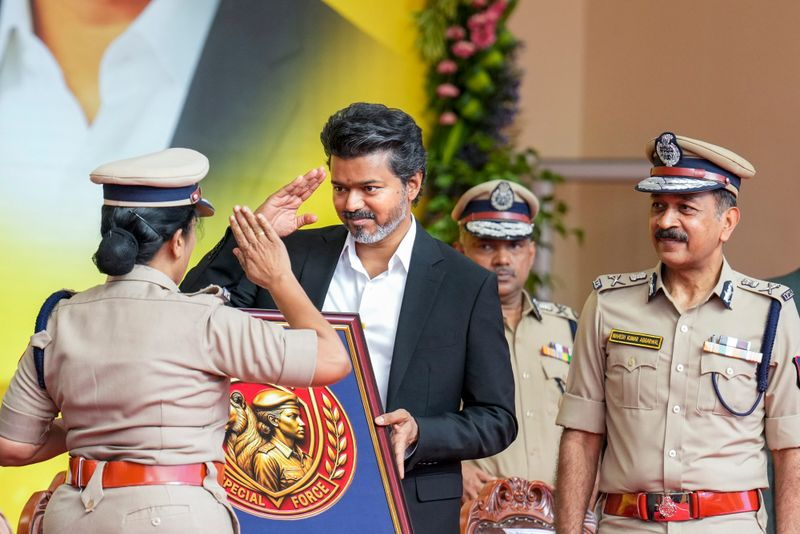
TAMIL Nadu Chief Minister C Joseph Vijay recently inaugurated an all-women police unit called the Singappen Special Task Force, aimed at ensuring the safety of women and children in his state. That was a promise he had made during electioneering after he formed the TVK (Tamilaga Vettri Kazhagam). He has decided that Singappen would be supervised by him.
Most chief ministers keep the Home portfolio in their own hands. This is not surprising as the police are the most visible agency of the government on the street; the image of the party in power depends a lot on how the cops behave in their daily interaction with the people they have sworn to serve.
Vijay has taken a resolute step forward. He has appointed a woman IPS officer, K Bhavaneeswari, to head the all-women unit and ordered that she report to him. That arrangement may not turn out to be practical, but the initiative is bound to send the desired message: the safety of women and children is of utmost importance to the CM and he is going to ensure that they go about their business without constantly looking over their shoulders.
In my city of Mumbai, the police have evolved the “Didi” project. Female cops are specifically designated as “Didis” in every police station’s jurisdiction to keep in touch with school authorities and monitor the safety of children from the moment they leave their homes to the time they return. Kids travelling in school buses are vulnerable to sexual harassment. The antecedents of bus drivers and conductors, besides toilet attendants and janitors in schools, need to be verified before they are employed.
The safety of women on the street is another problem altogether. As a trustee of the Public Concern for Governance Trust (PCGT), I was in contact with another NGO that had been involved in this work for several years. We joined forces and were successful in getting many spots in the city identified and equipped with better street lighting, to begin with.
That experience was enough for us to realise the magnitude of the problem. The incidence of misbehaviour with women has increased exponentially in the last few decades. It is difficult to put your finger on the exact causes of this phenomenon, but what is certain is that we need to sensitise young men about the importance of respecting their mothers, sisters and daughters, and to extend this respect to all women.
While it will be interesting to keep track of the Singappen project, the fact that women police officers in Punjab are leading major operations against criminals is another heartening trend. Some of them are involved in the anti-gangster drive (“Gangstran Te Vaar”).
Pragya Jain, Assistant Inspector General of Police (AIG, Law and Order) and former Faridkot SSP, believes that gender has nothing to do with the roles she has been asked to perform. “Policing is about competence, courage and commitment,” she says. I agree with her completely.
Much depends on the police leaders. If they can take all their juniors along to achieve various goals, their gender, religion, caste or economic status become irrelevant. The leaders need to be honest, fair and just in their dealings with the public as well as their subordinates.
Are women better than men in policing? I don’t think so. It all depends on individuals. I have come across outstanding women and men at different levels of the police force. I have also seen laggards in both genders. Even corruption has affected both of them. Much depends on those in the top echelons. Both male and female personnel will look up to them. If the leaders are persons of integrity and willing to lead from the front, they can transform the outlook of the personnel entrusted to their care.
There are some physical differences between men and women that have to be considered. For example, an all-out lathicharge should be assigned to men. Most other qualities required for getting a job done, like integrity, fair play, initiative and commitment, are common to them.
The Punjab Police have found that women are more open to sharing information about wrongdoers in their locality with police officers of their own gender. This is to be expected. Similarly, a victim of molestation may not be keen to share details of the agony she has suffered with policemen, but would be more comfortable with policewomen. These realities should be kept in mind by police leaders who have to make on-the-spot decisions.
I vividly remember an incident that happened decades ago. The late Jayawantiben Mehta, a feisty BJP leader from Mumbai, and others had blocked a key road prior to then Prime Minister Indira Gandhi’s arrival. I was the DCP sent to clear the road. I tried to persuade Jayawantiben, but she was adamant. She insisted on dealing with women cops who, in those days, were not as numerous as they are today. I told her I did not have any policewoman with me and requested her to permit the PM to proceed. On her refusal, I had to order the men to keep banging their lathis on the ground for making a racket to unsettle the protesters. That was the most viable alternative I could think of.
Several years later, Jayawantiben served as a Minister of State in Atal Bihari Vajpayee’s government. She asked me to visit her official residence in Delhi whenever I happened to be in the capital. Obviously, she held no grudge against me, just as I held none against her. We were both doing our respective duties.