All posts by webadmin

Jawan, militant killed; JeM hideout busted in Kashmir

SRINAGAR: A militant and a soldier were killed in a gunfight that erupted on Tuesday morning in south Kashmir’s Kulgam district, while a militant hideout was busted in Pulwama district following another encounter.

Deputy inspector general of police SP Pani said the gunfight in Nowbug Kund area of Kulgam ended with the deaths of a soldier and a militant. A policeman was injured but stable.

The gunfight erupted after police, army’s Rashtriya Rifles and CRPF launched a cordon and search operation (CASO) in the area. “The firing stopped in Kulgam in the morning itself but we are still searching the area,” Pani said late in the evening.

Pani said the identity of the slain militant was being ascertained. “He seems to be a Hizbul Mujahideen operative but we can confirm his identity once his family identifies the body,” he said, suggesting that the militant was a local. Police control room, Kulgam, informed that the soldier belonged to 10 Sikh-LI regiment.

Meanwhile, the encounter between security forces and militants which started in Laan Tral area of Pulwama ended with the busting of a militant hideout.

“A huge hideout of Jaish-e-Mohammad outfit was busted in Tral,” Pani said.

The encounters in south Kashmir came after two local Hizbul militants were killed when they attacked a police checkpoint in Handwara on Monday night.

Body of jawan killed in mine blast reaches Mandi today

BODY TO BE BROUGHT TO PATHANKOT FROM IMPHAL BY AIR AND THEN TAKEN TO PANDOH IN ARMY VEHICLE; WILL BE CREMATED WITH STATE HONOURS

MANDI : The body of Assam Riffles jawan Inder Singh from the Pandoh area of Mandi district, who was killed in a landmine blast in Manipur on Monday, will reach home on Wednesday.

A pall of gloom descended on the town as the news of Inder’s death reached his family on Tuesday.

Inder’s maternal uncle Man Singh, a retired army personnel, said the Assam Riffles headquarters informed him his body will be brought to Pathankot from Imphal by air and then taken to Pandoh in an army vehicle.

Mandi Sadar sub-divisional magistrate (SDM) Pooja Chauhan, who visited that Inder’s house, said he will be cremated with state honours on Wednesday.

Inder is survived by his wife, seven-year-old son and his widow mother.


DGMO to Pak: Your civilians now acting as terror guides

DGMO to Pak: Your civilians now acting as terror guides
File photo

Ajay Banerjee

Tribune news service

New Delhi, October 30

In a clear change of tactics, Director General of Military Operations (DGMO) Lt Gen AK Bhatt today told his Pakistani counterpart Maj Gen Sahir Shamshad Mirza that Pakistani civilians living close to the boundary were aiding and helping terrorists infiltrate into India. They are even acting as guides.The two DGMOs spoke over the hotline around 2 pm. The unscheduled talk was requested by Pakistan.(Follow The Tribune on Facebook; and Twitter @thetribunechd)The Indian DGMO told his counterpart that Pakistan army has employed civilians at forward posts and accorded permission for their permanent location in the vicinity of its posts. These civilians have repeatedly been used for gaining information on Indian locations and providing guides to terrorists while crossing the Line of Control (LoC).The DGMO apportioned blame for collateral damage to civilians on the Pakistan side,  saying the “support provided to terrorists while crossing the LoC by Pakistan army is the prime reason”.


Roughing up of soldiers Kashmir must step back from the edge

Roughing up of soldiers

A NEW and worrying phenomenon has gripped Kashmir. There have been five incidents of soldiers being set upon by mobs in the Valley, including the border district of Kupwara and central Kashmir’s Ganderbal. These soldiers were roughed up by mobs baying for their blood. Kashmir may be on the edge of chaos after the braid-chopping incidents, the origin and continuity of which is rooted in mystery. They, however, became an excuse for mobs to subject soldiers to physical and mental distress. The soldiers have shown extraordinary restraint — any retaliation could have worked to the advantage of pro-Pakistan separatists. The Centre, however, needs to think: How long can such a situation be tolerated?These incidents expose the hollowness of claims that Kashmir is on the path to recovery. Instead, militancy, once aptly described as “agitational terrorism”, has become “mobocracy”. After a successful anti-terrorism campaign by the Army — killing of 19 top terrorists was no mean feat — the state government has failed to capitalise upon the gains. Lumpen elements have felt emboldened to bait the Army in the streets and then upload the incidents on social media. Separatists have succeeded in integrating the belief that braid-chopping was the handiwork of Indian intelligence agencies in their toxic discourse. The government and the police have behaved as mute spectators with no control over the narrative. Rather, the government may have tacitly aided the separatist agenda by announcing a reward for anyone catching the braid-choppers. Since then, braid-chopping incidents have seen a rise. The government has been unable to act as a catalyst in the peace restoration exercise. The killing of a former sarpanch in South Kashmir’s Shopian on Monday is a representative example. Angered villagers managed to kill a Hizb-ul-Mujahideen assassin. However, instead of recognising the valour of the family and ensuring foolproof security, the administration left them to the mercy of a mob the next day that set their home ablaze. The inaction negates the gains made by the Army and shows how the administration needs to ensure better support for those who resist militants. 


Whither ‘strategic depth’? by Lt Gen BHOPINDER SINGH,

Pakistan’s infamous quest to acquire ‘Strategic Depth’ within Afghanistan, has ensured the continuous ISI machinations, interventions and deceits within Afghanistan, that has led the common Afghan to loath Islamabad. Increasingly the Pakistani duplicity is getting exposed and the evolving geopolitical churning is further denying the Pakistan in getting the aspired ‘Strategic Depth’

The curse of the illogically drawn cartographical lines across the Indian subcontinent by the British colonisers is the reason behind most of the fiery borders and LOCs that bleed the contiguous nations even today.

The haunting legacy of Sir Mortimer Durand’s simplistic 2,640 kilometre long line (Durand Line), which created a protective ‘buffer state’ between British India and Tsarist Russia in 1893, sliced the Pashtun population into two sovereigns – a part that slipped into British India and the other that was retained by the Emir of Afghanistan, Abdur Rahman Khan – besides conveniently tucking in Baluchistan into British India, and later uneasily into Pakistan.

This lazy division of the irrepressible Pashtun populace has since been vehemently and consistently opposed by the 50 million-odd Pashtuns on both sides of the Durand Line – with an estimated majority of approximately 30 million Pashtuns resident in modern-day Pakistan.

Pursuant to these unaccepted slices, Afghanistan, which actually preceded Pakistan as a nation-state, opposed the creation, legitimacy and entry of Pakistan into the United Nations. The relative insignificance of Afghanistan in the late 1940s disabled it from effectively redrawing the Durand Line while the country born out of the ‘two-nation’ theory, Pakistan, offered feeble ‘fusion’-confederate options to Afghanistan, citing commonality of faith.

Recognising the intensity of the Pashtun sentiment, Pakistan arrived at a reconciliatory arrangement in the Pashtun-dominated area and designated the same as the Federally Administered Tribal Area (FATA) – a semi-autonomous set-up with archaic laws which empowered the tribal jirgas to mete out justice. Yet, the Pashtuns remained restive and tentative with the arrangement, and portents of a unified ‘Pashtunistan’ led to many Af-Pak border raids. At one time, Pakistan’s President Ayub Khan even broke off diplomatic ties with Afghanistan, and Kabul retaliated by closing its borders.

However, following internal strife within Afghanistan, including the overthrow of the monarchy, ‘Saur Revolution’ and, finally, the arrival of the Soviets, the popular angst amongst the locals changed towards ousting the Soviets and their propped-up regime in Kabul. The US supported the Afghan mujahideen with money and weapons that were routed through Pakistan’s ISI.

Given the landlocked status of Afghanistan and the open land borders, the ISI/Pakistan footprint and impact became invaluable to the anti-Soviet operations and, in the process, the ISI cultivated its own framework of dependent warlords, implants and networks that have sustained till date and continue to wreak havoc, much after the Soviets left the Najibullah government in the lurch in 1989.

Having appropriated the cause of anti-Soviet efforts, Pakistan started fancying Afghanistan as its own backyard and fiefdom, by influencing the situation using its trump cards like Gulbuddin Hekmatyar and, much later, by silencing all dissonance with the creation and deployment of the Taliban — a Pakistani homegrown phenomenon that introduced unprecedented radicalism, revisionism and intolerance. ISI pillars like the late Lt Gen Hamid Gul had finally succeeded in creating a vassal, or a client state that toed Rawalpindi’s line.

The term ‘strategic depth’ in the Pakistan-Afghanistan context was propounded first by General Mirza Aslam Beg and provided the context and thinking behind Pakistan’s strategic interventions and manipulations in Afghanistan.

In its strict sense, the concept of ‘strategic depth’ envisages a tactical retreat when under attack to a geographical hinterland to absorb the initial enemy thrust and provide for crucial time and space to regroup and retaliate. However, this is conceptually unviable, even puerile, given the improbability of Pakistani forces vacating from Pakistan and relocating into the Afghan swathes to ward off a potential first-strike by India!

So, the more plausible interpretation is that it was meant to avoid the spectre of a choking encirclement by India and a Russia-supported Afghanistan – ‘strategic depth’ is one of a pliant ‘backyard’ or ‘nursery’ that economically, diplomatically and militarily sustains on Pakistan’s dole, and does the bidding on its behalf to fulfill Islamabad’s strategic preferences.

Changed situation

However, the change in power from Taliban to the avowedly pro-West Hamid Karzai, and now the Ashraf Ghani regime, have frustrated the Pakistani calculus for usurping power and control of Afghanistan. The proxy wars in the region and the brazen desperation of the ISI has, for once, posited Islamabad against its long-term ally, the US. Advancing Pakistani interest and neutralising the growing Indian-US-Afghan axis has taken the shape of Pakistan recklessly supporting the Haqqani-faction and the Afghan-facing Taliban.

The duplicitous nature of Pakistani actions in Afghanistan led Gen. Joseph Dunford, chairman of the US Joint Chiefs of Staff, to state, “It is clear to me that the ISI has connections with terrorist groups”. The traditional US tactics of cajoling, nudging and even ‘droning’ Pakistan have given way to more plain-speaking under the Trump regime.

Washington DC’s latest ‘Afghanistan plan’ is more assertive and direct – it envisages putting 3,900 more US troops on the ground, more pro-active support from India (albeit, non-military) and the accompanying language of the US Defence Secretary, James Mattis, is unequivocally blunt and accusative of Pakistan, “We need to try one more time to make this strategy work with them – by, with and through the Pakistanis – and if our best efforts fail, President Trump is prepared to take whatever steps are necessary”.

The government in Kabul is also furious with the ongoing Pakistani machinations and designs on Afghanistan. With this, and the renewed military, diplomatic and financial commitment from the US and
India, the possibility of Pakistan developing ‘strategic depth’ has further waned.

Recently, President Trump did some straight shooting when he said, “Pakistan has much to gain from partnering with our effort in Afghanistan. It has much to lose by continuing to harbour terrorists”. The Pakistani bogey and bluff has been called out as part of Trump’s “principled realism”. Besides the heightened commitment towards supporting the Afghan regime in Kabul in terms of material, financial and personnel wherewithal, the implied hard-line on Pakistan, specifically, is a departure from the standard US diplomatic fare, completely denying Islamabad any hopes of creating ‘strategic depth’ in Afghanistan.

(The writer is a former Lt Governor of Andaman & Nicobar Islands & Puducherry)


Girls from humble background yearn to don the olive green

Girls from humble background yearn to don the olive green

Avneet Kaur

Jalandhar, October 10

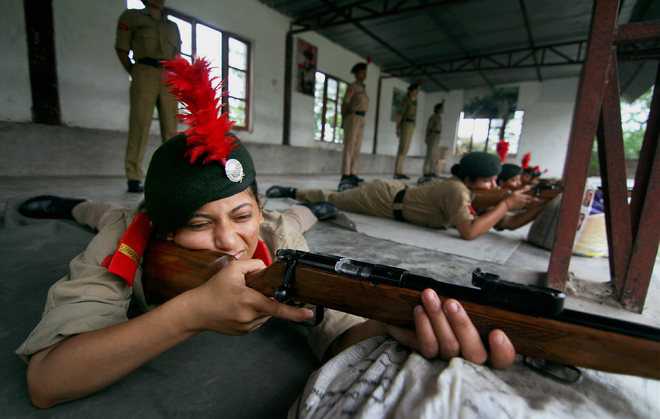
Daughter of a security guard, Anu (20) has been working religiously for the past three months to improve upon her physical strength, communication skills and overall personality as she aims to clear the forthcoming Combined Defence Services (CDS) examination.A second year student at KMV College, she has been taking a regular, professional training at a three-month-long NCC camp that concluded in the city today. “We are four siblings. Despite less income, my father is committed to making my future in the defence services. It is because of my father that I am today studying in a reputed college while also simultaneously attending this camp. My father has a dream that at least one child of his should be an army officer. I have taken it upon myself to fulfil his dream and make him feel proud. I am confident that I will become an Army officer one day,” she said.Like Anu, there were other girls from humble backgrounds in the 38-cadet batch who want to make it to the Army and have been striving hard for this. Another participant at the camp is Navjot Kaur (21), daughter of a carpenter. A student of Lyallpur Khalsa College, she says, “Love for the olive green and the proud feeling one gets while donning it is the sole reason behind choosing to join the defence forces.”She said, “The coaching has been very beneficial for each one of us. We all have been charged very nominally. Even in case a cadet was not able to pay the amount, the entire fee has been sponsored by Brig IMS Parmar, Group Commander of the NCC.”“We have learnt different sections of examination in detail here. Moreover, special attention has been given to hone our personality development and communication skills. Even if we fail to crack the exam in the first attempt, we still will believe that we have become a better human being and learnt many lessons for lifetime,” she added.The camp, which was in progress since July 10 at a career centre owned and run by Col MS Chadha (retd) at Cool Road here, concluded today with a special three-hour session. The aim of the camp was to instil confidence among the cadets and provide them a launching platform along with quality coaching under the expert faculty to crack the competitive exam.Speaking on the last day of the training programme, Brig Parmar said, “Hard work is the key to success and I felt that NCC cadets who are already ‘C’ certificate holder if given the right exposure and guidance, can achieve wonders in life. The cadets were made to attend guest lectures too which were held from time to time by retired Army personnel.”He also said, “In addition to the academic classes held, special personality development programme classes were also held to ensure that the desired candidates made all the way through the exams and the final screening at the Service Selection Board (SSB) level.”

Naval cadets get ‘lessons’ on China, Act East policy

Naval cadets get ‘lessons’ on China, Act East policy

Ajay Banerjee

Tribune News Service

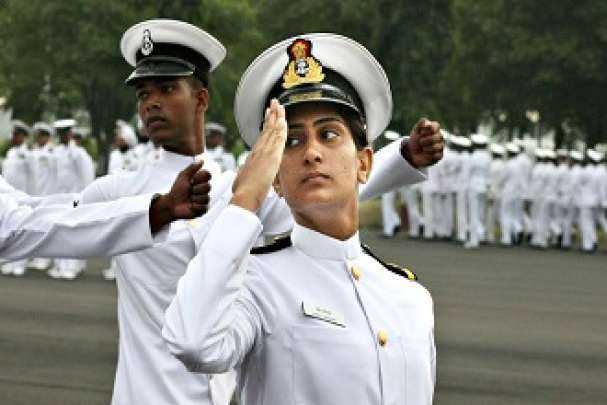
Ezhimala (Kerala), October 12Amid growing India-China power play at sea and efforts to dominate the sea trade, future leaders of the Navy were today given a broad strategic picture of India’s Act-East policy and what to expect from China in the Indian Ocean region.The Indian Naval Academy (INA), Ezhimala, which trains Navy officers, today commenced its two-day ‘Dilli series’ seminar: ‘India and Southeast Asia-Maritime Trade, expeditions and civilizational linkages’. The name ‘Dilli’ carries history, the British where running the sea-trade routes around India in the early 1900s, when they set up a lighthouse at this vantage point on the northern-Kerala Coast in the early 1900s and named it ‘Dilli’.INA Commandant Vice Admiral SV Bokhare kicked off the seminar, saying: “The subject has been chosen to teach cadets about the history and economic linkages.”The cadets at the academy will be posted on warships, submarines and flying fighter jets, helicopters or surveillance planes in the coming years.Professor Shrikant Kondapalli, Chairman of East Asian Studies, Jawaharlal Nehru University, suggested that the forthcoming Communist party Congress in China will authorise a greater role for Chinese Military and Naval presence in the Indian Ocean region. Kondapalli, who has authored two books on China, while moderating a session said we have seen the Chinese middle class bubbling, we have seen China’s push in South China Sea.“China has no tactical air support in the Indian Ocean region as it lacks airfields and even a credible mid-air refueling. We will see a more concentrated China footprint in the Indian Ocean. Djibouti (China’s new land base in north-eastern Africa) will solve the issue of logistics,” Kondapalli said.Vice Admiral Anup Singh (retd) former Eastern Naval Commander, delivered the keynote address and argued to move forward in ‘top gear’ to re-kindle the relationship, start exporting military hardware to south-east Asian countries — Myanmar, Indonesia, Thailand, Vietnam, Malaysia, the Philippines, Brunei Philippines. He suggested that Andaman and Nicobar Island be developed for dual use. Last week, the government appointed former Navy Chief Admiral DK Joshi (retd) as the Lieut Governor of the Island.Prof Ruby Maloni, former head of the history department, Bombay University, pointed out to the military importance of the Straits of Malacca (the sea route to China passes through these straits). Citing European author Tome Pires, she said: “There is no equal in the world.” Pires had written this after Portuguese conquered Malacca in 1511.Dr Nazeer Aziz Anjum from the Aligarh Muslim University recollected how the Dutch colonisers issued passes to traders to cross the Malacca. Replying to question from a Naval officer, he said the Indian maritime declined during the Mughal rule as they could not develop as strong enough naval force.


Civilian officers demand separate head for MES

Vijay Mohan

Tribune News Service

Chandigarh, October 8

Civilian officers in the Military Engineer Service (MES) have sought a separate and “full-time” head from amongst their own cadre in place of the Engineer-in-Chief at Army Headquarters.They have pointed towards a serious rift in the Army and civilian cadres that make up the officer strength of one of largest construction and maintenance agencies in India.The Engineer-in-Chief (E-in-C), at present, is head of the Army’s Corps of Engineers, a combat arm responsible for assisting formations in offensive and defensive operations, as well as the MES that is responsible for executing civil works like constructing buildings and structures in rear echelons. He also oversees the functioning of the Border Roads Organisation and the Married Accommodation Project.Dual role leading to problemsIn a meeting with Defence Minister Nirmala Sitharaman a few days ago, members of the Indian Defence Service of Engineers (IDSE) Association claimed that due to his dual role, the E-in-C is accountable neither to the Army or the Ministry of Defence in respect of the MES, which is an inter-service organisation under the ministry having an annual budget of Rs 14,000 crore. This is leading to several administrative problems.Some posts in the MES are tenable by officers drawn from the Corps of Engineers while others are manned by officers from IDSE, an organised Group-A service under the administrative control of the Ministry of Defence that comprises qualified engineers. Conflicts of interest between the two cadres have surfaced repeatedly.The association also pointed out that orders issued by the then Defence Minister over a year ago for creating three new posts of Additional Director General for the north, North-East and coast guard to expedite infrastructure projects have not made any headway.IDSE members have also urged the Defence Minister to implement the orders issued by the ministry in February 2016 on the recommendations of the Jaffa Committee that covered personnel issues, rationalisation of the MES structure, measures for improving time and cost operation and redeployment and training of staff.


440 years of Amritsar once know as Ramdaspur

Manmeet Singh Gill

Tribune News Service

Amritsar, October 6

Since the fourth Sikh master, Guru Ramdas Ji laid its foundation 440 years ago, the holy city of Amritsar, historically known as Ramdaspur and colloquially referred to as Ambarsar, has seen vast changes in its heritage. But, what has not changed is its street pattern and its nomenclature. The whole community and the city in particularly will be celebrating its founder’s birth anniversary on October 7 (Saturday).Till date, one of the first settlements in Amritsar after Gurus invited artists of 52 trading communities to inhabit the city is known as Chownk Passian. The name Passia has lived long though the other characters of the area have changed.Prof Balvinder Singh, adviser to Indian Heritage Cities Network (IHCN) said, “Passa was a gold ornament worn by women on their heads. The area was inhabited by goldsmiths and hence the name Passian struck. Further, the gold which came in the form of a lump or ingot, was locally referred to as Passa.”Although the work to set up the city was started by the fourth Sikh master, it began taking shape after the fifth Sikh master, Guru Arjan Dev, was installed on Gurgaddi in 1581. It was during his period that most area (measuring around 3.52 sq km), now called the walled city, was developed.The streets in the time were mostly named on the basis of caste and profession. Gali Mochian and Gali Acharjan is the name of community, which performs rituals at the time of cremation of the dead and in lieu of that they are entitled to hold personal belongings of the deceased. Telia Wali Gali is an example of the same.Another wonderful character of the street layout of the time is a narrow lane leading to a square with residential buildings having big tree in the centre. The professionals of the architecture term this character as “Surprising open spaces”. Much of the original structure of the city was changed in the period between 1628 to 1765 owing to frequent attacks by the Mughals and damage to buildings due to gun-powder.The period following 1765 to 1802 witnessed massive construction of katras’ (neighbourhoods) named after leaders of the Sikh misls, forts, bungas (resting places for devotees), gardens, and havellis. The 23 different markets — Ghee Mandi, Gur Mandi, Gha (grass) Mandi — are a contribution of the period. At the time, traders of a particular commodity had their shops in the market. This very character of these markets has changed, but nomenclatures still remains the same.The only remaining bunga now is the “Bunga Ramgarhia” built for the defence of Harimandir Sahib. “The watch tower of the bunga was restored recently, but without considering the true conservation techniques,” commented Prof Balvinder Singh.It was in the era of Maharaja Ranjit Singh (1802-1849) that a massive wall (with 12 gates) of unbaked bricks, with a double moat was constructed around the city in 1825. This fortification (wall) was 25 yard broad and seven yard high.Amritsar was made a district headquarter in 1849. The Amritsar Municipal Corporation came into being in 1868. It was in the following years that the original wall was demolished by the British and later, a new one was built.Prof Balvinder Singh said, “Much of the built heritage has been demolished due to faulty conservation or lack of awareness. Still the original character can be restored or conserved because it reflects the intangible component in terms of values, lifestyle of the inhabitants. It is this common heritage which binds us.”

Interesting facts

  • One of the first settlements in the city is at Chownk Passian.
  • Much of the original structure of the city changed in the period between 1628 to 1765 owing to frequent attacks by the Mughals.
  • The only remaining bunga now is the “Bunga Ramgarhia” built for the defence of Harimandir Sahib.
  • A massive wall (with 12 gates) of unbaked bricks, with a double moat was constructed around the city in 1825 during the era of Maharaja Ranjit Singh.
  • Amritsar was made a district headquarter in 1849.
  • The Amritsar Municipal Corporation came into being in the 1868

Nagar Kirtan held to mark Gurpurb

Founder of holy city had settled here people from 52 vocations

Nagar Kirtan held to mark Gurpurb
Devotees take part in a procession on the birth anniversary of the fourth Sikh Guru, Guru Ramdas Jee, at the Golden Temple in Amritsar on Friday. PTI

Tribune News Service

Amritsar, October 6

A grand Nagar Kirtan was held to mark the 484th birth anniversary of the fourth Sikh Guru, Guru Ram Das, in the holy city here today.Apart from the Sikh sangat, people from other faiths also took part in the Nagar Kirtan held on the Gurpurb of the city’s founder.The religious procession commenced from Akal Takht where the Head Granthi of Golden Temple, Giani Jagtar Singh, placed Guru Granth Sahib in the palanquin.En route the Nagar Kirtan, shopkeepers of all religions had cleaned the roads in front of their shops, beautified them and lit candles to welcome the religious procession.Devotees from all over the world took part in the Nagar Kirtan, including the USA, and inmates of the Miri Piri Academy. Employees of the SGPC had tied up ribbons on their turbans on which “Dhan Dhan Sri Guru Ram Das Jee” was printed.Schoolchildren, band parties, gatka groups, Nihang groups and others took part in the Nagar Kirtan which passed from different areas of the city.  The SGPC president, Kirpal Singh Badungar, thanked different organisations and people to make the Nagar Kirtan a grand success. He said the founder of the holy city had settled people from 52 different vocations in the city for its overall growth.Golden Temple was illuminated with sophisticated LED lights and the sanctum sanctorum was beautified with flowers brought from different countries by the sangat from Mumbai. A ‘deepmala’ was also arranged at Sri Guru Ram Das Jee International Airport, the railway station, the ISBT, the Attari-Wagah Joint Check Post, the elevated road and other prominent public buildings. Various educational institutes also held religious programmes. 


Army donates wheelchair to polio-affected boy

Army donates wheelchair to polio-affected boy

Army donates wheelchair to polio-affected boy
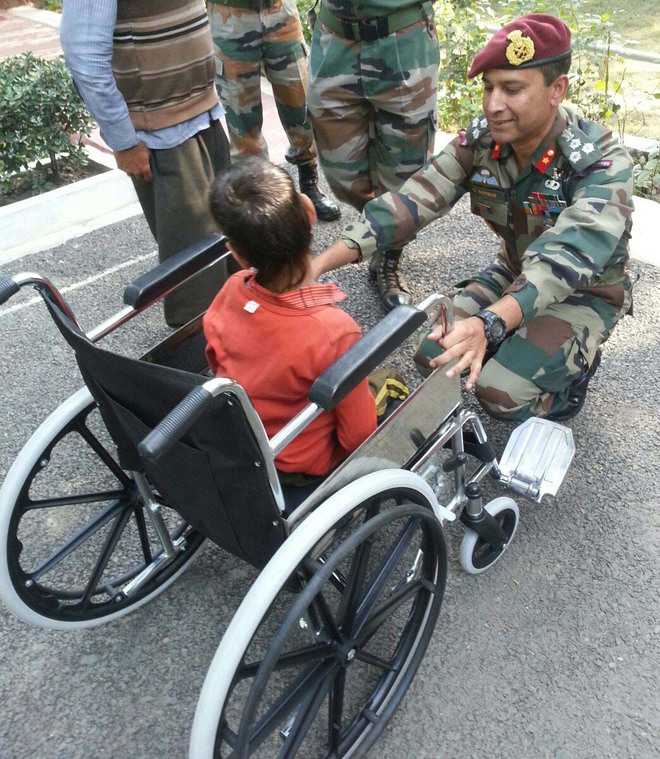
An Army officer makes Basharat Ahmed, a polio-affected child, sit on a wheelchair in Rampur on Sunday. A Tribune Photo
Tribune News Service
Srinagar, October 1
The Army donated a wheelchair to a polio-affected child in north Kashmir’s Baramulla district.
The wheel chair was donated to 10-year-old Basharat Ahmed of Ghati Galiyan at Mohara in Uri.
“The child has been affected by polio since birth. The parents had lost their daughter to the killer disease six months ago and they used to carry their son (Basharat) on their shoulders,” an Army statement said. “To ease the movement of the child, the Army at Rampur donated the wheelchair to the family. The parents thanked the Army for this gesture.”


हिमालयन रेंज में मौजूद सियाचिन ग्लेशियर दुनिया का सबसे ऊंचा बैटल फील्ड है। यहां से एक चीन-पाकिस्तान पर नजर रखी जाती है।

रक्षा मंत्री ने लेह-कराकोरम के बीच ब्रिज की शुरुआत की, सियाचिन की पोस्ट भी देखी, national news in hindi, national news

रक्षा मंत्री ने लेह-कराकोरम के बीच ब्रिज की शुरुआत की, सियाचिन की पोस्ट भी देखी, national news in hindi, national news

रक्षा मंत्री ने लेह-कराकोरम के बीच ब्रिज की शुरुआत की, सियाचिन की पोस्ट भी देखी, national news in hindi, national news

रक्षा मंत्री ने लेह-कराकोरम के बीच ब्रिज की शुरुआत की, सियाचिन की पोस्ट भी देखी, national news in hindi, national news

रक्षा मंत्री ने लेह-कराकोरम के बीच ब्रिज की शुरुआत की, सियाचिन की पोस्ट भी देखी, national news in hindi, national news

रक्षा मंत्री ने लेह-कराकोरम के बीच ब्रिज की शुरुआत की, सियाचिन की पोस्ट भी देखी, national news in hindi, national news

रक्षा मंत्री ने लेह-कराकोरम के बीच ब्रिज की शुरुआत की, सियाचिन की पोस्ट भी देखी, national news in hindi, national news

श्रीनगर.निर्मला सीतारमण ने पहली महिला रक्षा मंत्री के तौर पर शनिवार को लद्दाख रेंज में सियाचिन का दौरा किया। उन्होंने लेह से 120 किलोमीटर दूर ‘प्रथम-श्योक’ ब्रिज का इनॉगरेशन किया। इससे आर्मी को चीन से सटे दरबुक और दौलत बेग ओल्डी सेक्टर तक आवाजाही में मदद मिलेगी। रक्षा मंत्री ने हेलिकॉप्टर के जरिए चीन और पाकिस्तान की बॉर्डर से सटे इलाकों और फॉरवर्ड पोस्ट की सिक्यिुरिटी का जायजा लिया। उनसे पहले महिला मंत्री के तौर पर स्मृति भी सियाचिन ग्लेशियर जा चुकी हैं। दो साल पहले पूर्व रक्षा मंत्री मनोहर पर्रिकर भी सियाचिन गए थे। बता दें कि सियाचिन 24 हजार फीट की ऊंचाई पर स्थित दुनिया का सबसे ऊंचा और मुश्किल बैटल फील्ड है। यहां से चीन और पाकिस्तान पर नजर रखी जाती है।सीतारमण ने शहीदों को श्रद्धांजलि दी…

न्यूज एजेंसी के मुताबिक, रक्षा मंत्री शनिवार सुबह सियाचिन बेस कैंप पहुंचीं। यहां वॉर मेमोरियल पर शहीदों को श्रद्धांजलि देने के बाद जवानों से मुलाकात की। साथ ही आला अफसरों से सियाचिन के सिक्युरिटी हालात और जवानों की जरूरतों की जानकारी ली।
– सीतारमण ने लेह से करीब 120 किलोमीटर दूर ‘प्रथम-श्योक’ ब्रिज का इनॉगरेशन किया। यह पुल लेह और कराकोरम को जोड़ता है। इससे आर्मी को चीन से सटे दरबुक और दौलत बेग ओल्डी सेक्टर तक आवाजाही में मदद मिलेगी।
कश्मीर में फॉरवर्ड पोस्ट पर भी गईं सीतारमण
– रक्षा मंत्री बनने के बाद सीतारमण पहली बार दो दिन के जम्मू-कश्मीर के दौरे पर पहुंची थीं। रविवार को सीतारमण ने आर्मी चीफ जनरल बिपिन रावत के साथ नॉर्थ कश्मीर के कुपवाड़ा में कुछ फॉरवर्ड पोस्ट का दौरा किया। इस दौरान आर्मी चीफ ने रक्षा मंत्री को पाकिस्तान के कब्जे वाले कश्मीर (PoK) से आतंकी घुसपैठ को रोकने के उपायों की जानकारी दी। सीतारमण ने पोस्ट पर तैनात जवानों से मुलाकात की और सिक्युरिटी का जायजा लिया। शाम को सीएम महबूबा मुफ्ती और गवर्नर से मुलाकात की।
– बता दें कि रक्षा मंत्री का जम्मू-कश्मीर दौरा ऐसे वक्त हुआ, जब पाकिस्तान रोजाना सीजफायर वॉयलेशन कर रहा है। पाकिस्तान बर्फबारी शुरू होने से पहले फायरिंग की आड़ लेकर PoK से आतंकवादियों को कश्मीर में दाखिल कराना चाहता है। इंटेलिजेंस एजेंसियों ने आगाह किया है कि सीमा पार से बड़ी संख्या में आतंकी भारत में घुसपैठ की फिराक में हैं। इसके जवाब में सिक्युरिटी फोर्सेस ने पिछले एक महीने में LoC के पास घुसपैठ की कोशिशों को नाकाम कर कई आंतकवादियों को मार गिराया है।
कौन-कौन से मंत्री सियाचिन गए?
– 22 मई, 2015 में तब के रक्षा मंत्री मनोहर पर्रिकर ने सियाचिन का दौरा किया था। यहां बने वॉर मेमोरियल पर शहीद जवानों को श्रद्धांजलि देने के बाद उन्होंने हेलिकॉप्टर से सियाचिन ग्लेशियर के सुरक्षा हालात का जायजा लिया था।
– 9 अगस्त, 2016 को केंद्रीय मंत्री स्मृति ईरानी रक्षाबंधन पर सियाचिन में तैनात सैनिकों को राखी बांधने के लिए गई थीं। इस दौरान वे अपने साथ 70 शहरों से जुटाए लोगों के मैसेज लेकर पहुंचीं। स्मृति दुनिया के सबसे ऊंटे बैलट पर जाने वाली देश की पहली महिला मंत्री थीं।

आर्मी के लिए क्यों अहम है सियाचिन?

– हिमालयन रेंज में मौजूद सियाचिन ग्लेशियर दुनिया का सबसे ऊंचा बैटल फील्ड है। 1984 से लेकर अब तक यहां करीब 900 जवान शहीद हो चुके हैं। इनमें से ज्यादातर की शहादत एवलांच और खराब मौसम के कारण हुई।
– सियाचिन से चीन और पाकिस्तान दोनों पर नजर रखी जाती है। विंटर सीजन में यहां काफी एवलांच आते रहते हैं। सर्दियों के सीजन में यहां एवरेज 1000 सेंटीमीटर बर्फ गिरती है। मिनिमम टेम्परेचर माइनस 50 डिग्री (माइनस 140 डिग्री फॉरेनहाइट) तक हो जाता है।
– यहां हर रोज आर्मी की तैनाती पर 7 करोड़ रुपए खर्च होते हैं। यानी हर सेकंड 18 हजार रुपए। इतनी रकम में एक साल में 4000 सेकंडरी स्कूल बनाए जा सकते हैं। अगर एक रोटी 2 रुपए की है तो यह सियाचिन तक पहुंचते-पहुंचते 200 रुपए की हो जाती है।