All posts by webadmin

Pakistan Army says 3 people killed in firing by Indian troops

Pakistan Army says 3 people killed in firing by Indian troops
The Army said Indian troops resorted to “unprovoked firing” on Friday, targeting the civilian population in Rakhchikri area of Rawalakot. PTI file

Islamabad, September 30

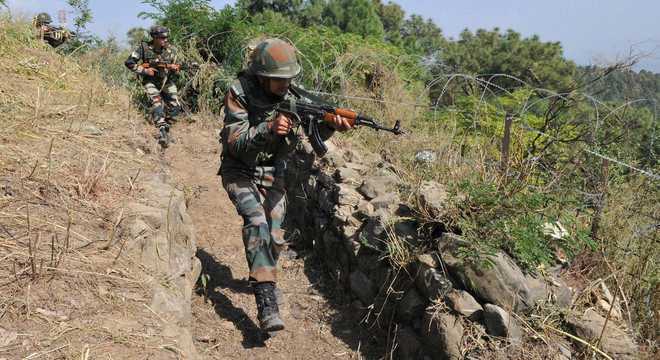
At least three people, including a soldier, have been killed and four others injured in alleged firing by Indian troops across the Line of Control, the Pakistan Army said on Saturday.The Army said Indian troops resorted to “unprovoked firing” on Friday, targeting the civilian population in Rakhchikri area of Rawalakot.As a result of the shelling, two civilians, including a woman, were killed while one person sustained injuries.An army patrol assisting rescue operations in the area also came under fire, resulting in the killing of Naib Subedar Nadeem. Three soldiers were also injured, it said.The Army claimed that Pakistani “troops gave a befitting response to the cross-border firing”. PTI


Attari-type Retreat on cards in Meghalaya

Attari-type Retreat on cards in Meghalaya
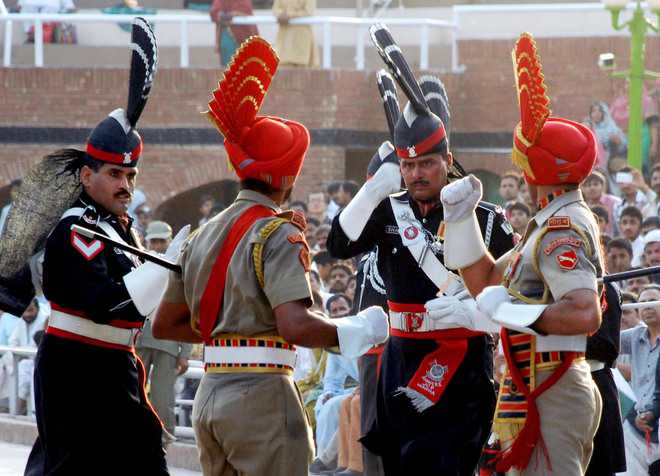
Border guards of India and Pakistan during the Retreat ceremony at the Attari-Wagah border. Tribune file photo

Bijay Sankar Bora

Tribune News Service

Guwahati, September 15

The Border Security Force and the Border Guards of Bangladesh are all set to start a daily Retreat ceremony on the lines of the one at Attari-Wagah border in Punjab at Dawki in Meghalaya on the India-Bangladesh border.The ceremony was expected to begin before the next BSF Raising Day and a saluting platform had already been built, a senior official said. The Retreat would have already started but for some hiccups faced by the BGB, he said.Besides the saluting platform, the BSF is making arrangements for other utilities and amenities such as washrooms, resting sheds and canteen for the visitors/tourists who would converge on the border to witness the ceremony.Dawki has already been popular destination for domestic as well as foreign tourists visiting Meghalaya. Tourists used to cross the border point at Dawki from both the sides under the watchful eyes of the BSF and the BGB guards.“The BSF plans to flaunt picturesque destinations of Meghalaya and destinations in rest of the country embedded in the infrastructure that is being built at Dawki in view of the the Retreat ceremony, which will soon become a reality,” another official said. The ceremony will provide scope for the Meghalaya government to chip in to boost tourism in the state.


Ex-Army officer turns house into green abode

Ex-Army officer turns house into green abode
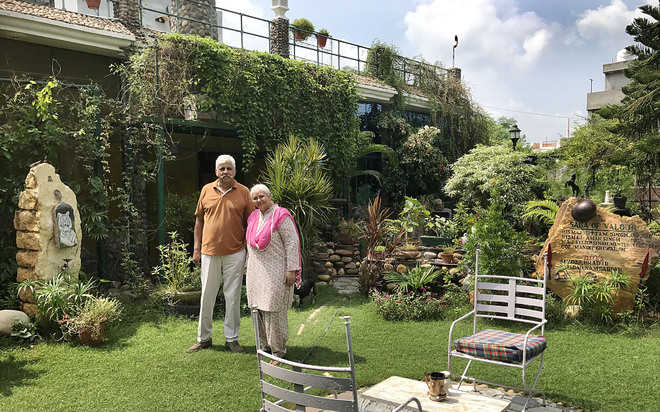
Col (retd) Mandip Grewal, along with his wife Kamaljit Kaur, at his home in Sofi Pind. Tribune Photo

Rachna Khaira

Tribune News Service

Jalandhar, September 11

He gave his crucial years of life to the service of the nation and dedicated his retired life to the service of nature.Meet 59-year-old Col (retd) Mandip Grewal who hails from a distinguished family of Risaldars, Numbardars and decorated Army officers. Now, settled in Sofi Pind, he has turned his house into an abode of nature.His home — home to over 100 birds and animals — is a delight to visit. Interestingly, he has not bought any of the animals or birds kept at his home. They have chosen his house of their own will.He does not sell any plant or animal but offers them to all those who come to his home to enjoy the serenity of nature as a return gift.Among the daily visitors, a majority are children.Throwing light on the idea, he said, “Love for nature is like passion for the Army that runs in my veins. My father was also an Army officer and had immense love for nature. Earlier, we used to transport our birds and animals along to various places. The transferable job in the Army did not prove to be detrimental in diminishing our love for nature.”Known as Mandy among his friends, Col (retd) Grewal was awarded the Sena Medal for his exemplary services.On being asked how he managed to attract so many birds and animals to his place, Col Grewal said, “Birds also have basic needs and fulfilling the need of some of them will ensure you’ve got quite an audience. Birds need food, water, shelter and nesting materials during the spring. These things can be provided easily to the birds like a tray of sunflower seeds, a pan of water, a bush to hop into and an old plastic basket, that are kept in the open area of my lawn.”While his children are away for higher studies, Col Grewal and his wife Kamaljit Kaur are busy taking care of the extended family, which they actually ‘won’ in the past five to six years.“Apart from enjoying their sight and sound, one can easily feel rejuvenated while looking at some of the interesting species around. Moreover, you can learn a lot from them,” added Col Grewal.Talking about lessons learned from nature, Col Grewal said, “The most important lesson is love. The birds are very careful about their offspring and also make strenuous efforts to make a house for them. Also, unlike human beings, they do not spoil nature but add value to it by planting more trees,” said the officer who only retired last year and has taken over as Officer–in-Charge (OIC) of the ECHS polyclinic in the Ucchi Bassana area.He said birds play an important role in tree plantation by flying seeds from one part of the world to another.The officer not only distributes free plants and animals among the visitors at home but also gifts a Neem or Moringa tree to every patient who visits his ECHS polyclinic everyday.“These are herbal plants having a medicinal value. Their presence prevents many diseases,” he added.He said his family supported him in the endeavour. “While my children are away and busy making their career, my wife is very supportive and treats every bird and animal like her own child. As I keep travelling to various places to distribute free plants, she is the one who takes care of food for the birds residing at our house,” added Col Grewal, who was also honoured with the Green Ambassador award by a Pune-based NGO, Save Earth, in 2010.He has painted pictures of cranes in his home, including the main door. Explaining the reason for this, he said, “This is because a crane never stays alone and cannot survive without his companion.”He said the support of his family had added wings to his crusade for preserving nature. The former Army officer urged the city residents to make small endeavour to upgrade green cover and wildlife around their homes. Col Grewal also encouraged the children to spend more time with nature instead of electronic gadgets.


Sitharaman to focus on military preparedness, welfare of soldiers’ kin

Sitharaman to focus on military preparedness, welfare of soldiers' kin
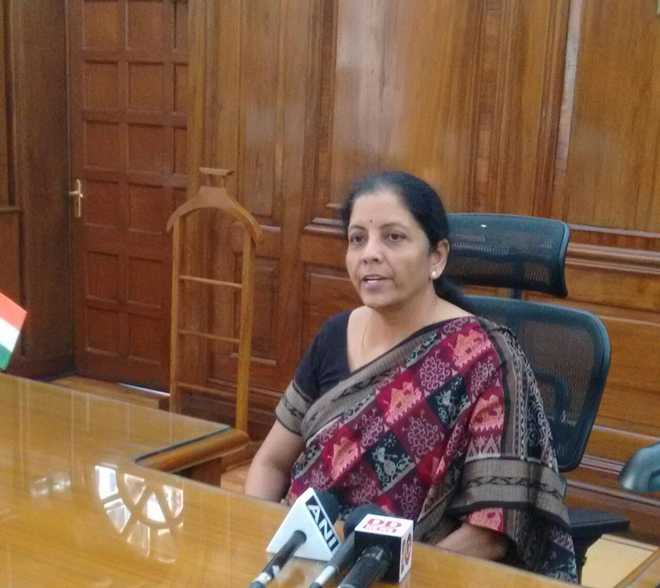
Nirmala Sitharaman after assuming office. Tribune photo

Ajay Banerjee

Tribune News service

New Delhi, September 7   Nirmala Sitharaman, the newly appointed Defence Minister, on Thursday said military preparedness, sorting out long-pending issues, ‘Make in India’ and welfare of families of soldiers would be areas of focus.Sitharaman assumed charge as Defence Minister at the South Block office here in the presence of outgoing Defence Minister Arun Jaitley and the Minister of State for Defence Subhash Bhmare.


In a brief statement after taking over, Sitharaman said, “My priority will definitely be the armed force preparedness.”It is important that the Indian armed forces received all attention in terms of giving them every necessary endowment and equipment to perform their duty, she added.Promising to address the long-pending issues, the Minister said, “I will address all long-pending issues in consultation with the Prime Minister and the cabinet.”

Sitharaman, who was commerce minister in the Modi cabinet, stressed upon ‘Make in India’. India is the world’s biggest importer of weapons and military equipment. “It’s very important for defence capability to have a make in India. We will ensure that it’s given full play for defence production.”“With technology coming in, we have to ensure that we ‘make in India’ so that we benefit and also send these to the international market,” she added Sitharaman said one of her priorities would be the families of the armed forces personnel. “Soldiers and their families should remain absolutely assured that their interests are watched,” she said.The taking over of Sitharaman had been scheduled for Thursday and was consequent to the return of Jaitley from his visit to Japan. Sitharaman was appointed Defence Minister on Sunday after Prime Minister Narendra Modi effected a reshuffle of his council of ministers. Sitharaman is the first-ever independent woman Defence Minister. Indira Gandhi held the portfolio for more than two years as the Prime Minister.


India’s refusal to budge on Dokalam will resonate well, says ex-envoy

India’s refusal to budge on Dokalam will resonate well, says ex-envoy
India dealt with the Dokalam standoff in a more mature and sensible way. AFP file

Beijing, August 30

India’s refusal to back off from the Dokalam standoff despite heavy pressure mounted by China will have a wider resonance in the region against Beijing’s assertive behaviour, former Indian Ambassador to China Ashok Kantha said.

India and China on Monday ended their standoff in Dokalam by withdrawing their troops from the area. Troops of the two countries had been locked in a standoff in Dokalam since June 16 after Indian troops stopped the Chinese Army from building a road in the strategically key Dokalam region, a disputed area between China and Bhutan.

“The way India dealt with Dokalam standoff has wider resonance. Because what the Chinese are trying to do in Dokalam is part of a larger pattern,” Kantha, who served as India’s envoy here from 2013 to January last year, told PTI in a wide-ranging interview on the Dokalam issue from Delhi over phone.

China is trying to achieve its contested territorial claims though unilateral actions like the disputed South China Sea, where smaller states have accepted Beijing expansive territorial claims as a “new normal”.

“But that did not happen in Dokalam. India and Bhutan did not follow the script, so China has to back off and revisit their position,” Kantha, now director of a New Delhi-based think tank, the Institute of Chinese Studies (ICS), said.

“If India had succumbed to Chinese pressure, it would have made it even more difficult for China’s smaller neighbours to stand up. It would have undermined India’s credibility, first in Bhutan and other South Asian neighbours,” he said.

“How we dealt with it definitely has resonance in terms of encouraging greater pushback in the region to China’s assertive behaviour. This also may lead to some introspection on the part of China, especially why the rise of China and its behaviour is creating anxieties among its neighbours,” he said.

Both India and Bhutan challenged changing facts on the ground catching China by surprise, while showing restraint on the ground, he said.

Also, India “very deliberately and consciously made an effort not to indulge in tit for tat polemics as only through a quiet diplomacy a solution can be found”, he said.

Also, the assessment on the Indian side is that there was no real risk of war breaking out and war was not an option for either side, including on the Chinese side, so that there is space to convey our concerns and interests, he said.

“China also realised that finding resolution by taking recourse through force is really not an option.

Notwithstanding what they were saying, they had to find a diplomatic solution. Since India maintained a firm position, given the BRICS summit was around the corner, China didn’t want it to be overshadowed by the Dokalam standoff,” he said.

While there will be greater clarity in the coming days about the understanding reached between India and China to end the 73-day standoff, India has achieved its objective to prevent China from building the road close to the narrow Chicken Neck connecting the North-Eastern states, he said.

“That was the provocation for Indian personnel to step into the area of standoff. The objective has been achieved and we have also managed to defuse the situation, without India yielding space,” he said.

Kantha said China also has shown flexibility after initial belligerence.

“Initially, they said there has to be unilateral Indian withdrawal to enter into meaningful talks. They changed their position and agreed on mutual engagement, which has been achieved through bilateral understanding. Now, they also indulged in war-like rhetoric, but came around to accepting that the use of force is not an option for them,” he said.

India on the contrary dealt with Dokalam in a more mature and sensible way.

Though both the countries have managed to defuse the current situation, the Dokalam standoff has seriously affected the bilateral relations, he said. PTI
CM: Dera to pay for security forces too Govt to submit detail of loss to property in HC

CM: Dera to pay for security forces too
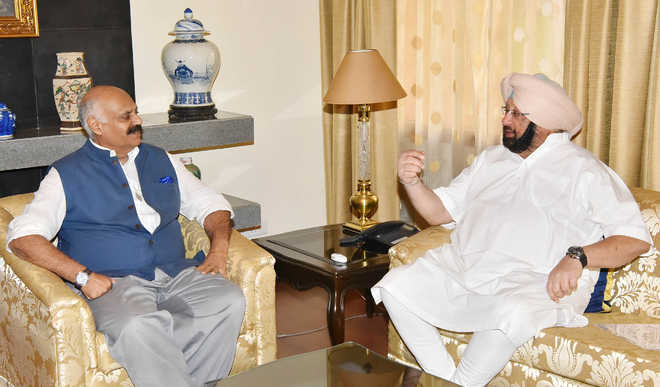
CM Capt Amarinder Singh briefs Governor VP Singh Badnore on the law and order situation, in Chandigarh on Monday. Tribune photo

Tribune News Service

Chandigarh, August 28

The state government wants Dera Sacha Sauda to pay for the expenditure incurred on the deployment of central as well as state forces during the period of dera-related disturbance in the state. A senior government functionary said the total expenditure would be between Rs 150 crore and Rs 200 crore.The claim will be in addition to the property loss, both of public and private, to be filed before the Punjab and Haryana High Court. The Union Government will bill the state for the deployment of central forces, which the state will submit in the high court for necessary action.After briefing Punjab Governor VP Singh Badnore on sporadic incidents of arson and looting and preventive arrests in the state, Chief Minister Capt Amarinder Singh said the quantum of loss would be available once a list of properties damaged in the violence was compiled by the authorities concerned.Of 32 people killed in police firing in Panchkula on August 25, 12 were from Punjab. The cremation of identified persons went off peacefully.“The government has already stated that there is no question giving compensation to the kin of the deceased as they were part of the mob. We can still consider cases on merit,” said an official spokesman.The CM said the government would review the situation on Tuesday before taking any decision on lifting curfew imposed in some areas.Of the 10 districts, the curfew has been lifted in five. Night curfew will continue for the time being in Mansa, Bathinda, Faridkot, Barnala and Samna, and Patran.While mobile data services in Punjab would be lifted tomorrow, the decision to open schools and colleges in sensitive districts had been left to the respective DCs, said the CM, who earlier held a high-level meeting with administrative and police officials.


Mobile internet services to remain suspended in Haryana, Punjab

Mobile internet services to remain suspended in Haryana, Punjab
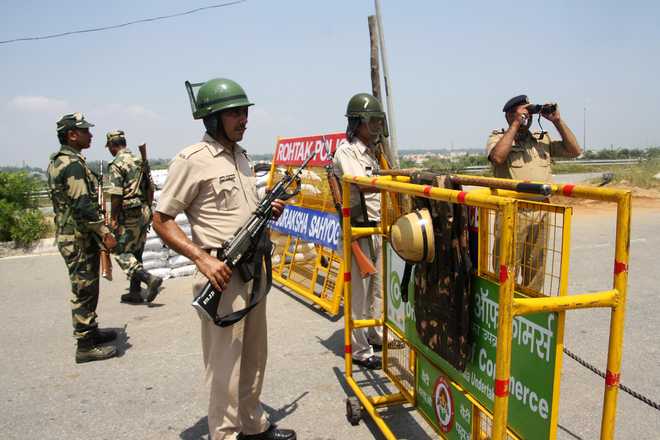
Security forces deployed at main junctions stand guard near a jail where dera head Gurmeet Ram Rahim Singh is awainting sentencing, in Rohtak on August 27, 2017. — AFP

Chandigarh, August 27

Mobile internet services will remain suspended in Haryana and Punjab till Tuesday, besides internet lease lines on the premises of the Dera Sacha Sauda headquarters at Sirsa have also been suspended for the said period, officials said on Sunday.The authorities had earlier suspended the services to prevent rumours from being spread, ahead of the court verdict against Dera Sacha Sauda chief Gurmeet Ram Rahim Singh, who was convicted by a CBI court in Panchkula on Friday in a 15-year-old rape case.(Follow The Tribune on Facebook; and Twitter @thetribunechd)Now, the ban has been extended till Tuesday to prevent any disturbance of peace and public order in view of the quantum of punishment to be pronounced against the Dera chief in Rohtak tomorrow, officials said.Mobile internet services, which were suspended for 72 hours in Haryana, ahead of Friday’s court verdict, would continue to remain suspended in the state till 11.30 am on Tuesday, they added.Besides, all educational institutions in Panchkula, Rohtak, Kaithal, Ambala, Bhiwani and Fatehabad districts will remain closed tomorrow, the officials said.Mobile internet services, which were suspended in Punjab three days back, would also remain suspended till Tuesday, Chief Minister Amarinder Singh had announced yesterday.The Haryana government said today it had extended the period of suspension of mobile internet services, including 2G, 3G, 4G, CDMA and GPRS, all SMS and dongle services provided on mobile networks, except voice calls, in the state till 11.30 am on August 29.“Besides, the internet lease lines on the premises of the Dera Sacha Sauda, Sirsa have been suspended till August 29.Any person found guilty of violating these orders would be liable to face legal action,” Additional Chief Secretary, Home Department, Ram Niwas, said here.He added that the orders had been issued under the Temporary Suspension of Telecom Services (Public Emergency or Public Safety) Rules, 2017.“The orders have been issued considering the critical law-and-order situation, to maintain peace and communal harmony in the state and prevent any loss of life or further damage to property. It has been reported by the IG, CID that the situation is tense and violence may continue for several days, especially on August 28, when the quantum of punishment (against the Dera chief) will be announced,” an official release quoted Niwas as saying.He added that it had been reported by the Deputy Commissioner and Superintendent of Police, Sirsa that the devotees might attempt to breach peace and tranquillity and resort to arson, leading to damage of properties.”Since the environment is tense, rumours of different kinds may be spread through broadband and internet lease lines on the premises of the Dera Sacha Sauda,” Niwas said.Directions had also been issued to the telecom service providers and those providing the internet lease lines on the premises of the Dera Sacha Sauda, Sirsa to ensure compliance of these orders, he added.Thirty-six people died in violence in Panchkula and Sirsa after the Dera Sacha Sauda chief’s conviction on Friday.Punjab and Haryana have been on a high alert with curfew imposed at many sensitive areas of the two states.The CBI court will pronounce the quantum of sentence in the rape case against Gurmeet in Rohtak tomorrow. — PTI 


53 defunct bomb shells recovered

53 defunct bomb shells recovered
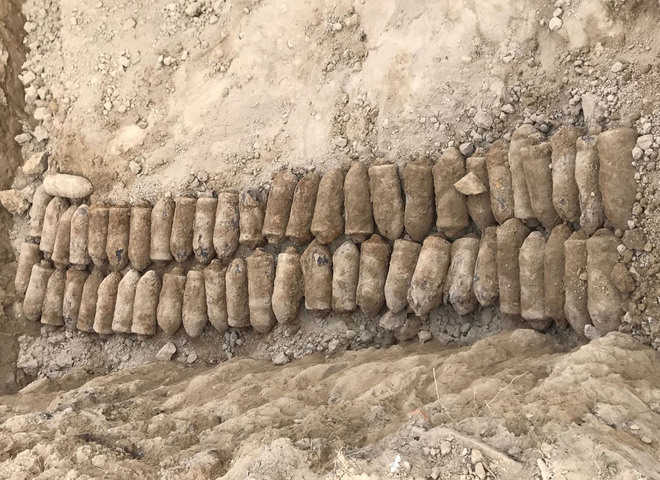
Bomb shells recovered from a religious place at Dhunda village in Tarn Taran on Wednesday. Tribune Photo

Our Correspondent

Tarn Taran, August 23

As many as 53 decades-old bomb shells have been recovered from Tomb Baba Anait Shah (religious place of a Muslim saint) in Dhunda village, 25 km from here, today. The place is situated on the banks of Beas.Goindwal Sahib DSP Satpal Singh said the bomb shells were seen by the sewadars of the tomb when they were digging the land for construction. The tomb head informed the police.The DSP said the police reached the spot and cordoned off the area to prevent any untoward incident. The DSP said the explosive could be related to the 1965 Indo-Pak war when the Indian Army had stationed here. He added that such type of 28 bomb shells were recovered from the same spot about six months ago. The DSP said experts had been called to defuse the bombs.Three bombs spotted near rail trackAbohar: Three bombs were spotted near the railway track in the border district of Jaisalmer on Wednesday. SP Gaurav Yadav said some villagers noticed the bombs lying near the railway track in Dagania village and informed the authorities. The area has been cordoned off. The anti-bomb squad and dog squad have been dispatched to the site and Army officers were also informed. Preliminary investigations indicate that the bombs appeared to be defused. OC


Trump rules out hasty withdrawal from Afghanistan, warns Pak for support to terror

Trump rules out hasty withdrawal from Afghanistan, warns Pak for support to terror
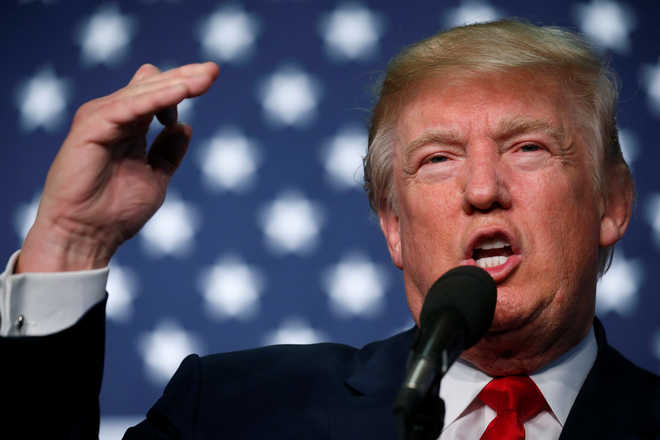
Donald Trump. Reuters file

Washington, August 22

The US on Tuesday ruled out a hasty withdrawal of its troops from Afghanistan as President Donald Trump warned Pakistan of consequences if it continued to provide safe havens to terror groups and sought an enhanced role for India to bring peace in the war-torn country.Trump, in a prime-time televised address to the nation, laid out his South Asia policy saying a “critical part” of it was to further develop US’ strategic partnership with India.He said after a “comprehensive review”, it had been decided that the American strategy in Afghanistan and South Asia would change dramatically.

(Follow The Tribune on Facebook; and Twitter @thetribunechd)

“A core pillar of our new strategy is a shift from a time-based approach to one based on conditions. I’ve said many times how counterproductive it is for the United States to announce in advance, the dates we intend to begin, or end, military operations,” Trump said in his address.”We will not talk about numbers of troops or our plans for further military activities,” Trump said as he announced his South Asia policy in front of about 2,000 people from all five services and top officials of his administration.Trump slammed Pakistan for its continued support to terrorist groups and warned Islamabad of consequences if it continued to do so.”We can no longer be silent about Pakistan’s safe havens for terrorist organisations, the Taliban, and other groups that pose a threat to the region and beyond,” Trump said.”Pakistan has much to gain from partnering with our effort in Afghanistan. It has much to lose by continuing to harbour terrorists,” he said, in a apparent warning to Pakistan.The US President reached out to India seeking an enhanced role for New Delhi, especially in the economic field, to bring peace and stability in Afghanistan.India, the world’s largest democracy, is a key security and economic partner of the United States, he said.”We appreciate India’s important contributions to stability in Afghanistan, but India makes billions of dollars in trade with the United States, and we want them to help us more with Afghanistan, especially in the area of economic assistance and development,” Trump said. PTI
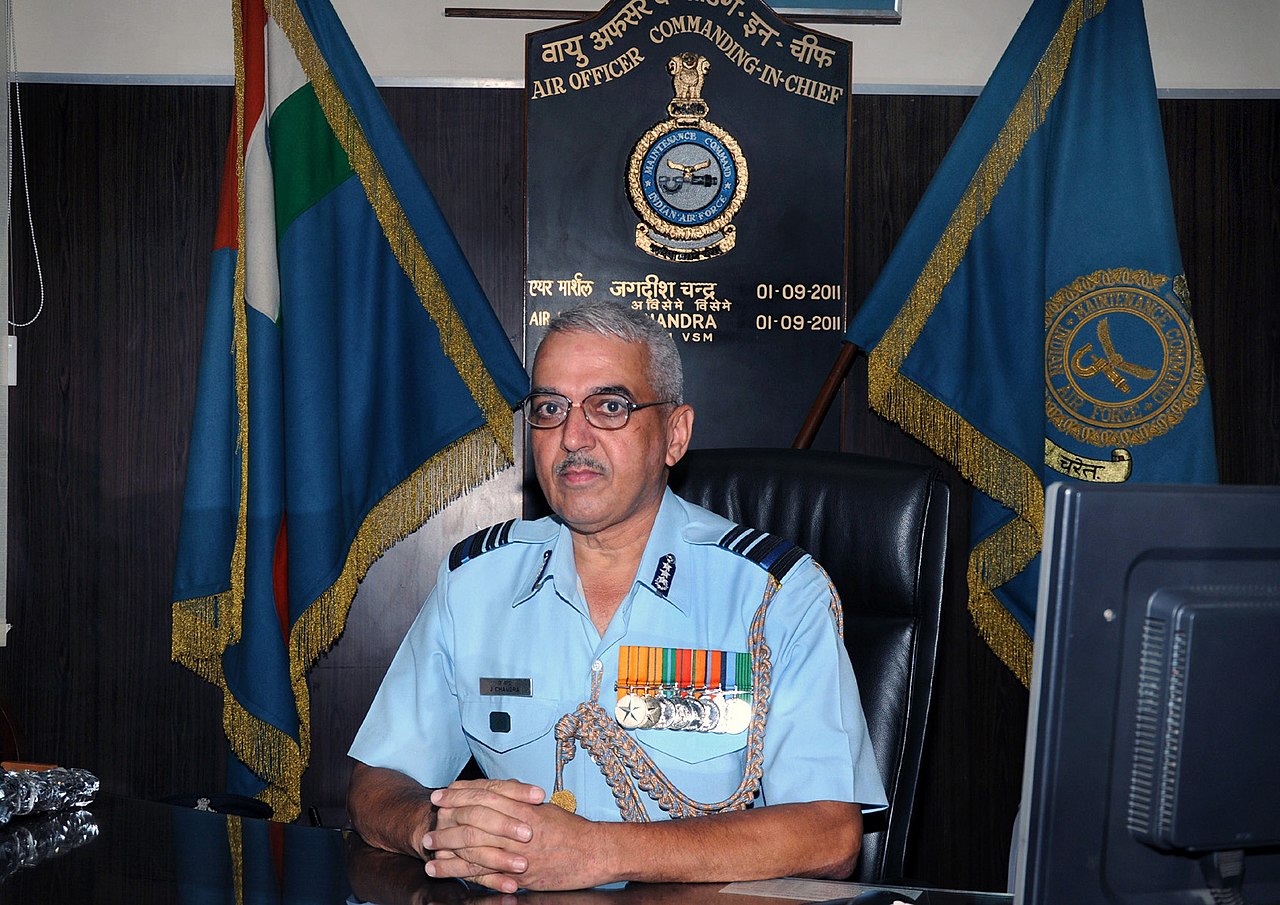

Defence Minister as a force multiplierby Lt Gen Bhopinder Singh (retd)

The post of the Minister of Defence is the singular nodal point for all matters pertaining to the defence forces. Despite internal and external security challenges, India has been consistently bereft of a passionate Minister of Defence, who could effectively address and allay institutional concerns.

Defence Minister as  a force multiplier

INDEPENDENT India’s short history has seen five of its Defence Ministers rise to be the Prime Ministers of India (Indira Gandhi, PV Narsimha Rao, Rajiv Gandhi, VP Singh and Chandrashekar), one Deputy Prime Minister (Jagjivan Ram), and two who went on to become the Presidents of India (R Venkataraman and Pranab Mukherjee). Besides these, topical satraps like VK Menon, Sharad Pawar, Mulayam Singh Yadav, AK Anthony and Arun Jaitely have adorned the office of the Raksha Mantri in the South Block of the Central Secretariat. Yet this crucial ministry in the national narrative is not the most-aspired for or sought-after portfolio amongst the mainstream politicos. As the corridor-joke goes, it comes without the “votes or the notes”! Ostensibly part of the critical  Defence, External Affairs and Finance triad of national governance, currently it retains a lamentable status of “additional charge”. The post of the Minister of Defence (MoD) is the singular nodal point for all matters pertaining to the defence forces — all historic and prevailing woes, concerns and challenges that require “governmental approval” are supposed to be articulated, proposed and championed by the incumbent MoD. Therefore, notwithstanding the ceremonial position of the President as the Supreme Commander of the Armed Forces — the buck realistically stops at the desk of the MoD. The preparedness and the systemic angst within the institution is indirectly reflective of the quality of political support lent by the MoD to the armed forces, as the institutional caretaker under the constitutional wirings of participative democracy. The basic institutional woes of the Indian armed forces are: Firstly, the material wherewithal. The lack of adequate weaponry, munitions, indigenisation efforts, wares etc.. Secondly, the personnel issues that include debilitating shortages of officer cadre, qualitative issues of intake, consistent down-slide in the official warrant of precedence, socio-economic degradation with issues like OROP and the successive Pay Commissions. Third is the crucial struggle with strategic integration. This includes concerns on insufficiency of joint-command structures within the three services, appointment of CDS etc. Lastly, the over-stretch of deployment, resulting in almost permanent deployments in insurgency-affected states, to now even in the realms of basic “policing” during civic disorders, in places like Muzzafarnagar and Rohtak. From time to time, specific issues of the defence forces hit their peak-decibels, with specific circumstances warranting their public concerns, mainstreaming and prominence. However, the specificities and emotional impulses of each of these institutional concerns bely the most fundamental issue concerning the defence forces in our form of governance — that is the historical absence of an empathetic, enlightened and powerful “voice” in the corridors of power,  a “voice”, that in our constitutional-political-administrative construct, can only come from the Minister of Defence in India. Unlike, China or Pakistan, where the military apparatus and the accompanying “voice” of their defence forces are predominant and impactful, the tenets, instincts and compulsions of a democracy in India, relegates the bare necessities of the “voice” of the Indian defence forces to occasional faux-nationalistic fervour. This is without any meaningful investments in addressing the increasing laundry-list of institutional concerns. Reality is that from the inadequacy of fighter squadrons, basic infantry rifle procurement, OROP to even CSD-related concerns — the defence forces maintain a disciplined public silence. This is mandated in the constitutional wiring of “civil supremacy over military matters”. Whereas, the politicos and the generalist civil bureaucrats maintain an equally silent posture that basically exposes the defence forces to an unfair and undefended position of either misunderstood criticism, (for example the “Sahayak” system), disinterest (successive Pay Commission degradations) or even disagreements (annual budgetary allocations).This dysfunctional marginalisation of the armed forces on matters pertaining to security and the decision- making process has a historical faultline of suspicion of the “uniformed” fraternity by the politico-bureaucrat combine. This has been conveniently perpetuated by all political dispensations, irrespective of their ultra-nationalistic posturings. Of the 20 incumbents as the Minister of Defence, none except for the short tenure of Jaswant Singh, could claim any professional affinity or having propounded or published any seminal work on strategic/security relevance or on any other larger security imperatives. Also, unlike the Minister of Law (where 23 out of 26 incumbents have been lawyers), or in other ministries like ICDS, Tribal Affairs or Minority Affairs — where each and every minister till date has been from the respective domain, it is not essential that the Defence Minister needs to be an ex-soldier necessarily. The position demands an individual to feel passionately, intellectually and empathetically concerned about the institution. Former Minister of State for Defence, Arun Singh (Congress), like Jaswant Singh, (BJP) had a natural proclivity and sensibility on defence matters. Similarly, the Rajya Sabha MP Rajeev Chandrasekhar, though a civilian entrepreneur, has espoused the cause of the institution. None of the political heavy-weights can claim to such a concrete body of tangible contribution —materially, intellectually or even emotionally.From Baldev Singh (the first and the longest-serving MoD) to the military-despising VK Menon — the institution has steadily witnessed a free-fall in the decision-making hierarchy. Today the essential “sword-arm” of the nation has regressed to a purely “requisitioned-arm” that is utilised for its pure functional abilities, kinetic capabilities and delivering results (irrespective of the cost to itself!). While India essentially lacks a strategic-security culture per se, the current civil-politico-military relations are fraught with increasing tensions and suspicions as the much-promised reforms and corrections have so far eluded the services. Today, as the nation undergoes its most ambitious and revolutionary fiscal reform via the GST, the same individual has the ominous charge of managing the parallel challenge of the ongoing stare-down at Doklam, in his capacity as the MoD. All global-powers without exception, combine the economic-military prowess in their quest to protect their sovereign interests and future needs. However India, with all its internal and external security challenges, has been consistently bereft of a passionate Defence Minister who could effectively subsume, address and allay institutional concerns. The fundamental issue has always been the Minister of Defence, whereas the headline-grabbing noise of specific individual issues is only an outcome of this historic anomaly.

photo


The writer is a former Lt Governor of Andaman & Nicobar Island