All posts by webadmin

Rohtang Pass defies winter, to remain open for 4X4 vehicles till December 28

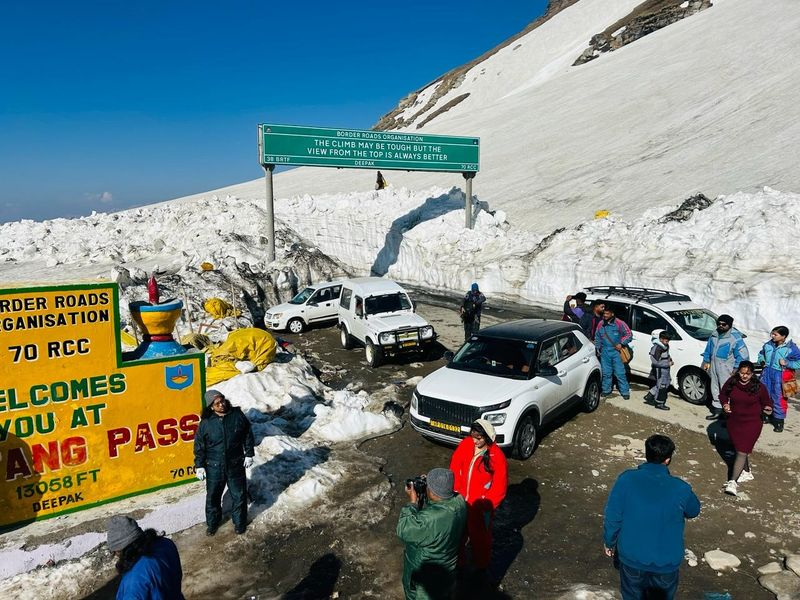
At a time when most high mountain passes across Himachal Pradesh lie buried under heavy snow, the 13,058-foot-high Rohtang Pass has emerged as a rare winter exception this year, remaining open for vehicular movement even in December. According to an order issued by Kullu Deputy Commissioner Torul S Raveesh, permission for 4×4 vehicles to travel towards Rohtang has now been extended until December 28. The development has delighted tourists and stakeholders alike, highlighting how favourable weather and careful regulation have extended the tourism season in the Manali region.

Officially opened to tourist vehicles on May 17, Rohtang Pass recorded steady footfall through the summer and autumn. Yet an early spell of snowfall in Himachal’s high-altitude areas prompted authorities to shut the pass on October 8 as a precaution. Following a review of road and weather conditions, it was later reopened, allowing limited, regulated traffic once again.

Based on recommendations from Manali Sub-Divisional Officer Raman Sharma, vehicles may ply between Gulaba and Rohtang from 9.30 am to 12 noon, with mandatory return from the Marhi check post before 3 pm. The district administration has emphasised that the extension remains subject to existing terms and conditions, urging drivers and agencies to strictly follow the timings and safety norms.

This situation stands in sharp contrast to last year, when vehicular movement beyond the Gulaba barrier was halted on December 1 due to severe road icing from sub-zero temperatures. Reports from previous winters suggest such early closures were routine, making this year’s extended access particularly remarkable.

Tourists in Manali are seizing the opportunity. “We never imagined we would reach so close to Rohtang in December,” said Rohan Mehta from Delhi. “The snow activities, pristine views, and thrill of driving through icy stretches made it unforgettable.” Similarly, Ananya Sharma from Jaipur described the visit as pure adventure, noting that snow biking and sledging near Marhi were highlights of her trip. “It feels like a winter carnival,” she said.

Local tourism operators report that the extended opening has provided a significant boost to winter business, benefiting hotels, taxi services, and adventure activity providers. Authorities, however, caution that mountain weather can change rapidly, and adverse conditions may lead to immediate restrictions.

For now, Rohtang Pass remaining accessible deep into December has become a rare winter delight—offering tourists a taste of high-altitude snow adventures while underscoring the importance of regulated, responsible tourism in the fragile Himalayan terrain.
HEAD LINES 22 DEC 2025

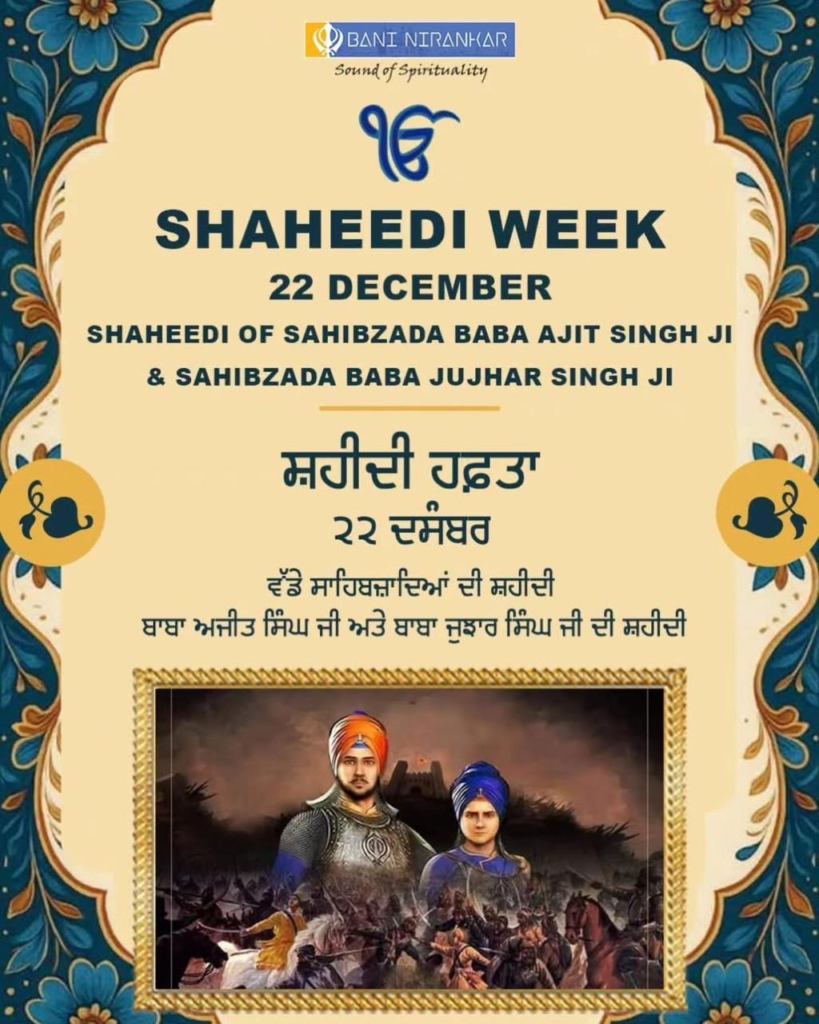
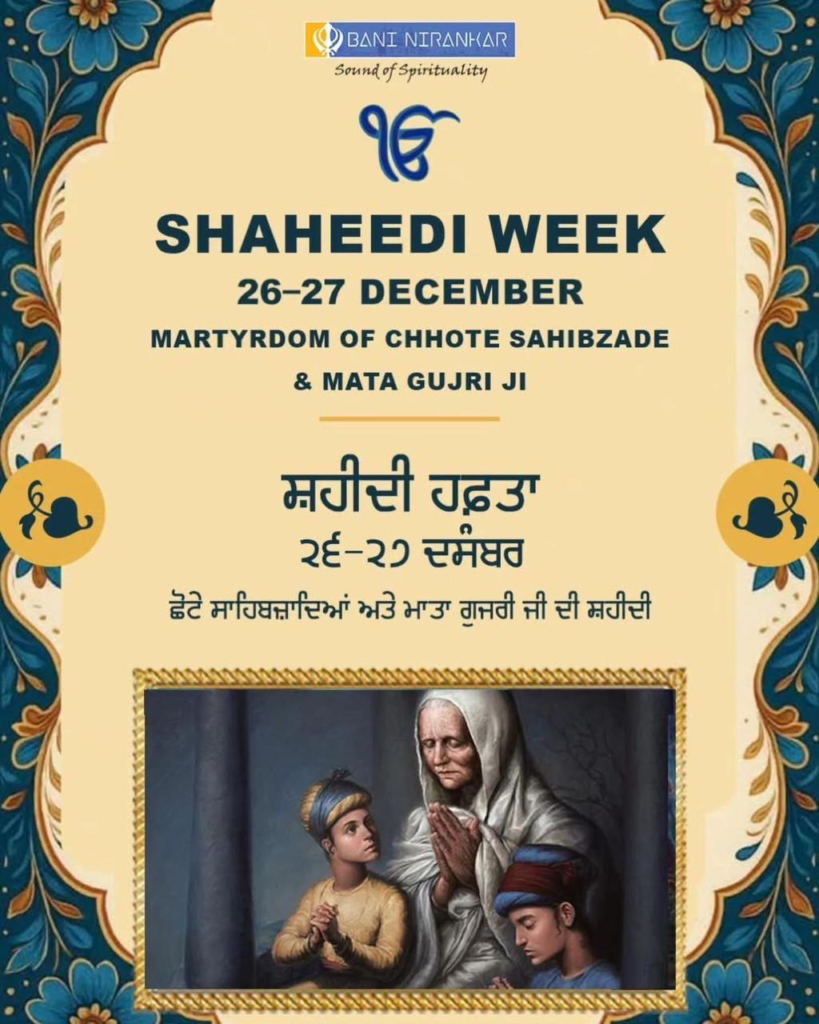
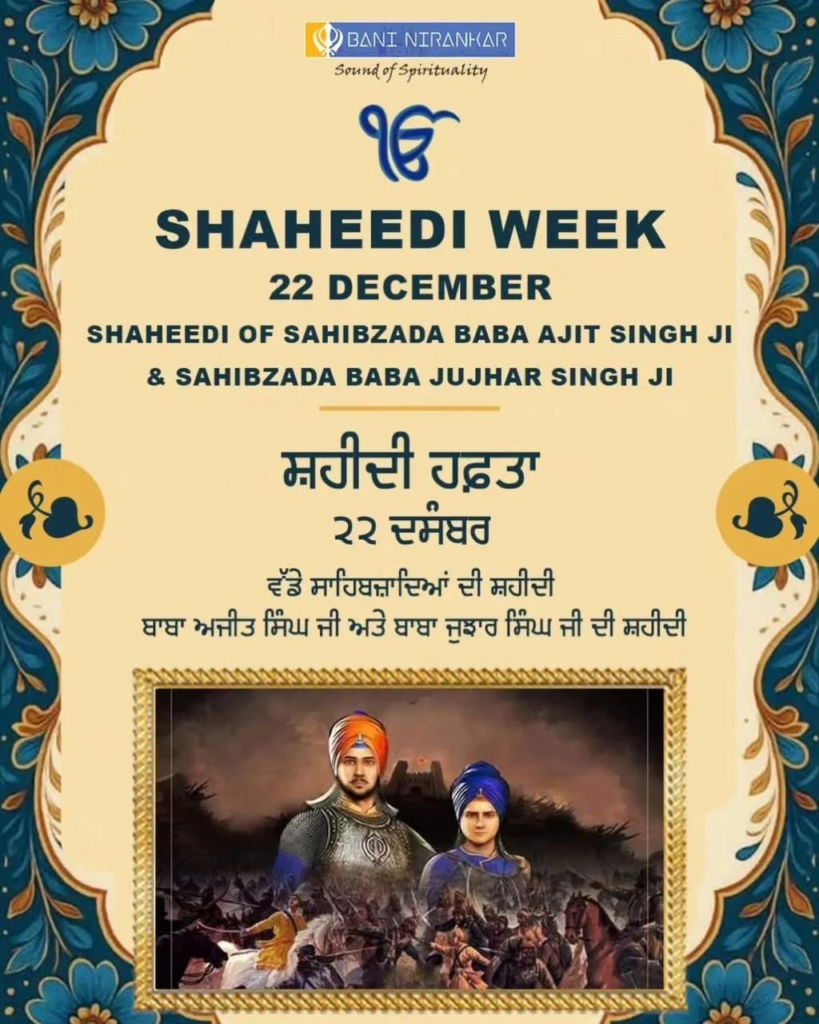
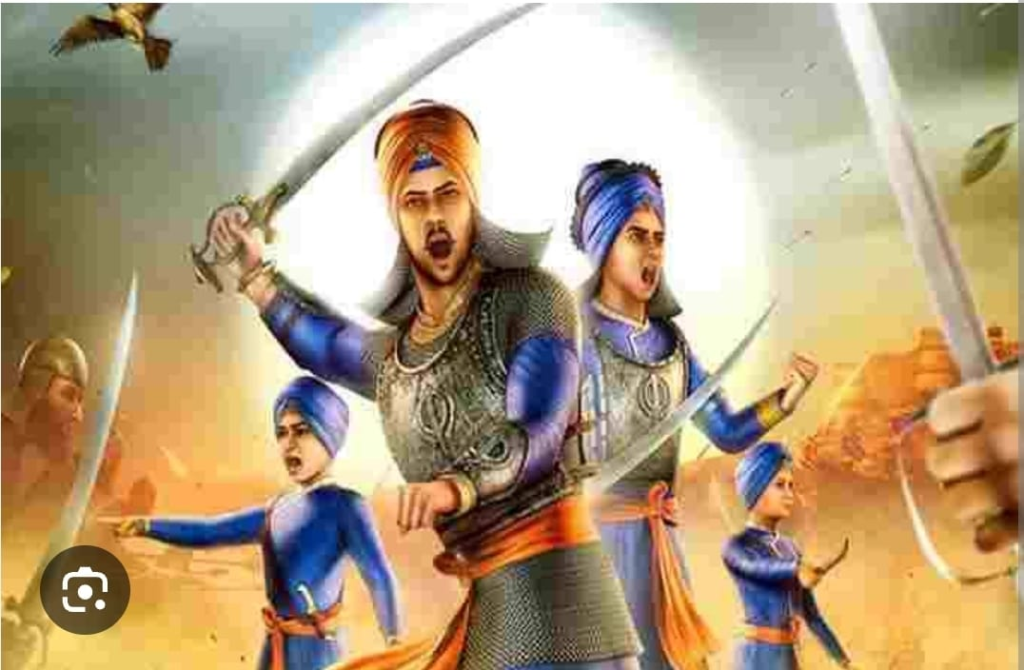
SHADEEDI OF SAHIBZADA BABA AJIT AND JUJHAR SINGH JI :1,000,000 Mughals against 42 Sikhs

Video: What happened during Nagar Kirtan in New Zealand and why some locals are concerned

Punjab ex-IPS officer Amar Singh Chahal, accused in 2015 Faridkot firing case, critical after alleged ‘suicide’ attempt

Snowfall blocks vital roads across Kashmir valley, disrupts flight operations

IAF MI-17 helicopter transports Pench tigress from MP’s Sukatra airstrip to Rajasthan

DEFENCE: As INS Sindhughosh signs off, Navy down to 1990s’ strength

‘We felt it’: Pakistan’s Asim Munir says country received ‘divine help’ during Operation Sindoor


Lt Col posted in Department of Defence Production arrested in bribery case

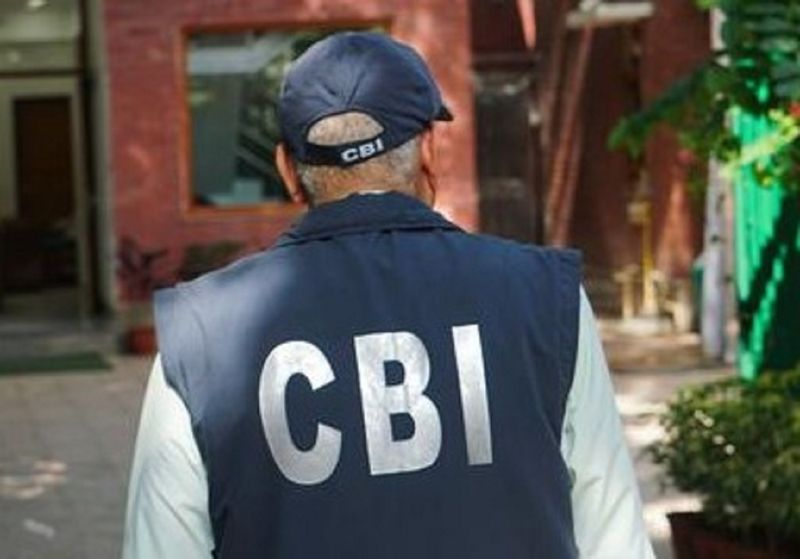
The CBI on Saturday arrested Lt Col Deepak Kumar Sharma, posted in Department of Defence Production under the Defence Ministry, for alleged taking Rs 3 lakh in bribe from a Bengaluru-based company, officials said.

During searches at the premises of Sharma, CBI seized Rs 2.23 crore cash, they said. CBI had registered the case against Sharma, Deputy Planning Officer, International Cooperation and Exports, Department of Defence Productions and his wife, Col Kajal Bali, CO, 16 Infantry Division Ordnance Unit (DOU), Sri Ganganagar, Rajasthan.

It was alleged that Sharma “habitually indulges in corrupt and illegal activities” in criminal conspiracy with representatives of various private companies dealing in defence products manufacturing, export, etc, the CBI spokesperson said in a statement.

Sharma obtained bribes from companies in exchange for providing undue favours to them, the agency alleged.

CBI received inputs about a possible bribe payment from a Bengaluru-based company. Rajiv Yadav and Ravjit Singh were looking after its affairs, they said.

“They (Singh and Yadav) have been in regular contact with Lt Col Deepak Kumar Sharma and are, in connivance with him, pursuing various undue favours by illegal means for their company from various government departments and ministries. One Vinod Kumar delivered a bribe of Rs 3 lakh, on the behest of the said company, to Lt Col Deepak Kumar Sharma on 18.12.2025,” CBI spokesperson said in a statement.

Vinod Kumar was also arrested in the case, it said.

During searches at the premises of the Sharma, CBI seized Rs 2.23 crore cash and Rs 3 lakh bribe money from the Delhi residence, while Rs 10 lakh was seized from his wife’s residence in Sri Ganganagar, the statement said.

Both the arrested accused — Sharma and Vinod Kumar — were produced before a Special Court here, which sent them to CBI custody till December 23.


SHADEEDI OF SAHIBZADA BABA AJIT AND JUJHAR SINGH JI :1,000,000 Mughals against 42 Sikhs.

Major General Garuv Khusal writes: If you truly understood what happened on December 22, 1704… 🤯
You would NEVER look at Baba Ajit Singh Ji and Baba Jujhar Singh Ji the same way again.

Because at Chamkaur Sahib, they weren’t just children.

They were Khalsa warriors, stepping into their destiny with their eyes open, fully aware of what awaited them. 🦁⚔️

Baba Ajit Singh Ji was 17.
Baba Jujhar Singh Ji was 13.
But in Sikhi, age NEVER defines courage.

8 Poh: ( 22 December)The Battle of Chamkaur began.
It was ,

Everyone knew this would be a battlefield of Shaheedi. 🏹
And still… the Vadde Sahibzaade chose Sikhi over life.

THE MOMENT THAT CHANGED HISTORY:
As the Sikhs attained Shaheedi, Baba Ajit Singh Ji asked Guru Gobind Singh Ji:
“Pita Ji… give me permission to go.” 🙏…
[05:41, 12/22/2025] Major General Garuv Khusal : dear Sir’s, Jai Hind
Am sure you are aware.
Yet I shared, lest we forget-
why they Sacrificed Themselves
Who the Evil Was
&
To Fight the Evil- 40 are not Always Adequate

Sat Shri akal (SSA)–jai Hind

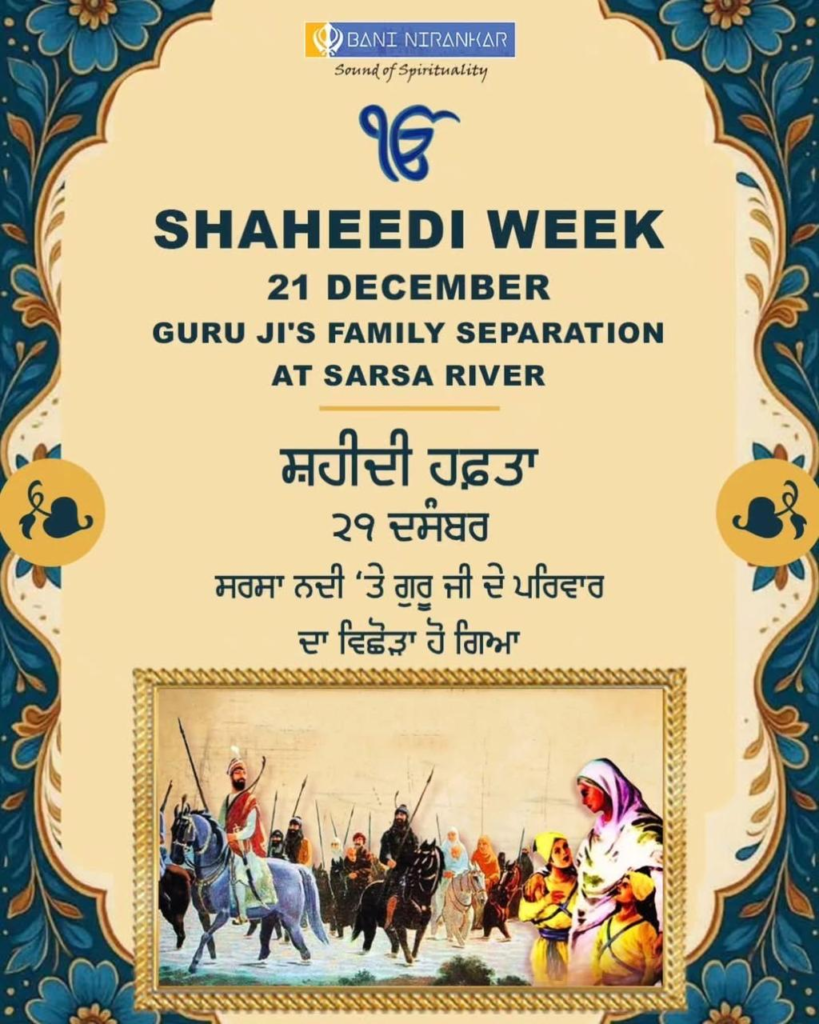
After Guru Gobind Singh left Anandpur Sahib on the night of 5 and 6 December 1704,[1] or 1705[14] he crossed the Sarsa River with his disciples. While they were crossing, the Mughals and hill kings attacked. Guru Gobind Singh and his followers asked permission of the city chief for shelter to rest for the night in their garhi or haveli. He refused, but his younger brother allowed the Sikhs to stay in the haveli.[3]

At the Battle of Chamkaur in December 1704, Guru Gobind Singh’s two elder sons, Sahibzada Ajit Singh (around 18) and Sahibzada Jujhar Singh (around 13), fought valiantly against a massive Mughal army and attained martyrdom after leading charges from the mud fortress, demonstrating immense courage and commitment to their faith, inspiring all Sikhs. They chose to die as warriors defending their father and the Sikh cause rather than surrender, following the path of selfless sacrifice. 

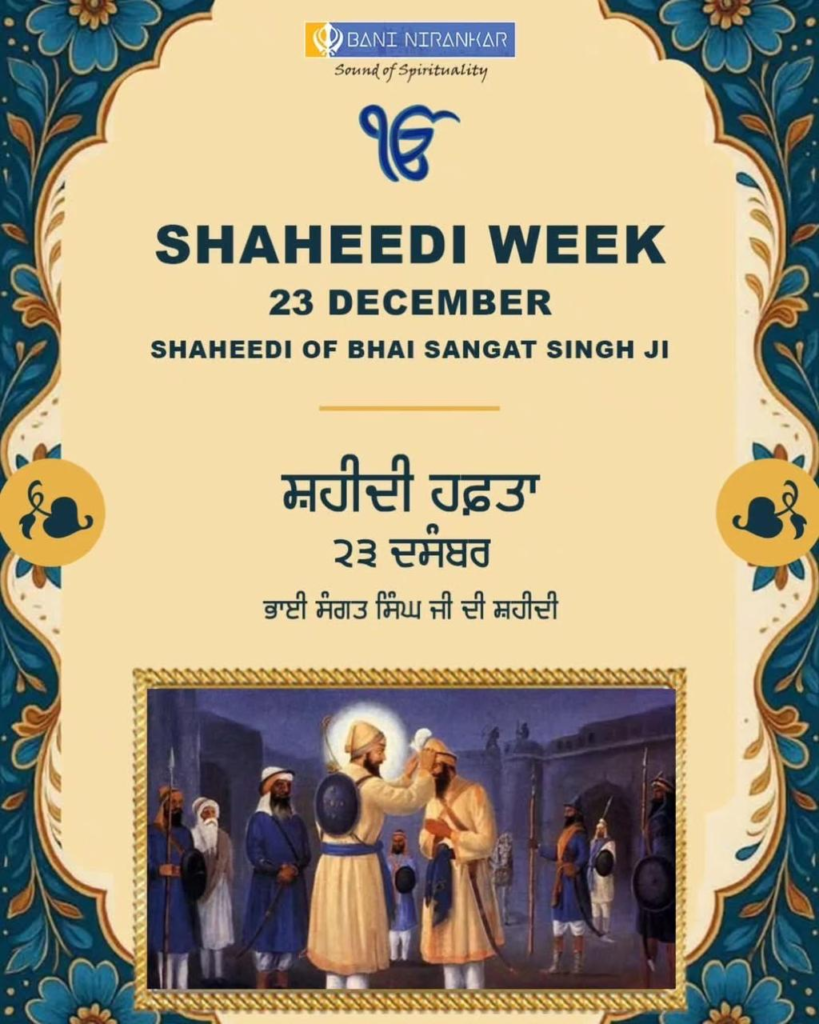
Despite giving assurance of safe conduct, the Mughal soldiers were looking for Guru Gobind Singh, to take his head as a trophy. After learning that the party of Sikhs had taken shelter in the haveli, they laid siege upon it. The actual battle is said to have taken place outside the haveli where Guru Gobind Singh was resting.[3] A council of Panj Piare was convened during the battle, whom ordered Guru Gobind Singh to leave the battlefield to preserve his life and continue leading the Sikhs, a request which the Guru obeyed.[15] Negotiations broke down and the Sikh soldiers chose to engage the overwhelming Mughal forces, thus allowing their Guru to escape. Another Sikh who resembled the Guru, Sangat Singh, donned the Guru’s clothes and remained with the soldiers. The next morning the remaining Sikhs were killed by Mughal forces.[16]

he Guru emphasised how he was proud that his sons had died fighting in battle, and that he had ‘thousands of sons – the Singhs‘. He also said that he would never trust Aurangzeb again due to the broken vow he took on the Quran.[17]


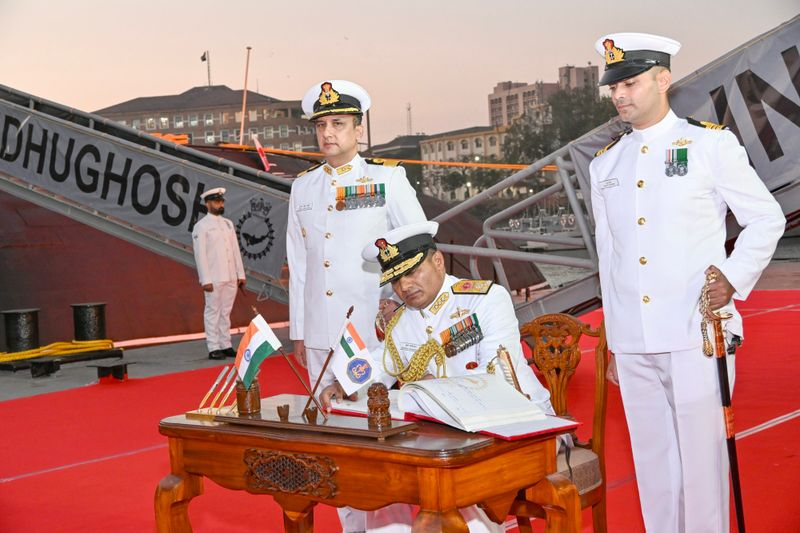
INS Sindhughosh decommissioned after 40 years of glorious service: Navy

INS Sindhughosh, the lead submarine of her class with the Indian Navy, has been decommissioned after 40 years of glorious service to the nation, the Western Naval Command said on Saturday.

The decommissioning ceremony was held at the Naval Dockyard, Mumbai, in the presence of WNC’s Flag Officer Commanding-in-Chief (FOCINC) Vice Admiral Krishna Swaminathan.

“INS Sindhughosh, the lead submarine of her class in service with the Indian Navy, was decommissioned at sunset on 19 Dec 25, after 40 years of glorious service to the nation, at Naval Dockyard, Mumbai, in the presence of VAdm Krishna Swaminathan, FOCINC WNC,” WNC posted on X.

The submarine was paid off under the command of Lt Cdr Rajat Sharma. Capt KR Ajrekar (retd), the second Commanding Officer of the submarine, was the guest of honour, it said.

The Western Naval Command also shared some photos of the ceremony.

“Adm VS Shekhawat (retd), former CNS, Flag Officers, former Commanding Officers, members of the commissioning crew, veterans, senior officers and distinguished guests were present for the occasion,” it said.


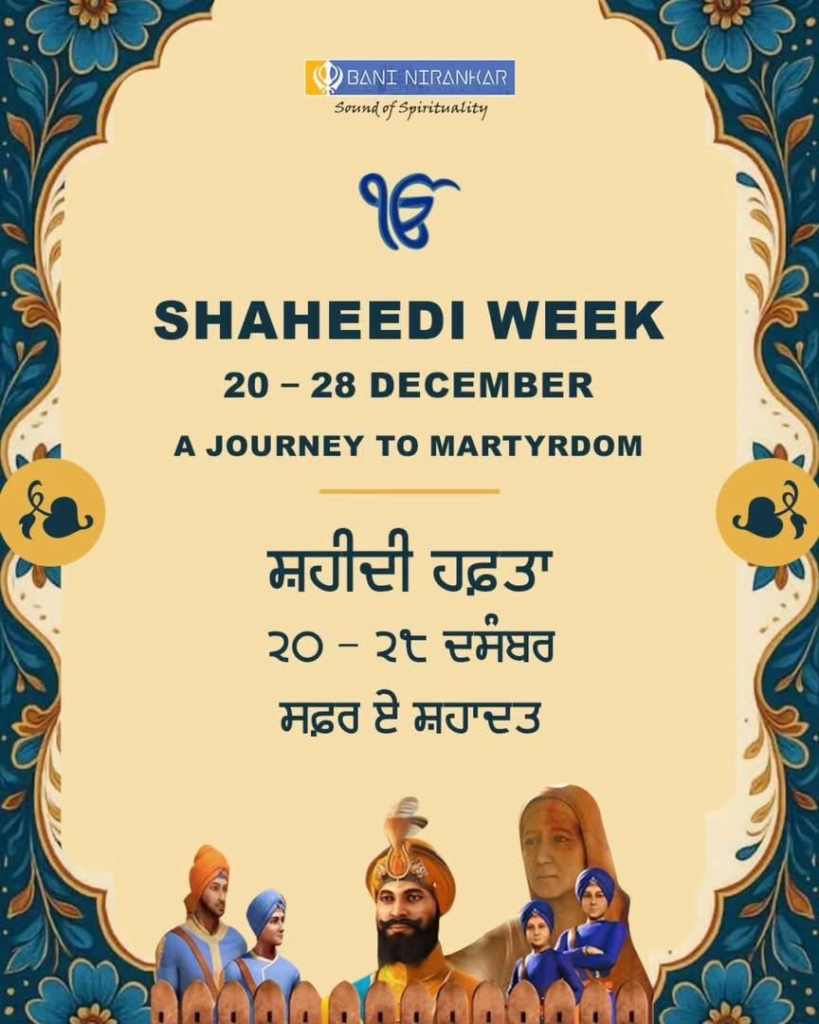
Sahibzade Shaheedi Divas: Beyond “Bal Veer Diwas” — Understanding Sikh Itihas and Gurmat

As the Shaheedi Divas of the Sahibzade approaches , the Sikh collective memory once again bows before one of the most defining moments of Sikh Itihas —the martyrdom of the younger Sahibzade of Guru Gobind Singh Ji .

In recent years, this day has also been referred to as “Bal Veer Diwas.” While the intent behind the term may be to honor courage, it is important—especially from the lens of Sikh philosophy (Gurmat) —to reflect deeply on whether this terminology truly aligns with Sikh thought, tradition, and historical consciousness.

Sikh Philosophy Does Not Define Spirituality by Age

Sikhism does not measure wisdom, courage, or spiritual authority by physical age.

One of the clearest examples from Sikh Itihas is Guru Har Krishan Ji, who became Guru at the age of five.
Yet, Sikh history never refers to him as “Bal Guru.”

Why?

Because in Gurmat, once divine responsibility (Guruship) is bestowed, age becomes irrelevant.
What matters is spiritual maturity, divine consciousness, and commitment to truth.

Calling Guru Har Krishan Ji a “child guru” would diminish the spiritual stature that Sikh philosophy so clearly upholds. The same principle applies to the Sahibzade.

Who Were the Sahibzade in Sikh Consciousness?

The Sahibzade were not “children” in the worldly sense. They were Khalsa in spirit, warriors in resolve, and saints in consciousness.

The younger Sahibzade— Sahibzada Zorawar Singh Ji and Sahibzada Fateh Singh Ji —stood before tyranny with a clarity and courage that many adults could not summon.

Their choice was clear:

To abandon Sikhi and live,
or
To uphold truth and embrace martyrdom.

They chose Shaheedi.

This was not innocence.
This was a conscious sacrifice.

In Sikh philosophy, such awareness places them among the highest exemplars of Gurmat jeevan (a life aligned with divine truth).

Why the Term “Bal” Needs Reconsideration

The word “Bal” (child) is often associated with:

Dependency
Innocence without awareness
Lack of agency

But Sikh Itihas tells us the Sahibzade:

Understood the consequences of their decision
Refused conversion with full awareness
Accepted death without fear, hatred, or compromise

To call them merely “Bal” risks reducing Shaheedi to victimhood, whereas Sikh history remembers them as martyrs by choice, not victims by circumstance.

In Sikh thought, Shaheedi is not tragedy—it is triumph of truth.

Shaheedi in Sikh Itihas Is an Act of Conscious Choice

From Guru Arjan Dev Ji to Guru Tegh Bahadur Ji , from the Sahibzade to countless Singhs and Singhnis , Sikh martyrdom has always been:

Intentional
Principle-driven
Rooted in justice and righteousness (Dharam)

The Sahibzade’s martyrdom stands in continuity with this tradition—not as an emotional episode of lost childhood, but as a towering moral stand against injustice.

Sikh Itihas Teaches Us How to Remember

Sikh remembrance (Yaad) is not symbolic—it is instructional.

We remember so that:

We understand why they sacrificed
We learn how to stand for truth
We internalize f earlessness, equality, and sovereignty of conscience

Reducing the Sahibzade to a modern label, however well-intentioned, risks disconnecting the event from its Gurmat foundation.

Sahibzade as Complete Khalsa, Not “Bal Veer”

The Sahibzade were:

Khalsa in conviction
Saint-warriors in spirit
Fully conscious defenders of Sikhi

They do not need prefixes to amplify their greatness.

Their Shaheedi stands on its own—as one of the highest expressions of Sikh philosophy, human dignity, and moral courage .

As we approach their Shaheedi Divas, let us remember them not through simplified labels, but through the depth of Sikh Itihas and the clarity of Gurmat .

Because in Sikhi:

Truth is not measured by age,
and courage is not defined by years lived,
but by the values one refuses to abandon—even in death.


Veterans move NHRC over faulty SPARSH migration

More than a year after the Ministry of Defence (MoD) switched to a new pension-disbursing software for veterans, nearly 1.20 lakh individuals are yet to migrate, prompting a group of veterans to petition the National Human Rights Commission (NHRC).

The MoD introduced ‘System for Pension Administration – Raksha (SPARSH)’, a flagship Digital India initiative. Last year, it migrated data for all pensioners, though several lakhs could not be transferred and are being addressed gradually.

On December 15, the MoD stated that 31.69 lakh defence pensioners have been onboarded to SPARSH.

A Parliamentary Standing Committee on Defence report, tabled in the House on 9 December, put the total number of defence pensioners at 32,94,181. This includes 6,40,536 defence civilian pensioners and 26,79,645 armed forces pensioners.

The MoD added that 94.3% of the 6.43 lakh cases with discrepancies have migrated from previous systems, with 6.07 lakh normalised without affecting entitlements.

Grievance redressal time has fallen from 56 days to 17 days, the MoD noted. SPARSH has replaced a fragmented system—previously managed by over 45,000 agencies—with a unified, transparent, and accountable digital framework.

Extensive outreach has targeted elderly and non-tech-savvy pensioners. For the nationwide Digital Life Certificate (DLC)—required annually to continue pensions—the Defence Accounts Department mobilised 202 offices, 4.63 lakh Common Service Centres, and 15 partner banks. Consequently, 20.94 lakh people obtained their DLCs, the highest among all departments, the MoD said.

In FY 2024–25, a defence pension budget of ₹1,57,681 crore was disbursed in real time via SPARSH. OROP-III, implemented in July 2024, enabled swift payment of ₹1,224.76 crore to 20.17 lakh beneficiaries within 15 days.

Yet, away from the MoD’s claims, Lt Col RK Bhardwaj (Retd), representing affected ex-servicemen (ESM) pensioners, has petitioned the NHRC for intervention.

The petition alleges that data migration relied on outdated legacy pension payment orders (issued 1976–2016) rather than post-7th Pay Commission orders, depriving many pensioners of entitled benefits.

Most pensioners, being less educated, non-tech-savvy, and living in remote villages or small towns, cannot lodge individual complaints via the online portal or offline forms, the petition states.


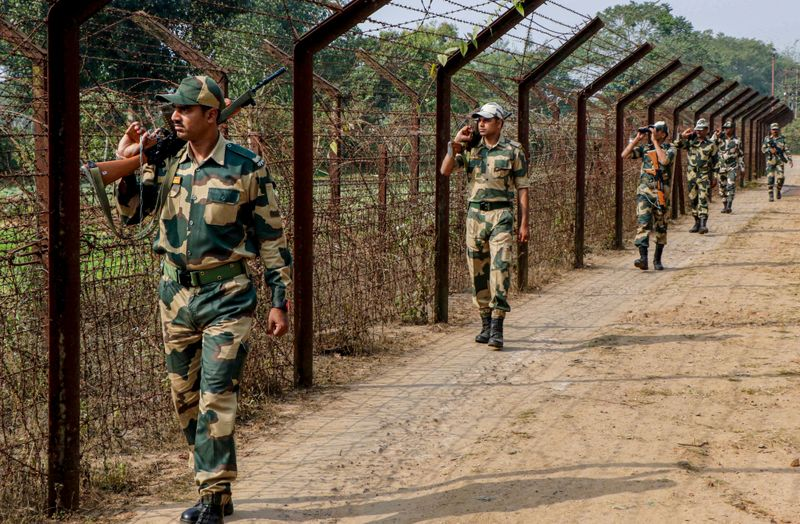
Ex-Agniveer quota raised for BSF constable posts from 10% to 50%

The Ministry of Home Affairs has increased the quota for ex-Agniveers for constable recruitment in the Border Security Force (BSF) from 10 per cent to 50 per cent, according to a gazette notification.

The increase has been made by amending the BSF, General Duty Cadre (Non-Gazetted) Recruitment Rules, 2015. The first batch of ex-Agniveers will also get upper age-limit relaxation of up to five years, while the rest of the former Agniveers will get three years relaxation. The ex-Agniveers shall also be exempted from physical standard test and physical efficiency test, said the notification issued on Friday.

By direct recruitment (including fifty per cent), vacancies shall be reserved for ex-Agniveers in every recruitment year, ten per cent for ex-servicemen, and up to three per cent for Combatised Constable (tradesmen) in absorption of annual vacancy, the notification said.

In the first phase, the recruitment shall be conducted by the nodal force for 50 per cent vacancies earmarked for ex-Agniveers, and in second phase recruitment shall be conducted by the Staff Selection Commission for candidates other than ex-Agniveers for the remaining forty-seven per cent vacancies (including ten per cent ex-servicemen), along with the unfilled vacancies of ex-Agniveers in a specific category in the first stage, it said.

The Centre had amended the Government of India (Allocation of Business) Rules, 1961, by the gazette notification in June this year, inserting a new point in the second schedule under the Department of States of the Home Ministry, “coordinating activities for further progression of ex-Agniveers” who exit after completing four years in the armed forces. With this amendment, the work relating to coordinating activities for further progression of ex-Agniveer has been assigned to the MHA, sources said.

After rolling out the Agnipath recruitment scheme in June 2022, the government had already reserved 10 per cent of jobs for ex-Agniveers in all future appointments of constables in the Central Armed Police Forces like the CRPF, BSF, CIS and the SSB.


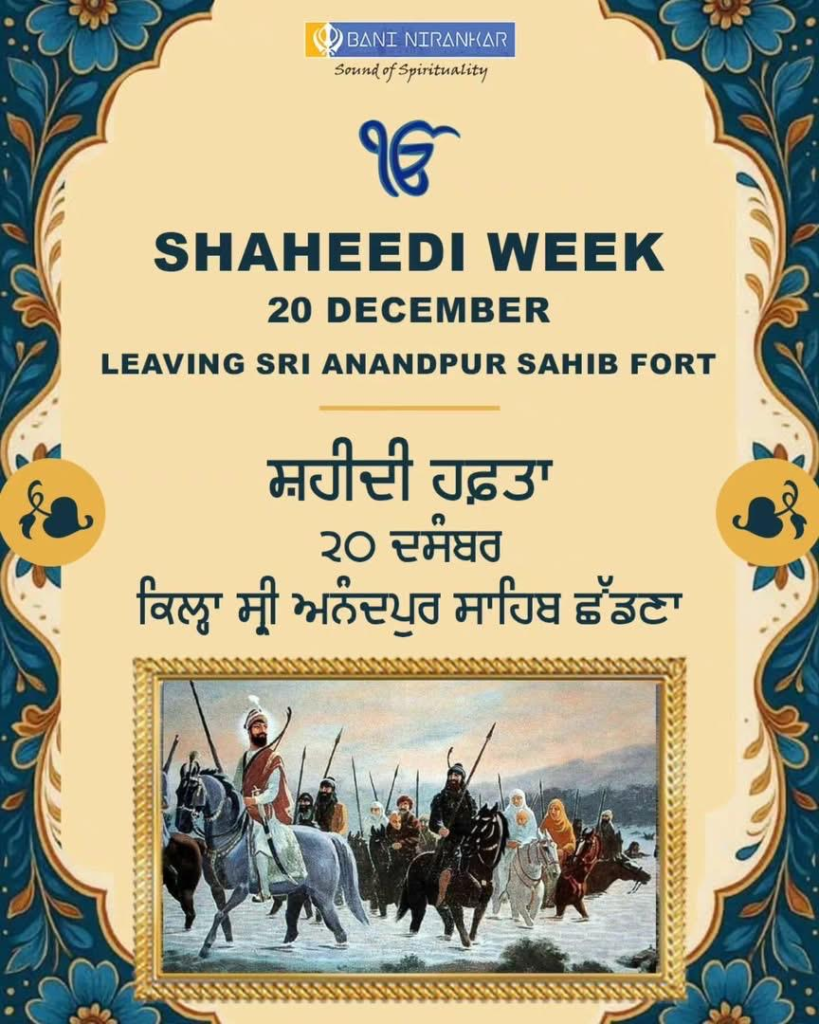
History why Guru Gobind Singh ji had to leave Anandpur Sahib Fort on 20 Dec (6Poh, 6ਪੋਹ)

The period following the execution of Guru Tegh Bahadur – the father of Guru Gobind Singh, was a period where the Mughal Empire under Aurangzeb was an increasingly hostile enemy of the Sikh people.[88] The Sikh resisted, led by Gobind Singh, and the Muslim-Sikh conflicts peaked during this period.[88] Both Mughal administration and Aurangzeb’s army had an active interest in Gobind Singh. Aurangzeb issued an order to exterminate Gobind Singh and his family.[89]

Gobind Singh believed in a Dharamyudh (war in defence of righteousness), something that is fought as a last resort, neither out of a wish for revenge nor for greed nor for any destructive goals.[90] To the Guru, one must be prepared to die to stop tyranny, end persecution, and to defend one’s own religious values.[90] He led fourteen wars with these objectives, but never took captives nor damaged anyone’s place of worship.[90]

There were total of 12 Hill Kings who could not tolerate the growing popularity among local and other states ,they tried to attack Guru Gobind Singh but were defeated .They jointly met Aurungzeb and asked him to curb Guru and so they collectively along with support of Mogul Army attacked but could not make any dent in any walls of the fort for 8 months . Thereafter Aurangzeb asked Guru Gobind Singh ji to leave the Fort and took oath of Cow beef for safe passage .

It was again the Indian rulers who sided with Aurungzeb to defeat their own Singh King

Battles

Guru Gobind Singh with his horse

Guru Gobind Singh fought 21 battles against the Mughal Empire and the kings of Siwalik Hills.

  • Battle of Anandpur (1682) Bhim Chand attacks Gobind Singh.
  • Battle Of Anandpur (1685) Bhim Chand attacks Gobind Singh once again
  • Battle of Bhangani (1688), which states chapter 8 of Gobind Singh’s Bicitra Natak, when Fateh Shah, along with mercenary commanders Hayat Khan and Najabat Khan,[91] attacked his forces without any purpose. The Guru was aided by the forces of Kripal (his maternal uncle) and a Brahmin named Daya Ram, both of whom he praises as heroes in his text.[92] The Guru’s cousin named Sango Shah was killed in the battle, a cousin from Guru Hargobind‘s daughter.[91]
  • Battle of Nadaun (1691), against the Islamic armies of Mian Khan and his son Alif Khan, who were defeated by the allied forces of Gobind Singh, Bhim Chand and other Hindu kings of Himalayan foothills.[93] The non-Muslims aligned to the Guru had refused to pay tribute to the Islamic officials based in Jammu.[91]
  • In 1693, Aurangzeb was fighting the Hindu Marathas in the Deccan region of India, and he issued orders that Guru Gobind Singh and Sikhs should be prevented from gathering in Anandpur in large numbers.[91][94]
  • Battle of Anandpur (1695) Mughals attack Gobind Singh at Anandpur
  • Battle of Guler (1696), first against the Muslim commander Dilawar Khan’s son Rustam Khan, near Sutlej river, where the Guru teamed up with the Hindu king of Guler and routed the Muslim army.[95] The commander sent his general Hussain Khan against the armies of the Guru and the Guler kingdom, a war fought near Pathankot, and Hussain Khan was defeated and killed by the joint forces.[95]

After the creation of the Khalsa the Hill Rajas, who had previously lost in battle to Guru Gobind Singh, sent a petition to Delhi requesting they act immediately and join them in battle against the Guru.l[96]

  • Battle of Anandpur (1699), was against two Rajas of the hills.
  • Battle of Anandpur (1700), against the Mughal army of Aurangzeb, who had sent 10,000 soldiers, in response to the Hill Rajas letter, under the command of Painda Khan and Dina Beg.[97] In direct combat between Gobind Singh and Painda Khan, the latter was killed. His death led to the Mughal army fleeing the battlefield.[97]
  • First siege of Anandpur, The hill Rajas of northern Punjab regrouped after defeat at Anandpur the previous year and resumed their campaign against Gobind Singh, joining forces with Gujar and other tribesmens to besiege Anandpur, northeast of Ludhiana. Gujar leader Jagatullah was killed on the first day and the Rajas were driven off after a brilliant defence led by the Guru’s son Ajit Singh.[97][98][94]
  • Battle of Taragarh was a battle fought in defence during the Siege of Anandpur.
  • Battle of Basoli (1702), against the Mughal army; named after the kingdom of Basoli whose Raja Dharampul supported the Guru in the battle.[99] The Mughal army was supported by rival kingdom of Kahlur led by Raja Ajmer Chand. The battle ended when the two sides reached a tactical peace.[99]
  • First Battle of Chamkaur (1702), Mughal Army was repulsed.[97]
  • First Battle of Anandpur (1704), Mughal Emperor Aurangzeb sent a fresh force into northern Punjab under General Saiyad Khan, later replaced by Ramjan Khan. Ramjan was mortally wounded in further very heavy fighting around the Sikh stronghold at Anandpur, northeast of Ludhiana, and his force again withdrew.[97]
  • Second siege of Anandpur, According to scholars, this siege was triggered by the proliferation of armed Sikhs in Anandpur, the increasing numbers creating a shortage of supplies. This led the Sikhs to raid local villages for supplies, food, and forage, which in turn dramatically frustrated the local pahari rajas who forged alliances and mounted an attack on Guru Gobind Singh’s patrimony.[100][91] The Mughal general was fatally wounded by Sikh soldiers, and the army withdrew. Aurangzeb then sent a larger army with two generals, Wazir Khan and Zaberdast Khan in May 1704, to destroy the Sikh resistance.[97] The approach the Islamic army took in this battle was to lay a protracted siege against Anandpur, from May to December, cutting off all food and other supplies moving in and out, along with repeated battles.[16] Some Sikh men deserted the Guru during the Anandpur siege in 1704 and escaped to their homes where their women shamed them and they rejoined the Guru’s army and died fighting with him in 1705.[101][102] Towards the end, the Guru, his family, and followers accepted an offer by Aurangzeb of safe passage out of Anandpur.[103] However, as they left Anandpur in two batches, they were attacked, and one of the batches with Mata Gujari and Guru’s two sons – Zorawar Singh aged 8 and Fateh Singh aged 5 – were taken captive by the Mughal army.[98][104] Both his children were executed by burying them alive into a wall.[16][105] The grandmother Mata Gujari died there as well.[98]
  • Battle of Sarsa (1704), against the Mughal army led by general Wazir Khan; the Muslim commander had conveyed Aurangzeb’s promise of a safe passage to Guru Gobind Singh and his family in early December.[104] However, when the Guru accepted the offer and left, Wazir Khan took captives, executed them and pursued the Guru.[106] The retreating troops he was with were repeatedly attacked from behind, with heavy casualties to the Sikhs, particularly while crossing the Sarsa river.[106]
  • Battle of Chamkaur (1704) Regarded as one of the most important battles in Sikh history. It was against the Mughal army led by Nahar Khan;[107] the Muslim commander was killed,[107] while on Sikh side the remaining two elder sons of the Guru – Ajit Singh and Jujhar Singh, along with other Sikh soldiers were killed in this battle.[108][98]