All posts by webadmin

Vijay Diwas: Wounded, Lance Naik Ekka cleared enemy bunkers, silenced machineguns


Born in an Adivasi tribe, where hunting was a common activity, he was spotted during a hockey by a Subedar Major from the Bihar Regiment

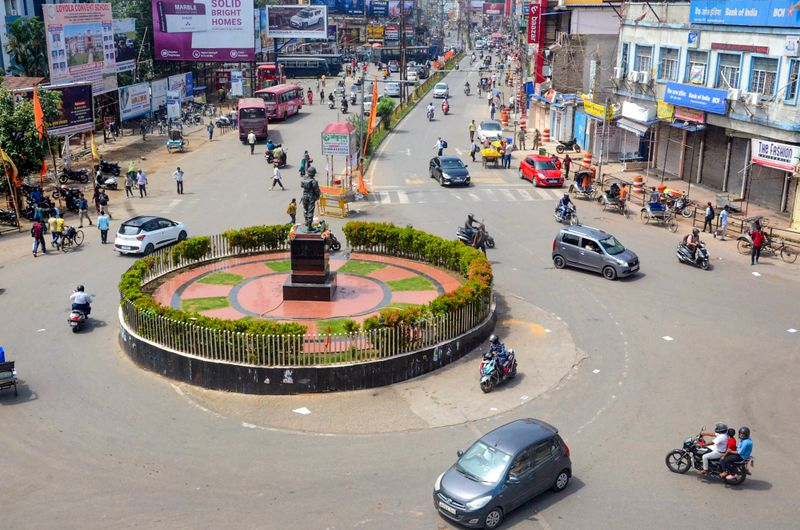
The Albert Ekka Chowk in Ranchi. Photo: Tribune archives

Lance Naik (L/Nk) Albert Ekka was just a few days shy of his 29th birthday when he made the supreme sacrifice on the very first day of the India-Pakistan War of 1971. His actions in the face of the enemy earned him the Param Vir Chakra (PVC), the highest gallantry award in the country.

Despite being wounded in the arm and neck, he charged enemy defence under fire, clearing several bunkers and knocking out two machinegun posts before succumbing to his injuries on the battlefield.

Hailing from Jari village (in the present day Chhattisgarh), Ekka belonged to an Adivasi tribe, where hunting was a common activity. “This helped groom his soldierly instincts from an early age, and he became a marksman with the bow and arrow. He was also quite good in hockey. During a district-level tournament, he was spotted by a Subedar Major from the Bihar Regiment, who helped him join the battalion,” Lt Col Dilbagh Dabas (retd), historian and author of several books on gallantry awards, told The Tribune.

Ekka was enrolled in the Bihar Regiment in December 1962. Later, when 14 Guards was raised, he was transferred to the new battalion in 1968. A little before the war began, he was promoted to the rank of Lance Naik.

As hostilities officially commenced, 14 Guards under 4 Corps was tasked to capture Gangasagar, located in eastern Bangladesh adjoining Tripura. Capturing Gangasagar was crucial for the 4 Corps to advance westwards and the battalion positioned itself south of Gangasagar near the local railway station for further operations and attacked enemy defences along the railway tracks. It was here that L/Nk Ekka, despite being wounded, made his final charge.According to the historical records, L/Nk Ekka was part of a forward company of his battalion during the attack on the enemy defences at Gangasagar on the eastern front. This was a well-fortified position held in strength by the enemy. The assaulting troops were subjected to intense shelling and heavy small-arms fire, but they charged on to the objective and engaged in a bitter hand-to-hand combat.

L/Nk Ekka noticed an enemy light machine-gun inflicting heavy casualties on his company. With complete disregard for his personal safety, he charged the enemy bunker, bayoneted two enemy soldiers and silenced the machine gun. Although he was seriously wounded in this encounter, he continued to fight alongside his comrades, clearing bunker after bunker with undaunted courage.

Lance Naik Albert Ekka. File

In the meantime, enemy troops opened a medium machine-gun from the second floor of a well-fortified building, inflicting heavy casualties. Once again, L/Nk Ekka, despite his serious injury and the heavy volume of enemy fire, crawled forward till he reached the building and lobbed a grenade into the bunker killing one enemy soldier and injuring the other.

The machine gun, however, continued to fire. “With outstanding courage and determination L/Nk Ekka scaled a side wall and entered the bunker, bayoneting the enemy soldier who was still firing and silenced the machine-gun, saving further casualties to his company and ensuring the success of the attack. In the process, however, he received serious injuries and succumbed to them after the capture of the objective,” reads the citation for his award.

“L/Nk Ekka had displayed gallantry of the highest order. His determination and grit in the face of grave danger remain unmatched and he made the supreme sacrifice in the finest traditions of the Army,” Brig SS Ahluwalia (retd), a member of the War Decorated India, an association of wartime gallantry award recipients, told The Tribune.

According to army officers, Gumla district of Jharkhand, where L/Nk Ekka’s village is located, has a strong martial tradition. Virtually every household in the district has sent a member to the armed forces or the para-military organisations.

To honour L/Nk Ekka’s legacy, the government issued a commemorative postal stamp on the 50th Republic Day in 2000. A major intersection in Ranchi has been named as Albert Ekka Chowk and bears his statue, while a block in Gumla has also been named after him. There is also a park in Tripura named after him to commemorate his actions in the war.
Army jawan arrested for ‘raping’ woman in Jharkhand’s Ranchi

Jawan currently posted with the 42 Medium Regiment in Patiala 

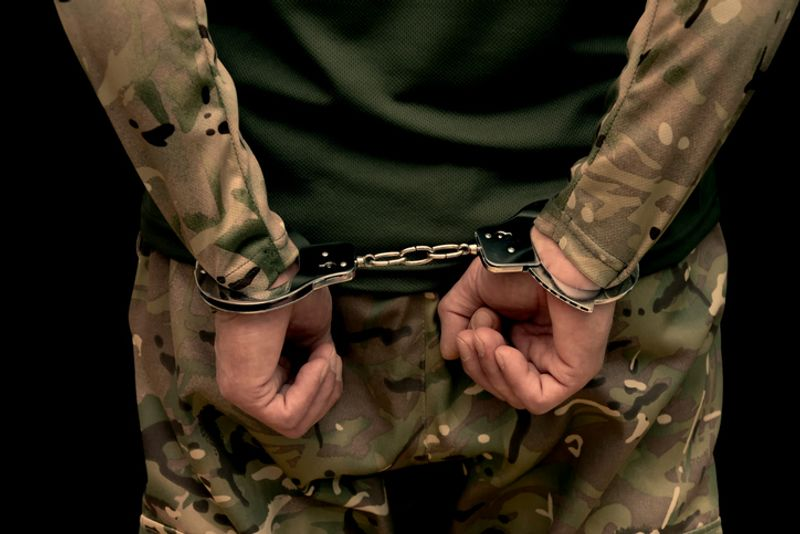
An Army jawan has been arrested in Jharkhand’s Ranchi for allegedly raping a 22-year-old woman while on duty, an official said on Saturday.

The incident occurred at Tatisilwai Railway Station on Thursday around 5:30 pm, when the woman was waiting to board a train for Ranchi, he said.

The jawan, 42, took her to an empty coach of a train and allegedly raped her, the official said.

“The Army personnel was on duty guarding a defence logistics train. He was reportedly in an inebriated state when he committed the crime,” the Railway Protection Force (RPF) official said.

The accused jawan is a resident of the Sarha police station area in Prayagraj district, Uttar Pradesh, and was posted with the 42 Medium Regiment in Punjab’s Patiala, he said.

After hearing her cries for help, people at the railway station gathered and raised an alarm, following which the Railway police rushed to the spot, the official said.

The jawan tried to flee before being apprehended and suffered injuries, he said.

An FIR has been registered based on the woman’s statement.

On Friday, he was produced before a court, which forwarded him to judicial custody.


Army’s Western Command tests long-range drone resilient to electronic warfare

The fixed wing drone, developed jointly developed by Chennai-based startups and Army engineers from the artillery division, has a range of about 100 km

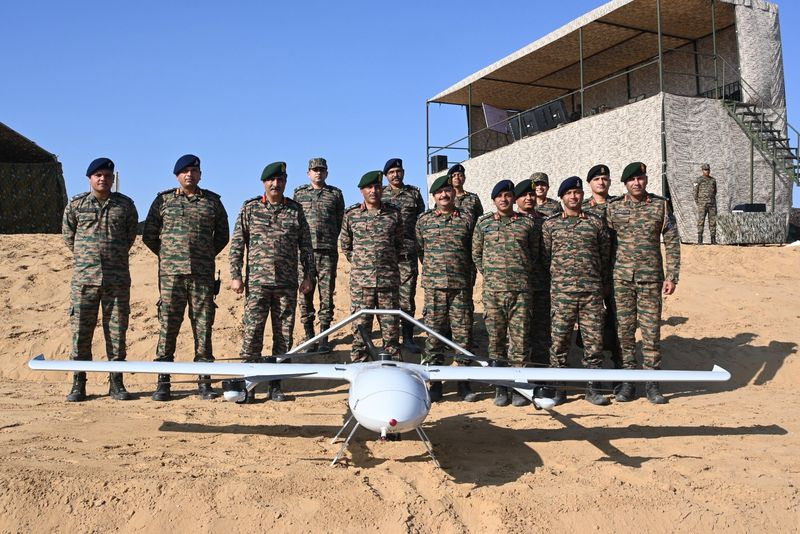
The Army’s Western Command successfully tested a new indigenously developed long-range drone that is resilient to electronic warfare, on Friday. The trails were carried out by the Kharga Corps’s artillery division at Mahajan Field Firing Ranges in Rajasthan.

The fixed wing drone, developed jointly developed by Chennai-based startups and Army engineers from the artillery division, has a range of about 100 km and is designed to resist disruption in the electromagnetic spectrum.

“Witnessed by Lt Gen #ManojKumarKatiyar, PVSM, UYSM, AVSM, #ArmyCommander, the trial marked a key step towards self-reliance in critical drone technologies,” the Army posted on its official X handle.

Electronic Warfare resilient drones are unmanned aerial systems designed to operate effectively in environments where adversaries use jamming, spoofing or other electronic attacks to disrupt radio communication frequencies and GPS navigation links, effectively disabling or blinding the drone of taking over its control.

Such drones employ artificial intelligence based mission control and navigation using on-board computing, visual and inertial navigation systems or pre-programmed routes, enabling them to continue their mission without constant inputs from operators or GPS.

They also feature anti-jamming communications like radio frequency hopping, mesh networking and low-probability-of-intercept signals, along with alternative control methods like fiber-optic tethers that are immune to interception or jamming.

In the contemporary battle space, drones have emerged as a key element for offensive, surveillance, recce, communications and logistics. Operation Sindoor, the brief but intense military engagement between India and Pakistan in May this year, as well as other conflicts such as the Russia-Ukraine war are examples of this.

The Army is also incorporating lessons drawn from Operation Sindoor as well as inputs from global conflicts in its operational doctrines and tactical concepts. Several field exercises involving the employment of drones in different operational environments have been conducted by the Army recently.

The Army, as with the other services, has inducted a range of UAV’s from small tactical hand-held drones to large, long-range systems, and these have been integrated into every arm and service of the Army, including delivery of supplies in high altitude areas.

A lot of focus is being laid on the development and fabrication of drones, both in-house by the Army and in collaboration with industry partners and a great deal of emphasis is being given to drone warfare and strengthening training.


Amid China threat, US defence policy stresses deeper India ties

Amid strained India-US ties over trade and punitive tariffs US President Donald Trump has signed an annual defence policy Bill into law, laying down an expanded engagement with India in 2026, including through the Quad, to promote a free and open Indo-Pacific and address the challenges posed by China.

Called the National Defence Authorisation Act (NDAA) for US FY2026 (starting January 1), it includes a spending of $900 billion on defence and security over the next fiscal.

The NDAA mentions the need to maintain a ‘free open Indo-Pacific region’ through bilateral and multilateral engagements and participation in military exercises, expanded defence trade and collaboration on humanitarian aid and disaster response.

The passing of the NDAA comes just two weeks after the US ‘national security strategy’ released by the White House mentioned the need to ‘improve commercial and other relations with New Delhi’. It had also mentioned a strategic role of India and Japan in the US calculus for maintaining equilibrium vis-a-vis China in the disputed waters of the South China Sea.

Besides, the NDAA authorises fiscal year appropriations for the Department of War (DoW), the Department of Energy national security programmes, the Department of State, the Department of Homeland Security, the Intelligence Community and other executive departments and agencies.

The Act outlines ‘sense of Congress on Defence Alliances and Partnerships in the Indo-Pacific region’. Under this, the Secretary of Defence should continue efforts that strengthen US defence alliances and partnerships in the Indo-Pacific region to “further the comparative advantage of the US in strategic competition with China”.

The NDAA says it should include “broadening US engagement with India, including through the Quad”. India, the US, Japan and Australia are part of Quad, which is aimed to counter China’s aggressive behaviour in the Indo-Pacific region.

This, it said, would strengthen the collective defence industrial base by expanding capability, capacity and workforce, including enhanced supply chain security, interoperability and resilience among participating countries.

A section titled ‘Joint Assessment between US and India on Nuclear Liability Rules’ further states that Secretary of State Marco Rubio shall establish and maintain within the US-India Strategic Security Dialogue a joint consultative mechanism with the Indian government.

This mechanism would convene regularly to “assess the implementation of the agreement for cooperation between the US and India concerning peaceful uses of nuclear energy, signed in Washington in 2008,” it said.

It also calls on Rubio to submit a report describing the joint assessment about this not later than 180 days after the date of the enactment of the Act, and annually thereafter for five years.

Calls BRICS adversary

The NDAA also mentions how adversaries of the US were cooperating multilaterally in international institutions such as the UN and through expanded multilateral groupings such as the Brazil-Russia-India-China-South Africa group (BRICS) to isolate and erode the influence of the US.


Army eyes new 9mm pistols; Ministry of Defence invites bids from Indian firms

The Ministry of Defence today asked Indian industry to provide options for an indigenous 9mm pistol suited to the changing nature of threats.

The MoD seeks to procure 1 lakh such pistols and has issued a request for information (RFI) to identify capable vendors. It requires a 9mm pistol with accessories like night sights and targeting options.

The MoD is addressing the Army’s future needs with a weapon to replace the existing 9mm semi-automatic, magazine-fed pistol from Rifle Factory Ishapore, used for close-range enemy engagement.

The Army wants new 9mm pistols featuring ambidextrous controls, suppressors and accessory rails to modernise older weapons.

While the Army’s special forces currently use imported 9mm pistols, they are shifting to advanced indigenous solutions.

The DRDO and Indian Army have already designed a 9mm weapon for counter-insurgency and counter-terrorism, incorporating 3D-printed parts and a high rate of fire.

Today’s MoD RFI emphasises a ‘Make in India’ weapon and parts. The pistol must operate across terrains, from hot deserts along India’s western borders to extreme winters above 18,000 feet in the Himalayas.

It should function day and night in common weather conditions across all terrains.

Accessories like night sights must operate from desert heat to extreme cold.

The MoD requires a modular design for future upgrades via simple modifications, without structural changes. It should also allow accessory integration without affecting performance.


Suspension of IWT act of war, says Dar

Remark comes day after Pakistan sought clarification from India regarding variations in the flow of the Chenab river

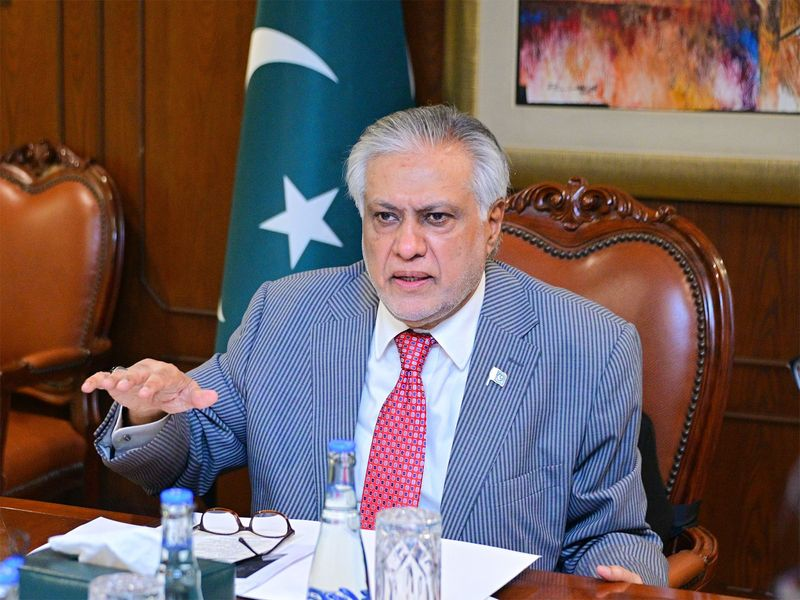
Pakistan’s Deputy Prime Minister Ishaq Dar on Friday accused India of “consistently attempting to undermine the Indus Waters Treaty (IWT)”, claiming that the current material breaches strike at the heart of the pact. He said suspension of water would be considered as an act of war.

Dar, who is also the Foreign Minister of Pakistan, was addressing the media a day after Pakistan sought clarification from India regarding variations in the flow of the Chenab river. “We witnessed in April this year India’s unilateral abeyance of the Indus Waters Treaty. But what we are witnessing now is material breaches by India that strike at the heart of the IWT, with escalating consequences both for regional stability and the sanctity of the international law,” he said.

A day after the Pahalgam attack on April 22, India took a series of punitive measures against Pakistan, which included putting the 1960 Indus Water Treaty in “abeyance”.

Dar said the manipulation of the Indus basin waters at a critical time of agricultural cycle threatened lives and livelihood in Pakistan. He said India had halted sharing information, which had exposed Pakistan to floods and droughts.


Infosys Foundation has donated Rs 30 Crores to the Indian Army for the benefit of the education of widows and children of Physical Casualties.

Please give wide publicity to the following in your Regimental groups :
The Infosys Foundation has donated Rs 30 Crores to the Indian Army for the benefit of the education of widows and children of Physical Casualties.

The grants from Indian Army for education  range from Rs 10,000 to 50,000.

Considering the average grant per child for a year is Rs 20000 a total number of children who can benefit from this single grant is 15,000.

Like Infosys the Indian Army has many more donors and there is adequate financial support available through donors.

Unfortunately only about 30% of those who are eligible claim these grants

This is because of lack of awareness as well as lack of connect with the NOK of the physical casualties.

Project Sambandh aims to establish this connect and the simple modus operandi developed can ensure that every eligible child claims the grant.

Please reach out to the NOK of rhe physical Casualties of your course, unit, regiment and Project Sambandh will help you establish the connect.

Let’s together help assist the children of the physical casualties.

Colonel Vembu Shankar, SC
Founder
Project Sambandh
Website

www.projectsambandh.com
Email:

theprojectsambandh@gmail.com

Telephone
+91 8777877409

Whatsapp

https://wa.me/message/3IQCWZGFETVPB1

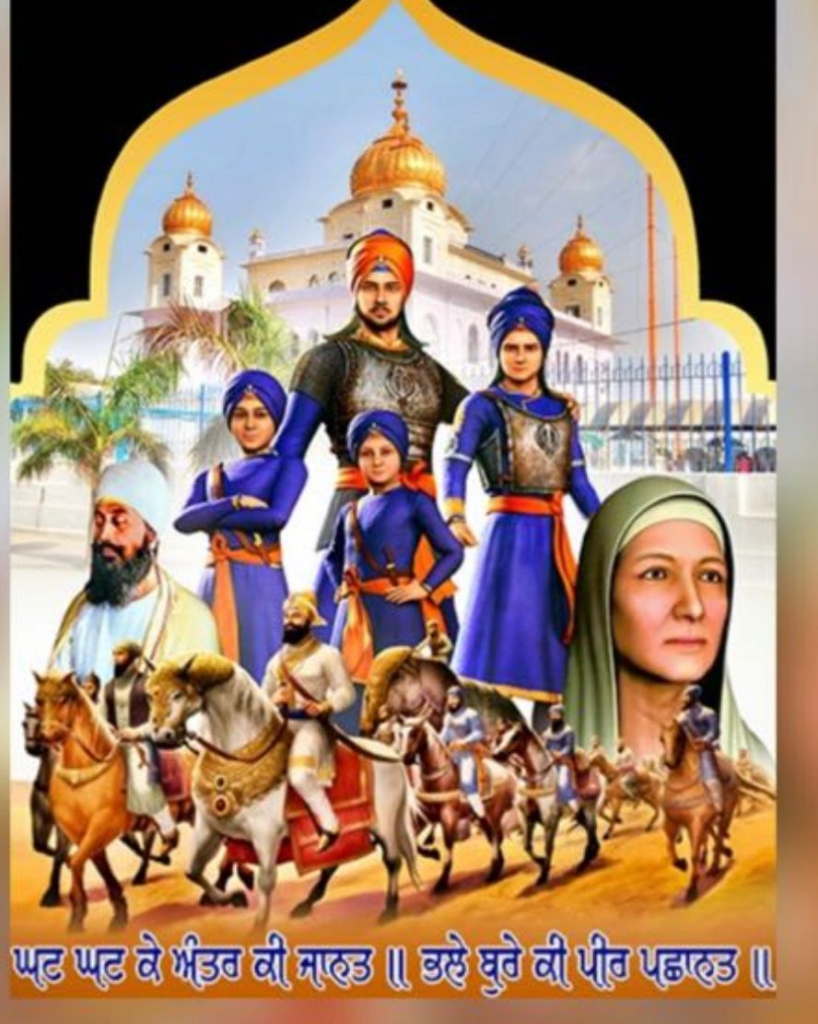
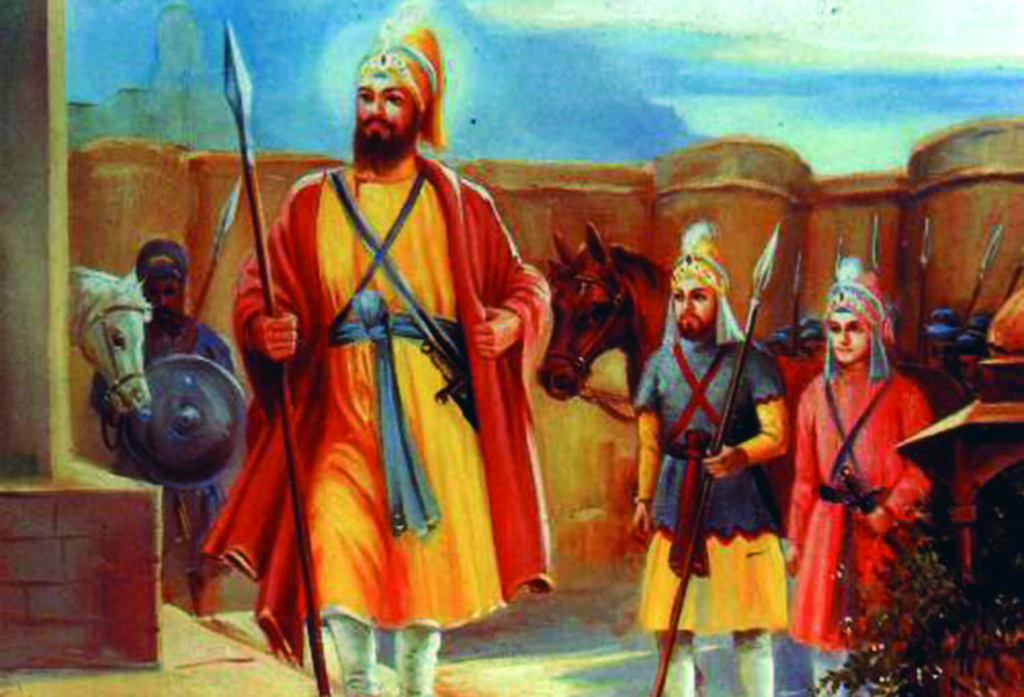
Sanjha Morcha will dedicate 20 dec to 27 Dec 2024 as Shaheed Shaibzas DIWAS week

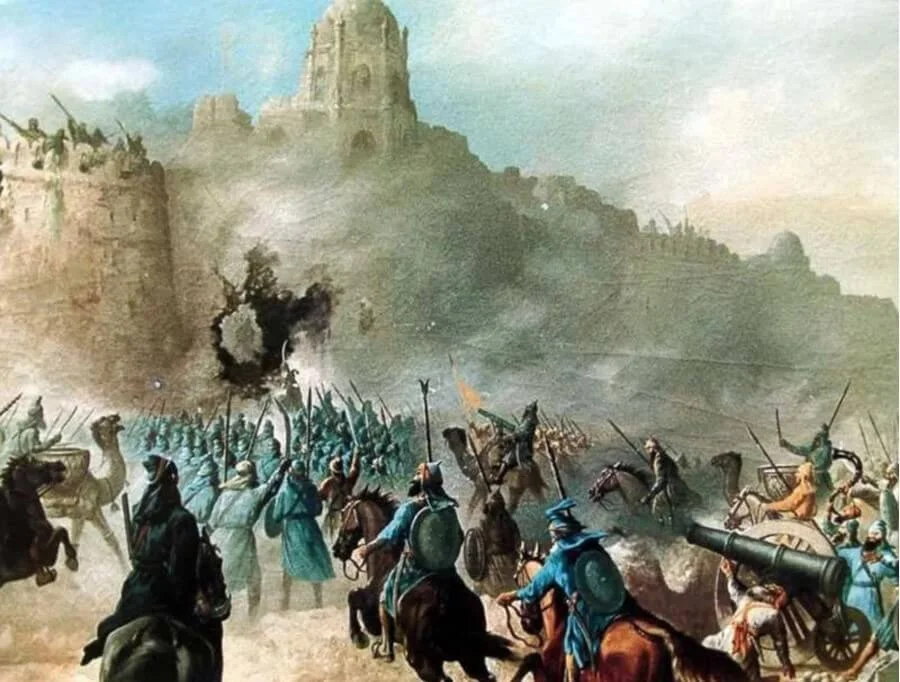
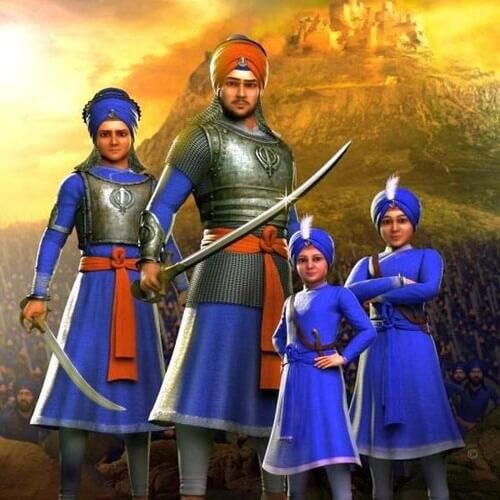
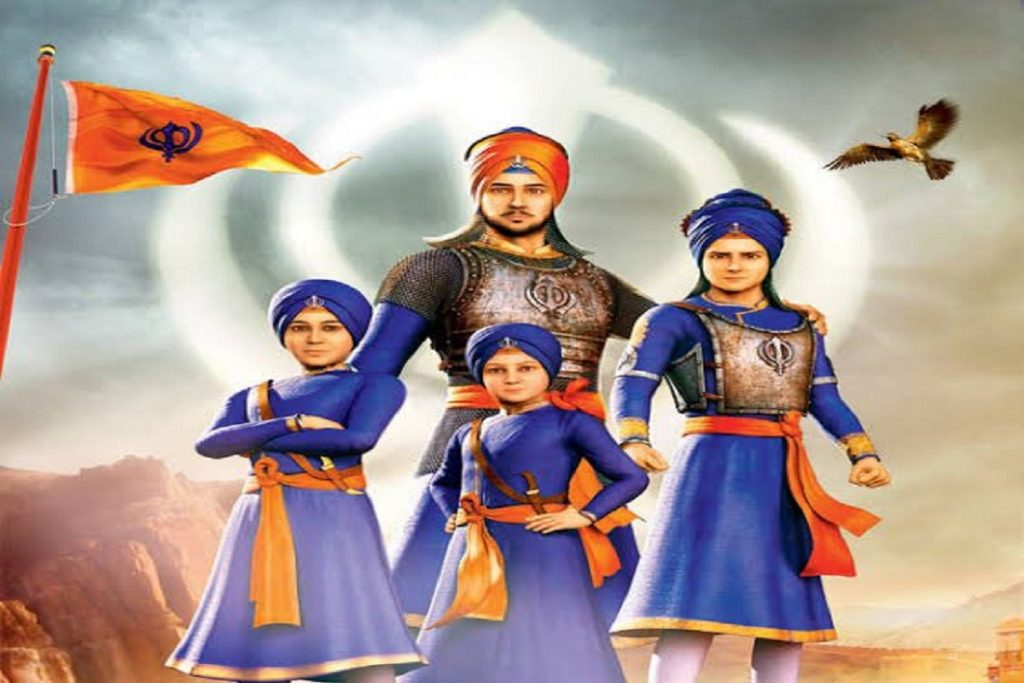
This is to remember the supreme sacrifice of Guru Govind Singh family for the Nation and other Communities for non conversion and adoption to Muslim religion but instead preferred to sacrifice their Lives . The first Shabads will be dedicated for the supreme sacrifice

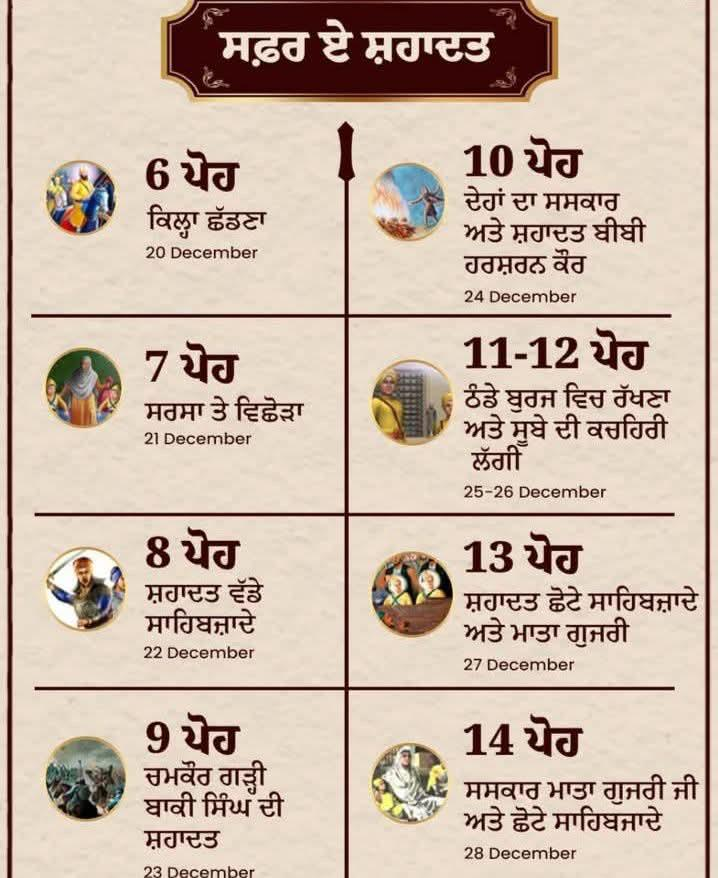
Details translated in English as under English

20 Dec —Left Anandpur Sahib Fort as was encircled and attacked by 12 Kings of Indian Mountains ( 12 पहाड़ी राजे/12 ਪਹਾੜੀ ਰਾਜੇ ) Fighting for Aurangzeb to Capture Guru Gobind Singh Live

21 Dec—-Separation of Family at Sirsa River at Ropar , younger Sahibzada (Zorawar Singh, and Sahibzada Fateh Singh )with Grandmother and elder Sahibzada’s (Ajit Singh, Sahibzada Jujhar Singh), with Guru Gobind Singh

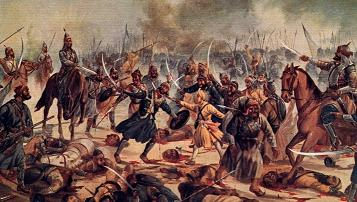
22 DEC—- Elder Sahibzada’s became Martyrs in Chamkor shaib ( Near Morinda) Battle against 10000 mogul army

23 DEC—–Balance Sikhs became Martyrs in Chamkor Sahib Battle

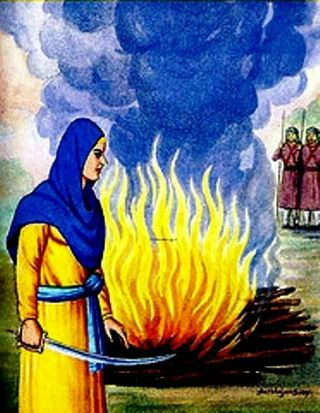
24 DEC— Bibi Harsharan kaur was Martyred who dared to conduct Funeral of all dead bodies of sikhs and two Sahibzada during night at Chamkor sahib Battle field single handily

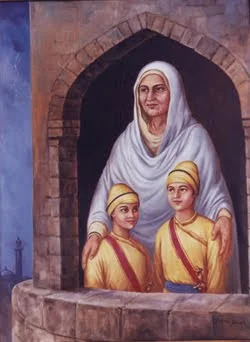
25-26 DEC — Younger Sahibzada’s along with Grandmother Mata Gujri Prisoned in Thanda Burj SIRHIND court trial was conducted but Sahibzada did not relent for conversion in spite of giving them all the worldly greed.

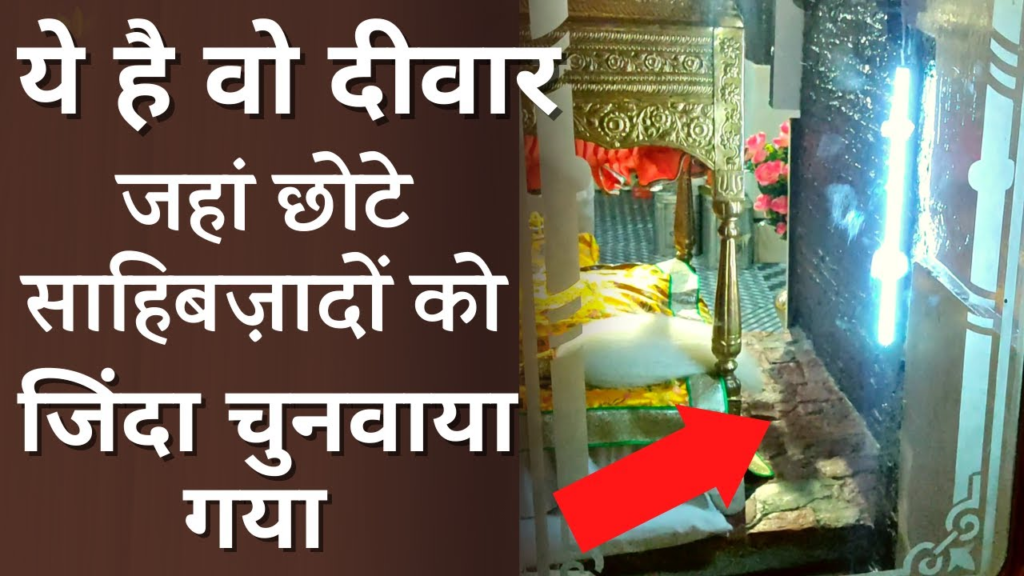
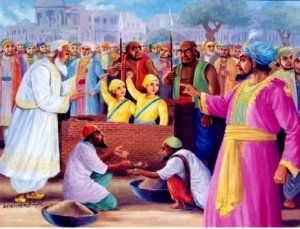
27 DEC —- Younger Sahibzada’s Martyred after they were live buried in walls and then Mata Gujri also gave her life after hearing the supreme sacrifice of Younger Sahibzada’s

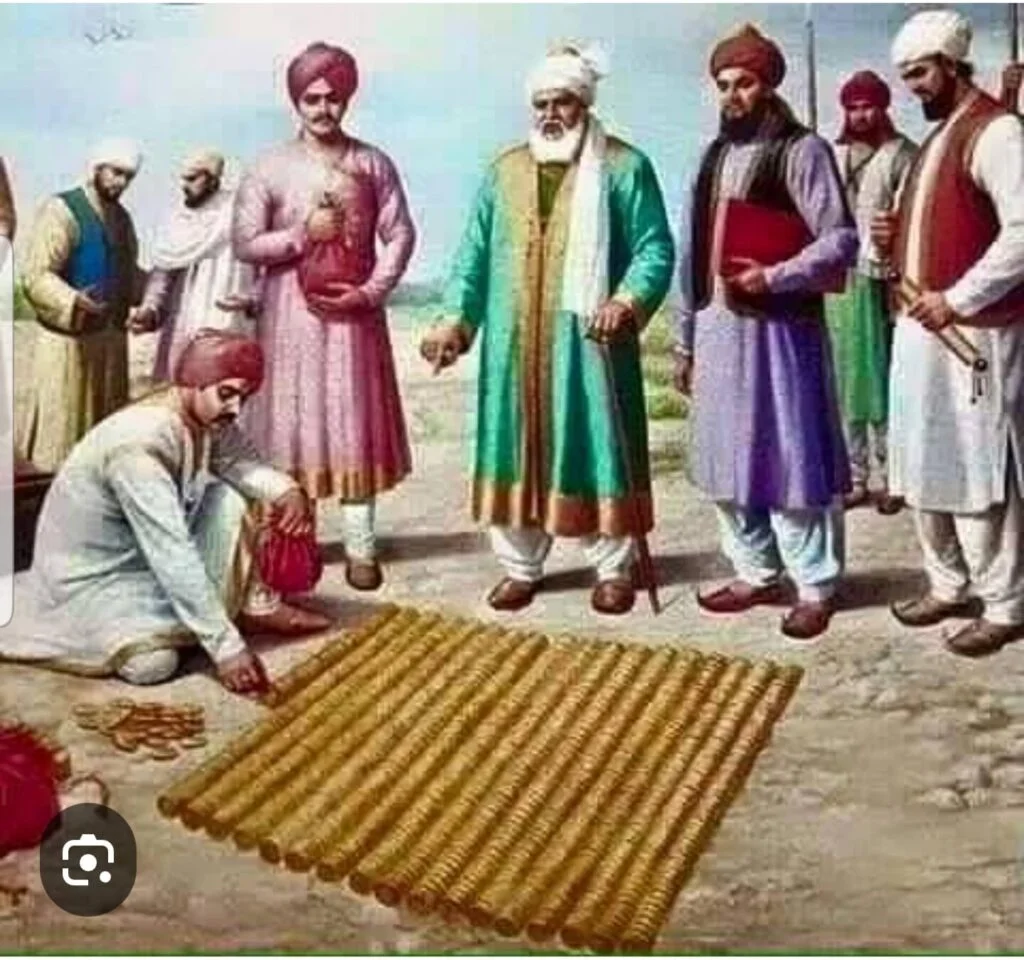
28 DEC—Younger Sahibzada Funeral was conducted on Piece of Land bought by Diwan Todar mal with standing Gold coins.


Vijay Diwas: Despite wounds, Col Hoshiar Singh Dahiya manned a machine-gun to repulse multiple enemy attacks

Of the four recipients of the Param Vir Chakra in the 1971 India-Pakistan War, Col Hoshiar Singh Dahiya was the only living awardee of the nation’s highest wartime honour

Of the four recipients of the Param Vir Chakra in the 1971 India-Pakistan War, Col Hoshiar Singh Dahiya, known to be a tough taskmaster but also one who knew the art of motivating troops, was the only living awardee of the nation’s highest wartime honour.

Then a Major with 3 Grenadiers in the Shakargarh sector, he moved fearlessly from trench to trench under heavy shelling and tank fire despite being wounded, motivating his men to fight and repel repeated enemy assaults with heavy casualties inflicted on the enemy.

“He was a go-getter who did not relent and did not believe in losing,” Maj Gen Naveen Airy (retd), who served under Colonel Dahiya when the latter was commanding his battalion, told The Tribune. “When he was the Commanding Officer, the battalion never lost any professional competition,” he added.

Maj General Airy said the most outstanding aspect of his personality was that he understood the psyche of a soldier well and that the soldiers, whom he pushed hard to train, respected him.

In fact, Maj General Airy’s father, Lt Gen VP Airy, had been Colonel Dahiya’s Commanding Officer in the Battle of Basantar during the war and had been decorated with the Maha Vir Chakra.

“I remember my father telling me that Colonel Dahiya was wounded in the battle but refused to leave the battlefield. My father had forced the injured officer to be evacuated. Even when wounded, he asked two soldiers to assist him in moving from trench to trench to inspire them and keep control on the situation,” Maj General Airy said.

Col Hoshiar Singh
Col Hoshiar Singh Dahiya

During the battle, Colonel Dahiya had captured a well-fortified Pakistani position and later held back several counter attacks, during which he was wounded in shelling. On December 15, 1971, his battalion was tasked to establish a bridgehead across the Basantar in the Shakargarh sector. Then Major Dahiya was commanding a forward deployed company and was ordered to capture the enemy locality of Jarpal.

This was a well-fortified position. During the assault, his company came under intense shelling and crossfire from enemy medium machine guns. Undeterred, he led the charge and captured the objective after a fierce hand-to-hand combat.

The enemy staged three counterattacks the next day. Unmindful of the heavy enemy fire, he motivated his men to stand fast and fight. Inspired by his courage and dauntless leadership, his company repulsed all attacks, inflicting heavy casualties on the enemy.

On December 17, the enemy launched another attack with a battalion supported by heavy artillery fire. An enemy shell landed near a medium machine-gun post, injuring the crew and rendering it inoperative. Realising the importance of the machine-gun, he rushed to the pit and though seriously wounded himself, manned the weapon inflicting heavy casualties on the enemy. The enemy retreated, leaving behind 85 dead, including their commanding officer and three other officers.

“Throughout this operation, Major Dahiya displayed gallantry, indomitable fighting spirit and leadership in the highest traditions of the Army,” the citation for his award reads.

“After the war, the battalion came to be known as the ‘Triumphant Third’. Once standards have been set, there is no space to compromise and the expectations from a highly decorated unit increase manifold,” Col JS Dillion (retd) who also served under Colonel Dahiya in 3 Grenadiers, told The Tribune. “It is Colonel Dahiya’s legacy and personal example that continue to motivate the battalion to strive for excellence,” he added.

Colonel Dahiya hailed from Sisana village in Haryana’s Sonepat district and was commissioned into the Grenadiers in June 1963. In the 1965 Indo-Pakistan war, as a Lieutenant, he had also seen action in the Rajasthan sector, for which he was mentioned-in-despatches for gallantry.

After serving as an instructor at the Indian Military Academy, Dehradun, he commanded 3 Grenadiers and later had a stint at the National Defence Academy. He hung up his boots in 1988 and settled in Jaipur, where he passed away 10 years later at the age of 62.


Beyond the battle : A soldier’s memory of 1971

For all intents, we were in the bag — but luck had not deserted us.

article_Author
Lt Gen Baljit Singh Retd

At the stroke of 2000 hours on December 17, 1971, during the Indo-Pak war in the western theatre, the sudden and profound near-total quiet which had descended all across the Chhamb battle zone after 15 days of almost continuous lethal combat engagements, was to me reminiscent of the all-pervasive surreal silence in the Universe before God created life on planet Earth. But did we dance in euphoria, having brought the war to a closure? Speaking for myself, I was simply bewildered to make any sense of it all, like the two teenaged grandchildren who in all innocence had asked poet laureate Robert Southey about the “Battle of Blenheim“:

Looking back, this little patch of the Indian subcontinent had been a strategic obsession of the Pakistan military planners as a springboard for dominance of the southern Pir Panjal region and a potential threat to Jammu during all the three Indo-Pak wars, albeit without success. Mindful of these tendencies, the 10 Infantry Division of WW II fame was resurrected, both to bolster the defence posture in the Chhamb-Jaurian sector and to recapture the territory lost to Pakistan in the Chhamb sector in the 1965 war. But kudos to our Pakistani foes who outwitted us with an audacious pre-emptive, executed spiritedly without let, beginning at sundown on December 3, 1971.

Their intent left little doubt when some 180 artillery guns of various calibres firing in unison lit up the horizon in an orange-pink wash, followed by the distant thunder of massed guns firing in rapid succession, gradually building into a never-ending roll of drumbeats. But in the next blink of an eye, even that mighty sound got downgraded by the greater, deafening lethal shell bursts all around us.

And the serenity of the beautifully starlit horizon of five minutes earlier was completely obliterated by the mushrooming clouds of smoke and debris, turning beauty into something beastly.

By nightfall on December 5, Pakistan had well-nigh neutralised most constituents of the 191 Infantry Brigade group holding defences west of the Tawi rivulet (TR), except 12 Field Regiment (Artillery), and the GOC signalled his commanders to withdraw on December 6. It appeared that our Command Radio frequency had been compromised because come 0200 hours that night, endless waves of artillery fire assaults heaped up the existing carnage of blood and gore.

Around 1700 hours on December 6, 191 Brigade commenced phased withdrawal under covering fire by 12 Field Regiment. And, by 1945 hours, noticing the now totally isolated 12 Field, our foe seized the opportunity to create a horseshoe resting on TR, trapping us gunners in its constricted centre! For all intents, we were in the bag —but luck had not deserted us, as our archetypal breeching of the siege was best summed up by Lt Gen KP Candeth, the GOC-in-C Western Command thus: “Guns of this Battery (Sic. 12 Field Regiment, Q Battery) were the last organized body of troops to withdraw across the Munawar Tawi bridge with great élan and in a copy book sequence, each 25 Pounder gun leap-frogged in a retrograde action, firing at point blank range till the pursuing enemy infantry were exhausted to stand still, before it (bridge) was blown by us as a part of our defensive plan” by 101 Engineer Field Company at 2345 hours on December 6, 1971.

Even under intense combat, there are moments of comic relief. On December 7, our lookout sentries apprehend a suspect trespasser in our gun area. But fancy meeting the lanky, 6-ft Major in armoured corps overalls, after our last term together at the IMA, Dehradun, in 1956! Recognition dawned upon both of us simultaneously; friend Grover had been asleep in a trench when his tank troop acted on orders to “move at once”, leaving their troop commander to recoup his sleep!

And lastly, two legacy memories. Just when it seemed that we had wrested the initiative, enemy sprang another surprise with multiple shallow intrusions across the east bank, sending alarm bells ringing loud and we received orders to withdraw yet further back.

Subedar Major Sant Ram Sahib bickered with tear-filled eyes: “Saab, aenaa pichhe hut-hut ke, ghar wapas ja ke apna moonh kime dakhawan ge!” I was struggling for an answer when, fortunately, that order was countermanded, eliciting a prompt happy response from Sant Ram Sahib, “Aah taan Rab ne fauj de izzat bucha ditti, Saab ji!“

For the first time, on December 14 morning, there was a perceptible drop in demands on fire support. Around midday, every eye turned towards sentries escorting at the point of bayonet two turbaned Sikh peasants in colourful, loose-flowing Punjabi “kurtas” and billowing “tehmats” of Bhangra performing artistes to where I stood. In a flicker, they lifted me up in a tight bear hug, uttering: “Oh! Balle-balle-balle!” and the entire gun position burst in merry guffaw.

A somewhat bewildered and embarrassed havildar clerk, Nirmal Singh, emerged from the Regimental Command Post dugout to formally introduce his maternal uncles!

After a lengthy narration of how they hitched rides from Gurdaspur onwards, and gave the slip to every Military Police check post en route, they stated “Asaan socheya aeni ghamasan jung lagi hai, te assan apne bhaanje nu zarur mil aaiye!” We entertained them to a right royal lunch, downed with stiff rum punch before escorting them back to Akhnoor.

Subedar major Sant Ram Sahib and havildar Nirmal Singh and their kind are the epitome of those who are attracted to the Indian armed forces. As Philip Mason surmised: “Because it is a matter of honour!” No less, no mor