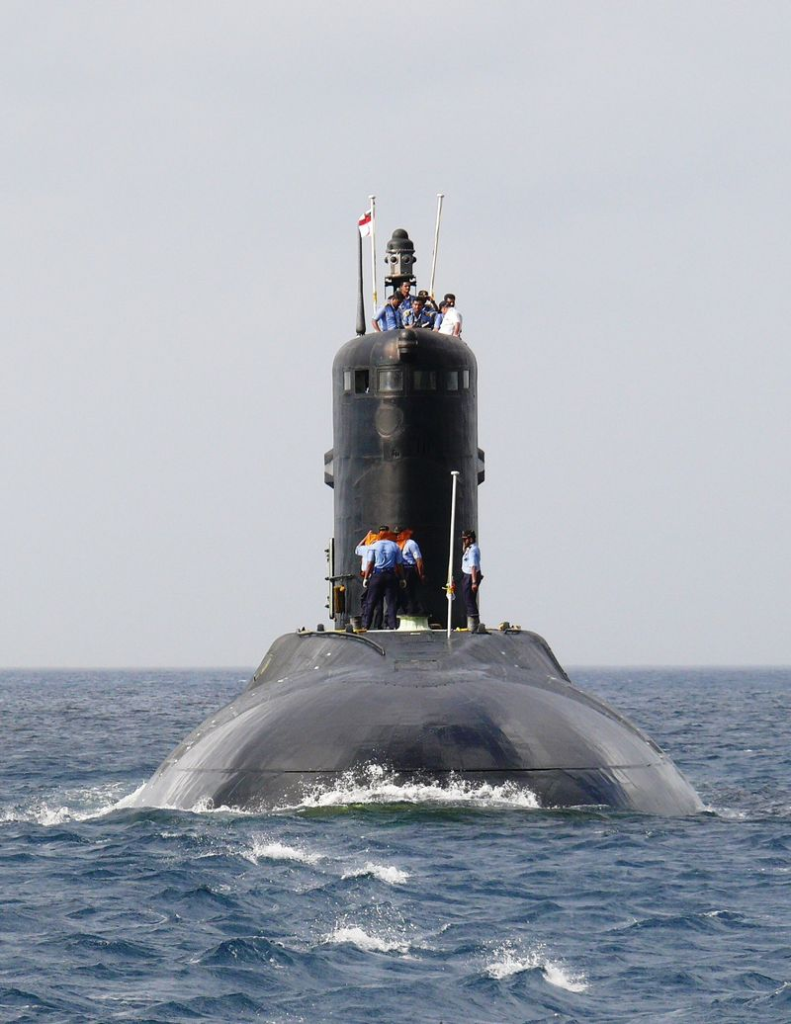
DEFENCE: As INS Sindhughosh signs off, Navy down to 1990s’ strength


Former Punjab cadre IPS officer Amar Singh Chahal allegedly shot himself on Monday after being “defrauded” of over Rs 8 crore by online scammers. He was rushed to a private hospital with a critical injury.
In a note, he wrote, “I am in deep trouble. I have been scammed out of crores of rupees by very sophisticated investment and wealth managers. Most of the money I borrowed was from friends and relatives whom I am not able to face as I have no money to repay them. I am left with no option other than to take my life.”
Known to be a very public-friendly police officer, Chahal alleged that he had invested the money over the past decade, but instead of any returns, the company continued to ask for more money.
The former cop further mentioned that the main culprit used a picture of a CEO of a reputed company on his WhatsApp account and that “all transactions were made online through a bank”.
Before taking the step, the former Inspector General, who retired in 2019, wrote to the PM, Home Minister, Finance Minister and the Punjab DGP, highlighting the scam and how he was defrauded and demanded a CBI probe.
The note was recovered by the police from his residence and a probe is underway.
In the note, Chahal mentioned he used a service weapon allotted to his gunman and that he (gunman) should not be held responsible in any manner. “I hope criminals will not go unpunished and my family will get justice. I also request all my friends from whom I borrowed money to let my family come out of the shock before they are in a position to repay the loans,” he mentions.
“The site is named as F777 Wealth Equity Research Group and they have multiple numbers. I had borrowed over Rs 7 crore from friends and relatives and I was ashamed to face them,” read the excerpts from the handwritten note that was sent to many persons.
The former IG demanded that a CBI probe or an SIT be formed by the state police to arrest these online scammers who dupe gullible people of their hard-earned money. “A similar case of an Andhra Pradesh-based engineer who was cheated of Rs 1 crore was also reported. Therefore, the matter requires proper investigations so that money can be recovered and returned,” reads the note.
Chahal is one of the accused in the 2015 Faridkot firing case. In February 2023, a Special Investigation Team (SIT) led by ADGP LK Yadav filed a chargesheet in a Faridkot court naming several political leaders and senior police officials, including Chahal.
The police have started an investigation into the matter and ruled out any foul play in the incident, terming it a case of “attempted suicide”. “We are looking into the details and it is too early to reach any conclusion, though an FIR will be registered soon,” said Patiala SSP Varun Sharma.
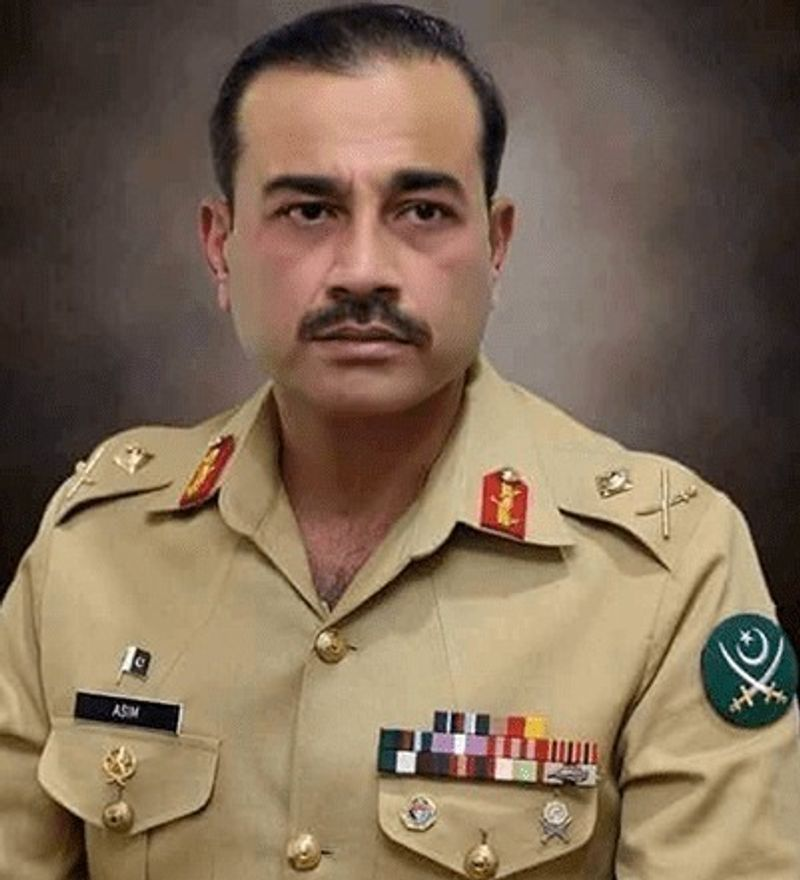
Pakistan’s Chief of Defence Forces, Field Marshal Asim Munir, has claimed that the country received “divine help” during the four-day military confrontation with India in May, calling the unseen support something that Pakistan forces “felt”.
Speaking at the National Ulema Conference in Islamabad, Munir cited verses from the Quran as he described the conflict that followed India’s Operation Sindoor, launched on May 7 in retaliation to the Pahalgam terror attack that killed 26 civilians.
“We felt it,” he said, referring to what he described as “divine intervention” during the hostilities that erupted after Indian strikes on terror targets inside Pakistan and Pakistan-occupied Kashmir.
The May clashes between India and Pakistan marked one of the sharpest escalations between the neighbours in years, with both sides engaging in intense clashes before an understanding was reached to stop the military actions on May
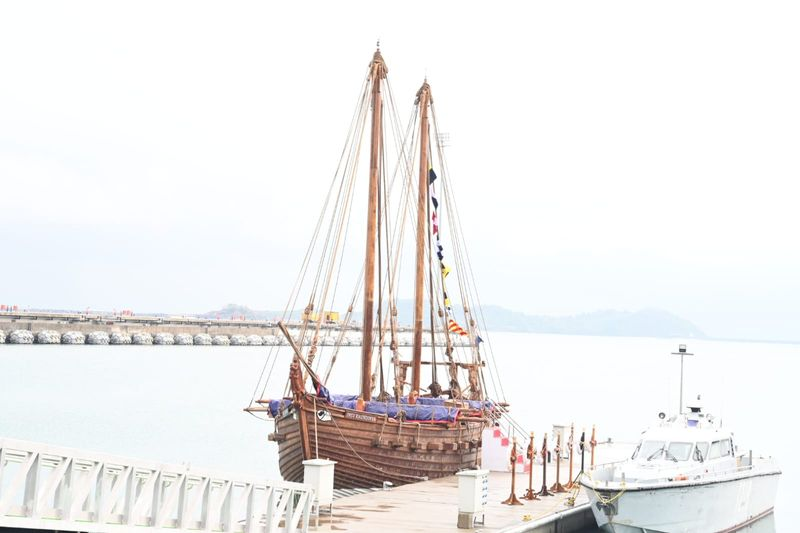
The Indian Navy’s pioneering stitched sailing vessel, INSV Kaundinya, that revives India’s ancient shipbuilding and seafaring traditions, will undertake her maiden overseas voyage on December 29.
The vessel will be flagged off from Porbandar, Gujarat, for Muscat, Oman, symbolically retracing historic maritime routes that connected India with the wider Indian Ocean world for millennia.
Inspired by depictions of ancient Indian ships and constructed entirely using traditional stitched-plank techniques, INSV Kaundinya represents a rare convergence of history, craftsmanship and modern naval expertise. Unlike contemporary vessels, her wooden planks are stitched together using coconut coir rope and sealed with natural resins, reflecting a shipbuilding tradition once prevalent along India’s coasts and across the Indian Ocean.
This technology enabled Indian mariners to undertake long-distance voyages to West Asia, Africa and Southeast Asia long before the advent of modern navigation and metallurgy.
The project was undertaken through a tripartite Memorandum of Understanding (MoU) between the Ministry of Culture, the Indian Navy and M/s Hodi Innovations as part of efforts to rediscover and revive indigenous knowledge systems. Built by traditional artisans under the guidance of master shipwright Babu Sankaran, and supported by extensive research, design and testing by the Indian Navy and academic institutions, the vessel is fully seaworthy and capable of oceanic navigation.
Named after the legendary mariner Kaundinya, who is believed to have sailed from India to Southeast Asia in ancient times, the ship embodies India’s historic role as a maritime nation.
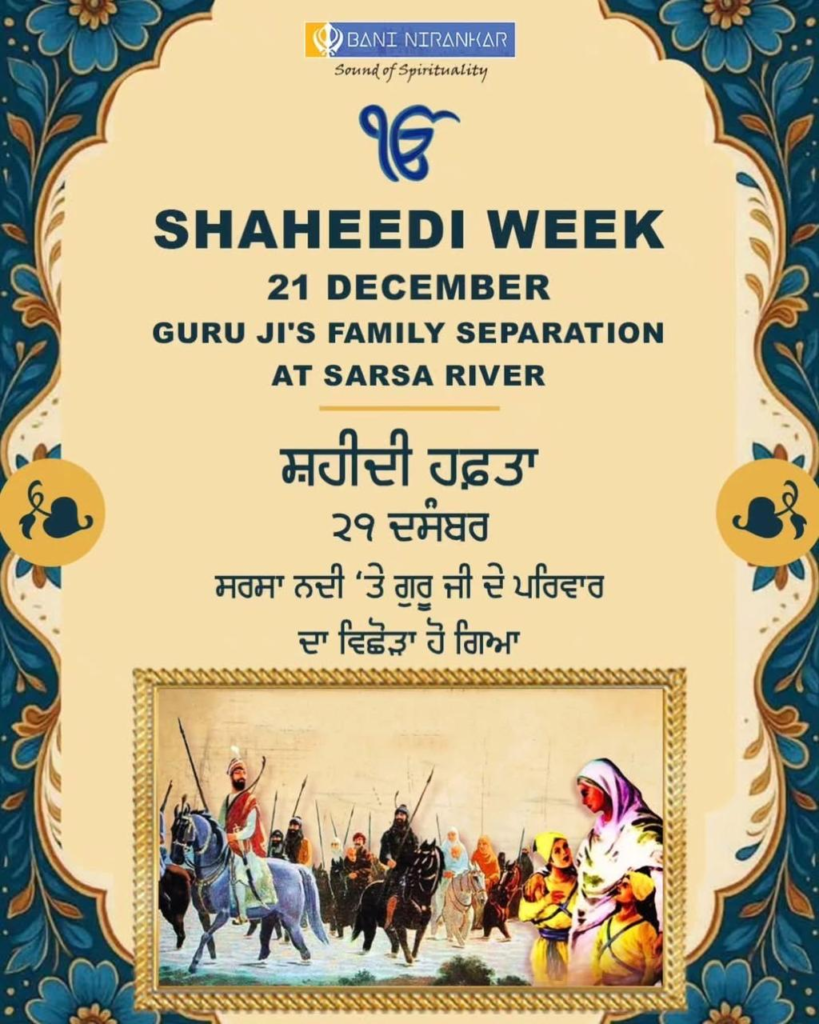
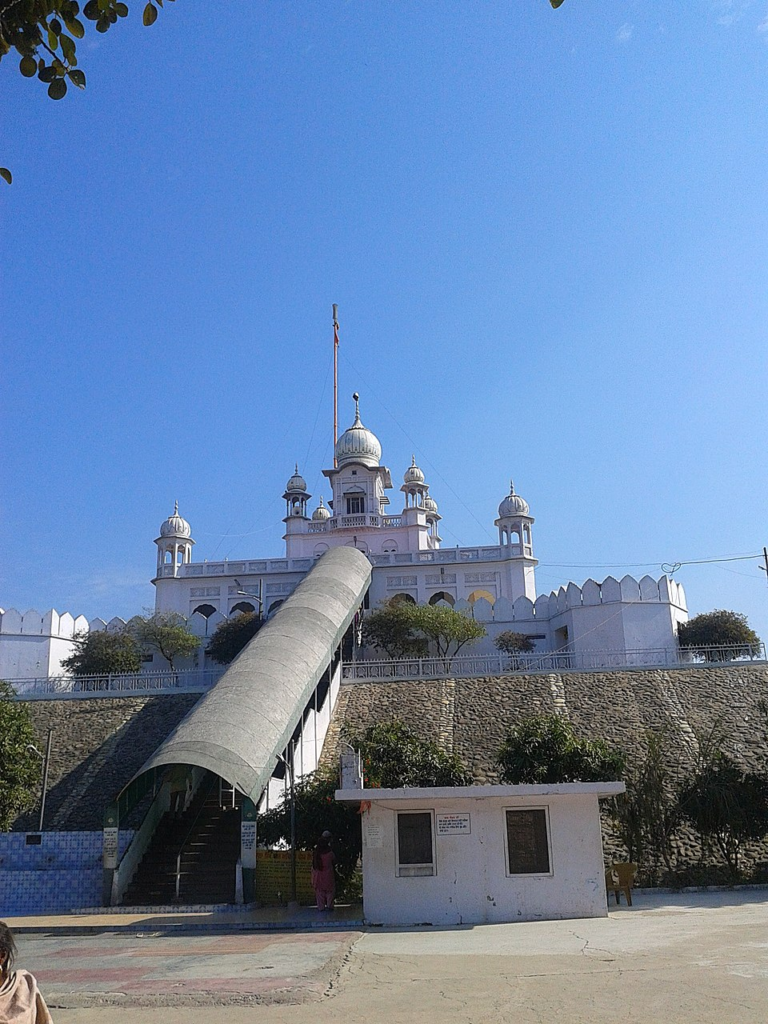
The Battle of Sarsa River – On the night of December 20th, 1704: 7th Poh, 1761, Sri Guru Gobind Singh Ji, his family, and the Sikhs left Anandpur Qila. By the morning of December 21st, they reached the Sirsa River, where Guru Ji emphasized the importance of Amritvela Nitnem (morning prayers). While crossing the river, they were ambushed by the Mughal army, resulting in intense fighting and heavy casualties. Guru Ji’s family was separated during the crossing, with each group heading in different directions. After reaching the far bank, Guru Ji was left with his two elder sons, 42 Sikhs, and the Panj Piaare. They continued toward Ropar and sought refuge in a haveli, where they faced the Mughal army in the Battle of Chamkaur.
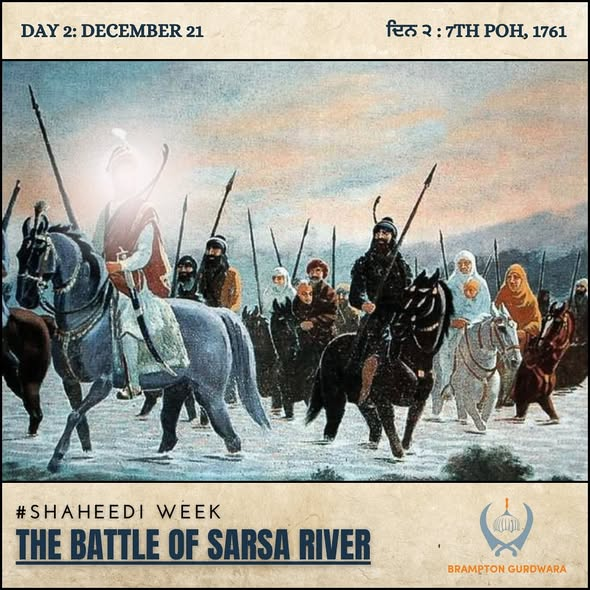
The separation of Guru Gobind Singh Ji‘s family at the Sarsa River (Sirsa) in December 1704 was a tragic event during the siege of Anandpur, where a fierce Mughal ambush during a stormy night forced the Guru’s party to scatter, resulting in the loss of many Sikhs and valuable manuscripts, and forever separating his family, with his mother Mata Gujari
The Sarsa River, usually dry, had turned into a powerful, raging current due to heavy rains in the hills, making it impossible to cross. The first group of Sikhs waited on the riverbank for Guru Gobind Singh to arrive. The Guru set out with his two elder sons and about 400 Sikhs. Before he could reach the river, his group was attacked by a large Mughal force under Wazir Khan. While the Guru and his men were engaged in battle, another Mughal unit launched an assault on the Sikhs waiting by the riverbank.[4][5]
Amidst the rain, cold, darkness, and fierce fighting, confusion spread among the Sikhs. Many were killed, including Udai Singh and his warriors. Some courageous Sikhs attempted to cross the dangerous river on horseback, carrying the Guru’s family with them. Though they reached the other side safely, they lost all their belongings, including important manuscripts, to the floodwaters. After crossing the river, the Guru’s family was separated. His mother, Mata Gujri, along with his two younger sons, Baba Zorawar Singh and Fateh Singh, were unable to travel far. They were taken in by Gangu, a former servant of the Guru’s household, who led them to his village, Saheri. Meanwhile, Mata Sundari and Mata Sahib Devi disguised themselves as village women and moved toward Ambala for safety. Gobind Singh and his men also suffered heavy losses. Despite fighting bravely, most of his warriors were either killed in battle or drowned while trying to cross the river. By the time he reached the other side, only 43 Sikhs remained with him, including his two elder sons, Ajit Singh and Jujhar Singh, the “Five Beloved Ones” (Panj Pyare), and other warriors. As they continued their journey, they received alarming news—nearly a thousand Mughal soldiers were marching toward them from Sirhind, while another force was crossing the Sarsa River.[4][5][6]