L-G also interacts with the Parliamentary Standing Committee on External Affairs
Chief of Army Staff General Upendra Dwivedi on Friday called on Ladakh Lieutenant Governor VK Saxena at Lok Niwas and discussed measures to strengthen civil-military cooperation in the Union Territory.
In a post on X, the L-G said, “We discussed strengthening civil-military cooperation, fostering closer coordination between the administration and the armed forces, re-employment of Agniveers in the UT Administration, and advancing collective efforts for peace, stability and development in the region.”
The Army Chief’s visit to Ladakh comes amid the Army’s continued focus on maintaining operational preparedness and enhancing coordination with the civil administration in the strategically significant border region.
Meanwhile, the L-G also interacted with the Parliamentary Standing Committee on External Affairs. He posted on X, “Had an engaging and fruitful interaction with the Parliamentary Standing Committee on External Affairs, chaired by Hon’ble MP Dr Shashi Tharoor, during their Ladakh visit yesterday.”
The committee sought details on Ladakh’s key challenges and the measures being undertaken to address them. The L-G briefed members on the region’s fragile ecosystem, environmental concerns and growing water scarcity.
He also highlighted initiatives such as Project Him Sarovar, the construction of rock check dams under the Sindhu Jal Samridhi Abhiyan and extensive plantation drives aimed at mitigating these challenges.
“Grateful to the committee for appreciating these initiatives and assuring full cooperation in our efforts,” the L-G said in his post on X.
Structured mechanism enables India to swiftly deploy assets overseas for disaster relief
Under Operation Amistad, meaning ‘friendship’ in Spanish, Venezuela’s national language, the 41-member team is equipped to provide emergency medical care
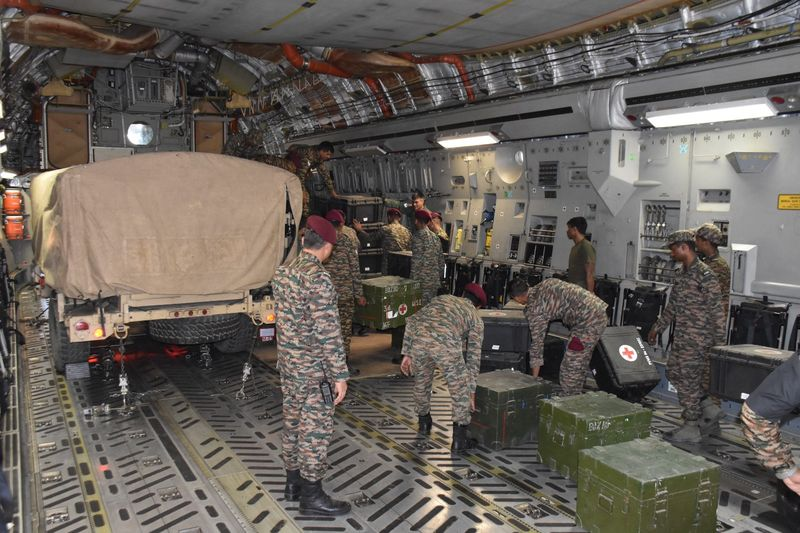
wo Indian Air Force (IAF) Boeing C-17 heavy-lift aircraft headed out to Venezuela on June 26, carrying elements of the Indian Army’s 60 Para Field Hospital on a humanitarian mission for providing medical assistance to the earthquake-hit country.
Under Operation Amistad, meaning ‘friendship’ in Spanish, Venezuela’s national language, the 41-member team is equipped to provide emergency medical care, trauma management, surgery and critical care.
Besides carrying about 35 tonnes of medical supplies, equipment and relief material, the team is also deploying the indigenously developed BHISHM Cubes, a rapidly deployable modular field hospital capable of delivering advanced trauma care, emergency surgeries and intensive care for up to 200 patients, significantly strengthening India’s disaster response capability.
Bilateral ties between India and the Bolivarian Republic of Venezuela, which lies on South America’s northern coast on the Atlantic, have been traditionally warm, rooted in cooperation in the energy sector and a shared commitment to the Global South, according to the Ministry of External Affairs. Venezuela has emerged as India’s top suppliers of crude oil.
The mission embodies India’s enduring commitment to humanitarian assistance and disaster relief, guided by the timeless ethos of “Vasudhaiva Kutumbakam — The world is one family,” The Indian Army said on its X handle. “In moments of adversity, India stands in solidarity with the people of Venezuela, extending compassion, care and hope to those affected.”
Humanitarian Assistance and Disaster Relief (HADR) operations are an important part of India’s global engagement. Since the Indian Army deployed its first medical mission to Korea in November 1950, also by 60 Para Field Ambulance as it was then called, India has a long and credible record of providing relief teams and emergency supplies to countries hit by natural calamities. Over the years, India had developed extensive disaster management experience and capability, both domestically as well as overseas.
Policy for timely and credible response
India’s HADR missions are based on a robust policy and institutional architecture that enables coordinated, timely and credible response to natural or man-made disasters at home and abroad.
For international HADR operations, India’s approach is guided by the Agenda No.10 — Bring about greater cohesion in international response to disasters — of the Prime Minister’s 10-point agenda on Disaster Risk reduction, according to information shared by the government.
The National Disaster Management Authority (NDMA) also issued International HADR Guidelines in October 2024, which institutionalise overseas disaster response and are bound by certain principles such as respecting the sovereignty and territorial integrity of the affected states, adhering to international humanitarian law and human rights standards and committing to transparency, accountability and ethical conduct.
The guidelines also implicitly align with the United Nations Office for Disaster Risk Reduction Gender Action Plan (2024), reinforcing inclusivity in humanitarian action. “Importantly, they formally recognise the Indian Armed Forces as pivotal enablers of rapid response, mandating their role in strategic lift, logistics, medical support, evacuation and engineering tasks, with increasing emphasis on technology integration, such as drones and AI-enabled forecasting,” a brief issued on the subject earlier by the government said.
Institutional stakeholders
Several institutions within the government are involved for the planning and execution of overseas HADR operations and ensuring that the response is structured, swift and strategically coherent. These include —
Ministry of External Affairs: The nodal ministry for India’s overseas HADR engagement, responsible for diplomatic coordination, handling requests from affected states and international outreach. In 2021, the ministry had set up a Rapid Response Cell, initially for coordination to deal with the COVID-19 pandemic, which now functions as a central coordination hub for overseas HADR and liaising with NDMA, Armed Forces, Airports Authority of India and other union ministries or departments concerned.
Ministry of Home Affairs: The ministry’s Integrated Control Room for Emergency Response, operational 24×7, coordinates international operations from India with the Ministry of External Affairs National Disaster Management Authority, National Disaster Response Force and other stakeholders.
Headquarters Integrated Defence Staff: Functioning under the Ministry of Defence, it provides the strategic airlift capability, logistics, medical support, engineering capabilities and other rapid deployment assets.
National Disaster Management Authority: It is the apex policy body that frames guidelines and coordination mechanisms for disaster response, including international HADR missions. The National Disaster Response Force deploys specialised disaster response teams and equipment when and where required.
Ministry of Health and Family Welfare: It leads medical and public health support in HADR through emergency medical teams, disease surveillance, global coordination, and inclusive healthcare delivery. It also coordinates with the World Health Organisation and other health agencies for public health management.
The Armed Forces’ pivotal role
The institutional framework, according to the brief, mandates the Armed Forces’ role in rapid deployment, with emphasis on technology integration such as employment of drones and artificial intelligence for forecasting. NDMA’s HADR Guidelines formally recognise the pivotal role of the Indian Armed Forces in disaster relief operations. The Army can deploy troops and set up field hospitals or first aid centers, the Air Force is tasked with airlifting relief personnel, medical supplies, rescue equipment and evacuating people, the Navy can use ships for evacuation, transport of relief goods, while the Coast Guard renders support in maritime disasters like cyclones or tsunamis.
This approach is aligned with India’s commitments under the Sendai Framework for Disaster Risk Reduction which emphasises preparedness, resilience, effective response, and coordinated recovery. The Sendai Framework is a non-binding UN-endorsed agreement by member states that focuses on reducing disaster risks and losses from natural and man-made hazards by preventing new risks and mitigating existing ones.
Numerous domestic exigencies apart, the Indian Armed Forces have over the past decade undertaken over a dozen overseas HADR and evacuation operations. These include missions in Nepal, Afghanistan, Sri Lanka, Turkiye, Syria, Myanmar, Ukraine, Poland, Bangladesh, Sudan and some other Indian Ocean Rim countries. Several exercises, including those with some friendly foreign countries have been conducted to hone skills and interoperability.
Lt Gen Pushkar to head Southern Command, Lt Gen Malhotra South Western Command
An Armoured Corps officer, Lt Gen Pushkar is scheduled to take over his new appointment in Pune on July 1
Lieutenant General Rajesh Pushkar, currently serving as the General Officer Commanding of 2 Corps at Ambala, has been appointed as the General Officer Commanding-in-Chief (GOC-in-C) of the Southern Command, while Lieutenant General Mohit Malhotra will take over as the General Officer Commanding-in-Chief of the South-Western Command.
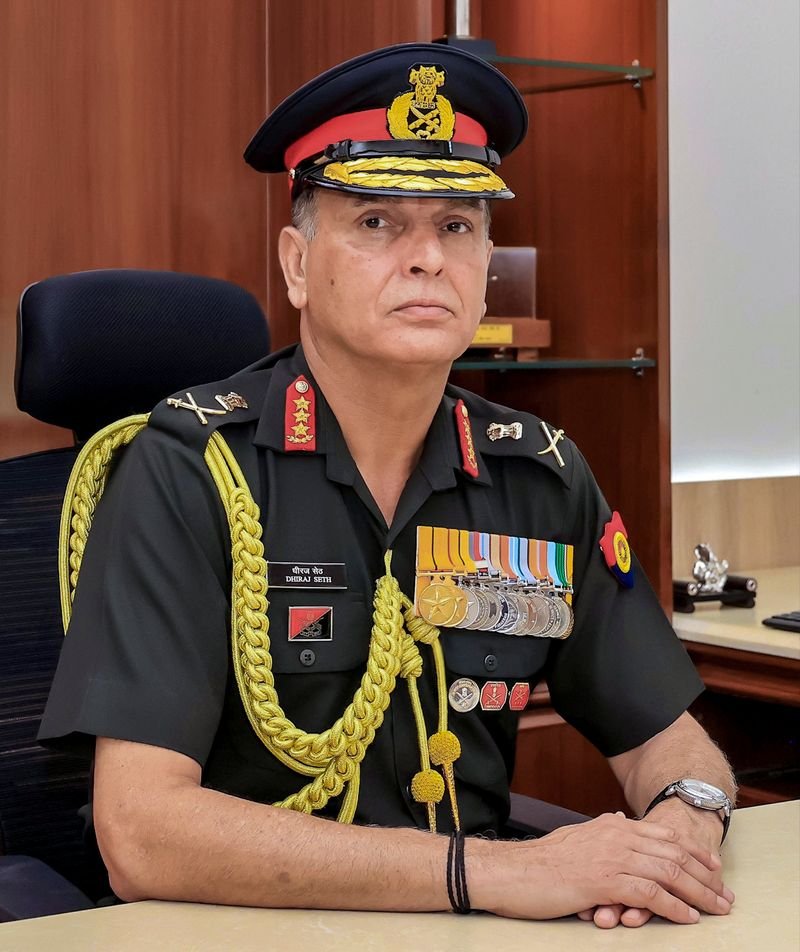
An Armoured Corps officer, Lt Gen Pushkar is scheduled to take over his new appointment in Pune on July 1, replacing the incumbent, Lt Gen Sandeep Jain, an infantry officer who has taken over from the Army Chief designate, Lt Gen Dhiraj Seth, in April 2026.
Lt Gen Malhotra, also an Armoured Corps officer, will take over the reins of the South-Western Command at Jaipur from Lt Gen Manjinder Singh, an Infantry officer, who superannuates at the end of this month.
Lt Gen Pushkar is Colonel of the 74 Armoured Regiment, also known as the Desert Hawks, that was raised at Ahmednagar in June 1972 and is presently equipped with the T-90 main battle tanks
An alumnus of the National Defence Academy, he had taken over as the 2 Corps Commander in July 2024. In a career panning about 35 hears, Lt Gen Pushkar has commanded an armoured regiment in an operational area, a strategic independent armoured brigade and an infantry division in the western sector.
In addition, he has served with the Indian Military Training Team in Bhutan, had a tenure as the defence attache in teh Indian Embassy in Moscoe and tenanted the appointment of Director General Territorial Army at Army Headquarters.
Lt Gen Pushkar is the brother-in-law of Member of Parlaiment Sashi Tharoor. “Knowing his military brilliance, his stellar record, and his absolute dedication to the uniform, I have no doubt that he will lead with the highest distinction. It is a moment of profound pride for our entire family, and a reassuring moment for the nation, to see such an exceptional and dedicated officer ascend to a position of such monumental responsibility,” Tharoor said on his X handle on Friday.
Lt Gen Malhotra is presently posted as the Chief of Staff, eastern Command in Kolkata. Commissioned into the 47th Armoured Regiment in June 1989, Lt Gen Malhotra is an alumnus of the National Defence Academy and the Advanced Command and Staff Course, United Kingdom. He has earlier commanded the 1st Armoured Division at Patiala and the 12 Corps at Jodhpur.
IT Ropar Director Rajeev Ahuja receives commendation from Army Chief Dwivedi
Expressing gratitude after receiving Chief of Army Staff Commendation, Ahuja says he deeply humbled and dedicates the recognition to IIT Ropar community
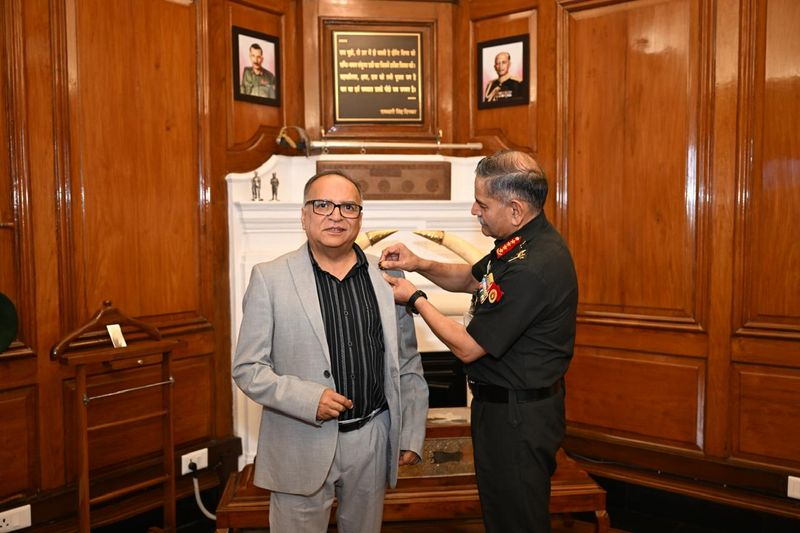
IIT Ropar Director Rajeev Ahuja has been conferred the Chief of Army Staff Commendation by General Upendra Dwivedi during a formal meeting at the Army Chief’s office on Saturday.
“I am thankful and greatly humbled by this honour bestowed on me by the Chief of Army Staff. I owe this to the hard work put in by IIT Ropar team to create a defence research and innovation ecosystem to help strengthen the security of the Nation. This recognition will give us renewed impetus to fulfil our pledge towards ensuring Atmanirbhar Bharat in defence,” he said.
Over the past few years, IIT Ropar has significantly expanded its research portfolio in strategic defence technologies with support from the Army Technology Board.
Faculty members and researchers at the institute are currently working on several projects, including resilient military habitats, autonomous armoured vehicles and directed energy weapons areas considered critical for enhancing the operational capabilities of the Indian Army.
The recognition highlights the increasing collaboration between premier academic institutions and the armed forces in developing indigenous technologies under the country’s self-reliance initiative. It also reflects the confidence reposed by the Indian Army in IIT Ropar’s research capabilities and its contribution towards advancing next-generation defence solutions said prof Ahuja.
Iran launched a drone assault targeting Bahrain while a ship in the Strait of Hormuz separately came under attack Saturday, in Tehran’s likely response to overnight airstrikes by the US.
The US on Saturday said it carried out “powerful” strikes on Iranian missile and drone storage locations and coastal radar sites. It said the action was in response to Iran’s drone attack on a commercial ship in the Strait of Hormuz a day earlier.
Iran’s Foreign Ministry said its military retaliated by striking targets linked to US forces in Bahrain. It described the attack as a response to US air strikes on Iran’s southern coast and accused Washington of violating the memorandum of understanding on ending the war.
Bahrain accused Iran of launching drone attacks on its territory, describing them as a “serious violation” that undermined de-escalation efforts in the region. Qatar, the UAE and Kuwait condemned the alleged Iranian attacks on Bahrain.
Earlier, the US Central Command (CENTCOM), responsible for operations in West Asia, said its forces had conducted strikes against Iran on June 26 as a “powerful response” to the attack on a commercial ship transiting the Strait of Hormuz.
“US aircraft struck Iranian missile and drone storage locations and coastal radar sites after Iran hit M/V Ever Lovely on June 25 with a one-way attack drone,” the US said.
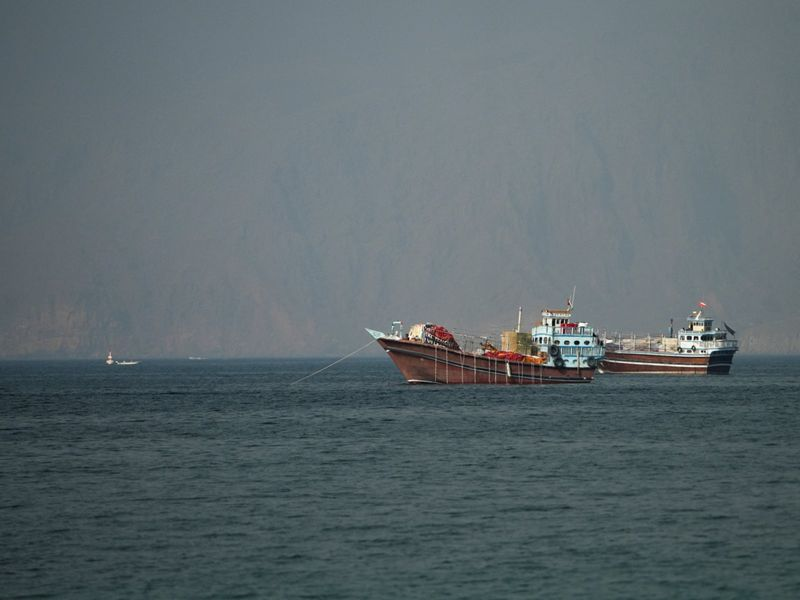
The Singapore-flagged cargo ship was exiting the Strait of Hormuz along the Omani coast when it came under attack. The US described the strike as an unwarranted act of aggression against commercial shipping and a violation of the ceasefire.
It added that Iran’s actions undermined freedom of navigation through one of the world’s most vital trade corridors. “CENTCOM forces continue to provide safe-passage coordination and support to commercial vessels transiting the strait,” the US said.
The US military remained present and vigilant to ensure that all aspects of the agreement with Iran were adhered to and remained in force, it added.
US President Donald Trump had earlier described the Iranian drone attack on the Ever Lovely cargo ship on June 25 as “a foolish violation” of the agreement.
The UN’s International Maritime Organisation (IMO) on Friday paused its Strait of Hormuz evacuation initiative after the Ever Lovely was attacked in the Gulf of Oman.
The IMO had earlier begun evacuating 600 ships and around 11,000 mariners stranded by the closure of the Strait of Hormuz during the US-Israeli war on Iran, helping them leave the Gulf through two routes — one via Iranian waters and another via Omani waters under US oversight.
Trump says US hit Iranian targets after ‘ceasefire’ violation, warns ‘Iran will no longer exist’
US military says it struck 10 targets in Iran as ceasefire is strained by 2nd day of attacks
The US military said on Saturday it had struck 10 targets in Iran at President Donald Trump’s direction, continuing a string of attacks that have shaken the war’s uneasy ceasefire.
US Central Command, in a post to social media, said that US military aircraft targeted Iranian military “surveillance infrastructure, communication systems, air defence sites, drone storage facilities, and minelayer capabilities” following an attack on a merchant vessel early on Saturday morning. It later specified the strikes involved 10 Iranian military targets at multiple locations in and near the Strait of Hormuz.
Advertisement
The ongoing strikes in the Persian Gulf show the danger of the Iran war again spinning out of control, even after Iran and the US reached an interim deal to try and agree on a final accord to end the conflict.
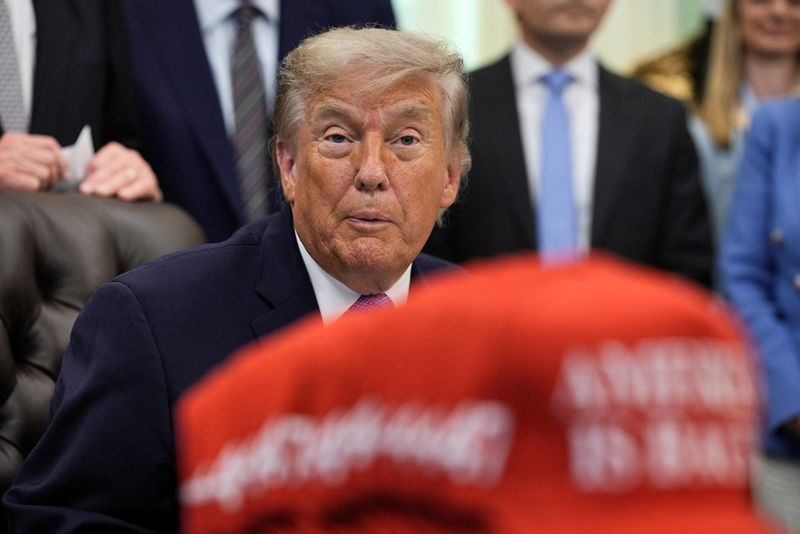
In a social media post, Trump said the US had “struck Iranian missile and drone storage locations, and coastal radar sites, for violating the Cease Fire Agreement, AGAIN!” He warned of a point where the US may no longer be able to be reasonable “and will be forced to militarily complete the job.”
“If that happens, the Islamic Republic of Iran will no longer exist!” Trump wrote on Truth Social.
The incident follows a similar back and forth that occurred just days prior when an Iranian drone struck a merchant vessel off the coast of Oman on Thursday and the US military retaliated with strikes the next day.
US says strikes were a response to Iranian attack on oil tanker
US Central Command said that in this latest attack Iranian forces attacked the oil tanker Kiku with a one-way drone. The tanker was laden with more than two million barrels of crude oil and sailing through the Strait of Hormuz.
According to ship tracking websites, the Kiku left a Qatari oil field in the middle of the Persian Gulf earlier in the week and was bound for a port in the United Arab Emirates that sits on the Gulf of Aman, just on the other side of the Strait of Hormuz.
It appeared to be attempting to use a route that was established near the coast of Oman that is serving as an alternative to the route sanctioned by Iran that runs through its own waters.
A multinational maritime body overseen by the US Navy said Saturday that it would expand the Omani route to allow for both inbound and outbound traffic, likely setting up a new flashpoint with Tehran, which sees the strait as a key source of leverage in ongoing talks with the US.
The US military said that “Iran had a chance to honor the ceasefire agreement” but “elected not to” when its forces attacked the Kiku.
Iran state TV reported explosions in an area just north of the Strait of Hormuz.
Bahrain condemns Iran’s drone attack
Earlier on Saturday, a statement from Bahrain’s Foreign Ministry said a “number of Iranian drones” targeted the country. It called the attack “a flagrant threat to the security of citizens and residents.” There were no immediate reports of damage.
Iran’s paramilitary Revolutionary Guard earlier issued a statement carried by the state-run IRNA news agency saying it had targeted several locations “of the US terrorist army in the region.” It did not name what areas were targeted.
Bahrain has been one of the strongest critics of Iran and is home to the US Navy’s 5th Fleet. It just hosted US Secretary of State Marco Rubio for a meeting of the Gulf Cooperation Council’s foreign ministers, which ended with a call for an end to Iran’s attacks and for the strait to be completely open.
Overnight into Saturday, the US military’s Central Command said it had struck Iranian missile and drone locations and coastal radar sites.
US Vice President JD Vance, who has led the negotiations with Iran, said on social media Friday night that Iran should “pick up the phone” if there are disagreements about the ceasefire agreement, “but violence will be met with violence.”
The US and Iran are negotiating terms of the deal including issues such as getting ships through the strait that’s vital to global supplies of oil and natural gas and addressing the future of Iran’s nuclear program and stockpile of highly enriched uranium.
Under the interim deal, the two sides have 60 days to work out the details. Ending the fighting in Lebanon between Israel and the Iranian-backed Hezbollah militant group is a key part of the deal.
Ship comes under attack as strait route expands The British military’s United Kingdom Maritime Trade Operations center said that a tanker was attacked Saturday in the strait, with the crew safe and no environmental damage reported. No one immediately claimed the strike, but suspicion fell on Iran.
Just after that report, the Joint Maritime Information Center, overseen by the US Navy, said the route near Oman’s shore is expanding to allow for inbound and outbound traffic.
Iran has insisted that ships must obey its orders and warned it will start charging fees for transit through the strait. However, ships have been increasingly trying to leave the Gulf in recent days.
Ebrahim Azizi, who heads the Iranian parliament’s national security commission, wrote Friday that “the Strait of Hormuz is governed by Iran, so: Respect the rules.” The US and Gulf Arab states have rejected Iran’s demands. The strait is considered as an international waterway, despite being the territorial waters of Iran and Oman.
The Joint Maritime Information Center warned that the threat to ships was “substantial,” adding that “mariners are advised of the existence of mines and should expect a naval presence as clearance operations continue.” The International Maritime Organization on Friday halted a new effort to evacuate ships said it won’t resume until there are guarantees that the other ships won’t be attacked. It said about 115 ships have been able to move out of the strait in recent days.
A Commanding Officer of the Army and around 30-40 other personnel have been booked after they allegedly stormed a police station, assaulted police personnel and damaged government property in Jammu’s Kishtwar.
Jammu-based defence spokesperson Lt Col Suneel Bartwal said the matter was “under examination through the appropriate institutional mechanisms”.
Sources said the trouble began when the driver of a private vehicle associated with the Army allegedly got into an altercation with the driver of a pilot vehicle of the Kishtwar Deputy Commissioner, who was on his way to an official function.
As the Army driver allegedly misbehaved, the vehicle was taken to the nearby police station. The sources said although the vehicle was later allowed to leave, the situation escalated when the Army personnel later stormed the police station.
According to the FIR, a copy of which was accessed by The Tribune, “a criminal conspiracy and violent assault” took place at Atholi police station. The FIR states that under the “direct command” of N Arun Gandhi, Commanding Officer 17 RR, a group of 30-40 Army personnel, led by Major Vikas Sharma, launched a “pre-planned attack”.
“Armed with lathis, iron rods, and arms and ammunition, the group stormed the police station by climbing over the main gate and the boundary wall. Their intention was to cause fatal injuries and kill the police personnel on duty,” the FIR states.
It further alleges that during the scuffle, the Army personnel tore the uniform of the SHO and physically assaulted Atholi SDPO Vijay Kumar Bhagat. Several other police personnel on duty also sustained injuries during the assault, it adds.
The FIR also states that the Army personnel also assaulted the ARTO, Kishtwar, and his personal security officers (PSOs), who were present at the police station. “The attackers also caused extensive damage to government and public property, vandalising the official vehicle of the ARTO, the vehicle of the SHO and the SDPO and damaging the main gate of the police station,” it states.
The FIR names Commanding Officer Gandhi and Major Vikas Sharma of the 17 RR, besides 30-40 other Army personnel.
Meanwhile, the Army spokesperson said, “Appropriate action will be taken based on the outcome of the joint investigation. At this stage, it would be premature to comment further while the investigations are in progress.”
Army’s portable field hospital to be deployed in earthquake-hit Venezuela
Two Indian Air Force C-17 transport planes, carrying doctors, a portable field hospital, equipment and supplies, took off from the Hindon Air Base, near Delhi.
‘Amistad’ is Spanish for ‘friendship’. Venezuela is a Spanish-speaking country in South America.
En route, the IAF planes will refuel in Côte d’Ivoire (Ivory Coast) on the west coast of Africa.
External Affairs Minister S Jaishankar posted on X, “Two IAF C17s took off today for Venezuela with urgent assistance to support their post-earthquake relief efforts. The assistance contains an Indian Army Field Hospital Unit and over 35 tons of relief supplies, medicines and medical equipment.”
India is committed to supporting the government and people of Venezuela in this difficult time, Jaishankar added.
A key initiative is the portable self-contained field hospital called the BHISHM (Bharat Health Initiative for Sahyog, Hita & Maitri) Cube.
The BHISHM Cube is a state-of-the-art, indigenous, rapidly deployable modular medical facility designed specifically for disaster and humanitarian response. Comprising compact, self-contained medical modules, it can be quickly assembled into a fully functional field hospital capable of delivering advanced trauma care, emergency surgeries, intensive care support and essential medical treatment for up to 200 patients. Equipped with portable ventilators, patient monitors, diagnostic equipment, surgical instruments, power generation and oxygen support systems, the BHISHM Cube enhances India’s capability to provide swift and effective medical assistance during crises anywhere in the world.
Indian Army’s specialised medical contingent will assist in humanitarian relief efforts in the affected region. The medical team from 60 Para Field Hospital is on board the IAF planes.
The contingent comprises 41 personnel, including nine medical officers, and is equipped to provide emergency medical care, trauma management, life-saving surgical support and other essential health care services to the affected.
The Army team is carrying approximately six tonnes of medical stores and humanitarian relief supplies provided by the Ministry of External Affairs.
UAE military delegation sees military prowess along India’s western front
The delegation also was given first-hand experience on state-of-art AI and Quantum lab facilities, modern weapon systems and tactical training methodologies
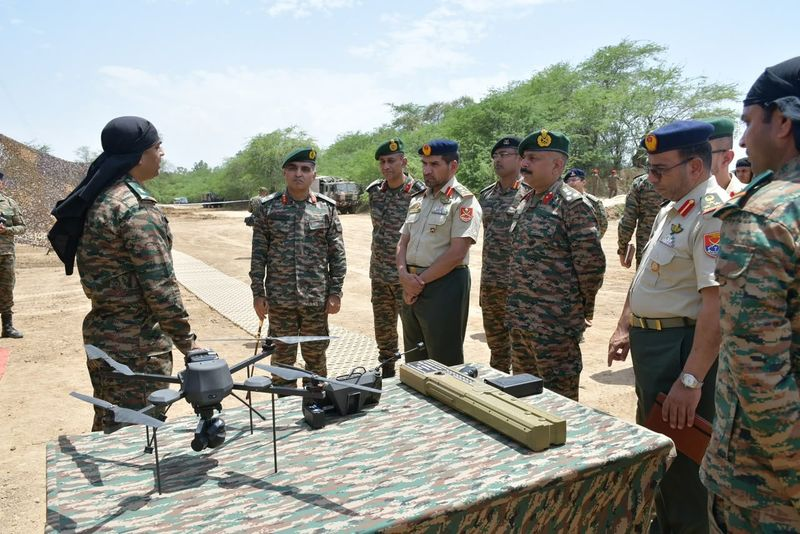
A military delegation from the UAE has been shown around Indian Army’s firepower and training abilities.
The delegation leader Brig Gen Staff Mohamed Khamees Al Hassani, Deputy Commander, UAE Land Force, paid homage at National War Memorial on Thursday.
Earlier, the five-member delegation of UAE Army led by Brigadier General Al-Hassani, visited the Army War College at Mhow, Madhya Pradesh and the Infantry School at the same location. The delegation was briefed on the institutional training imparted at various establishments located at Mhow.
The delegation also was given first-hand experience on state-of-art AI and Quantum lab facilities, modern weapon systems and tactical training methodologies.
The Army War College posted on X saying it hosted a high-level UAE delegation. Discussions covered contemporary conflicts, multi-domain operations, and avenues for bilateral cooperation in professional military education.
A day earlier, the delegation had visited an Army division tasked westwards. The delegation witnessed mechanised manoeuvres and integrated operations showcasing own UAV and Counter-UAV capabilities. The Army’s South Western Command said during interactions, both sides exchanged views on contemporary security challenges, emerging defence technologies and evolving operational concepts, reaffirming the shared commitment of India and the UAE towards strengthening military-to-military cooperation and fostering a robust friendship.
Sources said India and the UAE had rapidly deepened defence ties since 2023, moving from periodic exercises and equipment cooperation to a formal Strategic Defence Partnership that expanded cooperation across maritime security, defence industry collaboration, cyber and counter terrorism, training and interoperability, and intelligence sharing.
The two governments signed a Letter of Intent toward a Strategic Defence Partnership in January 2026, committing to negotiate a framework agreement to deepen and broaden defence cooperation.
State Stalwarts
DEFENCE MINISTER
Minister Rajnath Singh
ALL HUMANS ARE ONE CREATED BY GOD
HINDUS,MUSLIMS,SIKHS.ISAI SAB HAI BHAI BHAI
CHIEF PATRON ALL INDIA SANJHA MORCHA
LT GEN JASBIR SINGH DHALIWAL, DOGRA
SENIOR PATRON ALL INDIA SANJHA MORCHA
MAJOR GEN HARVIJAY SINGH, SENA MEDAL ,corps of signals
.
.
PATRON ALL INDIA SANJHA MORCHA
MAJ GEN RAMINDER GURAYA ,MADRAS REGIMENT
sanjhamorcha303@gmail.com
PRESIDENT SOUTH ALL INDIA SANJHA MORCHA
COL SS RAJAN BOMBAY SAPPERS,
PRESIDENT UTTARAKHAND ALL INDIA SANJHA MORCHA
COL B M THAPA ,BENGAL SAPPERSS
PRESIDENT HARAYANA STATE CUM COORDINATOR ESM
BRIG DALJIT THUKRAL ,BENGAL SAPPERS
PRESIDENT TRICITY
COL B S BRAR (BHUPI BRAR)
PRESIDENT CHANDIGARH ZONE
COL SHANJIT SINGH BHULLAR
.
.
PRESIDENT PANCHKULA ZONE AND ZIRAKPUR
COL SWARAN SINGH
INDIAN DEFENCE FORCES
DEFENCE FORCES INTEGRATED LOGO
INDIAN AIR FORCE
Air Officer C-in-C WESTERN AIR COMMAND
AIR MSHL S PRABHAKARAN AVSM VM
AOC-IN-C, EASTERN AIR COMMAND
Air Marshal Inderpal Singh Walia
AOC-in-C SOUTH WESTERN AIR COMMAND
Air Marshal Vikram Singh
AOC-IN-C, SOUTHERN AIR COMMAND
Air Marshal J.Chalapati
AOC-IN-C TRAINING COMMAND
AIR MARSHAL SK GHOTIA VSM
AOC-IN-C MAINTENANCE COMMAND
Air Marshal Jagdish Chandra
Flag Officer Commanding in Chief, Western Naval Command
ice Admiral R Hari Kumar, PVSM, AVSM, VSM
Flag Officer Commanding in Chief, Eastern Naval Command
Vice Admiral Sanjay Bhalla, AVSM, NM
Flag Officer Commanding in Chief, Southern Naval Command