













Sanjha Morcha

Sarvottam Yudh Seva Medal for Lt Gen Ghai, Air Marshal Bharti of Op Sindoor

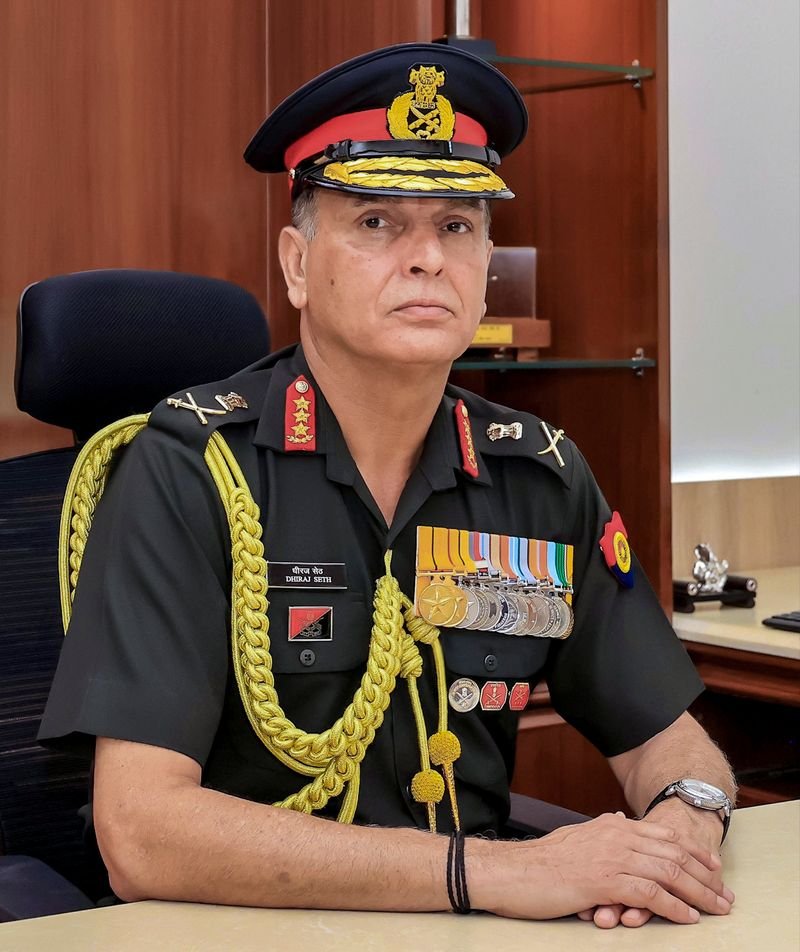
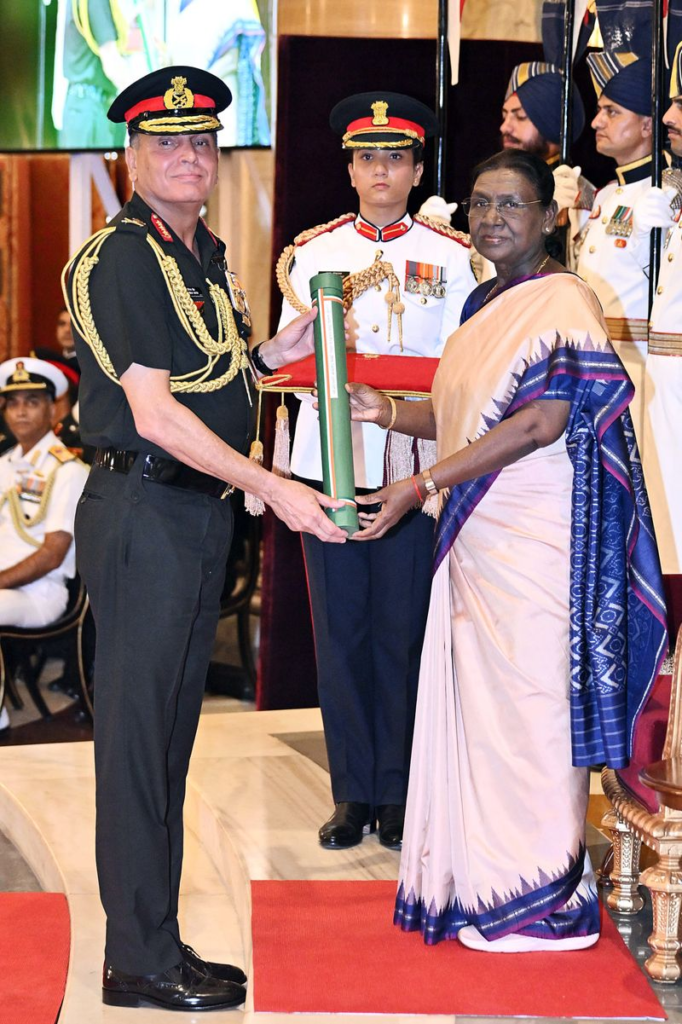
President Droupadi Murmu honours Armoured Corps, Headquarters Southern Command, Lt Gen Dhiraj Seth, with Uttam Yudh Seva Medal during Defence Investiture Ceremony-2026 (Phase-2) at Rashtrapati Bhavan in New Delhi on Monda

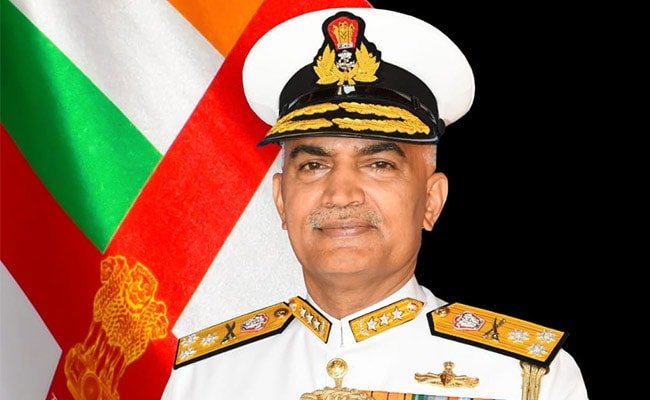
Param Vishisht Seva Medal to Navy Chief

Lt Gen Dhiraj Seth, the country’s next Chief of the Army Staff, Navy Chief Admiral Krishna Swaminathan as well as Lt Gen Rajiv Ghai and Air Marshal Awadhesh Kumar Bharti, who both played key roles during the Operation Sindoor last year, were on Monday honoured with prestigious military decorations for their distinguished service of exceptional order.

President Droupadi Murmu conferred 105 distinguished service decorations to the personnel of the defence forces and the Indian Coast Guard during the Defence Investiture Ceremony 2026 (Phase-II) hosted at the Rashtrapati Bhavan here.

“These decorations — seven Sarvottam Yudh Seva Medals, 30 Param Vishisht Seva Medals, 12 Uttam Yudh Seva Medals and 56 Ati Vishisht Seva Medals — have been given to the personnel for their distinguished service of exceptional order,” the Defence Ministry said.

It also shared the names of the awardees in a list, mentioning different categories of military decorations. Sarvottam Yudh Seva Medal recognises the distinguished service of the most exceptional order during war, conflict or hostilities.

Lt Gen Pratik Sharma, Commander, Army’s Northern Command; Lt Gen Ghai, who served as the Army’s Director General of Military Operations (DGMO) during Operation Sindoor; Deputy Chief of the Air Staff, Air Marshal Bharti, who served as the IAF’s Director General of Air Operations during the operation in May 2025, IAF’s Vice Chief Air Marshal Nagesh Kapoor, and former Vice Chief of Air Staff, Air Marshal Narmdeshwar Tiwari (retd), have been conferred the Sarvottam Yudh Seva Medal.

Both Lt Gen Ghai and Air Marshal Bharti were also the Army’s and IAF’s faces during the tri-service briefing conducted here on Operation Sindoor last year.

Lt Gen Ghai was recently appointed military adviser to the National Security Council Secretariat (NSCS).

Murmu also conferred Param Vishisht Seva Medals to Navy Chief Admiral Swaminathan; Flag Officer Commanding-in-Chief, Western Naval Command, Vice Admiral Sanjay Vatsayan; and Chief of Integrated Defence Staff (CISC), Air Marshal Ashutosh Dixit, among other officers, serving and retired.

Admiral Swaminathan assumed charge as the 27th Chief of the Naval Staff of the Navy on May 31.

In the Uttam Yudh Seva Medal category, the awardees include Lt Gen Seth and Vice Admiral Tarun Sobti, among others.


Century-old gurdwara demolished in Pakistan; Sikh representatives seek action

A 125-year-old gurdwara in Pakistan was allegedly demolished by miscreants recently. 

Gurdwara Singh Sabha is located in Farooqabad in Punjab. According to media reports, it was demolished on the night of June 24.

The gurdwara was significant as far as the Singh Sabha Movement is concerned.

Sikh representatives in Pakistan have accused the government of taking no action following the incident. They say that earlier also, there have been such incidents. They have demanded a strict legal action on this.


HEADLINES : 28JUN 2026

जनरल साहब ने 47 साल बाद बड़े खाने में ऐसा क्या बताया की सब रह गये दंग

DC Kishtwar responsible for Army and Police fight

INS Sudarshini Strengthens India-US Naval Bonds With Baltimore Arrival

IAF Demands 40–60% Local Content In Rafale Deal As India-France Push Co-Production

Soldiers-cops clash : Impartial probe is the way forward

Names of 6 bravehearts killed in Operation Sindoor made public

Army Chief, Ladakh L-G discuss stronger civil-military coordination

Structured mechanism enables India to swiftly deploy assets overseas for disaster relief

Lt Gen Pushkar to head Southern Command, Lt Gen Malhotra South Western Command

IIT Ropar Director Rajeev Ahuja receives commendation from Army Chief Dwivedi

US, Iran trade fresh strikes as truce frays

Trump says US hit Iranian targets after ‘ceasefire’ violation, warns ‘Iran will no longer exist’


जनरल साहब ने 47 साल बाद बड़े खाने में ऐसा क्या बताया की सब रह गये दंग


Corps of Signals pays tribute to martyrs at Hussainiwala, inspires youth with ‘Sanchar Shakti’ expedition

As part of the ongoing ‘Wheels of Valour: Sanchar Shakti’ motorcycle expedition, the Indian Army’s Corps of Signals visited the historic Hussainiwala Border, par­ticipated in the ceremonial Retreat Ceremony, and con­ducted a civilian outreach pro­gramme aimed at promoting patriotism, national unity and the spirit of selfless service. The expedition is being led by Colonel Sumeet Bhardwaj and comprises a 20-mem­ber team of riders from the Corps of Signals. The con­tingent includes Officers, Ju­nior Commissioned Officers (JCOs), Other Ranks (ORs) and Ladies of the Corps of Signals, reflecting the Corps’ indomitable Esprit de Corps, unity, discipline, diversity and teamwork. During the visit, the team interacted with local residents, highlighting the vi­tal role of the Indian Army in safeguarding national security while strengthening the bond between the Armed Forces and civil society.

As part of the programme, the expedition paid homage to the legendary freedom fight­ers Shaheed Bhagat Singh, Shaheed Sukhdev Thapar and Shaheed Shivaram Rajguru by laying floral tributes at their memorials. The team hon­oured their supreme sacrifice and paid tribute to their un­matched courage, patriotism and unwavering commitment to the nation’s freedom.

The team also participated in the iconic Retreat Ceremo­ny at Hussainiwala Border, a solemn and inspiring display of military discipline, valour and national pride. The cer­emony witnessed enthusiastic participation from citizens, who expressed their admi­ration and support for the Indian Army. The interac­tion further strengthened the enduring relationship of trust and mutual respect between the Armed Forces and the local community.

Speaking on the occasion, Colonel Sumeet Bhardwaj said that the objective of the “Wheels of Valour: Sanchar Shakti” expedition is to in­spire patriotism, service and sacrifice among citizens while creating greater awareness about the invaluable contri­bution of the Corps of Signals in ensuring seamless military communications during both peace and operations


DC Kishtwar responsible for Army and Police fight

The tension between the Army and police in Kishtwar (Jammu and Kashmir) erupted after a traffic dispute involving Kishtwar Deputy Commissioner (DC) Pankaj Kumar Sharma’s convoy. The police booked nearly 40 Army personnel, including a Colonel and a Major, for allegedly storming a police station and assaulting officers. [1, 2]

The highly publicized standoff escalated through a sequence of specific events: [1]

  • The Traffic Stop (June 24): A police official stopped an Army-linked vehicle in Kishtwar’s Atholi area because it was reportedly obstructing the Deputy Commissioner’s convoy. The police alleged the vehicle had a traffic violation and posed a security concern. [1, 2, 3, 4, 5]
  • Vehicle Seizure: Police seized the vehicle when the driver could not provide valid documents. [1]
  • The Alleged Assault: Police stated that around 30 to 40 Army personnel from the 17 Rashtriya Rifles later barged into the Atholi police station, carrying iron rods and sticks. The FIR alleges they damaged government property and assaulted multiple police officers, including the Station House Officer (SHO). [1, 2]
  • The FIR Filed: Police registered an FIR against the Army personnel, including charges of rioting, assault on public servants, and attempt to murder. [1, 2]

Both agencies are working to resolve the issue: [1]

  • The Army’s Stance: The Army acknowledged the incident and stated they are conducting a joint investigation. They confirmed they will extend full cooperation to the legal and institutional process. [1, 2]
  • The Police Action: Officials have maintained that while the situation is a serious breach of standard coordination, no arrests have been made as the matter is being handled through dialogue. [1, 2, 3]

You can track further developments in local media via The Hindu or Hindustan Times. [1]

Would you like me to find more details on how these two forces typically coordinate their anti-terror operations in the Chenab Valley, or do you want updates on the official joint investigation?


INS Sudarshini Strengthens India-US Naval Bonds With Baltimore Arrival

INS Sudarshini has reached the Port of Baltimore, Maryland, on 26 June 2026 as part of its landmark Lokayan 26 expedition, marking a major milestone in India’s maritime outreach and strengthening naval ties with the United States.

The ship’s arrival coincides with preparations for the Sail250 Maryland celebrations, commemorating America’s 250th anniversary.

The Indian Navy’s sail training ship INS Sudarshini arrived in Baltimore after sailing from Norfolk, Virginia. The passage included a transit through the historic Chesapeake & Delaware Canal, where the vessel passed beneath several iconic mid-Atlantic bridges. This leg of the journey highlighted both seamanship and symbolic connectivity between maritime communities.

The visit is regarded as an important milestone in the Lokayan 26 expedition. It underscores the enduring friendship and cooperation between the Indian Navy and the US Navy. The deployment is designed not only to showcase India’s maritime heritage but also to reinforce strategic naval partnerships across the Atlantic.

During its stay in Baltimore, INS Sudarshini will undertake maritime engagement activities and community outreach programs. These will precede the Sail250 Maryland celebrations, which commemorate the 250th anniversary of the United States. The ship’s presence is expected to draw significant public interest, offering opportunities for cultural exchange and naval diplomacy.

Prior to arriving in Baltimore, INS Sudarshini participated in the Sail250 Virginia celebrations at Norfolk from 19 to 23 June 2026. At Norfolk, the vessel joined tall ships from across the world and represented India in the Parade of Sail and the City Crew Parade. These events allowed India to showcase its naval traditions on an international stage.

The transoceanic voyage began from Kochi and has already covered more than 13,000 nautical miles over five months before reaching Norfolk. This extensive journey reflects India’s long-standing seafaring traditions and its commitment to maritime outreach.

The expedition embodies the spirit of Vasudhaiva Kutumbakam, the ancient Indian ethos of “the world is one family,” aiming to foster friendship, cooperation, and mutual trust among nations.

INS Sudarshini is a sail training ship of the Indian Navy. It is used to train naval personnel in traditional sailing skills while simultaneously promoting maritime diplomacy and international engagement. The vessel thus serves both as a platform for professional training and as a symbol of India’s maritime heritage.

Earlier, on 31 May 2026, INS Sudarshini departed from Antigua after a four-day port call. That visit marked another milestone in India’s maritime outreach, enhancing cooperation with Caribbean nations under Lokayan 26.

India Military Equipment

During the Antigua stopover, the ship hosted several dignitaries, including Gaston Browne, Prime Minister of Antigua and Barbuda. The Commanding Officer also met Brigadier Telbert Benjamin, Chief of Defence Staff of the Antigua and Barbuda Defence Force, further strengthening bilateral defence ties.

The Baltimore visit comes at a time when India and the United States are deepening defence cooperation. Earlier this month, the two countries held the 29th edition of Army-to-Army Staff Talks in Hawaii, co-chaired by Lieutenant General Rajiv Ghai of India and Lieutenant General Joel Vowell of the US  Army Pacific.

These discussions focused on enhancing interoperability, expanding professional exchanges, and deepening military collaboration in support of shared security interests. The arrival of INS Sudarshini in Baltimore thus complements broader strategic efforts to reinforce India-US defence relations.


IAF Demands 40–60% Local Content In Rafale Deal As India-France Push Co-Production

The Indian Air Force has formally demanded that the 96 Rafale F4 fighters to be manufactured in India under the ₹3.25 lakh crore deal must begin with at least 40 percent indigenous content, rising to 60 percent in the final batch, The Print reported.

Dassault Aviation, already partnered with TATA Advanced Systems for fuselage production, is scouting for an Indian partner to produce wings, while Thales and BEL are expanding cooperation on radar and electronic warfare systems to meet localisation targets.

Indian Defence Market

h

The Letter of Request was issued to France in late May, with Paris expected to respond by September. This document initiates the government-to-government procurement process, bypassing commercial tendering.

Of the 114 aircraft, 18 will be delivered in flyaway condition from France, while 96 will be built in India. The IAF insists that the first Indian-assembled Rafale must have at least 40 percent local content, progressively increasing to 60 percent by the final batch.

Dassault has already outsourced fuselage production to Tata Advanced Systems, with a new Hyderabad facility expected to deliver complete fuselages by 2028. The company is now seeking an Indian partner for wing manufacturing, which would mark another milestone in shifting critical aerostructure production to India. In addition, several Indian firms have been contracted to produce Line Replaceable Units and components, further boosting localisation.

Thales has deepened its partnership with Bharat Electronics Limited. BEL has already delivered over 7,000 transmit/receive modules for the Rafale’s RBE2 AESA radar, and cooperation has expanded to advanced microwave modules for the SPECTRA electronic warfare suite.

Thales has also awarded contracts to Indian firms such as SFO Technologies for complex radar wiring structures, embedding India into the Rafale’s global supply chain. These steps are expected to push indigenous content beyond 40 percent in the early production phase.

Dassault has assured that with the planned Maintenance, Repair and Overhaul facility in India, overall indigenisation could reach 80 percent when factoring in lifecycle support. This would make India the first country outside France to host full-scale Rafale production and sustainment, a major boost to the aerospace ecosystem.

The deal is unlikely to exceed the earmarked ₹3.25 lakh crore budget. Deliveries of the first 18 flyaway aircraft are expected to begin around 2030 if the contract is signed by early 2027.

The Rafale F4 standard being acquired will introduce enhanced connectivity through satellite and intra-flight links, upgraded communications servers, and software radios, enabling more effective network-centric warfare. India’s existing Rafale fleet will also be upgraded from the F3-R to the F4 configuration.

Strategically, this acquisition is critical to bridging the IAF’s squadron shortfall, with current strength at 29 squadrons against a sanctioned 42.5.

The Rafale F4 will provide advanced multirole capabilities to counter threats from China’s J‑20 and Pakistan’s expected induction of the J‑35. Indigenous projects such as the TEJAS MK-2 and AMCA remain years away from maturity, making the Rafale deal the fastest route to restoring combat parity.

Aerospace Engineering Services

The localisation push aligns with India’s broader “Make in India” and “Atmanirbhar Bharat” initiatives. By embedding co-development, co-design, and co-production into the Rafale program, India is moving from a buyer-seller dynamic to a strategic industrial partnership with France.

This will not only strengthen bilateral defence ties but also create thousands of skilled jobs and position India as a global hub for Rafale production and sustainment.


Soldiers-cops clash : Impartial probe is the way forward

The Tribune Editorial: The gravity of the allegations must not overshadow the principle of due process

HE alleged assault on police personnel inside a police station in Jammu and Kashmir by Army personnel, now the subject of a criminal FIR, is an extraordinary development that demands an impartial inquiry rather than a rush to judgment. The charges are serious: forcible entry into a police station, assault on public servants and damage to government property. Equally significant is the fact that they involve institutions that have long worked shoulder to shoulder in one of the country’s most challenging security environments. The Army and the Jammu and Kashmir Police have jointly confronted terrorism for decades. Their coordination has been central to intelligence-gathering, counter-insurgency operations and maintaining public order. Any public breakdown in that relationship risks weakening operational effectiveness and creating avoidable confusion. Also, it can erode public confidence in the very institutions entrusted with ensuring security.

At the same time, the gravity of the allegations must not overshadow the principle of due process. An FIR is the beginning of an investigation, not a determination of guilt. The police must investigate fairly, while the Army’s internal inquiry should proceed with equal seriousness. Accountability cannot depend on the uniform one wears; nor should accusations alone be allowed to tarnish institutions that have earned public trust through years of service. The episode also exposes the need for stronger mechanisms to resolve disagreements between security agencies. In high-pressure settings, disputes can arise, but they must be addressed through established channels rather than confrontation.

Clear protocols on custody, jurisdiction and inter-agency coordination are essential to prevent such incidents from escalating. The rule of law is the foundation of every democratic institution. If wrongdoing occurred, it must invite appropriate action. If the allegations are disproved, that too must be established transparently.


Names of 6 bravehearts killed in Operation Sindoor made public

The names will be engraved on a special brick

India has officially made public the names of six martyrs who laid down their lives during Operation Sindoor against Pakistan in May last year.

Two of the bravehearts are gallantry awardees, having received a Vir Chakra and a Vayu Medal. The names of the five Army soldiers and their regimental affiliations along with the lone Indian Air Force warrior and his squadron have been put up on the website of the National War Memorial in New Delhi. Each of the six names will be engraved on a special brick.

The six martyrs are:

Names of 6 bravehearts killed in Operation Sindoor. AI generated image

Names of 6 bravehearts killed in Operation Sindoor. AI generated image

Sub Maj Pawan Kumar from the Headquarters 10 Infantry Brigade

  1. Rifleman Sunil Kumar from the 4th battalion of the Jammu and Kashmir Light Infantry Regiment
  2. Lance Naik Dinesh Kumar from the 5 Field Regiment
  3. Agniveer Mood Murali Naik from the 851 Light Regiment
  4. Havildar Sunil Kumar Singh from the 237 Filed Workshop
  5. Sergeant Surendra Kumar from the 39 Wing of the Air Force

Rifleman Sunil Kumar has been awarded the Vir Chakra, the country’s third-highest battle honour, and Sergeant Surinder Kumar the Vayu Medal.

Most of the six casualties have been in Jammu and Kashmir. Sources said Sunil Kumar was posted along the Line of Control with Pakistan. On June 8, President Droupadi Murmu presented the Vir Chakra (posthumous) to Sunil Kumar at the Defence Investiture Ceremony. The award was received by his mother Sudesh Kumari and father Yash Paul.

The names of the Operation Sindoor bravehearts have been made public along with the list of all those soldiers who had lost their lives in 2025 in various operations.

The National War Memorial features the Tyag Chakra (circle of sacrifice), which contains 16 concentric circular walls built entirely from granite bricks. Each brick bears the name, rank and regiment of a fallen martyr who made the supreme sacrifice since Independence.



























