*LONG BUT WORTH READING. FOR THOSE NOT HAVING TIME PLEASE GO TO CONCLUSION GIVEN AT THE END*
( *Shared By – Brig Dhananjay Vinayak Vidwans (Retd)*)
1. Very recently we were able to solve a case of migration to SPARSH of an EME officer who retired in 2003. 2. The officer received a SMS from his bank that *Rs xxxxx has been credited on xxJul 2023 by NEFTINWARD RBIXXXXX/PRINCIPAL CO* of Jul 2023. 3. The officer referred the SMS to me, it was evident that he had been migrated to SPARSH. I suggested that we wait for a fortnight for the userid and Pw. No userid and Pw were received in 15 days ( and would not have been received at all ( came to know later ) since the mobile number in use was not registered in ePPO / SPARSH database). 4. After waiting for 15 days and no userid and Pw, we set to take action for SPARSH registration. 5. The first task was to upload the Aadhar number of the officer as it was not available with SPARSH. We had to wait for a week for the Aadhar number to be approved by ORO(MP5) /RODRA. 6. After that the mobile number linked to Aadhar was required to be uploaded since it was not available with SPARSH ( Later on we came to know that an old number was present in the SPARSH database but was not in use by the officer and not linked to Aadhar). Since the old out of use mobile number was present in SPARSH we could not proceed with the Aadhar authentication and had to use the secret question option in which the bank account number, personal number, date of retirement and the Aadhar number were required to be input. 7. After approval of the mobile number we could then get the SPARSH PPO number and able to login with the forgot password option. 8. Subsequently the change of password and declaration were esigned. 9. After that the pension slip, PDV and Corr PPO were downloaded. 10. The whole process took 25 days in all. 11. The task of updating / correcting the information in the PDV is required to be undertaken on priority by the officer.
*CONCLUSION* – *a. Officers should register and/or update RODRA data*. *b. For those who have not been migrated should check their Bank Passbook for the description of pension paid entry for the following words NEFTINWARD RBIXXXXX/PRINCIPAL CO*
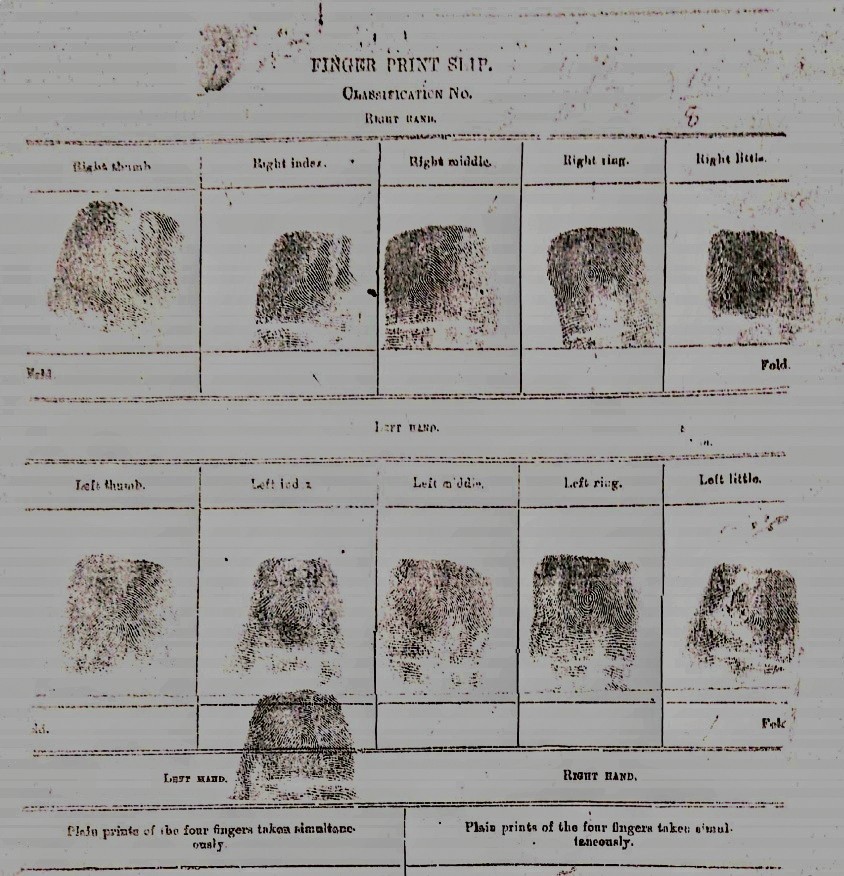
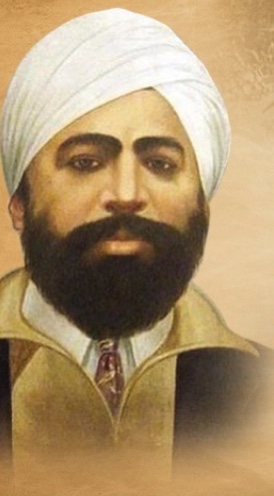
The Tribune Exclusive: Shaheed Udham Singh’s fingerprints discovered at Punjab Police Academy, Phillaur
As the nation observes the 84th martyrdom year of Shaheed Udham Singh and a film on his life won five national awards on Thursday, the freedom fighter’s fingerprints lie hidden from the public eye in the closets of the Punjab Police Academy (PPA) at Phillaur.
Shaheed Udham Singh
The fingerprints were captured in 1927 when Udham Singh was arrested for holding a gathering of Ghadar Party activists. This correspondent, with the help of the Punjab Police, came across the rare document while searching for the fingerprints of Shaheed Bhagat Singh. The academy has been a repository of police case files, documents and weapons since 1860s, then known as the Military Police Force. It was rechristened the PPA in 1891. It’s the first time a photo of Udham Singh’s fingerprints has been published. Udham Singh had famously avenged the Jallianwala Bagh massacre of April 1919 by assassinating Michael O’Dwyer, a former colonial-era lieutenant governor, on March 13, 1940, in London.
Udham Singh, who insisted his name was Ram Mohammad Singh Azad—to show his secular preference—turned a hero back home after the assassination. He has since been a subject in books, songs, plays and films. Every year on his martyrdom day, there is a call to collect things attached to him and display those in a museum. However, many things like the fingerprints are lying hidden in government files or archives.
Punjab DGP Gaurav Yadav said he was excited to know about the “discovery” of the fingerprints and happy that the PPA had preserved such an important document all these years. He assured the prints would be displayed suitably soon. Earlier, a research from the same academy had led to the discovery of martyr Bhagat Singh’s lost pistol.
While being arrested in 1927, Udham Singh was shown to be in the possession of unlicensed arms and ammunition by the British police. The copies of “prohibited” Ghadar Party paper called “Ghadr-di-Gunj” (Voice of Revolt) were also recovered. He was prosecuted and sentenced to five years in prison, a period when the fingerprints were captured.
Udham Singh’s real name was Sher Singh and he belonged to Sunam. Born on December 26, 1899, to Tehal Singh and Narain Kaur, he had an elder brother, Sadhu Singh. The martyr’s mother died when he was three years old and his father too passed away after some time. The brothers were adopted by the Central Khalsa orphanage and baptised as Mukta Singh and Udham Singh. The elder brother too died a few years later due to an ailment.
As per the information form, the fingerprints list the bearer’s name as Sher Singh, son of Tehal Singh. These were taken on October 10, 1927. Interestingly, the prints bear a noting of April 1, 1940, also, where it seemed the prints were taken from the academy for verifying the identity of Udham Singh, who was under arrest in London on March 13, 1940, when he killed O’Dwyer.
THE immediate compulsion for the British to quit India arose with the erosion of loyalty to the Crown among the Indian armed forces’ personnel as a result of Netaji Subhas Chandra Bose’s military activities. The Indian National Army (INA) was founded with the collaboration of Indian soldiers, prisoners of war, expatriates and Japanese allies in Southeast Asia; it also had a women’s regiment, the Jhansi Ki Rani Regiment, led by Lakshmi Sahgal.
Things came to a head when the British committed a grave error — they set about putting on public trial members of the top brass of the INA at the Red Fort in Delhi during 1945-46 on the charge of waging a war against the King-Emperor.
Col Prem Sahgal, Major Gen Shah Nawaz Khan and Col Gurbaksh Singh Dhillon had served as officers in the British Indian Army. They had been taken prisoners of war at Malaya, Singapore and Burma. Later, they joined the INA along with a large number of Indian Army troops and fought for the liberation of India. Their trial spread disenchantment against the British within the armed forces. The public, too, rose in unison.
On February 18, 1946, Indian sailors of the Royal Indian Navy (RIN) mutinied; the mutiny spread to over 70 ships. Bringing down the British flag on their ships, the mutineers hoisted flags of the Congress, the Muslim League and the Communist Party. Vociferously raising the demand for Independence, thousands of sailors went around Bombay holding portraits of Netaji. The mutineers were joined by the people of Bombay, who wholeheartedly extended support. Within 48 hours, the British had lost control over the navy, even as the mutineers rechristened RIN as the Indian National Navy.
It is estimated that around 220 people died in police firing and about 1,000 were injured during the unrest. The RIN mutiny was followed by a rebellion in the Royal Indian Air Force and in some Army units, mainly at Jabalpur.
The British painfully realised that a mortal blow had been inflicted on the Raj, and that they no longer controlled the Indian armed forces. They feared more such mass movements. The mutinies, coupled with the uproar in the Indian armed forces and the sacrifices of freedom fighters, convinced the British to expedite the process of quitting India. Clement Attlee, then British Prime Minister and the Leader of the Labour Party from 1935 to 1955, was left with no option but to approve the decision to grant Independence to India.
As World War II ended, Britain had already exhausted Indian resources, finances and manpower for its war effort. Britain’s economy was left severely depleted. The state of affairs had a tremendous impact on British foreign policy, even as the tumultuous events of 1945-46 played a key role in hastening the colonial power’s exit from India.
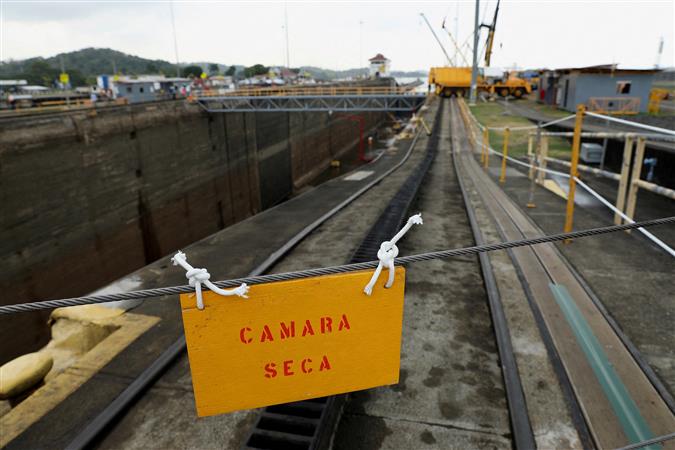
Explainer: Why Panama Canal has become a traffic jam of the seas
On March 23, 2021, the Suez Canal remained blocked for six days due to the Ever Given—a container ship that had run aground in the canal. By March 28, around 370 ships had queued up, stranding around $9.6 billion world trade in the canal.
By the time the Suez reopened, around 200 in the Red Sea, some 200 in the Mediterranean Sea and approximately 50 in the Bitter Lakes, were said to be caught up in the “traffic jam”, according to reports.
The Suez Canal is one of the world’s most important trading routes, connecting the Mediterranean Sea to the Red Sea through the Isthmus of Suez and dividing Africa and Asia.
While the traffic jam in the Suez was caused by a ship, the one currently on near the Panama Canal is due to climate change.
The effect of climate change and global warming is no longer a thing of the future, real-time impacts of climate change have already started affecting world economy and trade, say observers.
Panama Canal Authority imposes transit restrictions
Due to low water levels in the lock system, the Panama Canal Authority, the agency of the government of Panama responsible for the operation and management of the Panama Canal, has imposed transit restrictions in the key route connecting the Atlantic Ocean with the Pacific Ocean, dividing the North and South America.
Ships waiting for their turn have again raised questions whether it was the time for an alternative route to the Panama Canal which plays a key role in maritime transport.
Due to water-level issues, the canal operations are expected to remain restricted for up to a year, according to reports.
The waiting time to enter is up to 11 days on an average from the earlier three to five days.
According to the official website, “the prolonged dry season is a natural phenomenon that affects many regions, including the Panama Canal. While we can’t control nature, we can adapt our operations to ensure a competitive flow of vessels”.
“To provide perspective, as of today, we have around 120 vessels waiting for transit.
“For this month, the average waiting time for unbooked transits is between 9 and 11 days.
“The backlog currently sits at about 115 vessels,” as per the website.
The restrictions are expected to cause a drop of $200 million drop earnings in 2024 compared to this year, some independent reports state.
The key maritime route
The canal authorities which first announced restrictions for this year later extended it to “at least 10 additional months”. According to ground reports, ships loaded with consumer goods, oil/ gas, grain and other items are waiting for their turn at the canal through which an estimated $270bn worth of cargo passes each year.
Apparently, some ships have also decided to take detours to avoid the delays, decisions that are expected to push up freight costs and affect consumer prices.
Owners have been advised to make reservations to avoid delays.
Experts say the event is “unprecedented and a cause for concern”. It is perhaps time to consider another way to get from the Pacific to the Atlantic in mind of climate change, they add.
Reducing time for ships to travel between the Atlantic and Pacific oceans, avoiding a lengthy route around the southernmost tip of South America, the Panama Canal is called one of the “largest and most difficult engineering projects ever undertaken”.
Panama Canal, the ‘engineering marvel’
Canal operations depend upon lakes where the levels are said to be “close to the minimum” due to rain deficit.
The complicated canal lock system lifts ships up to artificial freshwater lakes and then lowers them at the other end.
Transporting ships through the system of locks consumes vast amounts of fresh water. A ship requires around 200 million liters of freshwater to move it through the locks. The water is provided by two artificial lakes which supply the canal and also provide drinking water. The lakes are the main source of drinking water for the Panama city.
Panama Canal facing drought
Panama is facing a drought which has been made worse by the El Nino phenomenon.
Many maritime experts say the drought in the middle of Panama’s wet season is “unusual”.
The US also had the choice to build a canal across Nicaragua but Panama was selected since the route was shorter, and for other geographical reasons. However, the climate crisis has rekindled thoughts of an alternate route to save time and billions of dollars.
Experts say the “unprecedented dry season” in the region led to a significant decline in water levels in the canal, which needs fresh water for operations.
Since much of the freshwater gets drained in the sea, the authorities are now using methods to store and reuse some of it. There are also plans of diverting water from other rivers and constructing additional reservoirs, according to reports.
Ukrainian aspirations to join NATO cannot fructify unless the war ends, as laid down by the current US administration.
Gp Capt Murli Menon (Retd)
Defence analyst
Russian President Vladimir Putin’s ‘special military operation’ will be 18 months old on August 24, with little indication of an end anytime soon. US President Joe Biden has sanctioned the transfer of 80-odd F-16s from Denmark and the Netherlands to beef up Ukraine’s air power, which has been dealt a severe blow by the Russians in recent days.
While the US is fighting shy of a direct involvement in the conflict, Biden said in Poland recently that “Ukraine will never be a victory for Russia”, indicating his resolve to bankroll the war effort indefinitely. In America’s eyes, even a prolonged stalemate would be a defeat for Russia. Analysts think that for Ukraine to win, it needs to regain all territories lost to Russia, including Crimea.
With the Ukrainian counter-offensive making a painful progress, the Russian military, battered and demoralised as it is, has put up a resilient show against western weapons and war tactics. The US backing and weaponry, however, are unlikely to render early results; some experts say that it could take a couple of years to tilt the balance in Ukraine’s favour. Meanwhile, Russia appears to be willing to sacrifice any number of its young men for its war cause.
The US presidential election next year is bound to have a profound impact on the US and the West’s inclination to indefinitely support Ukraine. Republican presidential contender Donald Trump has made it clear that he will end support for Ukraine, should he get elected. With some European leaders having a similar mindset, a ‘forever war’ would definitely favour Russia and not Ukraine. Recent Saudi efforts to rally 40 nations, including China and the USA, in support of Ukrainian President Volodymyr Zelenskyy’s 10-point peace plan are aimed at bringing about full Russian withdrawal from the Ukraine territory, the return of abducted children and justice for war crimes.
Diplomatic options to terminate the war or achieve an armistice are thus unlikely to bear fruit, considering that Russia under Putin has never chosen to end a conflict at the negotiating table.
Meanwhile, Ukrainian aspirations to join the NATO cannot fructify unless the war ends, as laid down by the current US administration. Protection to the Ukrainian territory under the NATO treaty’s Article 5 would be similar to what happened in Korea and Germany after World War II. Thus, any plausible democratic Ukrainian accession into NATO and its ratification by parliaments of NATO members would serve to frustrate Russia’s efforts to prolong the war indefinitely. Joining NATO while pursuing unification within its 1991 borders is a call for Ukraine to take to consolidate the gains, if any, as a NATO member. That would also preclude any scope for a future Russian offensive on Ukrainian territory.
Now, what could be India’s stand while this uncertain European saga plays out? Clearly, a diplomatic one, considering the goodwill garnered over the years with both warring parties. Ukraine has categorically stated that it would welcome any ‘bigger and greater’ Indian role in ending the war, as stated by Ukrainian Deputy Foreign Minister Emine Dzhaparova during her April visit to India.
Meanwhile, having avoided any direct condemnation of Russia as an aggressor and having abstained several times from voting on UN resolutions, India has shown its inclination to contribute to peace efforts. India’s stand is clearly motivated by its dependence on Russia for 60 per cent of its defence hardware and the purchase of low-priced Russian oil, both strategically vital national considerations.
The Indian ambivalence in taking a pro-West stand amid its need to balance ties with an old ally has played out as a ‘diplomatic coup’. New Delhi has managed to keep its ties with Russia intact while deepening its links with the West through its Quad membership and G20 presidency. India has also been firm on not calling the Ukraine conflict a ‘war’ in its G20 communiques.
Be that as it may, western observers have tended to put much stock in the US supply of F-16s to Ukraine. While apprehensions were initially expressed about how it would take years to familiarise Ukrainian pilots — with their limited English proficiency — with western fighter platforms, US professionals have been training them on F-16 simulators. Ukraine is bound to encourage the entry of ‘volunteer’ F-16 pilots from the world over to cut down time frames for operationalising them on the new aircraft. This could alleviate the Ukrainian problem of finding an adequate number of Russian-origin fighters for the Ukrainian air force. The proclaimed aggressive professionalism of the Ukrainian fighter pilots is bound to contribute to their transition to operating F-16s.
Considering that the UK has been the other key backer of the Ukrainian war effort militarily, it is surprising why the Eurofighter Typhoon is not on offer. Possibly, on account (as, indeed, was the case with the US) of the UK wishing to neither up the ante against Putin nor make him cross the nuclear Rubicon. Also, it’s a fact that a comparatively limited number of any advanced fighter platforms would have to compete against the substantive Russian Comprehensive National Power to achieve favourable outcomes in the ongoing conflagration. The multiple war fronts in eastern Ukraine, Crimea and the Black Sea region would pose even bigger challenges for both adversaries to achieve their war objectives conclusively.
The advent of drone warfare only adds to the convoluted mix of tactical options. Though some countries, such as Pakistan, peddling heavy 155-mm shells to Ukraine shows an opportunistic trend implicit in a global conflict, India as a neutral entity needs to be careful about its licensed hardware, such as the indigenous BrahMos, finding its way into the battle zone, more so because of Russia’s desperation for accurate long-range missilery.
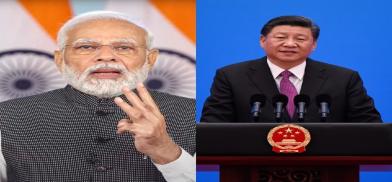
Can a Modi-Xi meeting at Johannesburg break the border standoff?
The Major General-level talks (initially described as confidence building) apparently aim for a conducive atmosphere when Modi comes face to face with Xi at Johannesburg for the BRICS summit August 22-24.
The 19th round of Corps Commander-level India-China talks in eastern Ladakh on August 14, 2023 lasted 10 hours. An Indian government press release on the joint statement highlighted the following: positive, constructive and in-depth discussion to resolve remaining issues; discussions in an open, forward-looking manner, in line with guidance of the leadership; agreement to resolve remaining issues expeditiously, maintaining the momentum of dialogue and negotiations through military and diplomatic channels; and agreement to maintain peace and tranquility in border areas in the interim.
Much is being made of the fact that not all previous rounds of talks ended with a joint statement, although China’s state media is silent on any joint statement. But this statement offers little other than similar diplomatic lingo used in previous joint statements. The important issue is the Chinese side neither agreed to disengage further, nor agreed to Indian patrolling in no-patrol zones (buffer zones), leaving aside demobilization. The media even triumphed about this meeting lasting only 10 hours compared to 15-16 hours in previous cases!
The above talks were followed by Major General-level talks on August 18 at two locations in eastern Ladakh. There is no news about the outcome yet but the media has quoted unnamed defence sources saying that: the discussion is about resolving legacy issues; resumption of patrolling in Depsang plains; PLA presence at ‘Y Junction’ (19 km inside Indian territory in Depsang); and in case of any headway, another round of Corps Commander-level talks would follow to finalize the outcomes.
Through spin doctoring, Indian diplomats have avoided admitting how PLA shifted the Line of Actual Control (LAC) westwards through the invasion of eastern Ladakh in 2020. The above media admission for the first time of PLA presence at the ‘Y Junction’ was known since 2020. Yet, the Indian defence minister kept harping “not even an inch of territory has been lost”. But this minister would be at a loss to explain if this indeed is the case, what are these 19 rounds of talks about?
Spin doctoring and ground reality
The fact is that Indian troops can no longer access 26 of their 65 Patrolling Points (PPs) between Karakoram (KK) Pass and Chumar in eastern Ladakh. Ironically, these PPs were established well short of the LAC in eastern Ladakh from the very beginning, perhaps for fear of annoying Beijing. But this is not all. All buffer zones, including in locations like the north bank of Pangong Tso, Galwan and Hot Springs, are inside Indian territory. Yet, the Indian media keeps repeating that Depsang and Demchok are the only two outstanding “friction points” (euphemism for intrusions) in Ladakh.
When the last few Corps Commander-level meetings lasting from 10 to 16 hours have achieved precious little, China giving any concessions now is unlikely, especially when it calls all the shots. Mention of “legacy issues” by the media appears another attempt at spin doctoring with reference to Depsang and Demchok although China has successfully shifted the LAC even west of its 1959 claim line, which was not acceptable to India in the first place.
We may keep referring to the buffer zones also as “no patrol zones” in joint statements released by the Indian side, but China has never said so. That is why China demanded a 15-20 km buffer zone in Depsang in recent times. There is little chance of any compromise by China but spin doctoring from our side will continue in all probability.
Brazen Chinese moves
When Xi Jinping came to visit in September 2014, India went gung-ho with Tibetan protests concurrent to Modi-Xi discussions in New Delhi. But a distinct change was visible after the Modi-Xi tête-à-tête during a follow-up visit by Modi to China. China is presently profiting more through India-China bilateral trade than it was before invading eastern Ladakh in 2020.
The Chinese foreign ministry said on July 24, 2023, that Xi and Modi reached an important consensus on stabilizing China-India relations in Bali last year. Is this about India accepting the status quo or China’s ruse before more offensive action? Xi appears unaffected by Western shenanigans to checkmate China, not even boasting of limited nuclear wars with Russia and China. Brazen Chinese war games are continuing in proximity to Taiwan as the PLA prepares for more conflict with China.
The Major General-level talks (initially described as confidence building) apparently aim for a conducive atmosphere when Modi comes face to face with Xi at Johannesburg for the BRICS Summit August 22-24. But without a meeting of the two leaders on the sidelines of the summit – of which there is no indication presently – any progress towards normalization of relations will remain a chimera.
Read more at: https://www.southasiamonitor.org/spotlight/can-modi-xi-meeting-johannesburg-break-border-stalemate
comments
For China it is ‘heads I win, tails you lose.’ China has managed to reinforce in Indian minds that, Tibet and Aksai Chin not possible to discuss; also, hard negotiations on patrolling is the most they will tolerate and whenever it suits, Arunachal Pradesh will again be claimed. The Indian mind has been so conditioned over the years.
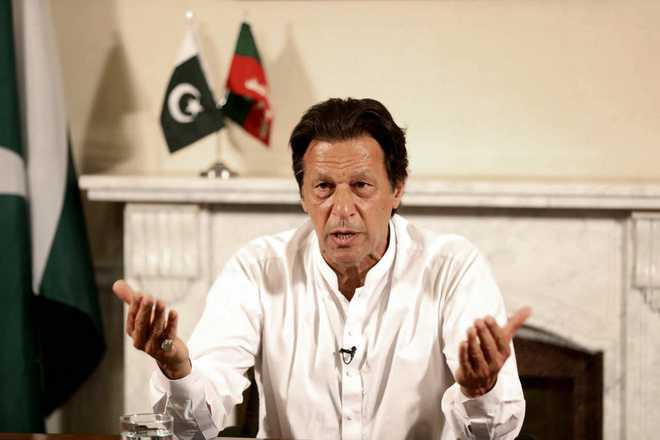
THE Prime Minister of Pakistan till April last year, Imran Khan is now reduced to being Prisoner No. 804 in the Attock jail. Five years ago, former PM Nawaz Sharif was rendered ineligible to contest elections after being sentenced to 10 years of imprisonment. Imran had been the beneficiary as Sharif was knocked out of the fray weeks before the polls. Pakistan’s deep state was suspected to have orchestrated the judicial verdict against Sharif. A similar misgiving prevails in Imran’s case. Pakistan’s current economic freefall has remained unattended in this clash of institutions, making the common man sceptical of their ability to deliver the goods.
Imran has been facing relentless prosecution after his relationship with the army soured; he is now pinning hopes on the Supreme Court for his release. But in a polity where the system of negotiations and compromise has collapsed, the deep state and its political allies will try their best to make him ineligible for the elections scheduled for November. Not surprisingly, the global guardians of political rectitude have held their peace. Western powers seem to have green-lighted the impetuous and unpredictable rabble-rouser PM’s removal last year itself.
As if this internal turmoil were not enough, after two years in power, the Taliban in Afghanistan are unwilling to play the ISI’s game, having concluded that Islamabad has no economic heft and is hardly a model Islamic state. The ISIS seems to have got its second wind as the Taliban are apparently doing little to check its attacks on the Pakistani state. The recent suicide bombing that targeted a pro-army political party was claimed to be the handiwork of the ISIS. The onus is now on caretaker PM Anwaarul Haq Kakar to ensure a conducive environment for the elections.
Army men shot dead two terrorists from Pakistan during an infiltration bid in Balakote sector of Poonch district early on Monday morning. An AK-47 rifle, two magazines, 30 rounds, two hand grenades and Pakistan-made medicines were recovered during a search operation.
Took cover of fog
The terrorists tried to infiltrate when there was poor visibility due to dense fog and inclement weather.
Injured by gunfire, the terrorists turned away but later succumbed, said the Army.
Lt Col Suneel Bartwal, PRO, Defence, said intelligence inputs received from multiple intelligence agencies and the police suggested that the terrorists had been waiting to cross the LoC from Balakote sector. “Based on these inputs, our surveillance grid was placed on heightened alert and multiple ambushes were placed at suitable location,” he said.
On Monday morning, two terrorists were detected trying to cross the LoC during inclement weather, dense fog, thick foliage and undulating ground in Hamirpur area of Balakote sector.
As the terrorists approached the ambush sites set up by the Army, they were challenged and also fired upon. This forced the terrorists to flee. “However, effective fire resulted in one terrorist falling down on the ground near the LoC. Additional troops were then moved into the area and a search operation was started in the afternoon after the improvement of the weather and the visibility,” said Lt Col Bartwal.
“During the search, blood trails leading towards the LoC were detected. As per intelligence inputs, the two terrorists who attempted to infiltrate were injured but still managed to return across the LoC. They later succumbed to their injuries,” the PRO informed.
Muted anxiety has been triggered that the fauj will be plagued by the erosion of professional competence at the altar of political expediency.
C Uday Bhaskar
Director, Society for Policy Studies
PRIME Minister Narendra Modi’s Independence Day speech was akin to blowing the bugle for the 2024 General Election. The presumptuous certitude exuded by Modi about the outcome at the hustings was reflected in his assertion that that he would be back next year as the PM to present India’s report card. “Next time, on August 15, at this very Red Fort, I will speak of the achievements of our country, the potential and resolve of our people and their success and self-confidence,” he said in the speech.
The probability of this exigency is very high, though this message could have been conveyed in a modest manner, but that is not the Modi model when it comes to electioneering. Specific to national security, PM Modi said: “India has gained a new strategic strength in recent years and today our borders are more secure than ever.”
Ironically, this claim to India’s new-found ‘strategic strength’ came against the backdrop of the 19th round of India-China Corps Commander-level talks, where there was no sign of any breakthrough or even limited progress in the tense military stand-off along the disputed Line of Actual Control (LAC) in eastern Ladakh. The ground reality is that after the Galwan clash (June 2020), India has forfeited patrolling rights in an area of almost 900 sq km and Delhi is seeking a return to the status quo, which Beijing has refused to accept and restore.
It is being speculated that when PM Modi and Chinese President Xi Jinping meet at the BRICS summit in South Africa (August 22-24), there could be a political nudge to arrive at a modus vivendi to a complex territorial dispute that has been festering since October 1962. If this does happen, the prospects of a successful G20 summit in India in September are bright, and a satisfactory resolution of the dispute would burnish the Modi report card apropos of national security in a distinctive manner.
However, the signals from China remain opaque and India will have to live with the latest formulation in the joint statement, which noted that in the absence of any breakthrough, the two sides ‘agreed to maintain peace and tranquillity on the ground in the border areas’.
The inference that follows is that if India is to remain credibly resolute in its stand on the contested territorial impasse, the index of its ‘strategic strength’ would have to be of effective quality and quantity. A brief review of this domain under Modi 2.0 would suggest that there are complex national security challenges ahead that will merit objective scrutiny by the government of the day in a non-partisan manner.
On the external front, the old chestnuts remain on the radar — the revisionist agendas adopted by China and Pakistan. Apropos of internal security, the recent violence that racked Manipur and parts of Haryana are illustrative of the challenges. Left-wing extremism that has in the past challenged the efficacy of the state is currently dormant, but it remains a cause for concern that can flare up in an unanticipated manner.
The material state of the armed forces and their individual inventory status were deemed to be inadequate by the BC Khanduri committee in 2018, but the requisite funding support has been less than adequate to redress this gap. This is one tangible strand of India’s strategic strength.
The more critical but intangible elements of India’s strategic strength are the professionalism of the fauj (military), the steadfast apolitical orientation of this institution, and the military’s abiding commitment to the country and the national flag. From the first war to defend Kashmir in October 1947 to Kargil of 1999 and in a wide spectrum of internal security duties, the Indian armed forces have never wavered, despite a range of constraints.
However, this core strategic strength has been diluted under Modi 2.0 as the ‘spine’ of the institution has been tampered with. While the creation of the post of CDS (Chief of Defence Staff) in January 2020 was welcomed and it must be acknowledged as a major political decision, subsequent developments have apparently disturbed the institutional integrity of the military and the equipoise of the civil-military relations.
After the tragic death of Gen Bipin Rawat in December 2021, the Modi government kept the office vacant for many months and finally appointed the second CDS only in September 2022. But in a very radical departure from the norm, a retired three-star General was handpicked and appointed the CDS with a four-star rank.
Whatever may have been the compulsions for such a decision, this has resulted in introducing a political dimension in the steep pyramidical ‘rat race’ that characterises promotions in the military. Muted anxiety has been triggered that the fauj will soon be plagued by the erosion of professional competence at the altar of political expediency. Were this to happen, its much-valued ‘strategic strength’ would be frayed.
In the run-up to the October 1962 debacle, then PM Jawaharlal Nehru allowed his domestic political compulsions to trump abiding national security considerations and the country paid the price. As PM Modi prepares for a possible third tenure, paying heed to the rhythms of history may be a desirable detour before the election momentum relegates matters of strategic and security import to the back-burner.
The Army Wives Welfare Association (AWWA) organised the second season of ‘Asmita – Inspiring Stories by Army Wives’ here on Monday. It was a day-long event and President Droupadi Murmu was the chief guest.
Dr Sudesh Dhankar, wife of Vice President Jagdeep Dhankar and Meenakshi Lekhi, Minister of State for External Affairs and Culture were the guests of honour. Archana Pande, AWWA president, told the audience that ‘Asmita’ is a platform provided to Army wives and achievers, who have shattered glass ceilings to narrate their accounts and inspire others like them.
This season of ‘Asmita’ comprised talks by Jaya Prabha Mahto, science teacher from Jharkhand; Sanjhana Nayarr, author and social activist; Vandana Mahajan, cancer care and palliative care counsellor; Ambreen Zaidi, author and columnist; Captain Yashika H Tyagi (retd); Florence Hnamte; Sargam Shukla, national rowing medalist; Aashna Kushwaha, entrepreneur and content creator and Lieutenant Jyoti.
Arunima Sinha, a mountaineer and Ananda Shankar Jayant, a classical dancer, were guest speakers at the event.
State Stalwarts
DEFENCE MINISTER
Minister Rajnath Singh
ALL HUMANS ARE ONE CREATED BY GOD
HINDUS,MUSLIMS,SIKHS.ISAI SAB HAI BHAI BHAI
CHIEF PATRON ALL INDIA SANJHA MORCHA
LT GEN JASBIR SINGH DHALIWAL, DOGRA
SENIOR PATRON ALL INDIA SANJHA MORCHA
MAJOR GEN HARVIJAY SINGH, SENA MEDAL ,corps of signals
.
.
PATRON ALL INDIA SANJHA MORCHA
MAJ GEN RAMINDER GURAYA ,MADRAS REGIMENT
sanjhamorcha303@gmail.com
PRESIDENT SOUTH ALL INDIA SANJHA MORCHA
COL SS RAJAN BOMBAY SAPPERS,
PRESIDENT UTTARAKHAND ALL INDIA SANJHA MORCHA
COL B M THAPA ,BENGAL SAPPERSS
PRESIDENT HARAYANA STATE CUM COORDINATOR ESM
BRIG DALJIT THUKRAL ,BENGAL SAPPERS
PRESIDENT TRICITY
COL B S BRAR (BHUPI BRAR)
PRESIDENT CHANDIGARH ZONE
COL SHANJIT SINGH BHULLAR
.
.
PRESIDENT PANCHKULA ZONE AND ZIRAKPUR
COL SWARAN SINGH
INDIAN DEFENCE FORCES
DEFENCE FORCES INTEGRATED LOGO
INDIAN AIR FORCE
Air Officer C-in-C WESTERN AIR COMMAND
AIR MSHL S PRABHAKARAN AVSM VM
AOC-IN-C, EASTERN AIR COMMAND
Air Marshal Inderpal Singh Walia
AOC-in-C SOUTH WESTERN AIR COMMAND
Air Marshal Vikram Singh
AOC-IN-C, SOUTHERN AIR COMMAND
Air Marshal J.Chalapati
AOC-IN-C TRAINING COMMAND
AIR MARSHAL SK GHOTIA VSM
AOC-IN-C MAINTENANCE COMMAND
Air Marshal Jagdish Chandra
Flag Officer Commanding in Chief, Western Naval Command
ice Admiral R Hari Kumar, PVSM, AVSM, VSM
Flag Officer Commanding in Chief, Eastern Naval Command
Vice Admiral Sanjay Bhalla, AVSM, NM
Flag Officer Commanding in Chief, Southern Naval Command