










Sanjha Morcha

What’s New

Click the heading to open detailed news

Current Events :

web counter

Print Media Reproduced Defence Related News

Netaji’s daughter renews push for bringing back his mortal remains from Japan to India

Subhas Chandra Bose’s ashes are kept at the Renkō-ji Temple in Suginami, Tokyo
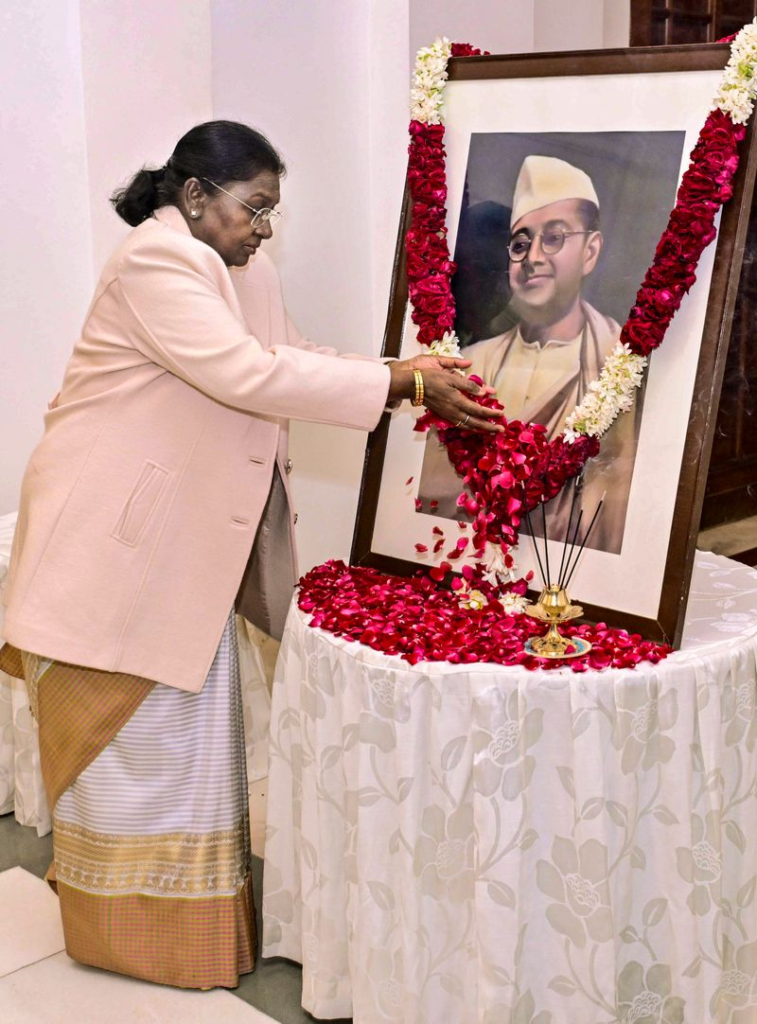
The government on Friday organised ‘Parakram Diwas–2026’ to commemorate the 129th birth anniversary of Netaji Subhas Chandra Bose, even as his daughter Anita Bose Pfaff renewed the push for bringing back the mortal remains of the freedom fighter from Japan to India.

In a statement, she said Netaji, who spent much of his life in forced exile while fighting for India’s freedom, would have been deeply distressed that his remains are still kept outside his motherland more than 80 years after his death and 78 years after India became free.

“As Netaji’s daughter, I invite the Indians of today who still revere him to support his posthumous return from exile; to support the transfer of his mortal remains to India for a final and fitting disposal,” she stated.

Meanwhile, the Ministry of Culture is organising ‘Parakram Diwas–2026’ from January 23 to 25 at the Andaman and Nicobar Islands along with celebrations at 13 other iconic locations across the country associated with the life and legacy of India’s most revered freedom fighter.

“The event marks the 129th birth anniversary of Netaji Subhas Chandra Bose and aims to honour his unparalleled contribution to India’s freedom struggle and his enduring legacy of courage, sacrifice and patriotism,” it said in a press release.

The celebrations will feature a grand cultural programme, including a spectacular drone show and performances by eminent artistes such as Ustad Amjad Ali Khan, Papon, Amaan Ali Bangash, Ayaan Ali Bangash, Raghu Dixit, among others.

Recalling Netaji’s life and struggle, Pfaff noted in her message that he had devoted decades to the freedom movement, and later took the dramatic step of leaving India to continue the freedom struggle when imprisonment made his work impossible.

Pfaff recounted that following Japan’s surrender in August 1945, Netaji set out from Singapore for Tokyo but met with a fatal air crash in Taipei on August 18, 1945. Though he survived the initial crash with severe burns, he succumbed to his injuries later that day. He was cremated in Taipei, and his ashes were later taken to Tokyo.

Netaji’s ashes were then kept in safe custody by the chief priest of the Renkoji Temple in Japan, where they lie even today.

Senior Congress leader Jairam Ramesh also took potshots at the Narendra Modi government for “suppressing” the contribution of Netaji in resolving the controversy surrounding the later verses of Bande Mataram in 1937.

In a series of posts on X, he said, “Today on January 23, 2026, the nation celebrates the 129th birth anniversary of Netaji Subhas Chandra Bose, who had played a key role in resolving the controversy surrounding the later verses of Bande Mataram in 1937 which the PM deliberately suppressed.

“Further, Sugata Bose, the eminent historian and his grand-nephew, has written that Netaji had inaugurated the Free India Centre in Berlin on November 2, 1942, and chosen Jana Gana Mana as the national anthem… it was on October 2, 1943, in Singapore that Netaji chose Jai Hind as the rallying cry of the Azad Hind Govt — a cry that is never given voice to by the PM and his party.

“And of course it was Netaji who, in a radio broadcast from Singapore on July 6, 1944, first called Mahatma Gandhi as the Father of the Nation — whose memory and legacy the PM is systematically demolishing, with the latest instance being the repeal of MGNREGA,” he said.

Ramesh added, “The PM is India’s greatest distorian. That is what entire political science is all about.”
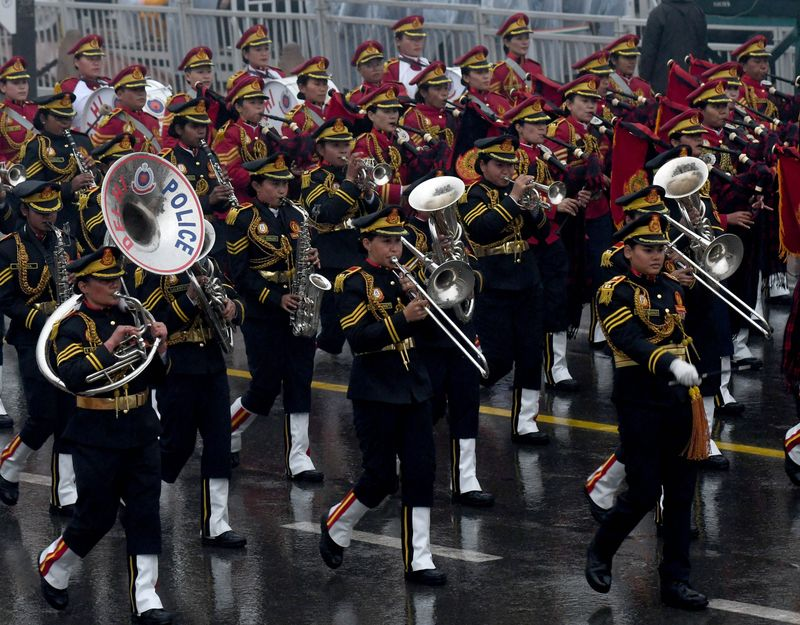
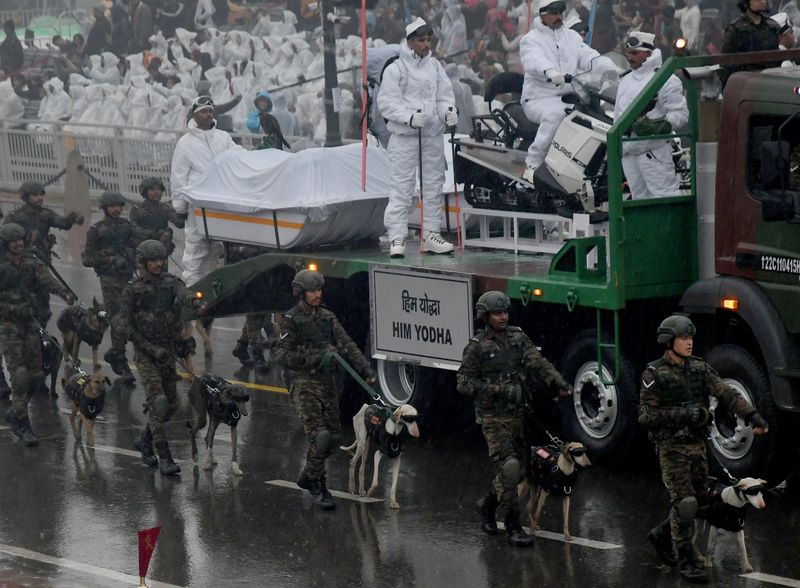
Freak weather in Capital, but R-Day rehearsal goes on at Kartavya Path

Unseasonal rain and overcast skies failed to disrupt full-dress rehearsal ahead of Republic Day, with parade and cultural performances being held as scheduled along the Kartavya Path here on Friday. However, Indian Air Force (IAF) flypast was rescheduled due to dense cloud cover.

Early morning rain in several parts of Delhi led to a noticeable dip in temperature, with light to moderate showers continuing intermittently through the day. According to the India Meteorological Department (IMD), an active western disturbance brought cloudy conditions, prompting a yellow alert for Delhi and adjoining areas, with the possibility of thunderstorms accompanied by rain. Parade contingents, cultural troupes, security personnel and spectators braved the wet conditions. While most of the spectators were seen wearing raincoats and shawls, some others used plastic sheets to shield themselves from the cold and drizzle. IAF officials said the flypast, which could not be conducted due to heavy cloud cover, has been rescheduled for Saturday, subject to favourable weather conditions.

The rehearsal followed the same route as that of the parade on Republic Day. This year’s celebrations will feature 30 tableaux – 17 from states and union territories and 13 from various ministries, departments and services. The chill persisted in the city as the minimum temperature was recorded at 13.7°C, while the maximum was 16°C. As per the weather department, Palam was the coldest in the city with a minimum temperature of 13°C.

The temperature is against expected to drop, with IMD forecasting a minimum temperature of 7°C and maximum of 17°C on Saturday. Meanwhile, Delhi’s air quality index (AQI) stood at 282 at 4 pm on Friday, placing it in the ‘poor’ category, as per the Central Pollution Control Board.

Metro to start services at 3 am

Delhi Metro will begin services at 3 am on all lines on January 26 to facilitate the movement of people heading to Kartavya Path for the Republic Day celebrations, the Delhi Metro Rail Corporation (DMRC) said on Friday.

According to the DMRC, trains will operate at a frequency of 15 minutes on all lines from 3 am to 6 am. After 6 am, metro services will run as per the regular schedule for the rest of the day.

Special arrangement has been made to ensure smooth and convenient travel for spectators and staff attending the Republic Day celebrations. Commuters have been advised to plan their journeys in advance and make use of the early services to avoid last-minute inconvenience.

The DMRC also announced that parking facilities at Metro stations across the network will remain fully operational on Republic Day, offering added convenience to those travelling by private vehicles before boarding the Metro.


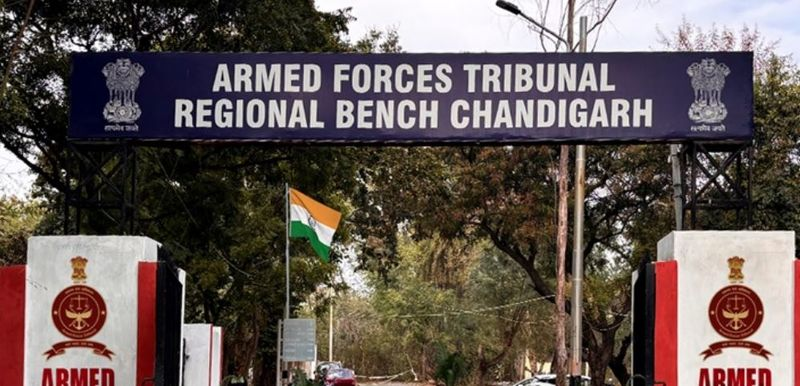
AFT upholds dismissal of soldier who deserted unit to avoid J-K operations

Terming desertion to be a serious offence in the defence services, the tribunal has held that such acts need to dealt with firmly and swiftly to ensure discipline in the rank and file

Terming desertion to be a serious offence in the defence services, the Armed Forces Tribunal (AFT) has held that such acts need to dealt with firmly and swiftly to ensure discipline in the rank and file.

Observing that a soldier deserted from his unit to avoid serving in counter insurgency operations in Jammu and Kashmir, the tribunal’s Chandigarh bench has upheld his dismissal from service by a summary court martial conducted in 2015.

“Such indiscipline deserves to be punished immediately to convey the correct message to the environment. Other soldiers of the battalion had to be conveyed that indiscipline of the nature of desertion for avoidance of operational duty would be promptly punished,” the tribunal’s bench comprising Justice Sudhir Mittal and Lt Gen (Dr) Ranbir Singh, said in their order of January 15.

The soldier was serving in 152 Infantry Battalion (Territorial Army), the main body of which was located in Srinagar. Being in low medical category, he was left in the rear at Ludhiana. In July 2014, he had sought leave to get his mother treated, which was refused and instead he was directed to proceed to the location of the main body.

Instead of moving to Srinagar, the soldier went home. After a lapse of a period of 30 days, a Court of Inquiry was conducted and he was declared a deserter. Accordingly, an apprehension roll was issued.

He was apprehended by the civil police from Hisar in January.2015, and handed over to a local Army unit from where he was collected by an escort party from his unit that took him to the battalion headquarters, which had by then moved to Sonamarg.

The bench observed that the soldier had claimed that he sought leave because his mother was unwell. The leave application was dated July 4, whereas the certificate relied upon by him shows that she was admitted to a local civil hospital on July 7, which showed that leave was sought on a false basis as he could not have had a premonition three days earlier that his mother was going to be unwell.

The bench also did not accept the soldier’s contention that he had no intention to desert and had voluntarily surrendered before the police. The bench rejected a certificate purportedly signed by the officer-in-charge of the police station concerned saying that he had surrendered, on the grounds that it did not bear any date and was partially filled. The signature of the officer-in-charge had been forged as was evident by comparing the same with the signature on certificate stating that he had been apprehended.


Armed forces to project joint strike power on Republic Day

At the core of the tableau is the strike narrative — rapid response, controlled escalation and precision. A loitering munition neutralises an enemy air defence radar, followed by a Rafale fighter launching SCALP missiles against terror infrastructure. The sequence intensifies as a Sukhoi-30 MKI fires a BrahMos supersonic cruise missile to destroy hardened aircraft shelters.

The finale features the S-400 air defence system executing a long-range engagement at 350 km to neutralise an enemy airborne early-warning platform — underscoring India’s doctrine: detect first, decide first and destroy first, the Ministry of Defence said.

For the Indian Air Force, a special attraction will be a composite flypast formation named ‘Sindoor’, comprising Rafale, Sukhoi-30 MKI, MiG-29 and Jaguar fighters. A helicopter will carry the Operation Sindoor flag.

The Ministry of Defence will also showcase the new Suryastra rocket system with a range of nearly 250 km, bringing multiple terror camps across the border within strike range.

DRDO will display its under-development Long-Range Anti-Ship Hypersonic Glide Missile (LR-AShM), designed for naval coastal defence. The missile follows a quasi-ballistic trajectory, achieving speeds up to Mach 10 and sustaining an average Mach 5.


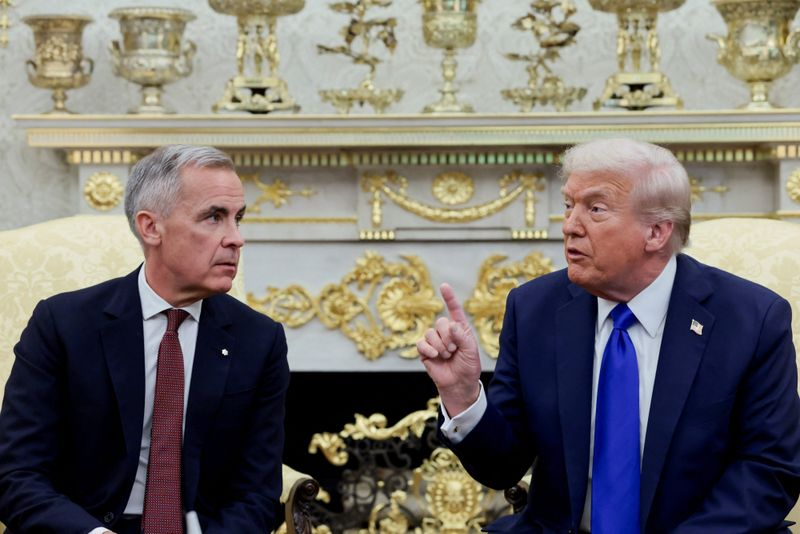
‘China will eat them up’: Trump slams Canada for opposing Greenland ‘Golden Dome’

US President Donald Trump on Friday slammed Canada for rejecting his proposed “Golden Dome” missile defence project over Greenland, warning that Beijing could “eat them up” within a year as the northern neighbour chooses closer ties with China over US-backed security.

On Truth Social, Trump wrote, “Canada is against The Golden Dome being built over Greenland, even though The Golden Dome would protect Canada. Instead, they voted in favour of doing business with China, who will ‘eat them up’ within the first year!”

Trump’s outburst comes amid escalating tensions between the US and its northern neighbour, following recent remarks by Canadian Prime Minister Mark Carney at the World Economic Forum (WEF) in Davos.

On Wednesday, during his address at the 56th Annual Summit of the WEF, Trump criticised Carney, asserting that Canada should be more “grateful” to the US for the “freebies” it receives, including security protections.

“Canada gets a lot of freebies from us, by the way. They should also be grateful, but they’re not. I saw your Prime Minister yesterday; he wasn’t so grateful. They should be grateful to us,” Trump said, adding that his plan to build a “Golden Dome” missile defence system will also provide protection to Canada.

“Canada lives because of the United States. Remember that, Mark, the next time you make your statements,” Trump said, underscoring the strategic and security role of the US in protecting its northern neighbour.

Trump’s remarks were aimed at Canadian Prime Minister Mark Carney, who, in his WEF address, highlighted “an era of great power rivalry, where the rules-based order is fading,” and also opposed tariff coercion, in a veiled reference to Washington’s use of the financial tool to acquire Greenland.

On January 17, Canadian Prime Minister Mark Carney announced a new trade agreement with China. Carney said that the deal would open markets for Canadian businesses and workers.

In a post on X, Carney said, “We’ve secured a new trade agreement with China — unlocking more than $7 billion in export markets for Canadian workers and businesses.”

In a statement by the Canadian Prime Minister’s Office said, “In a more divided and uncertain world, Canada is building a stronger, more independent, and more resilient economy. To that end, Canada’s new government is working with urgency and determination to diversify trade partnerships and catalyse massive new levels of investment. As the world’s second-largest economy, China presents enormous opportunities for Canada in this mission.”

Canada has agreed to cut its 100 per cent tariff on Chinese electric cars in return for lower tariffs on Canadian farm products, CBS News reported.

Carney said there would be an initial annual cap of 49,000 vehicles on Chinese EV exports to Canada, growing to about 70,000 over five years. China will reduce its total tariff on canola seeds, a major Canadian export, from 84 per cent to about 15 per cent, as per CBS News.

Carney said China has become a more predictable partner to deal with than the US.

“Our relationship has progressed in recent months with China. It is more predictable and you see results coming from that,” Carney said, as quoted by CBS News.

Canada faces 35 per cent levy on its goods. Canada is affected by the blanket 50 per cent levy on imported metals and 25 per cent on non-US automobiles.

Meanwhile, China and US arm-twisted each other with threats of 100 per cent tariffs but after US President Donald Trump and Xi Jinping’s meeting, the tariffs were exempted on a portion of Chinese products until November 10, 2026.


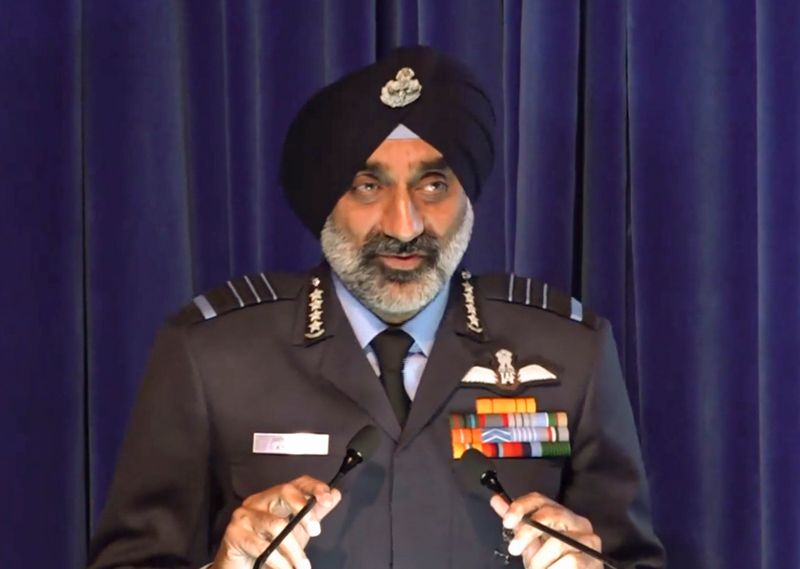
Military power is ultimate arbiter of national strength: IAF Chief AP Singh

Air Chief Marshal AP Singh, IAF Chief, on Wednesday cited the examples of Venezuela and Iraq being targeted by the US to argue that military power remains the ultimate arbiter of national strength.

“Military power stands as the ultimate arbiter of national power. All instruments of national power will take you nowhere if you do not have a strong military,” the IAF Chief said while addressing the 22nd Subroto Mukerjee Seminar.

Referring to the rapidly changing global scenario, he added, “A nation can be economically strong, but that does not guarantee security.”

“The whole idea is to use comprehensive national power to impose your will over other nations, while ensuring that no other nation can impose its will on us,” he said.

“Military power is important, but even more important is the will to use that power. Without the will, restraint is seen as weakness. Only when you are strong enough does restraint reflect capability,” he added.

Highlighting India’s gap in cutting-edge technology, Air Chief Marshal Singh said the country needed strategic partnerships to develop next-generation platforms. “We need to catch up with technology. Maybe we can do it alone, but it will take longer,” he said.

He cited the example of strategic tie-ups in aero-engine manufacturing — a reference likely to the partnership between French engine-maker Safran and Hindustan Aeronautics Limited.

On military preparedness, the IAF Chief said, “We must manage our immediate requirements. We need to assess what we require today and over the next 10 years, and focus on those priorities.”

Meanwhile, speaking at another session, Additional Director General (Strategic Communications), Indian Army, Major General Sandeep Sharda said during Operation Sindoor, Pakistan spread deepfakes, doctored videos and misinformation through official channels and press conferences.

He said Pakistan deployed a large network of YouTube channels, X accounts and government handles to


India’s defence forces get quantum boost with new Mission Policy Framework

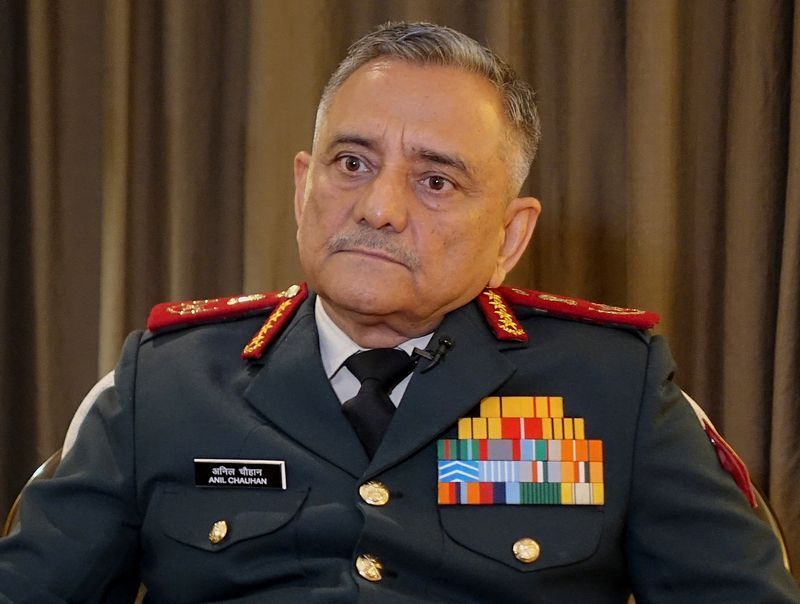
Chief of Defence Staff General Anil Chauhan today released the ‘Military Quantum Mission Policy Framework’, a comprehensive document that includes the policy and the roadmap to implement ‘quantum technologies’ in the Armed Forces.

Quantum computing is the next generation of computer technology. It processes information.  A quantum computer allows a computer to be in more than one state at a time, whereas a traditional computer can only be in one state. This gives quantum computers the potential to process large amounts of data very quickly as they can operate on several platforms.

The framework aims to integrate the four pillars of Quantum technologies – Quantum communication, Quantum computing, Quantum sensing and Metrology and Quantum materials and devices — into the Tri-Services to empower them to prepare for the future battlefield and to achieve technological dominance in the rapidly evolving world.

The vision document defines the way ahead to achieve synergy in the amalgamation of quantum technologies, align with the National Quantum Mission — of which the Defence Forces are an integral part — and formulate an indicative roadmap and policy for implementing this niche field within the Defence Forces.

It will form the basis for incorporating cutting‑edge quantum technology into the Armed Forces through the synergised efforts of all three services. The document underscores the increasing need for the assimilation of these niche technologies from a defence perspective and highlights the milestones and goals to be achieved by utilising civil‑military fusion through dedicated governing bodies consisting of members across multiple government sectors. The framework also emphasises the critical need for jointness and integration in assimilating this technology to achieve technological supremacy on future battlefields.

Navy Chief Admiral Dinesh K Tripathi, Army Chief General Upendra Dwivedi and IAF Chief Air Chief Marshal AP Singh were present on the occasion.


HEADLINES : 15 JAN 2026

Final Veteran handbook dt 12 Jan 2026

DONOT GIVE YOUR UNFORM TO ANYONE TO BE MISUSED

Remarks against Col Qureshi: Take call on sanction to prosecute minister in 2 weeks: SC to MP Govt

Tribunal cannot interfere while court martial proceedings are underway, says AFT

Defence Procurement Board okays proposal to acquire 114 Rafale jets from Dassault

Why an Indian-origin Canadian Sikh left home to fight in Ukraine and made the ultimate sacrifice

Beyond its heavy focus on development of critical road infrastructure in the mountains along the country’s northern frontiers, the Border Roads Organisation (BRO) is upgrading some roads in the deserts of Rajasthan that would enhance connectivity along the western borders.


BRO’s strategic push: Upgrading desert roads in Rajasthan to boost border connectivity

Chance for India to bridge the Gulf

All India Radio begins two-hour morning Gurbani broadcast from Golden Temple, Amritsar

Several detained; massive search op to hunt down terrorists enters day 3 in J-K’s Kishtwar