On Republic Day eve, the government announced 131 Padma awards for the year 2026, including five Padma Vibhushan, 13 Padma Bhushan and 113 Padma Shri which include two cases in which the award for two individuals is counted as one. the Ministry of Home Affairs (MHA) said.
Former Kerala Chief Minister and veteran communist leader V. S. Achuthanandan and actor Dharmendra have been awarded the second-highest civilian honour, Padma Vibhushan, posthumously for 2026, a government statement said Sunday.
Former Supreme Court judge KT Thomas for public affairs, Hindustani Classical musician and violinist N Rajam in Art, eminent Malyalam journalist P Narayanan in literature and education have been awarded Padma Vibhushan, it said.Playback singer Alka Yagnik, former Uttarakhand chief minister Bhagat Singh Koshyari, actor Mammootty and banker Uday Kotak are among those awarded Padma Bhushan, the Home Ministry said.
Ad guru Piyush Pandey, JMM founder Shibu Soren and BJP leader VK Malhotra have been awarded Padma Bhushan, while actor and comedian Satish Shah has been awarded Padma Shri, posthumously, it said.
Ninety awardees are women and the list includes six persons from the category of foreigners, NRI, PIO and OCI, and 16 posthumous awardees, it said.
Tennis legend Vijay Amritraj has been awarded Padma Bhushan; cricketer Rohit Sharma, women’s cricket captain Harmanpreet Kaur and hockey player Savita Punia have been awarded Padma Shri, the statement said.
Former JNU VC M Jagadesh Kumar, former Prasar Bharti CEO Shashi Shekhar Vempati and actors R Madhavan and Prosenjit Chatterjee are also among those awarded Padma Shri, the ministry said.
PM congratulates Padma awardees
Prime Minister Narendra Modi on Sunday congratulated all the Padma awardees for their contribution to diverse fields.
“Congratulations to all the Padma Awardees for their outstanding contributions to our nation. Their excellence, dedication and service across diverse fields enrich the fabric of our society,” the prime minister said in a post on X.
He said the honour reflects the spirit of commitment and excellence that continues to inspire generations. — with PTI
Punjab: 19th century power pole restored at Golden Temple
Seventy six years ago, on a cold January morning in 1950, a newly independent nation stood at attention. India had just become a republic. There were no long-standing traditions, no iconic boulevard yet only hope, resolve and a country learning how to celebrate itself.
That first Republic Day parade was held at Irwin Stadium, today known as National Stadium. It was simple and restrained, yet deeply symbolic, reflecting a young republic still shaping its identity and its rituals. Five years later, in 1955, that search for expression found its defining stage.
The grand ceremonial boulevard stretching from Rashtrapati Bhavan to India Gate, then called Rajpath, was chosen as the permanent route of 3 kms for the Republic Day parade. Designed by British architect Edwin Lutyens as an imperial vista, the avenue was reclaimed and reimagined, transforming a colonial showpiece into the heartbeat of India’s democratic pride.
From that moment, Rajpath became far more than a road.
Each year, it carried the measured march of soldiers, vibrant stories of India’s states through tableaux and the growing confidence of a republic finding its voice. The echo of boots on stone, slow glide of cultural narratives and the thunder of fighter jets overhead turned the avenue into a living theatre of national aspiration.
Decades passed. Governments changed. Generations grew up watching the same spectacle, often from the same spot, wrapped in winter shawls and wonder. Yet every January 26, the nation returned faithfully to that ceremonial stretch of land.
In September 2022, Rajpath was rechristened Kartavya Path, marking a conscious departure from colonial symbolism and a renewed emphasis on duty, service and civic responsibility. The name changed, but the essence endured.
Today, as India marches confidently into its Amrit Kaal, the Republic Day Parade reflects a nation at ease with its past and assured of its future. Indigenous defence platforms, women-led contingents, digital coordination and themes of development, inclusivity and self-reliance now define the spectacle. The parade no longer merely displays power, it tells a story of purpose. As the columns once again move forward, they retrace not just a route, but a timeline from the uncertainty of 1950 to the self-belief of a modern republic.
On this road, history does not rest in archives. It marches year after year into the future.
The present route
The Republic Day Parade begins at Rashtrapati Bhavan, proceeding along Kartavya Path, passing iconic landmarks such as Vijay Chowk, India Gate and C-Hexagon, before concluding near the National Stadium.
Manipur’s 100-year-old dance maestro, litter collector from Chandigarh among 45 awarded Padma Shri in ‘unsung heroes’ category
Retired Punjab cadre DIG honoured as ‘unsung hero’ for turning street cleaning into a lifelong mission of public serviceChandigarh’s ‘Broom Warrior’ ex-IPS Inderjit Sidhu chosen for Padma Shri at 88
Chandigarh’s octogenarian retired Punjab cadre IPS officer Inderjit Singh Sidhu has been chosen for the prestigious Padma Shri award for social service, according to a notification issued by the Union Ministry of Home Affairs (MHA).
A copy of the notification, which is with The Tribune, said Sidhu, 88, is among 113 Padma award recipients announced on the occasion of Republic Day and among 45 individuals selected from across the country in the ‘unsung heroes’ category.
Sidhu, who retired as Deputy Inspector General (DIG) from the Punjab Police in 1996, has earned nationwide admiration for his quiet yet powerful commitment to cleanliness in Chandigarh.
Over the past several years, the former police officer has been stepping out of his home every morning at dawn to clean streets and public spaces around his neighbourhood in Sector 49, often single-handedly collecting garbage and transporting it in a rehri or cycle cart for proper disposal.
His selfless efforts drew widespread attention last year after videos showing him sweeping roads and pulling a cart full of waste went viral on social media. The visuals struck a chord with people across the country and were even shared by Mahindra Group Chairman Anand Mahindra, who hailed Sidhu as a symbol of purpose, discipline and service beyond age and official position.
Residents say Sidhu began the cleanliness drive after repeatedly flagging the issue of garbage accumulation with civic authorities without seeing lasting results.
Instead of complaining further, he chose action, turning what began as a solitary effort into a source of inspiration for his family, neighbours and many others. Though some initially dismissed his work as eccentric, his persistence gradually transformed attitudes, with several locals now joining and supporting his mission.
Despite the attention and accolades, Sidhu has consistently played down his role, saying he simply believes in keeping his surroundings clean and finds personal satisfaction in doing so. He has often remarked that there is dignity in labour and no task is too small when it comes to public good, expressing hope that Chandigarh can set an example by ranking among the cleanest cities in the country.
Punjab Governor and Chandigarh Administrator Gulab Chand Kataria welcomed the Centre’s decision to honour Sidhu, calling it a fitting recognition of an extraordinary citizen’s spirit. “Inderjit Singh Sidhu has shown that service to society does not end with retirement or age. His dedication to cleanliness and civic responsibility is deeply inspiring and should be emulated by citizens across the country. Such individuals strengthen the moral fabric of our society,” Kataria told The Tribune.
The Padma Shri recognition places Sidhu among a diverse group of ordinary Indians making exceptional contributions in their own quiet ways. For Chandigarh, his honour stands as a reminder that lasting change often begins not with authority or slogans, but with personal example and unwavering commitment to the common good.
Didn’t have money to watch 1997 film ‘Border’: Diljit
Border 2 has already taken flight at the box office, opening with a thunderous Rs 30 crore net on day one
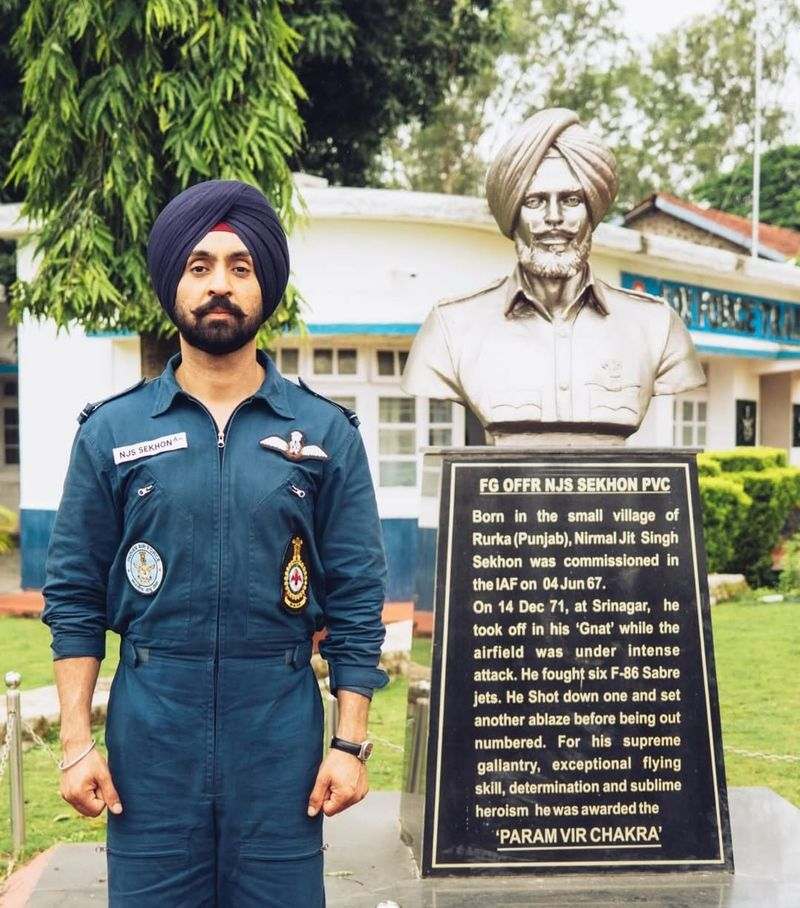
When the original Border roared onto screens in 1997, young Diljit Dosanjh could only watch from the sidelines. In a recent, candid social‑media clip, he recalled, “I remember when the first Border came, so many people around me went to watch it, but I couldn’t because I didn’t have the money for it. My family also didn’t give me any money for it, but even they didn’t have much, so how could they spare it? Little did I know that I would get the chance to be in the film one day.”
That bittersweet memory now frames his role as Flying Officer Nirmal Jit Singh Sekhon, the real‑life hero whose bravery in the 1971 Indo‑Pak war earned him the Param Vir Chakra. Diljit’s heartfelt plea—“If you have never read about him, you should definitely read and understand his life.”
Border 2 has already taken flight at the box office, opening with a thunderous Rs 30 crore net on day one and soaring past Rs 70 crore in just two days, making it one of 2026’s biggest Hindi openers
.
The ensemble—Sunny Deol, Varun Dhawan, Ahan Shetty and Diljit—has turned the war drama into a crowd‑pleaser, with audiences flocking to theaters for both nostalgia and fresh heroics.
“An honest tribute!,” reacted @tseriesfilms on Instagram. Another individual commented, “All time blockbuster movie.”
India to display military might, growth story at Republic Day Parade
India will display its development journey, cultural diversity and military might, including newly-raised units and mock-ups of major weapon systems deployed during Operation Sindoor, at the 77th Republic Day celebrations on Monday.
The President of the European Council, Antonio Costa, and the President of the European Commission, Ursula von der Leyen, will be the chief guests at the event in the national capital.
The overarching theme of the event at the Kartavya Path will be 150 years of ‘Vande Mataram’. President Droupadi Murmu will lead the ceremony that will commence at 1030 hours and will last for approximately 90 minutes.
It will start with the visit of Prime Minister Narendra Modi to the National War Memorial, where he will lead the nation in paying solemn tributes to the fallen heroes by laying a wreath.
Murmu and the chief guests are expected to arrive at the venue in a ‘traditional buggy’ that will be escorted by the President’s Bodyguard.
Around 100 cultural artistes will be heralding the parade, on the theme ‘Vividata Mein Ekta (Unity in Diversity) which is set to be a grand presentation of musical instruments, demonstrating the nation’s unity and rich cultural diversity.
Showering of flower petals will be carried out by four Mi-17 1V helicopters of the 129 helicopter unit in the Dhwaj formation.
The parade will then begin with President Murmu taking the salute. The parade will be led by Parade Commander Lt General Bhavnish Kumar, General Officer Commanding, Delhi Area, a second-generation officer.
The proud winners of the highest gallantry awards will follow and the team will comprise Param Vir Chakra winners — Subedar Major (Honorary Captain) Yogendra Singh Yadav (Retd) and Subedar Major Sanjay Kumar.
Ashok Chakra winners Maj Gen CA Pithawalia (Retd) and Colonel D Sreeram Kumar will also be part of the team.
A small military contingent of the European Union (EU) will also feature in the parade.
For the first time, the parade will showcase a phased ‘Battle Array Format’ of the Indian Army that will include an aerial component. It will feature a high mobility reconnaissance vehicle and India’s first indigenously designed armoured light specialist vehicle.
Providing aerial support would be the indigenous Dhruv Advanced Light Helicopter and its armed version, Rudra, in Prahar formation, demonstrating battlefield shaping, officials said.
The combat elements will then follow with T-90 Bhisma and Main Battle Tank Arjun rolling past the saluting dais with aerial support from Apache AH-64E and Prachand light combat helicopters.
Other mechanised columns will include BMP-II Infantry Combat Vehicle, along with Nag missile system (Tracked) Mk-2.
A tri-services tableau showcasing replicas of major weapon systems deployed by the Indian military during Operation Sindoor in early May is expected to be a major attraction.
The tableau will represent India’s resolve to respond decisively to national security challenges.
A glass-cased integrated operational centre, depicting the conduct of Operation Sindoor in brief, will also roll down Kartavya Path. While the Brahmos missile struck deadly blows to the enemy during the operation, the Akash missile systems and S-400 provided a protective shield.
The Indian Navy contingent will comprise 144 young personnel, led by Lt Karan Nagyal as contingent commander, and Lt Pawan Kumar Gandi, Lt Priti Kumari and Lt Varun Dreveriya as platoon commanders.
It will be followed by the Naval tableau that will present a vivid depiction of the theme ‘Strong Navy for a Strong Nation’. The tableau depicts a stitched ship from the fifth century CE, now christened as INSV Kaundinya, Gurab class ships of the Maratha Navy, and frontline indigenous platforms, including the aircraft carrier INS Vikrant and INS Udayagiri.
The tableau will also feature a depiction of the circumnavigation route followed by INSV Tarini as part of the Navika Sagar Parikrama-II expedition.
In addition to naval personnel, young cadets from the Sea Cadets Corps, a non-governmental organisation that imparts basic nautical skills to youth in Mumbai, will march alongside the tableau.
The Indian Air Force contingent will comprise four officers and 144 airmen. The contingent commander will be Squadron Leader Jagdesh Kumar with Squadron Leader Nikita Choudhery, Flt Lt Prakhar Chandrakar and Flt Lt Dinesh as supernumerary officers.
Syncing with the marching contingent would be a thrilling fly-past by two Rafale jets, two MiG-29s, two Su-30s and one Jaguar aircraft in ‘Spearhead’ formation, symbolising the “Sindoor Formation”, officials said.
The Defence Research and Development Organisation (DRDO) will showcase its hypersonic glide missile LR-AShM. It is capable of engaging static and moving targets and is designed to carry various payloads.
A total of 30 tableaux — 17 of states and Union Territories and 13 of various ministries and departments — will roll down the Kartavya Path.
The tableaux will showcase a unique mix of 150 years of the national song Vande Mataram and the nation’s rapid progress.
This year, around 2,500 cultural artists drawn from every state and Union Territory will perform on Kartavya Path.
A joint ‘Dare Devils’ team of motorcycle riders drawn from the Central Reserve Police Force (CRPF) and the Sashastra Seema Bal (SSB) will enthrall the audience.
The aerial fly-past, which is one of the most eagerly-awaited events of the parade, will witness the participation of a total of 29 aircraft, including 16 fighter jets, four transport aircraft and nine helicopters.
These include Rafale, Su-30 MKI, MiG-29 and Jaguar aircraft, complemented by strategic assets – C-130 and C-295, as well as the Indian Navy’s P-8i aircraft. The formations include Arjan, Vajraang, Varuna and Vijay.
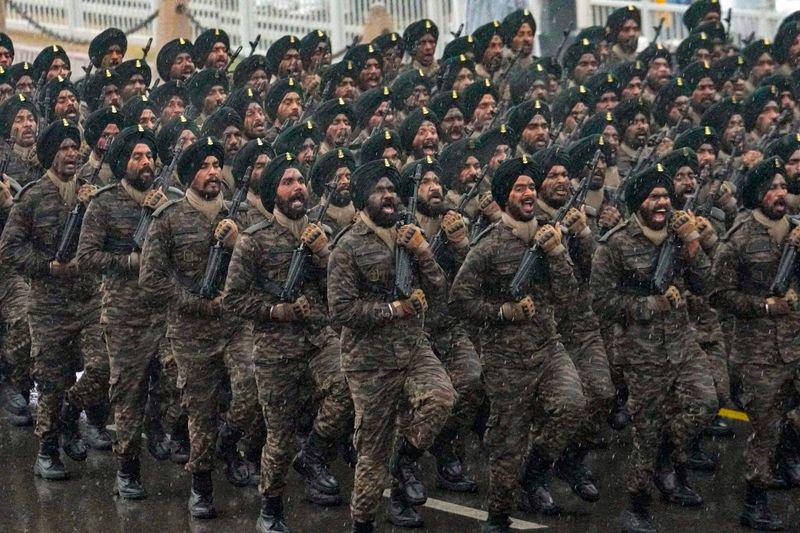
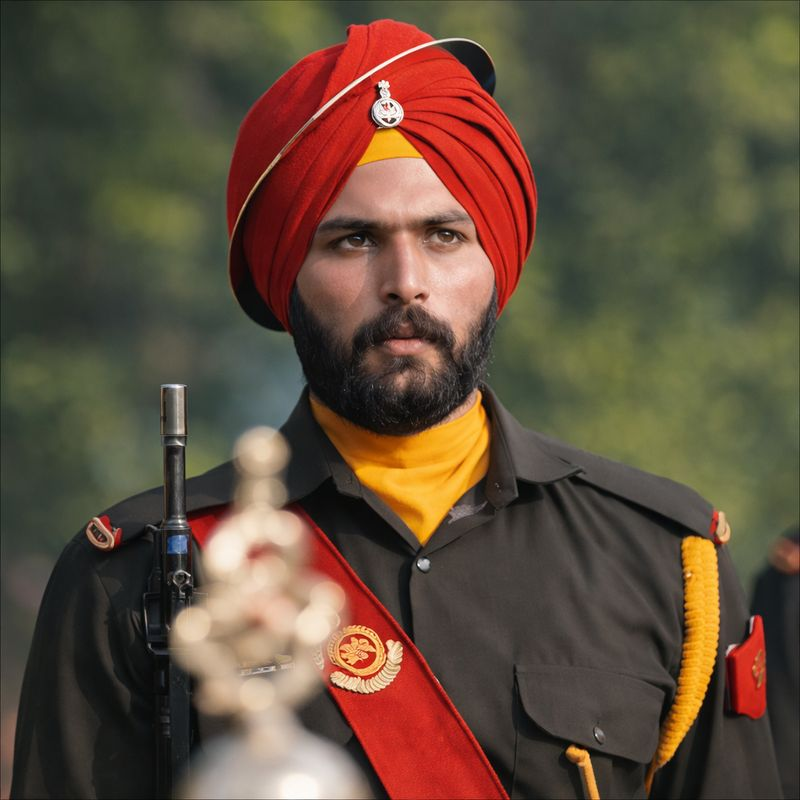
Among the most highly decorated regiments in the Indian Army, its history goes back to August 1846
As many as seven battalions of the Sikh Regiment were conferred unit awards on Army Day for their outstanding performance and operational effectiveness during the preceding year.
Among them, two battalions received the Chief of the Army Staff (COAS) Unit Citation, one battalion was awarded the COAS Unit Appreciation and four battalions were conferred the Army Commander’s Unit Appreciation.
“Receiving such a large number of honours at a single time is a rare and prestigious achievement,” a defence spokesperson said on Tuesday. “These achievements reinforce the Sikh Regiment’s legacy of valour and professional excellence,” he added.
Earlier, a similar occasion arose in January 2015, when six battalions of the Sikh Regiment were recognised for their exemplary service. The Regiment comprises 20 regular battalions and three Territorial Army battalions.
Among the most highly decorated regiments in the Indian Army, its history goes back to August 1846, when the first battalion was officially raised just before the partial annexation of the Sikh Empire by the British East India Company, which then started recruiting Sikh soldiers into its Bengal Army.
The Regiment evolved consistently over the years and participated in numerous campaigns across the world, including the North West Frontier Province, Middle East, Africa, Europe and China. Post-Independence, the regiment has fought in all major wars and operations undertaken by the Indian Army.
Its large tally of pre and post-Independence gallantry awards include 14 Victoria Cross, two Param Vir Chakra, four Askok Chakra, 75 Battle Honours and 38 Theatre Honours.
The Sikh Regiment draws its manpower for its rank and file from Punjab and predominantly recruits from the Jat Sikh community, though officers, like for all other regiments, are assigned from all over India at the time of their commissioning.
“The true strength of the Regiment lies in the youth of Punjab, who proudly carry forward the warrior traditions passed down through generations. Despite certain manpower-related challenges, the Sikh Regiment continues to demonstrate high standards of performance and consistently meets the Indian Army’s elevated expectations,” the spokesperson said.
The Regiment has appealed to the youth of Punjab to step forward, join the Sikh Regiment, and become a source of pride for their parents and families. Serving in such a renowned and prestigious regiment is a matter of great honour and privilege.
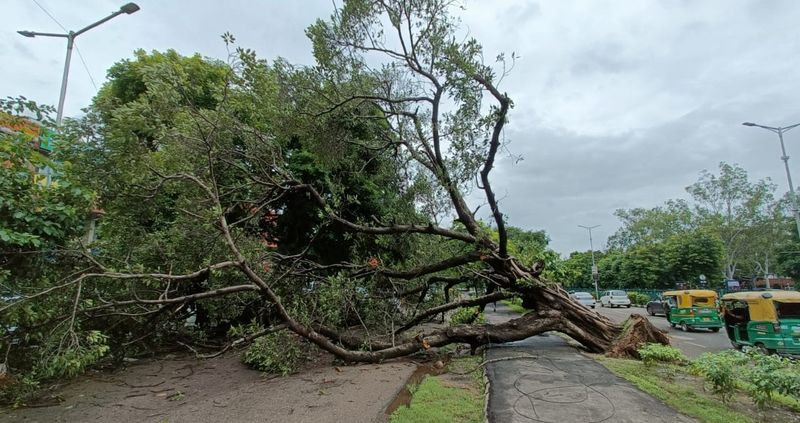
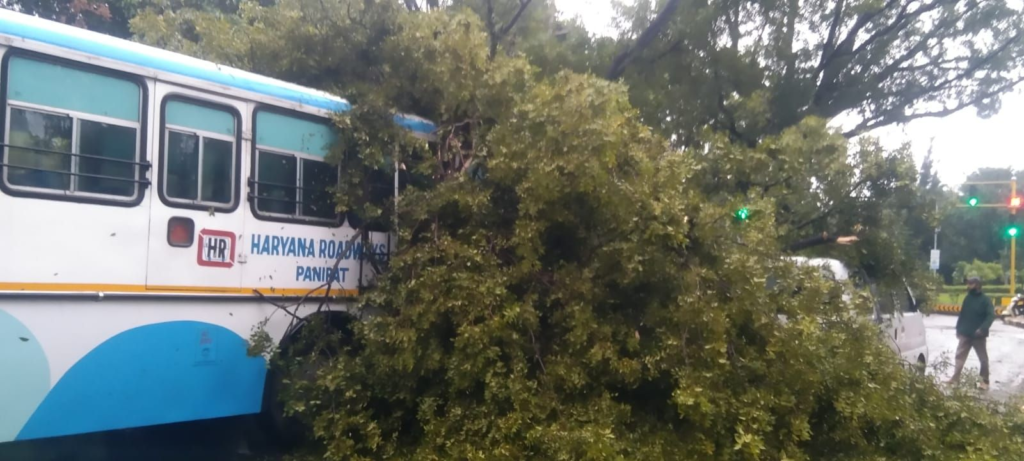
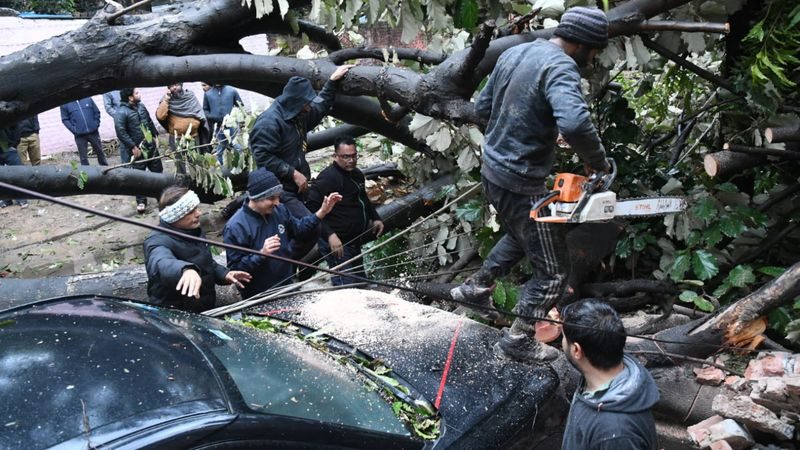
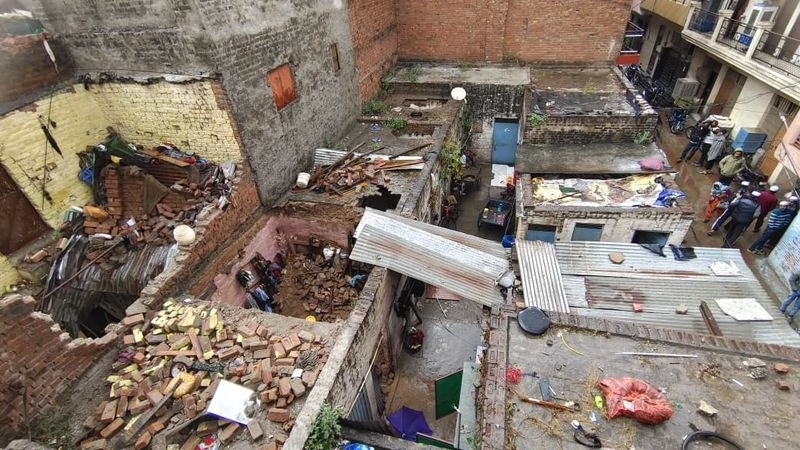
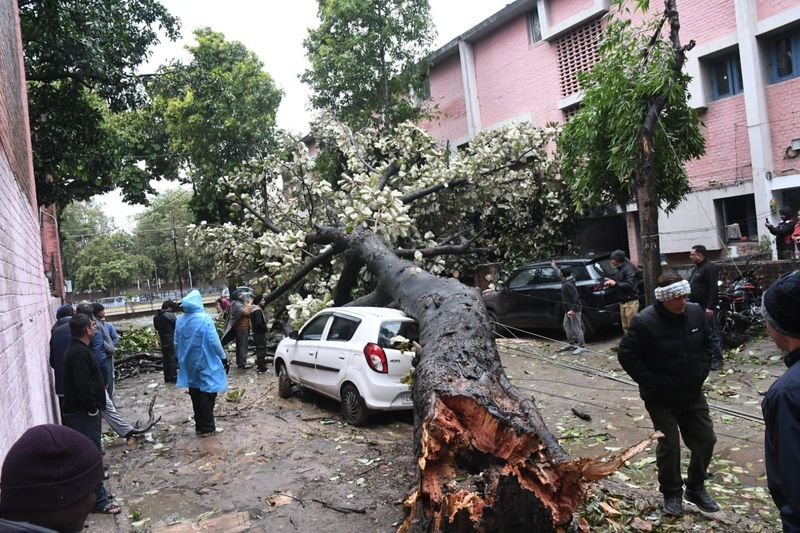
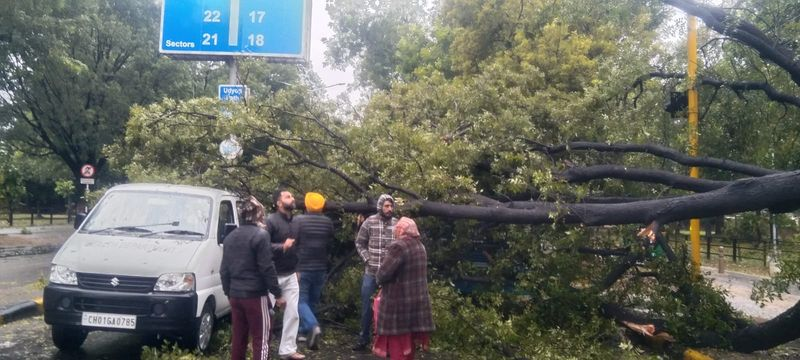
Storm batters Tricity, leaves trail of destruction
An uprooted tree on Madhya Marg at Sector 9 in Chandigarh after continuous rain on Tuesday. Tribune photo: Pradeep Tewari
A tree uprooted amid heavy rain in Chandigarh’s Sector 36. Tribune photo: Pardeep Tewari
Uprooted trees and fallen poles, entangled with broken live electricity wires, blocked roads and internal passages at numerous locations. Tribune photo: Ravi Kumar
The roof of a house that collapsed at Govindpura, Mani Majra in Chandigarh on Friday. Tribune photo: Ravi Kumar
Cars damaged after trees that were uprooted due to heavy rain and high velocity winds at Sector 29 in Chandigarh on Friday. Tribune photo: Ravi Kumar
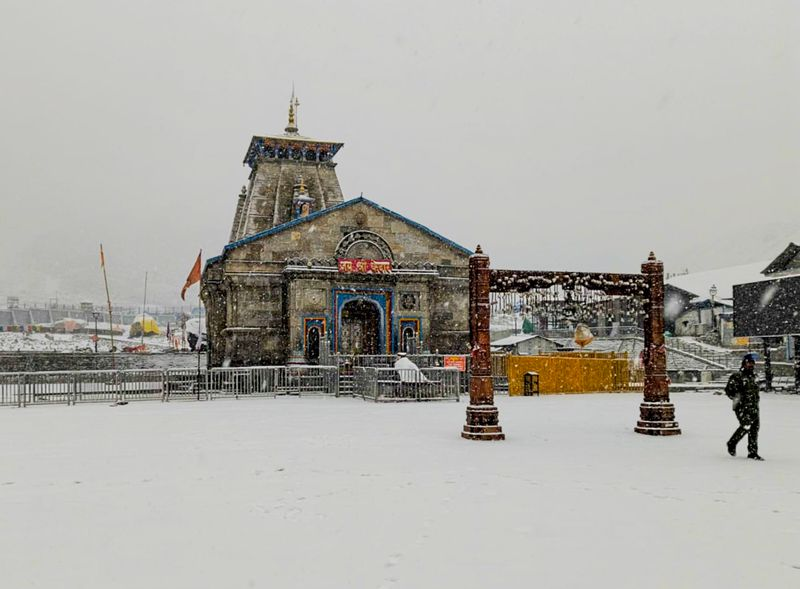
A view of the snow-covered Kedarnath Temple amid snowfall, in Kedarnath, Rudraprayag district of Uttarakhand, Friday. PTI photo
PATALA HEAVY RAINS
An excavator clears mud and silt following cloudbursts and heavy rain, in Dehradun on September 17, 2025. PTI
State Stalwarts
DEFENCE MINISTER
Minister Rajnath Singh
ALL HUMANS ARE ONE CREATED BY GOD
HINDUS,MUSLIMS,SIKHS.ISAI SAB HAI BHAI BHAI
CHIEF PATRON ALL INDIA SANJHA MORCHA
LT GEN JASBIR SINGH DHALIWAL, DOGRA
SENIOR PATRON ALL INDIA SANJHA MORCHA
MAJOR GEN HARVIJAY SINGH, SENA MEDAL ,corps of signals
.
.
PATRON ALL INDIA SANJHA MORCHA
MAJ GEN RAMINDER GURAYA ,MADRAS REGIMENT
sanjhamorcha303@gmail.com
PRESIDENT SOUTH ALL INDIA SANJHA MORCHA
COL SS RAJAN BOMBAY SAPPERS,
PRESIDENT UTTARAKHAND ALL INDIA SANJHA MORCHA
COL B M THAPA ,BENGAL SAPPERSS
PRESIDENT HARAYANA STATE CUM COORDINATOR ESM
BRIG DALJIT THUKRAL ,BENGAL SAPPERS
PRESIDENT TRICITY
COL B S BRAR (BHUPI BRAR)
PRESIDENT CHANDIGARH ZONE
COL SHANJIT SINGH BHULLAR
.
.
PRESIDENT PANCHKULA ZONE AND ZIRAKPUR
COL SWARAN SINGH
INDIAN DEFENCE FORCES
DEFENCE FORCES INTEGRATED LOGO
INDIAN AIR FORCE
Air Officer C-in-C WESTERN AIR COMMAND
AIR MSHL S PRABHAKARAN AVSM VM
AOC-IN-C, EASTERN AIR COMMAND
Air Marshal Inderpal Singh Walia
AOC-in-C SOUTH WESTERN AIR COMMAND
Air Marshal Vikram Singh
AOC-IN-C, SOUTHERN AIR COMMAND
Air Marshal J.Chalapati
AOC-IN-C TRAINING COMMAND
AIR MARSHAL SK GHOTIA VSM
AOC-IN-C MAINTENANCE COMMAND
Air Marshal Jagdish Chandra
Flag Officer Commanding in Chief, Western Naval Command
ice Admiral R Hari Kumar, PVSM, AVSM, VSM
Flag Officer Commanding in Chief, Eastern Naval Command
Vice Admiral Sanjay Bhalla, AVSM, NM
Flag Officer Commanding in Chief, Southern Naval Command