Bengaluru topped the list of 111 cities in the government’s ‘Ease of Living Index’ on Thursday, followed by Pune, Ahmedabad, Chennai, Surat, Navi Mumbai, Coimbatore and Vadodra.
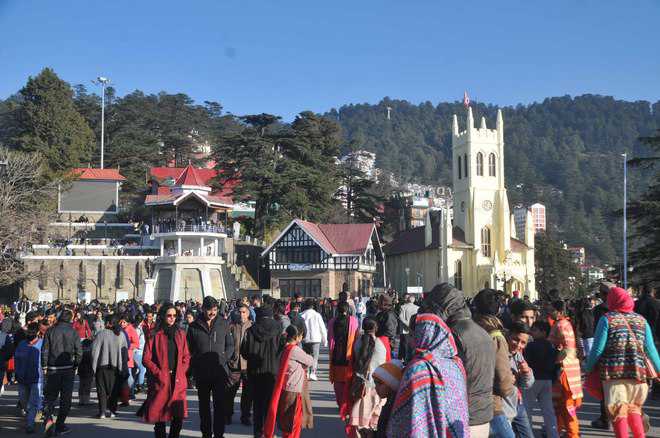
According to the index released by Union Housing and Urban Affairs Minister Hardeep Singh Puri, Shimla was ranked top in the category of cities with ‘population less than million’.
New Delhi Municipal Council topped the ‘Municipal Performance Index’ list in the ‘less than million population’ category.
Jaishankar discusses ways to boost bilateral relations with Bangladeshi counterpart
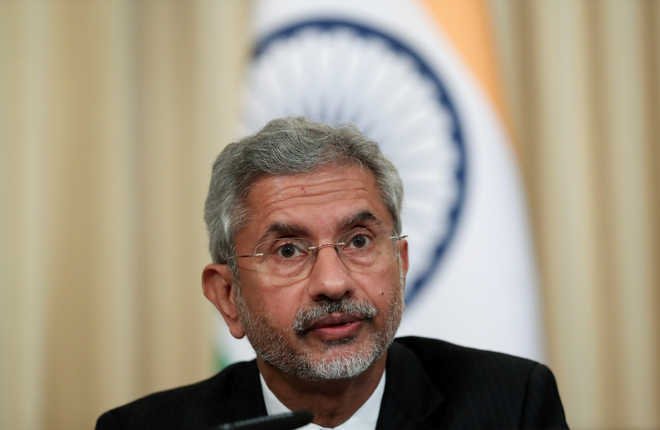
External Affairs Minister S Jaishankar on Thursday met his Bangladeshi counterpart AK Abdul Momen and held wide-ranging discussions on ways to take forward the bilateral relations.
As part of India’s ‘Neighbourhood First’ policy, Jaishankar arrived here on a day-long visit to prepare the ground for Prime Minister Narendra Modi’s upcoming visit to Bangladesh.
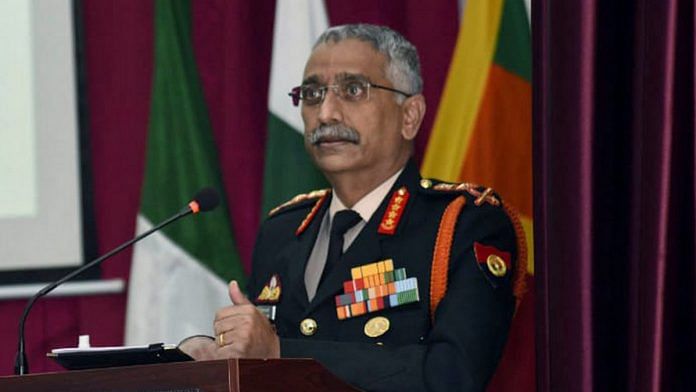
China realised its habit of creeping forward will not work with India, Army chief says General M.M. Naravane noted that the disengagement process at Pangong Tso was a ‘win-win’ for both India and China.
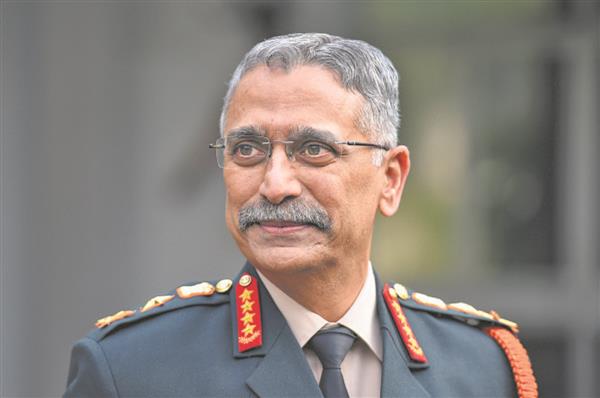
New Delhi: China has realised that its habit of creeping forward and achieving its aim without firing a shot or suffering casualties will not work with India, said Army chief General M.M. Naravane Wednesday.
“China has been in the habit of creeping forward, making small incremental changes…and because of these small incremental moves, which has never been contested, it has been able to achieve its aim without firing a shot or suffering casualties. We have shown that this strategy will not work with us and every move will be met resolutely,” said Gen Naravane, while addressing a webinar.
Speaking for the first time on the issue since India and China completed the disengagement process at the Pangong Tso in Ladakh last week, Naravane said that whatever has been achieved so far was “very good”.
He credited the disengagement to the approach taken by entire government machinery —political, diplomatic and economic besides the military — and advice by National Security Advisor Ajit Doval.
“We (government machinery) were all in it together. We had our plan chalked out which we had discussed what should be the way forward. Whatever has panned out has happened as a result of that,” said Naravane at a webinar organised by Vivekananda International Foundation (VIF), a New Delhi-based think tank.
He added: “What we have achieved so far is very good. Having a number of meetings…the advice given by the NSA came handy and his insight into strategic matters, helped us.”
He further noted that the disengagement was a “win-win” situation for both India and China, and for any agreements to last both sides should feel that they have achieved something.
“To that end, this is a good outcome of the 10 rounds of talks,” the Army chief said, referring to the 10 rounds of Corps Commander level talks that were held between India and China.
During his address, Gen Naravane also noted that while the disengagement process has been completed, the Army continues to be cautious and wary.
“There is a trust deficit and unless it is removed, we will continue to be wary and watchful of all kinds of movements. At end of the day, we have achieved a lot.”
He said the disengagement agreement signed with China is premised on the fact that it will be observed in letter and spirit, as is the case with any agreement signed with another country.
“We will trust but we will verify. We have put our systems in place to ensure there is no re-occupation of the heights (southern and northern banks). It is part of the agreement and we can only hope that PLA will adhere to it in toto,” said Naravane.
He further highlighted that certain issues remain pending between the two countries, and the Army had strategies in place for them.
“We have our strategies in place for that. Do we have anything to negotiate? Yes, we definitely have, but I can’t say what those strategies will be, to again come out with a favourable outcome.”
The Army chief also spoke about China’s tactics of creeping with small incremental changes without any casualty or firing a shot. He noted that China has been similarly creeping forward in the South China Sea.
This tactic by China is known as ‘salami slicing’ in the strategic community and refers to the Chinese taking over territory inch by inch over years.
In September 2017, then Army chief and present Chief of Defence Staff General Bipin Rawat had cautioned against this.
“Salami slicing, taking over territory in a very gradual manner, testing our limits of threshold is something we have to be wary about and remain prepared for situations emerging, which could gradually emerge into conflict…,” Rawat had said.
According to Naravane, even after disengagement the military is prepared for a two-and-a-half front war.
“These are threats in being. Whether they manifest or not…We should prepare for the worst but hope for the best,” he said, adding that plans are in place to defend the primary and secondary front.
The Army chief also said that over the years, India has focused primarily on the western front than the northern front but this will change now.
Naravane further noted that there was “no overt sign” of any collusion between Pakistan and China during the Ladakh stand-off and whatever they were doing, they continued to do.
“There was no large mobilisation that would say any help is being given,” he said.
He added that the Ladakh stand-off showed India’s resolve in maintaining its interest foremost.
On India’s relationship with China going forward, the Army chief said, “Our relationship with China would develop along the road that we wish to develop. We will like to have peace and tranquility on the border and all other engagement will continue… nobody wants an unsettled border.”
Naravane also highlighted that India wants peaceful ties with all neighbours and stressed on the need to have settled borders.
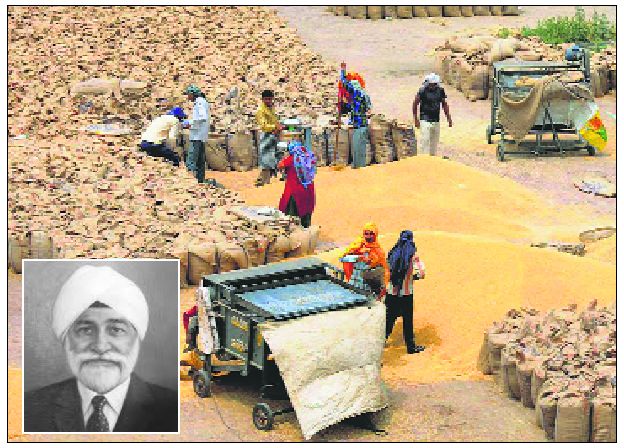
Gurnam Singh, the first non-Congress CM of Punjab, believed that agriculture was viable only with govt support. Industry, on its own, can’t sustain farming. But a prosperous farming community would sustain the industry by giving it a large consumer base. The govt will find that funding agriculture will pay far more social and financial dividends than subsidising bad industrial loans or promoting crony capitalism.
CM’S CONTRIBUTION: Gurnam Singh (inset) offered incentives to farmers. PTI
Gurbir Singh
President, Guru nanak Education Trust, Ludhiana
The 122nd birth anniversary of Justice Gurnam Singh, the first non-Congress Chief Minister of Punjab, falls today. He was one of the architects of the agriculture policy that made India surplus in foodgrains. This is relevant today amid the farmers’ agitation against the Central Government for repeal of the three new farm laws. In the mid-1960s, India suffered from major food deficits and even famine. It was dependent on American food aid, termed PL480. The country was an unregulated market where big traders purchased foodgrains at low prices from farmers and sold them at huge profits to deficient states. The then PM Indira Gandhi raised the alarm at the distress caused by food shortages and high prices.
After taking charge as CM in 1967, Gurnam Singh announced remunerative prices for farmers. The minimum support price (MSP) for wheat was fixed at Rs 72 for the new ‘Mexican’ variety and Rs 86 for the old varieties. Hoarding and export of wheat from Punjab was banned to ensure price stability for consumers. Union Agriculture Minister Jagjivan Ram accepted Punjab’s request for the purchase of surplus foodgrains by the Food Corporation of India (FCI) at the MSP. At the state level, a policy of setting up village mandis or agriculture market was framed; till then, the mandis were mainly restricted to urban centres. The policy of rural electrification and link roads for connectivity to mandis was initiated, making Punjab the first state to do so. The Punjab Agricultural Produce Markets Act for regulating the mandis was passed by the Unionist Party government of Sir Sikander Hyatt Tiwana in 1939. It was the brainchild of the then Development Minister, Sir Chhotu Ram. The Act was amended in 1961. The MSP was adopted by Union Agriculture Minister C Subramaniam on the advice of American scientist Frank Parker in 1966 at Rs 54 per quintal. But a major incentive to farmers that led to the food surplus came when Punjab revised the procurement price to Rs 72 in 1967. Haryana followed suit. Gurnam Singh went on to head the Indian delegation at the World Food Conference at Rome, the only Chief Minister to have this honour.
Coming back to the present, the new farm laws have been hailed by captains of industry and some economists as the ‘1991 moment’, a reference to the economic reforms of Manmohan Singh.
However, the farmers have rejected the laws. It is feared that India will again become an unregulated zone for agriculture and market forces will determine prices for farmers and consumers. Provision for corporate houses to open private mandis without paying taxes applicable to the APMC mandis may lead to the latter’s closure. Stockpiling is allowed. The stipulated contract is biased in favour of companies. The farmers say this is a return to the pre-1967 era of hoarding, artificial surpluses and shortages, low purchase prices for the cultivator and inflated prices for the consumers. Hence, they want the laws repealed and redrafted.
Farming involves, in some form, 70 per cent of the Indian population. About 90 per cent of the farmers are poor and marginal. Agriculture contributes only 16 per cent of the GDP because of lack of government funding. Farmers are under heavy debt and over 4,00,000 have committed suicide since 1996. The new reforms have triggered unease that will take over agriculture. Farmers fear they will lose their lands to crony capitalism. Farmers of Punjab and Haryana who made the country self-sufficient in foodgrains by their hard work, say that MSP and FCI procurement, their main source of income, are being eased out and they will be left at the mercy of big businesses. So, they have taken the path of agitation.
Instead of addressing the concerns of the farmers, the Centre has chosen the path of defaming them and suppressing the movement by repression and the use of draconian laws.
Punjab, which then included Haryana, saw the biggest agrarian agitation of the 20th century for the repeal of three farm laws enacted by the British Government in 1907. Then too, there were mass detentions and compromise formulas were floated, including one brought forward by Lala Lajpat Rai.
But after nine months of struggle, the laws were repealed. The agitation, titled Pagdi Sambhal Jatta or “preserve the rights and honour of farmers” is being replicated at Delhi’s borders today and steadily spreading to other parts of the country. The violation of human rights of peaceful protesters and those speaking up for them has brought about international condemnation.
So, what is the way forward? Gurnam Singh believed agriculture was viable only with government support. Big business could supplement, but not be a substitute for state funding. Industry, on its own, could not sustain farming. But a prosperous farming community would sustain the industry by giving it a large consumer base. He found support from the likes of Dr MS Randhawa, a brilliant civil servant, a farmer himself, who served as Vice-Chancellor of Punjab Agricultural University, as also Partap Singh Qadian, founder of the original BKU. The US, Canada, EU, Japan and China heavily subsidise farming to maintain price stability and a minimum income for farmers. China subsidises agriculture four times more than India. So, the government must allocate more funds for agriculture through MSP and direct payment to farmers; and capital expenditure on technology, water and soil conservation, research, agro industry, opening APMC mandis and so forth.
It should give incentives to farmers of Punjab and Haryana to switch from rice and wheat to other crops. The government will find that funding agriculture will pay far more financial and social dividends than subsidising bad industrial loans or promoting crony capitalism. Or else, India will remain a poor country with weak institutions while other Asian countries move ahead.
Retired Armymen support farmers at Ghazipur border Mani Dev Chaturvedi, National Joint Secretary, Veterans Association of India, said that whichever government went against the wishes of people was always defeated
Farmers and agricultural workers attend a rally against farm laws, in Barnala, northern state of Punjab. — Reuters
New Delhi, February 24
Retired Army personnel came out in full support of the protesting farmers at Ghazipur on the Delhi-UP border on Wednesday.
IANS spoke to Anurag Lathwal, National Secretary, Veterans Association of India, and he said: “All demands of the farmers are genuine. The central government intends to push the agriculture sector into the hands of industrialists in the same manner as it has handed petrol, diesel and airports in the hand of industrialists.”
Jai Prakash Mishra, National President of the Veterans’ Association, said: “We had been supporting the farmers from the start and would continue to do so.”
Gurcharan Singh, the District President of Lakhimpur Kheri branch of the Veterans Association, said: “There is a huge difference between what the Modi government says and what it does. Therefore, the Modi government cannot be trusted.”
He said the three “black farm laws” were like a death warrant for the farmers and also said the government should not be allowed to do whatever it wants.
Mani Dev Chaturvedi, National Joint Secretary, Veterans Association of India, said that whichever government went against the wishes of people was always defeated.
He said: “History is witness to the fact that evil was always defeated as were Ravana, Kansa and Duryodhana.” — IANS
Submit Nodeep’s medical report on record, rules HC Next hearing tomorrow
Just about two days after labour activist Nodeep Kaur claimed before the High Court that she was beaten black and blue in the police station after being arrested in a “false” case in connection with the farmers’ agitation, the High Court on Wednesday noted the medical report had not been placed on record by the state.
As her petition seeking bail came up for resumed hearing, Justice Avneesh Jhingan asserted that the Sonepat Duty Magistrate/Judicial Magistrate First Class, vide order dated January 18, had ordered that Nodeep Kaur be medically examined.
“She was medically examined, but the report has not been placed on record by the state, rather only medico-legal report under Section 54 of the CrPC is placed on record,” Justice Jhingan observed before fixing the case for further hearing on February 26 for the state counsel to place the report on record.
Nodeep had moved the court through senior advocate RS Cheema and Arshdeep Singh Cheema alleging a false implication in an FIR registered for attempt to murder, assault or criminal force to deter public servant from discharge of his duty and other offences.
Justice Jhingan also directed the placing on record medico-legal report in case of co-accused Shiv Kumar. The court, on February 19, had ordered Shiv Kumar to be examined by the Medical Superintendent, Government Medical College and Hospital, Sector 32, Chandigarh. “To appreciate the real controversy, report of medical examination of Shiv Kumar under Section 54 CrPC be also produced on record,” Justice Jhingan directed.
The Bench also recorded the submission of senior advocate RS Cheema and Arshdeep Singh Cheema on the petitioner’s behalf that Shiv Kumar required medical attention and may be shifted to Sector 32 hospital.
Mistrust hits pullback, troops not yet back at home bases Present position not face to face, but within striking range of artillery fire
Ajay Banerjee
Tribune News Service
New Delhi, February 24
Even as there has been visible disengagement of Indian and Chinese troops along a section of the Line of Actual Control in eastern Ladakh, the de-escalation and deinduction — which means pulling back troops and war equipment to the pre-April 2020 home bases — have not yet begun in the area.
At the commander-level meet on Saturday, the two sides did discuss phased de-escalation and deinduction, but there has been no forward movement on the two issues, sources told The Tribune, adding that “it could take more talks as a lack of trust exists for now”.
Catering for redeployment
The two sides don’t want to pull back to locations from where redeployment, in case of an exigency, could take time, say sources.
The first phase of the disengagement process commenced on February 10 with simultaneous withdrawal by both sides from both banks of the Pangong Tso, a 135-km-wide glacial lake. The matters of disengagement at Depsang, Gogra or Hot Springs are likely to come up in subsequent talks.
Army Chief Gen MM Naravane, speaking at an event of a think tank in New Delhi on Wednesday, sounded a word of caution: “We still have a long way to go. We now have to go on to the stage of de-escalation, then deinduction of troops. We have to be wary and cautious.”
A senior functionary explained that it was a clear case of lack of trust, hence the two militaries didn’t want to pull back to locations from where redeployment, in case of an exigency, could take time.
The present positions of troops, tanks or guns are not face to face but they are within striking range of artillery fire and from where rapid redeployment is possible.
General Naravane too spoke about the lack of trust, saying that “there is trust deficit with China and we will be watching Chinese moves closely”.
Some of mistrust stems from statements of the Chinese Ministry of Defence as well as the Ministry of Foreign Affairs in Beijing, which tried to wrongly blame India for the Galwan clash on June 15 last year. The statements had come on February 19, indicating that China was under pressure from its domestic audience, which has no access to international media or opinion.
China is in the habit of creeping and making very small incremental changes along the LAC where each change by itself doesn’t appear to be very big or worthy of a strong reaction, said the Army Chief.
19 arrested, 25 FIRs lodged for R-Day violence, Centre tells Delhi High Court The petition has sought the removal of people squatting under the garb of farmers agitation and clear all the roads and public places.
As many as 19 people have been arrested and 25 FIRs lodged in connection with the Republic Day violence in the national capital. Reuters photo.
New Delhi, February 24
As many as 19 people have been arrested and 25 FIRs lodged in connection with the Republic Day violence in the national capital during the farmers’ tractor rally in protest against the three new agri laws, the Centre informed the Delhi High Court on Wednesday.
Additional Solicitor General Chetan Sharma and central government standing counsel Ajay Digpaul further told the high court that as many as 50 people have been detained and an investigation was going on into the incident.
They also submitted that adequate security personnel have been deployed at the Red Fort for its safety and security.
Taking note of the government submissions, a bench of Chief Justice D N Patel and Justice Jasmeet Singh sought to know whether any similar matter has been already filed in or was pending before or disposed of by the Supreme Court.
It asked the central government to give it details of any similar matter in the apex court and listed the petition by a Delhi resident, Dhananjai Jain.
The petition has sought the removal of people squatting under the garb of farmers agitation and clear all the roads and public places.
It has also sought a direction to remove the Delhi Police Commissioner from his position with immediate effect and punish all the police officers who allegedly failed in discharging their duties relating to the Red Fort incident on Republic Day.
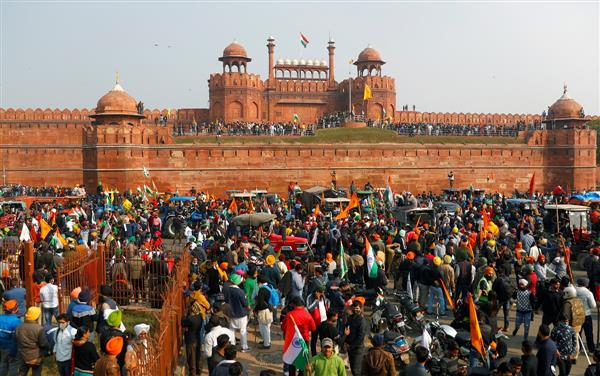
The tractor rally on January 26 that was to highlight the demands of farmer unions to repeal three new agri laws dissolved into anarchy on the streets of the national capital as thousands of protesters broke through barriers, fought with the police, overturned vehicles and hoisted a religious flag from the ramparts of the iconic Red Fort.
The petition has also sought a direction to the Centre to put adequate paramilitary forces to protect important monuments and to ensure the safety of life and property of citizens of Delhi and restore the feeling of confidence and security amongst them.
On January 12, the Supreme Court had stayed the implementation of the contentious new farm laws till further orders and constituted a four-member committee to make recommendations to resolve the impasse over them between the Centre and farmers’ unions protesting at Delhi borders.
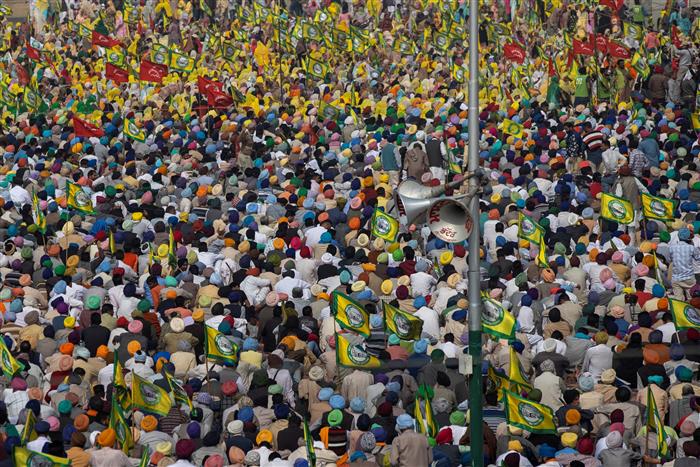
Thousands of farmers, mainly from Punjab, Haryana and western Uttar Pradesh, are protesting at various border points of Delhi for over two months now against the three laws—the Farmers’ Produce Trade and Commerce (Promotion and Facilitation) Act, the Essential Commodities (Amendment) Act, and the Farmers (Empowerment and Protection) Agreement on Price Assurance and Farm Services Act. —PTI
Caged parrot’ Rajnath Singh could resolve impasse if allowed to talk to farmers: Naresh Tikait
Bharatiya Kisan Union president Naresh Tikait. PTI file
Barabanki (UP), February 24
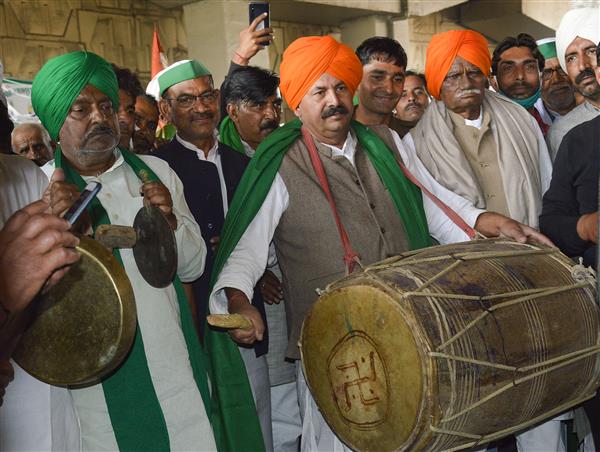
Bharatiya Kisan Union president Naresh Tikait on Wednesday called Defence Minister Rajnath Singh a “caged parrot” and said the farmers’ issues could be resolved if he is given the freedom to talk with them.
He accused the BJP-led central government of being “stubborn” over the three new laws, which farmer unions want repealed. The protesting farmers too are not ready to go back on their demands, he said.
“The government has made Defence Minister Rajnath Singh a caged parrot (‘pinjre ka tota’). If he is given the freedom to talk to farmers, I can guarantee that there would be a decision and the BJP’s prestige will also remain intact,” he said.
He said farmers respect the Defence Minister, but he is not given a chance by the government to deal with the farmers’ issue.
Tikait addressed a farmers’ “mahapanchyat” here and also spoke to reporters, claiming that the Centre was not paying heed to the farmers protesting against the laws.
“The government is stubborn and is not ready to hear out farmers. It should change its attitude,” the BKU leader said.
“If the PM is not ready to repeal the laws, we are also not going to backtrack. The farmers are ruined and not getting the right price for their produce. The rise in prices of power, petrol and diesel has affected them also,” he said.
“If this government continues for long, farmers will have to abandon agriculture,” added.
The BKU leader said the way to Uttar Pradesh’s Purvanchal is through Barabanki and if farmers here are made aware of the impact of the new laws, they will be able to tell farmers in that region about it.
“This government is defaming farmers, labelling them as terrorists and Khalistanis and we will not remain silent on this,” he said.
Tikait indicated that he had no quarrel with Union Minister Sanjeev Balyan, whose supporters and those of the Rashtriya Lok Dal clashed recently over the farmers’ protests.
He indirectly referred to the riots in western Uttar Pradesh in 2013, over which Balyan too had faced charges.
“Earlier Hindus and Muslims lived in amity. But from 2013, BJP spread misconceptions among them and divided society. But now people have understood their tricks,” the BKU leader said.
Thousands of farmers have been camping at the border of Delhi since November-end, demanding the repeal of the new agri-marketing laws. They claim that the laws will weaken the minimum support price (MSP) system, an argument that the government rejects. PTI
State Stalwarts
DEFENCE MINISTER
Minister Rajnath Singh
ALL HUMANS ARE ONE CREATED BY GOD
HINDUS,MUSLIMS,SIKHS.ISAI SAB HAI BHAI BHAI
CHIEF PATRON ALL INDIA SANJHA MORCHA
LT GEN JASBIR SINGH DHALIWAL, DOGRA
SENIOR PATRON ALL INDIA SANJHA MORCHA
MAJOR GEN HARVIJAY SINGH, SENA MEDAL ,corps of signals
.
.
PATRON ALL INDIA SANJHA MORCHA
MAJ GEN RAMINDER GURAYA ,MADRAS REGIMENT
sanjhamorcha303@gmail.com
PRESIDENT SOUTH ALL INDIA SANJHA MORCHA
COL SS RAJAN BOMBAY SAPPERS,
PRESIDENT UTTARAKHAND ALL INDIA SANJHA MORCHA
COL B M THAPA ,BENGAL SAPPERSS
PRESIDENT HARAYANA STATE CUM COORDINATOR ESM
BRIG DALJIT THUKRAL ,BENGAL SAPPERS
PRESIDENT TRICITY
COL B S BRAR (BHUPI BRAR)
PRESIDENT CHANDIGARH ZONE
COL SHANJIT SINGH BHULLAR
.
.
PRESIDENT PANCHKULA ZONE AND ZIRAKPUR
COL SWARAN SINGH
INDIAN DEFENCE FORCES
DEFENCE FORCES INTEGRATED LOGO
INDIAN AIR FORCE
Air Officer C-in-C WESTERN AIR COMMAND
AIR MSHL S PRABHAKARAN AVSM VM
AOC-IN-C, EASTERN AIR COMMAND
Air Marshal Inderpal Singh Walia
AOC-in-C SOUTH WESTERN AIR COMMAND
Air Marshal Vikram Singh
AOC-IN-C, SOUTHERN AIR COMMAND
Air Marshal J.Chalapati
AOC-IN-C TRAINING COMMAND
AIR MARSHAL SK GHOTIA VSM
AOC-IN-C MAINTENANCE COMMAND
Air Marshal Jagdish Chandra
Flag Officer Commanding in Chief, Western Naval Command
ice Admiral R Hari Kumar, PVSM, AVSM, VSM
Flag Officer Commanding in Chief, Eastern Naval Command
Vice Admiral Sanjay Bhalla, AVSM, NM
Flag Officer Commanding in Chief, Southern Naval Command