




Sanjha Morcha

What’s New

Click the heading to open detailed news

Current Events :

web counter

Print Media Reproduced Defence Related News

Polyclinics for defence veterans get more medical staff so they can run 24×7 amid Covid surge

Defence ministry has sanctioned additional staff, including a medical officer, a nursing assistant & a pharmacist, for 51 ‘high pressure’ ECHS polyclinics for 3 months.
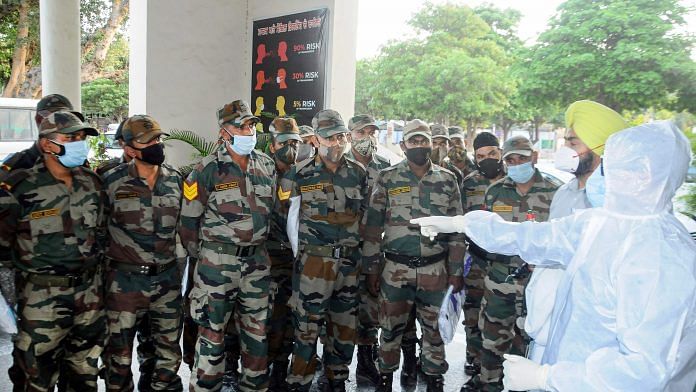
Doctors giving instructions to army medical personnel during their special duty for coronavirus cases, in Patiala, on 26 April 2021 | PTI Photo

New Delhi: The Ministry of Defence has sanctioned additional contractual medical staff at 51 “high pressure” Ex-servicemen Contributory Health Scheme (ECHS) polyclinics for three months.

The new staff — including a medical officer, a nursing assistant and a pharmacist, among others — will be over and above the authorised staff strength at the polyclinics, the defence ministry said in a tweet.https://0393a91a87522a63831e407ec18f7174.safeframe.googlesyndication.com/safeframe/1-0-38/html/container.html

The idea is to ensure that these polyclinics are operational round the clock for ECHS beneficiaries requiring urgent medical attention, particularly in the wake of the additional burden they are facing during the second wave of the Covid-19 pandemic, defence sources told ThePrint.

Most of the identified polyclinics are located in metros which are densely populated. There are over 400 ECHS polyclinics operating across India.

Senior defence officials told ThePrint the decision was taken Monday.

The move is part of a fresh set of efforts initiated by the government and the armed forces for the veterans. The sources said it possibly stems from the concerns that a large number of the veterans were not being able to avail the services of these polyclinics and other military hospitals due to a surge in Covid-positive patients seeking treatment there.

“The move was initiated in the wake of the burgeoning Covid-19 positive cases to ensure that ECHS polyclinics are equipped well beyond their usual timings to attend to serious and emergency cases requiring urgent medical attention,” a defence source said.

The source said while most patients with mild symptoms have been advised home quarantine, there are cases that require continuous monitoring.

“Thus the need for additional staff in polyclinics to provide urgent medical attention to patients, particularly in the night hours,” said a services officer.


Also read: Army sets up cell to ensure ‘decent last rites’ for veterans, dependents succumbing to Covid


Efforts for armed forces veterans

The ECHS provides allopathic and AYUSH medicare to ex-servicemen pensioners and their dependents through a network of polyclinics, service medical facilities, civil empanelled or government hospitals and specified government AYUSH hospitals across India.

The scheme has been structured on the lines of the Central Government Health Scheme (CGHS) to ensure cashless transactions for the patients. It is financed by the central government.

Last week, Southern Army Commander Lieutenant General J.S. Nain wrote to veterans, stating that serving and retired personnel would be provided the same medical treatment and facilities amid the spiralling coronavirus positive cases.

Recently, Western Army Commander Lt. Gen. R.P. Singh also assured armed forces veterans and their families of medical care and other requisite assistance, stating that all military hospitals will be accepting ECHS beneficiaries and all ECHS polyclinics and ex-servicemen cells will proactively deal with Covid cases among veterans and their families.

Earlier, ECHS beneficiaries were told to explore telehealth facilities at the triservice teleconsultation service of the defence ministry at www.sehatopd.in to avoid a risk of contracting the virus.

Moreover, a sanction for purchase of prescribed medicines to ECHS beneficiaries from any available pharmacy has been accorded, for which they can claim reimbursements upto 31 July 2021. This will prevent crowding at polyclinics.

The Army has also set up a cell to ensure ‘decent last rites’ for veterans, dependents who are succumbing to Covid-19.


Also read: Army, Navy, Air Force seek emergency financial powers for 3 months to tackle Covid crisis

Committed to giving care & treatment for Covid to veterans, says Indian Army

Doctors giving instructions to army medical personnel during their special duty for coronavirus cases, in Patiala, on 26 April 2021 | PTI Photo

New Delhi: The Indian Army said on Tuesday it is committed to give care and treatment for COVID-19 to its veterans and would like them to approach the nearest Army facility for any kind of assistance.

“The Indian Army is taking multiple steps to enhance its medical capacities on account of rise in COVID-19 cases amongst the veterans and their dependents,” its statement noted.

The base hospital at Delhi and service hospitals at all military stations are working tirelessly to accommodate maximum veterans, it said.

These hospitals are continuously ramping up their capacities to ensure that beds are available, the statement added.

Veterans affected by COVID-19 are being guided and assisted in getting medical advice and admission in various hospitals, it noted.

With 3,23,144 people testing positive for the coronavirus infection in a day, India’s total tally of COVID-19 cases has climbed to 1,76,36,307, while the national recovery rate has further dropped to 82.54 per cent, according to the Union Health Ministry data updated on Tuesday.

The death toll increased to 1,97,894 with 2,771 daily new fatalities, the data updated at 8 am showed.


Also read: Army, Navy, Air Force seek emergency financial powers for 3 months to tackle Covid crisis

All eyes on Afghanistan

US pullout will lead to a race for natural resources, with China as the most active player

All eyes on Afghanistan

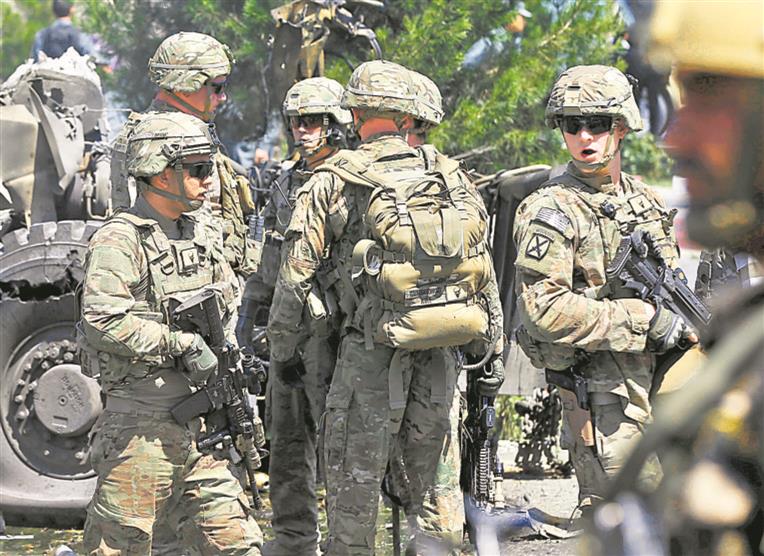
FLOWING OUT: A recent American study has indicated that the war in Afghanistan has cost the US treasury a mind-boggling $2.26 trillion. Reuters

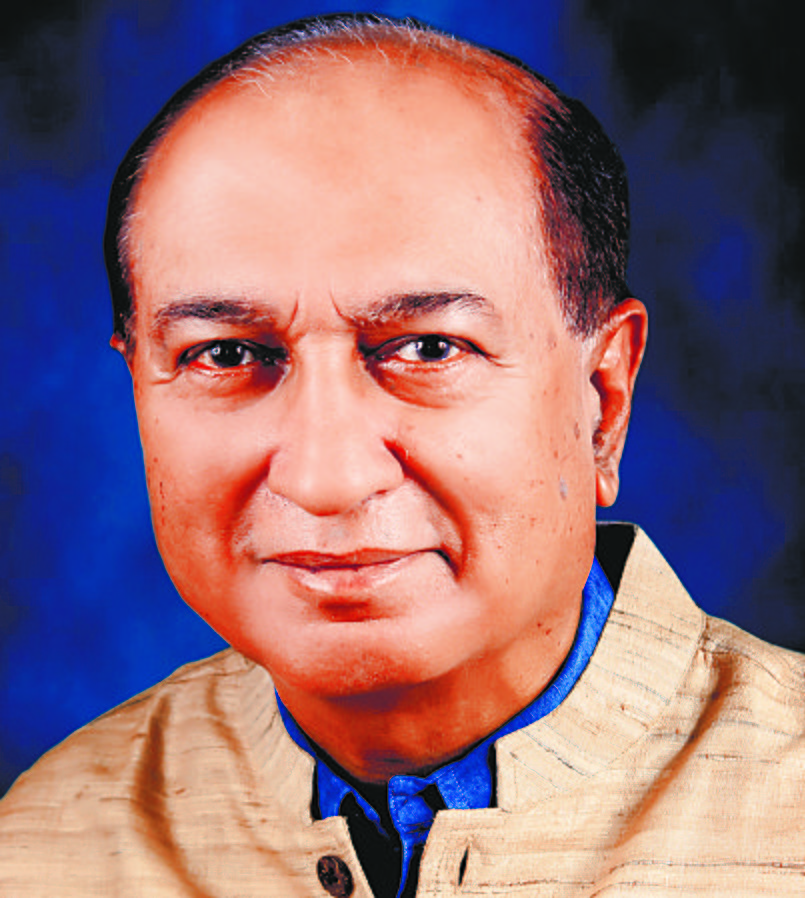
G Parthasarathy

Chancellor, Jammu Central University & former High Commissioner to

US President Joe Biden announced on February 14 that all American troops would be withdrawn from Afghanistan by September 11. This would bring to an end the longest war in US history whose roots were laid two decades earlier. On September 11, 2001, US cities were subjected to four coordinated attacks, masterminded by the Al-Qaeda, led by Osama bin Laden, operating from Taliban-ruled Afghanistan. As many as 2,977 Americans died. The attacks led to the most prolonged US military operations ever. US commandos killed Osama in Pakistan’s Abbottabad. He was living at a virtual stone’s throw away from Pakistan’s military academy. American diplomacy was so confused and inept that rather than censuring and sanctioning Pakistan, successive US Presidents acted as virtual apologists for the Pakistan army.


The Afghanistan government would require financial assistance from the US and its allies, together with military supplies and air support, to survive.

A recent American study has indicated that the war in Afghanistan has cost the US treasury a mind-boggling $2.26 trillion and resulted in 2.41 lakh people killed, including 2,372 US military personnel. Thanks to Pakistan’s omnipresent ISI, the Afghan conflict also saw the emergence of closer ties between the ISI, the Taliban, and Afghanistan-based Pakistani terrorist groups operating against India. These included the Jaish-e-Mohammed and the Lashkar-e-Taiba. These links will inevitably continue. The Taliban, after all, treated the hijackers of IC 814 like heroes, as India surrendered ignominiously, releasing terrorists like Maulana Masood Azhar, Omar Saeed Sheikh and Mushtaq Zargar.

Contrary to popular belief, Afghanistan is not a monolithic country. The country has 14 distinct ethnic and linguistic denominations, including Pashtuns, Tajiks, Kyrgyz, Balochis, Turkmen and Uzbeks. Pashtuns, who constitute 40.9% of the population, are mainly in southern Afghanistan. The Tajiks, constituting 37-39%, live in northern Afghanistan bordering Central Asia. The Durand Line drawn arbitrarily by the British is not accepted as an international border by Afghan Pashtuns, who believe Afghanistan’s borders extend to the Indus near Attock in Pakistan. The main question posed today is, why is there so much interest, and, indeed, rivalry among China, the US, Russia, the EU, Pakistan and others to have a finger in the Afghan pie?

A major reason for this extraordinary external interest of these powers in Afghanistan is that it is a goldmine of mineral and material resources. The country’s high-quality emeralds, rubies, etc., have long excited the international gemstone market. The United States Geological Survey has concluded that Afghanistan may hold 60 million metric tonnes of copper, 2.2 billion tonnes of iron ore, 1.4 million tonnes of rare earth elements, and veins of aluminum, gold, silver, etc. From the point of view of mining tycoons, these resources are there for the picking. The US withdrawal will lead to a race for access to Afghanistan’s natural resources, with China as the most active participant.

Pakistan is obsessed with using Afghanistan for ‘strategic depth’ to promote terrorism in India. In the days before the 9/11 US intervention, the ‘strategic depth’ that Pakistan received in Taliban-ruled Afghanistan was the availability of training camps for its jihadi groups. In days after US intervention, the Taliban provided facilities for Pakistan-based groups to attack Indian consulates in Herat and Jalalabad. The Indian embassy in Kabul has been under constant threat of attacks. Indian engineers and professional staff working on development projects in Afghanistan face similar threats.

With the passage of time, the Taliban will seek to obtain dominant control of territory. The Taliban and other ISI protégés, like the Haqqani network, could overrun significant parts of southern and eastern Afghanistan. New Delhi needs to make a careful assessment on whether it would be feasible, or desirable, to join others in providing weapons and equipment, including air power, to the Afghan armed forces.

A major feature of Indian involvement in the Afghan conflict, prior to US intervention, was India’s close ties with Iran and Tajikistan, which were transit points for Indian military and relief assistance to the Afghan resistance, known as the Northern Alliance. Tajik war hero Ahmed Shah Masood then led the resistance. Iran has sectarian and ethnic aversions for the Taliban, though it presently seems to have opted to proceed cautiously. Iran can intervene when the Taliban seeks to take control of non-Pashtun, or Shia-dominated areas in Afghanistan’s provinces bordering Iran, or Central Asian Republics like Uzbekistan and Tajikistan.

At the same time, the Russians who backed the Northern Alliance prior to the American invasion, now appear to be singing a different tune by backing the Taliban. One wonders how the Russians will respond to concerns in their erstwhile Soviet Republics in Central Asia about the Taliban reaching their borders. Trends on these issues need to be analysed and acted on. New Delhi should undertake detailed discussions not only with the Afghan government, but also major regional leaders in Afghanistan on how to proceed in the coming months. An odd development one faces is that the Afghan ‘peace process’ treats the Afghanistan government and the Taliban on a virtually equal footing. Little thought seems to have been given on how to politically deal with the Taliban, which has the support of only a section of Afghanistan’s Pashtun population. It is, however, unlikely that the Taliban can prevail over the Afghan national army across the entire Pashtun heartland.

The Afghan government would require financial assistance from the US and its allies, together with military supplies and air support, to survive. Given past American policies, one can never be sure of assistance, particularly air support from the US, in the future. India would have to keep in touch with a wide cross-section of Afghan political leaders as the resistance to a Taliban takeover would be strong and widespread. It would, however, be prudent to retain contacts with sections of the Taliban. Pakistan will, in the long run, face territorial and other claims by any government in Afghanistan which is sensitive to Pashtun aspirations.


DRDO to set up two 500-bed hospitals in Jammu, Srinagar

DRDO to set up two 500-bed hospitals in Jammu, Srinagar

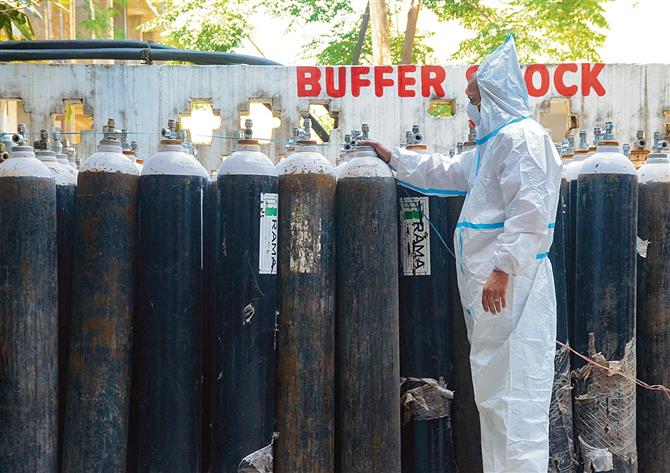
A worker checks medical oxygen cylinders at Government Medical College and Hospital in Jammu on Wednesday. PTI

Jammu, April 28

The Defence Research and Development Organisation (DRDO) will set up two 500-bed Covid hospitals in Jammu and Srinagar, officials said on Wednesday.

Union Home Secretary Ajay Bhalla, while chairing a high-level meeting, reviewed the proposal to set up the hospitals, they added. Bhalla asked the Jammu and Kashmir administration to immediately identify suitable locations for constructing the hospitals. He also asked the DRDO to evaluate and submit the corresponding proposal estimates through a team of experts.

The meeting was informed that the administration has identified two patches of land in Jammu and Srinagar for the purpose. Jammu and Kashmir Chief Secretary BVR Subrahmanyam, Financial Commissioner, Health, Atal Dulloo, the Union secretaries of the departments concerned and officers from the DRDO, the Indo-Tibetan Border Police (ITBP) and the AFMS Institute attended the meeting. To mitigate the shortages in medical facilities, it was requested that the temporary DRDO Covid hospitals be constructed in time, an official spokesperson said. — PTI

Medical oxygen stocks set to surge in J&K

  • In an attempt to pre-empt the medical catastrophe that has afflicted Delhi, Maharashtra, Madhya Pradesh, Telangana, Karnataka and some other states, the Government of Jammu and Kashmir has taken a major initiative to boost the oxygen manufacturing across the Union Territory.
  • Even as most of the major hospitals in Kashmir are already equipped with independent oxygen manufacturing plants, the authorities have stepped up the process of addingsix new plants to the system within a fortnight. PTI

84-hr lockdown in 11 districts

  • An 84-hour lockdown would be imposed in 11 districts of Jammu and Kashmir on Thursday evening in a bid to tackle the surge in Covid-19 cases, a senior official said.
  • The curfew would come into effect at 7 pm on Thursday and remain in force till 7 am on Monday. Eleven districts, including Srinagar, Anantnag, Baramulla, Budgam, Kulgam, Pulwama, Ganderbal, Jammu, Kathua, Reasi, Udhampur will be under curfew. PTI

Transporters want passenger fare up

Protesting against the administration’s order capping the seating capacity in public transport at 50 per cent amid the Covid-19 pandemic, dozens of transporters held a protest here on Wednesday, demanding a hike in passenger fare for the survival of the  economically-hit” industry. Private transporters have been on an indefinite strike since April 21. PTI


DRDO starts building hospital in Panipat

DRDO starts building hospital in Panipat

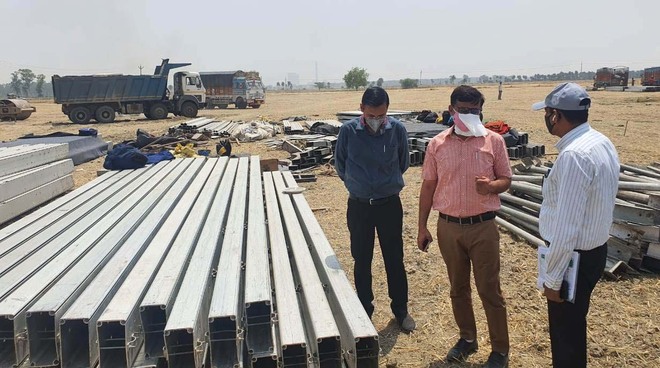
Officials inspect the hospital site in Panipat’s Bal Jatan village on Wednesday. Tribune Photo

The Defence Research and Development Organisation on Wednesday started constructing a 500-bed hospital in Panipat’s Bal Jatan

The hospital will be constructed in two phases. The first phase is expected to be completed in 10 days.

It is one of the two hospitals the DRDO has proposed in the state. The other one will be in Hiasr district.

“The Public Works Department has assigned the construction to an agency, which will build makeshift structures,” said Panipat DC Dharmendra Singh.

The DC said the work to lay the oxygen pipeline would be started on Friday and it would be complete within a week.

Chief Minister Manohar Lal Khattar had visited the Panipat site two days ago and took stock of constructio.


IAF airlifts 9 cryogenic oxygen containers from Dubai, Singapore

These containers were brought on Tuesday

New Delhi, April 28

The Indian Air Force (IAF) airlifted nine cryogenic oxygen containers from Dubai and Singapore and has brought them to the Panagarh air base in West Bengal, according to an official statement issued on Wednesday.

These containers were brought on Tuesday, it said.

In addition, the IAF’s C-17 aircraft on Tuesday also airlifted two cryogenic oxygen containers from Indore to Jamnagar, two from Jodhpur and Udaipur to Jamnagar and two from Hindon to Ranchi, it said.

“IAF’s C-17s have airlifted six cryogenic oxygen containers from Dubai to Panagarh Air Base. Another C-17 brought three oxygen containers from Singapore to Panagarh Air Base,” the statement said. 

The IAF also airlifted eight cryogenic oxygen containers from Hyderabad to Bhubaneswar, two from Bhopal to Ranchi and two from Chandigarh to Ranchi, it said.

India is struggling with the second wave of the coronavirus infection and hospitals in several states are reeling under a shortage of medical oxygen and beds in view of a rising number of Covid cases. 

The IAF has been airlifting empty oxygen tankers and containers to various filling stations across the country to speed up the distribution of the much-needed medical oxygen in treating Covid patients. PTI


DRDO to set up 500 oxygen plants

Technology already installed at Ladakh and north-east

DRDO to set up 500 oxygen plants

Ajay Banerjee

Tribune News Service

New Delhi, April 28

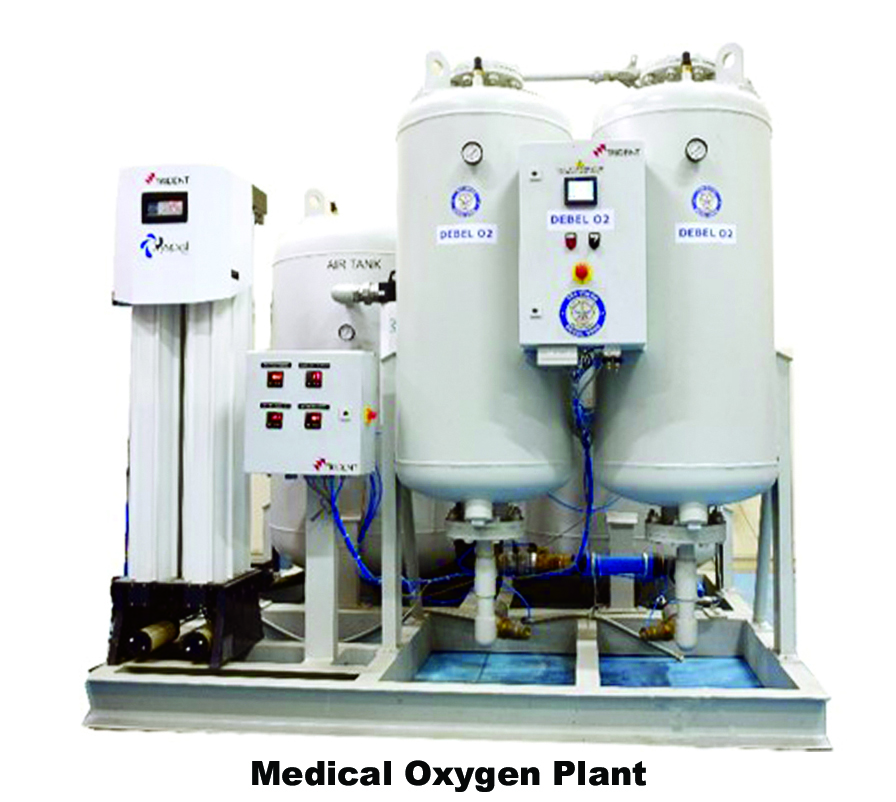
The Defence Research and Development Organisation (DRDO) has been asked to set up 500 medical oxygen plants within three months with money coming from the ‘PM cares fund’.

“Site preparation for five plants to be installed in Delhi/NCR region has already been initiated,” the Ministry of Defence said on Wednesday.

Transfer of technology has been done to Tata Advanced Systems Limited, Bengaluru, that will make 332 of these plants.https://053161fb01f9b454302c786c99827158.safeframe.googlesyndication.com/safeframe/1-0-38/html/container.html

Trident Pneumatics, Coimbatore, will produce 48 of these plants. “A supply order has been made to the two companies,’ the MoD said.

Each of these plants is designed for a capacity of 1,000 litres of oxygen per minute.  The system caters for 190 patients at a flow rate of five litres per minutes, it can charge 195 cylinders per day.

Another 120 plants with capacity of making 500 litres of oxygen per minute will be produced by industries working with Indian Institute of Petroleum, Dehradun, belonging to Council of Scientific and Industrial Research (CSIR).

The MoD has set the DRDO a target of producing 125 oxygen plants per month and 380 of these – from Tata and Trident — will be installed within three months.

The oxygen producing units based on this technology have already been installed at some of the sites of the Indian Army in North East and also in the Ladakh Region where the tree-less expanse at an altitude of 14,000 provides very little natural oxygen.


DRDO conducts maiden trial of Python-5 Air-to-Air Missile

Trials were aimed to validate enhanced capability of already integrated Derby Beyond Visual Range AAM on Tejas, a DRDO statement says

DRDO conducts maiden trial of Python-5 Air-to-Air Missile

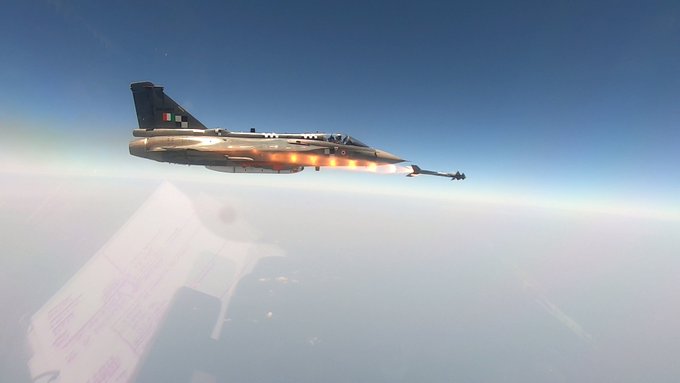
The test firing in Goa on Tuesday completed a series of missile trials to validate its performance under extremely challenging scenarios. Photo: Twitter/DRDO_India

Bengaluru, April 28

India’s indigenous Light Combat Aircraft, Tejas, has added the fifth generation Python-5 Air-to-Air Missile (AAM) to its air-to-air weapons capability.

Trials were also aimed to validate enhanced capability of already integrated Derby Beyond Visual Range (BVR) AAM on Tejas, a DRDO statement said on Wednesday.

The test firing in Goa on Tuesday completed a series of missile trials to validate its performance under extremely challenging scenarios, it said.https://c426715202f202f76b41301d39202efb.safeframe.googlesyndication.com/safeframe/1-0-38/html/container.html

“Derby missile achieved direct hit on a high-speed manoeuvring aerial target and the Python missiles also achieved 100 per cent hits, thereby validating their complete capability. The trials met all their planned objectives,” the statement said.

Prior to these trials, extensive missile carriage flight tests were conducted in Bengaluru to assess integration of the missile with aircraft systems on board the Tejas, like Avionics, Fire-control radar, Missile Weapon Delivery System and the Flight Control System.

In Goa, after successful separation trials, live launch of the missile on a ‘Banshee’ target was carried out.

Python-5 missile live firing was conducted to validate target engagement from all aspects as well as beyond visual ranges. In all the live firings, missile hit the aerial target.

The missiles were fired from Tejas aircraft of Aeronautical Development Agency (ADA) flown by Indian Air Force (IAF) Test pilots belonging to National Flight Test Centre (NFTC). PTI


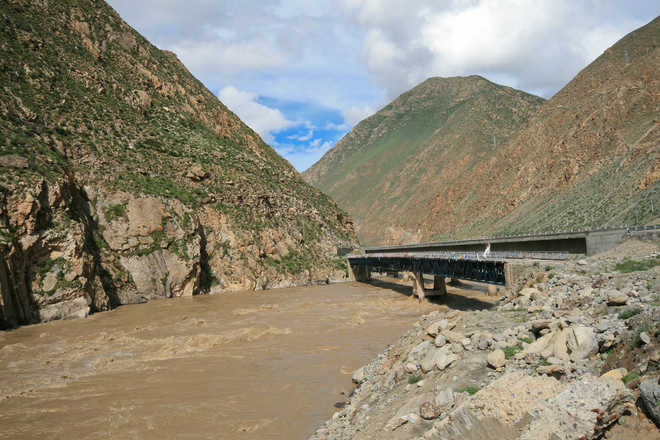
Melting glaciers threaten China’s plan to build massive dam over Brahmaputra in Tibet: Media report

The Brahmaputra is the longest river in Tibet and its valley in southern Tibet is the world’s deepest

Melting glaciers threaten China’s plan to build massive dam over Brahmaputra in Tibet: Media report

Beijing, April 28

Melting glaciers and barrier lakes could threaten China’s plan to build the world’s biggest hydroelectric dam over the Brahmaputra river in Tibet close to the Arunachal Pradesh border, a media report said on Wednesday.

The proposed dam which one Chinese official said has “no parallel in history” will be built in Medog county, where the Brahmaputra Grand Canyon is located. Medog is the last county in Tibet which is located close to the Arunachal Pradesh border.

The plan to build the mega-dam, which is part of China’s 14th five-year plan beginning from this year, was approved by China’s Parliament, the National People’s Congress in March this year.

But the engineers are concerned about the threats posed by landslides and barrier lakes to the dam, the Hong Kong-based South China Morning Post reported.

“But an icy obstacle could put a halt to much of the plan. In 2018, a landslide caused by a melting glacier blocked the Yarlung Tsangpo – the upper stream of the Brahmaputra river – at the Sedongpu Basin in Milin county,” it said.

It formed a lake containing about 600 million cubic metres of water. With the river spilling over the top at present, the dam could collapse at any time, it said.

The Sedongpu lake sits just a few dozen kilometres upstream from the planned construction site of the super hydropower plant. With so much water hanging overhead, no construction workers can move in to clear the ground, it said.

To build the big dam, they must get rid of the small dam formed by the landslide first, the report said.

India and Bangladesh, the lower riparian states, have raised concerns over China’s plan to build the massive dam on Brahmaputra river. But China has downplayed such anxieties saying it would keep their interests in mind.h

As a lower riparian state with considerable established user rights to the waters of the trans-border rivers, the Indian government has consistently conveyed its views and concerns to the Chinese authorities and has urged them to ensure that the interests of downstream states are not harmed by any activities in upstream areas.

Brahmaputra river is known as Yarlung Zangbo in Tibet.

The Brahmaputra is the longest river in Tibet and its valley in southern Tibet is the world’s deepest with a 7,000-metre (23,000-foot) drop from the highest mountain peak to the lowest basin.

China plans to build a hydropower plant in the valley with electricity generation capacity reaching 70 gigawatts, about three times that of the Three Gorges Dam, currently the world’s largest built by the country, the report said.https://8b8994065ccaba94072b9026c62602d5.safeframe.googlesyndication.com/safeframe/1-0-38/html/container.html

Several teams of scientists and engineers have flown to Sedongpu in recent years, including some of the nation’s top experts in civil engineering, glacier study and landslide prevention. They collected a large amount of data on the site using drones and other advanced equipment and were asked by authorities to come up with a solution after finishing their assessment, it said.

“The situation is very difficult. There is not an immediate solution yet,” Xing Aiguo, a professor of civil engineering at the Shanghai Jiao Tong University who was involved in one of the studies told the Post.

The experts could not find a way to strengthen the landslide dam or remove it safely. Worse still, they found similar disasters would likely happen again in the same area, thanks to climate change.

“The area is large and there are many glaciers,” Xing said. Even if there is a method, treating such a harsh natural landscape with engineering methods could be technically challenging and costly, he said.

A quarter of the glaciers on the Tibetan Plateau have disappeared since the 1970s, and two-thirds of the remaining will be gone by the end of the century, the Post report quoted an estimate by the UN’s Intergovernmental Panel on Climate Change.

Studies have found that increased meltwater and rising temperatures could make the “roof of the world” more habitable with greater crop yields and advancing tree lines, but the risk of natural disasters, including flooding and landslides, also increased.

And ice could turn a landslide into something more destructive. At Sedongpu, for instance, the icy debris travelled more than 10km with a top speed of 72km/h according to an estimate by Tibet autonomous region’s geological environmental monitoring station.

The icy material also loosened the landslide dam and made it more prone to collapse. The sheer drop in elevation means even a relatively small amount of water could cause serious destruction downstream, it said.

Liu Chuanzheng, a government researcher with the Consultative Centre of Geohazard Mitigation under the Ministry of Natural Resources in Beijing, said human activity in the Sedongpu area “should be avoided altogether”.

“The development and utilisation of natural resources and energy in the Yarlung Tsangpo river must fully consider the situation of avalanches and debris flows in the Sedongpu valley,” he said in an official report about the landslide published in the journal Geology in China in 2019.

Some Chinese scientists have proposed that instead of building a super dam, a 16km-long tunnel could be dug through one of the high mountains in the Yarlung Tsangpo valley.

The water could be directed into the tunnel to push electricity generating turbines. This scheme would reduce the power output to 50GW – or about twice that of the Three Gorges Dam – but reduce the risk of damage from landslides or other natural disasters. PTI


Army project to help Ladakh students prepare for competitive exams

Full-time residential programme will mentor and guide students for a period of 12 months for entrance examinations of various medical and engineering colleges spread across the country

Army project to help Ladakh students prepare for competitive exams

Tribune News Service

Chandigarh, April 26

As part of the Indian Army’s initiative to secure a better future for Ladakhi youth, the army’s Leh-based Corps on Monday signed an MoU with Hindustan Petroleum Corporation Limited (HPCL) and National Integrity and Educational Development Organisation, (NIEDO) to help students to prepare for competitive examinations.

The project, Ladakh Ignited Minds: A Centre of Excellence and Wellness, is a full-time residential programme to mentor and guide students for a period of twelve months for entrance examinations of various medical and engineering colleges spread across the country. 

The programme being run under the aegis of the Indian Army will be executed by Kanpur-based NIEDO. The Army will oversee the overall operations that includes administration and logistics with requisite funding support from HPCL.

NIEDO will not only mentor and guide the students but will also provide value-based education, soft skill training, critical life competencies, develop leadership capabilities and personality development.