Army Chief informs PM that force is giving all needful help to states, people
Tribune News Service New Delhi, April 29
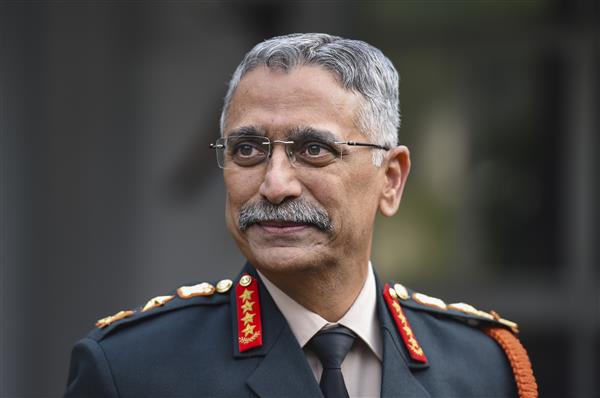
Prime Minister Narendra Modi on Thursday reviewed the Army’s preparedness in dealing with the serious situation arising out of the COVID-19 pandemic in the country, as Chief of Staff MM Naravane called on him to apprise him of the various measures so far taken by the personnel of the defence force.
According to an official statement issued by the government, Naravane told the Prime Minister that the Army was making its medical staff available to state governments and was setting up temporary hospitals in various parts of the country to fight the pandemic.
During the meeting, the Army Chief apprised the Prime Minister that efforts are being made to open the force’s hospitals for civilians, wherever possible, and that citizens could approach their nearest Army hospitals, the statement said.
“General MM Naravane informed the Prime Minister that the Army is helping with manpower for imported oxygen tankers and vehicles, where specialised skills are required to manage them,” the statement read.
The Prime Minister has been holding daily meetings with various stakeholders both within the government and outside to marshal the country’s resources in its fight against coronavirus, as the pandemic has been raging in various parts of the country.
Delhi gurdwara starts ‘Oxygen Langar’, food delivery for COVID-19 patients
Manjeet Singh GK said his team is arranging oxygen from Punjab and Haryana to provide oxygen to the people in Delhi
New Delhi, April 29
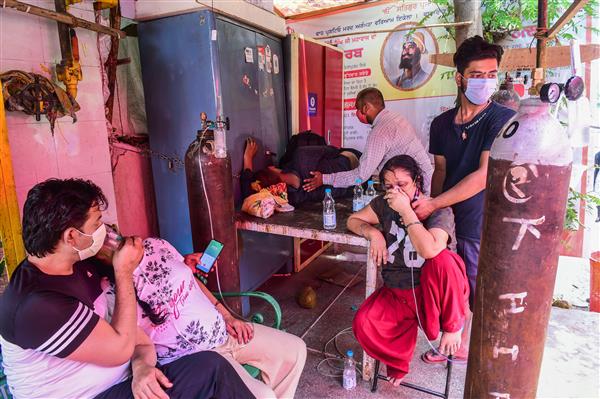
Amid an acute shortage of medical oxygen in Delhi, Gurdwara Singh Sabha located in Greater Kailash area of the national capital has started ‘Oxygen Langar’ for refilling of oxygen cylinders, where people can come and refill their empty oxygen cylinders.
Former president of Delhi Sikh Gurdwara Management Committee Manjeet Singh GK told ANI that his team is arranging oxygen from Punjab and Haryana to provide oxygen to the people in Delhi.
Singh further said that at the moment they have an oxygen supply for only 100 to 150 people.
“If we will have more oxygen then we will be able to run the oxygen langar for 24 hours,” he added.
Along with medical oxygen, the gurdwara also made arrangements for home delivery of food for COVID-19 infected people.
The gurdwara has also issued a helpline number where people can ask for help regarding food.
The national capital is witnessing over 300 daily fatalities due to COVID-19 for the past seven days.
The city reported 25,986 new COVID-19 cases and 368 related deaths on Wednesday, taking the total active cases in Delhi to 99,752. ANI
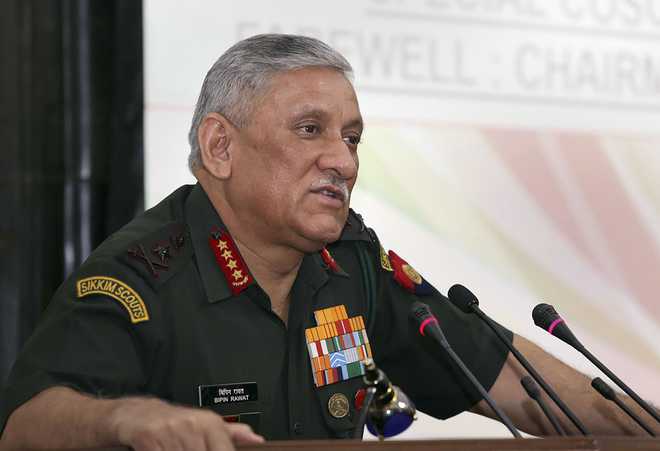
Gen Rawat’s assertion that China tried to change status quo in eastern Ladakh ‘inconsistent with facts’: Chinese military
China’s military on Thursday described as “completely inconsistent with the facts” the assertion of Chief of Defence Staff Gen Bipin Rawat that the People’s Liberation Army (PLA) tried to change the status quo in eastern Ladakh.
The remarks by the spokesperson of China’s Ministry of National Defence came days after Gen Rawat said India stood firm in preventing a change of status quo on the northern borders and the country proved it will not get pushed under any pressure.
“They tried to ensure that they can change the status quo by the use of disruptive technologies without using force…They thought that India, as a nation, will succumb to the pressures that they have been putting on us because of the technological advantage that they have,” Gen Rawat said in his address at the Raisina Dialogue in New Delhi on April 15, referring to the border standoff with China in eastern Ladakh.
“But, I think India stood firm on the northern borders and we have proven that we will not get pushed,” he said at the virtual conference.
When sought China’s response to Gen Rawat’s remarks, China’s defence ministry spokesperson Senior Colonel Wu Qian “rebutted” it during the monthly virtual press conference, the Chinese military’s official website reported.
“Snr. Col. Wu responded at a regular press conference of the Ministry of National Defence on April 29 that the relevant remarks by the Indian side are completely inconsistent with the facts,” the report said.
“Regarding the situations in the western section of the China-India boundary, China has explained the ins and outs in detail, and the responsibility does not lie with China,” he said.
“Thanks to the joint efforts of China and India, the border defence troops of both sides have recently disengaged from contact in the Galwan Valley and Lake Pangong, and the situation in the border area has eased on the whole,” Wu said.
He said earlier this month, China and India held the 11th round of Corps Commander-Level Meeting, exchanging views on issues of mutual concern and agreeing to continue to maintain close communication through diplomatic and military channels, according to the report.
Wu stressed that China’s position on the China-India boundary issue is consistent and clear.
China hopes that the Indian side will cherish the hard-won situation, abide by the relevant agreements of the two countries, he said.
He said two militaries and the consensus reached in previous talks, and work with China to safeguard peace and tranquillity in the border area, so as to bring the relations between the two countries and two militaries back to the track of healthy and stable development, the report stated.
India and China were locked in military standoff at multiple friction points in eastern Ladakh since early May last year but they have completed withdrawal of troops and weapons from the North and South banks of Pangong Lake in February following a series of military and diplomatic talks.
The two sides are now engaged in talks to extend the disengagement process to the remaining friction points. PTI
Among other facilities, package includes visit of doctors at home twice a week
Vijay Mohan
Tribune News Service
Chandigarh, April 28
The Ex-servicemen Contributory Health Scheme (ECHS) has introduced a paid home isolation package for its beneficiaries who have been advised home quarantine due to COVID-19.
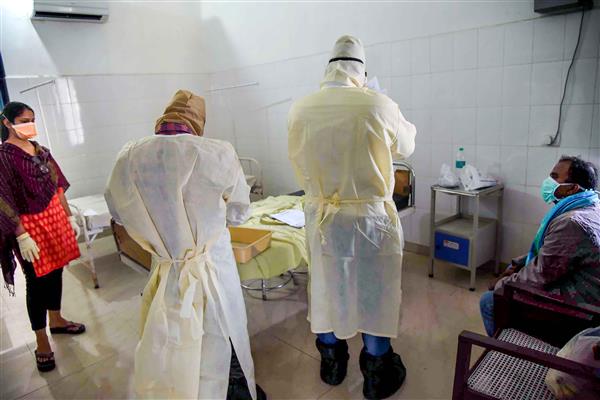
The package includes visit of doctors at home twice a week, monitoring of temperature, pulse, oxygen levels and blood pressure, dietician consultation, administration of injections and medicines, use of oxygen cylinder, and monitoring by nursing staff based on the condition of the patient.
Due to the recent surge in number of COVID-19 cases and inability of the health infrastructure to cope with the sudden rise in the number of cases, a large number of beneficiaries with mild symptoms are being advised home quarantine.
“During the home quarantine, there is a need to monitor the patient for his parameters such as temperature, SpO2 levels, blood pressure, etc., as also to consume prescribed medicines. In certain cases, there may be a requirement to administer oxygen to the patient,” a circular issued by the ECHS Central Organisation at Army Headquarters on April 27 states.
“If an ECHS beneficiary who is having complaints of fever, cough, or diarrhoea, etc., and consults a doctor at a service, government, empanelled or non-empanelled hospital, where he is advised home isolation and RT-PCR test, he will be entitled to purchase a home isolation package,” the circular adds.
The cost incurred on availing the package by a patient will be reimbursed by ECHS with a ceiling limit if Rs 1,000 per day up to 14 days from the date of advice for home quarantine.
In addition, the use of oxygen cylinder or oxygen concentrator a home, provision of ambulance to shift a patient to hospital if the need arises and blood tests RT-PCR and CT-scan would also be reimbursable for home quarantine.
ECHS provides medi-care to retired armed forces personnel, their dependents and some other entitled categories through a network of 427 polyclinics spread across the country. It has a scriber base of over 50 lakh beneficiaries.
Following the recent surge in COVID-19 cases, ECHS polyclinics have been opened up for providing COVID-19 treatment to its beneficiaries. Yesterday, the Defence Minister, Rajnath Singh had also approved the hiring of additional contractual staff in 51 ECHS facilities to cater to the increased work load.
Moving field hospital from Himachal to PU Sector 25 campus
Chandigarh, April 27
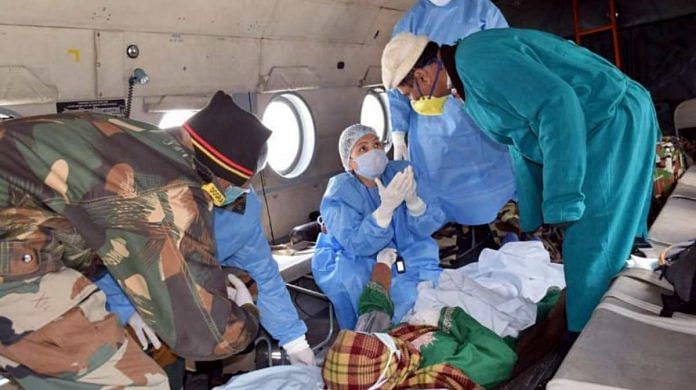
The Army is moving a field hospital from Himachal Pradesh to Chandigarh after the UT Administration requested the Western Command for setting up a Covid-19 care centre in view of the spike in infection cases.
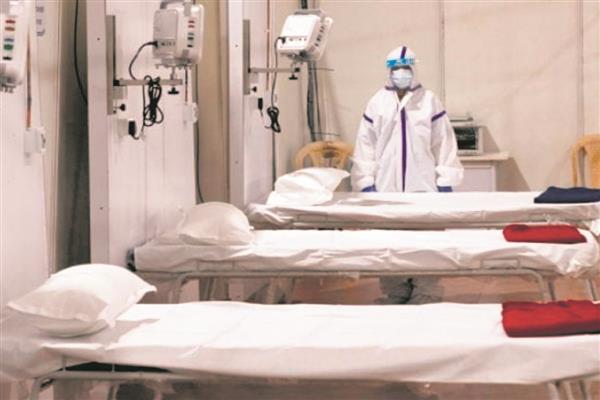
The 100-bed facility will come up at International Students’ Hostel on the Sector 25 campus of Panjab University. The Army will begin moving in the equipment and staff tomorrow and the facility is expected to be fully functional in five days.
According to Col Jasdeep Sandhu, Director, Civil-Military Affairs, Headquarters Western Command, the Army will be providing medicines, oxygen, ambulances and other supplies to the centre, besides doctors, paramedical and support staff.
Specialist medical cover will also be provided by the Command Hospital in Chandimandir. In addition, the PGI and the GMSH, Sector 16, will also be available for any support. Civilian doctors will also be deputed for liaison.
A meeting was held by Punjab Governor and UT Administrator VP Singh Badnore with officers from the Headquarters Western Command today, where modalities for setting up the centre were discussed.
International Students’ Hostel was selected by the Army after a survey of several sites as it has over 100 AC rooms and open space adjacent to it. The UT Administration had earlier earmarked it as a Covid care centre on a payment basis.
The Army is also moving a couple of field hospitals from different locations to other cities in the region, besides working with the civilian administration to make oxygen generation plants functional.
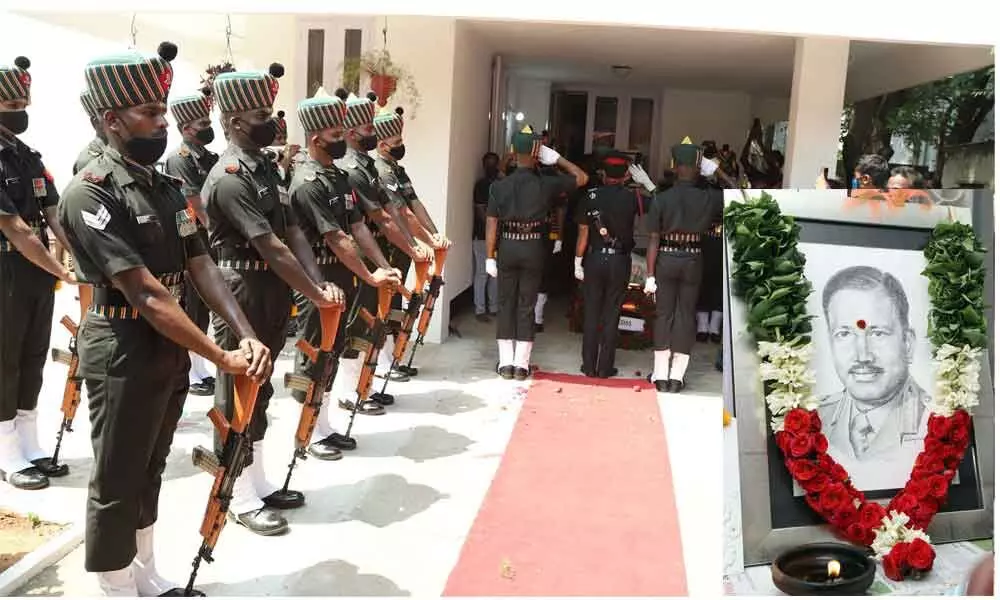
71 war hero Major General Chittoor Venugopal :Maha Vir Chakra (MVC)::passes away
Born on November 14, 1927, he was commissioned in the 5/1 Battalion of Gorkha Rifles in 1950
Hyderabad, April 28
Major General Chittoor Venugopal (Retd), hailing from Tirupati in Andhra Pradesh and recipient of the Maha Vir Chakra for his leadership in the 1971 Indo-Pak war, passed away following cardiac arrest late on Tuesday.
Born on November 14, 1927, he was commissioned in the 5/1 Battalion of Gorkha Rifles in 1950. He later commanded the same battalion as a Lieutenant Colonel during the 1971 war.
The 5/1 Gorkha Rifles was tasked to attack the well-fortified positions of Pakistan at Uthali and Darsana locations of Jessore in the Eastern Sector.https://dacca3d45be01ff50bd19d722051bd4a.safeframe.googlesyndication.com/safeframe/1-0-38/html/container.html
These positions had a series of concrete pillboxes interconnected with communication trenches. Lt Col C Venugopal made a meticulous plan of attack and successfully captured two important positions which caused the enemy to withdraw.
The 5/1 Gurkha Rifles pursued the retreating enemy without giving them any rest or time to regroup that led to the capture of Jhenida Post, Jessore within three days. For his leadership and aggressive battle planning resulting in large military gains, he was awarded the second highest gallantry award, Maha Vir Chakra, a defence statement said.
Post retirement, the General had limited social interaction and led a bachelor’s life in the White House at Tirupati. The sad demise of the brave son of the soil of Andhra Pradesh is a great loss to the Army and the nation as a whole, the statement added.
His last journey was curtailed due to the Covid pandemic and a ceremonial wreath laying ceremony was organised at Tirupati with limited attendance of relatives, civil dignitaries and the Armed Forces veterans.
Major General Chittoor Venugopal donated his mortal remains to Sri Venkateshwara Medical College, added the defence statement. IANS
yderabad: Former Major General Chittoor Venugopal, PVSM, MVC, passed away on Tuesday evening after suffering a cardiac arrest. Commissioned into 5/1 Battalion of Gorkha Rifles in 1950, he later commanded the same battalion as a Lieutenant Colonel during the 1971 Indo-Pak war.
Tasked with attacking well-fortified Pakistani positions at Uthali and Darsana in Jassore in Eastern Sector, he laid a meticulous plan of attack and captured two important positions which caused the enemy to withdraw. The battalion then pursued the withdrawing enemy and captured Jhenida Post, Jessore within three days. For his leadership and planning that resulted in large military gains, he was awarded the Maha Vir Chakra (MVC), the second-highest gallantry award.
Post retirement, he led a bachelor life in the White House at Tirupati. His last journey was curtailed due to Covid pandemic and the ceremonial wreath laying was organised at Tirupati, with limited attendance of relatives, civil dignitaries and armed forces veterans.
Army sets up cell to ensure ‘decent last rites’ for veterans, dependents succumbing to Covid
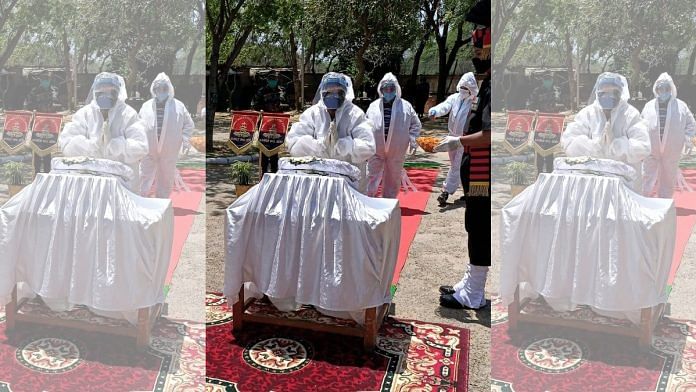
Last rites being performed at the Brar Square Crematorium in the Delhi Cantonment | By special arrangementText Size: A- A+
New Delhi: Faced with an increase in number of cases of either veterans or dependents of its personnel succumbing to the deadly second Covid-19 wave, the Army has set up a special cell at the Delhi Cantonment to provide “decent last rites” to members of its own family, ThePrint has learnt.
This comes at a time the Army has stepped its efforts to help the civil administration in fighting the Covid-19 crisis.https://2754e1208152aa641e2db363f876528c.safeframe.googlesyndication.com/safeframe/1-0-38/html/container.html
While the focus of the nation remains on doing everything possible to save each precious life, the Army silently continues to carry out its time-honoured duty of bidding a fitting farewell to its personnel who have succumbed to the virus, a source in the force said.
The Army has an Assured Decent Last Rites Scheme (ADLRS). Under this scheme, every local station has a system and budget meant for all cases of fallen soldiers — from receiving the body at the airport, further transportation and giving funds to the family for the last rites.
However, keeping the deadly wave in mind and the rising numbers, a special cell has been created to take care of Covid-related cases involving veterans and dependents.
All aspects of the cremation, organised at the Brar Square Crematorium in the Delhi Cantonment, is handled by a Special Cell created at the Delhi Cantonment, sources said.
Additional personnel have been mobilised and special hearse vans have been hired to ensure that families are provided full support for a hassle-free cremation, they added.
In cases where it is not possible to move the mortal remains to Brar Square, necessary coordination is being done with the state or district administration to ensure proper last rites.
“And where no family member is available to handle the last rites, this solemn duty is also being undertaken by the Army,” a second source said.
The sources refused to give specific figures of the last rites done and the actual increase in cases because of Covid.
All Covid & Army protocols followed
Sources said that the last rites are being conducted with proper Covid-19 protocols as well as Army traditions.
The soldiers involved in the process have all been given proper PPE kits and even the wreath laid are also covered up on the sides to ensure all safety protocols are put in place.
The Army has already converted the Base Hospital in the Cantonment as a full-fledged Covid facility and moved patients there to the Army Research and Referral Hospital.
New Delhi: The Army, the Navy and the Air Force have sought emergency financial powers from the defence ministry to expedite critical procurement needed to build additional infrastructure to tackle the growing burden of the coronavirus pandemic, ThePrint has learnt.
According to sources in the government, the proposals seeking emergency financial powers for additional infrastructure — such as quarantine facilities and equipping them with stores, ration and other materials — for a period of three months are currently under the active consideration of the government.
A decision on this is expected shortly. The services were granted emergency financial powers last year too.
Once approved, the emergency powers could range from delegating full financial powers to providing spending powers of Rs 20 lakh to the heads of different formations of the three services.
For example, last year, Army commanders were sanctioned full financial powers, while corps commanders or area commanders were made eligible to spend Rs 50 lakh, and division commanders or sub-area commanders could spend Rs 20 lakh on Covid-related infrastructural work in their espective jurisdiction.
The development comes after the defence ministry last week sanctioned invoking Schedule 8.1 of Delegation of Financial Powers to Defence Services (DFPDS-2016), which deals with the grant of emergency financial powers to the Armed Forces Medical Service (AFMS) upto 30 September 2021.
Schedule 8.1 of DFPDS-2016 provides for full financial powers to the Director General (DG), Armed Forces Medical Service (AFMS) for procurement of medical items, materials and stores.
In addition, DGs Medical Services in the service headquarters of the Army, Navy and Air Force have also been granted financial powers of Rs 5 crore. At the field level in Commands/Corps, Rs 3 crore will be made available to a Major General-equivalent and another Rs 2 crore to a brigadier-equivalent officer of the AFMS.
These emergency financial powers will also be utilised for providing various services on treatment and management of Covid-19.
In addition, Schedule 2.5 of DFPDS also provides for expenditure upto 5 lakh per day per patient to commandants of Military Hospitals headed by a Lieutenant General.
It will also accord spending powers of Rs 3 lakh and Rs 2 lakh on hospitals headed by Major Generals and Brigadiers. Defence sources told The Print that this schedule is also being used for managing the pandemic.
This is, however, different from the emergency financial powers sought by the services for their commands.
According to defence sources, the services have pointed out the exponential rise in Covid cases and thus the requirement of augmenting infrastructure of military hospitals and quarantine facilities with materials, equipment, stores, rations, beds and ambulances, to tackle the health crisis.
This will also include personal protection gear, sanitisation and other medical equipment.
“There was emphasis on how invoking emergency powers will help in better management of the Covid-19 situation and aid repairs and faster procurement of medicines and other medical equipment needed for the pandemic on a real-time mode,” a defence source said.
As reported by ThePrint, last year too, the Ministry of Defence had granted emergency financial powers to Army commanders, corps commanders as well as division or sub-area commanders to expedite procurement related to establishing and running quarantine facilities, among other things, for an initial period of three months, which was later extended by three more months.
The powers were later also given to Naval and Air Force commanders and other senior officers of the services.
When are these powers exercised
The emergency powers to the three services enumerated under different schedules of the DFPDS-2016 are exercised as and when the government notifies an event through an order declaring war, hostility, natural calamity or disaster or when the defence minister declares and orders military preparedness for emergency or other immediate military necessities.
It will also be applicable as and when a proposal, mooted by the service chiefs, is approved by the defence minister for immediate action to be taken in case of a series of incidents or when the Army is requisitioned for internal security duties.
Procurement powers under various heads vary and are enhanced in consultation with the Integrated Financial Adviser (IFA), who is from the Controller General of Defence Accounts (CGDA).
On Monday, Chief of Defence Staff General Bipin Rawat met Prime Minister Narendra Modi to review the preparations and operations undertaken by the armed forces to tackle the pandemic.