









Sanjha Morcha

What’s New

Click the heading to open detailed news

Current Events :

web counter

Print Media Reproduced Defence Related News

Defence innovation needs top-down reforms

Laboratories or institutions exploring new frontiers in technology or weapon systems must, of necessity, be of an intellectual explorer’s mindset — quite the opposite of the rule-bound administrators — as they thrive on an out-of-the-box thinking and risk-taking leading to innovative solutions. The very idea of placing the Defence Innovation Organisation under a government department, hence, appears flawed.
Defence innovation needs top-down reforms

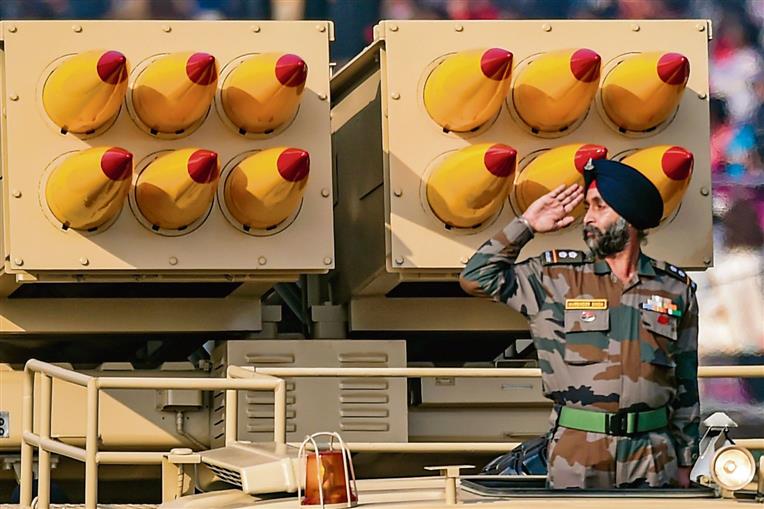
Laudable: The budgetary allocation for the Innovations for Defence Excellence-Defence Innovation Organisation is expected to foster technology development. PTI
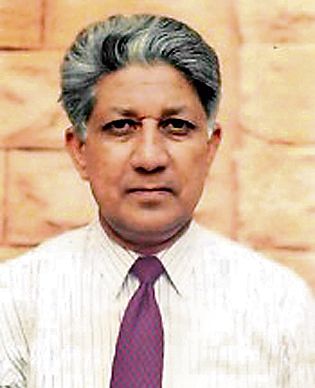
Air Marshal Brijesh D Jayal (retd)

Defence Commentator

The Ministry of Defence recently released a document outlining a set of 20 reforms that have been introduced across the defence sector. This is a welcome change on the part of a ministry that has traditionally been seen to stay in the background, taking refuge under the national security blanket.

Amongst the list are the two important elements — of bringing atmanirbharta to defence and of reforming defence R&D — both of which are aimed towards meeting the requirements of the armed forces through indigenous sources whilst aiming to make India a hub of defence manufacturing.

Self-reliance in the field of defence production has been a cherished objective of successive governments dating back many decades. But the nation still finds itself in the unenviable state of being the second largest international arms importer.

A weakness is clearly underlying the state of affairs. This weakness is the result of our following an archaic organisational model where both defence R&D and production remain under the Ministry of Defence. This business model is not practised by any western democracy boasting of an internationally competitive defence industry.

Two examples merit mention in the furtherance of this view. The first is the recent announcement by the Defence Minister of budgetary allocation for the Innovations for Defence Excellence (iDEX)-Defence Innovation Organisation (DIO), which was recently formed. Through funding start-ups or individual innovators, the latter is expected to create an ecosystem fostering innovation and technology development in the defence and aerospace sectors.

Whilst the spirit behind this initiative is laudable, what undermines confidence is that this organisation will also be under the Department of Defence Production in the MoD when it is well known that the government bureaucracy’s work culture is rule-and-precedence bound. It is inhibited further by the shadow of agencies like the CAG, CBI and CVC.

Laboratories or institutions exploring new frontiers in technology or weapon systems must, of necessity, be of an intellectual explorer’s mindset — quite the opposite of the rule-bound administrators — as they thrive on an out-of-the-box thinking and risk-taking leading to innovative solutions. The very idea of placing the DIO under a government department, hence, appears flawed and a contradiction.

This view is reinforced if one considers that the DRDO already has a network of advanced technology centres within academic institutes funded and tasked to pursue research directed towards conceiving and developing next-generation defence technologies. That notwithstanding these, the MoD still finds need for an innovation organisation speaks for itself.

The second example is that of aeronautics. It needs recalling that it was in the early fifties that the government had authorised the development of HF-24 fighter aircraft, with the then Prime Minister stating that it would aid in the development of a modern aircraft industry in India. HAL commenced design in 1956 and the aircraft entered the IAF service in 1967, being at the time the first Asian jet fighter (outside of the USSR) to go into production.

In 1970, Vikram Sarabhai had proposed to the Administrative Reforms Commission an organisational model with a ministry of advanced technologies comprising separate commissions for atomic energy, space, earth sciences and aeronautics.

It speaks for his foresight that in all the fields, except aeronautics, the government followed this model and the nation is today on a par internationally. Only aeronautics remained the technological orphan, confined to the folds of the MoD, with continuing dependence on imports.

It was to address this weakness that the Aeronautical Society of India had, in 1994, under APJ Abdul Kalam’s presidentship, proposed a national aeronautics policy, wherein it had been stated: “Aviation is one of the most significant technological influences of modern time and empowers the nation with strength for international partnership. It is a major tool for economic development and has significant role in national security and international relations….”

Further, industrial aeronautics is an area where much commonality exists between the rapidly expanding civil aviation sector and military aviation, and, from a defence-industrial policy viability point of view, can contribute to the economies of scale and international footprint.

This proposal was lost in our bureaucratic jungle and an updated version submitted in 2004 appears to have suffered the same fate. So much for dynamism in the South Block towards making India a defence manufacturing hub of international standing!

In fairness, for the first time, we now have a vision promoting innovation in the defence industrial sector originating from the highest level of government leadership. There is, hence, cause for optimism that there is willingness to shed past baggage.

To benefit from this positive climate and claim Indian aeronautics’ rightful place, however, we first need take an innovative look at the higher-level defence organisation model with reference to the place of defence R&D and production within it.

Indeed, for an innovative attitude to take root in the mindset of the national security establishment, innovative administrative reforms starting from top to down are the need of the day. Not the reverse, as appears to be in the case of iDEX-DIO, or, indeed, of the integrating of operational commands.

Army Chief visits Shimla-based ARTRAC, briefed on training initiatives

Gen Naravane also calls upon Himachal Governor Bandaru Dattatraya

Army Chief visits Shimla-based ARTRAC, briefed on training initiatives

Army Chief General MM Naravane visits the Shimla-based Army Training Command on Friday. Photo: PIB

Tribune News Service

Chandigarh, June 25

Chief of the Army Staff General MM Naravane visited the Shimla-based Army Training Command (ARTRAC) today, where he was briefed on a range of issues such as strategic-military futures, doctrinal corrections, operational challenges and preparedness, technological infusion and training pedagogy.

He was apprised about a number of initiatives being undertaken to maximise the effectiveness of the Indian Army and steps taken to make professional military education (PME) more contemporary and responsive to current challenges, according to an official statement.

General Naravane also called upon the Governor of Himachal Pradesh, Bandaru Dattatraya, and discussed issues of mutual interest with him.

Later, the Army Chief and the President, Army Wives Welfare Association interacted with and honoured the next of kin of Sepoy Ankush, who had made the supreme sacrifice during the Galwan standoff in Ladakh during June 2020 and was decorated posthumously with the Sena Medal.


IAF Chief Bhadauria directs WAC commanders to keep operational readiness at highest level

The commanders deliberated extensively on security challenges facing the country along the northern border during the deliberations

IAF Chief Bhadauria directs WAC commanders to keep operational readiness at highest level

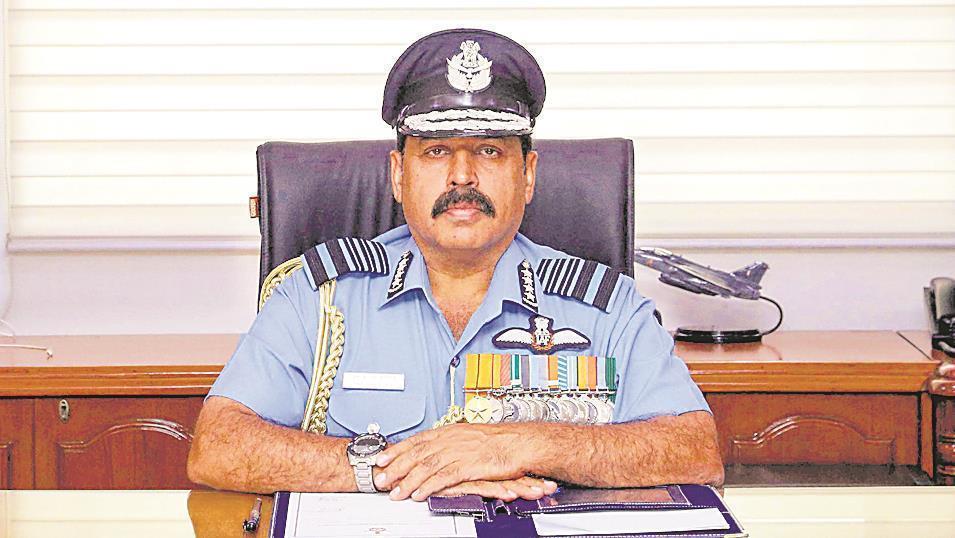
Air Chief Marshal RKS Bhadauria. File photo

New Delhi, June 25

Air Chief Marshal RKS Bhadauria has lauded the Western Air Command (WAC) for its swift response in the face of the bitter border standoff with China in eastern Ladakh and directed it to keep the operational readiness at the “highest level”, officials said on Friday.

The Chief of Air Staff was addressing a two-day conference of the top commanders of the WAC which looks after the security of the country’s air space in the sensitive Ladakh sector as well as various other parts of north India.

In his remarks, Air Chief Marshal Bhadauria directed the commanders to ensure that the operational readiness of all platforms, weapon systems and assets are kept at the “highest level”, the officials said.

The commanders deliberated extensively on security challenges facing the country along the northern border during the deliberations that concluded on Friday.

In his remarks, Air Chief Marshal Bhadauria emphasised the need for critical analysis of the evolving security matrix, enhancing operational preparedness and ensuring robust physical and cybersecurity infrastructure.

“The Chief of Air Staff appreciated the swift response and high commitment shown by all bases in WAC in the recent standoff on our Northern frontiers despite the constraints posed by the ongoing pandemic,” the IAF said in a statement.

Following the escalation in tension in eastern Ladakh in mid-June last year, the Indian Air Force (IAF) deployed almost all its frontline fighter jets like Sukhoi 30 MKI, Jaguar and Mirage 2000 aircraft as well as its attack helicopters in the key air bases in eastern Ladakh and elsewhere along the Line of Actual Control.

Since last September, newly-inducted Rafale jets too started carrying out sorties in various forward areas in eastern Ladakh as part of measures to give a boost to India’s combat readiness in the region.

The Chief of Air Staff also appreciated the aerospace safety record of the WAC and urged the commanders to continue their efforts towards a safe operational environment.

“He underlined the future of IAF by enhancing operational capability through force structuring along with self-reliance and indigenisation with an aim to transform the IAF into a potent aerospace power,” the IAF said.

India and China were locked in a military standoff at multiple friction points in eastern Ladakh since early May last year. However, the two sides completed the withdrawal of troops and weapons from the North and South banks of Pangong lake in February following a series of military and diplomatic talks.

The two sides are now engaged in talks to extend the disengagement process to the remaining friction points. India has been particularly pressing for disengagement of troops in Hot Springs, Gogra and Depsang.

According to military officials, each side currently has around 50,000 to 60,000 troops along the Line of Actual Control in the sensitive sector.https://eff949897ec1e69c076370533595826e.safeframe.googlesyndication.com/safeframe/1-0-38/html/container.html

There was no visible forward movement in disengagement of troops in the remaining friction points as the Chinese side did not show flexibility in their approach on it at the 11th round of military talks.

Last month, Army Chief Gen MM Naravane said that there can be no de-escalation without complete disengagement at all friction points in eastern Ladakh and that the Indian Army is prepared for all contingencies in the region.

Gen Naravane also said that India is dealing with China in a “firm” and “non-escalatory” manner to ensure the sanctity of its claims in eastern Ladakh, and that it was even open to initiating confidence-building measures. PTI


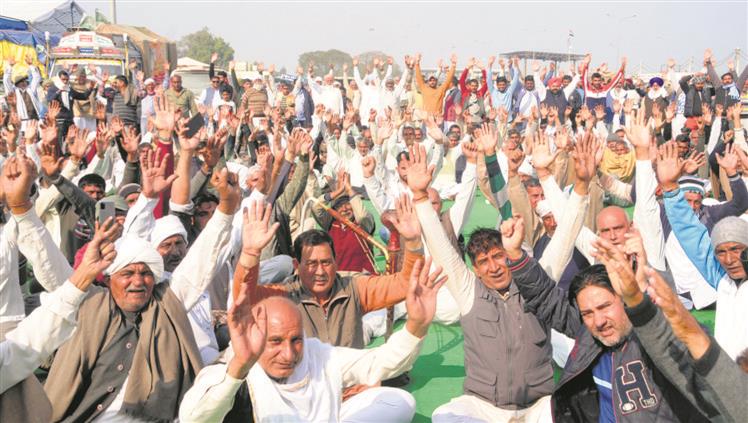
Kisan Morcha gears up for protest today

To march from Nada Sahib to Raj Bhavan

Kisan Morcha gears up for protest today

Farmers protest at the Bastara toll plaza in Karnal. file photo

Tribune News Service
Panipat, June 25

The Samyukt Kisan Morcha (SKM) has put everything in place to hold a protest at the Raj Bhavans of Punjab and Haryana in Chandigarh tomorrow.

Thousands of farmers from Haryana will enter Chandigarh from the Panchkula side, while those from Punjab will come from the Mohali side.

The morcha had announced to observe June 26 as “Kheti bachao, loktantra bachao” (save farming, save democracy) day on the completion of seven months of the farmers’ protest and the 47th anniversary of Emergency in India.

Punjab farmers will gather at Gurdwara Amb Sahib in Mohali, while those from Haryana will gather at Gurdwara Nada Sahib in Panchkula at 11 am tomorrow.

SKM leader Yogendra Yadav said the farmers would hold a protest march from Gurdwara Nada Sahib to the Raj Bhavan in Chandigarh. “We will organise a peaceful march and submit a memorandum to the President of India through the Governor,” he added.


India-US joint drill sees high-tempo naval operations

India-US joint drill sees high-tempo naval operations

The two-day integrated bilateral exercise between Indian and US forces in the Indian Ocean Region concluded on Thursday.

New Delhi, June 25

Ending a two-day joint exercise with the US Navy, the Defence Ministry on Friday said the exercise has been another milestone in strengthening cooperation between the two countries and reinforcing the shared values as partner militaries, in ensuring freedom of seas and commitment to an open, inclusive Indo-Pacific and a rules-based international order.

The two-day integrated bilateral exercise between Indian and US forces in the Indian Ocean Region concluded on Thursday.

The Indian Navy along with Indian Air Force participated with US Navy Carrier Strike Group in the exercise.

The exercise has been a key enabler in building interoperability and strengthening the defence coordination between the two nations and witnessed high tempo-naval operations at sea. — TNS


DRDO test-fires 122 mm enhanced calibre rockets

DRDO test-fires 122 mm enhanced calibre rockets

A multi-barrel rocket launcher test-fires Pinaka in Balasore district. PTI

New Delhi, June 25

The DRDO on Friday successfully test-fired enhanced range versions of its 122mm calibre rocket at the Chandipur test range in Odisha.

These rockets have been developed for the Army and can destroy targets up to 40 km, the Defence Ministry said. Four enhanced versions of the rocket were fired from a multi-barrel launcher with full instrumentation and they completed mission objectives, it said.

The DRDO also test-fired an extended range version of indigenously developed “Pinaka” rocket at Integrated Test Range in Chandipur off Odisha coast. — PTI


Pakistan remains on FATF grey list

Attempt by Pak media to corner India on ‘uranium theft’ falls flat

Pakistan remains on FATF grey list

Pakistan also remains the subject of investigation by FATF’s regional body, the Asia Pacific Group (APG) regarding “serious issues” on money laundering and terror-financing.

Sandeep Dikshit
TRIBUNE NEW SERVICE
NEW DELHI, JUNE 25

The global Financial Action Task Force (FATF) has decided to keep Pakistan on the grey list of nations requiring constant monitoring till it demonstrates that terror-financing investigations and prosecutions target senior leaders and commanders of UN-designated terrorist groups, FATF Chairman Marcus Pleyer told the media on Friday.

“Though the Pakistan government has made substantial progress and largely addressed 26 out of the 27 action points, it is still failing to implement global FATF standards in a number of areas. This means the risk of money laundering remains high in turn fuelling corruption and organised crime,’’ said Pleyer at the end of the FATF’s virtual plenary that ended today.

Pakistan also remains the subject of investigation by FATF’s regional body, the Asia Pacific Group (APG) regarding “serious issues” on money laundering and terror-financing. The implication is that even if Pakistan completes all 27 action points given by FATF, it will also have to clear the APG hurdle. Pakistan will also be subjected to on-site investigations by both FATF and APG before it is cleared.

FATF is the second international body where the issue of Pakistan’s mollycoddling of UN-designated terrorists, including from LeT and JeM, has been tabled. At the Shanghai Cooperation Organisation’s (SCO) meeting of National Security Advisors on Wednesday, Ajit Doval, had proposed an action plan against LeT and JeM.

Doval also pressed for full implementation of UN resolutions and targeted sanctions against UN-designated terrorist individuals and entities as well as adoption of international standards to counter terror-financing, including an MoU between the SCO and FATF.

An attempt by Pakistani journalists to corner India on the issue of its police unearthing stolen uranium could not materialise. Pleyer said he was aware of the media reports in this regard but “will not comment on something in India we haven’t assessed”.


Navy’s Galwan deployment showed our intent: Rajnath

Says India’s first indigenous aircraft carrier to be commissioned next year

Navy’s Galwan deployment showed our intent: Rajnath

Defence Minister Rajnath Singh waves during a visit to the INS Vikrant in Kochi on Friday.

Tribune News Service
New Delhi, June 25

Defence Minister Rajnath Singh on Friday said the Navy’s forward deployment showed the country’s intent and readiness during the Galwan incident amid the military face-off in Ladakh between India and China.

“The Navy’s proactive forward deployment signalled our intent that we seek peace, but are ready for any eventuality,” he said during a visit to Kochi to review the construction of the upcoming indigenous aircraft carrier (IAC).

Much-needed boost

The aircraft carrier, INS Vikrant, is a much needed boost for the Indian Navy’s capabilities as it currently functions with only one aircraft carrier.

At the review on the IAC, that is named INS Vikrant, the minister was informed that the warship built by Cochin Shipyard Limited would be commissioned in the first half of 2022, and would be the most potent sea-based asset.

The aircraft carrier is a much needed boost for the Indian Navy’s capabilities as the Navy currently functions with only one aircraft carrier.

The Defence Minister said commissioning of the IAC next year would be a befitting tribute to 75 years of India’s Independence.

The ship would operate MiG-29K fighter aircraft, Kamov-31 air warning helicopters and the soon to be inducted MH-60R multi-role helicopter.

The Defence Ministry said Singh expressed “satisfaction” at the progress of construction adding that the IAC was having nearly 75 per cent indigenous content from design to steel used in construction to key weapons and sensors.

He reaffirmed the government’s commitment towards a strong Indian Navy, saying, “The IAC and Project Seabird at Karwar, which will be the Asia’s largest naval base, are the examples of our unwavering focus”.


Seven Amritsar hospitals off ECHS list for faking bills

Laboratory disempanelled too | 12 arrests made so far in case

Seven Amritsar hospitals off ECHS list for faking bills

GS Paul

Tribune News Service

Amritsar, June 22

The Union Ministry of Defence has dis-empanelled seven hospitals and a lab of Amritsar for their alleged involvement in the Ex-servicemen Contributory Health Scheme (ECHS) scam, wherein huge amounts of government funds were bungled by claiming fake medical bills.

What Army probe suggested

  • Army authorities found that several veterans misled genuine ECHS beneficiaries and collected their cards
  • In connivance with hospital managements and doctors, records were fabricated to usurp claim funds from the Department of Ex-servicemen Welfare
  • On the basis of an inquiry by the Army, an FIR was lodged against 24 persons on October 2

The hospitals and the lab named by the Department of Ex-Servicemen Welfare in a notification dated June 18, 2021, include Verma Hospital, Meerankot chowk; Neelkanth Hospital, Fatehgarh Churian Road; Life Kare Hospital, Nirankari Colony, Fatehgarh Churian Road; Gupta Multi-specialty Hospital, Race Course Road; Akashdeep Neuro Trauma and Multi SS Hospital; Madaan Hospital (Multi-specialty) Majitha Road; and Nijjar Scan and Diagnostic Centre, Court Road.

Sandeep Malik, Additional Deputy Commissioner of Police, Amritsar, had been holding an investigation into the case. “At least 12 arrests have been made so far. Others who evaded arrest had managed to procure interim bail from the High Court, but they have been asked to join the investigation. We are also awaiting some forensic records pertaining to the case,” he said.

Gurmeet Singh Bablu, president of the Shaheed-e-Azam Sardar Bhagat Singh Youth Front, alleged that the police gave immunity to various doctors and hospitals from the FIR without involving the Army authorities. He demanded a CBI or at least a vigilance probe into the case. “Why were the police taking the Army probe leniently? I shot a letter to the Punjab Chief Minister with copies to the Punjab DGP and Bureau of Investigations as the city police acted in a biased manner while investigating the case,” he said.Army authorities found that several veterans misled genuine ECHS beneficiaries and collected their cards. Later, in connivance with the hospital managements and doctors, records were fabricated to usurp claim funds from the Department of Ex-servicemen Welfare.

A 204-page Army inquiry report was submitted to the Cantonment police by Brig MD Upadhyay, Station Commander, Station Headquarters, Amritsar Cantonment. Following this, an FIR was lodged against 24 persons, including owners, managing directors and doctors of six private hospitals on October 2.

Brig Upadhyay, in his complaint to the police, alleged that hospitals had made false admissions with an intention of fraud with the cardholders “without providing them the services that are as per the files of the hospitals”. Also, the cardholders were kept in the hospitals “for a few days” even when the records suggest they stayed longer.


Eastern Ladakh row: India, China likely to hold another round of diplomatic talks this week

India and China were locked in a military standoff at multiple friction points in eastern Ladakh since early May last year.

Eastern Ladakh row: India, China likely to hold another round of diplomatic talks this week

India and China were locked in a military standoff at multiple friction points in eastern Ladakh since early May last year

New Delhi, June 23  

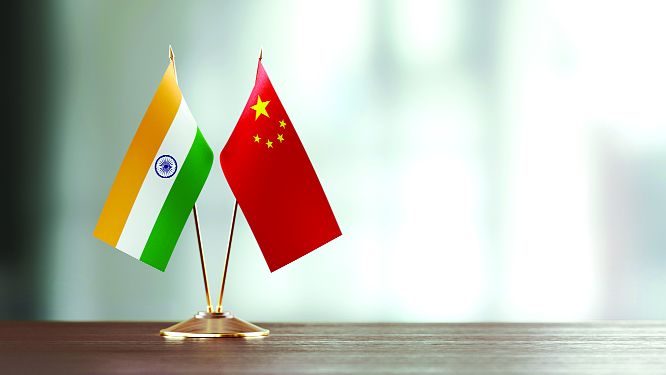
India and China are likely to hold another round of diplomatic talks this week on eastern Ladakh with a focus on moving forward in disengagement of troops in the remaining friction points, people familiar with the development said on Tuesday.

They said the talks under the framework of Working Mechanism for Consultation and Coordination on India-China Border Affairs (WMCC) are expected to focus on broad principles to bring down tensions between the militaries of the two countries in eastern Ladakh.

The talks may take place on June 24, said one of the people cited above.

The last round of WMCC talks took place on March 12.

It is learnt that another round of Corps Commander-level talks will be held following the diplomatic dialogue. 

India and China were locked in a military standoff at multiple friction points in eastern Ladakh since early May last year. However, the two sides completed the withdrawal of troops and weapons from the North and South banks of Pangong lake in February following a series of military and diplomatic talks.

The two sides are now engaged in talks to extend the disengagement process to the remaining friction points. India has been particularly pressing for the disengagement of troops in Hot Springs, Gogra and Depsang.

According to military officials, each side currently has around 50,000 to 60,000 troops along the Line of Actual Control in the sensitive sector.

There was no visible forward movement in disengagement of troops in the remaining friction points as the Chinese side did not show flexibility in their approach on it at the 11th round of military talks.

Last month, Army Chief Gen MM Naravane said that there can be no de-escalation without complete disengagement at all friction points in eastern Ladakh and that the Indian Army is prepared for all contingencies in the region.

Gen Naravane also said that India is dealing with China in a “firm” and “non-escalatory” manner to ensure the sanctity of its claims in eastern Ladakh and that it was even open to initiating confidence-building measures. PTI