









































05 JUN 2021 NEWS


Current Events :





















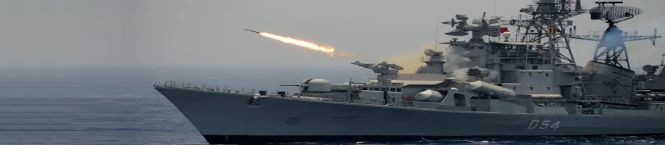
A months-long clash between India and China on their Himalaya border has dramatically increased tensions. But the growing rivalry between the two Asian powers is also likely to play out in the Indian Ocean. China’s navy is capable and only getting bigger, and India is trying to catch up
Last year, an all-out brawl between Chinese and Indian troops along the disputed Sino-Indian border killed 20 Indian and at least four Chinese soldiers.
The medieval-style battle in the Himalayas showed that the countries’ rivalry is entering a new phase of intensity.
“China is definitely factoring larger and larger in India’s defence strategy today,” Timothy Heath, a senior international and defence researcher at the Rand Corporation think tank, told Insider.
The military focus of that rivalry has primarily been on the ground, as reflected by the build-up in the Himalayas, but another area is growing in importance: the Indian Ocean. With some of the world’s most important trade routes running through it, the Indian Ocean’s value is hard to understate, which China has already recognized.
“Given its importance for China, it’s pretty obvious the Chinese are elevating in priority the security needs for the maritime silk road,” Heath said. “That means India has to be ready for possible situations involving China.”
But Indian dominance in its home waters is far from assured. While India’s navy has some advanced capabilities, China’s People’s Liberation Army Navy, or PLAN, is substantially larger and more sophisticated.
With the rivalry entering a new phase, India is trying to catch up.
Outnumbered At Sea
The Indian navy isn’t small or weak. Its primary combatants include 10 destroyers, 13 frigates, 17 submarines, and one aircraft carrier. A number of India’s warships, like its Kolkata-class destroyers and Shivalik-class frigates, were commissioned within the last decade and have stealth capabilities.
Some Indian ships have modern vertical launching systems and are armed with Russian and Israeli anti-ship and anti-aircraft missiles. India’s navy also has the BrahMos supersonic missile, a joint Indian-Russian design that is one of the fastest missiles in the world.
Two of India’s submarines are nuclear-powered: one attack submarine (SSN) on loan from Russia and one Arihant-class domestically designed and built ballistic-missile submarine (SSBN) – the first SSBN for a non-permanent member of the UN Security Council.
India expects to commission a second Arihant SSBN and a second aircraft carrier (also domestically designed and built) within the year. But the Indian navy is outnumbered and outclassed by the PLAN. Chinese ships are “largely composed of modern multi-role platforms featuring advanced anti-ship, anti-air, and anti-submarine weapons and sensors,” according to a 2020 Pentagon report.
By comparison, India is “still quite a way behind the Chinese in their warship development,” Heath said. “The Chinese have certainly developed some very impressive platforms, and the Indians are really trying to catch up.”
The Indian navy’s primary fighting vessels are outnumbered by the PLAN’s South Sea Fleet alone, which has some 11 destroyers, 19 frigates, 22 submarines (including two SSNs and four SSBNs), and one aircraft carrier. The PLAN, now the largest navy in the world, can draw on even more vessels from its two other fleets.
To address the imbalance, the Indian navy plans on acquiring a number of new and advanced vessels, especially nuclear-powered and diesel-electric submarines.
Two more Arihant-class SSBNs are in production and are expected to join the fleet by 2025. Three more larger SSBNs from the new S5-class are also being planned.
The Indian navy also hopes to build six Project-75 Alpha-class SSNs and to replace its leased Russian SSN INS Chakra (which will be returned soon) with another leased Akula-class SSN by 2025.
Six new Project 75I-class diesel-electric attack submarines have been delayed but could start entering Indian service by 2030.
A third aircraft carrier, INS Vishal, is planned to replace the aging INS Vikramaditya. The new carrier, not expected to be completed before 2030, may be based on the UK’s Queen Elizabeth-class supercarrier.
Seven brand-new Nilgiri-Class stealth frigates are also under construction, and four Admiral Grigorovich-class frigates, two built by Russia and two by India, are also expected to join India’s navy before the end of the decade.
China’s ‘String of Pearls’
There is little doubt in India that the new vessels are needed. Although China is relatively far from the Indian Ocean, it has ramped up its activity there.
Over the last few years, China has taken control of ports across the Indian Ocean that have the potential to support the PLAN – a network that has been called China’s “String of Pearls.”
“People have been theorizing about the so-called String of Pearls for years,” Heath said. “We are actually starting to see some evidence of the Chinese implementing something along these lines.”
China has taken control of a port in Sri Lanka, is building naval facilities in Pakistan, and is pursuing port projects in Myanmar, Bangladesh, and Tanzania.
China already has a military base in Djibouti, but other “pearls” appear to be primarily for civilian use.
That doesn’t mean those facilities couldn’t be used to support PLAN vessels. A number of Chinese ships and submarines have already docked at Sri Lanka to refuel and resupply. Sri Lanka has since denied Chinese requests for other warship port visits due to Indian concerns.
“The Chinese are not interested in building full-fledged bases in the US model,” Heath said. “These are facilities that primarily offer refuelling, repair, and replenishment to passing warships.”
India does have a few advantages over China. As the region is its backyard, it will always be able to bring more to bear against threatening Chinese vessels, such as land-based aircraft and anti-ship missiles.
India also has its own overseas outposts. It has set up radar stations for maritime surveillance in Sri Lanka, Seychelles, and Mauritius; it’s constructing facilities on the Mauritian island of North Agalega, and it’s pursuing military facilities elsewhere in the region.
India also controls the Andaman and Nicobar Islands, strategically important islands on the Indian Ocean side of the Malacca Strait. India has beefed up its military presence there, and some advocate allowing partner countries to have a presence there as well. (A US Navy patrol plane has already refuelled there.)
Despite the government’s renewed attention, India’s navy still has a ways to go. Most of its new ships and submarines will not be fully operational until the end of the decade at the earliest, and its budget is still smaller than that of India’s army or air force.
India’s navy will also have to compete with the considerable attention that remains focused on India’s land borders, where New Delhi also has to worry about Pakistan, the rival it has focused on almost exclusively since independence.
But the rivalry with Pakistan also has a naval element. The Pakistani terrorists who carried out the deadly 2008 attack in Mumbai arrived by sea, and Islamabad, which is a Chinese military partner, is modernizing its own navy, including with Chinese submarines and drones.

All across the United States, the Pakistani regime and its cheerleaders exploit the question of Kashmir to advance Islamist interests and attack India, in state and federal legislatures, newsrooms and town halls
The Pakistani regime, making use of lobbyists, Congressmen, terror supporters, and well-organised grassroots networks of American Pakistani Muslims, is working hard to advance a radical, Islamist-inspired agenda at the highest levels in the United States, using Kashmir as its cause. One Texas-based group, Friends of Kashmir, stands at the forefront of one of these efforts.
On 5 August, 2020, Friends of Kashmir and its head a prominent pro-Pakistani activist, writer and self-described poet named Ghazala Habib organised an online event, in collaboration with the Pakistani embassy and its consulate in Houston, to discuss the “Crisis in Kashmir.”
In a sign of the Pakistani regime’s growing influence, speakers included the two co-chairs of the United States Congress’s Pakistan Caucus, the president of Pakistan-administered Kashmir, and the Pakistani ambassador to the United States and the Houston consul-general. Other advertised speakers included Congresswoman Eddie Bernice Johnson, along with Texas state legislators Ron Reynolds and Terry Meza.
Sharing a screen with such illustrious figures, however, were open supporters of terror.
Extremists And Congressmen
The webinar was held to mark Youm-e-Istehsal, or ‘Day of Exploitation,’ an annual event recently established by Imran Khan’s government to bemoan India’s “seizure” of Kashmir in 2019.

During the webinar, broadcast on social media and American Pakistani television channel TVOne USA, Congressional Caucus co-chairs Representatives Jim Banks and Sheila Jackson Lee offered the dignified remarks expected of seasoned statesmen.
Banks, who has otherwise been an outspoken critic of South Asian Islamist movements, explained his intention to “draw attention to what’s going on in Kashmir” and “provide American leadership.” Jackson Lee expressed broad support for “security” and “human rights.” She fleetingly praised Imran Khan’s leadership but quickly switched to topics such as COVID and unrelated events in Lebanon.

The Indian Army is eyeing the “Future Tank” platform which it intends to induct by 2030
Nearly a year after India’s Bheema tanks were deployed in the Himalayas amid tensions between India and China along the Line of Control (LAC), according to the Request for Information(RFI) floated by the defence ministry, the Indian Army is looking to procure new generation “Future Tank” platform namely “Future Ready Combat Vehicle” (FRCV), approximately quantity 1770 in a phased manner.
The Army intends to induct the “Future Tanks” by 2030.
The Army has sought foreign takers for the tender and plans to procure the tanks under the “strategic partnership” route. The RFI says that “in conformity with the emerging future threat spectrum and the technological advancements, the Indian Army intends to induct a new “state-of-the-art” “technology-enabled” tank to operate in varied terrain profile (High Altitude Areas, Plains/Riverine, Deserts/Semi-Deserts) across the current and future spectrum of conflict, which will remain in service for the next 40-50 years as the ‘Main Battle Tank’ of the Indian Army.”
Technological Advancements In Tanks
As far as the induction of the tanks are concerned, the RFI says due to the rapid pace of technological advancements taking place every three or four years bringing about new systems and concepts, the phased induction will thus cater for this aspect and facilitate product improvement and upgradation.
The RFI clearly states that the government has invited “responses to only from foreign OEMs” with the end-user of the equipment being the Indian Army with the last date of “acceptance of receipt of response set for September, 15.
Multi-Layered Protection
The Army is looking for a “modern” battle tank platform that is not only superior but also “incorporates niche technologies i.e Artificial Intelligence, see-through armour, and has the ability to operate in a network-centric environment.”
The new tanks are also required to be in continuous operations by day and night in real-time awareness, all-terrain agility and high mobility, precision lethal firepower, multi-layered protection with the use of niche technologies. Not just this, along with the tank the company should also be able to provide a family of combat vehicles for example recovery vehicle, bridge layer tank based on modularity and standardisation of platform.
Auto Target Tracker With Hunter-Killer Capability
The medium-weight class tank would incorporate a 2- 3 crew pod concept with ammunition able to operate in a minimum temperature as in high altitude area and maximum range as existing in deserts terrain with corresponding humidity conditions.
The firepower would include a large calibre, lethal, modular and upgradable weapon system with capability to destroy and offer countermeasures to varied threats. The new tanks would also have multipurpose “smart munitions” both for main and secondary armaments with a gun tube-launched anti-tank guided missile. It would also be required to have a digital fire control system to incorporate, AI-enabled target acquisition and multiple-auto target tracker with hunter-killer capability and eye-safe laser range finder.
Auto-Loading With Minimum Intervention
The Army needs the next generation battle tank to have high detection recognition and identification ranges with thermal night fighting and “lock on target” capability with smoke dischargers with anti-thermal and laser capability.
The Army wants the battle tank to have a loading system to provide auto-loading with minimum intervention and engagement time. The army has insisted on the tank being lightweight in order to achieve higher operational advantage, with “soft kill systems” and other countermeasures meaning laser warning system and RF sensors.
India’s Bhishma Tank
The tanks are also required to have Explosive Reactive Armour (ERA), Hard and Soft Kill Measures, Chemical Biological Radiological Nuclear (CBRN) Protection & Instant Fire Detection and Suppression System (IFDSS) along with “high trafficability” in marginal and boggy terrain and operational ranges in cross country and on the road.
During the India-China standoff in eastern Ladakh last year, the Army had moved its premier T-90 battle tanks to eastern Ladakh in late June in the aftermath of the Galwan clash between Indian soldiers and Chinese troops even as India and Chinese commanders began their long-drawn talks to disengage along the LAC.
The Russian-built T-90 Bhishma tanks were acquired by India in 2001. India has already been boosting its T-90 tank capacity for several years keeping in mind the growing security risk along the LAC. Last July the Indian army had moved the tanks to the Line of Actual Control putting its best military firepower at the head of its defensive and offensive capabilities to take on the PLA. India had earlier reportedly made an assessment for up to eight T-90 tank regiments for the LAC with the total number of T-90 and its variants going up to at least 4,500.
The tanks have been further boosted by thermal imaging technology giving it an edge during night-time operations which is considered crucial in the era of 24×7 planning and execution and since the Indian army occupies dominant positions along the LAC at the present moment, the sophisticated battle tanks allow the Indian Army to maintain its edge over the PLA.
India has moved rapidly to beef up the T-90s with India’s defence ministry signing a deal with Bharat Earth Movers Limited (BEML) for mine ploughs (MP). India’s first T-90s Bhishma tank was rolled out of the assembly line from the Avadi Heavy Vehicles Factory (HFV) on 7 January 2004. The T-90 tanks played a crucial role during the confrontation on August 29 last year against the PLA tanks as the Bishma’s were set out to guard the strategic Spanggur pass at Chuasal.
China Threat
India has been quite openly reinforcing the T-90s in its arsenal.
In 2019, the defence ministry moved to induct more upgraded Russian built- Bishma’s at the cost of $2 billion. According to reports, the T-90s will be upgraded between 2022-26 enhancing India’s capability in the high Himalayas.
China had deployed its Type-15 lightweight tanks which has been conducting military drills in the plateau region. The tank has 105-millimetre shells and is reportedly meant for mountainous terrain. The Type-15 is equipped with chemical and nuclear protection and is reportedly easy to airlifted due to its light weight. India rapidly moved its T-90 tanks divisions after China fortified its presence in Galwan area during the clash between Indian and Chinese soldiers.
The Indian Army used its T-90 divisions strategically and placed them in vulnerable points and along with its infantry has pushed back the PLA as witnessed on August 29 when China made aggressive moves in the Himalayas.

The Defence Acquisition Council (DAC), in its meeting held under the Chairmanship of Raksha Mantri Shri Rajnath Singh on June 04, 2021, has approved proposals concerning Capital Acquisitions of various equipment for modernisation and operational needs of the Armed Forces amounting to approx. Rs 6,000 crore.
This is a landmark approval, being the first case processed under the Strategic Partnership model. This would be one of the largest ‘Make in India’ projects and will serve to facilitate faster and more significant absorption of technology and create a tiered industrial ecosystem for submarine construction in India. From a strategic perspective, this will help reduce current dependence on imports and gradually ensure greater self-reliance and dependability of supplies from indigenous sources.
There was a long pending need of the Indian Army for modernisation of its Air Defence guns. These had been earlier procured only from foreign sources. With the continued thrust of Ministry of Defence towards ‘Aatmanirbhar Bharat’ and ‘Make in India’, an enthusiastic response from about a dozen Indian companies was received. All of them have expressed their willingness and commitment to manufacture this complex gun system and associated equipment by ensuring technology assimilation in India. Accordingly, the DAC accorded approval of procurement of Air Defence Guns and Ammunition at an approx. cost of Rs 6,000 crore under the Buy & Make (Indian) category.
Further to better equip the Armed Forces to meet the operational challenges and facilitate faster induction of required arms and ammunition, the DAC extended the timelines for progressing urgent Capital Acquisitions under the delegated powers to the Armed Forces up to August 31, 2021. This will enable the Armed Forces to complete their emergent and critical acquisitions.
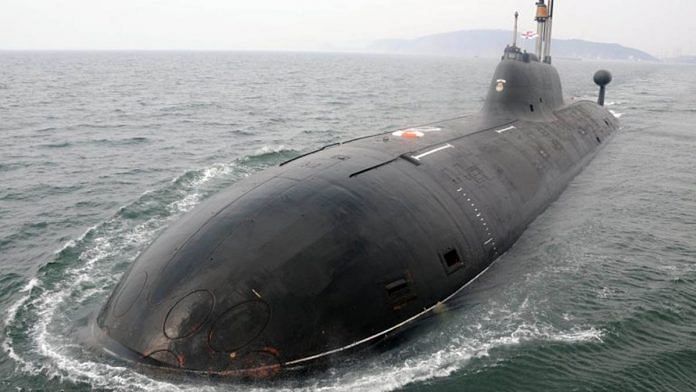
New Delhi: Twenty-one years after it was first envisaged, the defence ministry Friday cleared the issuance of the formal tender for the Project 75 India (P75I), under which six new conventional submarines with air independent propulsion (AIP) systems are to be built.
The decision was taken by Defence Minister Rajnath Singh-led Defence Acquisition Council (DAC).
Incidentally, it came on a day when pictures of India’s lone nuclear attack submarine (SSN) — Chakra — which was on lease from Russia, came out on social media making its way back to its country of origin.
Talking about the Rs 43,000 crore project, sources in the defence establishment said that since the programme is being pursued under a strategic partnership, the Request for Proposal (RFP) will be issued to selected Indian shipyards and they will then tie up with the Original Equipment Manufacturer (OEM) and bid.
The defence ministry had earlier appointed a high-powered committee to assess eight Indian shipyards and select the ones eligible for the project.
Two Indian shipyards — state-run Mazagon Dockyard Limited (MDL) and private firm Larsen & Toubro (L&T) — were finally selected.
The OEM’s in contention are Russia’s Rosoboronexport Rubin Design Bureau, Germany’s ThyssenKrupp Marine Systems, France’s Naval Group, Spain’s Navantia and South Korea’s Daewoo Shipbuilding & Marine Engineering. Swedish firm SAAB had pulled out from the race.
“We have promulgated our requirements and specifications which will be part of the RFP that will be issued to the two Indian shipyards. It will be their responsibility to tie up with the foreign firm and submit their bids for the project,” a senior naval officer, who wished to remain unnamed, told ThePrint.
It was not yet clear if the Indian shipyards can submit multiple bids and whether one OEM can tie up with both the domestic firms.
The defence ministry in a statement said this is a landmark approval, being the first case processed under the Strategic Partnership model.
This would be one of the largest ‘Make in India’ projects and will serve to facilitate faster and more significant absorption of technology and create a tiered industrial ecosystem for submarine construction in India, it said.https://a06f202bce40639438db582096e142f5.safeframe.googlesyndication.com/safeframe/1-0-38/html/container.html
“With accord of this approval, the country will be enabled to achieve its 30-year Submarine construction programme envisioned by the Government to acquire national competence in submarine construction and for the Indian industry to independently design and construct submarines in India,” the statement noted.
If all goes according the plan, it will take another 10 years for the first submarine to be inducted
Also read: Army chief in Kashmir ‘to take stock’ as ‘fragile’ ceasefire with Pakistan completes 100 days
The P75I is part of India’s 30-year-old submarine building plan that ends in 2030. Under this, India had to build 24 submarines — 18 conventional submarines and six nuclear-powered submarines (SSNs) — as an effective deterrent against China and Pakistan.
In 2016, then defence minister Manohar Parrikar had said that the submarine plan should continue till 2050 and that India should look to build more than 24 such vessels.
P75I was first cleared in 2007 but no further movement could be achieved on it. It is only in February 2019 that the defence ministry gave it a fresh “Acceptance of Necessity”.
Even as it will participate in the P75I tendering process, Russia has also pitched for a government-to-government contract for joint designing and building of a completely new class of submarines.
Russia wants to use its new Lada class submarines (its export version is called Amur), being built by the Admiralty Shipyard, as the prototype for the design and construction of the new submarines.
In 2019, Russia’s biggest design bureau for conventional submarines — the Rubin Design Bureau — had said that there was no submarine in the world that matches all the specifications laid down by the Indian Navy.
Incidentally, the Admiralty Shipyard has supplied 16 submarines to India including the first the country ever operated — the Foxtrot class of submarines — which were inducted in 1966.
Also read: Covid, production quality concerns delay induction of ‘Desi Bofors’ Dhanush by Army
Meanwhile, sources confirmed that the Chakra is on its way back and is being escorted by a Russian destroyer and a tanker. The lease for the Chakra got over earlier this year.
However, India and Russia had, in 2019, signed a $3 billion deal for the lease of a third SSN — Chakra III — which is likely to be in Indian waters by 2025 at the earliest.
While both India and Russia were trying to work out a possible extension of the Chakra II, it did not materialise because of cost and technical aspects. The Chakra is said to have had some major repairs over the last few years because of which sailing was limited.
The original INS Chakra initially came to India on a three-year lease that began in 1988. Chakra II was inducted in 2012.
The Chakras were leased to train crews for India’s own fleet of ballistic missile firing submarines (SSBNs). India’s first indigenously built SSBN, the INS Arihant, entered service in 2016. A second, the INS Arighat, was launched in 2017 and is expected to enter service soon.
Also read: India notifies 2nd list of defence items it won’t import, industry hopes more will be added
Proof of its efficacy lies in the implementation

The Model Tenancy Act approved by the Union Cabinet on Wednesday is a laudable step towards ironing out some major kinks that beset a large chunk of the owner-tenant community under the existing legal framework. Chandigarh has done well to adopt it immediately. The other states and UTs should incorporate it, too, with provisions suited to their local markets. The letter and spirit of the new Act is to restore trust and balance in this potentially volatile owner-occupant relationship by encompassing the safety measures essential to both parties for a symbiotic growth. The mutually beneficial terms and conditions laid out in the Act along with separate rent authorities and courts envisaged for speedy resolution of tenancy issues are the reforms whose need has been felt for a long time. They are directed at pulling the rental sector out of a dispute-riddled quagmire.
At present, in the absence of a mandatory written agreement to be registered with the authorities, as also the costly and protracted system of judicial reprieve, often it is money and muscle power that tend to shift advantage. Generally, depending on who is at the receiving end, either the landlady feels robbed of her returns from a hard-earned investment (a factor crucial in a poor social security ambience) or a needy tenant, commercial or residential, finds himself/herself extorted of funds or evicted from the premises.
The Act aims to protect the two parties by addressing such loopholes. The rent deed binds them against taking such harsh steps as levying huge security deposits or withholding essential supplies as also not paying rent, subletting or overstaying the tenancy period. But the proof of its efficacy lies in the implementation. The authorities need to facilitate the execution of the new rules at once. These confidence-building measures are bound to have a positive impact on real estate. In a trustworthy legal environment, more proprietors can be expected to unlock their properties for tenants and developers to invest in rental apartments. The inclusive atmosphere will ease the problem of housing shortage, and lead to a stabilising of rates.
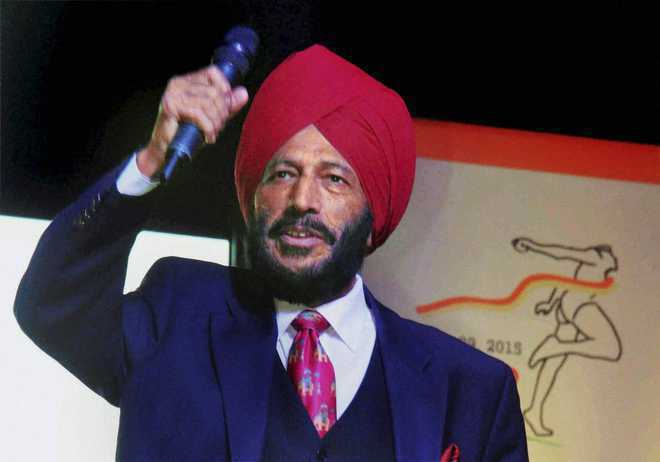
Legendary athlete Milkha Singh. File photo
New Delhi, June 4
Prime Minister Narendra Modi on Friday spoke to former Indian sprinter Milkha Singh and inquired about his health, reported ANI.
Modi wished the legendary athlete a speedy recovery and hoped he will be back soon to bless and inspire the athletes who are participating in the Tokyo Olympics.
Singh who is Covid-19 positive was admitted to the ICU in Covid Hospital of the PGIMER here on Thursday due to dipping levels of oxygen.https://f6d7b062fa224ec9b530b72ed8144a3b.safeframe.googlesyndication.com/safeframe/1-0-38/html/container.html
He has been kept under observation and is stable now. He was discharged from a private hospital earlier this week.
Milkha Singh was on Sunday discharged from a private hospital where he was getting treatment for Covid-19 infection even as he continues to be on oxygen support.
The 91-year-old was discharged in stable condition on the request of his family.
“On the request of the family, Mr Milkha Singh was discharged from the hospital today in a stable condition. He is on oxygen and nutritional support,” the Fortis hospital, Mohali, had said in its update.https://f6d7b062fa224ec9b530b72ed8144a3b.safeframe.googlesyndication.com/safeframe/1-0-38/html/container.html
Milkha is suspected to have contracted the infection from a house help.
The legendary athlete is a four-time Asian Games gold medallist and 1958 Commonwealth Games champion but his greatest performance was the fourth-place finish in the 400m final at the 1960 Rome Olympics.–ANI/TNS

rmy Chief at forward areas along LoC on Thursday
Srinagar, June 3
Army chief General MM Naravane reviewed the security situation along the Line of Control (LoC) in Kashmir on Thursday and lauded the troops for the high level of operational preparedness.
Gen. Naravane arrived on a two-day visit to Kashmir on Wednesday to review the overall security scenario in the valley. “On the second day of his two-day visit to #Kashmir, General MM Naravane #COAS reviewed the security situation along the Line of Control,” the Army wrote on its official Twitter handle.
It said the local commanders briefed the Chief of Army Staff on the existing security situation and the measures instituted to foil infiltration bids by terrorists.
“#COAS also interacted with the troops and complimented them for their high morale and the high state of operational preparedness,” the Army added.
On his arrival in Srinagar on Wednesday, Gen. Naravane, accompanied by Lieutenant General YK Joshi, the Northern Army Commander, and Lieutenant General D P Pandey, the Chinar Corps Commander, visited units and formations in the hinterland, where he was briefed by the local commanders on the existing security situation.
The Army chief was also briefed about the measures being taken to identify and target the overground workers (OGWs) network involved in the radicalisation and recruitment of youngsters into terrorist ranks. Efforts to prevent local recruitment and facilitate the surrender of local terrorists were also discussed.
The Army chief’s arrival in Kashmir assumes significance as it comes on a day when the ceasefire between India and Pakistan along the LoC completed 100 days.
While interacting with the troops, the Chief of Army Staff expressed his appreciation to the jawans and commanders, who are relentlessly battling the dual challenges of Pakistan-abetted terror and the COVID-19 pandemic.
He reinforced the need to be prepared to meet the emerging security challenges effectively. PTI






























