










Sanjha Morcha

What’s New

Click the heading to open detailed news

Current Events :

web counter

Print Media Reproduced Defence Related News

Advances in defence, space, telecom in focus as science fest comes to close

Experts delved on emerging technologies in the domain of defence, space and telecommunications and the close interplay of these fields during a technical session on “New Age Technologies” at the India International Science Festival.

The four-day event that saw scientists, industries, academia and innovators from across the country reach out to the public and showcase scientific advances in the country concluded today.

Reflecting on India’s space journey, Dr S Somanath, former director of the Indian Space Research Organisation, recounted his experiences during the Chandrayaan-3 Mission and spoke about the nation’s expanding ambitions.

Referring to upcoming missions such as Gaganyaan as proof of India’s rising capabilities, he said India’s achievements in space have grown significantly over the past decade. “There is an explosion of possibilities in space exploration,” Dr Somanath said, adding, “Interest in the Moon, Mars and other planets has surged worldwide. India has announced its return to the Moon and we are also pursuing science missions aimed at understanding the origins of the universe. Soon, your mobile phones may receive signals directly from space. Young students in India are already building rockets and satellites.”

Dr Abhay Pashilkar, Director National Aerospace Laboratory, Bengaluru, delved upon the expanding role of drones in India from long-endurance surveillance platforms to cargo-handling systems.

“We can do a lot with drones—some can fly for more than 90 days,” he said, adding, “They help in agriculture, logistics and large-scale mapping. The Government of India is working to build a national drone mission that empowers young innovators to create and deploy drone solutions suited to local needs.”

Offering insights into India’s defence preparedness, Dr Prahlada Rama Rao, former Director Defence Research and Development Laboratory, discussed the evolution of BrahMos cruise missile and Akash surface-to-air missile system.

Referring to the recent Operation Sindoor, he said both the missile systems demonstrated India’s technological edge. “Akash stood like a wall, while BrahMos penetrated enemy territory with precision,” he said.

Discussing advances in the telecommunications sector, Jagmohan Bali, Chief Technology Officer, Bharti Airtel and Jeevan Talegaonkar, Vice President, Jio, said the groundwork was being laid for 6G after India’s rapid progress from 2G to 5G. They also brought out how the next era of telecom will merge terrestrial and non-terrestrial networks.

“Drone systems, aircraft and missile technologies will be linked under one technological umbrella. With integration between mobile networks and space-based systems, we aim for seamless global coverage—across the ocean,” Bali said.

Gene editing discussed

Experts also highlighted India’s rapidly advancing in genetic technologies while staying rooted in its pursuit of building an innovative and self-reliant nation at a session on gene editing at the India International Science Festival here today.

Dr KC Bansal, former Director of National Bureau of Plant Genetic Resources, New Delhi, stressed how scientific interventions in agriculture are central to achieving self-reliance. Dr Ramesh V Sonti, Director of International Centre for Genetic Engineering and Biotechnology, New Delhi, described genome editing as a way of rewriting DNA — removing and inserting sequences much like changing letters in a text. Meanwhile, Dr Rahul Purwar from IIT Bombay shared the journey behind the indigenous CAR-T cell therapy. He said that treatment costs abroad run into several crores, whereas years of work by Indian scientists have brought it down to a fraction of that cost.

Experts discuss women’s role in scientific fields

Discussing the role of women in science at a special session titled “Women’s Development to Women-led Development in Science and Technology”, speakers from diverse field stressed that the journey toward women-led development must begin at home and in schools. Teachers, mentors and families hold the key to identifying young talent and nurturing confidence early on. Encouragement at the right age, they said, can shape future leaders in science.

Lt Gen Madhuri Kanitkar, Vice-Chancellor of Maharashtra University of Health Sciences, Nashik, said India’s progress was incomplete without women leading the way. “When women rise, the nation rises with them,” she said, encouraging students to embrace discipline, teamwork and courage. Vibha Tandon, Director, Indian Institute of Chemical Biology, Kolkata underlined the importance of mutual support while Bineesha Payattati, Executive Director, IIWM, also spoke about the comfort and confidence women gain when they see others in leadership roles.

Tanushree Bhowmik from the World Bank highlighted the growing gap between boys’ and girls’ participation in the STEM programme beyond middle school, attributing it to deep-rooted social barriers. She noted that high female enrolment in STEM education doesn’t translate into job opportunities. —TNS


Not just IAF, aspirants from different fields can become astronauts soon: Shukla

Talking about his mission, Shukla says space is very disorienting, but it is a lot of fun

The domain of astronauts, presently restricted to Indian Air Force test pilots, will be opened up for aspirants from other branches of the armed forces and different disciplines in the future, enabling a greater number of persons to participate in India’s space programmes.

Stating this during a public interaction with students at the India International Science Festival-2025 here today, Group Captain Subhanshu Skukla, the first Indian to travel to the International Space Station, said it was their responsibility to take the country forward in its space programme.

Pointing out that India already has programmes like a manned space station and a human landing on the Moon under way, he said that unlike the 1960s, when we will go to space, we will have a sustained presence and this will involve enabling of long-duration space missions, development of key technology and creating a scientific and industrial infrastructure around it.

Talking about his mission, Shukla said space is very disorienting, but it is a lot of fun. “When you travel to space again, it gives you a very unique perspective, forces you to solve problems because it is an environment where life should not be existing. There is no air, there is no water, there is no protection from radiation, but you not only sustain life you also thrive there and you conduct science,” he said.

“You have brain fog, headaches, nausea. You do not feel hungry because everything inside your stomach is also floating. So your stomach feels full all the time. You also grow taller in space by 5-10 cm, but when you come back to Earth, you return to normal height,” he said.

When you get to space, you do not have an idea of up or down, left or right. You just forget about it because there is no gravity. So even if you are upside down, you do not realise that. The concept of space also changes, where it is like a three dimensional hall, whereas on Earth we do not use the 3D space but use 2D, Shukla said.

The other interesting concept is the concept of weightlessness. There is only mass, but no weight, he said. Similarly, there are a lot of psychological challenges like confined space and stressful environment that you have to address, Shukla said.

For the first time we were able to conduct microgravity research and bring back the data and analyse it. The other experiments were for solving problems of food security. Then we also took seeds to see the effect of microgravity. They have been brought back and they will be evolved for five generations to see what changes they go through when they experience microgravity, he said.

“You have to create the experiments in a way that they can be done in space because the environment is really different. I think learning of this part was the biggest lesson for us, for the country. I think we have learned this ecosystem and now we know how to do it,” Skukla said.


125 border infrastructure projects worth Rs 5,000 crore dedicated to nation

The border infrastructure projects have been constructed by Border Roads Organisation

Defence Minister Rajnath Singh on Sunday inaugurated 125 infrastructure projects constructed by Border Roads Organisation (BRO) from Ladakh.

Spread across seven states of Arunachal Pradesh, Sikkim, Himachal Pradesh, Uttarakhand, Rajasthan, West Bengal and Mizoram, and two Union Territories, Ladakh and Jammu and Kashmir, these projects include 28 roads, 93 bridges and four miscellaneous works, which have been executed at a cost of about Rs 5,000 crore.

These upgraded infrastructure projects will significantly improve last-mile connectivity to remote villages and forward military locations, bringing these areas closer to the national mainstream, a defence spokesperson said.

The inauguration event was organised on the Darbuk-Shyok-Daulat Beg Oldie Road at the Shyok Tunnel, which is among the key projects inaugurated by the Defence Minister. This is an engineering marvel, built in one of the world’s toughest and most challenging terrain, will ensure all-weather, reliable connectivity to this strategic area.

This 920-metre ‘cut-and-cover’ tunnel will significantly enhance security, mobility, and rapid deployment capabilities, especially during harsh winters, as the region is prone to heavy snowfall, avalanches and extreme temperatures.

Singh also virtually inaugurated the Galwan War Memorial in Ladakh to honour the bravery, commitment and sacrifice of the Armed Forces personnel. He voiced the government’s resolve to develop the border areas, stating that these connectivity tools are lifelines for security, economy, and disaster management.

“There are numerous benefits of robust infrastructure in border areas. It ensures military mobility, smooth transportation of logistics, increase in tourism & employment opportunities and, most importantly, stronger faith in development, democracy and the government,” he said.

The Defence Minister said that the speed with which India is strengthening its borders with roads, tunnels, smart fencing, integrated command centres and surveillance systems is proof that connectivity is a backbone of security, not a separate entity.

On Operation Sindoor, Singh said the Armed Forces launched the operation in response to the horrific terrorist attack in Pahalgam in Jammu and Kashmir. “Everybody knows what befell on those terrorists. We could have done much more, but our forces, demonstrating both courage and patience, only did what was necessary. Such a massive operation was possible due to our strong connectivity. Logistics were delivered to the Armed Forces in a timely manner. Our connectivity with the border areas was maintained, making the operation a historic success,” he said.

He said the coordination between the Armed Forces and the civil administration, along with the people of border areas, during the operation was incredible. “This coordination; this mutualism is our identity. This is what makes us unique in the world,” he remarked.

Referring to India’s GDP growth, which reached 8.2 per cent in the second quarter of 2025-26, the Defence Minister stated that connectivity and communication play a significant role in not just security, but economic prosperity as well. “This growth is the result of policies and reforms, as well as the hard work of every Indian. We’re witnessing many wars and conflicts today. Post Operation Sindoor, we also witnessed a major conflict. But despite these challenges, our economy continues to grow, we continue to move forward,” he said.

Singh also pointed out that, in the financial year 2024-25, BRO incurred a record expenditure of Rs 16,690 crore, the highest ever, and a target of Rs 18,700 crore has been set for the 2025-26 fiscal.

Director-General Border Roads Lt Gen Raghu Srinivasan, said BRO has emerged as the agency of choice for key central ministries, including the Ministry of Home Affairs, the Ministry of External Affairs and the Ministry of Road Transport and Highways for executing critical infrastructure projects in the country’s most challenging and strategically significant terrains.

Rajasthan Governor, Haribhau Kisanrao Bagde, Mizoram Governor-General (Dr) Vijay Kumar Singh, Ladakh Lt Gov Kavinder Gupta, J&K Lt Gov Manoj Sinha, J&K Chief Minister Omar Abdullah, Mizoram Chief Minister Lalduhoma, Union Minister of State for Science and Technology, Dr Jitendra Singh, Union Minister of Parliamentary and Minority Affairs, Kiren Rijiju, Chief of the Army Staff, General Upendra Dwivedi, Defence Secretary, Rajesh Kumar Singh, General Officer Commanding-in-Chief, Northern Command, Lt Gen Pratik Sharma, General Officer Commanding, 14 Corps Lt Gen Hitesh Bhalla, other senior officials and BRO personnel attended the event.

In the last two years, a total of 356 BRO infrastructure projects in diverse and challenging regions, including high-altitude, snowbound, desert, flood-prone and dense forest terrains, have been dedicated to the nation. The government has enhanced BRO’s budget from Rs 6,500 crore to Rs 7,146 crore in the Union Budget 2025-26 in view of its critical role in national security and development.


PM Modi salutes Sahibzadas of Guru Gobind Singh at NDA meet

Says India in reform express mode with a clear policy intent

Prime minister Narendra Modi on Tuesday saluted the sacrifice of Guru Gobind Singh’s sons Sahibzada Zorawar Singh and Sahibzada Fateh Singh and called for nationwide awareness on the conviction to faith which the children of the tenth Sikh guru displayed.Speaking at the NDA parliamentary party meeting in Parliament today, the Prime Minister referred to the upcoming Vir Bal Diwas on December 26, a day dedicated to the commemoration of the sacrifice of Sahibzadas, and called for it to be observed across India.

Related news: Akal Takht urges Centre to rename ‘Veer Bal Diwas’ as ‘Sahibzade Shahadat Diwas’

PM calls for nationwide observance of Veer Baal Diwas on December 26

The PM also used the NDA platform to reiterate his commitment to reforms and said India was now in the “reform express phase”.

“The country is now in a full-fledged reform express phase, where reforms are unveiling rapidly and with a clear policy intent. The government’s reforms are fully citizen-centric, not just economic or revenue-focused,” said Modi adding that the goal is to remove everyday hurdles from the paths of people so that they can realise their full potential.

The PM urged MPs of the BJP and NDA alliance parties, which felicitated him for the recent Bihar win, to actively share day-to-day problems faced by ordinary people. “Improve your connection with the masses, flag their problems so that the reform express can reach every household and remove their day-to-day hardships,” Modi said at a time when the IndiGo crisis is unfolding and the government has vowed strict action against the airline.

Modi also said he wanted to end the culture of people having to fill bulky 30 to 40 page forms and unnecessary paperwork.

“We need to provide services at the door of citizens and eliminate repeated data submissions,” he noted, recalling how the government trusted citizens by allowing self-certification and ending the practice of forms to be signed by gazetted officers.

“This trust has worked successfully for 10 years and has not been misused or exploited,” Modi said. The PM also paid glowing tributes to the Sahibzadas referring to December 26 which the government declared as Vir Bal Divas in 2022 to honour the memory of Guru Gobind Singh’s sons who were bricked alive by Mughal faujdar of Sirhind Wazir Khan on December 26, 1704.

The sons of the tenth Sikh guru remained unyielding in the face of threats to convert to Islam — a message for all, the PM said.


India, US discuss trade, defence cooperation

Delegations welcome steady progress across existing dialogue mechanisms

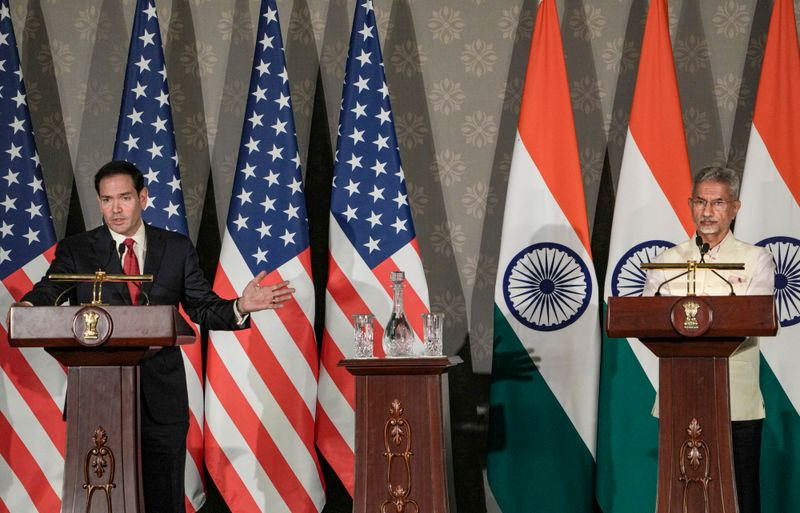
India and the US on Tuesday discussed a wide range of bilateral priorities, including trade and investment, defence cooperation, energy collaboration — particularly in the civil nuclear domain — as well as technology partnerships, critical minerals and trusted supply chains.

These discussions took place during the Foreign Office Consultations (FOC), co-chaired in New Delhi by Foreign Secretary Vikram Misri and US Under Secretary of State Allison Hooker.

According to the Ministry of External Affairs, the consultations offered an opportunity for a comprehensive review of the India-US Comprehensive Global Strategic Partnership. The two sides also exchanged views on regional and global developments of mutual interest, reaffirming their shared commitment to a free and open Indo-Pacific.

Both delegations welcomed the steady progress across existing dialogue mechanisms and agreed to accelerate the implementation of the “Catalysing Opportunities for Military Partnership, Accelerated Commerce and Technology (COMPACT) for the 21st Century” framework, aimed at driving transformative cooperation across key pillars of the relationship.

Meanwhile, a spokesperson for the US Embassy said the meeting helped advance the vision articulated by President Donald Trump and Prime Minister Narendra Modi during their February summit, translating it into concrete steps to strengthen US security, jobs and competitiveness while supporting India’s long-term strategic objectives

Hooker added that the US sought to deepen collaboration in defence, energy, advanced technology, space and trusted supply chains, emphasising the value of a partnership that boosts American innovation while supporting India’s emergence as a global technology leader.


1971 INDO PAK WAR (THE LIBERATION WAR): EASTERN THEATRE(Maj Gen Harvijay Singh, SM)

Liberation of Bangladesh in the 1971 Indo Pak War was achieved in style with over 90,000 Pakistani soldiers surrendering: the largest since World War II. It also resulted in the liberation of East Pakistan and creation of an independent nation of Bangladesh. Officially the Indo Pak War of 1971 was fought from 3 to 16 December 1971.

Unofficially an intense battle was fought in Garibpur on 21 November; it marked the beginning of the end of Pakistan in East Pakistan. A Brief Commentary on the War in the Eastern Theatre by Lt Gen TS Shergil, PVSM, PhD, Chairman Military Literature Festival Society, Punjab. Operation Searchlight by Pakistan in East Pakistan was a cleansing of intellectuals that, set off animal instincts among the soldiers and those that supported Pakistan. This behaviour saw a backlash among the population and the Pakistan Army had to close into their defences and move out only with road opening parties; a ‘fortress mentality’ set in that opened a large area open to anti Pakistan irregulars; the ‘Mukti Bahini’ were not so deep into East Pakistan. Indian Army 2 Corps, 33 Corps and 4 Corps were slow to recognize the large gaps that existed between these ‘forts.’ 2 Corps and 33 Corps had been allotted the entire Inland Water Transport (IWT) resources of Eastern Command as IWT could not reach 4 Corps because the mountain ranges of Meghalaya and NC Hills obviated such a transfer and thus, 4 Corps was allotted MI 4 helicopters for a lift capacity of approximately two companies to cross major water obstacles. All Corps and 101 Communication Zone-that had no serious water obstacle on its thrust line- started operations in a conventional manner attacking hard defences and suffered serious casualties and reverses. It is only after establishing contacts with locals that realisation dawned that, the flanks were open.

A chance reconnaissance flight over River Meghna convinced Lt Gen Sagat Singh to use his air lift to bypass a large fortress on the river. After suffering losses against hard defences, Maj Gen Nakra commanding 101 Communication Zone, employing local guides, by passed those defences and moved on towards Dacca. The rest is history. Both 2 Corps and 33 Corps never used the IWT resources allotted to them however, 4 Corps used the heli lift resource to change history. Note: In counterinsurgency, wherever road opening parties are used it indicates that, the psychological war is failing or has failed, and troops are no longer in essential contact with the masses.

The United States turned a blind eye towards nearly 300,000 Bengalis killed by the Pakistan army in East Pakistan in the months preceding the India-Pakistan war in Dec 1971. This was because the US was using Pakistan as a conduit for a historic rapprochement with Communist China, a country it had no diplomatic ties with. Gary J. Bass author of ‘The Blood Telegram: Nixon, Kissinger and a forgotten genocide’ The Orbat India’s Eastern Command set the Pakistani communication centres as its objectives. •

The Northwestern Sector; 33 Corps comprising 20 Mountain Division and 71 Mountain Brigade. Their operations entailed cutting the Hilli- Gaibanda line and to capture Bogra and Rangpur. • The Southwestern Sector; 2 Corps comprising 4 Infantry Division, 9 Infantry Division, 50 Para Brigade less a battalion, and an Armoured Regiment of PT-76 tanks with a squadron of T-55 tanks. They were to head towards Madhumati River, capture Jessore, Jhendia, thereafter secure Hardinge Bridge, Goalundo Ghat, Faridpur ferries and Khulna. •

The Central Sector; 101 Communication Zone comprising 95 Mountain Brigade and F1 sector. They were to capture Jamalpur, Mymensingh and subsequently Tangail. A para drop by a battalion group was to take place at Tangail near Dacca. • The Eastern Sector; 4 Corps comprising 8 Mountain Division, 23 Mountain Division and 57 Mountain Division. Their operations envisaged advance to the Meghna River, capture Maulvi Bazar, Sylhet, Mynamati, Lalmai Hills (South) – Laksham and Chandpur


Raksha Mantri Shri Rajnath Singh and Defence Minister of Russia Mr Andrei Belousov today laid a wreath & paid homage to the fallen heroes at the National War Memorial

Raksha Mantri Shri Rajnath Singh and Defence Minister of Russia Mr Andrei Belousov today laid a wreath & paid homage to the fallen heroes at the National War Memorial in New Delhi ahead of the 22nd meeting of India-Russia Inter-Governmental Commission on Military & Military Technical Cooperation at Manekshaw Centre


EXERCISE GARUDA 25 CONCLUDES: INDO–FRENCH AIR FORCES SUCCESSFULLY COMPLETE 8TH EDITION OF BILATERAL AIR EXERCISE

The 8th edition of Exercise Garuda, a bilateral Indo–French air exercise between the Indian Air Force (IAF) and the French Air and Space Force (FASF), concluded at Air Base 118, Mont-de-Marsan, France, on 27 November 2025. The IAF contingent returned to India on 02 December 2025 after the successful culmination of the exercise.

During the exercise, the IAF participated with Su-30MKI fighters, supported by IL-78 air-to-air refuelling aircraft and C-17 Globemaster III transport aircraft and both air forces conducted a range of complex air operations in a realistic operational environment. The training involved joint mission planning, coordinated execution of strike and escort missions and familiarisation with each other’s operational procedures, thereby enhancing interoperability. The IAF maintenance crew ensured high serviceability throughout, enabling smooth conduct of all planned missions. Senior officials from both nations interacted with the participants during the closing ceremony, commending the professionalism, discipline, and commitment displayed by both participating forces.

Exercise Garuda 25 was one of the largest international air training engagements undertaken by the IAF this year. The exercise reaffirmed the strong strategic partnership between India and France and provided valuable operational insights to the participating forces. The lessons learnt will further enhance the IAF’s war-fighting capabilities and strengthen jointmanship with friendly foreign air forces.


As Army gets advanced fuel storage facility in Kargil, logistics challenge in high altitude comes in focus

The Indian Army has commissioned the first-of-its-kind underground fuel, oil and lubricant (FOL) storage facilities in the Kargil Sector, marking a major advancement towards strengthening logistics infrastructure in high-altitude areas.

Titled Project Sena Sarthi, it consists of newly constructed storage tanks that will double the fuel-holding capacity, ensuring sustained operational preparedness for troops deployed in one of the most challenging terrains and climatic conditions in the country. It has been executed in collaboration with Bharat Petroleum Corporation Limited.

Storage and logistics for FOL products at high-altitude areas like Ladakh and the north-east, where vehicles and fuel-powered equipment like generators are deployed at heights up to 20,000 feet, poses significant challenges for the Indian Army because of extreme temperatures, inclement weather and hostile terrain.

Sub-zero temperatures not only affect the physical and chemical properties and combustibility of FOL products, but also require special storage and handling facilities. Bulk of the Army’s fuel requirements are transported by road. Since areas like Kargil and Ladakh remain cut-off from the rest of the country during winters, adequate stocking has to be done for this period.

The problems have been mitigated to some extent by the use of diesel and lubricants specially developed by DRDO for high altitude, use of additives and blends in FOL and building insulated or heated underground storage facilities, but these add to the costs and maintenance efforts.

Transportation and storage of FOL in forward areas is done in 200-liter barrels made of mild steel. According to the Compendium of Problem Definition Statements released by the Army earlier this year, the existing barrels, though robust, are prone to rusting, heavy and cumbersome to handle. In addition, they take up a large storage space even when empty.

“The greatest challenge is storage of main grade fuels in high altitude areas and mountainous terrain where existing barrels cannot be transported through heli-lift. There is a need to develop a customised alternate solution for Indian Army in form of new generation fuel barrels to enable ease of transportation, handling and portability of fuel in pack storage, especially in remote locations and high altitude areas,” the document states.

Pointing out that countries like the US and UK are using fuel drums specially designed for ease of portability and heli-lifting as under slung load, the Army has projected a requirement to the industry for robust, lightweight, portable and foldable or collapsible fuel drums which occupy less space when empty, withstand drops from higher levels and withstand extreme temperature from minus 45 degrees Celsius to 50 degrees Celsius.


Army embraces AI revolution, launches ‘boots to bytes’ plan

100 indigenous apps, UAV jammers to anchor forces’ digital overhaul

The Army has embraced artificial intelligence as part of its wider transformation to become a future-ready, data-driven force underpinned by automation and digitisation. The initiative, termed ‘boots to bytes’, draws from the long-held dictum of having soldiers on the frontline, or ‘boots on the ground’, and juxtaposes this with the new need for ‘terabytes’ of data to empower the soldier.

The transformation is built on three pillars — digitisation, automation and AI. Defence Minister Rajnath Singh on November 28 released the plan, formally titled ‘Digitisation-3’.

The plan documents 100 applications organised under two themes. One of these, called ‘Digital Sena’, highlights 40 cutting-edge digitisation and automation initiatives aimed at enhancing efficiency, transparency and logistics.

Among the key technologies being integrated is a UAV tethered to the ground, equipped with an electronic system capable of jamming enemy drones. Other major developments include an indigenous geographic information system (GIS) that leverages spatial data and advanced analytics to improve decision-making, planning and operational effectiveness. By integrating various data sources, it provides commanders with a common operating picture of the battlefield, terrain and logistics.

To become an AI-ready force, the Army is developing 60 AI-driven solutions, such as an indigenous ‘small language model’, and will deploy software using AI-as-a-Service. These tools underline how AI is transforming operations, surveillance, decision support and autonomous systems for faster cognition and superior battlefield decision-making.

A flagship project named ‘Ekam’ has also been designed to deliver indigenous, secure, military-specific AI solutions tailored to operational doctrines and classified datasets. These include state-of-the-art AI services such as document analysis, a military correspondence generator and translation tools. Phase II of ‘Ekam’ focuses on building the first indigenous large language model (LLM) for the Indian Army.

As part of its future technologies drive, the Army has also developed a ‘climatology’ application created through scientific collaboration. The system integrates more than 20 years of geospatial data drawn from over 35 parameters to deliver precise landslide and avalanche predictions.