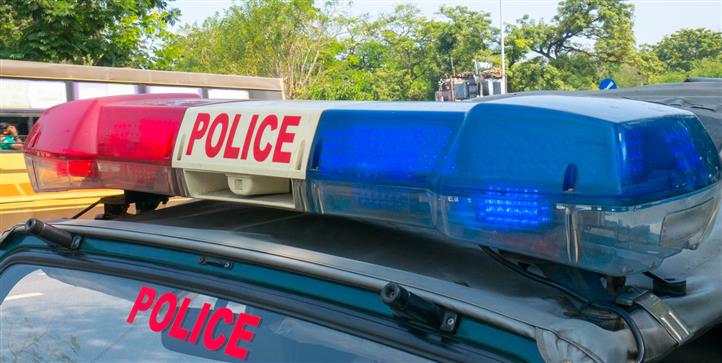
An FIR has been lodged against four persons in Badhapur police station of Bijnor district for allegedly assaulting a Sikh youth and forcing him to convert to Christianity by cutting his hair, police said on Wednesday.
Mahendra Singh, who belongs to the Sikh community and is a resident of Champatpur village of Thana Badhapur area, filed a complaint alleging that four persons—Balveer, Mangal Singh, Chhindar and Amrik—of his village had forcibly cut his son Gurpreet’s hair, assaulted him and forced to convert to Christianity.
Station House Inspector (SHO) Anuj Tomar said that an FIR was lodged against the four persons on the basis of the complaint.
“FIR has been lodged under sections 295 A (hurting someone’s religious feelings), 323 (voluntarily causing hurt), 352 (use of criminal force), 504 (intentional insult with intent to provoke breach of peace) and 506 (criminal intimidation) of the Indian Penal Code and the matter is being investigated.
China to reopen borders after 3 years, no quarantine for international travellers from January
Days after it faced nationwide anti-government protests against its stringent zero-Covid policy, China in a major shift of its coronavirus response policies has announced that it will scrap quarantine for international travellers from January 8 as it reopens its borders and comes out of international isolation after nearly three years.
Downgrades virus management
China’s National Health Commission has announced that Covid-19 management will be downgraded from Class A to B from next month. It will fall in the same category as less-severe diseases such as dengue fever
Companies welcome Beijing’s decision
Foreign firms welcomed China’s decision to end quarantines for travellers from abroad as an important step to revive slumping business activity
The National Health Commission (NHC) has announced that Covid-19 management will be downgraded from Class A to B from next month, in the same category as less-severe diseases such as dengue fever. China will cancel inbound quarantine for international arrivals starting from January 8, 2023, it said.
Earlier, passengers coming from abroad had to mandatorily stay in over two weeks of quarantine in government accommodations, which was gradually reduced to five days with three days of observation. These announcements come at a time when the country is grappling with a sudden spurt in coronavirus infections fuelled by the Omicron variant after the Xi Jinping regime relaxed its stringent zero-Covid policy earlier this month following a wave of anti-government protests.
Officials argue that the Omicron variant was not as lethal as the Delta strain, which caused massive casualties all over the world.
Covid has been managed as a top category ‘A’ infectious disease since 2020, putting it on a par with bubonic plague and cholera, South China Morning Post reported. Under Chinese laws, authorities must impose the toughest restrictions such as quarantine and isolation of the infected and their close contacts, and lockdowns to contain those diseases.
At the border, the infected must be isolated and those who might be infected quarantined, depending on the incubation period. The NHC also stopped announcing daily Covid cases from Sunday.
Nagar kirtan taken out from Akal Takht to mark Guru Gobind Singh’s parkash purab
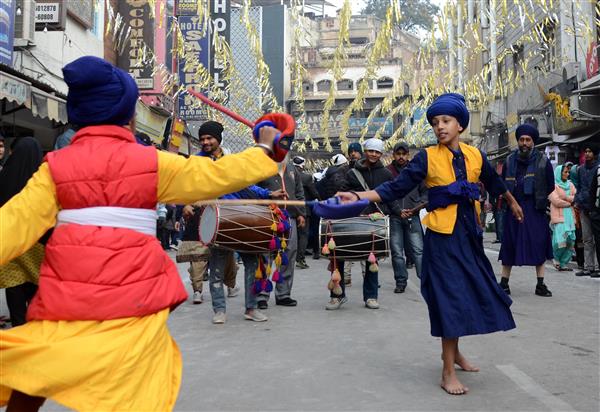
Two days before the parkash purab of Guru Gobind Singh, Shiromani Gurdwara Parbandhak Committee (SGPC) along with various Sikh organisations took out a nagar kirtan here on Tuesday.
Sikh youth perfom gatka during a nagar kirtan procession ahead of the birth anniversary of Guru Gobind Singh in Amritsar.
The nagar kirtan started off from Akal Takh. Giani Jagtar Singh, head granthi, Golden Temple, performed an ardas on the occasion. The palanquin carrying Guru Granth Sahib was decorated beautifully.
A large number of devotees participated in the nagar kirtan, reciting ‘Waheguru’.
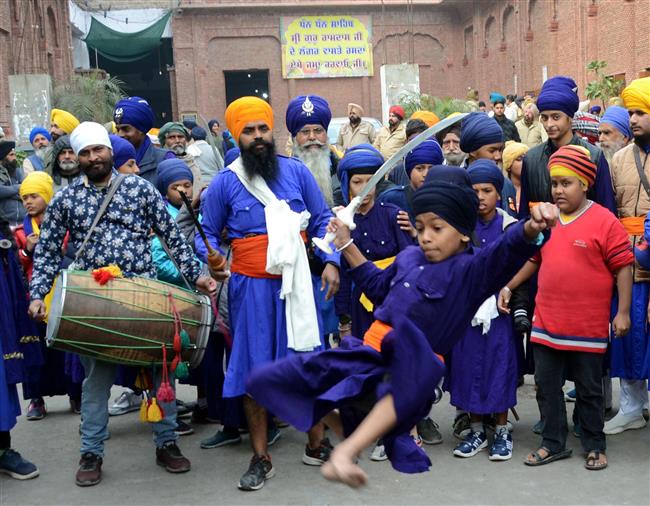
Aerial acrobatics:A boy perfoms gatka during a nagar kirtan procession ahead of the birth anniversaryof Guru Gobind Singh in Amritsar on Tuesday. Photo: Vishal Kumar
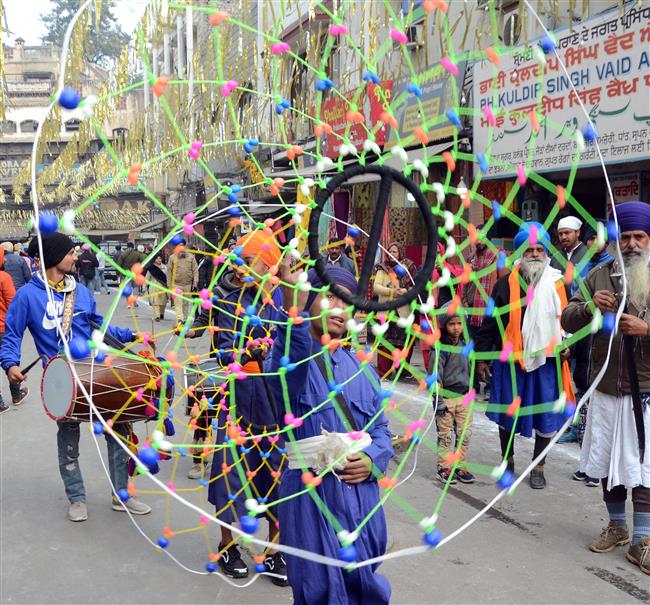
Starting from Akal Takht, the Nagar Kirtan passed through different localities of the walled city before concluding at Akal Takht. The localities from where the nagar kirtan passed were, Guru Ramdas Niwas, Brahm Buta Market, Bazar Mai Sevan, Bazar Kathian, Bazar Papada Wala, Bazar Bansan, Chowk Chatti Khuhi, Chaul Mandi, Dal Mandi, Dhab Vasti Ram, Jora Pipal, Lachmansar, Chowk, Babasaheb Chowk and Bazaar Paragdas.
Sikh youth perfom gatka during a nagar kirtan procession ahead of the birth anniversary of Guru Gobind Singh in Amritsar.
The Chief Khalsa Diwan (CKD) also organised a nagar kirtan to mark the parkash purab. After performing an ardas at a gurdwara situated on the CKD’s head office campus, the nagar kirtan proceeded to the Golden Temple. The nagar kirtan passed through different localities of the city. Gatka teams, teaching and non-teaching staff of the CKD schools, colleges, hospitals, orphanage and other institutions participated in it.
CKD president Dr Inderbir Singh Nijjar, who is also Local bodies Minister, welcomed the sangat that took part in the nagar kirtan and extended wishes to them.
Drone activity along International Border in Punjab increased nearly four times over last year, reveals BSF data
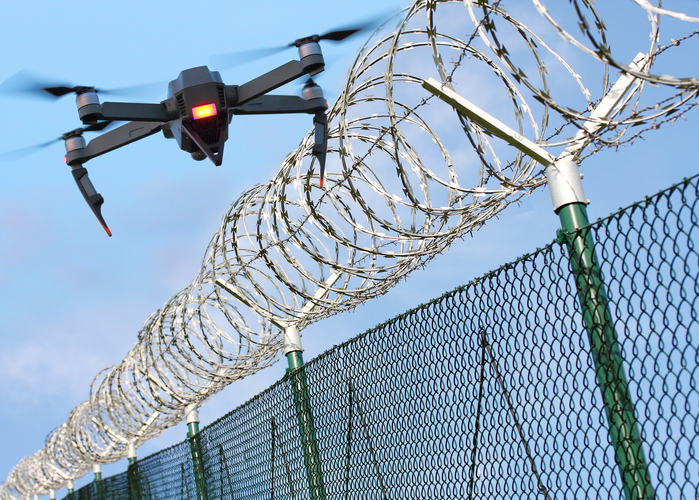
The Punjab frontier remained the most active sector in the year 2022 amongst the four states that share the International Border with Pakistan, which is a nearly four-fold increase in hostile drone activity being reported.
The spike in drone activity has prompted the BSF to initiate several counter measures such as setting up a special center to train personnel in dealing with the threat from drones, establishing operational protocols and upgrading technical capability.
From January 1 to December 28, there have been 254 drone activities in Punjab as compared to 67 in 2021, according to Border Security Force (BSF) sources. This includes 221 activities detected inside Indian territory and 22 inside Pakistan.
The activity in Punjab accounts for about 84 per cent of the total drone activities reported along the entire western border this year.
In 226 out of the aforementioned instances this year, the spotted drones were fired upon by BSF personnel. Last year, the number of firing instances was only 43.
The data also reveals that in 2022, nine drones were shot down by the BSF and another 12, which may have landed or fallen due to other reasons, were recovered as compared to just a single drone being recovered last year. Another four drones were recovered by the Punjab Police this year.
Across the entire western border, that runs through the states of Gujarat, Rajasthan, Punjab and the Union Territory of Jammu and Kashmir (J&K), the number of drone activities has witnessed a three-fold increase, from 100 last year to 304 this year.
Rajasthan reported the second highest number of drone activities this year, with 29 detections compared to six last year. Last year, J&K had reported 25 activities, second highest after Punjab, but this year the number came down to 16.
BSF data also shows that this year about 80 per cent of the drone detections were inside the Indian territory as compared to 64 per cent last year. Drones were fired upon in 80 per cent of the instances this year as compared to 53 per cent last year.
Drones, of various sizes and payload carrying capacity, are being increasingly used to smuggle narcotics, weapons and ammunition and fake currency from Pakistan. Most of the drone activity is at night when it is difficult to spot them. In winters, thick fog cover during the day also hampers detection
Besides relying on the drones’ audio signature for detection by ground troops along the border, anti-drone systems and spoofers have also been put in place in areas identified as sensitive.
The equipment, which includes the capability of jamming signals or disabling the GPS, is being upgraded and additional numbers are procured, BSF sources said. The resources of different agencies are also being amalgamated for optimisation.
BSF officers said that a new training centre has been set up under the Western Command to exclusively cater to the training requirements for handling drone activities. This includes training troops in detection of drones manually or through anti-drone systems and measures to neutralise hostile drones.
Recently, the BSF also set up a drone forensics laboratory in Delhi to analyse the mechanical and navigational components of recovered drones to determine their capability and flight path for formulating effective counter strategies.
Security stepped up in Jammu, high alert on highway after four terrorists killed in ‘chance encounter’
Security forces have been put on high alert across the Jammu region, particularly on the highway, after four heavily armed militants were gunned down on Wednesday, officials said.
The counter infiltration grid has been put on high alert and security has been tightened in the region’s border areas.
Four terrorists, travelling in a truck to Kashmir after infiltrating from Pakistan, were killed in a “chance encounter” with security forces here early on Wednesday morning. Seven AK assault rifles, one M4 rifle, three pistols and a large quantity of ammunition were recovered from the slain terrorists.
Tight security arrangements have been put in place and vehicles are being checked to ensure fool-proof security in the Jammu and Kashmir winter capital, they said.
Security checkpoints on the Jammu-Pathankot National Highway have increased vigilance and vehicles, particularly trucks, are being checked, they said.
All entry points to Jammu from the border areas have been put on vigil and vehicles entering the city are being thoroughly checked.
Sanjha Morcha & Indo-Can veterans Association observing 7th Day of Shaheedi Saptah
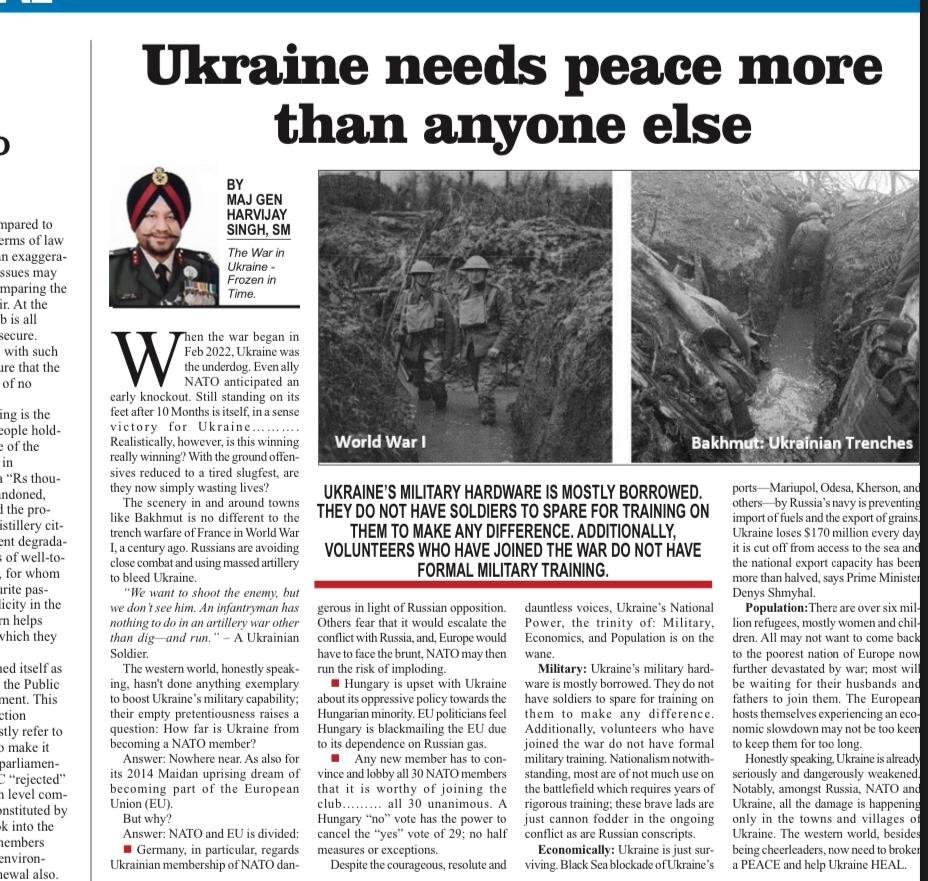
When the war began in Feb 2022, Ukraine was the underdog. Even ally NATO anticipated an early knockout. Still standing on its feet after 10 Months is itself, in a sense victory for Ukraine……….Realistically, however, is this winning really winning? With the ground offensives reduced to a tired slugfest, are they now simply wasting lives?
The scenery in and around towns like Bakhmut is no different to the trench warfare of France in World War I, a century ago. Russians are avoiding close combat and using massed artillery to bleed Ukraine.
“We want to shoot the enemy, but we don’t see him. An infantryman has nothing to do in an artillery war other than dig—and run.” – A Ukrainian Soldier.
The western world, honestly speaking hasn’t done anything exemplary to boost Ukraine’s military capability; their empty pretentiousness raises a question: How far is Ukraine from becoming a NATO member?
Answer: Nowhere near. As also for its 2014 Maidan uprising dream of becoming part of European Union (EU).
But why?
Answer: NATO and EU is divided:
Germany, in particular, regards Ukrainian membership of NATO dangerous in light of Russian opposition. Others fear that it would escalate the conflict with Russia, and, Europe would have to face the brunt, NATO may then run the risk of imploding.
Hungary, is upset with Ukraine about its oppressive policy towards Hungarian minority. EU politicians feel Hungary is blackmailing EU due to its dependence on Russian gas.
Any new member has to convince and lobby all 30 NATO members that it is worthy of joining the club……… all 30 unanimous. A Hungary “no” vote has the power to cancel the “yes” vote of 29; no half measures or exceptions.
Despite the courageous, resolute and dauntless voices, Ukraine’s National Power, the trinity of: Military, Economics, and Population is on the wane.
Military: Ukraine’s military hardware is mostly borrowed. They do not have soldiers to spare for training on them to make any difference. Additionally, volunteers who have joined the war do not have formal military training. Nationalism notwithstanding, most are of not much use on the battlefield which requires years of rigorous training; these brave lads are just cannon fodder in the ongoing conflict as are Russian conscripts.
Economically, Ukraine is just surviving. Black Sea blockade of Ukraine’s ports—Mariupol, Odesa, Kherson, and others—by Russia’s navy is preventing import of fuels and the export of grains. Ukraine loses $170 million every day it is cut off from access to the sea and the national export capacity had been more than halved. Prime Minister Denys Shmyhal.
Population: There are over six million refugees, mostly women and children. All may not want to come back to the poorest nation of Europe now further devastated by war; most will be waiting for their husbands and fathers to join them. The European hosts themselves experiencing an economic slowdown may not be too keen to keep them for too long.
Honestly speaking, Ukraine is already seriously and dangerously weakened. Notably, amongst Russia, NATO and Ukraine, all the damage is happening only on the towns and villages of Ukraine.
The western world besides being cheer leaders, now need to broker a PEACE and help Ukraine HEAL.
Days after the 1971 Indo-Pak War had ended, the Brachil Pass in Kargil and the nearby mountain features, including Wali and Malik, presented a gory sight. As the arena of many battles, these mountain features had witnessed the dance of death. Bodies of Pakistani soldiers strewn on bridle paths, in rocky crevices and on the slopes awaited an honourable repatriation.
My battalion, 18 Punjab, had emerged victorious after facing incredible hardships in Kargil. We had vanquished two foes — the Pakistanis and the extreme winter. The misty conditions had presented opportunities to the Pakistanis to spring surprises by stealthily launching counterattacks.
The ceasefire came into effect on December 17. The most severe winter, ‘chillai kalan’— 40-day period of the harshest winter of Kashmir — had set in. The snow fell intermittently.
Once we had cremated our brave-hearts, a suitable opportunity to repatriate the bodies of the Pakistani soldiers was awaited. On December 26, amidst the cacophony of shouts that alerted our listening posts, some Pakistani troops were observed downslope well within their territory, waving white flags signifying truce.
Being the Battalion Intelligence Officer, I was rushed to attend to this matter. Accompanied by a few armed personnel and having run for some distance, I halted, realising that the benumbing chill of the breezy, rarefied atmosphere of the high-altitude terrain was rendering us breathless and this may hamper our conversational ability. The others also slowed down their pace.
What greeted us were ear-to-ear grins of the chastened enemy soldiers. It seemed that their belligerence had vanished. A hefty figure saluted me. I returned his salute as smartly as I could in that freezing chill. And before we could question them, I was perplexed to notice the area within their territory. It was littered with used bandages and field dressings. Rocky patches still revealed bloodstains, indicating heavy casualties suffered by the Pakistanis. Breaking my reverie, the leader of the troops remarked, ‘Jenab, aap ki fauj ke afsar log mushkil mein apne faujion ke saath chalte hain (Sir, officers of your Army are always with their soldiers during difficult situations).’ I felt proud, and I still do, because that is the ethos of the Indian Army.
Pak security situation deteriorates as it seeks to revive economy
The security situation in Pakistan has suddenly plunged in the last few weeks leading to the US, followed by the UK, issuing travel advisories about an imminent terrorist attack in Islamabad.
The suicide bombing in Islamabad on December 23 missed its high value target but has shaken up the establishment as it was the first in the National Capital in nearly a decade.
But it is Balochistan which is at the vortex of the recent violence as some militant groups have merged and others have expanded their operations there. Bordering Afghanistan and Iran that have historically sheltered anti-Islamabad militant groups, Balochistan has been especially targeted by the Tehrik-e-Taliban Pakistan (TTP) after its cease fire with the Pakistan Army ended last month.
The TTP also received shadowy backing from the Taliban in Afghanistan which had freed all their imprisoned militants after seizing power in Kabul in August last year. But other groups are like the brutal ISIS (Khorasan Province) and indigenous groups are also active, targeting either their ideological rivals or Chinese investments in Balochistan. ISIS (KP) has been responsible for several of the attacks including of 11 Shia Hazara coal miners.
The attacks, however, come at an inopportune time for Pakistan. After being taken off the FATF’s watch-list, it was hoping for investments from the West to balance its dependence on Beijing. International cricket teams, including from the West, had also started playing regularly in the country.
Pakistan also needs breathing space to sort out the squabbles in its mainstream parties. While the ruling alliance wants to continue, Imran Khan, whom they had dethroned as PM, is pressing for the General Election.
1. (Dec 14) Suicide attack on Pakistan army convoy in North Waziristan.
2. (Dec 14) Fire at Diesel depot, Gwadar, Balochistan
3. (Dec 19) TTP took 10 Counter Terrorism personnel hostage in Bannu, KP
4. (Dec 19) Blast in Khuzdar, Balochistan
5. (Dec 19) Suicide attack on Frontier Corps in Miranshah, North Waziristan.
6. (Dec 19) Attack on Wana police station, South Waziristan
7. (Dec 23) Suicide bombing in Islamabad
8. (Dec 25) Five soldiers killed during clearance operation, Kohlu district, Balochistan
9. (Dec 25) Soldier killed near Afghan border in Zhob district, Balochistan
No mandatory hairstyle, but women cadets at National Defence Academy go for crew cuts
New Delhi : Women cadets at the Khadakwasla-based National Defence Academy (NDA) have chosen to sport crisp military-style crew cuts like their male counterparts for ease of training and to better fit into the armed forces, even though it isn’t mandatory for them to do so, officers familiar with the matter said on Monday.
NDA began inducting women for the first time in July 2022, and 18 are now at the academy, which allows them to keep “choice-based short hair”.
“The female cadets have opted for the crew cut as it’s easy to maintain There’s also an element of ease of training. NDA rules allow them to keep choice-based short hair or tie it in a bun (for Sikh trainees),” said one of the officers cited above. NDA was a male preserve until the Supreme Court passed a landmark order and opened the doors of premier tri-services academy to women.
Their entry required the creation of new infrastructure, separate physical training standards, and other gender-specific changes at NDA. The training of the first batch of women at NDA is progressing well, officers said.
Other training academies in the country have their own rules for how women are required to wear their hair. At the Chennai-based Officers Training Academy, short hair is compulsory for all except Sikh cadets who are permitted to keep a bun, said a second officer cited above. Like NDA, the Air Force Academy at Dundigal near Hyderabad and the Indian Naval Academy at Ezhimala allow choice-based short hair or bun.
“Despite the option of choice-based short hair, most women trainees at different academies have their hair cut to strict military standards. When you are training long hours and have tight schedules, they feel it just works better,” the second officer added.
The second batch of women cadets is expected to begin their training at NDA in early January. Of the 19 women cadets who joined NDA earlier this year, only one quit training for personal reasons, Hindustan Times has learnt. The first batch will graduate in 2025, and move to other single-service academies for further training depending on the service they have chosen — army, air force, or navy.
Woman officers said the choice by the cadets made sense because of its practicality. “When you are training, you are always short of time. Female cadets opt for crew cuts for effective time management, and the hair also fits well in the beret,” said Lieutenant Colonel Anu Randhawa, who retired last year after putting in 20 years in the army.
Three decades after the army commissioned its first batch of women officers in the short-service stream, the armed forces have come a long way and are now offering them a raft of opportunities that have given them new hard-earned identities, empowered them and helped bridge the gender gap significantly in a traditionally male-dominated field.
Women in uniform are now being assigned central roles on a par with their male counterparts — they are flying fighter planes, serving on board warships, being inducted in the personnel below officer (PBOR) cadre, and are eligible for permanent commission.
While the government and the armed forces have taken steps to promote gender-neutrality in the military system, the courts have also played an important role in pushing inclusion.
The air force and navy have allowed women to join their special forces units, the Garud commando force and Marine Commandos, respectively, to promote gender equality within their ranks provided they meet the criteria for selection, as previously reported by HT.
Physiological, psychological and cultural factors were earlier cited to deny more military roles to women. However, one of the turning points came in 2015 when IAF decided to induct them into the fighter stream. To be sure, tanks and combat positions in infantry are still no-go zones for women.
State Stalwarts
DEFENCE MINISTER
Minister Rajnath Singh
ALL HUMANS ARE ONE CREATED BY GOD
HINDUS,MUSLIMS,SIKHS.ISAI SAB HAI BHAI BHAI
CHIEF PATRON ALL INDIA SANJHA MORCHA
LT GEN JASBIR SINGH DHALIWAL, DOGRA
SENIOR PATRON ALL INDIA SANJHA MORCHA
MAJOR GEN HARVIJAY SINGH, SENA MEDAL ,corps of signals
.
.
PATRON ALL INDIA SANJHA MORCHA
MAJ GEN RAMINDER GURAYA ,MADRAS REGIMENT
sanjhamorcha303@gmail.com
PRESIDENT SOUTH ALL INDIA SANJHA MORCHA
COL SS RAJAN BOMBAY SAPPERS,
PRESIDENT UTTARAKHAND ALL INDIA SANJHA MORCHA
COL B M THAPA ,BENGAL SAPPERSS
PRESIDENT HARAYANA STATE CUM COORDINATOR ESM
BRIG DALJIT THUKRAL ,BENGAL SAPPERS
PRESIDENT TRICITY
COL B S BRAR (BHUPI BRAR)
PRESIDENT CHANDIGARH ZONE
COL SHANJIT SINGH BHULLAR
.
.
PRESIDENT PANCHKULA ZONE AND ZIRAKPUR
COL SWARAN SINGH
INDIAN DEFENCE FORCES
DEFENCE FORCES INTEGRATED LOGO
INDIAN AIR FORCE
Air Officer C-in-C WESTERN AIR COMMAND
AIR MSHL S PRABHAKARAN AVSM VM
AOC-IN-C, EASTERN AIR COMMAND
Air Marshal Inderpal Singh Walia
AOC-in-C SOUTH WESTERN AIR COMMAND
Air Marshal Vikram Singh
AOC-IN-C, SOUTHERN AIR COMMAND
Air Marshal J.Chalapati
AOC-IN-C TRAINING COMMAND
AIR MARSHAL SK GHOTIA VSM
AOC-IN-C MAINTENANCE COMMAND
Air Marshal Jagdish Chandra
Flag Officer Commanding in Chief, Western Naval Command
ice Admiral R Hari Kumar, PVSM, AVSM, VSM
Flag Officer Commanding in Chief, Eastern Naval Command
Vice Admiral Sanjay Bhalla, AVSM, NM
Flag Officer Commanding in Chief, Southern Naval Command