Lakshay and Ujjwal top men’s Lightweight Double Sculls event, finishing ahead of Hong Kong and Netherlands
Two Indian Army sportspersons have won India’s first-ever gold medal at the World Rowing Cup 2026 being held at Lucerne, Switzerland, topping the men’s Lightweight Men’s Double Sculls (LM2x) category.
WaterSports
“Historic! India’s First Ever. Hav Lakshay and Hav Ujjwal Kumar Singh won India’s first-ever World Rowing Cup gold in LM2x at Lucerne — 6:26.09. Proud moment for the Indian Army and the nation!” the Indian Army said on Sunday.
The duo, who have won several international medals in the past, were trailed by Hong Kong and the Netherlands. About 650 rowers from as many as 42 nations are competing across various men’s and women’s categories at the championships in Lucerne.
The two sportspersons belong to the Army Rowing Node (ARN), Pune. It is located at the College of Military Engineering (CME) in Pune and is India’s premier international-standard rowing facility with a specific mission to train the Indian Armed Forces’ rowing teams for international competitive events, including the Olympics.
Established in 2001 as part of the Army’s Mission Olympics, ARN features a man-made rowing channel measuring 2,200 m long and 135 m wide, making it the only facility in India capable of hosting international competitions.
The facility can support around 300 athletes and features a boathouse, a fully-equipped gymnasium, and sports science facilities and is staffed by a professional team comprising coaches, physiotherapists, nutritionists and sports psychologists.
The Army runs an expansive programme to recruit promising sportspersons in different disciplines and train them to meet global international standards. Many Army athletes have won gold medals at international events and set national records.
Army, Navy contingents to participate in Seychelles’ National Day celebrations
Indian Armed Forces contingents have previously represented nation at Bastille Day Parade in France and Victory Day parades in Bangladesh and Russia
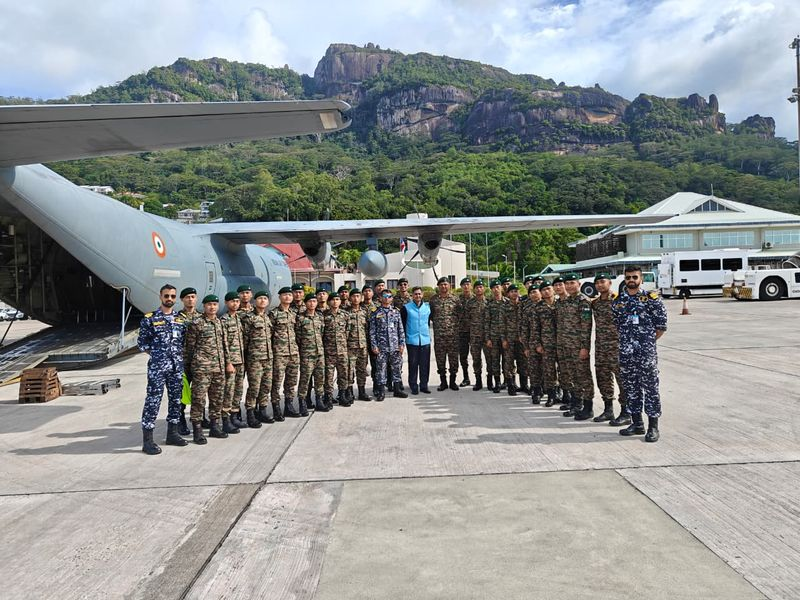
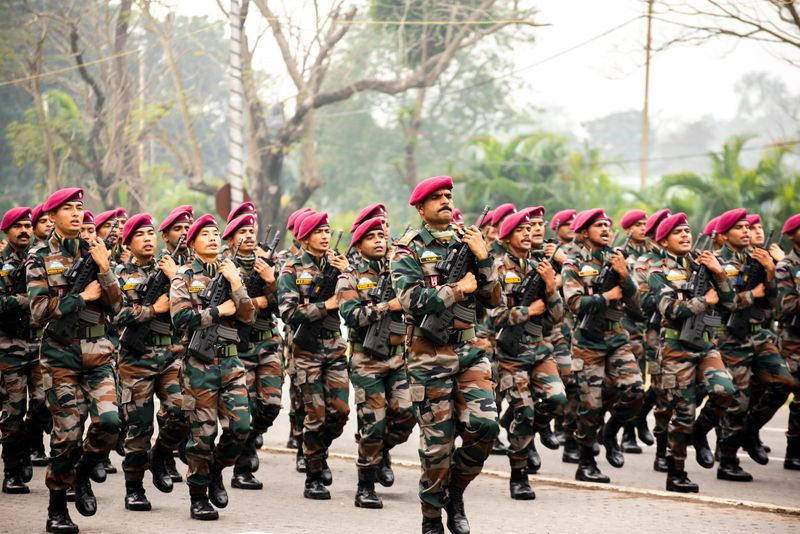
Indian Army and Navy contingents will participate in the 50th National Day celebrations of Seychelles on Monday, commemorating the Golden Jubilee of Seychelles’ Independence.
Prime Minister Narendra Modi will attend the celebrations as the Guest of Honour.
India and Seychelles share longstanding historical ties. Over the years, the relationship has evolved into a strong strategic partnership encompassing defence cooperation, development, culture and trade.
The Indian Army contingent comprises 32 personnel from the Assam Regiment and is led by Captain Aryan H Deolekar. An Indian Navy marching contingent, accompanied by a military band, will also take part in the celebrations, reflecting the close and enduring defence partnership between the two countries.
Participation of Indian Armed Forces contingents in the national celebrations of friendly foreign countries serves as a symbol of mutual trust, military camaraderie and shared commitment towards strengthening bilateral relations. Such engagements reinforce defence cooperation and underscore India’s role as a reliable partner in promoting peace, stability and security in the Indian Ocean Region.
Indian Armed Forces contingents have previously represented the nation at prominent international ceremonial events, including the 237th Bastille Day Parade in France in 2023 and the Victory Day parades in Bangladesh (2021) and Russia (2015 and 2020).
India’s participation in Seychelles’ Golden Jubilee celebrations reaffirms the special partnership between the two countries and highlights the growing depth of bilateral engagement across diverse sectors.
23 hours, 14,000 km: Here’s how IAF aircraft reached quake-hit Venezuela to deliver humanitarian aid
Under Operation Amistad, the two heavy-lift aircraft had departed Hindon Air Base in Ghaziabad on June 26
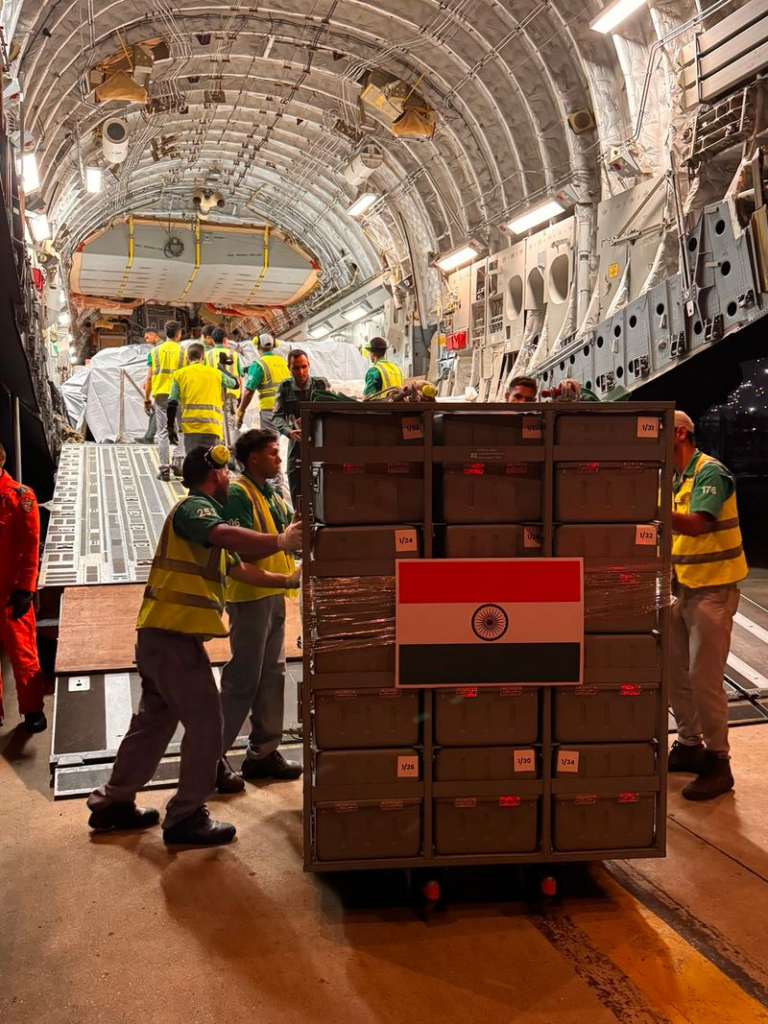
it took IAF aircraft 23 hours of flying to cover more than 14,000 km to reach Venezuela for delivering humanitarian aid to the quake-hit South American country.
“Responding with speed, reach and compassion, two Indian Air Force C-17 Globemaster III aircraft completed a demanding 23-hour flight to Venezuela, covering an aerial distance of over 14,000 km from Delhi to Caracas,” the IAF said on Sunday.
Under Operation Amistad, the two heavy-lift aircraft had departed Hindon Air Base in Ghaziabad on June 26.
The aircraft landed at Maiquetía International Airport in Caracas,carrying 66 tonnes of humanitarian aid, including an Indian Army Field Hospital, over 35 tonnes of relief supplies, medicines and medical equipment. The load also included two BHISHM Cubes, a rapidly deployable modular field hospital capable of delivering advanced trauma care, emergency surgeries and intensive care for up to 200 patients.
“This transoceanic deployment reaffirms India’s growing role as a responsible first responder and a reliable humanitarian partner,” the IAF said, adding that the mission demonstrates India’s capability to deliver hope across continents whenever called upon.
Air Force officers said that to reach Caracas, Venezuela’s capital, the IAF aircraft would have flown westwards over the Middle East and parts of North Africa with fuelling halt at Ivory Coast before heading in the southern direction to cross the Atlantic Ocean. Venezuela is located on continental South America’s northern coast. To have flown east over the Pacific would have added several thousand kilometres to the journey.
The IAF’s special mission apart, there are at present no direct commercial flights between India and Venezuela. Though the two countries share warm bilateral ties and growing energy and economic cooperation, there is a very small community of non-resident Indians in that country.
Persons travelling to Venezuela have to first fly to destinations in the Middle East or Europe and then switch flights for Caracas.
The IAF operates 11 Boeing-manufactured C-17 aircraft that were procured from the United States and inducted in 2013. These equip No.81 Squadron, The Skylords, based at Hindon.
The aircraft have a payload capacity of 77,000 tonnes and a range of over 10,000 km, and shot into prominence during the 2020 stand-off with China in eastern Ladakh, when they air lifted T-90 tanks and other heavy equipment to the Himalayan frontier.
The IAF employs the C-17, along with other aircraft like the IL-76, C-130 and AN-32, on regular logistics and support missions to the northern as well as north-eastern sectors.
C-17s have also been deployed for overseas joint military exercises with foreign countries, humanitarian aid at home and abroad and other special missions. More recently, these aircraft were in the news for assisting the government to ferry question papers for the NEET re-test across the country.
SGPC’s call to preserve Maharaja Ranjit Singh’s rich legacy
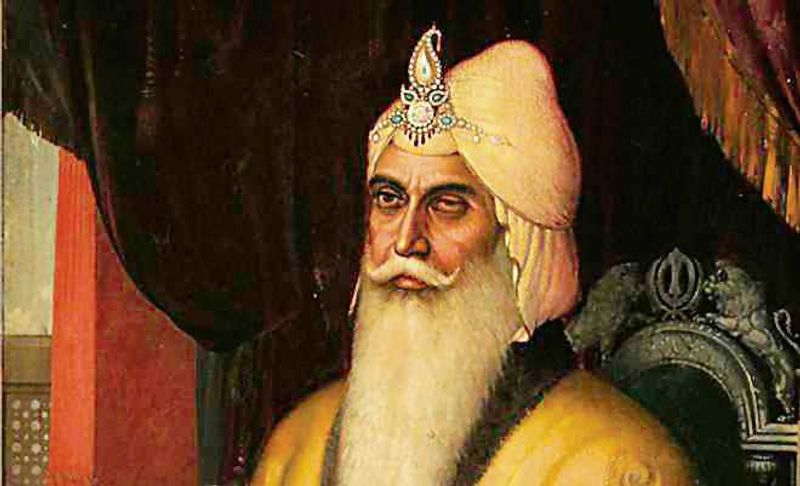
Addressing the gathering, Acting Jathedar of Sri Akal Takht Sahib, Giani Kuldeep Singh Gargaj, said Maharaja Ranjit Singh’s life symbolised unwavering faith in the Guru, humility and justice. He said the Sikh ruler established a Khalsa Raj where people of all faiths and communities enjoyed equal rights, respect and security.
Emphasising the need to preserve Sikh heritage associated with Maharaja Ranjit Singh, Giani Gargaj said the historic palace and Ram Bagh in Amritsar are priceless heritage sites. He appealed to Sikh organisations and the public to jointly identify and conserve heritage buildings linked to the Sikh empire. He also urged the younger generation to visit the historic palace to understand and connect with their rich heritage.
The Acting Jathedar said activities that do not conform to the historical character of the palace should be stopped and the site should be developed exclusively as a heritage monument. Describing Maharaja Ranjit Singh as a hero not only of the Sikhs but of the entire Punjab and Punjabi community, he said preserving his legacy was a collective responsibility.
Referring to other neglected Sikh-era heritage sites, he also expressed concern over the condition of Maharaja Sher Singh’s Baring College in Batala, saying Sikh institutions should come together for the conservation of such historically significant buildings.
The programme featured Gurbani kirtan by Hazoori Ragis of Sachkhand S Harmandir Sahib, while dhadhis narrated episodes from Sikh history. Rajinder Singh Marwaha, SGPC head pracharak Bhai Sarabjit Singh Dhotian, activist Gangveer Singh Rathore also addressed the gathering.
HE debate on military reforms and theatreisation has rightly highlighted an important reality: military transformation cannot be the responsibility of a single individual, institution or appointment. While the creation of the Chief of Defence Staff (CDS) and the efforts toward jointness and theatre commands are significant milestones, they represent only one part of a much larger transformation that the forces must undertake.
The central challenge facing militaries worldwide today is adaptation to a rapidly changing character of warfare. The nature of war may remain constant, but the means through which military power is generated, exercised and sustained are undergoing a profound change. Consequently, military reform must be viewed not only through the lens of structures and command arrangements but also through the lenses of technology, human capital, doctrine and national capability.
The future battlefield is increasingly defined by technologies that transcend traditional service boundaries. Multi-domain operations (MDO), integrated intelligence, surveillance and reconnaissance (ISR), net-centric warfare, sensor-to-shooter architectures, AI-enabled decision support, cyber warfare, electronic warfare, autonomous systems, drones, robotics and space-based capabilities are redefining how military power is applied.
In such an environment, military effectiveness will depend less on the number of platforms a nation possesses and more on how effectively it connects sensors, decision-makers and effectors across all domains.
The decisive military advantage of the future will not come merely from possessing tanks, aircraft, ships or missiles. It will come from achieving decision superiority – the ability to observe, orient, decide and act faster and more accurately than an adversary.
This requires integrated systems, common operational pictures, secure communications, data fusion, AI-enabled analytics and resilient networks. Theaterisation can facilitate such integration, but it cannot create it by itself. A theatre command without integrated data architecture may simply become three services operating under a common headquarters. True transformation demands much more.
If future military capability is tech-driven, then military reforms and technological self-reliance become inseparable. India’s pursuit of Atmanirbharta in defence must therefore extend beyond manufacturing platforms. Indigenous production of equipment is important, but the future battlespace will increasingly be shaped by control over software, algorithms, data, communications, cyber capabilities, sensors, semiconductors, autonomy, and artificial intelligence.
Dependence on external sources for critical technologies may create vulnerabilities far more significant than dependence on traditional military hardware. AI models, data repositories, operating systems, communication networks, cyber tools and digital infrastructure are becoming strategic assets. Technology-driven military reforms therefore require technology-driven Atmanirbharta.
This demands a national effort involving the armed forces, academia, startups, industry, research institutions and policymakers. Defence capability can no longer be viewed solely as the output of military organisations. It is increasingly the product of an entire national innovation ecosystem.
Much of the military leadership architecture of today was designed for the industrial-age military. The challenges of the future are different.
The AI age requires leaders who can operate simultaneously in the physical, informational, cyber, cognitive and technological domains. It requires institutions capable of rapid adaptation. It requires closer integration between military organisations and national innovation ecosystems.
Most importantly, it requires recognition that military reforms extend far beyond headquarters’ reorganisation. Theaterisation, jointness, and organisational restructuring are necessary. But they are only part of the solution.
The larger challenge is creating a force capable of achieving decision dominance in an era characterised by data abundance, algorithmic warfare, autonomous systems, cyber contestation, and persistent surveillance.
The discussion often evokes an important counterpoint – that while technology continues to advance at an unprecedented pace, the enduring principles of warfare remain unchanged. Leadership, judgment, initiative, courage, strategic foresight and operational art will always lie at the heart of military success. The art of war therefore retains its relevance and primacy.
However, the challenge before modern militaries is not one of choosing between the art and the science of war. It is about understanding how the science of war is increasingly shaping the manner in which the art of war is conceived and executed.
Historically, technological change certainly influenced warfare, but its impact on operational decision-making and battlefield outcomes was often limited by the pace of information flow and the relative simplicity of military systems. Today, the relationship has fundamentally changed. Artificial intelligence, integrated ISR networks, cyber warfare, electronic warfare, space-based capabilities, autonomous systems and sensor-to-shooter architectures are no longer peripheral enablers. They increasingly determine how commanders perceive the battlefield, generate situational awareness, make decisions and apply combat power. They are becoming central instruments through which military commanders achieve operational effects.
A commander who lacks technological understanding may struggle to exploit emerging capabilities effectively. Equally, technologists who lack understanding of warfighting realities risk creating solutions in search of problems.
The art of war and the science of war can therefore no longer be viewed as separate domains. Modern operational art is increasingly exercised through technological systems. A commander may still rely on intuition, experience and judgment, but these are now informed by data, algorithms, networks and machine-assisted decision support. The commander remains central, but the tools through which command is exercised are undergoing profound transformation.
The military challenge of our era is therefore not preserving the art of war from technology but incorporating the science of war into it. Those who master both will shape the future battlefield; those who treat them as separate disciplines risk being overtaken by adversaries who understand their convergence. That convergence is the real driver behind the transformation of modern warfare.
Therefore, framing the debate as a choice between the art of war and the science of war is not appropriate. The reality is that modern warfare increasingly demands mastery of both. The challenge is integrating them. It might well now be termed as “art & science of war”.
It naturally leads to the conclusion that future leaders must understand warfighting, technology and transformation simultaneously because the art and science of war are now inseparable.
Organisational reforms or technological infusion does not transform organisations by itself. People do.
The success or failure of military reforms will ultimately depend upon whether the armed forces can develop leaders capable of understanding and integrating operational requirements, technological possibilities, and institutional change.
This may require a new category of military leadership – what may be termed the “three-dimensional officer.” Historically, military leaders were primarily expected to master operations and command. In the future, that will remain essential but no longer sufficient.
Three-dimensional officers, particularly at the two-star and three-star levels where capability development and institutional transformation are shaped, must possess three distinct competencies.
First, they must have a comprehensive understanding of the operational environment across the spectrum of conflict and all domains of warfare. They must be capable of identifying operational challenges and translating them into future capability requirements and warfighting use cases.
Second, they must possess sufficient technological understanding to engage meaningfully with scientists, engineers, startups, academia and industry. They need not become technologists themselves, but they must understand what technology can and cannot do. They must be capable of guiding projects, evaluating outcomes, and ensuring that innovation remains aligned with operational requirements.
Third, they must be able to integrate emerging capabilities into doctrine, operational concepts, force structures, training systems, and war plans. Military innovation is successful only when technology becomes embedded within the way a force fights.
Possessing one or even two of these dimensions is no longer enough. Future military leaders must master all three. The critical question is therefore not whether India possesses talented officers. It undoubtedly does. The more important question is whether our institutional structures, education systems, career pathways, and promotion models are producing enough three-dimensional officers – or whether they continue to reinforce functional and service-specific silos.
Military reforms are therefore not merely about changing structures. They are about transforming capabilities. They are about building technological sovereignty. They are about creating institutions that learn faster than their adversaries. And above all, they are about developing leaders capable of navigating the intersection of warfare, technology and organisational change.
Military reforms are indeed not a one-man act. Nor are they merely an organisational exercise. They are a national endeavour requiring vision, military leadership, technological innovation, industrial capability and a new generation of three-dimensional officers who can convert technological possibilities into operational realities.
That may well be the defining challenge of military transformation in the twenty-first century.
Akal Takht directs changes to sacrilege law at first-ever meet with all Sikh MLAs
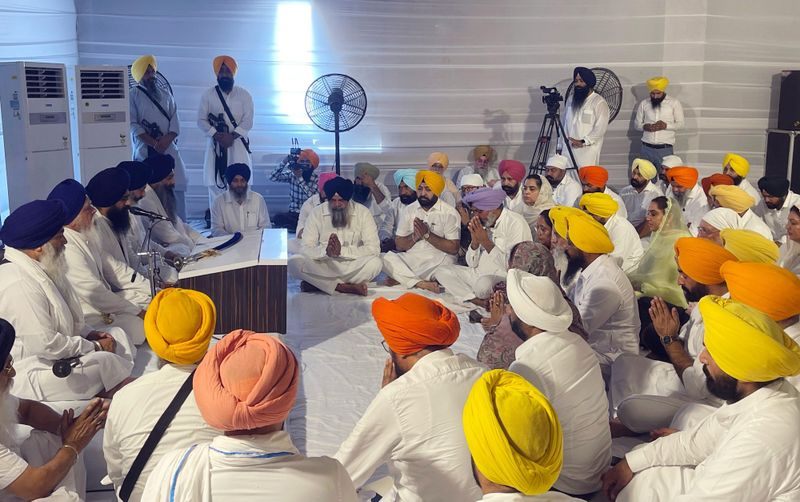
Akal Takht Acting Jathedar Giani Kuldeep Singh Gargaj on Monday directed the Punjab Government to remove “objectionable” clauses in the anti-sacrilege law within a month, conveying the message through Sikh ministers and MLAs who appeared before the Takht after being summoned.The Jathedar also told the government to keep the Jaagat Jot Sri Guru Granth Sahib Satkar Act on hold until the amendments were made. The legislators, for their part, “agreed” to carry out the changes.
Gives Punjab Government a month to act; Assembly Speaker Sandhwan says open to making amendments
It was the first time that all Sikh ministers and MLAs cutting across party lines appeared before the Akal Takht. There were 87 MLAs at the meeting at the Akal Takht Secretariat, of them 69 from the ruling Aam Aadmi Party (AAP), 15 Congress, two Shiromani Akali Dal (SAD) and one Independent. In earlier instances, the leaders had gone individually.
ExecutiveBranch
Addressing the lawmakers, Gargaj said the government had been “misled” while drafting the law. “Those who prepared the Bill did not have proper understanding of the Sikh traditions and Panthic practices, which led to an unnecessary controversy and confusion. The Act has created fear and misunderstanding among devotees,” he said. The Jathedar assured the government of full cooperation from the Akal Takht if the Act was amended as per the Sikh sentiments and the established Panthic traditions.
One of the main issues discussed during the hearing was the definition of “custodian” in the Bill and the proposal to create a central register of Guru Granth Sahib saroops. Gargaj warned that putting registry details online could reveal the locations of saroops kept in private homes and gurdwaras, exposing devotees to unnecessary problems.
The Jathedar said maintaining records of Guru Granth Sahib birs and supervising their publication was the responsibility of the Shiromani Gurdwara Parbandhak Committee (SGPC), not the government. He also criticised the use of word “saroop” instead of traditional Sikh term “bir” in the legislation.
Asked by Gargaj whether they had read the Bill, most MLAs said they received the draft Bill only a short while before it was passed in the Assembly, and that they “didn’t get enough time to go through it”. AAP MLAs Jagrup Singh Gill (Bathinda) and Kulwant Singh (Mohali) admitted to having “approved the Bill without reading it”.
Assembly Speaker Kultar Singh Sandhwan told the Jathedar that after he was summoned by the Akal Takht in May, he had immediately forwarded the Takht’s written objections to the government and the Chief Minister’s Office. He said amending the law was within the powers of the Assembly and they were open to making changes.
“We will give you our objections in writing. Call the Assembly and remove these objections within a month,” said Gargaj.
Leader of the Opposition Partap Singh Bajwa demanded that the report of the select committee be presented and discussed in the Assembly before any amended Bill was taken up.
Congress MLA Tript Rajinder Singh Bajwa said the Cabinet had approved the Bill on April 11, it was uploaded on the government website late on April 12 and the MLAs received it on April 13, the day it was passed in the Assembly.
Congress MLA Sukhpal Singh Khaira said the Assembly was paperless and the members could only see the draft on the screens placed before them after the House session began. He accused the government of passing the Bill in “secrecy and haste”.
When Minister Harpal Singh Cheema referred to an earlier Akal Takht edict (hukamnama) regarding the use of the word “custodian”, in which granthis and gurdwara committees were to be held responsible, the Jathedar said the edict did not prescribe any legal punishment for gurdwara staff. “It only speaks of religious punishment, not legal punishment,” the Jathedar said.
SAD MLA Ganieve Kaur Majithia said she did not attend the Assembly on the day the Bill was passed as the Akal Takht had advised that the Takht and the SGPC be consulted first. She also complained that she was insulted in the Assembly.
GeographicReference
At the end of the meeting, all MLAs raised their hands and agreed to make the amendments sought by the Takht.
Among those who spoke during the meeting were Sandhwan, ministers Gurmeet Singh Khuddian and Harpal Cheema; AAP MLAs Manjit Singh Bilaspur, Jagrup Gill and Baljinder Kaur; Congress leaders Partap Bajwa, Khaira, Pargat Singh and Tript Rajinder Singh Bajwa; SAD’s Ganieve Kaur and Manpreet Singh Ayali; and Independent MLA Rana Inder Partap Singh. Two non-Sikh MLAs, Naresh Puri and Aruna Chaudhary of the Congress, were also present.
Four AAP non-Sikh MLAs–Aman Arora, Barinder Kumar Goyal, Lal Chand Kataruchak and Mohinder Bhagat–submitted their written explanation to the Akal Takht.
Concluding the proceedings, Gargaj asked leaders of all political parties not to indulge in political blame games outside the Akal Takht. He said the issue concerned the collective honour and respect of Sri Guru Granth Sahib and should not become a matter of political victory or defeat. After the meeting, Harpal Cheema said, “The amendments will be sent to us through the Speaker and we will decide within a month.”
Sarvottam Yudh Seva Medal for Lt Gen Ghai, Air Marshal Bharti of Op Sindoor
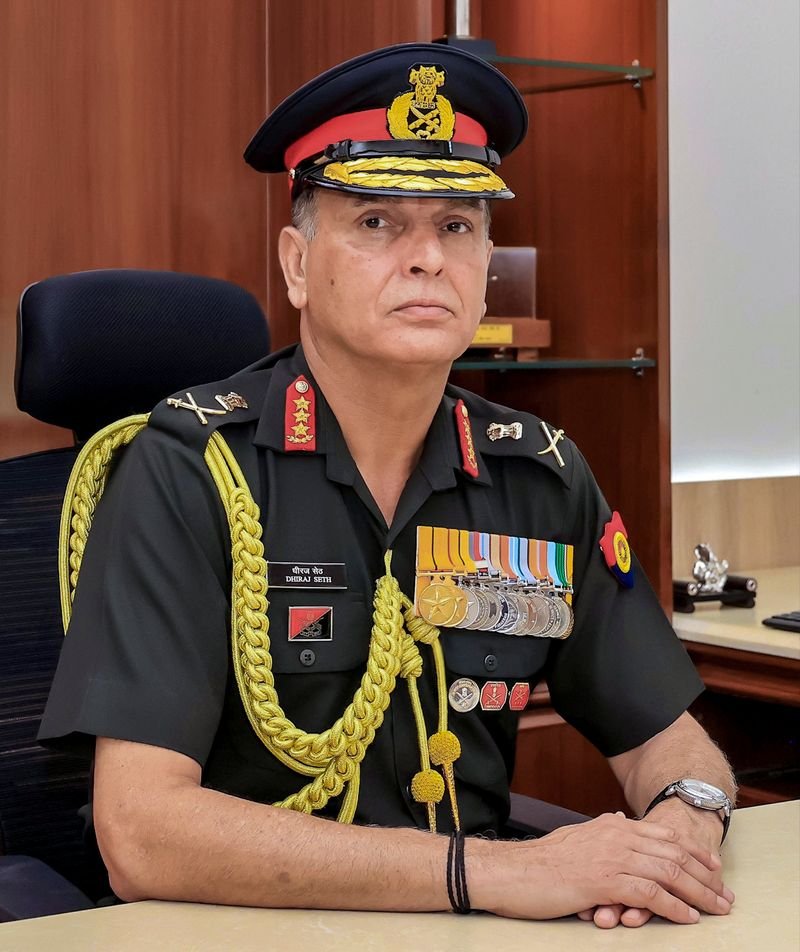
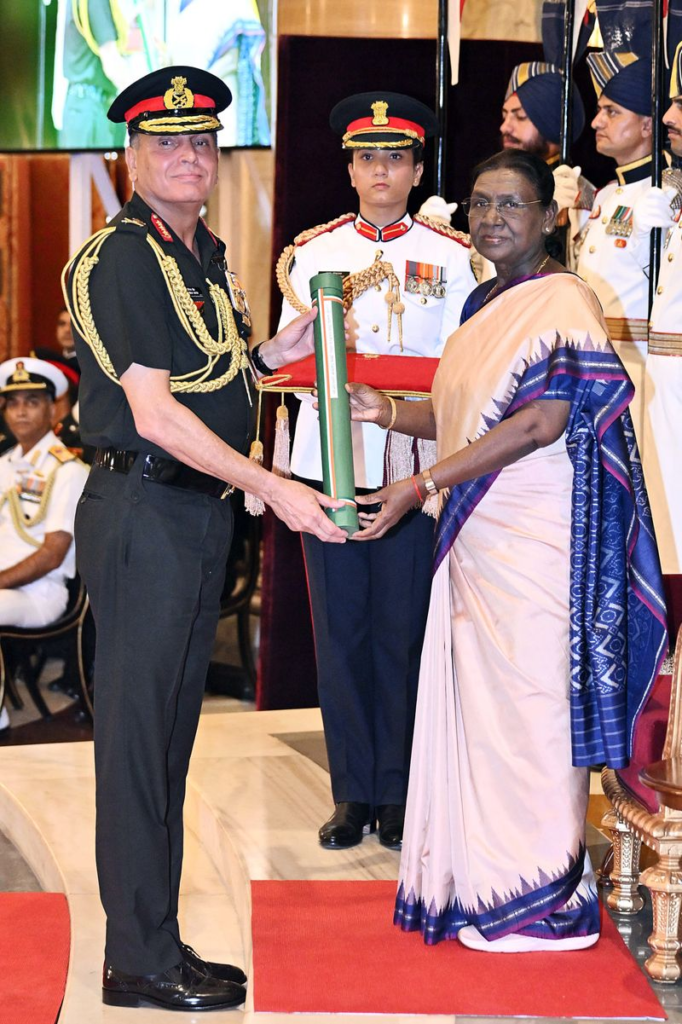
President Droupadi Murmu honours Armoured Corps, Headquarters Southern Command, Lt Gen Dhiraj Seth, with Uttam Yudh Seva Medal during Defence Investiture Ceremony-2026 (Phase-2) at Rashtrapati Bhavan in New Delhi on Monda
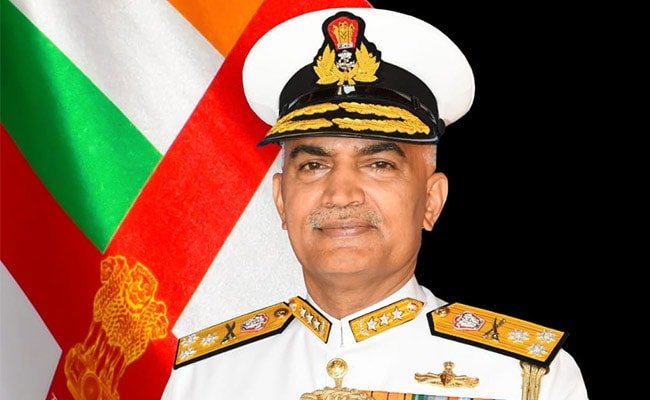
Param Vishisht Seva Medal to Navy Chief
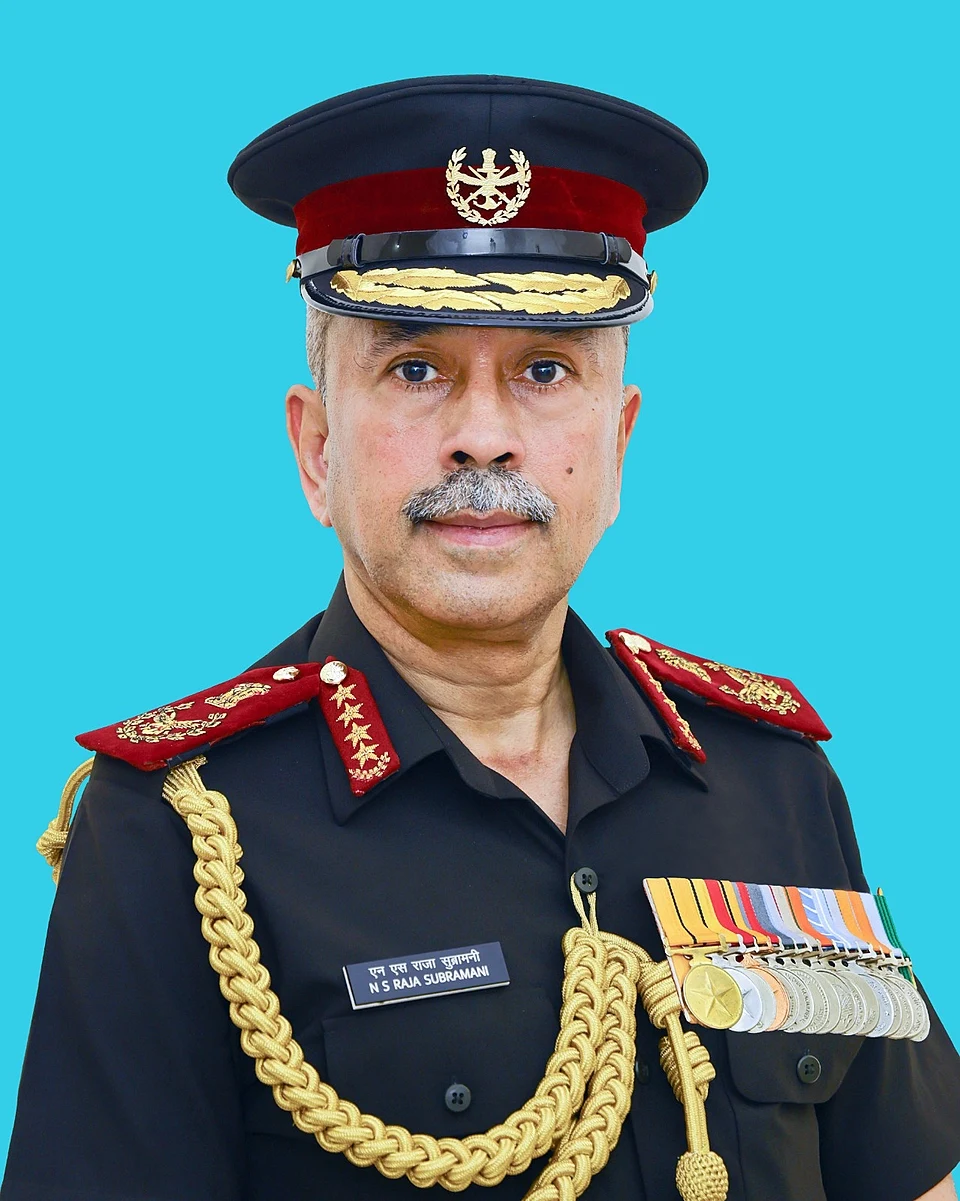
Lt Gen Dhiraj Seth, the country’s next Chief of the Army Staff, Navy Chief Admiral Krishna Swaminathan as well as Lt Gen Rajiv Ghai and Air Marshal Awadhesh Kumar Bharti, who both played key roles during the Operation Sindoor last year, were on Monday honoured with prestigious military decorations for their distinguished service of exceptional order.
President Droupadi Murmu conferred 105 distinguished service decorations to the personnel of the defence forces and the Indian Coast Guard during the Defence Investiture Ceremony 2026 (Phase-II) hosted at the Rashtrapati Bhavan here.
“These decorations — seven Sarvottam Yudh Seva Medals, 30 Param Vishisht Seva Medals, 12 Uttam Yudh Seva Medals and 56 Ati Vishisht Seva Medals — have been given to the personnel for their distinguished service of exceptional order,” the Defence Ministry said.
It also shared the names of the awardees in a list, mentioning different categories of military decorations. Sarvottam Yudh Seva Medal recognises the distinguished service of the most exceptional order during war, conflict or hostilities.
Lt Gen Pratik Sharma, Commander, Army’s Northern Command; Lt Gen Ghai, who served as the Army’s Director General of Military Operations (DGMO) during Operation Sindoor; Deputy Chief of the Air Staff, Air Marshal Bharti, who served as the IAF’s Director General of Air Operations during the operation in May 2025, IAF’s Vice Chief Air Marshal Nagesh Kapoor, and former Vice Chief of Air Staff, Air Marshal Narmdeshwar Tiwari (retd), have been conferred the Sarvottam Yudh Seva Medal.
Both Lt Gen Ghai and Air Marshal Bharti were also the Army’s and IAF’s faces during the tri-service briefing conducted here on Operation Sindoor last year.
Lt Gen Ghai was recently appointed military adviser to the National Security Council Secretariat (NSCS).
Murmu also conferred Param Vishisht Seva Medals to Navy Chief Admiral Swaminathan; Flag Officer Commanding-in-Chief, Western Naval Command, Vice Admiral Sanjay Vatsayan; and Chief of Integrated Defence Staff (CISC), Air Marshal Ashutosh Dixit, among other officers, serving and retired.
Admiral Swaminathan assumed charge as the 27th Chief of the Naval Staff of the Navy on May 31.
In the Uttam Yudh Seva Medal category, the awardees include Lt Gen Seth and Vice Admiral Tarun Sobti, among others.
Century-old gurdwara demolished in Pakistan; Sikh representatives seek action
A 125-year-old gurdwara in Pakistan was allegedly demolished by miscreants recently.
Gurdwara Singh Sabha is located in Farooqabad in Punjab. According to media reports, it was demolished on the night of June 24.
The gurdwara was significant as far as the Singh Sabha Movement is concerned.
Sikh representatives in Pakistan have accused the government of taking no action following the incident. They say that earlier also, there have been such incidents. They have demanded a strict legal action on this.