In a landmark event in indigenous ship-building capabilities, two frontline warships and a Kalvari-class submarine will join the Indian Navy tomorrow. The commissioning of three war-fighting assets in a single day is unique achievement. PM Narendra Modi will dedicate these…
In a landmark event in indigenous ship-building capabilities, two frontline warships and a Kalvari-class submarine will join the Indian Navy tomorrow.
The commissioning of three war-fighting assets in a single day is unique achievement. PM Narendra Modi will dedicate these platforms to the nation. The ships include the stealth frigate Nilgiri, stealth destroyer Surat and submarine Vaghsheer. The event will be held at the naval dockyard at Mumbai. These inductions will be a transition of technology.
The Nilgiri is the first warship made using ‘integrated construction’ technique. Integrated construction entails various parts of a ship, particularly its hull, superstructure and internal systems getting designed to be manufactured in separate blocks of 250 tonnes each. Each block is built with precision to allow cabling and piping to pass through when two set of blocks are aligned and welded together seamlessly. This technique accelerates the speed of making warships.
Despite Dhaka’s objections, India to go ahead with fencing along border
The objections raised by Bangladesh notwithstanding, India has decided to go ahead with fencing on its territory along the border between the two countries. 800 km of the 4,096-km India’s border with Bangladesh is unfenced New Delhi had temporarily halted..
The objections raised by Bangladesh notwithstanding, India has decided to go ahead with fencing on its territory along the border between the two countries.
800 kmof the 4,096-km India’s border with Bangladesh is unfenced
New Delhi had temporarily halted the “single-line” fencing at two border points — Malda in West Bengal and Unakoti in Tripura — following objections by Dhaka, said sources. The fencing in 92 other border sections, however, was continuing, they said.
India shares 4,096-km-long border with Bangladesh and 800 km of it is unfenced.
Terming the fencing “unauthorised”, Bangladesh had on Sunday summoned Indian Ambassador Pranay Verma. India too on Monday called Bangladesh’s Acting High Commissioner Mohammad Nural Islam, conveying the message that “security measures at the border, including fencing, were being undertaken as per agreements reached between the two sides”. Single-line fencing is usually done within 150 yards of the border. “The border is defined. Our fencing is legitimate. The single-line fencing is being done at 92 points. It will be impractical to stop the projects now,” said highly placed sources in the security establishment.
The sources said the fencing pact was finalised during the Director General-level talks of the Border Security Force (BSF) and the Border Guard Bangladesh (BGB) in March 2024 in Dhaka. The agreement was subsequently vetted by both governments.
The current interim government in Dhaka, led by Nobel laureate Mohd Yunus, however, has been objecting to the projects, though it has not attributed any clear reason.
While the fencing was being done to check criminal activities, the objections seemed to have a political motive, the sources said. “It’s understood the hostilities towards India are percolating from the top leadership in Dhaka,” they said.
The tensions have escalated between the two sides after the BGB stopped the fencing in Malda and Unakoti on January 6. After meeting Indian Ambassador Verma on Sunday, Bangladesh Foreign Secretary Mohammad Jashim Uddin, in a statement, asked India to “refrain from any provocative actions that could escalate tensions along the border”. On Monday, the MEA reiterated its commitment to ensuring a crime-free border by effectively addressing the challenges of cross-border criminal activities, smuggling, movement of criminals and trafficking. “Barbed fence, border lighting, installation of technical devices and cattle fences are measures for securing the border,” it said.
The relations between India and Bangladesh suffered a blow in August last year after Mohd Yunus became the head of the interim government in Dhaka. The development came days after then Prime Minister Sheikh Hasina was ousted following weeks of violent protests. The differences also surfaced when Bangladesh sought the extradition of Hasina, who has been provided asylum in India. The BSF-BGB DG-level talks are scheduled next month in New Delhi and the border fencing, among other issues, is expected to be taken up.
The Third Battle of Panipat: A defining moment in Indian history
The Third Battle of Panipat, fought on January 14, 1761, was one of the largest and bloodiest conflicts in the Indian history. It was a decisive confrontation between the Maratha empire and the Durrani empire, led by Ahmad Shah Abdali (also known as Ahmad Shah Durrani). This epic battle marked a turning point in Indian history, shaping the political and military landscape of the subcontinent for years to come.
By the mid-18th century, the Maratha empire had become the dominant power in India, extending its influence across vast territories. However, the weakening Mughal empire had left northern India vulnerable to invasions. Ahmad Shah, the founder of the Durrani empire in Afghanistan, sought to expand his control into the region. Alarmed by the growing strength of the Marathas, Abdali formed alliances with key regional powers, including the Rohilla Afghans and Shuja-ud-Daula, the Nawab of Awadh.
The Marathas, under the leadership of Sadashivrao Bhau, mobilised a massive army to counter Abdali’s advance. However, internal divisions and the lack of support from other Indian rulers weakened their position.
The two armies faced off on the plains of Panipat. Abdali’s forces, estimated at 1,00,000 men, included Afghan tribesmen, Persian troops and Indian allies. The Marathas, with a similar number, fielded a disciplined army equipped with artillery and cavalry.
The battle began in the early hours of January 14, 1761, and raged throughout the day. The Marathas launched a fierce assault, initially gaining the upper hand. However, Abdali’s superior military strategy and the betrayal of key Maratha allies turned the tide in his favour. The Maratha forces were outflanked and eventually overwhelmed by Abdali’s relentless attacks.
The Third Battle of Panipat was a catastrophe for the Marathas. Estimates suggest that over 1,00,000 soldiers and civilians were killed, making it one of the deadliest battles in history. The Maratha leadership suffered devastating losses, including the death of Sadashivrao Bhau and Vishwasrao, the heir to the Maratha throne.
For Ahmad Shah, the victory ensured his dominance in northern India, but it came at a heavy cost. His army suffered significant casualties, and he struggled to maintain control over the region in the long term.
The defeat at Panipat marked the end of Maratha expansion in northern India. It left a power vacuum that was eventually filled by the British East India Company, which began its steady rise to dominance. The battle also exposed the fragmentation and lack of unity among Indian rulers, a factor that facilitated foreign invasions and colonisation.
The Third Battle of Panipat remains a poignant reminder of the complexities of Indian history. It symbolises both the valour and the vulnerabilities of its warriors, leaving a lasting imprint on the nation’s collective memory. The battle is commemorated as a pivotal moment that reshaped the course of the Indian history.
A day after 45-year-old Harpreet Singh from Adampur lost his life due to Chinese kite string, his body was cremated today. His family members, including his wife Satinder Kaur, remained inconsolable. She demanded help for her children. Meanwhile, local…
A day after 45-year-old Harpreet Singh from Adampur lost his life due to Chinese kite string, his body was cremated today. His family members, including his wife Satinder Kaur, remained inconsolable.
She demanded help for her children. Meanwhile, local NGOs and the Adampur Press Club has decided to hold a candlelight march on Wednesday evening. They will demand action against those selling and buying chinese strings.
Hatinder Mehta, one of the members of the Adampur Press Club said such incidents should not happen again. “It is heartbreaking to see families suffer like this,” he said.
Advertisement
Last year, a 13-year-old boy from Adampur had also lost his life when he had injuries on his throat by the deadly dor.
A resident of Jalandhar’s Adampur Harpreet was the only breadwinner for his family of four. “Our life has been ruined, I want strict action against those who still sell the banned string,” said Satinder Kaur, pointing to their two children.
“My husband couldn’t take even a day off. Even when he was with us enjoying a Lohri function, he wanted to go to work so that he could earn for us,” added inconsolable Satinder Kaur.
Six Army personnel were on Tuesday injured in a landmine explosion in a forward village in Rajouri district of Jammu and Kashmir. The troops were on patrol duty when a soldier accidentally stepped over the landmine near the Khanba Fort…
Six Army personnel were on Tuesday injured in a landmine explosion in a forward village in Rajouri district of Jammu and Kashmir. The troops were on patrol duty when a soldier accidentally stepped over the landmine near the Khanba Fort area in the Nowshera sector of Rajouri at 10.45 am, triggering the explosion. The injured were rushed to hospital. Their condition was stated to be stable.
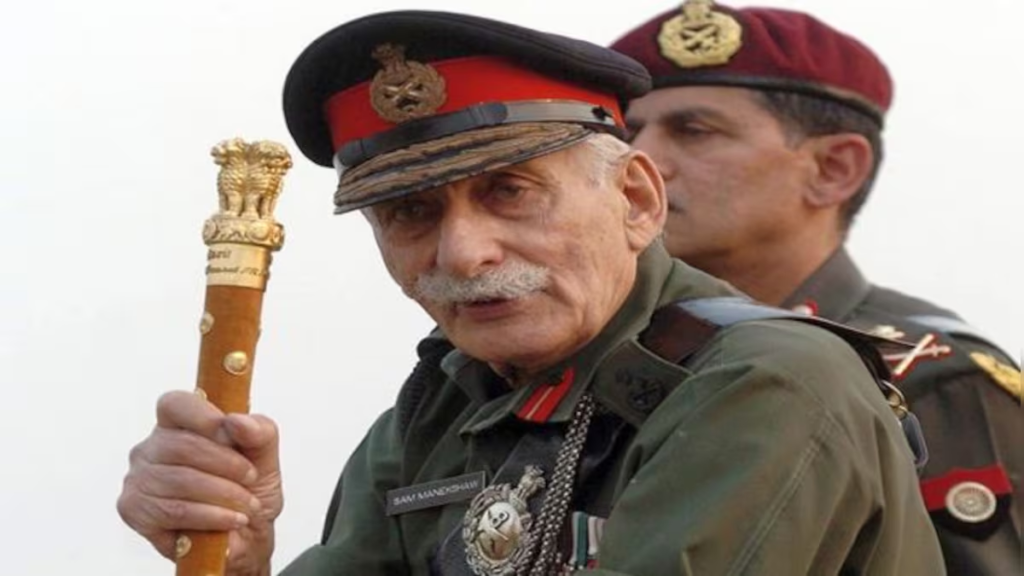
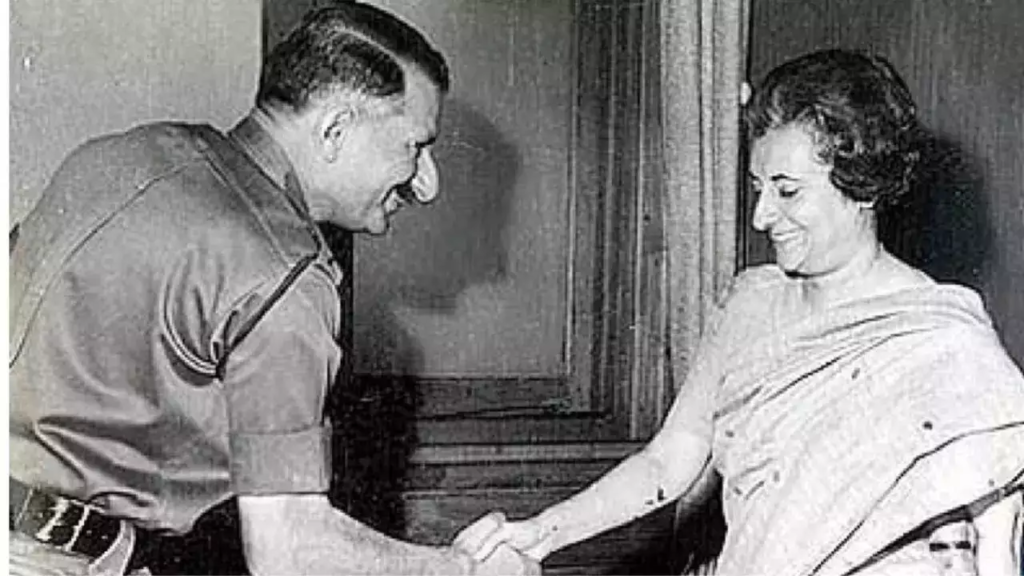
Sam Manekshaw: The brave soldier who said no to Indira Gandhi
(Maj Gen Harvijay Singh, SM)
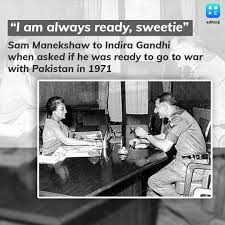
MODESTY AND MORAL COURAGE (Modesty is a quality of being unassuming in the estimation of one’s own abilities. Modesty is also in harmony with Empathy, Creativity, Accountability, Compassion, Humility and Grit. Field Marshal Manekshaw fits into this frame. He was fondly called Sam Bahadur (Sam the Brave). A courageous man, Sam led by example. His distinguished career spanned four decades and five wars, beginning with World War II and culminating in the 1971 Indo Pak war as Chief of the victorious Indian Army that liberated Bangladesh. In 1941, in Burma, he was hit by a burst of LMG bullets and received nine in the lung, liver and in his kidney: he was critically wounded. Major General DT Cowan, commanding the 17 Infantry Division was aware of Manekshaws valour in the battle and his serious injuries, he pinned his own Military Cross ribbon on Manekshaw saying, “A dead person cannot be awarded a Military Cross.” Manekshaw was moved to the hospital. So grievous were his injuries that the surgeon was ready to give up on his bullet-riddled body until he asked Manekshaw what had happened. Sam’s reply was, “Nothing happened, I was kicked by a donkey.” A man who could joke even when grievously injured had a chance, the surgeon thought. And he did. Going on to become the eighth Chief of the Indian Army. He never lost his courage and humour. How did he get the nick name Sam Bahadur? Manekshaw never commanded a Gorkha regiment but was an avowed admirer of Gorkha soldiers. So impressed was he by their fighting skills and valour that he made this monumental remark: “If a soldier says he is not afraid of death, he is either lying or he is a Gorkha.” Once, a Gorkha soldier named Harka Bahadur Gurung, standing guard as a ceremonial sentry was asked by Sam in Gorkhali: “Mero naam ke ho? (What’s my name?)”. Without batting an eyelid, the soldier replied, “Sam Bahadur, saab.” Sam loved the quick response, and the name stuck. As a senior officer, Manekshaw was a decisive leader and an able listener who was always considerate to those under his command. He spoke with mirth and was famous for his irreverent jokes which kept those around him stress free. He would simply walk into his Staff Officer’s office if he had a point to discuss; this made his team comfortable relaxed and efficient. His humility was specifically highlighted when he was asked to go to Dhaka to accept the surrender of Pakistani forces at the end of 1971 war. Manekshaw declined the honour, saying that it belonged to the Eastern Army Commander, Lieutenant General Jagjit Singh Aurora who had commanded the forces in that theatre. Such acts of Modesty won him great respect. He was equally strong in displaying Moral Courage. • As GOC of a Corps, he denied Indira Gandhi’s entry into the Operations Room during briefing of Prime Minister Nehru saying she had not taken the oath to secrecy of a Minister. Six years later as the Prime Minister, Indira Gandhi accepted him as the Chief of the Indian Army. • In 1971, he steadfastly refused to follow the orders Mrs Indira Gandhi, for launching immediate military operations against East Pakistan. Pointing out that it would be premature and inopportune, he also told her in no uncertain terms that if she did not agree, she could appoint someone else. • His own views of a Yes Man: “A ‘Yes man’ is a dangerous man. He is a menace. He will go very far. He can become a minister, a secretary or a Field Marshall but he can never become a leader nor, ever be respected. He will be used by his superiors, disliked by his colleagues and despised by his subordinates. So discard the ‘Yes man’.“ 95 Indian Mountain Brigade entered East Pakistan on 3 Dec 1971 from Kamalpur Border Out Post (BOP) defended by a company of 31 Baluch, platoon of Rangers and Razakaars. The BOP had well-prepared defences including concrete bunkers. They fought resolutely and finally surrendered on 4 Dec. The bravery and tenacity of the young Pak Company commander Captain Ashan Malik was appreciated by General Manekshaw who stated that “Militarily his performance was excellent” and that he should be shown special courtesy as a POW. India captured over 90,000 Pakistani troops in the 1971 war. They were all treated with the dignity due to a POW. Sam was the first Indian officer to reach at Delhi Railway Station to meet the Pakistani POWs. He shared a cup of tea and chatted with them for some time. The POWs were seen shaking their heads, saying that they wished they had generals like this in Pakistan. This photograph speaks volumes of Sam’s character, strength and confidence.
SANJHA MORCHA WISHES ALL HAPPY LOHRI 2025; WHY CELEBERATED ON 13 JAN
With Defence Minister Rajnath Singh scheduled to visit Jammu on Tuesday, security forces, including the police, have been placed on high alert. Singh is set to visit the Tanda Artillery Brigade in Akhnoor to attend the 9th Armed Forces Veteran’s…
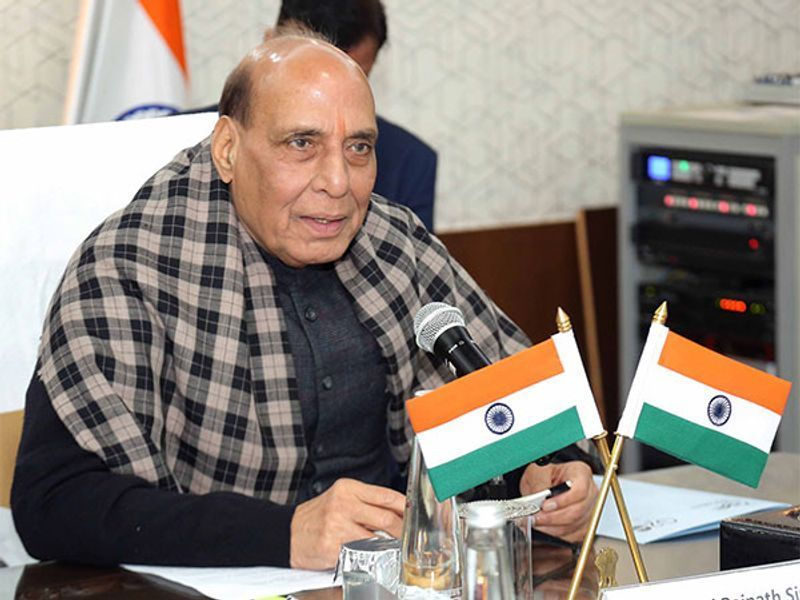
With Defence Minister Rajnath Singh scheduled to visit Jammu on Tuesday, security forces, including the police, have been placed on high alert.
Singh is set to visit the Tanda Artillery Brigade in Akhnoor to attend the 9th Armed Forces Veteran’s Day, an event being organised under the aegis of the Northern Command to honour “Armed Forces veterans and Veer Naris.”
Lieutenant Governor Manoj Sinha, Chief Minister Omar Abdullah, Chief of Defence Staff (CDS) General Anil Chauhan, Northern Army Commander Lt Gen Suchindra Kumar and GOC White Knight Corps, Lt Gen Navin Sachdeva, will also participate in the event.
To ensure tight security, the Jammu and Kashmir Police have enhanced their vigilance. Additional Director General of Police (ADGP) Jammu Division, Anand Jain, has been holding meetings with senior officials across the region.
ADGP Jain recently visited the districts of Kathua and Samba to reinforce the border and security management gridand along the International Border (IB).
“In light of the VVIP visit, the current security situation and the upcoming Republic Day 2025, I conducted a late-night review of security and border management measures in the Samba and Kathua districts on Sunday and Monday,” said an official. During his inspection, the ADGP stressed the need for maintaining peace in the area. He urged officials to remain vigilant and proactive.
Advertisement
Rajnath, CDS to attend Armed Forces Veterans’ Day event on Jan 14
Defence Minister Rajnath Singh and Chief of Defence Staff (CDS) General Anil Chauhan will attend the ninth Armed Forces Veterans’ Day event here on Tuesday, a defence spokesman said. Jammu and Kashmir Lieutenant Governor Manoj Sinha, Chief Minister Omar Abdullah…
Defence Minister Rajnath Singh and Chief of Defence Staff (CDS) General Anil Chauhan will attend the ninth Armed Forces Veterans’ Day event here on Tuesday, a defence spokesman said.
Jammu and Kashmir Lieutenant Governor Manoj Sinha, Chief Minister Omar Abdullah along with senior military and civil officials will also attend the event to be held at the Tanda artillery brigade in Akhnoor under the aegis of the Army’s Northern Command to honour the force veterans and “veer naris”, the spokesman said.
About 1,000 armed forces veterans from Jammu, Akhnoor, Pallanwala, Rakhmuthi, Naushera and Sunderbani are likely to attend the function, which will also include the hoisting of a 108 feet national flag and the inauguration of a heritage museum in Akhnoor, the spokesman said. The J-K culture department will present cultural performances reflecting the region’s rich heritage, he said.
As a special gesture, mobility equipment like motorised wheelchairs, e-scooters, and autorickshaws will also be distributed to the veterans, he added. The event reflects the Army’s respect and unwavering commitment to care for the war widows and veterans who served the nation with pride and dedication, the spokesman said. — PTI
Chadar trek on Zanskar river to begin today after delay
The much-anticipated Chadar trek on the frozen Zanskar river in Ladakh is set to commence on January 13, following a delay caused by the late formation of ice along the riverbanks. The trek, which attracts adventure enthusiasts from across the…
The much-anticipated Chadar trek on the frozen Zanskar river in Ladakh is set to commence on January 13, following a delay caused by the late formation of ice along the riverbanks. The trek, which attracts adventure enthusiasts from across the country every year, was initially scheduled to begin on January 7 but was postponed due to weather conditions.
An official announcement revealed that after a reconnaissance mission by the UT Disaster Response Force (UTDRF) in collaboration with representatives from the Wildlife and Tourism Departments, as well as the All Ladakh Tour Operator Association (ALTOA) and Ladakh Mountain Guides Association (LMGA), the revised date for the trek has been confirmed, contingent on favourable weather conditions.
The Ladakh Autonomous Hill Development Council (LAHDC), Leh, has also released a set of Standard Operating Procedures (SOPs) to ensure the successful and safe conduct of the trek. Trekkers will begin arriving in Leh on January 13, where they will rest for acclimatisation for a day before undergoing medical checks.
Travel agencies are required to ensure that all trekkers possess the necessary equipment and gear for the trek; without these, they will not be permitted to participate. ALTOA will be responsible for organising and providing the required gear.
An identity card will be issued to each porter, cook, helper and guide by ALTOA, and medical facilities will be available to the trek crew. To ensure safety and comfort, firewood for halts along the trek will be transported from Leh, with ALTOA taking responsibility for this. Travel companies will also be required to provide proper accommodation, tents, and food for the trekking team.
Additionally, the SOP mandates that all vehicles used for transportation must play an audio advisory issued by the Tourism Department, and an oxygen cylinder must be present in every vehicle at all times.
In terms of waste management, the Wildlife Department will distribute green bags for trash and collect a security deposit from guides, which will be refunded upon the return of all waste.
To regulate the number of trekkers, a maximum of 10 groups will be allowed to embark on the trek each day, with no more than 10 trekkers per group. The police are also exploring options to establish a communication network along the trekking route.
The LAHDC has made it clear that anyone violating the regulations, whether they are tourists, travel agencies, or taxi operators, will face a fine of Rs 20,000 to Rs 30,000 for a first offense. Repeated violators may face fines ranging from Rs 30,000 to Rs 50,000. In severe cases, the administration reserves the right to revoke the license of the tour operator responsible for non-compliance with the SOPs
State Stalwarts
DEFENCES FORCES RANKS
ARMY, NAVY, AIRFORCE RANKS
FORMATION SIGNS
FORMATION SIGNS
ALL HUMANS ARE ONE CREATED BY GOD
HINDUS,MUSLIMS,SIKHS.ISAI SAB HAI BHAI BHAI
CHIEF PATRON ALL INDIA SANJHA MORCHA
LT GEN JASBIR SINGH DHALIWAL, DOGRA
SENIOR PATRON ALL INDIA SANJHA MORCHA
MAJOR GEN HARVIJAY SINGH, SENA MEDAL ,corps of signals
.
.
PATRON ALL INDIA SANJHA MORCHA
MAJ GEN RAMINDER GORAYA , CORPS OF
sanjhamorcha303@gmail.com
PRESIDENT HARAYANA STATE CUM COORDINATOR ESM
BRIG DALJIT THUKRAL ,BENGAL SAPPERS
PRESIDENT TRICITY
COL B S BRAR (BHUPI BRAR)
PRESIDENT CHANDIGARH ZONE
COL SHANJIT SINGH BHULLAR
.
.
PRESIDENT PANCHKULA ZONE AND ZIRAKPUR
COL SWARAN SINGH
PRESIDENT SAS NAGAR (MOHALI)
COL BALBIR SINGH , ARTY
INDIAN DEFENCE FORCES
DEFENCE FORCES INTEGRATED LOGO
FORCES FLAGS
15 Th PRESIDENT OF INDIA SUPREME COMMANDER ARMED FORCES
Droupadi Murmu
DEFENCE MINISTER
Minister Rajnath Singh
CHIEF OF DEFENCE STAFF (2nd)
General Anil Chauhan PVSM UYSM AVSM SM VSM
INDIAN FORCES CHIEFS
CHIEF OF ARMY STAFF(29th)
General Upendra Dwivedi, PVSM, AVSM (30 Jun 2024 to Till Date)