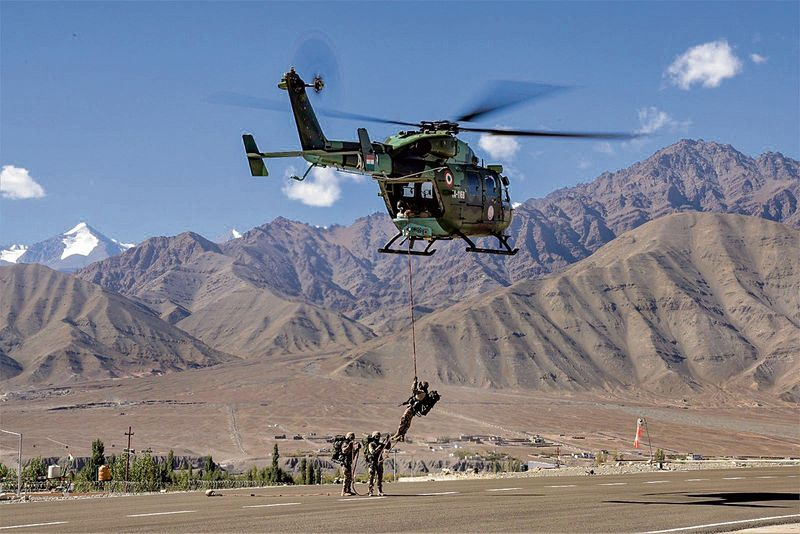
The indigenously made advanced light helicopter (ALH) will not be part of the Republic Day flypast this year as the entire fleet of 330 copters across the armed forces has been grounded following the crash of an Indian Coast Guard ALH on January 5 at Porbandar, Gujarat.
The ALH and its multiple variants have been part of Republic day flypasts for over 15 years. The copter is showcased as a prime indigenous platform. The ALH is part of the fleet of IAF, Navy, Army and Coast Guard. Several civilian operators too fly it.
The IAF will conduct its customary flypast over the Kartavya Path in New Delhi on January 26. The flypast will comprise 22 fighter jets, 11 transport planes, seven copters and also three Dornier surveillance planes of Coast Guard. The flypast shall also not include the indigenous fighter jet, the Tejas. The jet is a single-engine platform and IAF stopped flying single engine jets in the Republic day flypast many years ago.
The flypast will be in two separate phases. The Mi17 helicopters carrying the national flag will be part of the commencement of the parade. A formation of the MiG 29 will fly overhead when the IAF marching contingent of 144 personnel is on the parade route.
The second phase of the flypast will mark the culmination of the parade. The first formation will be of Apache attack helicopters, followed by transport planes and An32 and two Dorniers.
The transport plane C17, the surveillance plane ‘Netra’ will be part of the flypast. A formation of Jaguar fighter jets and Sukhoi 30MKIs will follow. The Sukhoi pilots will do the ‘Trishul manoeuvre’ — three Sukhoi jets will split in three different directions over the Kartavya Path.
A formation of six Rafale jets will follow. A single Rafale jet will culminate the parade with a striking manoeuvre called the ‘vertical charlie’ – the jet while flying horizontally will change its trajectory and fly straight in the air vertically.
Back from Russian warfront, youths picking up threads of life
From wielding assault rifles while fighting Russia’s battle in Krasnohorivka city of Donetsk Oblast in Ukraine, a number of Amritsar youths are now armed with wrenches, plungers and other tools as they resume the jobs of plumber, wallpaper installer and…
From wielding assault rifles while fighting Russia’s battle in Krasnohorivka city of Donetsk Oblast in Ukraine, a number of Amritsar youths are now armed with wrenches, plungers and other tools as they resume the jobs of plumber, wallpaper installer and dairy worker that they had been pursuing before leaving India. From travelling in tanks and army trucks, they are now using bikes and bicycles on their way to work.
Life is back to ‘normal’ for these youths, but thoughts about the choices they had made and the turn their life took as they landed on Russian territory still haunt them. They want to erase the psychological imprints of the war which was fraught with bullets and bombs.
“Having witnessed gory scenes and destruction caused by the war, low wages and long working hours don’t bother me anymore. Last month, I was in Rajasthan and now in Baddi, Himachal Pradesh, due to my job. Weather in our country is tolerable in comparison to the extreme and harsh winter we had to endure in Russia,” said Rohit, a 26-year-old youth from Ajnala. “It is better to earn less and stay with one’s family,” he said as he summed up his experience of going abroad.
A promise of Rs 1 lakh a month as salary, a Rs 7 lakh signing bonus and potential Russian citizenship — many like Rohit couldn’t resist this alluring opportunity they first saw on Instagram in January last year. They had never imagined that they would be made to serve on frontline when they fell for helper’s job in Army.
Hired as an Army helper, Rohit feared for his life as he delivered eatables and goods to Russian Army soldiers at the warfront. Up in the sky, Ukrainian drones captured even a slight movement on the ground and dropped explosives. He saw a Russian soldier getting killed in such an action.
After spending seven to 10 months in Russia, these youths have returned home with the intervention of the Indian government.
Amritsar’s Jaimal Singh, Rohit, Sarbjit Singh, Avtar Singh, and Sukhman Singh safely returned home after the Consulate General of India in St Petersburg arranged their return flight. Their return was facilitated by a request from Prime Minister Narendra Modi to Russian President Vladimir Putin in Moscow on July 8.
The story of each of these youths is about grit and despair at the same time.
Jaimal Singh, 25, is satisfied with his plumbing job in India. Like all returnees from Russia, he too feared drones and harsh winter. Unlike before, he now travels to neighbouring villages for work, boosting his monthly income to nearly Rs 20,000 from Rs 15,000 he used to make before going to Russia. Despite owning a house and six acres, Jaimal’s decision to go to Russia baffled his neighbours.
After a seven-month deployment, 26-year-old Rohit returned to Amritsar. Now working with a Ludhiana-based company, he installs boilers across North India. Less income and long working hours no longer bother him as he has witnessed the horrors of war.
Sarbjit Singh, 50, of Jagdev Khurd, hoped to join his family in the UK from his war earnings. Sukhman of Chogawan, a daily wager, is back to his job of sticking wallpapers. He found the winter harsh and disliked the repetitive non-vegetarian meals given to him during his stint in Russia.
Others from Jaimal’s neighborhood, including Shamsher Singh, 22, and Avinash, 21, had also gone to Russia in the hope of better prospects. Back home, Shamsher and Avinash have resumed their daily-wage jobs.
“I tell everyone it is better to be with your family and stay in your home country even if you earn less,” said their 62-year-old neighbour Baljit Singh, a farmer by profession.
The recent death of a 32-year-old Keralite Binil and injury to his 27-year-old relative Jain Kurian while serving the Russian Army prompted the Indian Ministry of External Affairs (MEA) to reiterate its demand for the early release of all its citizens who continue to work for the Russian armed forces in its conflict with Ukraine. This once again brought spotlight on Indian youths in general and Punjabis in particular who have been fighting the war for Russia. Tejpal Singh of Amritsar was killed in March and Rahul, also from Amritsar, who had sustained injuries in hand due to a landmine explosion, is recuperating in Russia.
Any blockade of the Malacca Strait could result in the Chinese invasion of Taiwan. The reverse is also possible: a blockade of Taiwan by China could lead to the closure of the Malacca Strait.
FROM the 48th floor sea-facing room at Oakwood Hotel in Sri Racha, Thailand, overlooking the Gulf of Thailand, I see an oil refinery being built by some 200 Indian employees of the multinational, Petrofac. Unlike in the adjoining dispute-ridden, China-claimed South China Sea, the Thai Gulf is tranquil. The growth of China, the world’s second biggest economy, depends on an uninterrupted supply of energy, which suffers from a Malacca dilemma.
During his marathon briefing on Monday, eve of Army Day, Chief of Army Staff, Gen Upendra Dwivedi said the LAC was sensitive but stable (earlier it was unpredictable). China calls the shots there; India reacts. Time it turned the tables elsewhere: possibly the Malacca Strait in the Indian Ocean where India has the upper hand for now.
Along the narrow neck of southern Myanmar and Thailand, connecting the Malaysia peninsula to the Asian mainland, is the Isthamus of Kra, called Devil’s Neck, like our own Chicken’s Neck in the Siliguri corridor which is being hedged under the Kaladan Multi-Modal project through Sittwe port in Myanmar.
Across Kra, Thailand, prodded by China, had sought to make a canal; now a 90-km land bridge is to join the Andaman Sea in the Indian Ocean with the Gulf of Thailand in the South China Sea/Pacific Ocean to bypass the Malacca Strait.
An alternative passage avoiding the Malacca Strait will inflict severe strategic and economic loss on Malacca’s custodians — Singapore, Indonesia and Malaysia — and alter maritime dynamics in the Indo-Pacific: depriving India of a strategic choke point in the Indian Ocean to offset its diminished deterrence against China along the LAC.
t
China’s Malacca dilemma is the stuff of legend. At a Chinese Communist Party meeting in 2003, the then President Hu Jintao mentioned the lack of alternative routes and vulnerability of the Malacca Strait to naval blockade. As much as 90 per cent of China’s trade is by sea, including 80 per cent of oil and 60 per cent of gas. The Strait of Malacca is 80 km long, 65-to-150 km wide and 2.8 km at its narrowest point.
From Malacca town, I could see the other side. Around 250 ships use it daily; it is congested with cargo ships and will reach its capacity by 2030. A closure of Malacca by accident or design will cost $85 million a week. During the Gulf War, Indian warships escorted US shipping through the Malacca Strait.
China has weighed its Malacca diversion options: alternative routes, a new passage and enhancement of detterence to use the existing route. Alternative routes are available further south of the Malacca Strait through Sunda, Lombok and the Macassar Strait. These are shallow for submarines and involve two-to-three days of additional sailing (1500 nm), incurring added cost, which a Thai estimate puts at an astounding $200 billion a year.
The Maritime Silk and Belt and Road initiatives launched in 2013 were designed to protect China’s land routes and sea lanes of communication for energy. Three land corridors were envisaged: the $65-billion China-Pakistan Economic Corridor (CPEC) from Gwadar to Xinjiang; the China-Nepal Economic Corridor (CNEC), which is at the design stage, and the $7-billion partly developed China-Myanmar Economic Corridor (CMEC) from Kyaukphyu to Kunming, containing road, rail and oil and gas pipelines with SEZs.
China is acquiring military bases and access to ports and airfields to dominate the Indian Ocean Region — the Djibouti military base, Gwadar (Pakistan), Hambantota (99-year lease in Sri Lanka), Kyaukphyu and Coco island (Myanmar) and Ream (Cambodia) in the Gulf of Thailand. Negotiations are on with Madagascar, Comoros, the Seychelles and Mauritius for use of/access to military facilities.
India, too, is creating strategic assets in Mauritius, the Seychelles and Myanmar, coupled with bilateral and multilateral partnerships in the Indo-Pacific. China is a loner.
In November 2023, the then Thai Prime Minister Srettha Thavisin presented the design to bypass the Malacca Strait and ports in Singapore and Malaysia, with a land bridge from Ranong and Chumphon, both deep sea container ports in the Andaman Sea and the Gulf of Thailand. In September 2024, Transport Minister Suriya Jungrungreangkit said the South-Eastern Corridor connecting Bimstec and Asean countries with the Indo-Pacific would come into effect in September 2025, the construction would commence in 2026 and the project completed in 2030. In August 2024, PM Paetongtarn Shinawatra confirmed that Thailand would seek Chinese investment for the $27-35-billion project.
For enhancing deterrence in the Indian Ocean, Beijing had shifted the military focus from the PLA to the PLA Navy (PLAN). It is now the fastest growing naval armada in the world, transforming from a brown-water navy to a blue-water one, crossing the First Island Chain and implementing the Two-Oceans Strategy — the Indian and Pacific Oceans. By 2035, it will be a 390-ship navy with seven aircraft carriers, frontline warships and submarines, hugely surpassing the US navy.
In the event of a blockade of the Malacca Strait by the US and/or India, which is an act of war, China may not attempt to break the blockade as it has three months of strategic oil reserves, with plans to make it last for 18 months and replenishing from Uzbekistan and Russia.
Any blockade of the Malacca Strait could result in the Chinese invasion of Taiwan. The reverse is also possible: a blockade of Taiwan by China could lead to the closure of the Malacca Strait. Further, a blockade or invasion of Taiwan independent of action against Malacca will also harm India’s economy.
In such contingencies, as per the India-US cooperative deterrence — the Indo-Pacific Strategy — New Delhi should align its maritime domain expertise and naval capability in the Indian Ocean while the US focus should be in the Pacific Ocean. As PLAN’s blue-water proficiency would take a decade to manifest, India should exploit more imaginatively China’s Malacca dilemma to alter the adverse balance along the LAC. Or, will the Kra land bridge become China’s hedge?
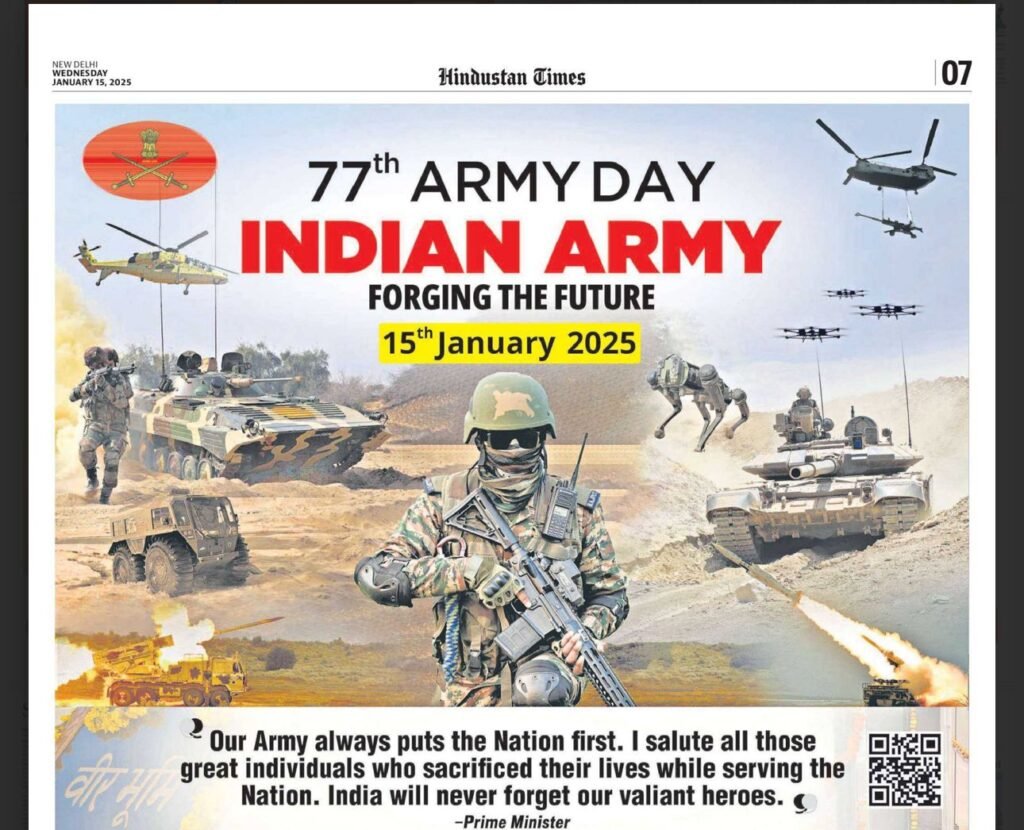
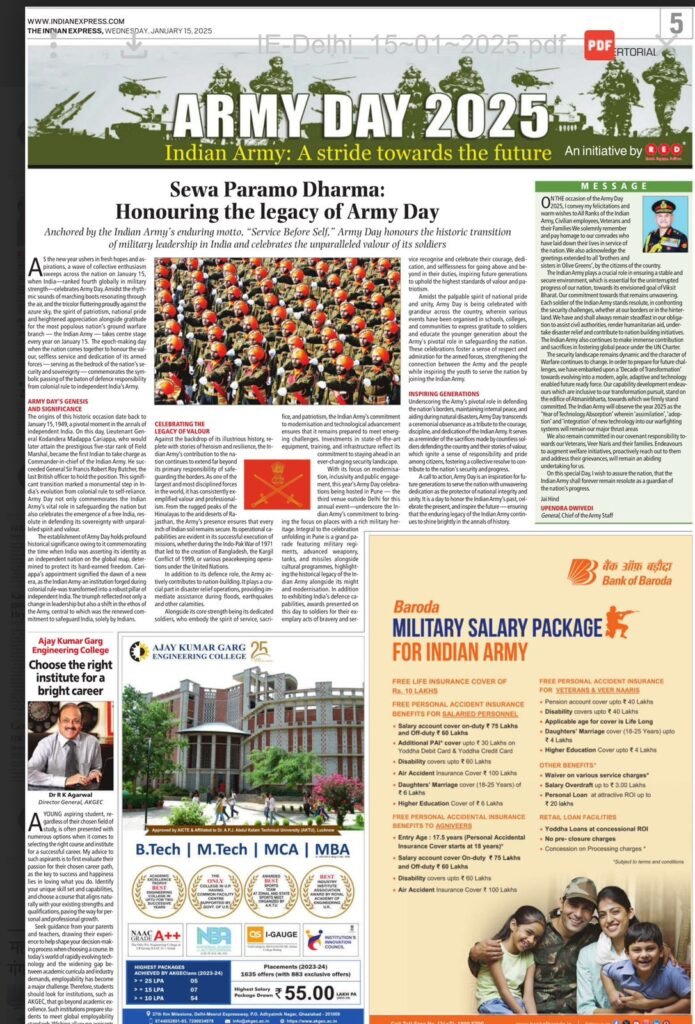
Every year on January 15, India celebrates Army Day to honour the valour, dedication and sacrifices of its soldiers. This significant day commemorates the momentous occasion in 1949, when General (later Field Marshal) KM Cariappa took over as the first Indian Commander-in-Chief of the Army from General Sir Francis Butcher, the last British Commander-in-Chief. This event marked a critical milestone in India’s post-Independence history, symbolising the nation’s growing self-reliance and sovereignty in defence matters.
Army Day is a tribute to the men and women of the Army, which serves the nation with unflinching dedication. The day is a reminder of their vital role in safeguarding India’s territorial integrity and maintaining peace and security within its borders. It also acknowledges their contributions during natural disasters, internal crises and international peacekeeping missions.
India’s Army, one of the largest and most professional in the world, has a rich legacy of bravery and strategic acumen. The day is not just a celebration of its past achievements but also an occasion to reaffirm its commitment to upholding the values of the Constitution and serving the people of India.
The main Army Day parade takes place at Cariappa Parade Ground in Delhi Cantonment. This event showcases the strength, discipline and technological advancements of the Army. The parade includes a display of military equipment, advanced weaponry and battle strategies, alongside cultural performances that reflect the diversity of the nation. Gallantry awards and medals, including the Param Vir Chakra and Vir Chakra, are also presented on this occasion to recognise acts of exceptional bravery and selflessness.
In addition to the parade, the day is marked by military drills, exhibitions and ceremonies across the country. These events provide an opportunity for the public to interact with soldiers and learn more about the Army’s operations and contributions. The day also sees tributes being paid to fallen soldiers at war memorials, including the iconic India Gate in New Delhi.
The Army has a long history of courage and resilience. From the Kargil War of 1999 to peacekeeping missions under the United Nations, the Army has consistently demonstrated its commitment to duty. It plays a crucial role in disaster management, rescue operations and rebuilding efforts during floods, earthquakes and other calamities.
The Army’s role extends beyond national security; it is a symbol of national unity and pride. Its motto, ‘Service Before Self’, reflects its ethos of placing the nation above personal interests.
Army Day is a celebration of the spirit of the Indian Army and its unwavering commitment to protecting the nation. It is a day to express gratitude to the soldiers, who stand vigilant at the borders, often in extreme conditions, to ensure the safety of 1.4 billion Indians.
As India continues to grow as a global power, the Army remains a cornerstone of its strength and sovereignty. On this day, the nation salutes its bravehearts, recognising their immense contributions to its freedom, security and progress.
Army chief defends replacing iconic 1971 Surrender painting
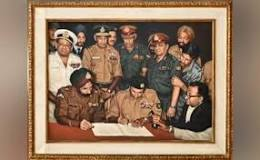
In the wake of a controversy over the replacement of the iconic ‘1971 Surrender’ paint ing at the army chief’s lounge in South Block, General Upendra Dwivedi on Tues day defended the decision, stating that the new artwork symbolizes a bridge between India’s past, present, and future. The painting in question, which depicts the surrender of Pakistani forces during the Bangladesh Liberation War, was moved to the Manekshaw Centre in Delhi Cantonment in December last year. It was replaced by a new painting showcasing India’s military strength, with themes inspired by the Mahabharata, modern war fare, and historical symbols. The new artwork includes depictions of Chanakya, Garuda, and Krishna driving Arjuna’s chariot, alongside images of tanks, helicopters, and boats. In response to the back lash, the Additional Direc torate General of Public Information (ADGPI) issued a statement on social media, explaining: “This painting represents one of the greatest military victories of the Indian Armed Forces and underscores India’s com mitment to justice and humanity. Its new placement at the Manekshaw Centre will ensure it reaches a large and diverse audience, includ ing dignitaries from across the world.” A month later, during his annual press conference ahead of the 77th Army Day, General Dwivedi addressed the issue, explaining that the date 16 December was chosen for the relocation as an “auspicious date.” Regarding the new paint ing, the Army Chief said that it was created by Lieu tenant Colonel Thomas Jacob of the 28 Madras Regiment, a serving officer and a rep resentative of the younger generation of the Army. He added: “Coming to the painting which is there as of now [in South Block], this has been conceptualised and made by Lt Col Thomas [Jacob] of 28 Madras Regi ment, which is the younger generation [of the Army]. If you see the golden history of India ~ it has three chap ters. It has British era, Mughal era and the era before that. If we wished to connect that [history] and the Army’s vision, symbolism becomes important.” General Dwivedi empha sized that symbolism plays a crucial role in communi cation with the younger gen eration of officers and sol diers. “So, once you look at that, my communication with my younger generation ~ my young officers, my jawans, is equally impor tant.” Addressing concerns about the painting’s mytho logical elements, the COAS pointed out that Chapter 4 of the original Indian Con stitution includes an image of Krishna and Arjuna in the same chariot depicted in the artwork. He also defended the inclusion of a semi-clad Brahmin and the depiction of Chanakya near Pangong Tso, urging that India’s civilizational history should be recognized. “If you open Chapter 4 of the original Constitution book, the painting which is there is of Krishna and Arju na, of the same chariot. It is also being said that there is a semi-clad Brahmin stand ing at the centre on the banks of Pangong Tso. If the Indian does not know Chanakya, we need to refer back to our civilisational approach,” said the COAS.
Gen Dwivedi unveils 10th edition of Samman magazine at Veterans’ Day celebrations in Pune
Chief of Army Staff General Upendra Dwivedi unveiled the 10th edition of the ‘SAM MAAN’ magazine during the 9th Armed Forces Veterans Day (AFVD) celebrations held in Pune today. The latest edition of the magazine highlights key ini tiatives by the Directorate of Indian Army Veterans (DIAV), including Project NAMAN, the Chatbot SAMBANDH, and VSK+. These initiatives reflect the Army’s unwavering commit ment to the welfare of its vet erans, embodying the core ethos of “Taking Care of Our Own.” The magazine also features updates from various veteran welfare organizations, illus trating significant progress in enhancing the quality of life for veterans and their families. The SAMMAAN magazine was unveiled simultaneously at multiple locations across India as part of the Veterans Day celebrations. General Dwivedi, accom panied by General Officer Commanding-in-Chief South ern Command, Lt. General Dhiraj Seth, also visited the Artificial Limb Centre, where he inaugurated a state-of the-art Upper Limb Training Lab and interacted with patients. He later attended the Veterans Lunch, which was attended by about 1,300 veterans from Maharashtra. During the event, the General honoured five distinguished veteran achievers and eight Veer Naris, including Veer Matas and Veer Pitas, and unveiled the “SAMMAAN” magazine dedicated to vet erans’ welfare. The COAS commended the veterans for their invalu able contributions to the nation and highlighted ini tiatives like VSK+ and Naman Kendras, which provide critical support to veterans. He also emphasized the vital role vet erans play in inspiring future generations and contributing to India’s progress. The event in New DelHI
began with a solemn wreath laying ceremony at the Nation al War Memorial to honour the sacrifices of fallen heroes. It was followed by a rally at the Manekshaw Centre, attended by senior military officials and about 2,500 veterans. Hero MotoCorp donated seven retrofitted scooters to serving disabled soldiers and veterans, and 40 stalls provided welfare-related infoR mation and support. The unveiling of SAMMAAN (Army), Vayu Samvedna (Air Force), and Sagar Samvad (Navy) magazines was also part of the event. The Veterans Day celebrations also took place at various military stations across the country, including Beng dubi, Jaipur, and Bareilly, where veterans and Veer Naris were felicitated for their exemplary service. These events highlighted the nation’s deep respect and gratitude for its heroes, with a focus on pro viding welfare support and skill development opportunities for veterans.
Asks it to dismantle terror infra or face consequences
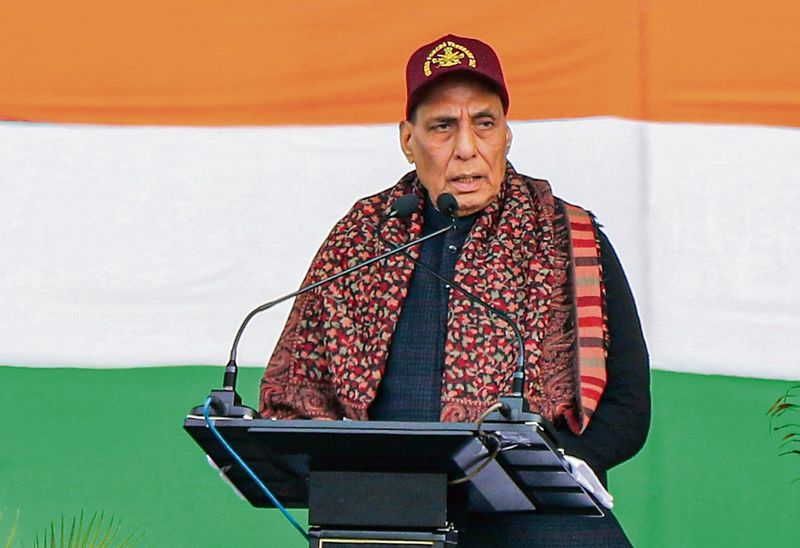
Defence Minister Rajnath Singh on Tuesday reiterated India’s stance on Jammu and Kashmir being incomplete without Pakistan-occupied-Kashmir (PoK), and that Islamabad must stop using the territory to sponsor terrorism or be ready to face consequences.
Omar praises forces for safeguarding country
Terror launch pad
Neither in the 1965 war nor during the peak of terrorism did the J&K people side with Pakistan. Even today, over 80% of the terrorists infiltrating into India are born in Pakistan.
Rajnath Singh, Defence minister
Addressing an event on the occasion of Armed Forces Veterans Day at Akhnoor in Jammu, the minister said, “For Pakistan, PoK is nothing more than foreign territory. The people living there have been deprived of a dignified life. Efforts are being made by Pakistan to mislead and provoke the people against India in the name of religion.” The retort is being viewed as a reply to PoK Prime Minister Anwar-ul-Haq, who had recently called for jihad against India.
Rajnath said Pakistan must immediately dismantle its terror infrastructure. “PoK is being used as a base for terror training camps, which act as launch pads for infiltration. The Indian Government is well aware of the situation. Pakistan will have to put an end to its nefarious designs,” he said.
The minister said Pakistan had been fostering terrorism and infiltration since 1965, but had repeatedly failed to influence the people of J&K. “Neither during the 1965 war nor when terrorism was at its peak did the J&K people side with Pakistan. Even today, over 80 per cent of the terrorists infiltrating into India are born in Pakistan,” he said.
Rajnath said terrorism would have ended in 1965 itself had the then Indian regime “not given away the strategic advantages gained on the battlefield”. “The situation on the ground has significantly improved after the abrogation of Article 370,” he said.
Describing the scrapping of Article 370 as a crucial step towards bridging the gap between J&K and the rest of the nation, he said the veterans’ day event in Akhnoor was a testament to the fact that J&K would always remain an integral part of India.
L-G Manoj Sinha, CM Omar Abdullah and Army Chief Gen Anil Chauhan were among those present at the event at Tanda Artillery Brigade. Rajnath interacted with ex-servicemen and expressed gratitude to the armed forces’ personnel, both retired and serving, for safeguarding the country’s borders.
State Stalwarts
DEFENCES FORCES RANKS
ARMY, NAVY, AIRFORCE RANKS
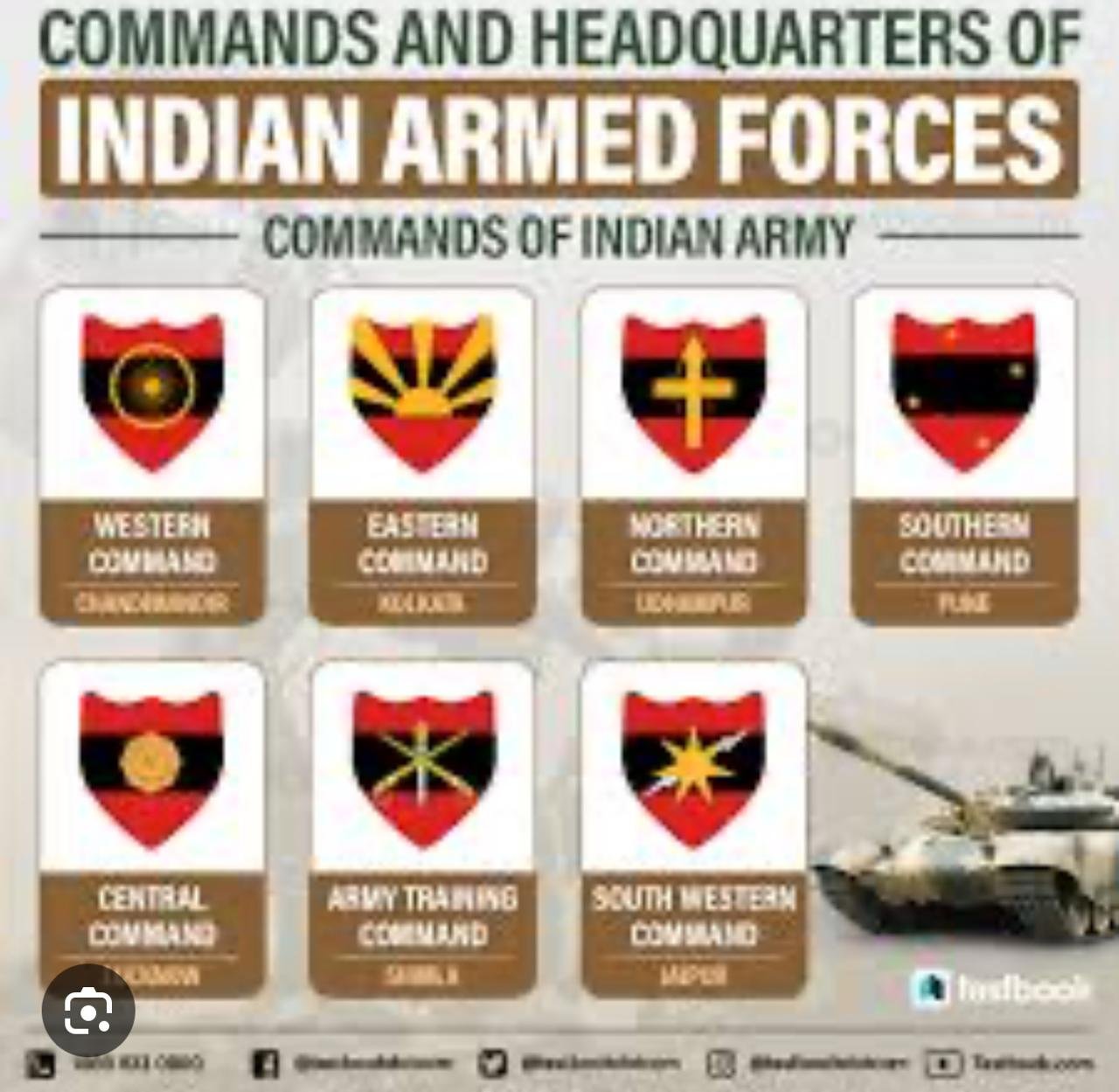
FORMATION SIGNS
FORMATION SIGNS
ALL HUMANS ARE ONE CREATED BY GOD
HINDUS,MUSLIMS,SIKHS.ISAI SAB HAI BHAI BHAI
CHIEF PATRON ALL INDIA SANJHA MORCHA
LT GEN JASBIR SINGH DHALIWAL, DOGRA
SENIOR PATRON ALL INDIA SANJHA MORCHA
MAJOR GEN HARVIJAY SINGH, SENA MEDAL ,corps of signals
.
.
PATRON ALL INDIA SANJHA MORCHA
MAJ GEN RAMINDER GORAYA , CORPS OF
sanjhamorcha303@gmail.com
PRESIDENT HARAYANA STATE CUM COORDINATOR ESM
BRIG DALJIT THUKRAL ,BENGAL SAPPERS
PRESIDENT TRICITY
COL B S BRAR (BHUPI BRAR)
PRESIDENT CHANDIGARH ZONE
COL SHANJIT SINGH BHULLAR
.
.
PRESIDENT PANCHKULA ZONE AND ZIRAKPUR
COL SWARAN SINGH
PRESIDENT SAS NAGAR (MOHALI)
COL BALBIR SINGH , ARTY
INDIAN DEFENCE FORCES
DEFENCE FORCES INTEGRATED LOGO
FORCES FLAGS
15 Th PRESIDENT OF INDIA SUPREME COMMANDER ARMED FORCES
Droupadi Murmu
DEFENCE MINISTER
Minister Rajnath Singh
CHIEF OF DEFENCE STAFF (2nd)
General Anil Chauhan PVSM UYSM AVSM SM VSM
INDIAN FORCES CHIEFS
CHIEF OF ARMY STAFF(29th)
General Upendra Dwivedi, PVSM, AVSM (30 Jun 2024 to Till Date)