Sanjha Morcha

What’s New

Click the heading to open detailed news

Current Events :

web counter

Print Media Reproduced Defence Related News

Day after Trump takes over, Quad opposes China’s coercive tactics in South China Sea

The Quad foreign ministers’ meet the first significant foreign policy event after Trump’s inauguration

article_Author
Ajay Banerjee Tribune News Service

n a message to China on its attempts to use coercive tactics in the South China Sea to assert its territorial claims, the foreign ministers of the Quad countries strongly opposed the move and said India, the US, Japan and Australia were committed to upholding international law.

The Quad foreign ministers met at Washington DC on Tuesday, a day after Donald Trump took over as the US President, making the Quad foreign ministers’ meet the first significant foreign policy event.

A joint statement put out by the US State Department talked about how the four nations planned to take forward the Quad. “Our four nations maintain our conviction that international law, economic opportunity, peace, stability and security in all domains, including the maritime domain, underpin the development and prosperity of the peoples of the Indo-Pacific,” the statement said.

In a reference to China, the statement said, “We also strongly oppose any unilateral actions that seek to change the status quo by force.”

It said, “We reaffirm our shared commitment to strengthening a free and open Indo-Pacific where the rule of law, democratic values, sovereignty and territorial integrity are upheld and defended.”

These blunt messages from the Quad foreign ministers to China come as Beijing is using coercive tactics at sea, primarily in the South China Sea, to assert its territorial claims and influence regional dynamics. These tactics include operations by a ‘maritime militia’ to intimidate and harass other countries’ fishing boats and coast guard vessels within disputed waters.

Chinese Coast Guard has been involved in aggressive manoeuvres, including ramming and water cannon attacks, against vessels from other countries operating in areas claimed by China.

China claims vast swathes of the South China Sea, overlapping with the exclusive economic zones of several other countries, leading to frequent confrontations. A code of conduct is being discussed among six countries—the Philippines, China, Taiwan, Vietnam, Malaysia and Brunei—that are party to the maritime boundary dispute in the South China Sea. These countries have been discussing a code of conduct forced upon the claimants by China that did not accept a UN verdict on the demarcation of the maritime boundary.

Meanwhile, in Washington DC, the Quad foreign ministers said they are committed to strengthening regional maritime, economic and technology security in the face of increasing threats, as well as promoting reliable and resilient supply chains.

“We look forward to advancing the work of the Quad in the coming months and will meet together on a regular basis as we prepare for the next Quad leaders’ summit hosted by India,” the statement said.

The Quad foreign ministers’ meet was the first for US Secretary of State Marco Rubio. External Affairs Minister S Jaishankar, Australian Foreign Minister Penny Wong and Japanese Foreign Minister Iwaya Takeshi were present at the meeting.

S Jaishankar posted on X, “The meeting today sends a clear message that in an uncertain and volatile world, the Quad will continue to be a force for global good.”

He said it is significant that the Quad foreign ministers’ meet took place within hours of the inauguration of the Trump Administration, adding, “This underlines the priority it has in the foreign policy of its member states.”



Know who is Himani Mor & why was Olympic medal winner Neeraj Chopra’s marriage a low key affair.he married 3 days ago

Neeraj Chopra–two-time Olympic medallist–on Sunday shared the news of his marriage with Himani Mor. The Javelin thrower from Haryana took to social media platforms to tell sports lovers about the marriage. The Tribune’s Monica Chauhan tells you more about


Who is Himani Mor, Neeraj Chopra’s beautiful wife

Neeraj Chopra–two-time Olympic medallist–on Sunday shared the news of his marriage with Himani Mor.

Himani hails from Haryana’s Larsauli and is currently pursuing her Master of Science in sports management and administration from McCormack Isenberg School of Management in the US.

Chopra didn’t reveal the date and venue of the wedding ceremony. He captioned it, “Starting a new chapter of life with my family. Grateful for every blessing that brought us to this moment together. Bound by love, happily ever after.”

However, Chopra’s uncle Bhim told PTI that the marriage took place in the country and the couple has left for honeymoon.

“Yes, the marriage took place in India two days back. I can’t disclose  the place where it took place,” Bhim said from his village  Khandra near Panipat.

Daughter of Chand Ram, Himani is an alumna of Delhi’s Miranda House where she completed her bachelors in political science and physical education. He has a brother, Himanshu, who is also a tennis player.

She participated in the 2017 World University Games in Taipei after competing at the national level for Delhi University. Her school website says she won a gold medal in the World Junior Tennis Championship held in Malaysia in 2016.

“The woman is from Sonipat and is studying in the US. They have left the country for honeymoon and I am not aware of the place they are going to. We wanted to keep it like that,” said Bhim, who stays with the Olympic medallist at Khandra.

According to the All India Tennis Association (AITA) website, Himani’s career-best national ranking was 42 in the singles and 27 in the doubles in 2018. She started playing in 2018 in AITA events.

Amherst College in Massachusetts lists her as an assistant coach of women’s tennis as most major students can do a job, along with studies. With PTI inputs


Sikh couple scales Mt Vinson, places Nishan Sahib at Antarctic peak

‘We view mountains as our teachers, imparting invaluable lessons about life’

article_Author
Aakanksha N Bhardwaj Tribune News Service

On January 7, when the clock struck 17.32, Sikh couple Harpreet Singh Cheema and Navneet Kaur Cheema from the US made a history by becoming the first to plant the Nishan Sahib at the summit of Mount Vinson, the highest peak in Antarctica, and the sky echoed with the sound of “Bole So Nihal, Sat Shri Akal.’

On May 23, 2024, they reached Mount Everest (8848m), the world’s highest mountain. Both Harpreet and Navneet had set a goal to complete seven summits of the world together and since then, with great perseverance, they have been working to accomplish the same.

Their journey started when they first climbed 5,895 m high Mt Kilimanjaro, Africa’s highest mountain in 2019. After that, they have climbed Mt Elbrus in 2022, Mt Aconcagua in 2023, Mt Denali in 2023. Mt Puncak Jaya in Indonesia is the only one left. The couple has a Doaba connection as they got married in Hoshiarpur.

Sharing their experiences with \IThe Tribune\I, they said their passion for mountaineering began as an extension of their love for marathons, cycling and triathlons. “What started as a way to explore new challenges quickly grew into a deep love for the mountains and the tranquility of nature,” shared Harpreet who is working as senior vice-president of Strategy for Common Spirit Health, the second largest healthcare system in the US.

His wife, Navneet, is a computer Science Engineer working at Expedia Group (the largest online travel company).The couple shared that climbing Mount Vinson was a test of endurance, demanding both physical and mental strength. In many ways, it felt like a mirror of Denali, one of the toughest of the seven summits, they said.“The daily ascent of nearly 3,000 ft, carrying heavy backpacks and

sleds weighing over 50 kg, requires extensive training and resilience. Throughout the challenge, the presence of Nishan Sahib was a constant source of strength,” the proud couple told The Tribune.

Reaching the top or achieving something big certainly doesn’t come easy. Climbing at such high altitudes carries significant risks, including the potential for injury, frostbite, and other unforeseen dangers. The couple shared their tough and emotional moments as well.

“While we have seen fellow climbers giving up on their summit bids because of severe frostbites, HAPE or HACE, witnessing death and bodies on Mt Everest sent shivers down our spines. Nearing the Hillary Step, we encountered a Kenyan triathlete and strong climber in distress. Sadly, he succumbed to exhaustion shortly after. Witnessing this loss was devastating,” they said.

It takes a lot to prepare to achieve such a feat. Their workouts are specifically designed to enhance rock climbing, core strength and hiking endurance.

For the couple, on Mt Everest, the seven weeks spent enduring extreme conditions were a true test of both mental and physical resilience. They faced the harshest environments, dealing with bacterial and viral infections, diarrhoea and pneumonia. “At one point, I was on three different antibiotics and paracetamol tablets. Your mind screams to quit, your weakened body craves the comfort of home, but the key is mental strength — to resist the urge to give up, and outlast the weakness. It was Guru Nanak Dev’s teachings on resilience and strength that continued to inspire and guide them through every step of this extraordinary journey.

They have two children a 15-year-old daughter, Chaaniyaa Kaur Cheema and a 7-year-old son Huqmaay Singh Cheema. Both children enjoy hiking trips with their parents.


Empower CAPFs with designated roles for a safer India

The CAPFs must have their own integral cadres, like the Coast Guard. The army, too, should yield control of the Assam Rifles.

article_Author
Lt Gen KJ Singh retd

The spurt in terrorist incidents in Rajouri-Doda-Kathua last year was blamed on gaps in the security grid caused due to pulling out of the army division for the more pressing task of beefing up deployment to combat the Chinese build-up on the northern border. Even after this much-belated rebalancing, described as RB-1.0, we have just around 30 per cent force level deployed against China, our main adversary on the northern borders. Out of the balance, 30-40 per cent is deployed to combat the proxy war in J&K.

Notwithstanding the recent agreement on the restoration of patrolling in Depsang and Demchok, it is imperative to maintain vigil and enhance the deployment levels. The army is reportedly working on RB-2.0. The critical determinant for such rebalancing is whether the designated forces — the Central Armed Police Forces (CAPFs) and police — would rise to the challenge and free the army for addressing the primary challenge.

The CAPFs, with around 10,45,750 personnel, comprise seven formidable forces for maintaining law and order, internal security (IS) and counter-insurgency (CI) and protecting the borders. They can be broadly grouped as per their functions.

The Central Industrial Security Force (CISF) is meant for industrial and airport security. The Ministry of Railways also has a 75,000-strong Railway Protection Force (RPF). The question is whether the overburdened Ministry of Home Affairs (MHA) should give control of the CISF to the designated ministries of aviation and industry, like the RPF.

The Central Reserve Police Force (CRPF) is mandated to beef up the state police forces for maintaining law and order and internal security. It was created as a reserve to the state police forces. Besides the regular constabulary, most states have around 10 armed police battalions, funded by the Central government, with a shared understanding on their deployment. These are also referred to as the Rapid Action Force (RAF).

Then, there are the Border Security Force (BSF), the Indo-Tibet Border Police (ITBP), the Sashastra Seema Bal (SSB) and the Assam Rifles (AR). Their mandate is border management (BM).

The Kargil Review Committee in 1991 had enunciated the principle of ‘one border, one force’ for border management and it recommended that the CRPF be dedicated for internal security. Consequently, rationalisation was attempted: the BSF for Pakistan and Bangladesh, the ITBP for China, the SSB for Nepal and Bhutan and the AR for Myanmar.

Each border has its own challenges. There is the problem of narcotics delivery by drones in Punjab, cattle and human trafficking on the Bangladesh border and terrorist intrusions in J&K.

The Pakistan border is properly fenced in the International Border (IB) sector and has a modified fencing along the Line of Control (LoC). The Bangladesh border is approximately 80 per cent fenced, but it has treacherous riverine and jungle stretches. Except for the 60-odd km out of 1,643 km, the border with Nepal, Bhutan, Tibet — the Line of Actual Control (LAC) — and Myanmar is unfenced.

Border management has two categories: border guarding or patrolling on settled borders and border defence on active frontiers (LoC and LAC), where the BSF and ITBP work in supportive role with the army.

The Assam Rifles is dual-tasked for the Myanmar border and the counter-insurgency role in the NE. It is paramilitary in nature as the officer cadre is from the army on a deputation basis.

The challenges of managing internal security and counter-insurgency are such that battalions of the CRPF, BSF, ITBP, SSB and AR are deployed in Manipur, reflecting the fire-brigade response of mustering whatever and whoever is available.

The force mix in J&K is similar, though the Rashtriya Rifles (RR), CRPF and J&K Police have become the main components. However, the recent induction of Assam Rifles units in J&K is indicative of the fire-fighting approach. The reputation of the AR — the original mainstay of North-East — has been tarnished in Manipur. It is not only unfortunate but also shortsighted. If there are black sheep in a force, fix them by all accounts, but why trash the 189-year-old legacy?

The National Security Guard (NSG) or Black Cat Commandos are on the other end of the spectrum. They do specialised counter-terrorism work, including hostage rescue.

The combined strength of the CAPFs and the armed police battalions matches that of the army in numbers. They also enjoy similar benefits in pay and perks and wear a similar uniform. They have recently even created similar sounding HQs, like the Command HQ, further adding to confusion.

The first and foremost requirement is empowerment of the CAPFs for their designated roles. It is predicated on the implementation of the police reforms recommended by the Prakash Singh Committee. They have been duly reiterated by the Supreme Court.

While the states have not implemented the suggested reforms, the Union government can set the pace for empowering the CAPFs and police in states ruled by NDA governments.

Next, the CAPFs have roles that require specialisation and force ethos. The use of the CAPFs as a cadre management avenue for senior ranks in the IPS needs to be reviewed. Para-dropping in CAPFs at apex ranks and shifting of DGs degrade cadre cohesion. The CAPFs must have their own integral cadres, like the Coast Guard. The army, too, should yield control of the Assam Rifles.

Regarding the border defence role, the BSF on the LoC and the ITBP on the LAC should operate under the undiluted operational control of the army.

Additionally, the large-scale deployment of the CAPFs for elections has impacted their availability for other mandated tasks. The electoral process should be made less dependent on the CAPFs, with the police and Home Guards shouldering the challenge.

The influx of infiltrators as an electoral issue has resulted in the counter-accusation that border management is ineffective and porous.

The BSF, except in West Bengal, has been allowed to operate up to 50 km in the hinterland along the borders, enhancing its effectiveness.

Viksit Bharat can only happen in a ‘surakshit Bharat’. For that, the CAPFs need to take up the challenge and become accountable. The army is observing 2025 as the ‘Year of Reforms’. The CAPFs could consider making it the ‘Year of Empowerment and Accountability’.


Exercise Devil Strike: Indian Army And Air Force Excel In High-Intensity Drill

Monday, January 20, 2025 by Indian Defence News

The Indian Armed Forces have successfully concluded Exercise Devil Strike, a high-intensity joint military exercise held from January 16 to 19, 2025. This collaborative effort involved the elite airborne troops of the Indian Army and the Indian Air Force, showcasing their operational excellence and readiness to tackle diverse challenges in demanding environments.

The exercise emphasized flawless coordination between the Army and Air Force, validating complex airborne operations such as the precision insertion of troops and equipment into hostile terrains.

Cutting-edge technologies and state-of-the-art equipment were deployed to ensure efficient and accurate delivery of forces to remote locations, enhancing operational capabilities.

The exercise featured meticulously coordinated airborne drills that demonstrated exceptional teamwork between the two branches of the military.

Mission scenarios closely mimicked actual combat challenges, ensuring that troops were well-prepared for real-world operational demands.

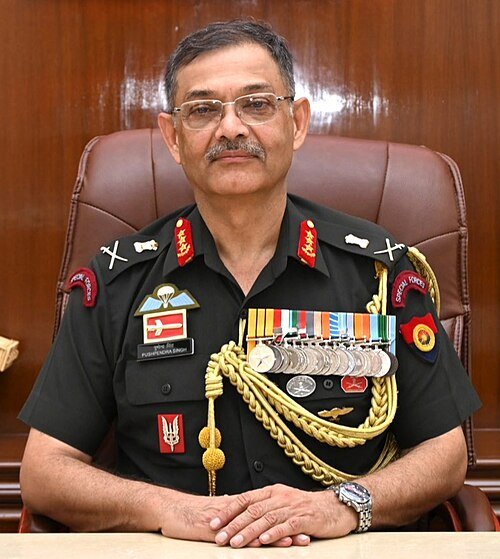
Lieutenant General Zubin A Minwala, General Officer Commanding (GOC) of the 33 Corps, observed the exercise and praised the professionalism and adaptability of the participating units.

He remarked, “Exercise Devil Strike has once again demonstrated our Armed Forces’ ability to adapt, innovate, and operate as a cohesive unit in diverse operational scenarios,” reflecting a strong commitment to maintaining readiness for future challenges.

Exercise Devil Strike has significantly enhanced joint operational capabilities within the Indian Armed Forces, reaffirming their preparedness to safeguard national interests and respond effectively to emerging threats. This exercise marks another milestone in their ongoing pursuit of operational excellence and


Arms, ammo recovered during search operations in Manipur

Security forces on Monday recovered a significant cache of arms and ammunition during a search and area domination operation in Manipur’s Kangpokpi district. The search operations were conducted to ensure security in vulnerable areas of hill and valley districts of…

Tribune News Service

Security forces on Monday recovered a significant cache of arms and ammunition during a search and area domination operation in Manipur’s Kangpokpi district. The search operations were conducted to ensure security in vulnerable areas of hill and valley districts of Manipur.

The recovered items included one 7.62 mm sniper rifle, five 9 mm pistols with magazines, two SBBL guns, two 36 hand grenades, six live rounds of ammunition, two stun shells (normal), one tear smoke shell (chilli), one tear smoke shell, and a Motorola communication set.n

Earlier on Sunday, during search operations and area domination exercises, the security forces recovered arms and ammunition from Thoubal district.

The items recovered included one single bore barrel (sniper), one country made rifle, one Amogh carbine magazine, three .303 magazines, one hand grenade, one detonator, and several live rounds.


Nuclear-capable missile Pralay to debut at Republic Day Parade

18 marching contingents, 15 bands, 31 tableaux to be part of event

Tribune News Service

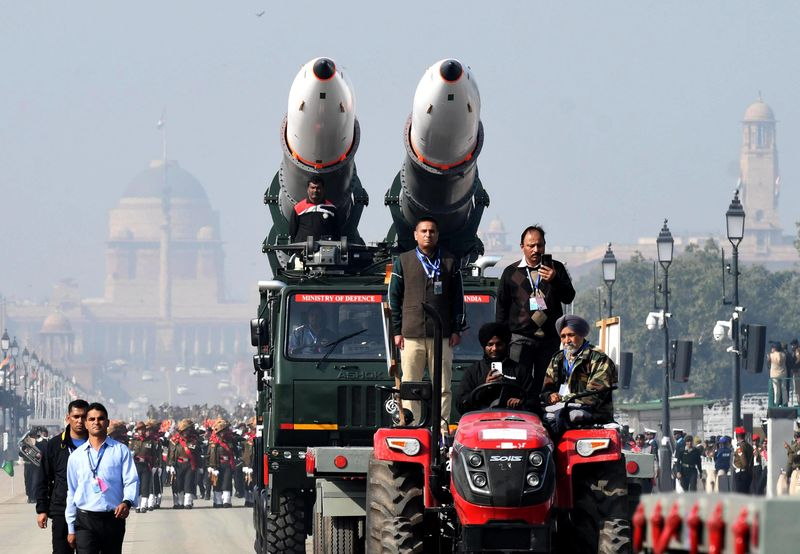
The newly developed short-range, tactical nuclear-capable missile ‘Pralay’ will make its public debut at the Republic Day Parade. On the cultural front, over 5,000 tribal artistes will perform at Kartavya Path.

Providing details to the media on Monday, Defence Secretary Rajesh Kumar Singh announced that the theme for this year’s parade is “75 Years of the Constitution”, marking the adoption of the Constitution in 1950.

The 90-minute parade will feature 31 tableaux, including 16 from states and 15 from Central ministries. To commemorate the 150th birth anniversary of Sardar Vallabhbhai Patel, some tableaux will highlight his contributions.

The parade will include 18 marching contingents, 15 bands, and a cultural troupe of 300 performers. Indonesian President Prabowo Subianto will be the chief guest, accompanied by a military marching contingent, a band and a cultural troupe from Indonesia.

“The military and martial character of the parade is being maintained, but we are incorporating wider societal and cultural participation,” the Defence Secretary said.

ALH issue will be resolved soon: Defence Secretary

The grounding of the Advanced Light Helicopter (ALH) fleet is a slight setback, Defence Secretary Rajesh Kumar Singh said on Monday. “Hindustan Aeronautics Limited (HAL) is currently conducting safety checks, and the issue will be resolved soon,” he stated. However, Singh added that it is unlikely the fleet will be operational in time for the Republic Day Parade.

The display of the ‘Pralay’ missile is significant as it is currently being inducted into the armed forces, marking a milestone in India’s tactical ballistic missile capabilities. Developed by the Defence Research and Development Organisation (DRDO), ‘Pralay’ is a surface-to-surface missile system classified as a Short-Range Ballistic Missile (SRBM), with a range of 150 to 500 km.

Its ‘elder sisters’ like Agni-V target long distances of 5,500 km or more.

Powered by a solid propellant motor, it offers quick-launch capabilities and increased mobility. The Pralay can change course mid-flight, making it difficult to intercept with traditional missile defence systems.

Designed for precision, Pralay ensures highly accurate strikes, adding strategic flexibility to India’s military arsenal. Its induction enhances the country’s tactical options across a range of scenarios.


Soldier killed in Sopore gunfight, search op on

A soldier was killed in an overnight encounter in north Kashmir’s Sopore, officials said on Monday. The soldier, identified as Pangala Kartheek, was injured in the exchange of fire with terrorists in the Zaloora Gujjarpati area of Sopore and died…

article_Author
Adil Akhzer

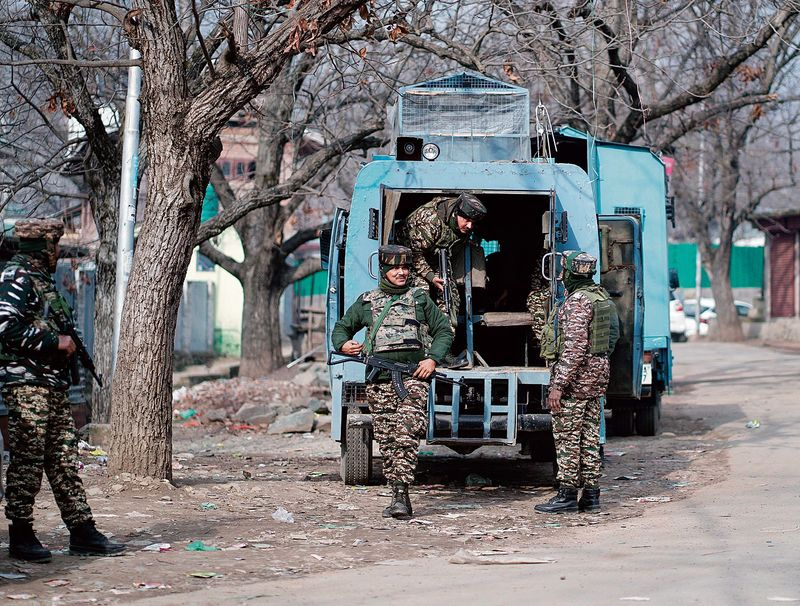
A soldier was killed in an overnight encounter in north Kashmir’s Sopore, officials said on Monday. The soldier, identified as Pangala Kartheek, was injured in the exchange of fire with terrorists in the Zaloora Gujjarpati area of Sopore and died as he was being evacuated, they said.

Following a tip-off, the security forces busted a hideout of terrorists in the area. A cordon and search operation was launched by a joint team of the police and Army personnel.

Srinagar-based 15 Corps said a suspicious activity was observed by the troops. “On being challenged, terrorists opened indiscriminate fire. Our troops effectively retaliated. The operation is still in progress,” the Army said.

Police sources told The Tribune that one jawan was killed after he suffered injuries in a grenade attack during the encounter. Paying tributes to the slain soldier, the Army, in a post on X, said, “All ranks of the Chinar Corps salute the supreme sacrifice of braveheart Pangala Kartheek, who laid down his life in the line of duty.”The sources said it was believed that two militants were trapped in the area.


On Delhi poll eve, Cabinet clears 8th Pay Commission

The Union Cabinet chaired by Prime Minister Narendra Modi on Thursday cleared the formation of the 8th Pay Commission to revise the salaries and pensions of nearly 1.15 crore Central government employees and pensioners. The decision comes ahead of the…

Tribune News Service

The Union Cabinet chaired by Prime Minister Narendra Modi on Thursday cleared the formation of the 8th Pay Commission to revise the salaries and pensions of nearly 1.15 crore Central government employees and pensioners. The decision comes ahead of the crucial Delhi Assembly elections.

1.15 cr central staff, pensioners to benefit

  • Around 50L Central government employees, including defence personnel, along with nearly 65L pensioners are set to benefit from the move
  • The 8th Pay Commission is likely to be formed by 2026; the term of the 7th Pay Commission, set up in 2016, ends on December 31, 2025
  • A chairman and two members will soon be appointed; they will hold talks with Central and state governments, besides PSUs and other stakeholders

Sources in the government said around 50 lakh Central government employees, including defence personnel, along with nearly 65 lakh pensioners will benefit from the move.

Union Minister for Information and Broadcasting Ashwini Vaishnaw, announcing the Cabinet decision, said the commission was likely to be formed by 2026 and reiterated that the recommendations of the 7th Pay Commission had already been implemented.

The 7th Pay Commission was set up in 2016 and its term will end on December 31, 2025. It had seen an expenditure increase of Rs 1 lakh crore for financial year 2016-17. With Delhi being the seat of all Central government offices and lakhs of employees residing here, the decision by the BJP-led government is being seen as an attempt to woo the key voter segment in view of the Assembly elections. As many as four lakh Delhi government employees stand to gain from the decision. “Typically, Delhi government employees see a hike in their salaries with the central pay commission,” said sources.

The announcement also comes ahead of the Union Budget presentation by Finance Minister Nirmala Sitharaman on February 1.

Prime Minister Narendra Modi said the decision would boost consumption and improve the quality of life. “We are all proud of the efforts of all government employees, who work to build a Viksit Bharat. The Cabinet’s decision will improve the quality of life and give a boost to consumption,” he said in a post on X.

Vaishnaw, while briefing the media after the Cabinet meeting, said: “PM Modi has approved the formation of the 8th Central Pay Commission for the benefit of all central government employees and pensioners.”

“Since 1947, seven pay commissions have been formed. The 7th Pay Commission came into effect in 2016. Its tenure will conclude in 2026. By deciding to form the 8th Pay Commission in 2025, we have sufficient time to receive recommendations well before the completion of the period of the 7th commission,” Vaishnaw said.

The minister added that the process would involve exhaustive consultations with central and state governments, besides public sector undertakings and other stakeholders. “A chairman and two members will soon be appointed for the commission,” he said.

Pay commissions are generally formed once in 10 years to recommend the fitment factor (multiplier used for calculating salaries and pensions) and other modalities.

The implementation of the 8th commission is expected to result in a salary hike for Central government employees along with their dearness allowance (DA).

The commission plays a crucial role in determining salary structures, allowances and other benefits for government employees, and its recommendations significantly impact millions of workers and pensioners across the country.


8th Pay Commission for Central government employees approved ahead of Budget 2025

8th Pay Commission News: In a major development, the Union Cabinet has approved the 8th Pay Commission to revise the salaries of central government employees and pensioners’ allowances.

8th Pay Commission News: The Union Cabinet has approved the implementation of the 8th Pay Commission to revise salaries of nearly 50 lakh Central government employees, Union Minister Ashwini Vaishnaw announced on Thursday, January 16. The implementation of the 8th Pay Commission will not only lead to salary hikes for the Central government employees, but also an adjustment in the Dearness Allowance (DA).

The 8th Pay Commission will also revise the pensions and allowances of 65 lakh Central government retirees. Government employees and retirees had long been expecting a revision of their pay scales, which is now possible with the setup of the 8th Pay Commission.

The announcement that the Union Cabinet has approved the 8th Pay Commission has come days ahead of the Budget 2025 announcements.

While Ashwini Vaishnaw has confirmed that the Cabinet has approved the 8th Pay Commission for Central government employees, the exact date for its setup has not been announced yet.

8th Pay Commission date: What we know so far

1. The Union minister has, however, announced that the commission will likely be formed by 2026. According to the reports, the 8th Pay Commission will come into force on January 1, 2026.

2. Ashwini Vaishnaw said the chairman and two members will soon be appointed to oversee the rollout of the 8th Pay Commission.

3. The decision to set up the 8th Pay Commission was taken at a meeting of the Cabinet chaired by Prime Minister Narendra Modi, I&B Minister Ashwini Vaishnaw said in the announcement.

He said, “For your awareness, our Prime Minister has approved the establishment of the 8th Central Pay Commission for all Central government employees.”

Ashwini Vaishnaw said the setting up of the new Pay Commission in 2025 will ensure that its recommendations are received well before the completion of the term of the seventh pay panel. Vaishnaw said consultations will be held with central and state governments and other stakeholders.

7th Pay Commission: What changes it brought?

1. Employee unions demanded a 3.68 fitment factor when it came to the salary revision for the 7th Pay Commission, but the government decided on a fitment factor of 2.57. The fitment factor is a multiplier used for calculating salaries and pensions.

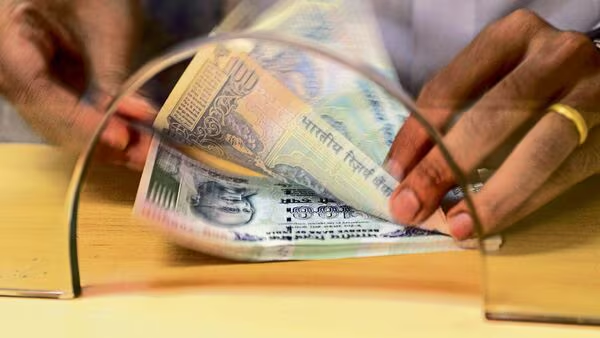
2. This led to the minimum basic pay for government employees to be ₹18,000 per month, compared to ₹7,000 in the 6th Pay Commission. 

Also Read 7th Pay Commission: What is Dearness Allowance (DA) and when is hike announced for central government employees?

3. The minimum pension also rose from ₹3,500 to ₹9,000. The maximum salary became ₹2,50,000, and the maximum pension became ₹1,25,000.

The 7th Pay Commission was set up in 2016, and its term will end on December 31, 2025. Ahead of the end of term for the 7th Pay Commission, a decision has been taken to set up the 8th Pay Commission to revise the salaries of the Central government employees.

Who benefits from 8th Pay Commission?

1. The pay commission plays a crucial role in determining salary structures, allowances, and other benefits for government employees, and its recommendations significantly impact millions of workers and pensioners across the country.

2. There are over 49 lakh Central government employees and nearly 65 lakh pensioners who will benefit from the implementation of the 8th Pay Commission.

The Central Pay Commissions are typically set up once every decade to evaluate and suggest modifications to pay scales, allowances and benefits for central government employees, considering various economic indicators, including inflation.

Since 1947, the government has constituted seven pay commissions. The pay commission plays a key role in deciding salary structures, benefits and allowances for government employees. Most state-owned organisations follow the commission’s recommendations.